

Why does med surg feel like the semester that swallows good students whole? The content is not harder than your other courses; there is just more of it, arriving faster, from five directions at once. These 18 med surg semester survival tips come from how the course actually works: systems first, questions daily, clinicals prepared the night before. They are habits, not heroics, and every one of them fits an ordinary week.
Start with the first three tips this week and add one more each week after. By mid-semester the routine runs itself, and the exam stops feeling like an ambush and starts feeling like a review of things you have already met three times.
Map the Whole Semester in Week One

When: week one · Time: one quiet hour · Tool: the syllabus and a blank calendar
Print or open the syllabus and mark every exam date, skills check and paper deadline on one calendar before the second week starts. Then work backwards: each exam gets a review week in front of it, and each heavy clinical week gets lighter study days around it. Most med surg stress is surprise, not difficulty. A semester you can see on one page stops ambushing you, because nothing on it arrives without warning, and you can spot the two brutal weeks in October while it is still September and plan around them early.
Learn the Big Three Systems First

Med surg is a course about body systems, and three of them carry most of the exam: the heart, the lungs and the kidneys. Nearly every other topic connects back to blood flow, oxygen or fluid balance, which is why the nursing school survival kit you build for this course should start with those three systems, not with chapter one. Learn how each system works when it is healthy, then learn its two or three big failures. The rest of the course becomes variations on music you already know, and new topics stop feeling like strangers.
Study tip: for every new condition, ask first which of the big three it touches; the answer tells you where to file it.
Turn Lectures Into Questions

When: the same day as class · Time: twenty minutes · Output: five questions per lecture
A lecture you only reread feels familiar, and familiar is not the same as known. After each class, close the slides and write five questions the material could ask you: one definition, two application questions, one priority question and one thing you still cannot explain. Answer them the next morning without looking. The questions you write today become the review set you trust in exam week, because you built it from your own gaps instead of a stranger’s list, and every gap on it is one you have already met once.
Review Within a Day, Every Day

Memory drops fastest in the first day after a lecture, so the cheapest points in med surg come from a short review within twenty four hours. Twenty minutes is enough: skim your notes, fix the parts that already look foreign, and write down the three ideas you would fail on if tested right now. It feels almost too small to matter, and that is the point. Small reviews compound quietly, the way interest does, until exam week arrives and you are revising instead of learning.
Study tip: attach the review to something you already do daily, like the bus ride home, so it never needs willpower.
Practice Questions Are the Real Textbook

Daily dose: ten questions · Review: every rationale, right or wrong · Order: untimed first, timed later
Textbooks explain; exams interrogate. The students who survive med surg treat practice questions as the main text and the book as the reference for whatever the questions expose. Do a small set daily, and read the rationale for every answer, right or wrong, because the rationale is where the teaching lives. When a question beats you, that topic goes on tomorrow’s study list. The nursing school survival tips make the same point for the whole program: questions first, notes second, pride last.
Learn the Labs Before the Drug Cards

Drug cards are hard to memorize when the labs behind them mean nothing. Before a drug class, spend one short session on the values that drug moves or endangers: potassium for the cardiac and kidney drugs, glucose for the diabetes drugs, clotting times for the blood thinners. You are not memorizing tables yet, only learning what normal looks like, so that a wrong value in a question stem jumps out at you. Then the drug cards have hooks to hang on, and the side effects stop being random lists.
Study tip: write each drug’s danger lab on the front of its card; if you cannot name the lab, you do not know the drug yet.
Study tip: Review in short daily sessions instead of one weekend marathon. Twenty minutes a day for six days beats six hours on Sunday, because each short session catches the forgetting before it finishes.
Think in Priorities: Airway, Breathing, Circulation
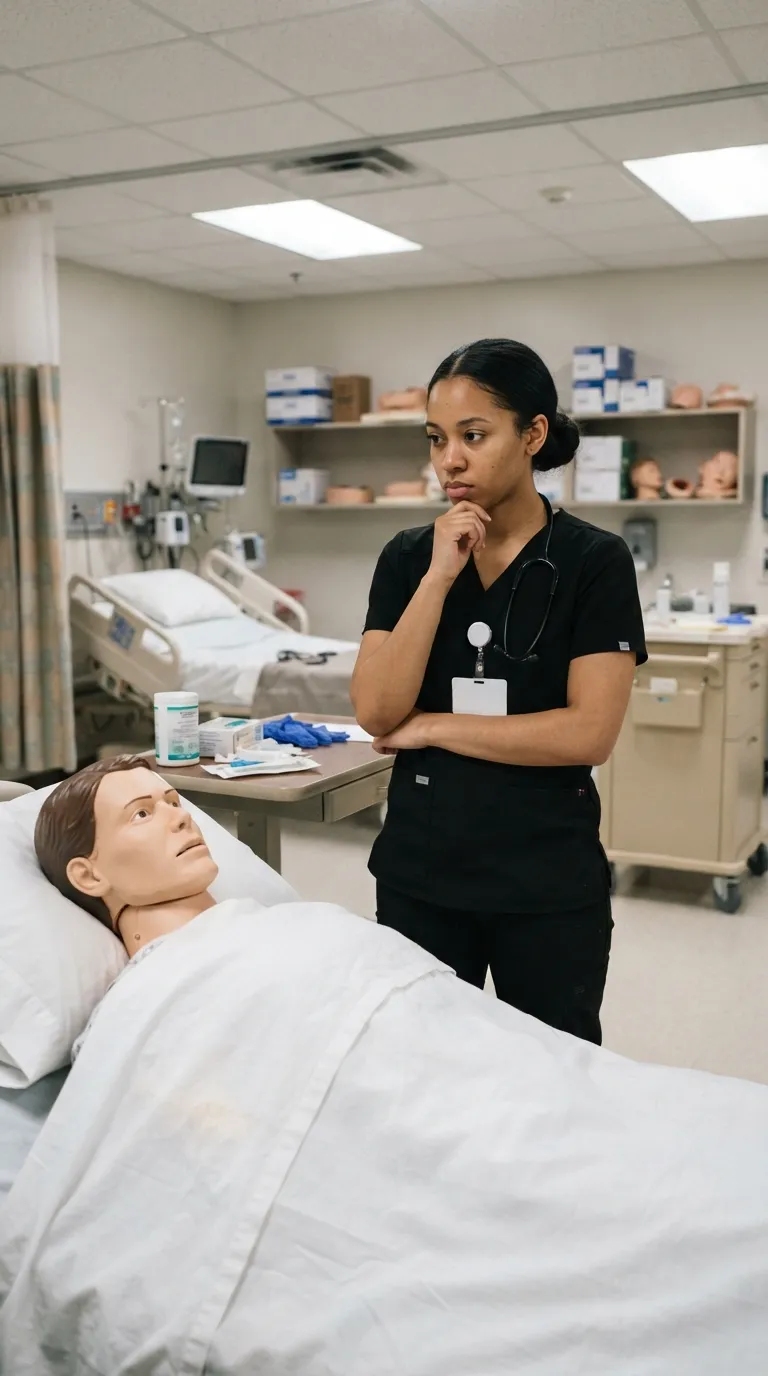
Order: airway, then breathing, then circulation · Use: every priority question · Test: what kills first
Med surg exams love asking which patient or action comes first, and most of those questions are won with one order: airway, breathing, circulation. Ask what threatens each letter. A blocked airway kills in minutes, failed breathing in minutes more, and circulation problems usually give you a little longer. When two answers both sound caring and correct, pick the one that protects the earliest letter. This single habit will not answer everything, but it settles the questions students argue about longest in the hallway after the exam.
One Page per Condition

For each condition, build one page and only one: what it is in a single line, the signs you would actually see, the checks and labs that confirm it, and the nursing priorities in order. The one page limit is the point. It forces you to choose the five facts that matter from the forty in the chapter, and choosing is the studying. By exam week your whole course fits in a slim folder you can review in one sitting, and the folder is yours, written in your own words.
Study tip: write the one page by hand. The slower writing is a feature; your hand remembers what your eyes skim past.
Keep a Running Error Log

Tool: one notebook or file · Entry: topic, your answer, the rule · Review: once a week
Every question you miss teaches the same lesson twice if you write it down once. Keep one error log for the whole semester: the topic, what you chose, what was right, and the rule you will use next time. Patterns appear fast. Three misses about potassium and three about delegation tell you exactly where your next study hour goes, which is what the nursing student organization tips mean by studying from your own data instead of your feelings about the week.
Study Groups Need Rules

A study group without rules becomes a long lunch. Keep it to three or four people, ninety minutes, phones away, and one rule above all: the group works questions out loud, taking turns explaining answers, instead of reading notes at each other. Explaining is where the learning happens, for the explainer most of all. End by naming what each person will review before the next meeting, so the group produces homework instead of just company and complaints.
Study tip: rotate who teaches each topic. Teaching a system once is worth reading about it three times.
Prep Clinicals the Night Before

When: the evening before · Time: thirty minutes · Covers: diagnosis, meds, one main risk
Clinical mornings punish improvisation. The night before, read your patient’s main diagnosis on your one page, check the medications you will see, and pick the one risk you will watch hardest: falls, breathing, bleeding, low blood sugar, whatever this patient carries. Write three questions you want to ask your nurse. Thirty quiet minutes at home buys you a calm morning on the unit, where you can spend your attention on the patient instead of on panic and guesswork.
Protect Sleep Like a Vital Sign

You would never chart a made up blood pressure, so do not run your brain on made up rest. Sleep is when the day’s learning gets filed, and all night cramming trades tomorrow’s recall for tonight’s anxiety. Set a hard stop for studying, keep it even in exam week, and treat seven hours as a clinical requirement, not a reward for finishing. Students rarely fail med surg from one early night; they fail in the fog of the fourth short one in a row.
Study tip: if you must choose between one more hour of notes and one more hour of sleep before an exam, choose sleep and review your error log at breakfast.
What you’ll need: one planner or calendar app for the semester map, flashcards or a question app for daily practice, one notebook or folder system for your one page summaries and error log, and a simple timer for study sessions and practice exams.
Eat and Drink on a Schedule Too

Rule: eat before you are desperate · Carry: water and one real snack · Limit: caffeine after lunch
Blood sugar is not a nursing concept that stops at the patient. Long study days and twelve hour clinicals run on whatever you ate last, and the vending machine at hour nine is a poor meal plan. Pack food the night before with your scrubs, keep water in reach all day, and go easy on caffeine after lunch so the night’s sleep survives. The nursing students productivity tips call this fueling the shift; in med surg it is simply maintenance your body grades daily.
Use Office Hours Before You Need Rescue

Office hours are not the emergency room for a failing grade; they work best in week three, not week thirteen. Bring one specific stuck point, like a worked question you still get wrong, and fifteen focused minutes will do what a weekend of rereading could not. Instructors also write exams, and the topics they linger on in office hours have a way of mattering later. Go early, go briefly, and go with a question written down.
Study tip: after each visit, add what you learned to your error log the same day, while the explanation is still warm.
Sit Practice Exams Like the Real Thing

Setup: timed, phone away, full set · Rhythm: once a week · After: grade it, log every miss
Knowledge and exam stamina are different skills, and only one of them is trained by rereading. Once a week, sit a full practice set under real conditions: timed, phone in another room, no pausing to check answers halfway. Your score matters less than your behavior under the clock, where rushing, second guessing and slow starts all show themselves. Finish, grade, and feed every miss into the error log. By the real exam, the room, the timer and the format all feel familiar.
File by System, Not by Week

Folders named Week 1 through Week 15 hide the course from you, because exams do not ask questions by week. File everything by body system instead: every heart lecture, question and one page summary in one place. When the cardiac exam arrives, your whole cardiac course sits in one folder, and connections between the September lecture and the November clinical finally show. The nursing school tips on this site suggest the same habit for the whole degree; med surg is where it pays off most.
Study tip: keep one running list at the front of each system folder with the questions that system still owes you an answer to.
Put Rest Days in the Calendar First

Rule: one full day off weekly · Booked: before study plans · Guarded: like a clinical shift
Rest planned after studying never happens, because studying expands to fill every open hour. Put one full rest day in the calendar first, before the review sessions and question sets go in, and defend it the way you would a clinical shift. A rested brain files the week properly; an exhausted one just rehearses anxiety. This is not softness, it is scheduling honesty: the semester is fifteen weeks long, and nobody sprints a distance like that without planned stops.
Collect Small Wins on Paper

Motivation in a long semester runs on evidence, not pep talks. Keep a visible list of small finished things: the question set completed, the system folder done, the clinical skill signed off, the exam passed by a point more than the last one. On the flat days, and there will be flat days, that list is proof the work is adding up. Survival is mostly continuing, and continuing is easier when the progress is written where you can see it every day.
Study tip: end each week by writing the week’s three wins at the top of your error log, then start the next week’s plan right under them.
Pick Your Favorites
If you remember one thing: med surg is survived by systems, not by stamina. Map the semester, learn the big three first, answer questions every day, and let sleep and rest days guard the whole plan.
Pick two favorites from this list and run them for two weeks before adding more. Habits that survive a fortnight usually survive the semester, and two kept tips beat eighteen admired ones.