


Nursing Student Organization Tips can help make a busy nursing school routine feel calmer and easier to manage. When notes, clinical supplies, digital files, and daily responsibilities have clear places, you spend less time searching and more time focusing on what matters. Good organization does not mean keeping everything perfectly arranged. It means creating simple systems that are easy to maintain during demanding weeks. These practical ideas can help nursing students reduce clutter, prepare ahead, and create a more comfortable study routine.
Create One Home Base

Organization becomes much easier when important information has a predictable home. Instead of repeatedly searching through different notebooks and folders, create one central system where your most important nursing school materials can always be found. This could be a physical planner, a digital dashboard, or a dedicated binder that keeps your everyday responsibilities visible.
Your home base should include the information you check most frequently, such as upcoming assignments, exam dates, clinical schedules, and priority tasks. Avoid adding too many unnecessary details because the purpose is to make your routine simpler.
Start with these essentials:
- A weekly overview of classes and clinical commitments.
- A short list of upcoming deadlines.
- Quick access to your most frequently used study resources.
Divide Materials by Course
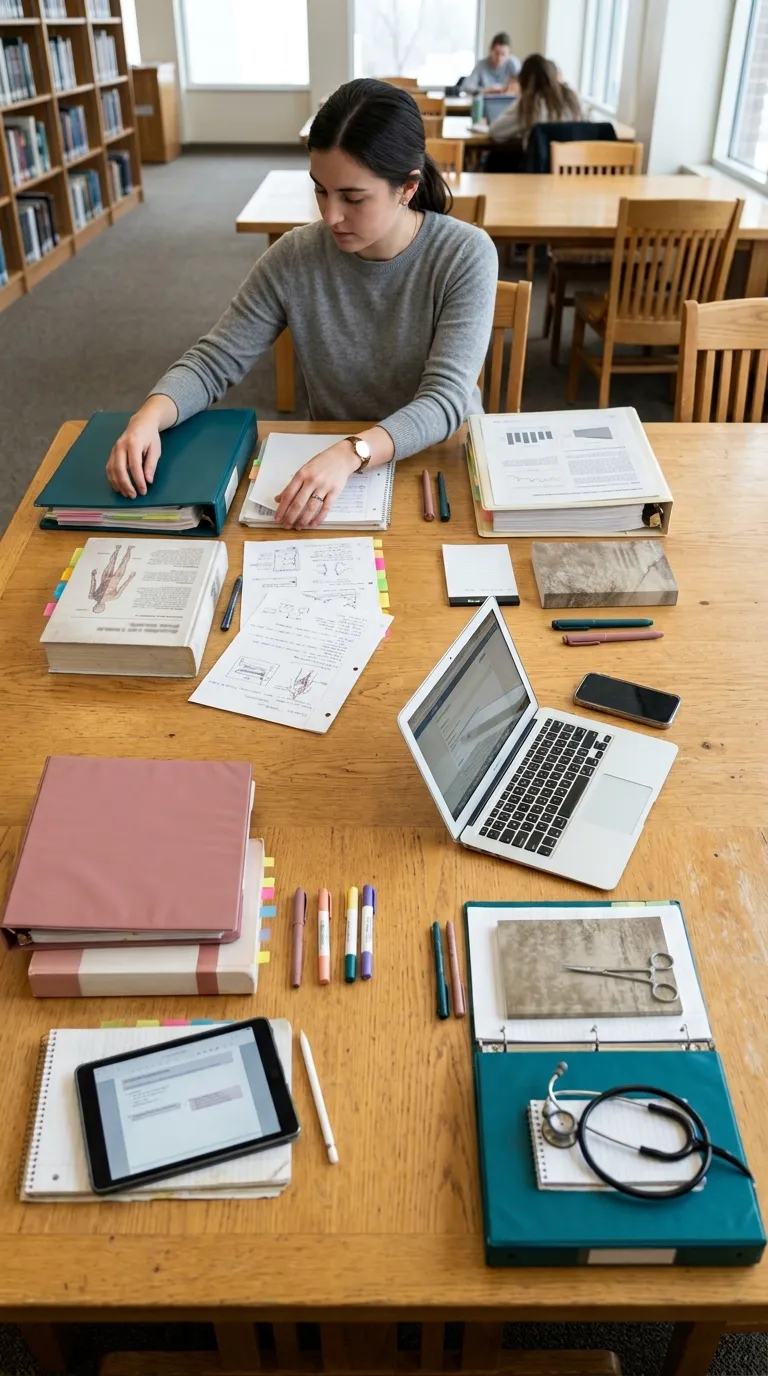
When every course has a defined place, your study materials become easier to navigate. A simple visual system can be especially useful when several nursing subjects are active at the same time and their notes begin to overlap. Assign each course its own notebook, binder section, or digital folder.
For example, keep pharmacology notes separate from health assessment materials and nursing fundamentals. You can also use different colors for each subject to make folders easier to recognize at a glance. Choose a system that feels natural rather than creating so many categories that maintaining them becomes another task.
Organize Your Digital Files

Digital clutter can become just as stressful as a messy desk. A consistent folder structure and predictable naming system make it much easier to locate lecture resources, assignments, study materials, and clinical documents when you need them quickly.
Create a main folder for each semester, then divide it into course-specific folders. Use descriptive file names instead of labels such as “Notes 1” or “New Document.” For example, a file named “Pharmacology-Cardiac-Medications-Review” is easier to identify later.
A helpful digital filing routine includes:
- Saving downloaded lecture slides in the correct course folder.
- Keeping assignment drafts separate from completed submissions.
- Backing up important academic files regularly.
Build a Clinical Go-Bag
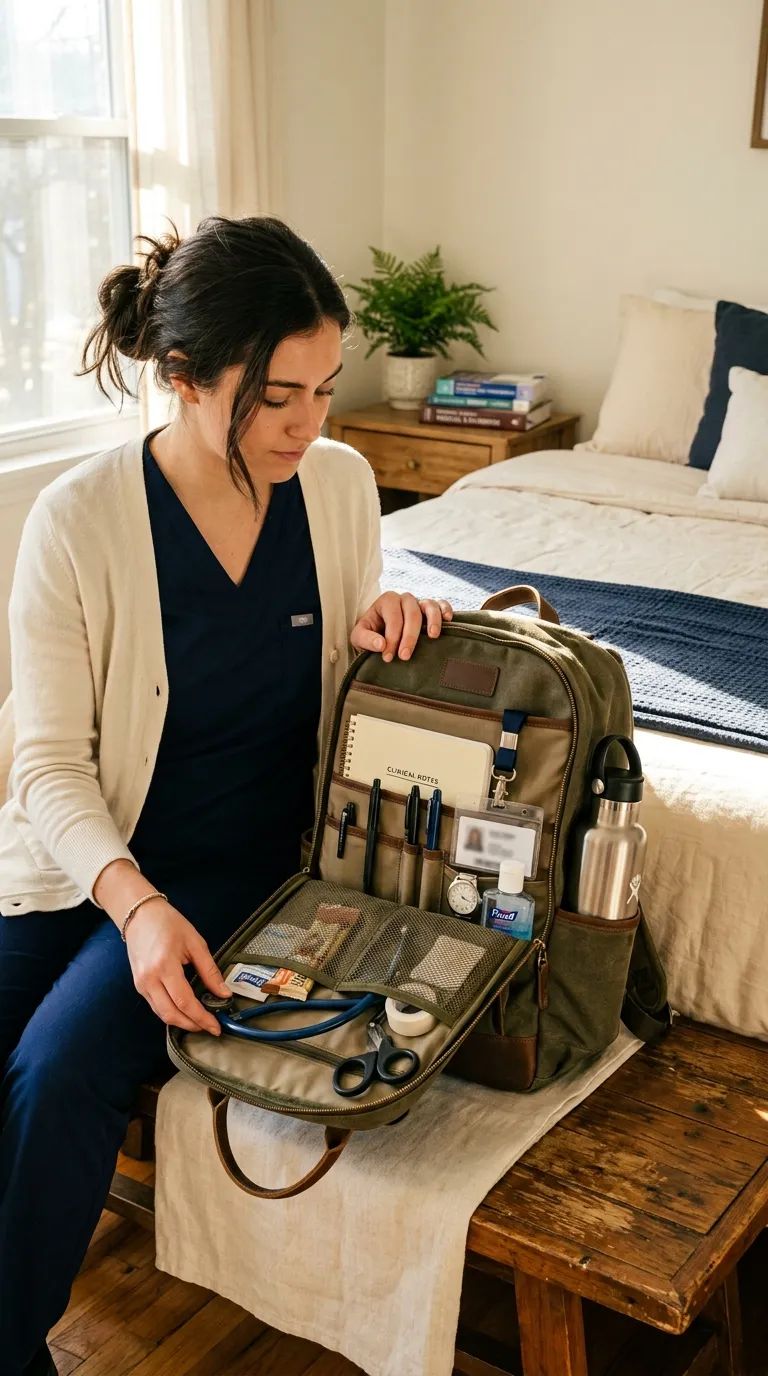
A dedicated clinical bag can remove dozens of tiny decisions from busy mornings. When essentials always return to the same compartments, packing becomes quicker and the risk of forgetting an important everyday item becomes easier to reduce.
Keep your bag organized according to your school’s clinical requirements. Common everyday items might include a notebook, pens, a watch, and approved clinical accessories. Follow your program’s policies regarding equipment, documentation, uniforms, and personal belongings.
After each clinical day, take a few minutes to remove rubbish, return misplaced items, and check what needs replenishing. Never store confidential patient information casually in your bag or personal devices.
Use a Semester Overview
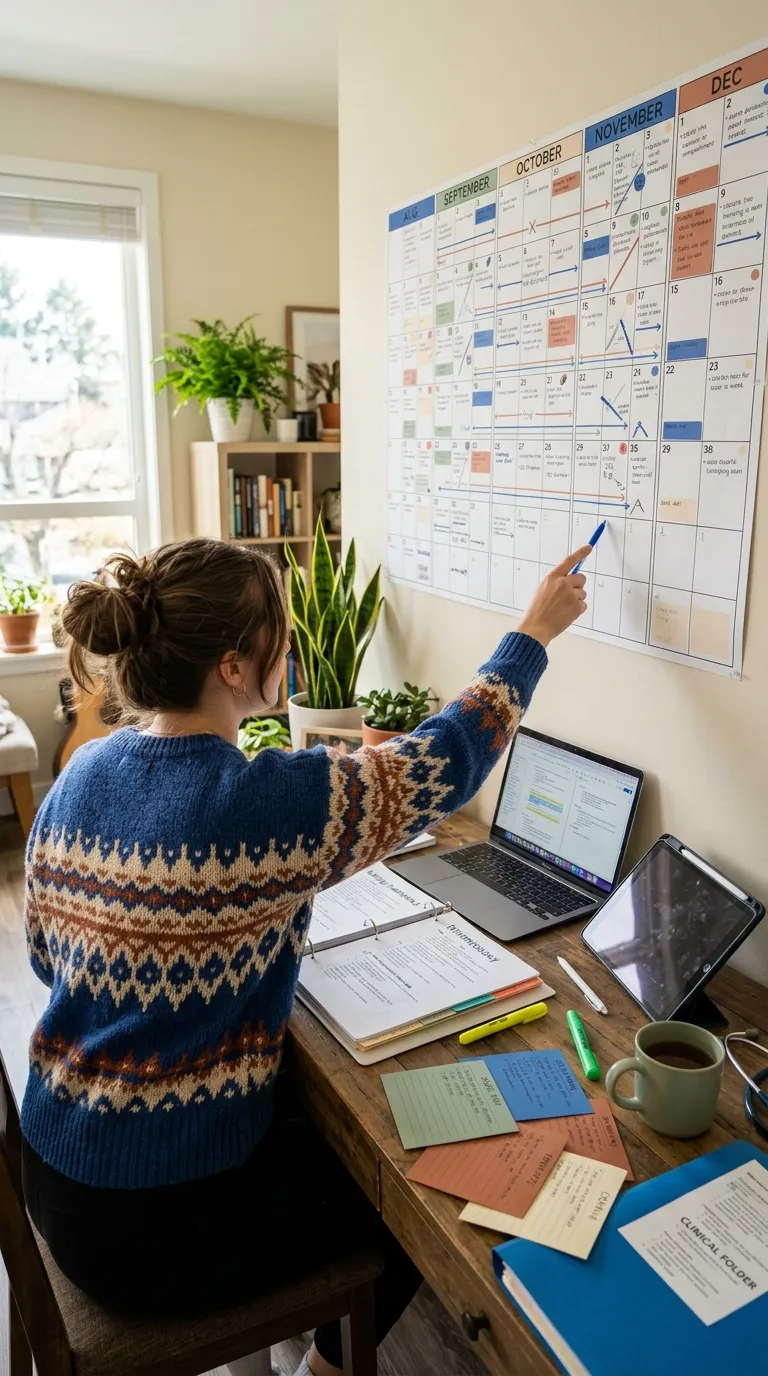
A semester overview gives you perspective that a daily planner cannot provide. Seeing major commitments together makes it easier to anticipate stressful periods and organize resources before several responsibilities arrive at once.
Write down examination dates, assignment deadlines, clinical rotations, skills assessments, and other important academic commitments as soon as they are announced. Review the overview at the beginning of each week so you can identify busy periods before they become overwhelming.
If two major deadlines fall close together, begin preparing for the earlier one in advance and divide the second task into smaller steps. You do not need to plan every hour of the semester. A broad view is enough to help you make more realistic decisions.
Keep a Master Reference Binder
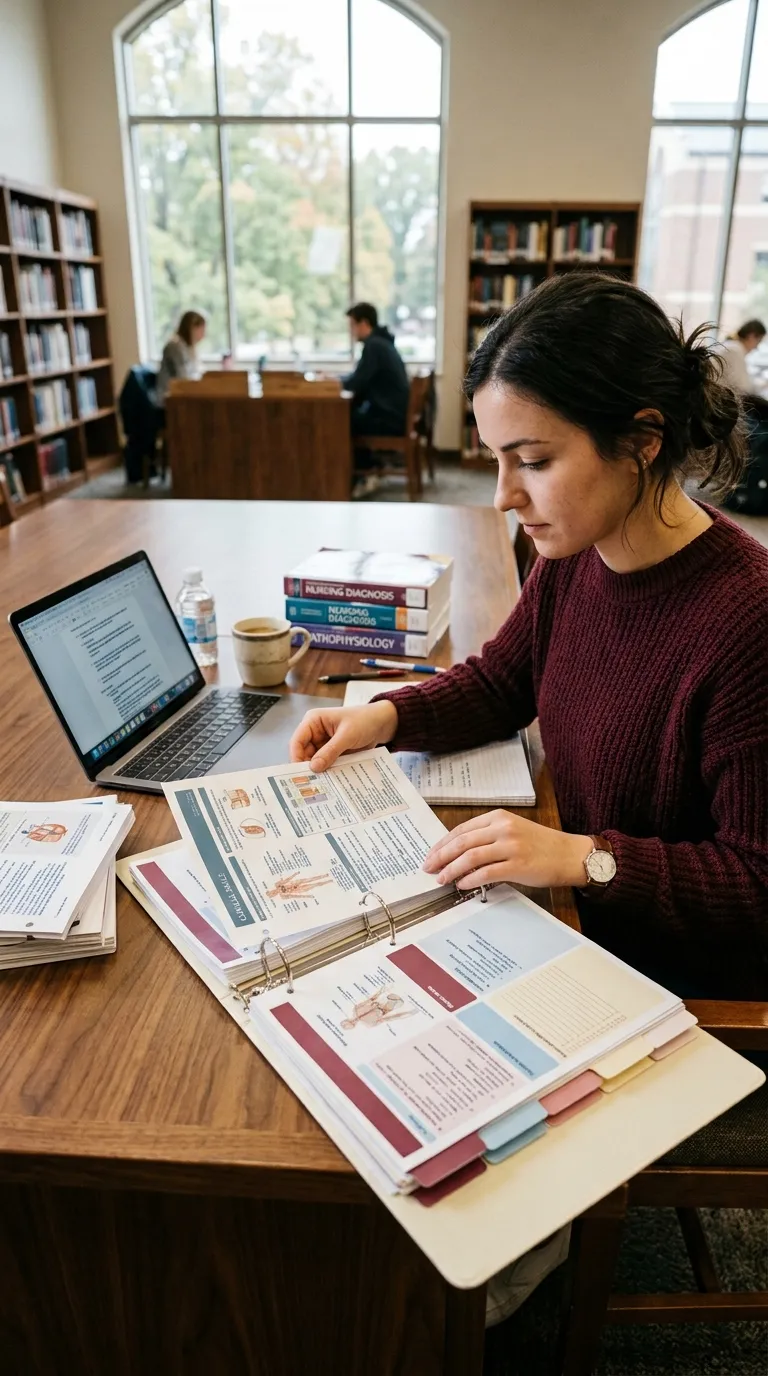
A reference binder should make information easier to find, not become another collection of papers. Keep it selective and current so opening it feels like accessing a useful resource rather than searching through another pile of material.
Organize the binder using clear sections for topics you frequently revisit, such as laboratory values, assessment concepts, terminology, and clinical skills. Include brief summaries, useful diagrams, and instructor-approved reference materials rather than copying entire textbooks.
Review the binder periodically and remove outdated duplicates. For clinical decisions, always verify information against current course materials, approved clinical references, and facility policies instead of relying on old notes alone.
Create a Daily Reset

Organization does not have to be a major weekend project. A short reset at the end of the day prevents clutter from accumulating and gives you a cleaner starting point when the next nursing school task arrives.
Spend five to ten minutes returning supplies to their proper places, checking your planner, and preparing your study area. This small habit is particularly useful after long classes or clinical shifts when you may not have the energy for a complete cleanout.
Your daily reset can include:
- Putting loose notes into the correct folders.
- Clearing your desk of cups, wrappers, and unnecessary items.
- Checking tomorrow’s schedule and choosing your first priority.
Keep the routine realistic. Even completing two or three small tasks can make the next morning feel more manageable.
Label Study Resources Clearly

Clear labels save mental energy because you do not have to open several folders to discover what is inside. Keep the system simple enough that you can maintain it even during the busiest part of the semester.
Use short, descriptive labels for binders, storage boxes, digital folders, and printed materials. If you have several documents about one subject, add the topic or date to distinguish them. Avoid changing your labeling style frequently, as consistency is what makes the system useful.
Separate Current and Archived Work

Not every paper deserves to remain in your active workspace. Separating current resources from completed work keeps your everyday system lighter while still preserving useful material that may matter later in your nursing program.
Create two main categories: current work and archived work. Keep active assignments, upcoming exam resources, and current lecture notes within easy reach. Move completed projects and older study materials into clearly labeled folders.
Before discarding anything, check whether your school requires you to retain it or whether it will be useful for future examinations. Securely dispose of any documents containing confidential information according to the relevant requirements.
Keep Your Bag Lightweight

A backpack can quietly become a mobile storage closet. A quick cleanout keeps essential items easier to locate and prevents you from carrying materials you no longer need throughout a busy campus or clinical day.
At the end of each week, remove old handouts, unnecessary stationery, empty containers, and materials that can remain safely at home. Keep frequently used items in consistent pockets so you can find them without unpacking everything.
Use a Portable Study Kit
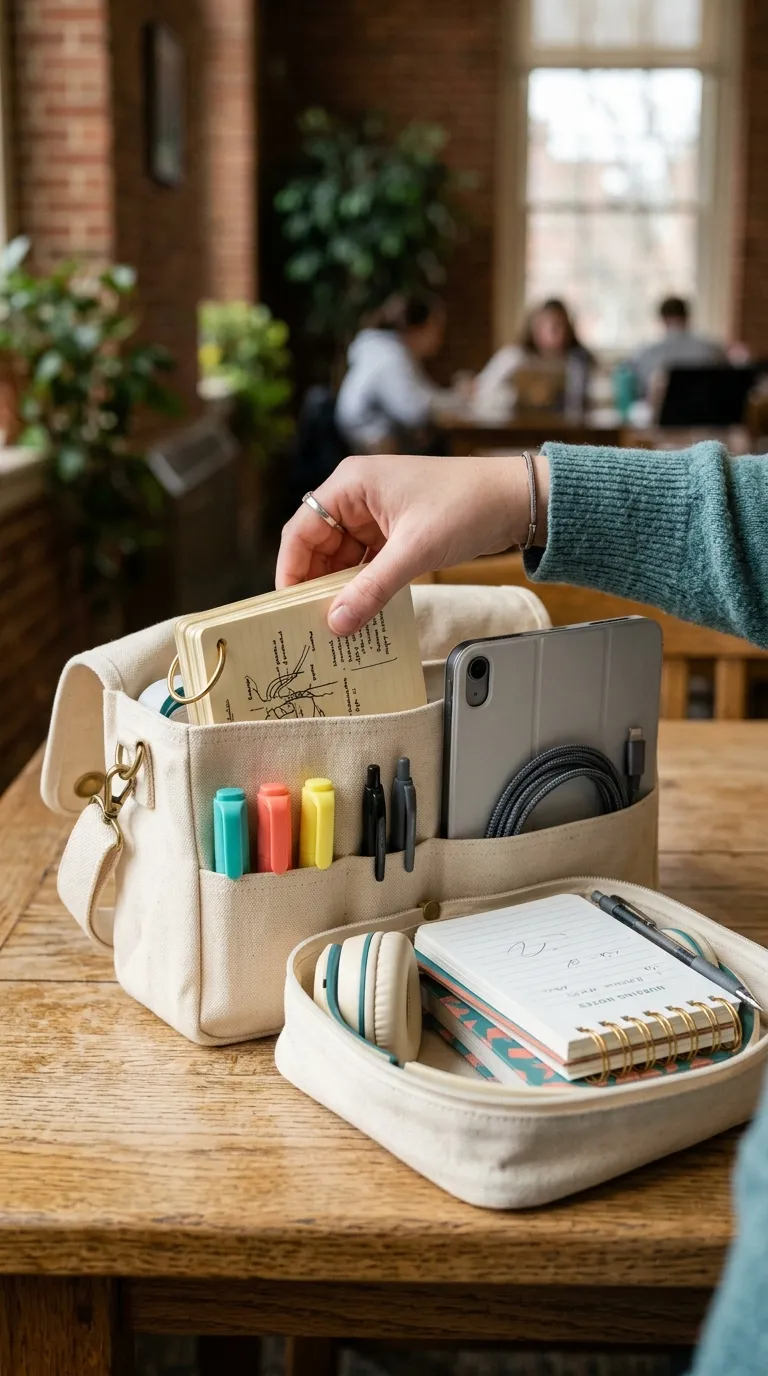
A portable study kit turns organization into something you can carry with you. Rather than rebuilding your supplies every time you leave home, keep a small set of reliable tools ready for library sessions, campus breaks, or quiet waiting periods.
Your kit might contain a few pens, sticky notes, highlighters, a small notebook, and printed review sheets for your current topics. If you prefer digital studying, a tablet and charging cable may be enough.
Avoid carrying your entire collection of study supplies. Choose items that support your current learning goals and replace anything you use regularly before it runs out.
Make a Meal Planning Corner

Organization extends beyond notebooks and schedules. Having a simple food routine can remove small daily decisions and make demanding nursing school days easier to navigate without relying on last-minute choices.
Choose a convenient place in your kitchen for reusable containers, lunch bags, water bottles, and basic meal-planning supplies. Before a busy week begins, consider which days require packed meals or snacks.
A simple routine could include:
- Checking your schedule for long campus or clinical days.
- Preparing containers and other lunch essentials in advance.
- Keeping easy-to-carry snacks available when appropriate.
The goal is convenience, not a complicated meal-preparation schedule. Adapt your routine to your budget, preferences, and available time.
Organize Your Phone

Your phone can either support organization or constantly create distractions. A cleaner digital setup makes important academic tools easier to access while reducing the number of unnecessary interruptions competing for your attention.
Move your calendar, notes, task manager, and approved study apps into a dedicated folder or a convenient home-screen location. Turn off nonessential notifications during focused study sessions while keeping important school communications accessible.
You can also review downloaded files, remove unused apps, and set reminders for major deadlines. Be mindful of privacy rules when using your phone for clinical learning, and never store identifiable patient information in personal apps without proper authorization.
Maintain a Supply Inventory

Running out of a basic supply at the wrong moment can create unnecessary stress. A quick inventory system helps you notice what needs replacing while there is still plenty of time to prepare.
Keep a short list of regularly used items, including stationery, printer paper, notebook supplies, and approved clinical accessories. Check the list once a week or whenever you prepare for an upcoming clinical rotation.
Mark items that are running low and purchase replacements according to your budget. This simple approach can reduce last-minute shopping and prevent unnecessary duplicate purchases.
Keep a Clinical Document Folder

Clinical paperwork deserves its own organizational system because it often has different deadlines and handling requirements from ordinary coursework. Keeping it separate makes important documents easier to check before a clinical commitment.
Use a clearly labeled folder for permitted forms, schedules, checklists, and other required paperwork. Arrange documents by purpose or deadline so you can quickly confirm what is complete and what still needs attention.
Before each placement, review the instructions provided by your nursing program. Protect sensitive information and follow all school and clinical facility requirements for document storage, transport, and disposal.
Declutter Every Friday

Small amounts of clutter become much easier to handle when they are addressed regularly. A short weekly reset keeps your study environment from gradually turning into another source of stress.
Set aside 10 to 15 minutes on Friday, or choose another day that suits your schedule. Clear your desk, organize loose papers, review digital downloads, and prepare the materials you will need next week.
You can use this weekly checklist:
- Remove unnecessary items from your study space.
- File completed notes and assignments.
- Review upcoming deadlines and missing supplies.
- Choose one organizational problem to improve next week.
Keep the process brief so it remains a sustainable habit instead of becoming another demanding responsibility.
Create a Charging Station

A charging station is a small organizational upgrade with a practical payoff. Keeping devices and cables together makes it easier to prepare for long study days and reduces the last-minute search for a missing charger.
Choose a convenient location near your desk or another safe area. Use a small tray or cable organizer to keep chargers, headphones, and other accessories together. Avoid overloading electrical outlets, and follow the safety instructions for your devices.
You might also want to check out Time Management Tips for more ways to organize your daily nursing school routine. You might also want to check out Time Management Tips.
Store Notes by Topic

Topic-based storage becomes especially helpful when you need to revisit an older concept quickly. Instead of remembering which lecture contained the information, you can go directly to the subject area where related resources belong.
For example, group notes about cardiovascular assessment together even if you studied them during different weeks. Apply the same method to pharmacology concepts, laboratory interpretation, and clinical procedures.
When several courses cover related subjects, keep the original lecture materials in their course folders while creating a separate topic-based index or review sheet. This gives you quick access without creating unnecessary duplicate files.
Keep a Lost-and-Found Tray

Not every misplaced item needs to be sorted immediately. A small temporary tray can keep your workspace visually calm while giving you one convenient place to collect things until you have time to put them away properly.
Use the tray for everyday items such as spare pens, sticky notes, charging cables, and small stationery supplies. Avoid placing important documents, confidential materials, or items that require immediate attention there.
Empty the tray during your weekly reset. If it fills quickly, consider whether frequently used items need a more permanent storage location.
Prepare Tomorrow’s Materials
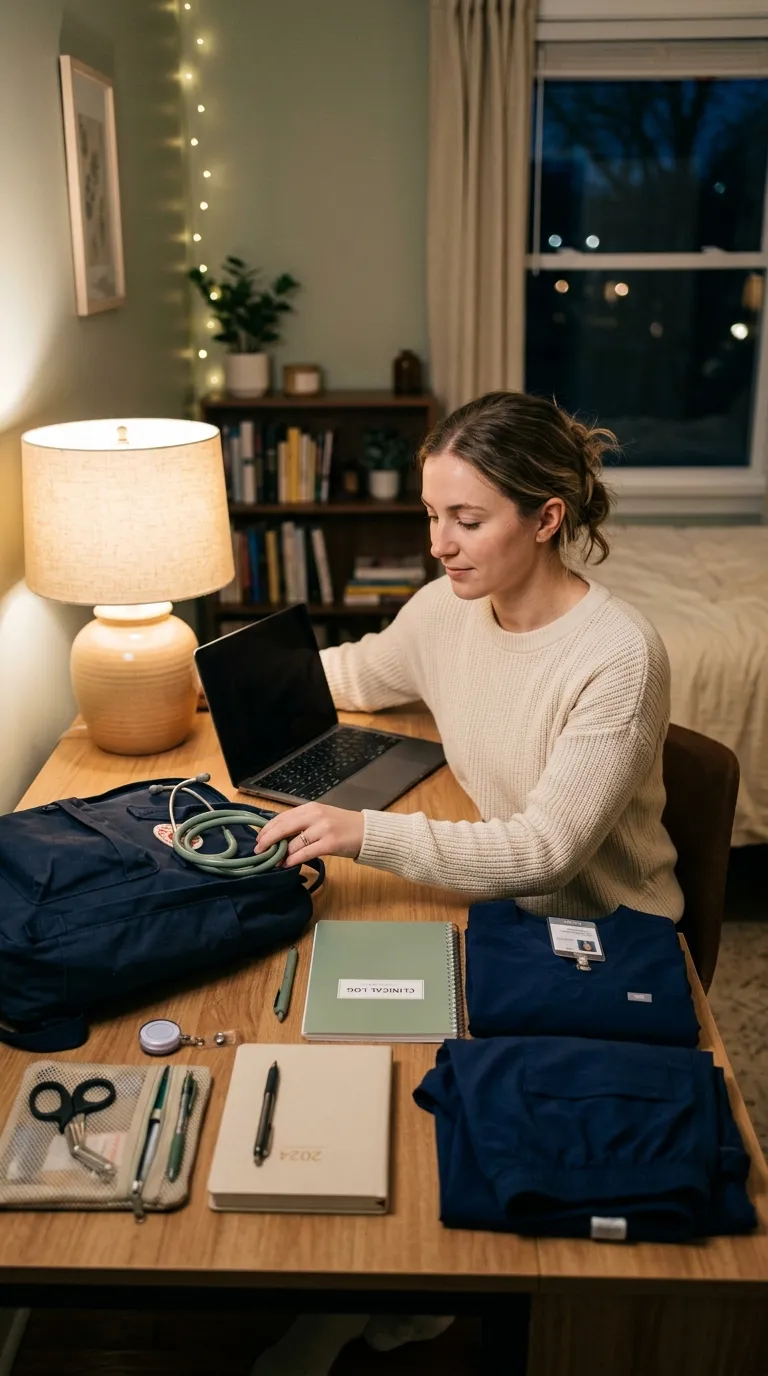
A few minutes of preparation at night can remove several small decisions from the morning. When tomorrow’s essentials are already together, you can begin the day with less searching, rushing, and unnecessary mental clutter.
Check your schedule before finishing your evening routine. Place the required books, notebooks, approved clinical supplies, and other essentials near your departure area. Review whether any assignments or forms need to be submitted before leaving home.
Preparing in advance does not mean planning every detail. Focus on the things that would otherwise make your morning rushed, especially after a demanding study day.
Set a Monthly Cleanout
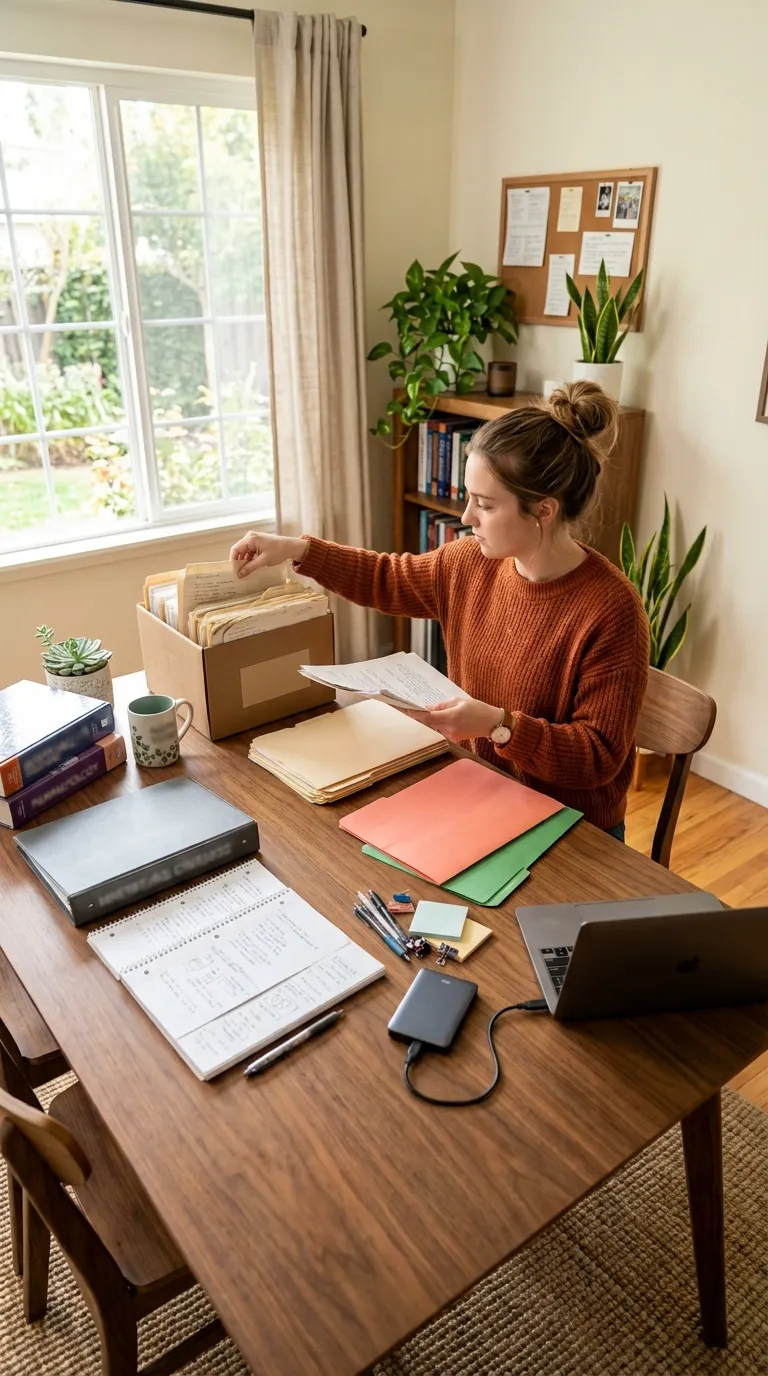
A monthly cleanout prevents small organizational problems from becoming permanent. It also gives you a chance to adjust your system as classes change, new materials arrive, and older resources become less relevant.
Review your physical folders, digital files, desk supplies, and backpack. Remove unnecessary duplicates, archive completed work, and check whether your current storage system still suits your workload.
Ask yourself three simple questions: What do I use regularly? What takes too long to find? What can I remove or organize differently? Small adjustments can make your system more practical without requiring a complete overhaul.
Build a Stress-Free Reset Routine

The most effective organization system is one you can maintain even when nursing school becomes demanding. Instead of waiting until everything feels overwhelming, create a short reset routine that helps you return to a manageable starting point.
Choose three simple actions that you can repeat most days, such as checking your planner, clearing your desk, and preparing tomorrow’s essentials. Add a weekly review when you have more time, but avoid making the routine so complicated that you stop using it.
Remember that organization should support your learning rather than become another source of pressure. If a system takes too much time to maintain, simplify it until it fits your actual schedule.
Closing Thoughts
Nursing school comes with a constant flow of notes, assignments, clinical materials, deadlines, and everyday responsibilities. The right organizational habits can make that workload feel more manageable without requiring a complicated system. Start with one small change, such as organizing your digital files, preparing your clinical bag, or creating a daily reset routine. As these habits become automatic, your environment can feel clearer and your academic responsibilities easier to handle. The goal is not perfect organization. The goal is less searching, less clutter, and less unnecessary stress so you can give more attention to learning and growing as a nursing student.