


Nursing Flashcards Ideas can make nursing school studying more active, focused, and easier to manage. Instead of copying entire textbook pages onto cards, create short prompts that help you recall medications, assessments, procedures, anatomy, lab concepts, and clinical reasoning. The best flashcards are simple enough to review quickly but useful enough to challenge your memory. With the right system, they can become a practical study tool throughout nursing school.
Turn Definitions Into Questions

Flashcards work best when they make you retrieve information rather than simply recognize it. Turning definitions into questions encourages active recall and makes each card a small self-test instead of another page of notes. For example, instead of writing a definition of hypertension on the front, ask, “What is hypertension?” and place a concise explanation on the back.
You can also use questions that require you to explain a concept in your own words. This helps you identify whether you genuinely understand the material or have only memorized a sentence from your textbook.
Build Medication Cards
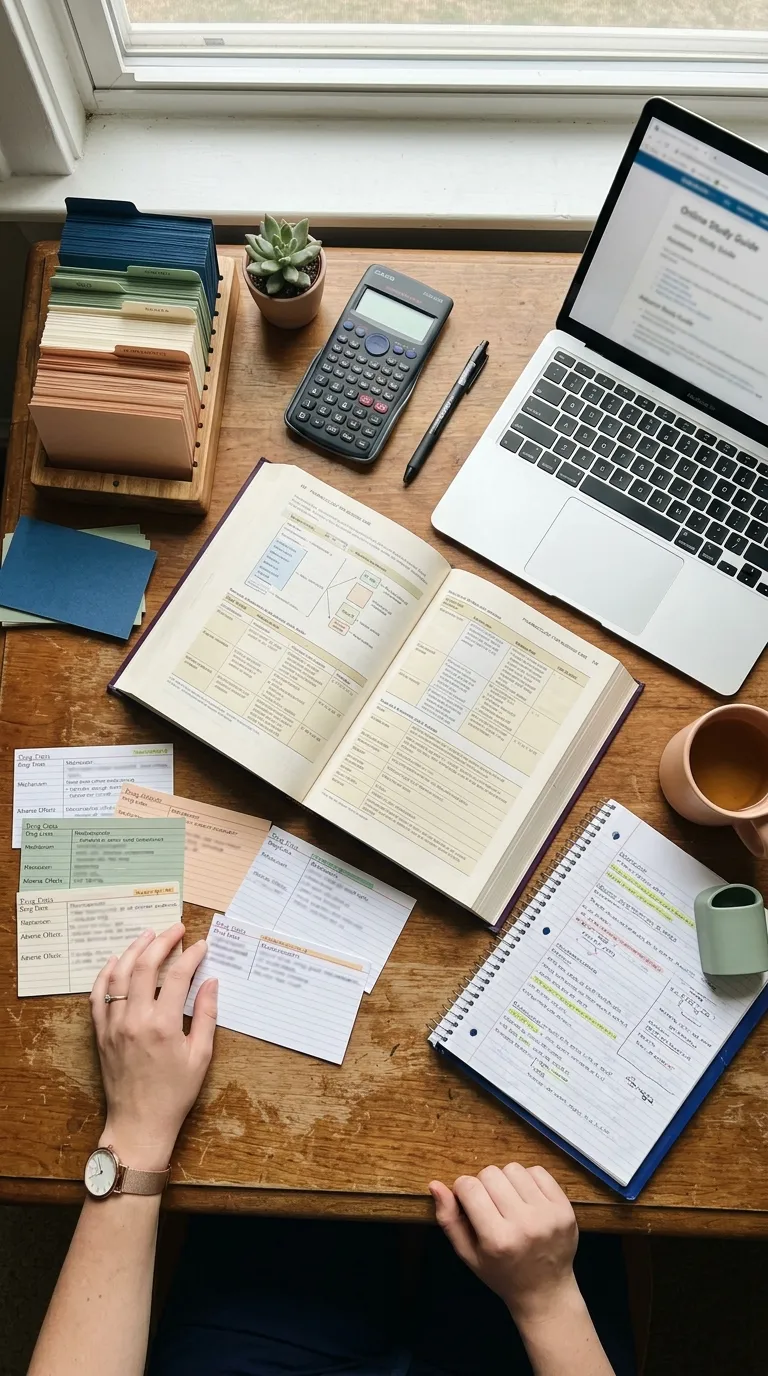
Medication information can become overwhelming when everything is placed into one giant study sheet. Smaller cards allow you to separate drug classes, purposes, precautions, and monitoring points so you can review the details more deliberately. Keep each card focused on one medication or one specific learning objective.
Useful medication card categories include:
- Drug class: Which medication group does it belong to?
- Purpose: What condition or symptom is it used to treat?
- Precautions: What important warnings should you remember?
- Monitoring: What assessments or parameters are relevant?
- Patient education: What information should the patient understand?
Use your course materials and current clinical references to verify medication information rather than relying on memory alone.
Create Lab Value Cards

Laboratory values are easier to remember when you connect them to clinical meaning. Instead of memorizing isolated numbers, build cards that help you recognize why a result matters and what concept your instructor expects you to understand. Include the reference range specified by your course or laboratory because ranges can vary between facilities.
For example, one side might ask what a potassium result outside the reference range could indicate. The other side can explain the relevant concept, potential concerns, and why further assessment may be necessary. Remember that laboratory results must be interpreted alongside the patient’s symptoms, history, and other findings.
Make Anatomy Recall Cards

Anatomy often involves many structures that are easy to mix up. Visual flashcards can make recall more active by asking you to identify a structure first and then connect it with its function. Use a simple diagram on the front and place the structure’s name, location, or function on the back.
You can also cover labels on an anatomy image and try to identify each structure without looking at your notes. This approach works well for muscles, organs, bones, and body systems. Keep the illustrations clear, and focus on the structures most relevant to your current nursing course.
Use Priority Scenario Cards

One of the most useful Nursing Flashcards Ideas is turning information into short clinical situations. This moves your studying beyond memorization and gives you practice deciding how different pieces of nursing knowledge fit together. Rather than asking only what a condition means, describe a brief patient situation and ask which assessment finding deserves immediate attention.
When reviewing scenario cards, consider:
- What information is most important?
- Is there a potential safety concern?
- Which additional assessment may be needed?
- What nursing priority or principle applies?
These exercises can strengthen clinical reasoning, but they should supplement instructor guidance, supervised clinical learning, and established nursing protocols.
Make Assessment Cards

Assessment cards can help you connect individual findings to the larger patient picture. Instead of memorizing lists, use questions that encourage you to decide what matters most and which findings should influence your next step. For example, create separate cards for respiratory assessment, pain assessment, neurological observations, and vital signs.
Try writing a question on the front that asks you to identify an important finding. On the back, include the relevant interpretation and the reason it matters. This encourages you to think beyond simply naming an assessment technique and understand its purpose in patient care.
Add Safety Reminders

Safety concepts deserve special attention because they often influence clinical decisions. A small set of focused cards can help you repeatedly review important precautions without turning your entire study session into passive rereading. Choose topics that your instructor emphasizes, such as infection prevention, patient identification, fall prevention, and medication safety.
You can make the cards more practical by using short questions such as, “What should be verified before administering a medication?” or “Which precautions help reduce infection transmission?” Keep the answers accurate and consistent with current facility policies, course materials, and applicable clinical guidelines.
Use Color With Purpose

Color can make a large flashcard collection easier to navigate, but it should support learning rather than become a decoration project. A simple, consistent system can help you quickly identify which subject or category a card belongs to. For example, you might use one color for pharmacology, another for anatomy, and a third for assessment concepts.
Avoid creating too many color categories because that can make your system difficult to maintain. The main goal is to find the cards you need without spending extra time organizing them.
You may also be interested in Nursing School Survival Tips Every Student Needs for more practical ways to manage coursework, clinical responsibilities, and exam preparation.
Keep Cards Short

A flashcard should prompt your memory, not become a miniature textbook. If one card takes too long to read, divide it into smaller pieces so you can actively recall each important concept. Short questions and focused answers make review sessions easier to complete, especially during busy school weeks.
For example, rather than listing every detail about a disease on one card, create separate cards for its common signs, relevant assessments, complications, and nursing considerations. This approach helps you identify exactly which part of the topic needs more review.
Create Before You Study

Creating flashcards can itself become a useful review activity when you decide which information deserves a place on each card. The key is keeping the process efficient so making study materials does not replace actually using them. Start with lecture objectives, assigned readings, instructor guidance, and concepts you find difficult.
A simple card-making routine can include:
- Identify the most important concept.
- Write one clear question on the front.
- Add a short, accurate answer on the back.
- Check the information against a reliable course source.
- Test yourself soon after creating the card.
Remember that a large collection is not automatically better. A smaller set of useful cards that you review consistently may serve you better than hundreds of cards you rarely practice.
Add Clinical Connections

One of the strongest Nursing Flashcards Ideas is linking classroom information to situations you may encounter in clinical practice. These connections can make abstract material easier to understand and give you a more useful reason to remember it. For example, connect a theoretical concept about fluid balance to the types of patient observations discussed in your lessons.
You can write a brief clinical example on the front and ask yourself which underlying nursing concept it demonstrates. On the back, explain the connection in a few sentences. Keep examples educational and avoid including identifying patient information from clinical placements.
Make Compare-and-Contrast Cards
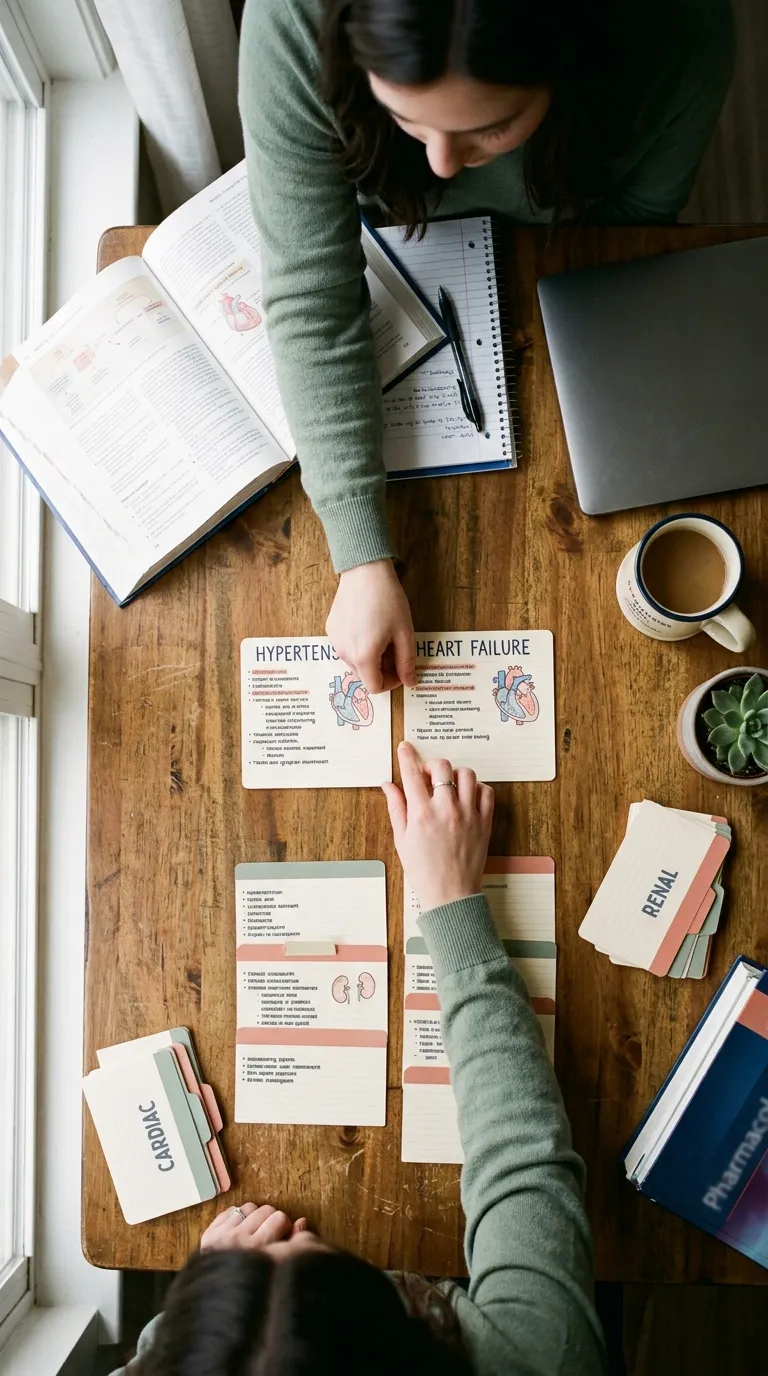
Nursing students often need to distinguish between concepts that share several characteristics. Comparison cards make those differences more visible and can help prevent confusion when similar topics appear together on an exam. They are particularly useful when reviewing conditions, assessment findings, terminology, or medication classes.
For instance, create a card asking you to compare two related conditions. The answer can highlight their main differences, typical findings, and relevant nursing considerations. Focus on the distinctions your course emphasizes rather than trying to include every possible detail.
Add Procedure Sequences
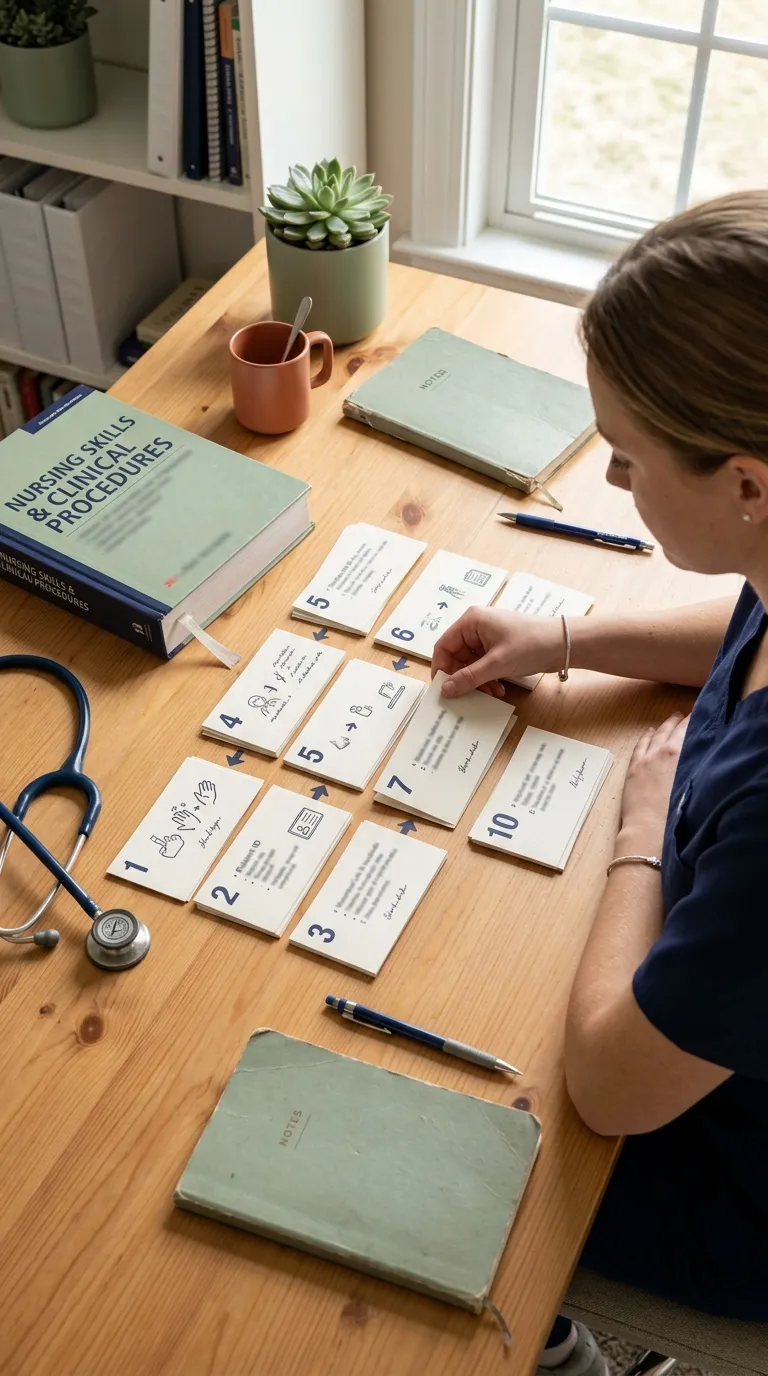
Some nursing skills are easier to remember when the order of actions is clear. Sequential cards allow you to practice the flow of a procedure and notice which steps you consistently forget or place incorrectly. They can also help you review the purpose behind individual steps rather than memorizing a sequence without understanding it.
For a procedure you are studying, divide the process into manageable stages and test yourself on what comes next. Always compare your sequence with the current procedure checklist and your instructor’s guidance. Flashcards are a revision aid, not a replacement for supervised practice or required clinical protocols.
Review Difficult Cards More Often

Reviewing every card equally can waste valuable study time. A better approach is to identify the cards that consistently challenge you and give those concepts additional attention while reducing time spent on material you already understand. This makes your study sessions more targeted and helps you use limited preparation time wisely.
A simple review system can divide cards into three groups:
- Needs practice: You could not recall the answer or made a significant mistake.
- Almost remembered: You recalled the main idea but missed important details.
- Confident: You answered correctly and could explain the concept.
Review the first group more frequently, revisit the second group soon, and schedule occasional checks of the third group to make sure your knowledge remains strong.
Use Reverse Recall

If you always see the question before the answer, you can become familiar with the pattern rather than truly understanding the material. Reverse recall changes the direction of practice and encourages you to retrieve information more flexibly.
For example, after learning a medication’s name and purpose, try recalling the medication when given its class or indication. Similarly, you might see an anatomy structure’s name and recall its function instead of always identifying the structure from an image. Not every card needs to work in both directions, but reverse recall can reveal gaps that ordinary review misses.
Include Mnemonic Cards

Mnemonics can be useful when several details need to be remembered together. The best memory aids are simple and meaningful, giving your brain a quick cue that leads back to the information you actually need. Create cards that show the mnemonic on one side and ask you to explain its meaning on the other.
Do not stop at remembering the letters or phrase. Make sure you can identify what each part represents and understand the underlying concept. Verify mnemonics against your course materials because simplified memory aids may omit exceptions or details that matter in clinical practice.
Make Image-Based Cards

Visual memory can complement written recall, especially for subjects involving structures, processes, and relationships. A simple diagram can turn a complicated page of information into a focused recognition and recall exercise. You might use labeled and unlabeled anatomy illustrations, diagrams of physiological processes, or simplified visual summaries.
Cover the labels before reviewing the image and try to explain what you see without checking the answer immediately. You can also combine a picture with one short question about its clinical or educational significance. Keep the visual information clear and avoid adding unnecessary details that distract from the learning objective.
Sort Cards By Subject

A large flashcard collection becomes much easier to manage when it has a clear organization system. Sorting by subject lets you target specific areas while studying, while occasionally mixing the cards can test whether your knowledge works outside its original category.
You might create separate groups for pharmacology, anatomy, fundamentals, assessment, and laboratory concepts. Digital flashcard apps can help you tag cards and search for specific topics, while paper cards can be organized with labeled dividers. Start with a system you can maintain easily rather than creating too many folders or categories.
Study Cards Away From Your Desk

Flashcards are convenient because they can turn small pockets of time into short retrieval sessions. You do not need to carry hundreds of cards; a small selection of challenging concepts can be enough for a useful review. Consider using a few minutes between scheduled activities or during a planned study break.
Choose a safe, appropriate place where you can concentrate without distraction. Avoid reviewing cards while driving, crossing streets, or performing patient-care responsibilities. Short sessions can reinforce previous learning, but protect longer study periods for complex topics that require deeper understanding and practice questions.
Retire Cards You Master

Once you can answer a card correctly and explain the concept confidently over several review sessions, move it into a mastered pile instead of repeatedly studying it at the same frequency. This creates more room for difficult material and makes your study routine more efficient. However, mastering a card once does not guarantee permanent recall.
Keep mastered cards available for occasional review, especially before examinations. If you forget an answer later, return the card to your active practice group. This flexible system allows your flashcard collection to change as your knowledge improves instead of growing into an overwhelming stack.
Final Thoughts
Nursing school requires more than memorizing large amounts of information. You also need to recognize patterns, connect concepts, and apply what you know to patient situations. Use focused flashcards, scenario-based questions, visual cues, medication reminders, and comparison cards to make your review sessions more effective.
Most importantly, keep improving your cards based on what you actually struggle to remember. Combine flashcard practice with course notes, practice questions, instructor feedback, and supervised clinical learning. When used consistently, these Nursing Flashcards Ideas can turn scattered information into manageable study sessions and help you approach nursing exams with greater confidence.