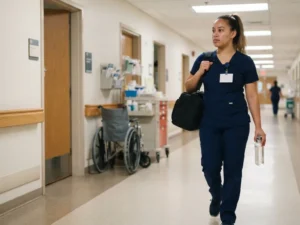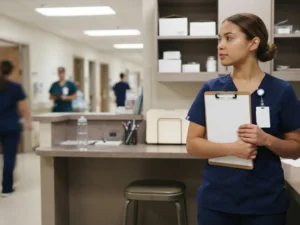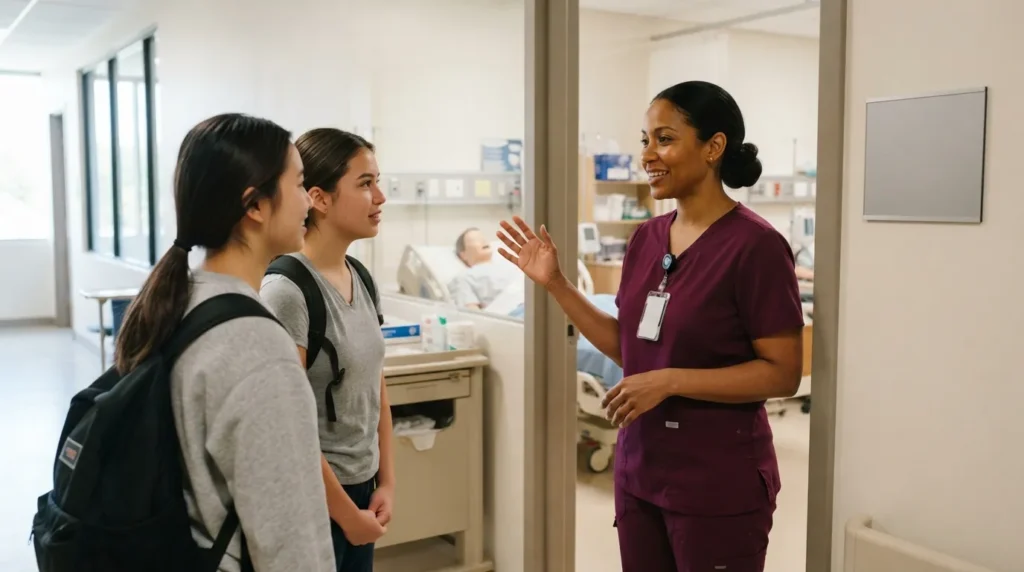

Many new students walk in expecting lectures, note-taking and a first real nursing lesson, and that is the most common mistake about the first day of nursing school. Day one is orientation, not class: paperwork, rules, tours and a long list of dates. These 15 things show exactly what fills the day, so nothing on it catches you off guard.
Read the list the night before, then use it as a running checklist while the day unfolds. By the last item you will know what to bring tomorrow, which deadlines land first, and why the program repeats its rules so often on day one.
An Early Start and a Crowded Sign-In Table

Programs usually ask students to arrive 30 to 45 minutes before the welcome session, and the sign-in table is where the day officially starts. You will sign an attendance sheet, pick up a name tent and a folder of forms, and get pointed toward your assigned seat. The line moves slowly because every student ahead of you has the same questions about lockers, badges and parking.
Study tip: Screenshot your cohort’s meeting room and reporting time the night before, so a dead phone battery never makes you late on day one.
A Welcome Talk From the Program Director

Who speaks: the program director and lead faculty · What it covers: program goals, pass rates and expectations · How long: about 30 to 45 minutes · Your job: listen for the standards every later rule hangs on
The welcome talk sounds ceremonial, but it quietly sets the tone for the whole program. Directors usually name the graduation and NCLEX pass rates the school must protect, explain that nursing school runs on professional standards, and warn that the pace is faster than general education classes. Write down any number or date mentioned twice, because repeated points become policy later.
A Mountain of Paperwork and Portal Logins

Expect a thick folder or a long online checklist: emergency contacts, health records, immunization proof, background check forms, drug screening consent and handbook acknowledgments. You will also activate student email, the learning management system and the testing platform, often with an IT staff member walking the room. Most forms are due within the first week, not on day one itself.
Study tip: Keep one folder, paper or digital, named with the due date of every form, and check items off as each office confirms receipt.
Syllabi That Spell Out Exactly How You Pass

What you get: one syllabus per course · Inside: grading scale, exam weights and absence rules · Watch for: minimum passing grades, often 77 to 80 percent · Keep: every syllabus all term
A nursing syllabus is a contract, not a rough outline. It lists how each exam, quiz and assignment counts, what happens after a failed test, and which average you must hold to stay in the program. Read the grading page first, then the calendar. When the med surg semester arrives, these med surg survival tips build directly on the habits this first stack of syllabi demands.
Attendance and Dress Code Rules With No Wiggle Room
Nursing programs run attendance like a job. One missed clinical day can mean a makeup shift, a written warning or removal from the course, and the exact count is spelled out on day one. Dress codes are just as specific: scrub color, shoe type, nail length, jewelry limits and hair rules for clinical sites.
Study tip: Photograph the dress code page of your handbook and keep it beside your scrub drawer until getting ready takes no thought at all.
Study tip: Turn the first week’s deadlines into one dated list tonight. Day one hands you more dates than facts, and the students who write them down once rarely scramble later.
Meeting Your Clinical and Lab Instructors
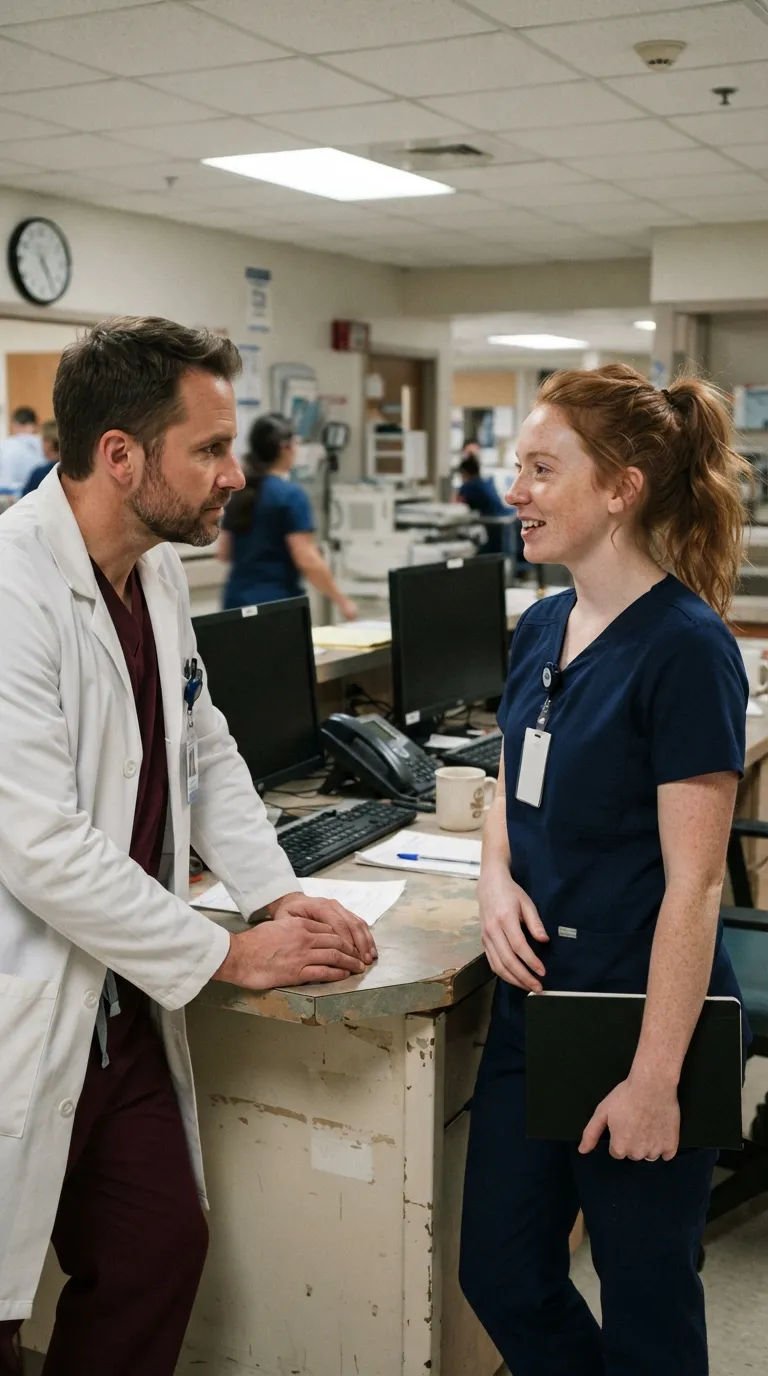
Who they are: the faculty who grade your skills and clinical days · First contact: short introductions and office hours · What they watch: safe habits, preparation and honest questions · Remember: these instructors write many recommendation letters later
Introductions feel brief, but first impressions in nursing school are sticky. Instructors notice who arrives prepared, who asks clear questions and who admits a mistake early. Learn each instructor’s name, course and office hours today, and note how each one prefers to be contacted, because those details save real stress during your first skills check-off.
A Tour of Skills Labs and Simulation Rooms
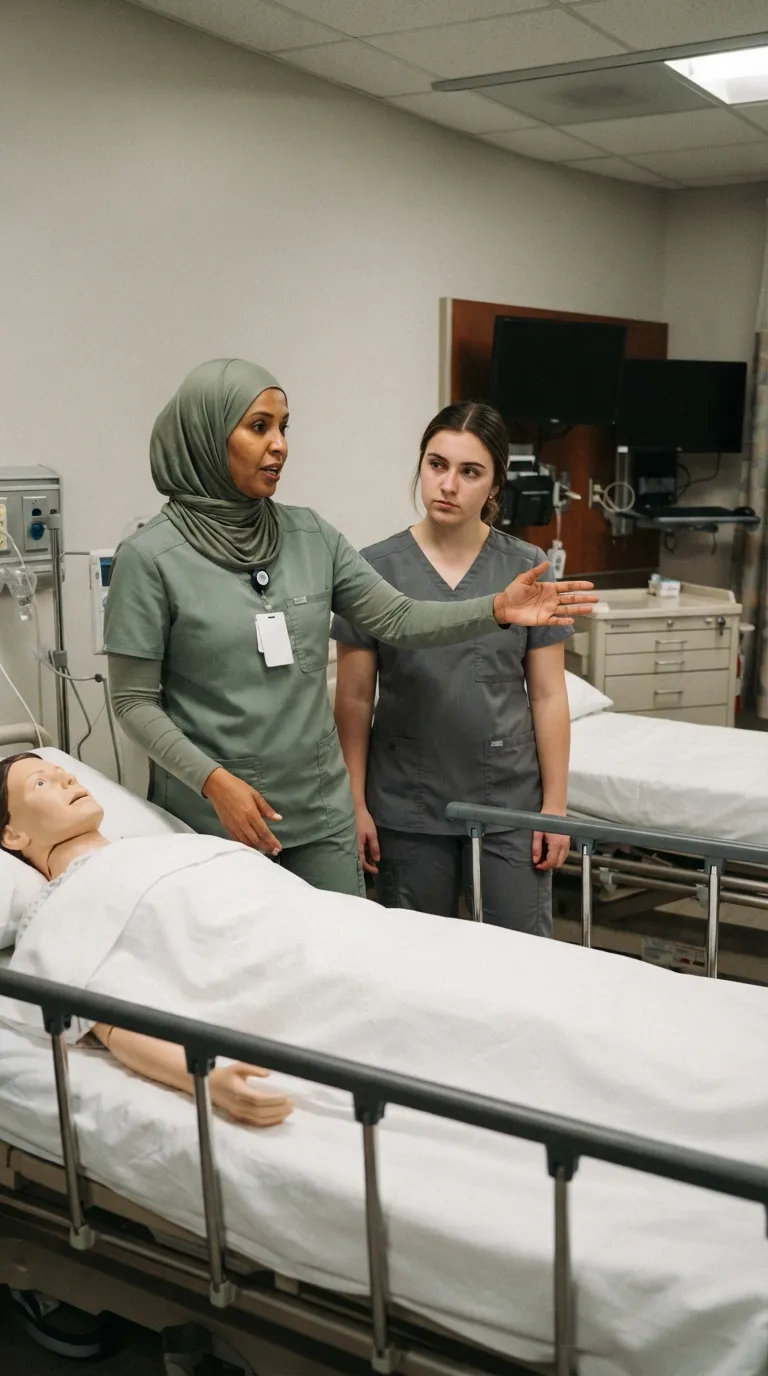
Most programs walk the new cohort through the skills lab and simulation rooms on day one. You will see hospital beds, manikins that breathe and talk, medication carts and the supply room where check-off equipment lives. Instructors point out sign-up sheets for open lab practice, because those practice hours fill fast before the first skills exam. You may also see the debrief room where classes review simulation scenarios afterward.
Study tip: Note which lab rooms allow drop-in practice and their hours; early bookings beat the pre-exam rush every single term.
ID Badges, Parking Passes and Handbook Errands
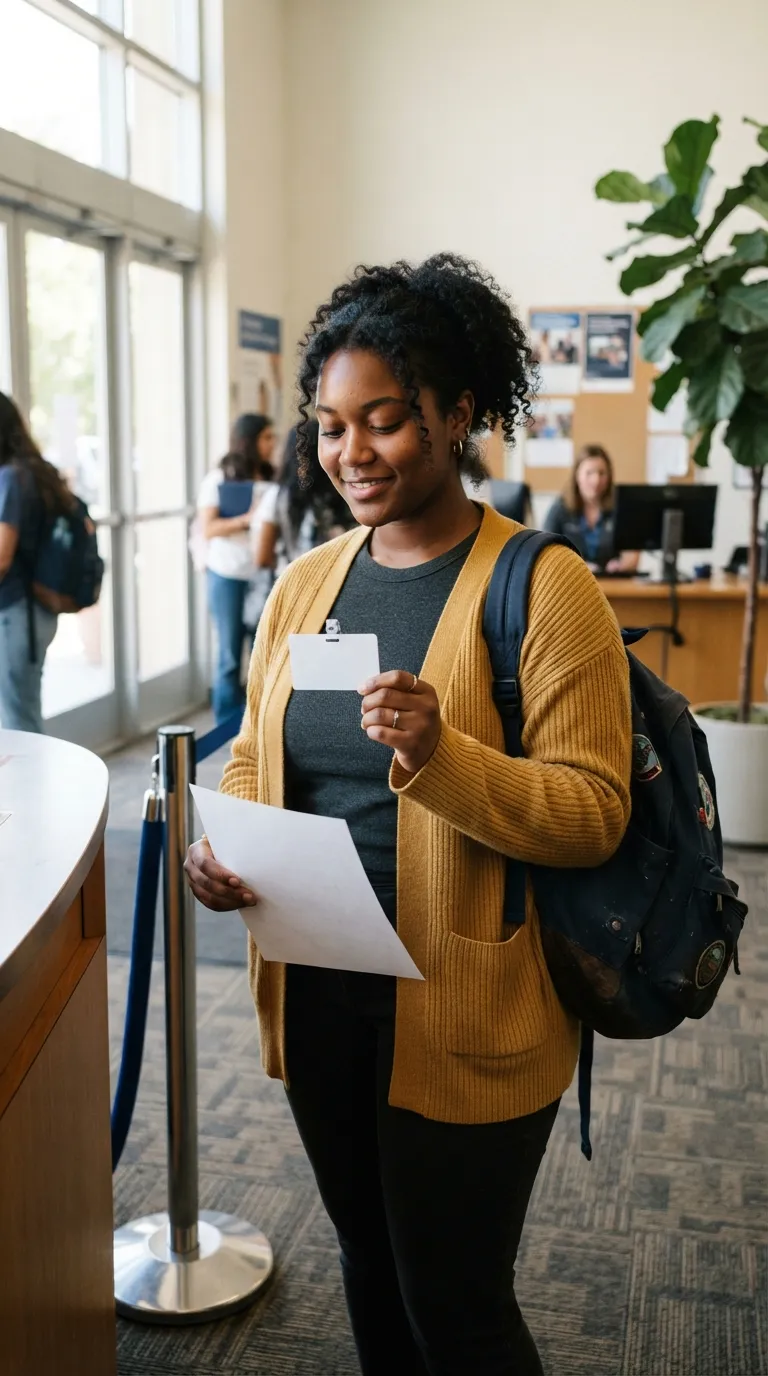
Stops: student ID office, parking services, bookstore or uniform desk · Bring: photo ID, course schedule and payment method · Why it matters: clinical sites require a visible school badge · Time: lines are longest on day one
The errand run is part of the real first day. Badges are printed, parking permits are sold, handbooks are handed out and lockers are assigned in quick stops between sessions. Finish every stop you can today, even in a long line, because offices are calmer now than they will be once classes and clinicals begin.
Technology Checks for Email, the LMS and Testing Apps

Programs test the technology on day one because every later deadline depends on it. You will log in to student email, open the learning management system, install the testing app and try a practice quiz on your own laptop. If a login fails, say so in the room. Quiet problems on day one become missed quizzes in week three, and simple fixes like these nursing school hacks start with accounts that actually work.
Study tip: Save every login in one password manager tonight, and test each account once more from home before the first assignment opens.
A Cohort That Starts Feeling Like Family by Lunch
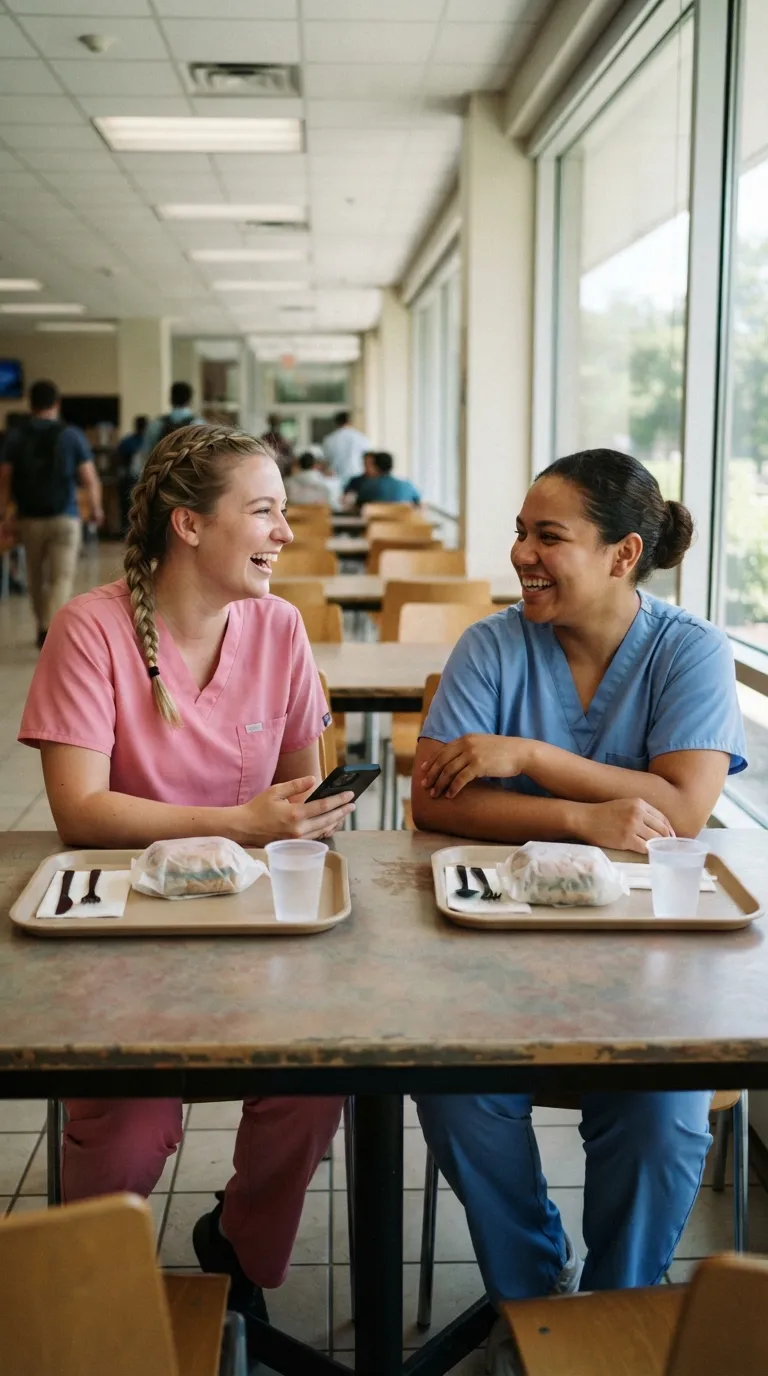
Who: 20 to 60 students who share every class with you · Shared ground: same fears, same schedule, same exams · First bonds: seating neighbors, lab partners and lunch tables · Why it matters: this group carries each other through the program
Lunch on day one feels different from the morning. The strangers from sign-in now trade phone numbers, compare commutes and laugh about the same confusing forms. Programs group students into cohorts on purpose: the people beside you become study partners, clinical carpoolers and the first call after a hard exam. Learn a few names today on purpose.
A First Look at How Clinical Placements Work
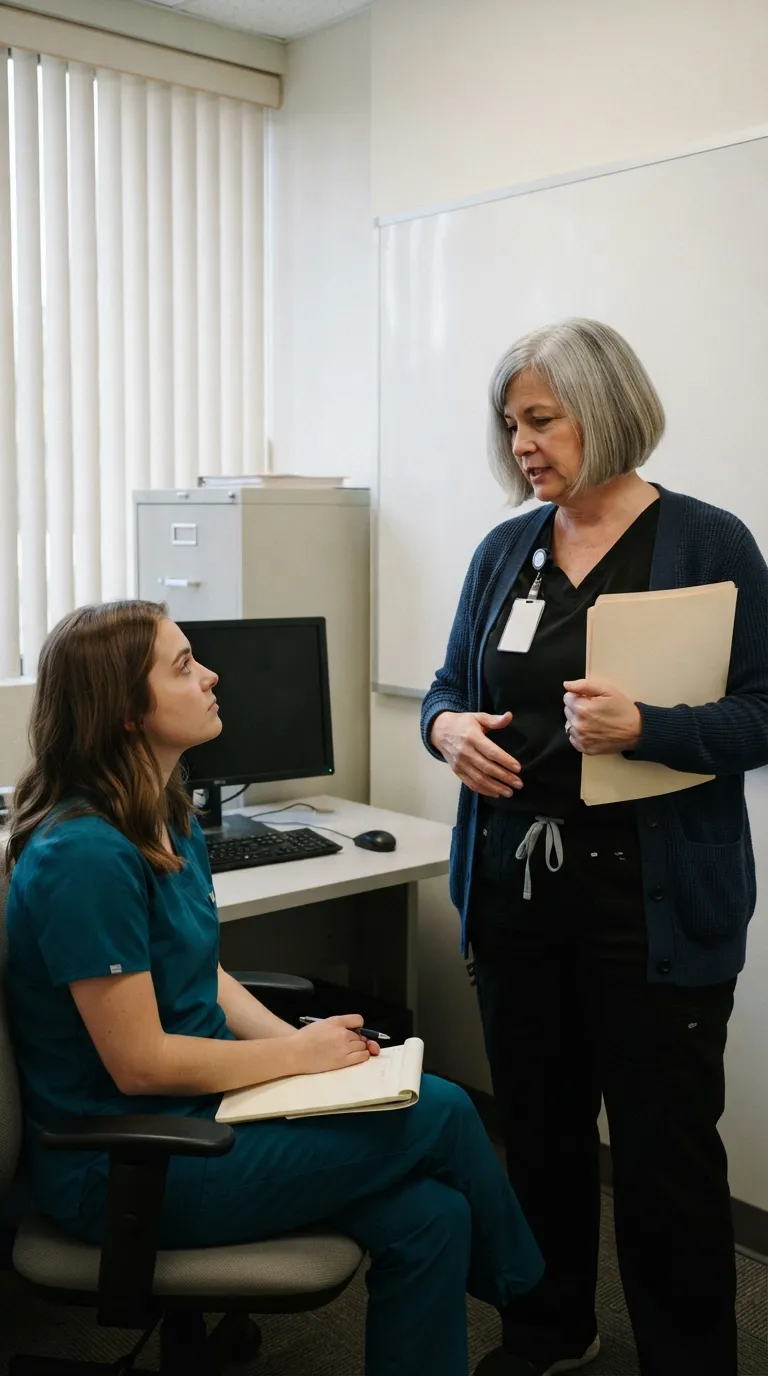
Clinical coordinators usually explain placements early, even when the first hospital day is weeks away. Hospitals require health clearances, background checks and specific paperwork before any student walks a unit, and deadlines are strict because sites set them, not the school. You may also hear how groups are assigned and why requests for a favorite hospital are rarely granted. Sites can sit across the city, so travel time becomes part of the planning too.
Study tip: Start a clinical documents checklist tonight with every clearance, vaccine record and deadline in one place.
Textbook and Supply Lists Longer Than Expected

The list: textbooks, a stethoscope, penlight, bandage scissors and a clinical bag · Big costs: books and testing packages, often several hundred dollars · Required vs optional: faculty mark the difference · Wait on: used-book sales and upperclassmen hand-me-downs
The supply list surprises almost everyone. Separate the required items from the nice extras before spending anything, and ask which books the library holds on reserve. Many students build their kit from these nursing school must haves over the first two weeks instead of buying everything on day one, when prices and lines are at their worst.
Lockers, Scrub Fittings and Uniform Pickups
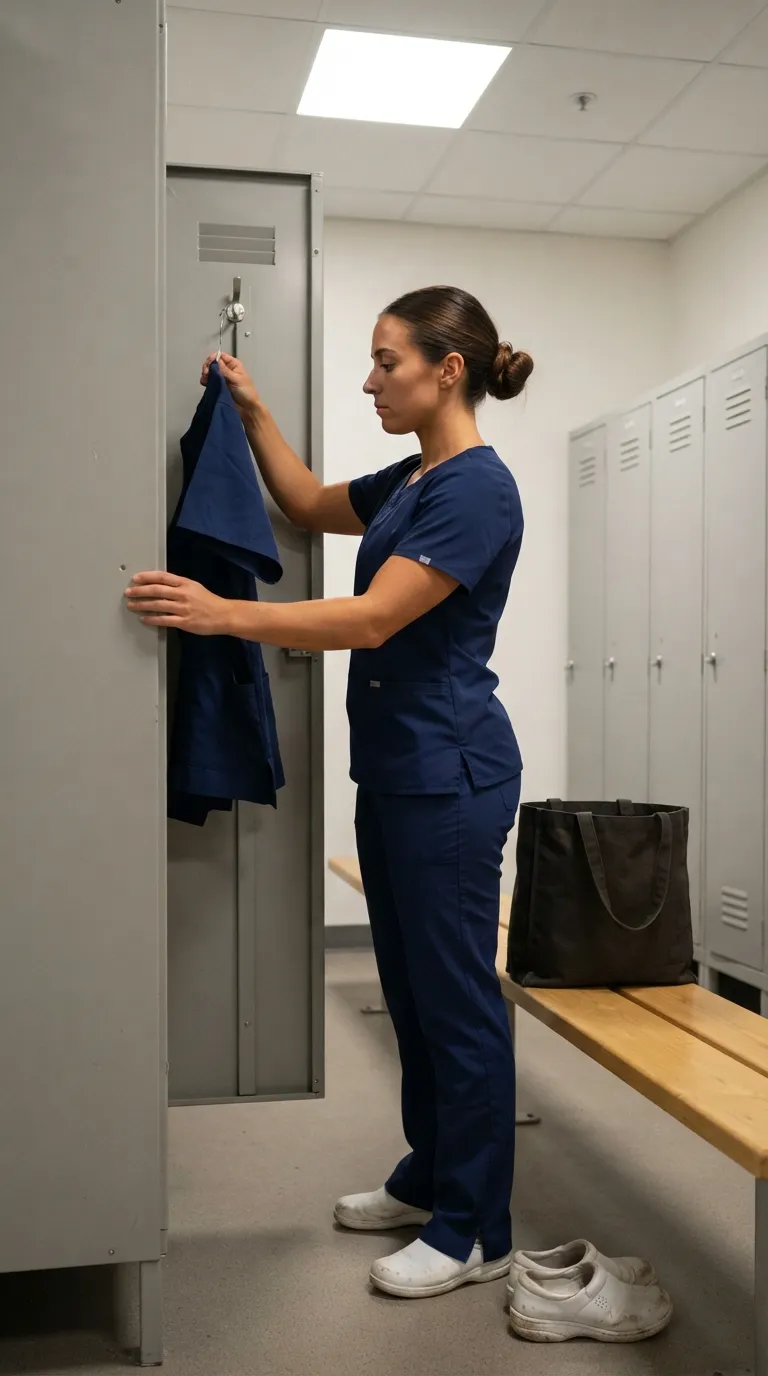
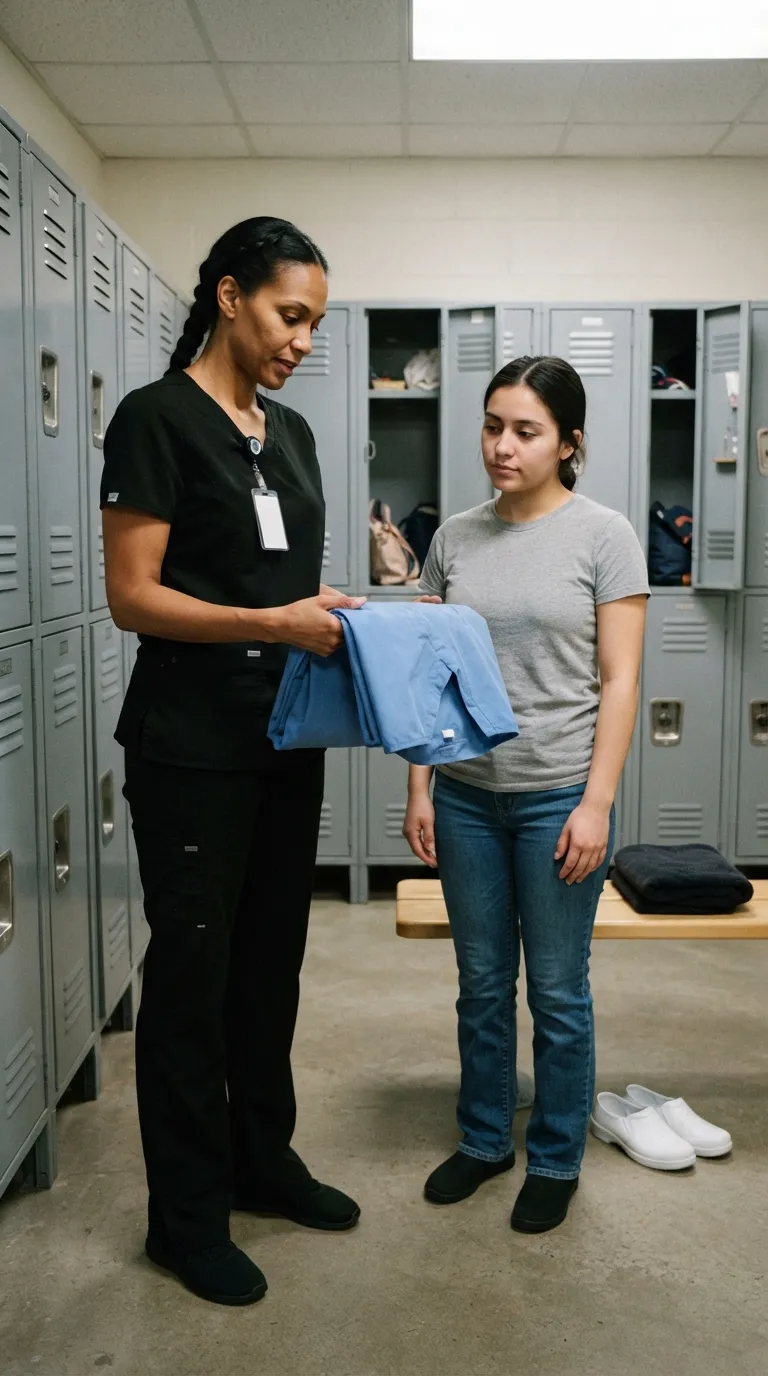
Somewhere in the day comes the uniform shuffle: trying on scrub tops, checking sizes, picking up lab coats or polo shirts and finding your locker. Programs are strict about fit and appearance at clinical sites, so exchanges happen now rather than later. Try everything on before you leave, including shoes with your clinical socks.
Study tip: Label every uniform piece with your name inside the collar tonight; identical scrubs get mixed up in every locker room.
A Serious Talk About Professionalism and Phones

Topics: phone rules, social media bans and patient privacy · The law behind it: HIPAA protects every patient detail · Hard lines: no photos in clinical areas, ever · Tone: respectful, punctual and honest, in class and online
This talk lands heavily because the stakes are legal, not just polite. One photo, one story with a recognizable detail, one post about a clinical day can end a student’s place in the program. Faculty explain what counts as a violation before anyone reaches a patient, and they expect the rules to hold from the very first week.
Ending the Day Tired, Wired and Full of Dates
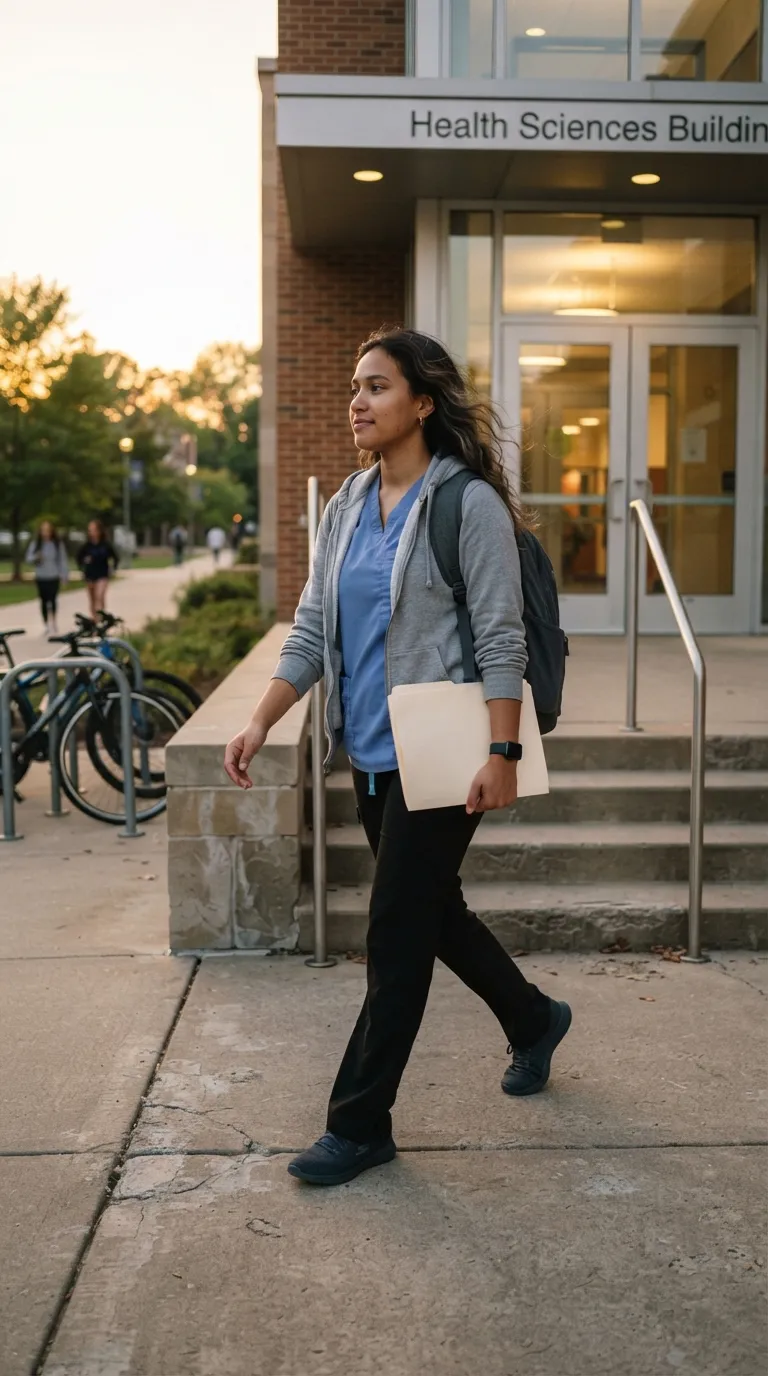
By the final session your folder holds syllabi, forms, login details and a calendar already filling up. Most students leave tired and oddly energized, with a head full of names and deadlines. That mix is normal. The day was not teaching; it was the map of everything teaching will demand, handed over all at once.
Study tip: Tonight, move every date into one calendar and lay out tomorrow’s bag; these nursing study planner printables turn the paper pile into a plan you can follow.
Quick Questions
What should you wear if uniforms are not issued yet?
Wear clean, professional clothes that follow the handbook: closed-toe shoes, no jeans with rips, nothing with large logos. Most programs say business casual until scrubs arrive. When in doubt, match what the handbook photo shows, and keep a spare outfit in your car for spills.
Should you buy every textbook before the first day?
No. Wait until each instructor confirms which edition and which chapters the course actually uses. Some listed books sit in the library on reserve, and upperclassmen sell used copies cheap in the first two weeks. Buy the required testing package first; it is the one item courses use from week one.
What if you already feel behind on day one?
You are not behind; day one is information, not instruction. Almost everyone leaves with the same long list and the same worries. Write every deadline down tonight, finish the forms due this week, and let the first real class set your study pace. Feeling lost on day one is the normal starting point.
Which Idea Is Your Favorite?
You do not have to love every part of day one. Some students light up at the lab tour, others at meeting the cohort, and some only relax once the paperwork is done. What matters is knowing which moments are coming, so the day feels like a plan instead of a pile-up. The surprises left are the good kind: a kind instructor, a friendly seatmate, a lab that feels exciting instead of scary.
Start small tonight: finish the forms due this week, set up your accounts, and sketch the routine you will test first, the way a simple nursing student study routine turns busy days into a pattern. Which of these 15 moments are you most curious, or most nervous, to meet first?