

The last three or four letters of a generic drug name usually give away its entire class. That single fact turns pharmacology drug suffixes into a shortcut: read the ending, and the drug’s job, its example and its main warning come with it. This sheet covers 25 endings worth knowing.
The endings are grouped the way med lists group them: heart, infection, brain and stomach, blood and sugar, then breathing. Learn one group at a time, and keep the full drug classes nursing cheat sheet open beside this one while you drill.
Quick Reference

| Suffix | Drug class | Example | Watch for |
|---|---|---|---|
| -pril | ACE inhibitors | Lisinopril | Dry cough; potassium climbs |
| -sartan | ARBs | Losartan | Potassium and kidney labs |
| -olol | Beta blockers | Metoprolol | Check pulse before giving |
| -dipine | Calcium channel blockers | Amlodipine | Swollen ankles |
| -statin | Cholesterol-lowering drugs | Atorvastatin | New muscle pain |
| -cillin | Penicillins | Amoxicillin | Allergy history first |
| -cycline | Tetracyclines | Doxycycline | Sun sensitivity |
| -floxacin | Fluoroquinolones | Levofloxacin | Tendon pain |
| -mycin | Macrolides | Azithromycin | Gentamicin is the exception |
| -azole | Antifungals | Fluconazole | Many interactions |
| -prazole | Proton pump inhibitors | Omeprazole | Low magnesium over time |
| -setron | Antiemetics | Ondansetron | QT interval |
| -pam and -lam | Benzodiazepines | Diazepam | Sedation and falls |
| -triptan | Migraine drugs | Sumatriptan | Chest pressure |
| -dronate | Bisphosphonates | Alendronate | Stay upright 30 minutes |
| -parin | Heparin family | Enoxaparin | Bleeding signs |
| -gliptin | DPP-4 inhibitors | Sitagliptin | Unusual joint pain |
| -glitazone | Thiazolidinediones | Pioglitazone | Weight gain and swelling |
| -glutide | GLP-1 agonists | Semaglutide | Nausea; stomach pain |
| -sone and -olone | Corticosteroids | Prednisone | Blood sugar climbs |
| -terol | Beta-2 agonists | Albuterol | Shaky hands, fast pulse |
| -lukast | Leukotriene blockers | Montelukast | Mood changes |
| -tidine | H2 blockers | Famotidine | Fewer interactions |
| -vir | Antivirals | Acyclovir | Hydration for kidneys |
| -caine | Local anesthetics | Lidocaine | Allergy asked first |
Heart and Blood Pressure Endings

-pril: ACE Inhibitors
A generic name ending in -pril marks an ACE inhibitor, one of the most tested blood pressure families, and lisinopril is the example that turns up everywhere. For a second check on any generic, the MedlinePlus drug information pages list it by name.
- Example: lisinopril, the name exams reach for first
- Watch: a dry, nagging cough is the classic complaint
- Labs: potassium can climb, so kidney labs are checked
- Emergency: lip or tongue swelling (angioedema) needs urgent action
-sartan: ARBs
The -sartan drugs block the same hormone system one step later, so they sit in the same blood pressure conversations as the -prils. Losartan is the standard example, and it is often the class patients switch to when a -pril cough will not quit.
- Example: losartan, the standard ARB name
- Class link: works on the same system as ACE inhibitors
- Watch: potassium and kidney labs get the same attention
- Remember: far less cough, the usual reason for switching
-olol: Beta Blockers
Names ending in -olol are beta blockers, and metoprolol is the one students meet first. The class slows the heart and lowers its workload, which is why the pulse check comes before the dose in every skills checkoff.
- Example: metoprolol, the first beta blocker students meet
- Before giving: check pulse and blood pressure first
- Watch: can hide the shaky signs of low blood sugar
- Remember: never stopped suddenly after long use
-dipine: Calcium Channel Blockers
The -dipine endings belong to calcium channel blockers that relax blood vessel walls, and amlodipine is the everyday example. Because they act mainly on the vessels, their side effects look different from the -olol family.
- Example: amlodipine, the everyday vessel relaxer
- How it works: relaxes vessel walls so pressure falls
- Watch: swollen ankles are the top complaint
- Also common: headache and flushing early on
-statin: Cholesterol-Lowering Drugs
A -statin ending means the drug lowers cholesterol production in the liver, and atorvastatin is the name on most med lists. The whole class shares one ending and one main job, which makes it an easy quiz win.
- Example: atorvastatin, seen on most med lists
- Watch: new muscle pain gets reported, not ignored
- Labs: liver tests are checked on this class
- Food note: grapefruit clashes with some statins
Infection-Fighting Endings

-cillin: Penicillins
The -cillin family is the penicillins, the oldest antibiotic group still in daily use, with amoxicillin in nearly every textbook. The ending is easy to spot; the allergy question attached to it is what exams really test.
- Example: amoxicillin, the textbook penicillin
- First check: allergy history before the first dose, every time
- Watch: rash or breathing trouble after a dose is reported fast
- Remember: one -cillin allergy questions the whole family
-cycline: Tetracyclines
Tetracyclines carry the -cycline ending, and doxycycline is the member students see most. The class has very testable habits: sun rules, stomach rules and timing rules that separate it from the other antibiotic families.
- Example: doxycycline, the member seen most
- Watch: skin burns faster in the sun
- Timing: keep apart from antacids and dairy
- Remember: stains growing teeth, so avoided in young children
-floxacin: Fluoroquinolones
A -floxacin name means a fluoroquinolone, a strong antibiotic family that includes levofloxacin. These drugs carry boxed warnings, so they are saved for infections where their strength is actually needed, not used as a first reach.
- Example: levofloxacin, a heavy-duty antibiotic
- Red flag: new tendon pain is reported the same day
- Watch: boxed warnings cover tendons, nerves and mood
-mycin: Macrolides
Most -mycin names on an exam are macrolides such as azithromycin, but this ending hides a trap. Gentamicin sounds like family and is not: it is an aminoglycoside, a different class with different monitoring. The ending starts the search; it never finishes it.
- Example: azithromycin, a macrolide
- Watch: stomach upset is the common complaint
- Pattern break: gentamicin is an aminoglycoside, not a macrolide
- Remember: trust the class list over the ending
-azole: Antifungals
Drugs ending in -azole fight fungal infections, and fluconazole appears in most case studies. The class is known less for side effects than for how often it changes the levels of other drugs on the same chart.
- Example: fluconazole, the case-study favorite
- Watch: liver tests matter on longer courses
- Interactions: changes the levels of many other drugs
- Remember: check the med list for clashes first
NCLEX tip: Suffix questions reward one habit: read the finding in the stem first, then choose the ending that owns it. Tendon pain points to a -floxacin; a dry nagging cough points to a -pril.
Brain, Pain and Stomach Endings

-prazole: Proton Pump Inhibitors
The -prazole drugs are proton pump inhibitors, and omeprazole is the name everyone knows. They shut down acid production at the pump itself, which makes them stronger and longer acting than the older -tidine blockers.
- Example: omeprazole, the name everyone knows
- Timing: taken before meals, as the pumps wake up
- Watch: long courses tie to low magnesium and B12
-setron: Antiemetics
A -setron ending marks the anti-nausea drugs built for chemotherapy and post-surgery sickness, and ondansetron is the example in almost every skills lab. The class blocks serotonin in the gut and in the brain’s vomiting center.
- Example: ondansetron, the skills-lab standard
- Watch: the QT interval sits on the monitoring list
- Common: headache and constipation after a dose
- Remember: the strongest anti-nausea family here
-pam and -lam: Benzodiazepines
Benzodiazepines end in -pam or -lam, and diazepam and alprazolam are the pair to learn first. They calm anxiety and stop seizures, and their sedation drives most of their safety rules. Their reversal agent sits with the drug antidotes every student should know.
- Examples: diazepam (-pam) and alprazolam (-lam)
- Watch: sedation and unsteady walking raise fall risk
- Antidote: flumazenil reverses this class
- Remember: two endings, one family
-triptan: Migraine Drugs
The -triptan drugs were built for migraine attacks, not everyday headaches, and sumatriptan is the class example. They narrow the swollen vessels around the brain and quiet the pain signals that drive an attack.
- Example: sumatriptan, the class standard
- Watch: chest pressure after a dose gets reported
- Interaction: with SSRI antidepressants, serotonin syndrome is the risk
-dronate: Bisphosphonates
Bisphosphonates end in -dronate, and alendronate is the standard example. These drugs slow the bone breakdown behind osteoporosis, and their teaching points are famous because the routine around the dose protects the esophagus.
- Example: alendronate
- Routine: full glass of plain water, empty stomach
- After: stay upright for 30 minutes
- Watch: new swallowing pain gets reported
Blood, Sugar and Hormone Endings
-parin: The Heparin Family
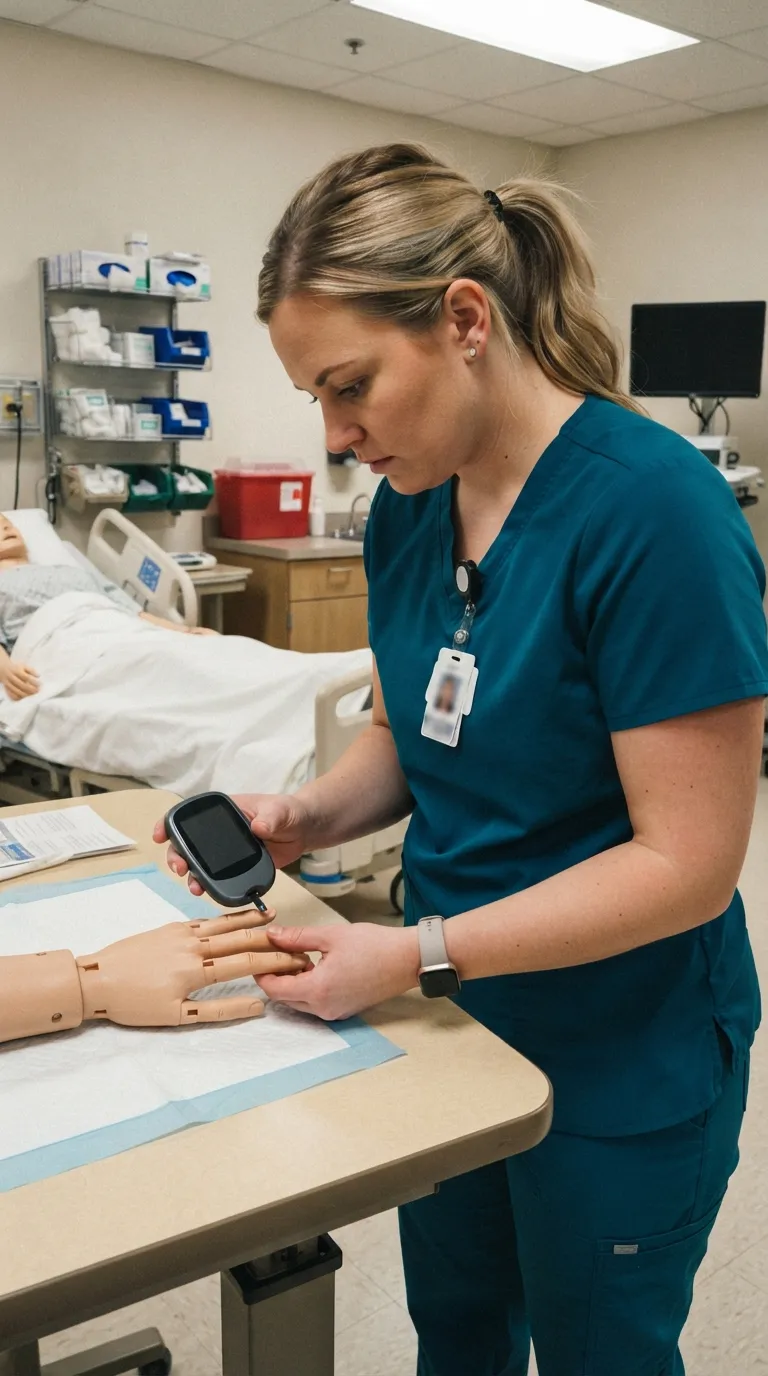
Names with -parin inside them belong to the heparin family: heparin itself and enoxaparin, its low-weight relative. Both thin the blood to prevent clots, and both sit inside the bigger map in the drug classifications nursing notes.
- Examples: heparin and enoxaparin
- Watch: bleeding signs, from gum bleeds to dark stools
- Labs: platelet counts matter; a sharp drop can mean HIT
- Remember: the pattern hides mid-name here
Red flag: On any -parin drug, new bleeding that will not stop, a sudden severe headache or a fast-falling platelet count means urgent action and a call to the provider.
-gliptin: DPP-4 Inhibitors
The -gliptin drugs are oral diabetes medicines, and sitagliptin is the name to know. They help the body release insulin only when blood sugar is up, which is why they rarely cause low blood sugar on their own.
- Example: sitagliptin
- Class: DPP-4 inhibitors, taken by mouth
- Watch: unusual joint pain gets reported
- Remember: low blood sugar is rare on this drug alone
-glitazone: Thiazolidinediones
Thiazolidinediones end in -glitazone, and pioglitazone is the example still in use. These diabetes drugs make body tissues more sensitive to insulin instead of pushing the pancreas to produce more of it.
- Example: pioglitazone
- Watch: weight gain and swelling build slowly
- Caution: fluid retention fits poorly with heart failure
- Remember: raises insulin sensitivity, not insulin supply
-glutide: GLP-1 Agonists
The -glutide ending marks the GLP-1 agonists, and semaglutide is the name in every headline. These drugs slow the stomach and raise insulin release when sugar is high, so the early side effects are mostly digestive.
- Example: semaglutide
- Watch: nausea and heavy fullness early on
- Red flag: severe stomach pain spreading to the back
- Remember: a slowed stomach drives benefit and side effects
-sone and -olone: Corticosteroids
Corticosteroids hide behind two endings: prednisone carries -sone and prednisolone carries -olone. They copy the body’s own cortisol to calm inflammation, and students who pair suffix drills with pharmacology mnemonics tend to keep this family straight.
- Examples: prednisone and prednisolone
- Watch: blood sugar climbs while the class runs
- Masking: fever and infection signs can be hidden
- Remember: taper after long use, never stop suddenly
Breathing, Allergy and Numbing Endings
-terol: Beta-2 Agonists
Inhalers ending in -terol are beta-2 agonists, and albuterol is the rescue inhaler in every clinical bag. The class opens the airways within minutes, which is why it is the first reach in an asthma flare.
- Example: albuterol, the rescue inhaler
- Role: opens airways within minutes during a flare
- Expected: shaky hands and a racing pulse afterward
-lukast: Leukotriene Blockers
Leukotriene blockers end in -lukast, and montelukast is the one name in the class students need. It blocks chemicals that tighten airways and swell their lining, and it comes as a daily tablet, not an inhaler.
- Example: montelukast
- Timing: one tablet in the evening is the usual pattern
- Watch: boxed warning for mood and behavior changes
- Remember: a daily controller, never a rescue drug
-tidine: H2 Blockers
The -tidine drugs are H2 blockers that cut stomach acid, and famotidine is the modern example. The class works more gently than the -prazole pumps, and famotidine is picked often because it stays out of other drugs’ way.
- Example: famotidine
- How it works: blocks the histamine signal for acid
- Watch: fewer interactions than cimetidine, the older member
- Remember: acid down a notch, not switched off
-vir: Antivirals
An ending of -vir signals an antiviral, and acyclovir is the example used for herpes and shingles. Antivirals do not wipe a virus out; they slow its copying so the immune system can catch up.
- Example: acyclovir, for herpes and shingles
- Timing: works best when started early
- Watch: hydration protects the kidneys during treatment
-caine: Local Anesthetics
Local anesthetics end in -caine, and lidocaine is the name on every procedure tray. The class blocks pain signals in one small area instead of putting the whole body to sleep, so it shows up in suturing, dental work and epidurals.
- Example: lidocaine, on every procedure tray
- Before: a -caine allergy is asked about before procedures
- Watch: numbness stays local; whole-body symptoms get reported
Quick Questions
Do drug suffixes work for brand names too?
No. Suffixes live in the generic name, which is why exams and charts use generics. A brand name is marketing and can end in anything. When a med list shows a brand, find the generic name first, then read its ending to place the drug in its class.
What if a name matches no ending on this sheet?
Treat the ending as a starting hint, not the answer. Some families hide the pattern mid-name, like the -parin drugs, and a few drugs break the rules entirely. Check the class in a drug guide, then file the exception next to the suffix it almost matched.
Which suffixes should be learned first for the NCLEX?
Start with the classes that drive priority questions: -pril, -olol, -parin, -pam and -lam, and -floxacin. Each carries a check or a warning the exam loves to test, from pulse checks to bleeding signs. Add the diabetes endings next, then the rest of the sheet.
Which Drug Will You Review First?
Twenty-five endings is a lot for one sitting, so start where your weak spot is: the blood pressure families if med cards blur together, or the infection endings if antibiotic questions keep tripping you.
Then pick one real drug and read it end to end, the way the oxytocin nursing drug notes break a single drug down to its suffix, class and watch-fors. Which drug on your next med list will you decode first?
For study use only. Always follow your program, your facility’s policy and current drug and lab references.