
Long days move fast in nursing school, from a morning lecture to a skills lab and then a clinical unit, often with little time in between to shop or pack. This post gathers 14 nursing school survival kit ideas that cover class, clinicals and long shifts, with a clear reason for each item and a simple way to use it.
Use the list like a packing guide. Start with the items needed on the first clinical day, add the study items next, and keep the whole kit in one bag so nothing gets left behind on a busy morning.
Quality Stethoscope (Clinical Pearl)
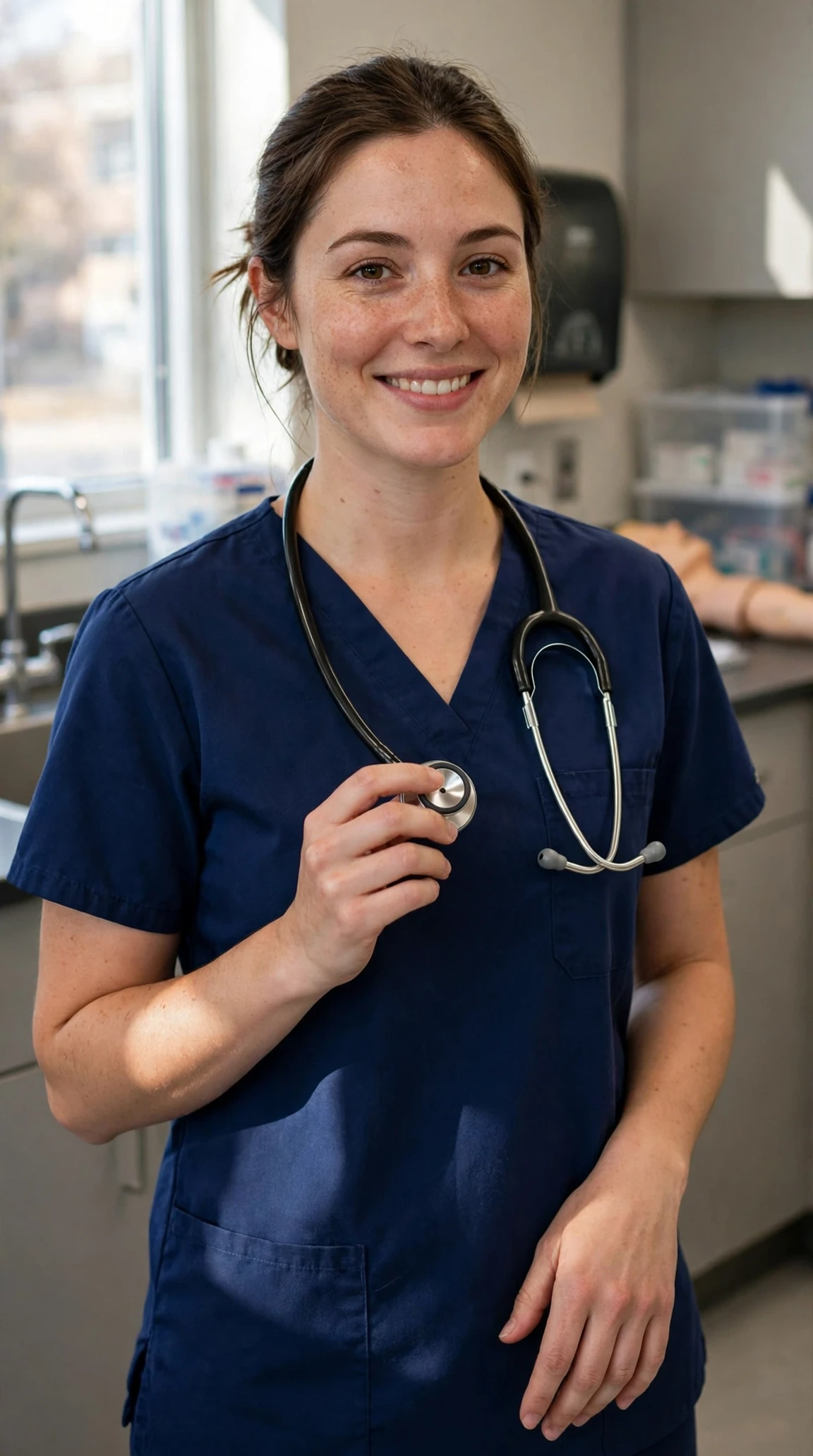
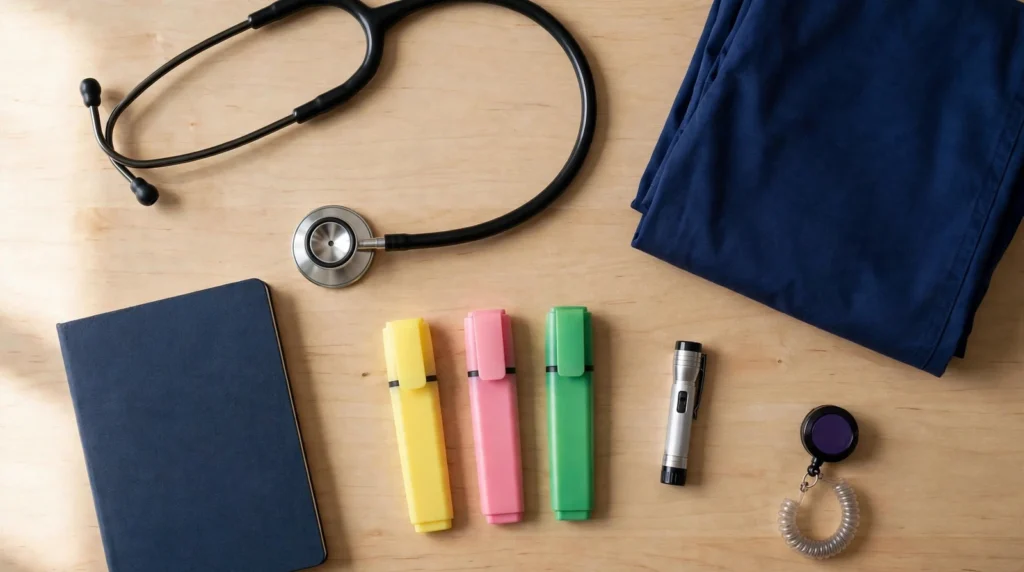
A stethoscope is the tool used most often in clinicals, from listening to heart sounds in a skills lab to checking a blood pressure on a unit. A model with clear sound and a comfortable fit helps a student hear subtle sounds without strain, and a shorter tube keeps the chest piece close during a busy assessment.
- Sound: Listen for clear heart and lung sounds in a quiet room first.
- Fit: Wear earpieces pointing forward so sound travels cleanly.
- Care: Wipe the chest piece and tubing after each clinical day.
- Storage: Keep it in a case so tubing stays straight and safe.
Comfortable Clinical Shoes (Fundamentals)
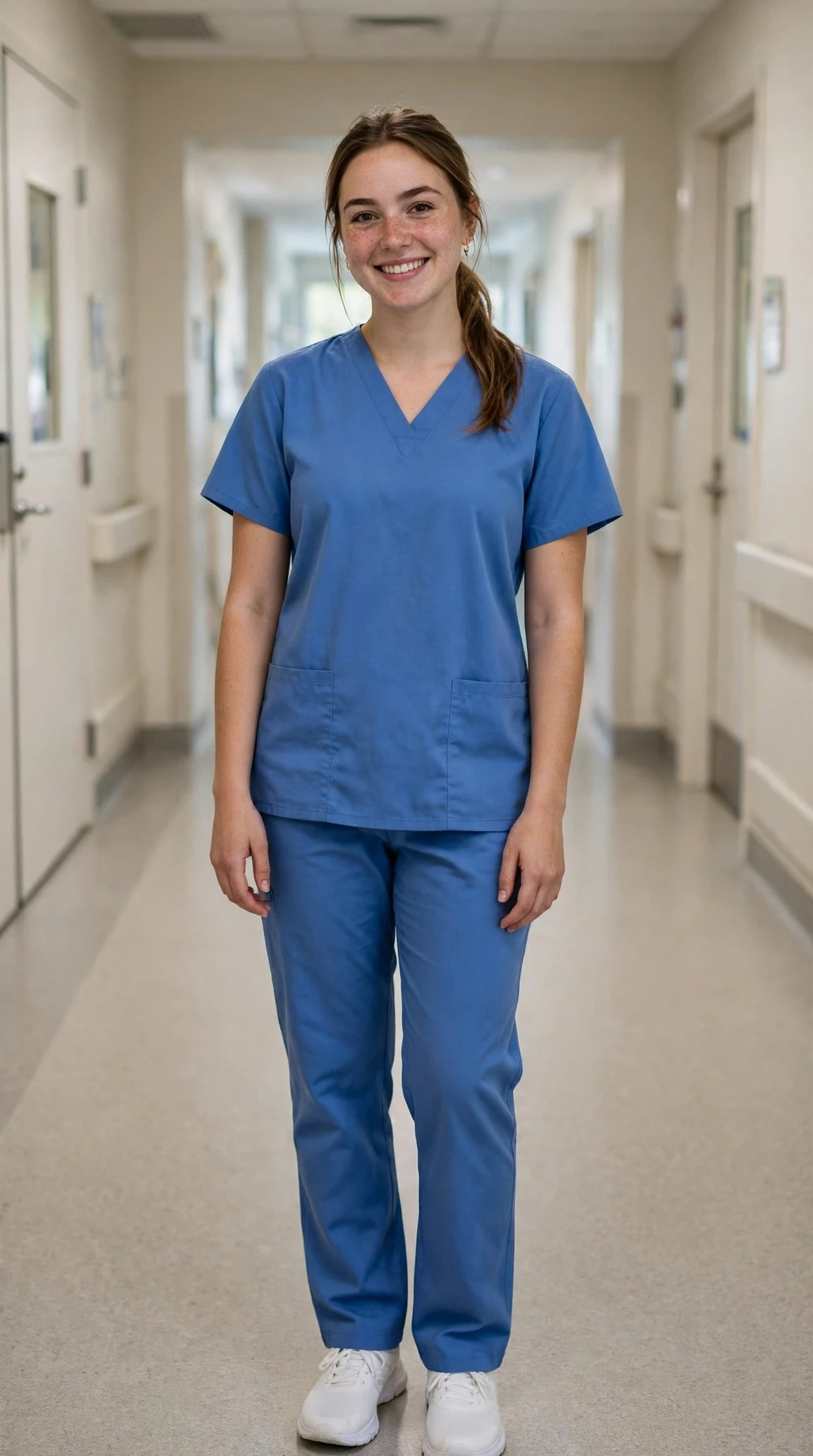
Long clinical days punish poor footwear, and sore feet distract from patient care and learning. Shoes made for standing work, with a cushioned sole and a closed toe, support the feet through a full shift on hard floors.
Choose a pair that fits the unit dress code and pairs well with scrubs, then break them in during short walks before a long clinical day. A second pair of socks in the kit bag helps when feet need a fresh start midway through a shift. Reading tips for surviving nursing school before buying helps, since fit matters more than style on a unit.
Pocket Notebook and Pens (Quick Win)

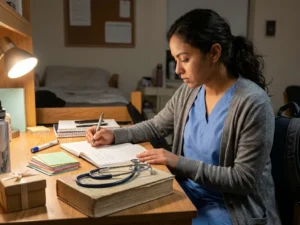
A small notebook fits a scrub pocket and holds quick notes from lectures, skills labs and clinical briefings. Notes written by hand during a demonstration stick better than notes typed later from memory, and a pocket notebook works even where phones stay tucked away.
- Notes: Record steps, values and questions right after a demonstration.
- Pens: Carry two pens, one black and one in a bright color for key points.
- Pages: Date each page so notes stay easy to find later.
- Review: Read the day’s notes once before the next class.
Badge Reel and ID Holder (High Yield)
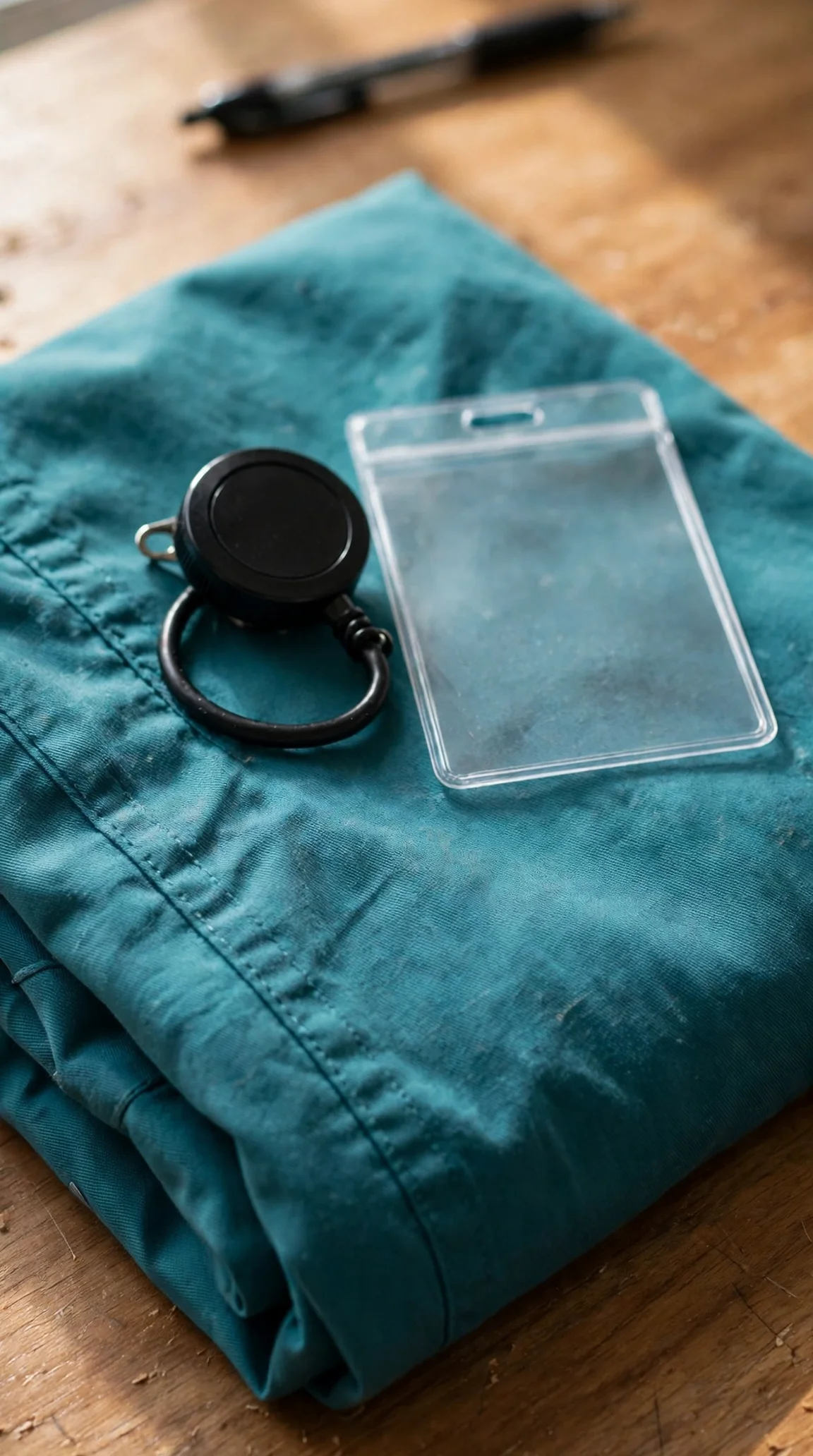
A badge reel keeps an ID card visible and within reach, which matters on units where doors, charts and supply rooms need quick identification. A sturdy reel clips to scrubs and extends far enough to scan a badge without unclipping it each time.
Pick a holder that protects the card from water and bending, and keep a spare clip in the kit bag. Students heading toward pinning season often look at pinning ceremony ideas for the next milestone, but a badge reel earns its place from the very first clinical day.
Insulated Water Bottle (Quick Win)
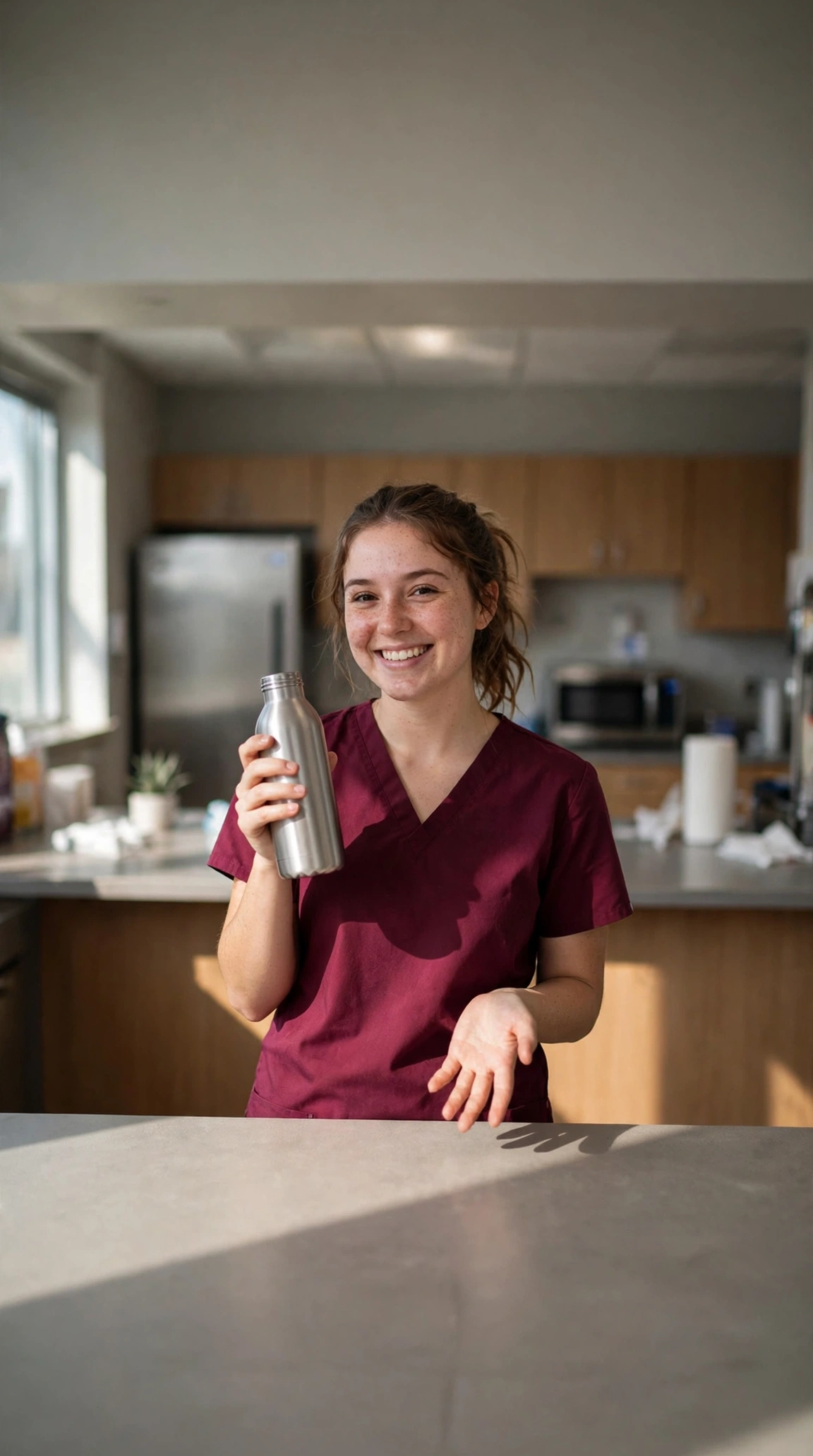
Water matters on long shifts, and a bottle that keeps drinks cold encourages steady sipping between tasks. An insulated bottle with a leakproof lid survives a bag full of books and scrubs, and a wide mouth makes refilling quick at a unit water station.
- Size: Pick a bottle that fits a bag side pocket.
- Lid: Choose a leakproof lid that opens with one hand.
- Cleaning: Rinse the bottle each evening after a clinical day.
- Refills: Fill it before leaving home and again at lunch.
Healthy Snack Stash (Exam Favorite)
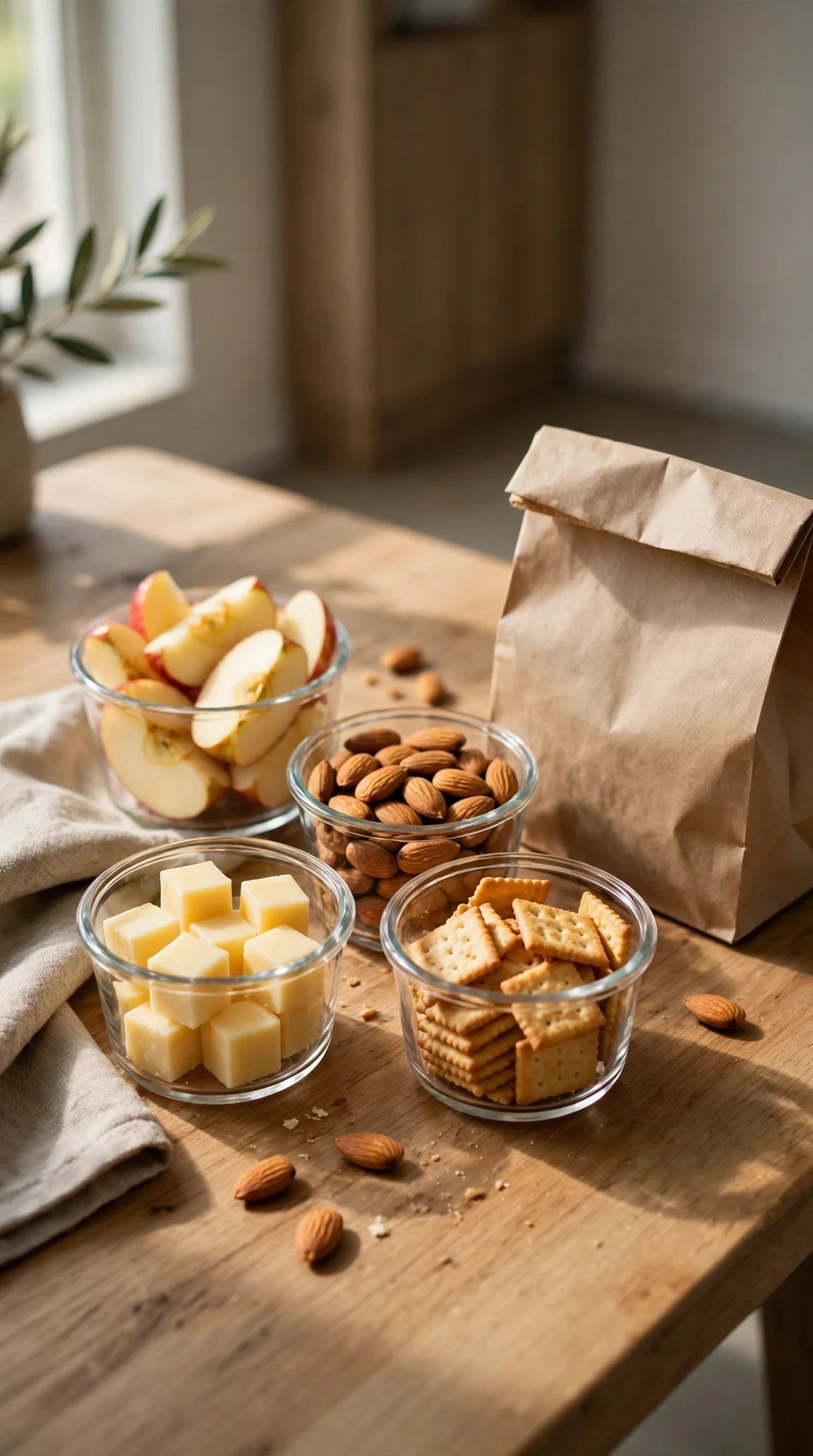
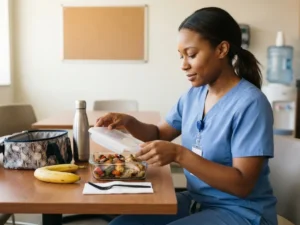
Hunger hits hard during long lectures and clinical shifts, and vending machines rarely offer a steady choice. A small stash of fruit, nuts and crackers in the kit bag gives steady energy without a long break away from the unit.
Pack snacks in small sealed containers the night before, and keep portions modest so the bag stays light. Classmates who share snack breaks often stay close through the program, and later they plan graduation picture ideas together for the final term.
Compression Socks (Med Surg)
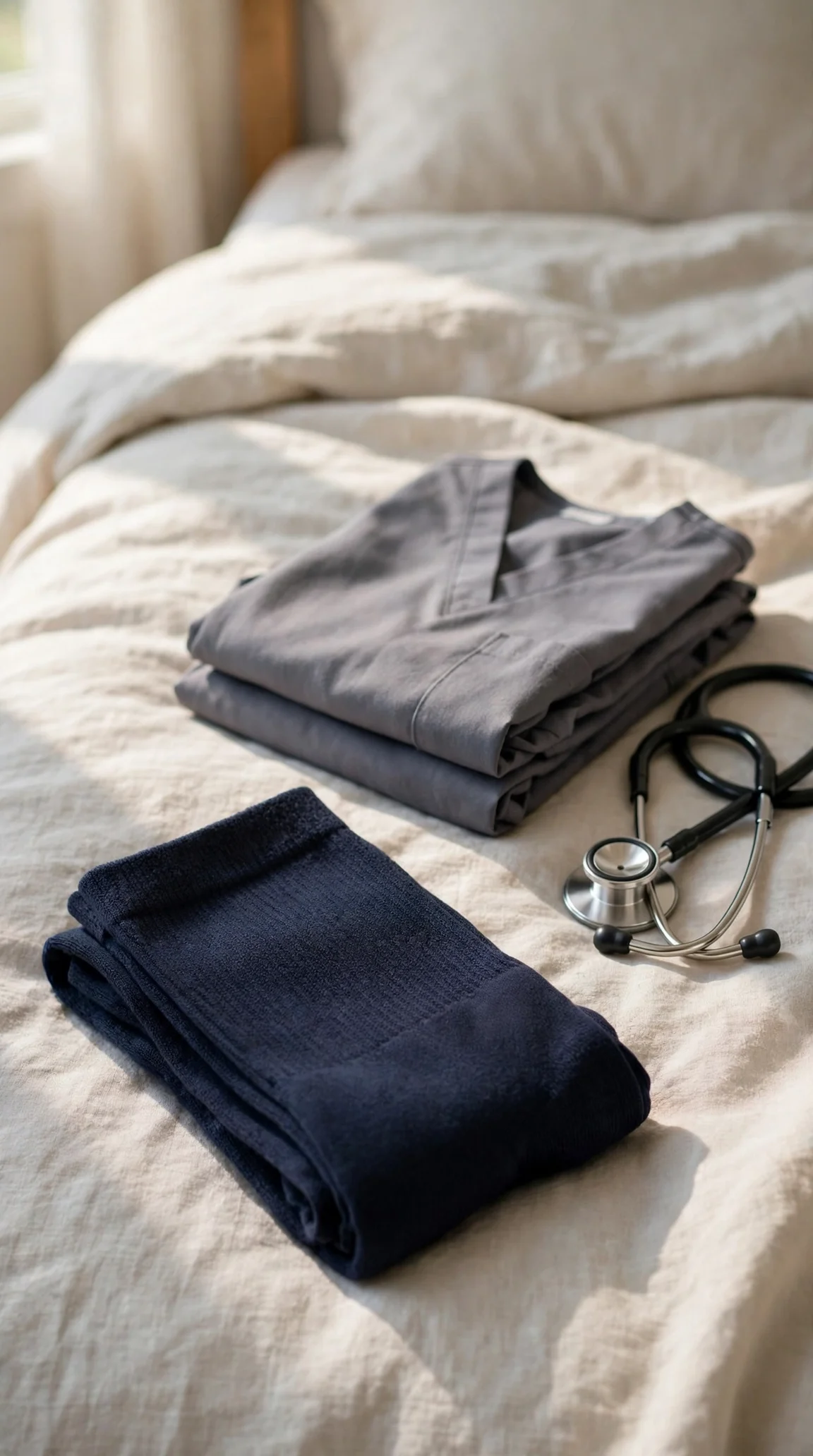
Standing for hours on a clinical unit tires legs fast, and compression socks support circulation during long shifts. Socks with graduated pressure feel snug at the ankle and looser near the knee, which helps legs feel fresher at the end of a shift.
- Fit: Measure calves and follow the size guide on the pack.
- Length: Knee-high socks suit most clinical shifts.
- Washing: Wash after each use and air dry to keep elasticity.
- Pairs: Keep two pairs so one is always clean and ready.
What you’ll need: A sturdy bag, a stethoscope, comfortable shoes, a notebook, pens, a badge reel, a water bottle, snacks, compression socks, flashcards, a planner, hand cream, a small pouch, a charger and a blanket for study evenings.
Study Flashcards Set (Exam Favorite)

Flashcards turn short gaps between classes into useful review, and a set built from lecture notes beats a generic set every time. Each card should hold one fact, one question or one drug name, so review stays quick and focused.
Carry a small stack in the kit bag and review ten cards before a lecture and ten more after it. Students who want practical nursing school tips often pair flashcards with a planner, since short daily review holds facts better than one long session before an exam.
Planner and Calendar (Fundamentals)

Deadlines pile up fast in nursing school, from exams and lab check-offs to clinical paperwork. A planner holds all of them in one place, and a weekly view shows busy days before they arrive.
- Exams: Write each exam date on the day it is announced.
- Clinicals: Block clinical days first, then add study sessions.
- Tasks: Break large assignments into small dated steps.
- Review: Check the planner each Sunday evening for the week ahead.
Hand Cream and Lip Balm (Easy to Mix Up)
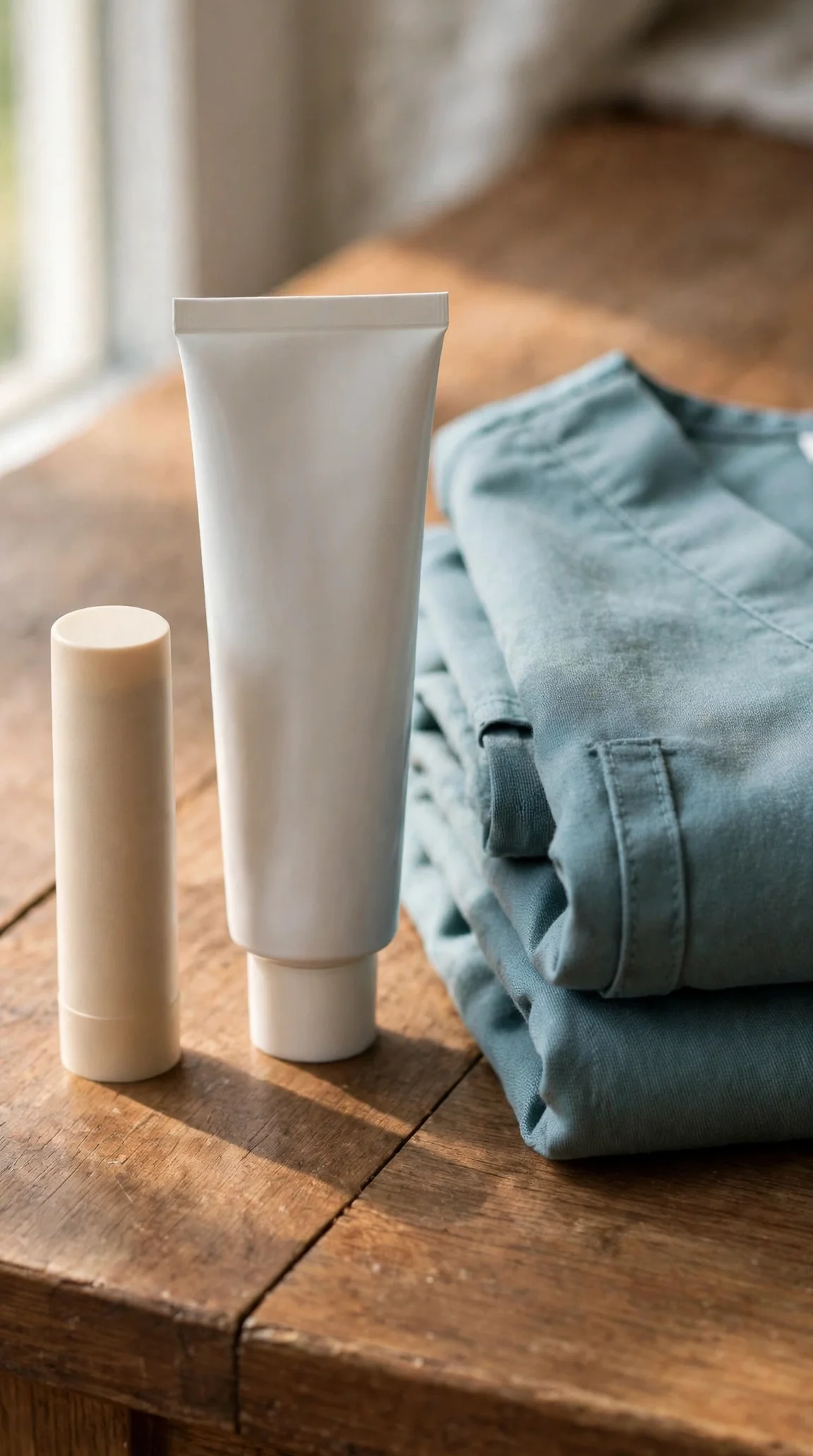
Frequent hand washing dries skin fast, and cracked hands make long clinical days harder. A small tube of hand cream in the kit bag restores moisture between tasks, while lip balm helps during dry hospital air.
Choose unscented products so patients with sensitivities stay comfortable, and apply cream during breaks rather than right before gloved tasks. Clever nursing school hacks often mention small comfort items, and hand cream is one of the simplest ways to stay comfortable through a shift.
Small First Aid Pouch (Clinical Pearl)
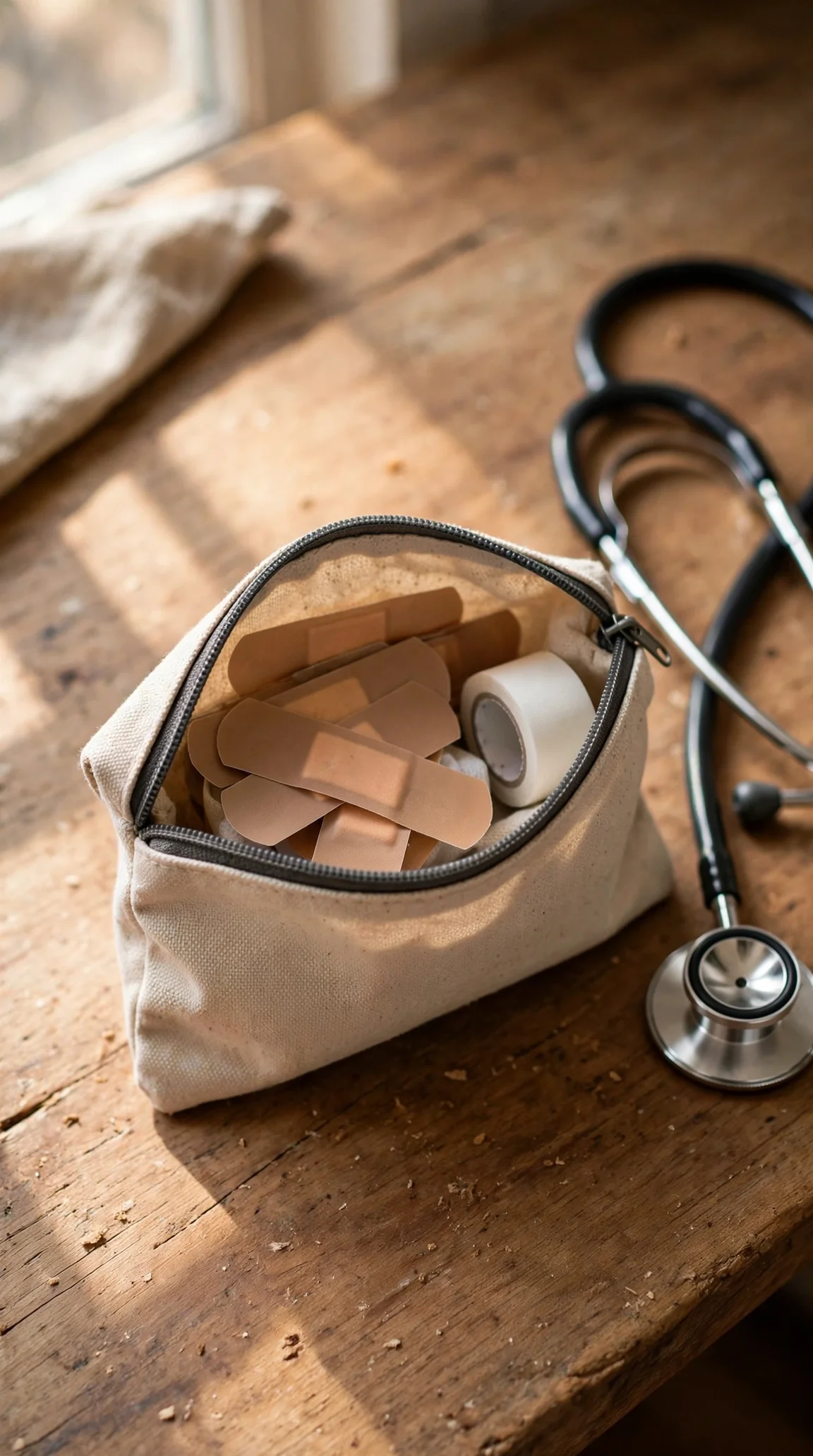
A small pouch holds the little items that solve small problems, from bandages for a blister to tape for a loose badge. Keeping these items together means a quick fix stays quick, even on a rushed clinical morning.
- Bandages: Pack a few in different sizes for blisters and small cuts.
- Tape: Add a small roll for labels, badges and loose items.
- Safety pins: Carry two pins for a torn pocket or a loose hem.
- Check: Restock the pouch each weekend so nothing runs out.
Phone Charger and Cables (High Yield)
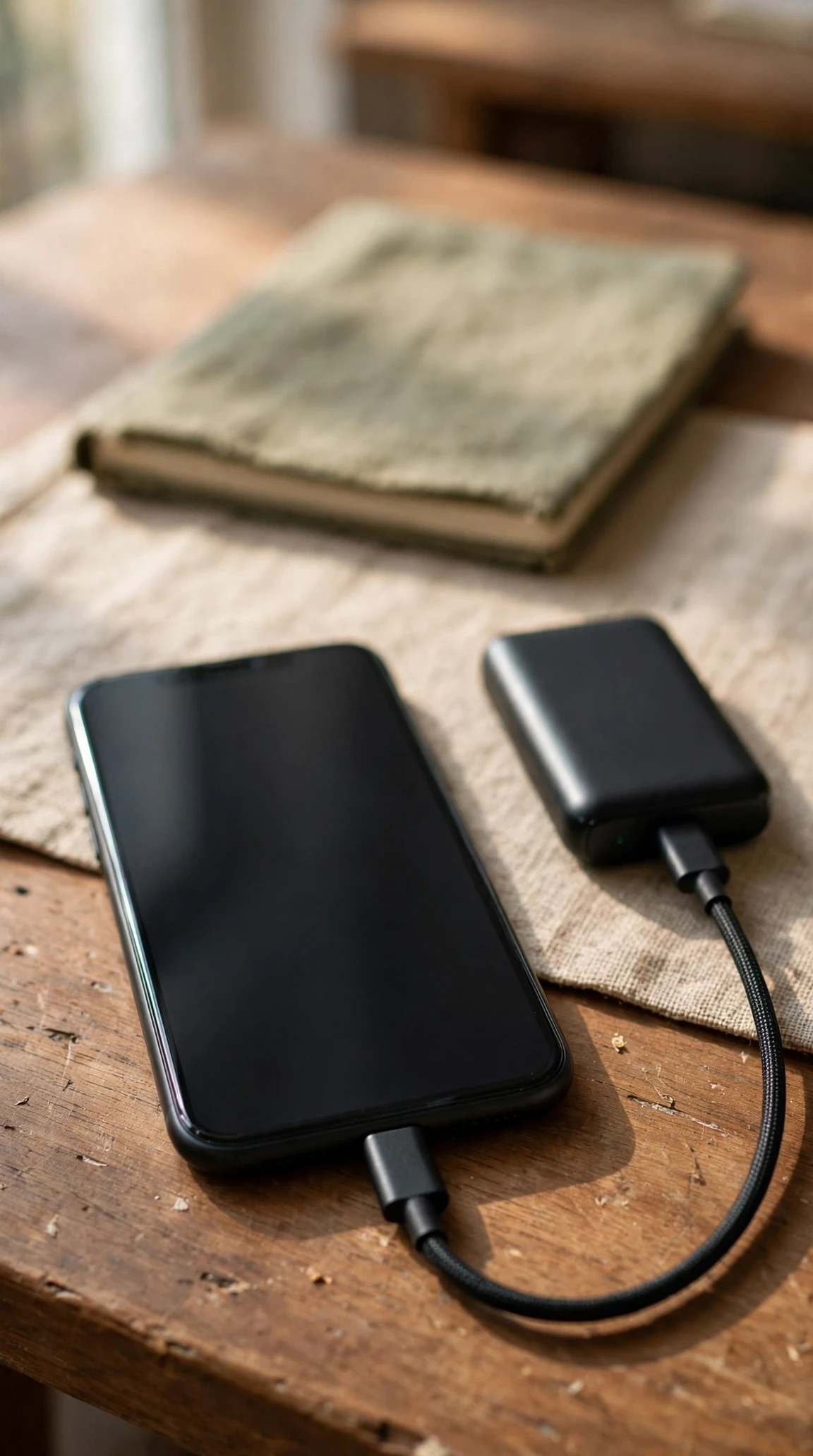
A phone holds schedules, lecture slides and messages from classmates, so a dead battery causes real trouble on a clinical day. A charger and a short cable in the kit bag keep the phone alive through long lectures and shifts.
Pack a small power bank as well, since wall outlets stay scarce in lecture halls and break rooms. Students comparing must have items for school usually rank a charger near the top, because every other tool in the bag depends on a working phone.
Cozy Study Blanket (Easy to Mix Up)

Late study sessions get cold, especially in libraries and quiet rooms with strong air conditioning. A soft blanket over the shoulders keeps a student warm and focused, and a small foldable blanket fits a study bag without much weight.
- Size: Pick a blanket that folds small for a bag.
- Fabric: Choose a soft, washable fabric for frequent use.
- Home use: Keep the blanket at a study desk for evening review.
- Washing: Wash it weekly so it stays fresh for study sessions.
Encouragement Cards From Home (High Yield)
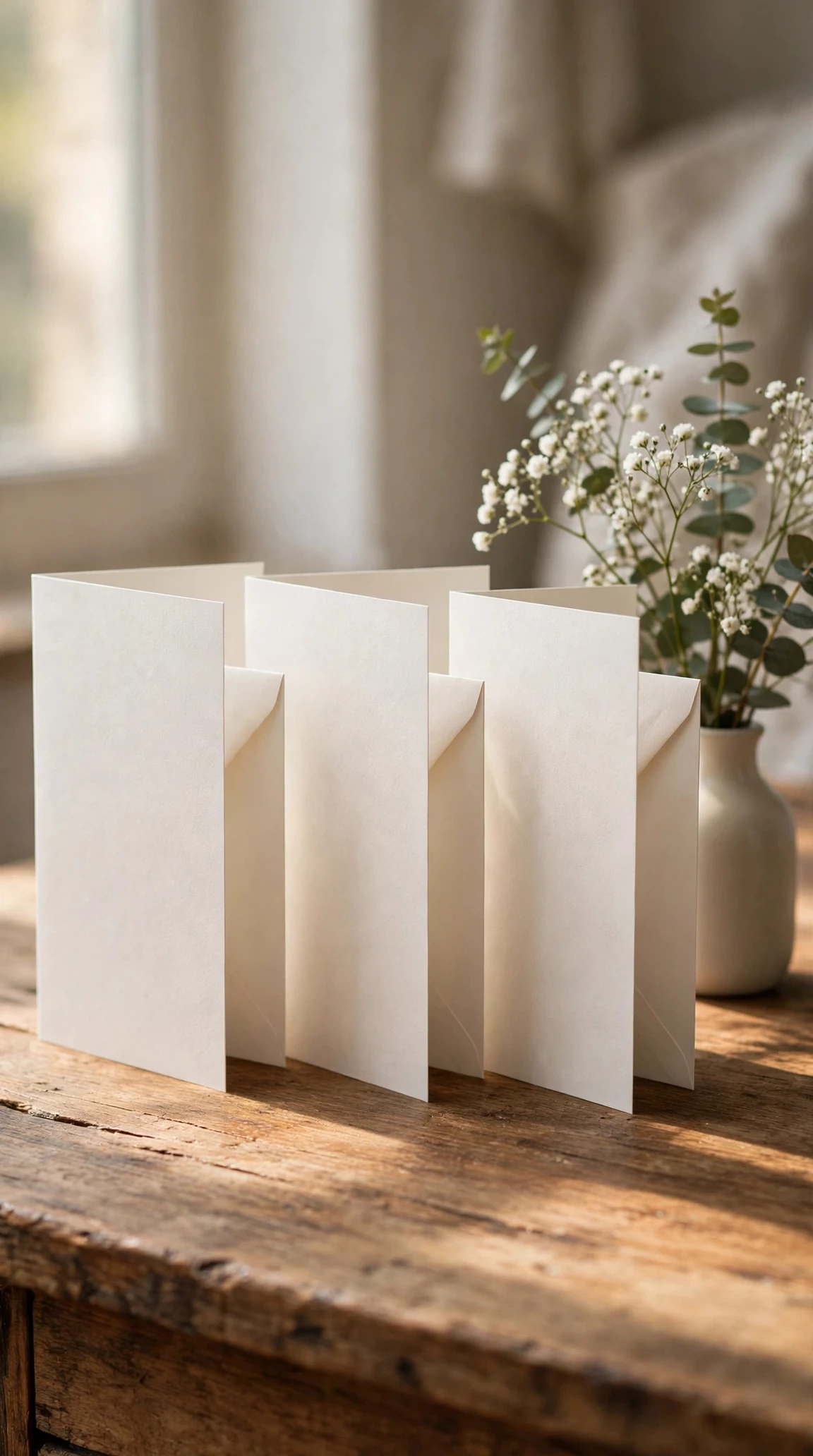
Hard weeks in nursing school test confidence, and a kind note from home can steady a student before an exam or a tough clinical day. Cards from family or friends carry encouragement that lasts longer than a single message on a screen.
Keep two or three cards in the kit bag and read one before a difficult shift or after a long week. A card tucked into a planner also marks a page, so encouragement stays close whenever the semester feels heavy.
Quick Questions
How Much Should a Survival Kit Cost?
Start with items already at home, such as a water bottle, a notebook and a pen, and add one or two clinical items at a time. A kit grows over a semester, and a simple version works just as well as a large one when every item has a clear job on a clinical day.
Can One Kit Cover Class and Clinicals?
Yes, when the bag has two sections, one for study items like flashcards and a planner, and one for clinical items like a stethoscope and a badge reel. Pack the clinical section the night before a shift, and keep the study section ready for lectures and library sessions during the week.
When Is the Best Time to Pack the Kit?
Pack the night before a clinical day, when there is time to check each item calmly and charge a phone. A morning pack often misses small items like pens or a badge reel, while an evening pack leaves the morning for a calm start and a quick bag check.
Pick Your Favorites
If you remember one thing: a small kit packed the night before turns a hard clinical morning into a calmer one.
Keep the kit simple at first, and add or swap one item after each clinical week based on what actually got used. A kit that fits daily nursing school life beats a large bag full of items that stay untouched at the bottom.