
How are you supposed to keep up when every class hands you a syllabus, a skills checklist and a reading list in the same first week? The honest answer is that nobody memorizes it all at once. first semester nursing school tips are small systems, not talent: one planner, one note method, one steady weekly rhythm. These 20 tips are the moves that help new students settle in, week by week.
Start with the setup moves, then the study habits, then the clinical and life pieces that keep the semester steady. A wider set of nursing school tips covers the whole program; this list stays on the first term, where habits form. Pick two tips this week, not twenty.
Put Every Date in One Planner [Fundamentals]

One home: every date, one planner · Add on day one: exams, check-offs, clinical days · Review: Sunday, ten minutes
Orientation week drops dates from every direction: exam days, skills check-offs, clinical rotations, paperwork deadlines. A date written in two places gets missed in both. One planner, paper or app, becomes the single home for all of it, and every new date lands there before the day ends.
The habit matters more than the tool. Check the planner each morning, and give it ten minutes every Sunday to move unfinished tasks forward and spot heavy weeks early. A week that looks full on Sunday is a plan; the same week found on Wednesday is a crisis.
Read Each Syllabus Like a Contract [Exam Favorite]
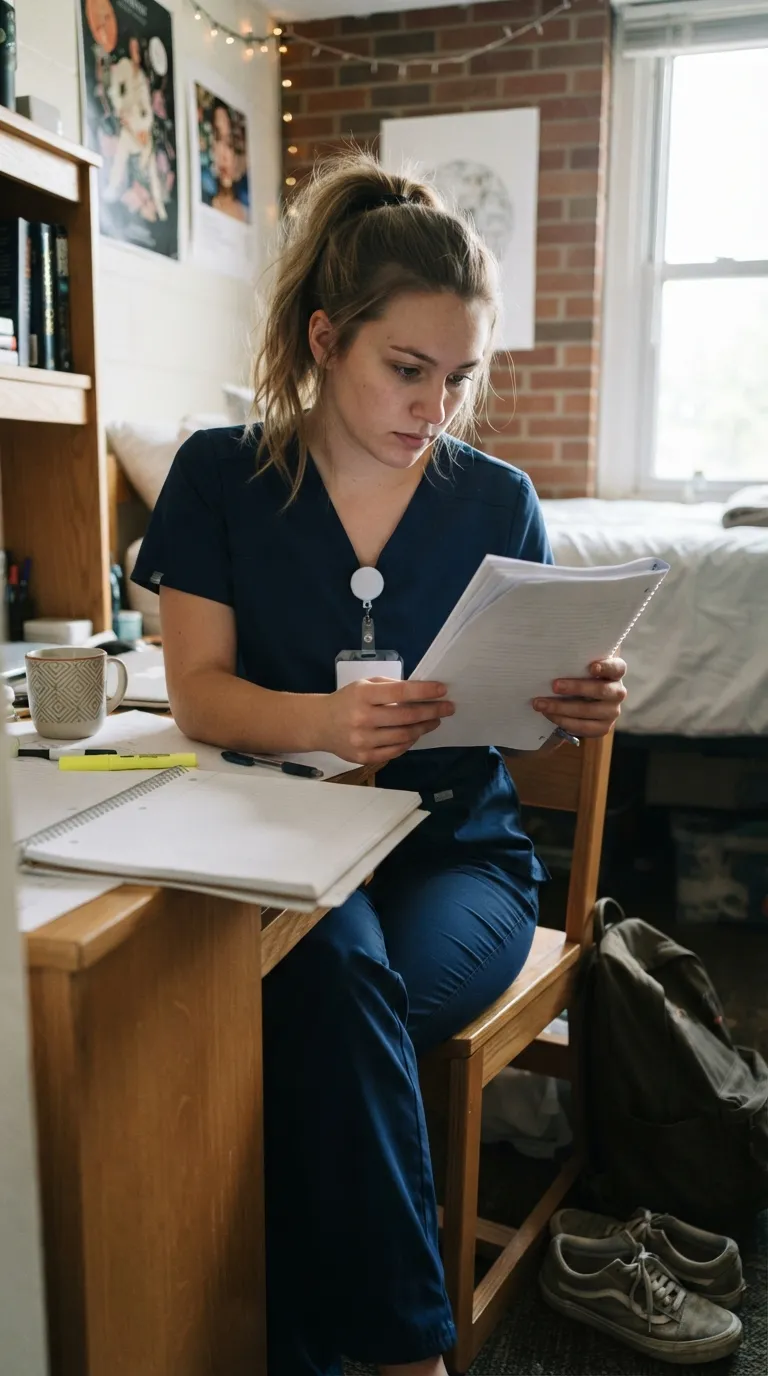
A syllabus is the closest thing nursing school has to a contract: what counts, how much each piece is worth, what happens when a date is missed. The packet handed out during the first day of nursing school deserves one slow read before the first lecture. Most surprises in week twelve were printed in week one.
- Circle the grading weights first, so study time follows the points, not the panic.
- Mark every due date in the planner the same day the syllabus arrives.
- Note the attendance and late-work rules; clinical courses run stricter than lectures.
- Write down each instructor’s office hours and email.
Build a Weekly Study Rhythm [High Yield]

Blocks: short, most days · Anchor: same start time daily · Rest: one lighter day weekly
Motivation fades by week three; a rhythm does not need it. Fixed study blocks at the same times on the same days turn review into a standing appointment instead of a nightly negotiation. Two focused hours on a Tuesday beat six scattered ones.
Build the rhythm around points that never move: classes, clinicals, work shifts, sleep. Each block gets one job, such as notes, questions or drug cards. When a block gets skipped, the next one still stands, so one rough day never cancels the week.
Learn How Your School Tests [High Yield]
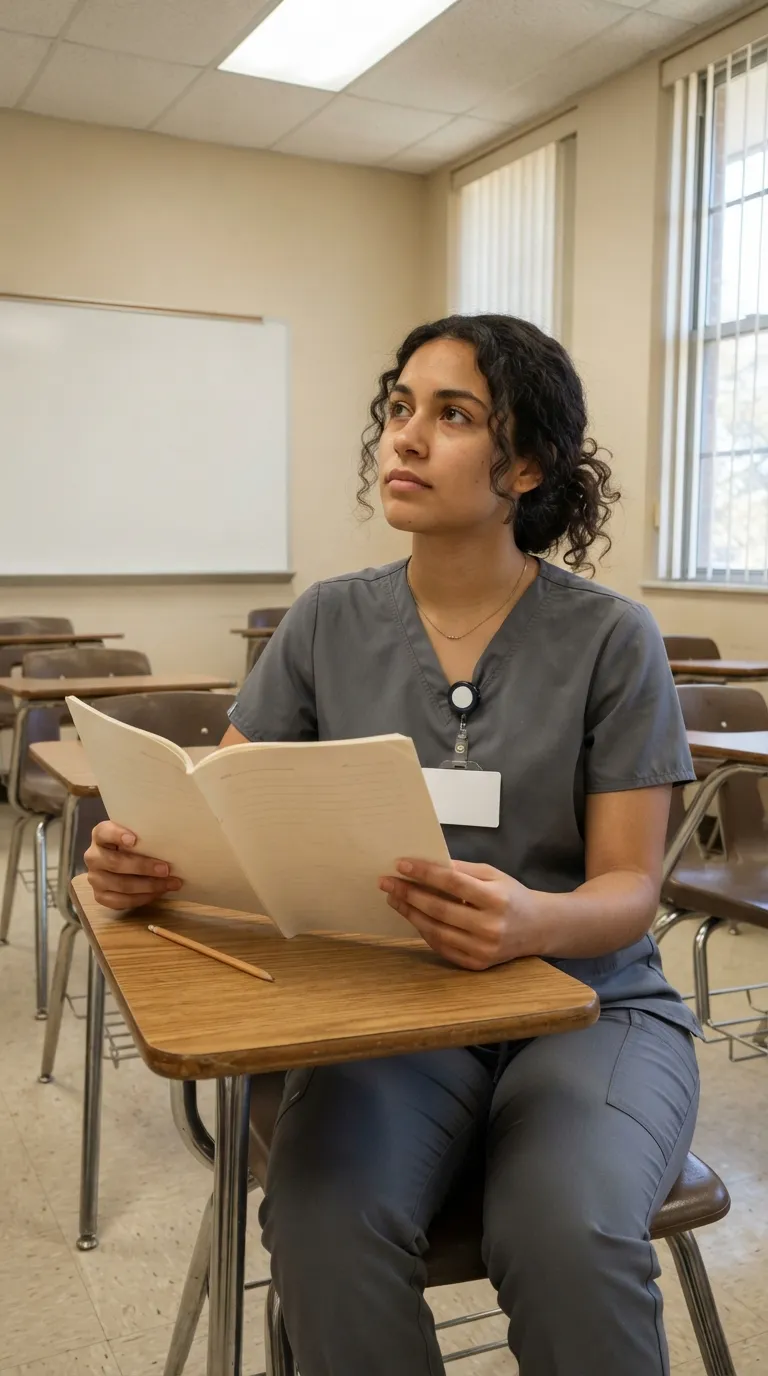
Most nursing exams ask NCLEX-style questions, where the point is applying facts to a patient, not reciting them. A question may hand over a short patient story and ask what the nurse does first, or which finding gets reported. Learning that format in week one changes how every chapter gets studied.
- Read the rationales for every practice question, right and wrong answers alike.
- Treat words like first, priority and report as signals, not decoration.
- Start a small question habit: ten practice questions after each study block.
- Review missed questions within two days, while the reasoning is still fresh.
Start Drug Cards From Week One [Clinical Pearl]

Card: name, class, action, checks · Add: top side effects · Pace: two or three a week
Pharmacology never arrives as one neat unit; it leaks into every course, a drug at a time. Cards started in week one grow slowly and stay manageable. Cards started the night before the exam become a stack of names with nothing attached.
Keep the format plain and identical every time: generic name, class, what it does, the side effects that matter, and the checks a nurse runs before and after giving it. Ten minutes with the week’s new drugs builds the deck quietly.
Practice Dosage Math a Little Every Day [Exam Favorite]
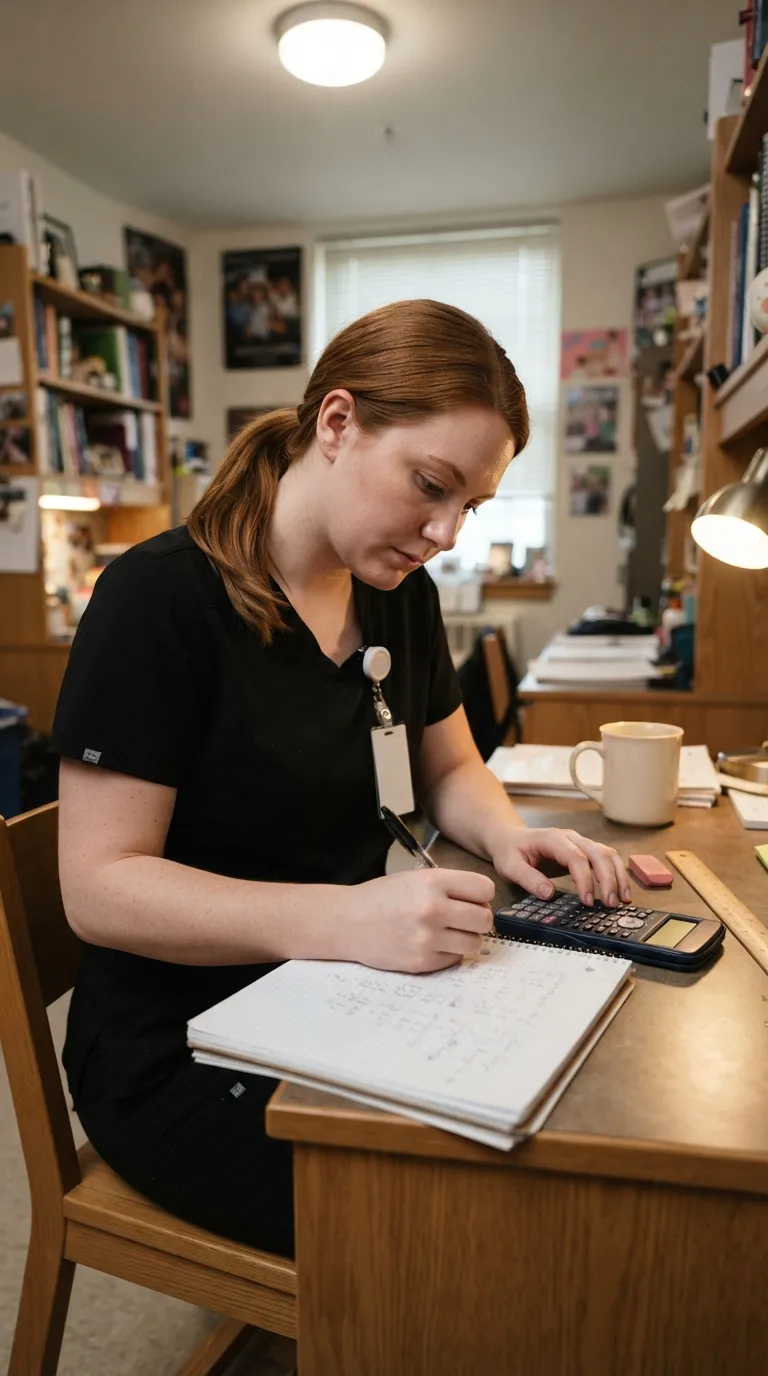
Dosage calculation is a skill with a pass bar, and many programs require near-perfect scores before a student gives medication in clinicals. Ten problems a day keep the formulas warm and expose weak spots while the stakes are still zero.
- Use one setup every time: ordered, on hand, what the patient gets.
- Write the units at every step and cancel them on paper, never in your head.
- Round by the stated rule: tablets to halves only when scored, liquids to tenths.
- Estimate the answer first; a result ten times too large should stop the hand.
Set Up Your Clinical Bag the Night Before [Quick Win]

Pack at night: uniform, shoes, badge, stethoscope · Check: paperwork, pen, second-hand watch · Rule: bag by the door
Clinical mornings start early and punish scrambling. A bag packed the night before removes the 5 a.m. hunt for a badge, a clean uniform or the one pen that works. Lay out the full kit in one fixed order, so a missing piece shows itself early.
The same routine protects the paperwork. Clinical forms and the day’s notes go in the bag’s front pocket as one stack, checked against the course list. Ten calm minutes at night buy a quiet morning and a drive without dread.
Study tip: Turn the night-before setup into a checklist taped inside the bag lid. Run it in the same order nightly for the first month; after that, the routine runs itself and the checklist becomes a safety net for rough weeks.
Ask Questions in Clinicals From Day One [Clinical Pearl]

Every new student worries that a question sounds basic. Instructors expect the opposite problem: silence. A student who asks why a medication is given, or where a finding fits, reads as engaged and safe. A student who guesses quietly in a patient’s room reads as a risk, and guessing is the habit clinicals punish hardest.
- Ask about the plan before the task, not during a sterile procedure.
- Tie each question to a patient: this reading, this drug, this change.
- Carry a small notebook; write answers where they will be found again.
- Thank the nurse who teaches; preceptors remember students who listen well.
Find Your People Early [Fundamentals]

Group: two or three classmates · Meet: weekly, agenda in hand · Rule: teach, never just copy
The first semester feels lighter with two or three classmates. A small group divides the work: one outlines the chapter, one writes practice questions, one builds the drug list, and everyone teaches a piece. Teaching out loud exposes gaps that silent rereading hides.
Groups fail when sessions turn into social hours with books open. Keep a start time, an end time and a short agenda, phones in bags. The right group also shares the load outside class: a ride on clinical mornings, a spare pen, a deadline reminder.
Take Notes You Can Actually Re-Read [Quick Win]
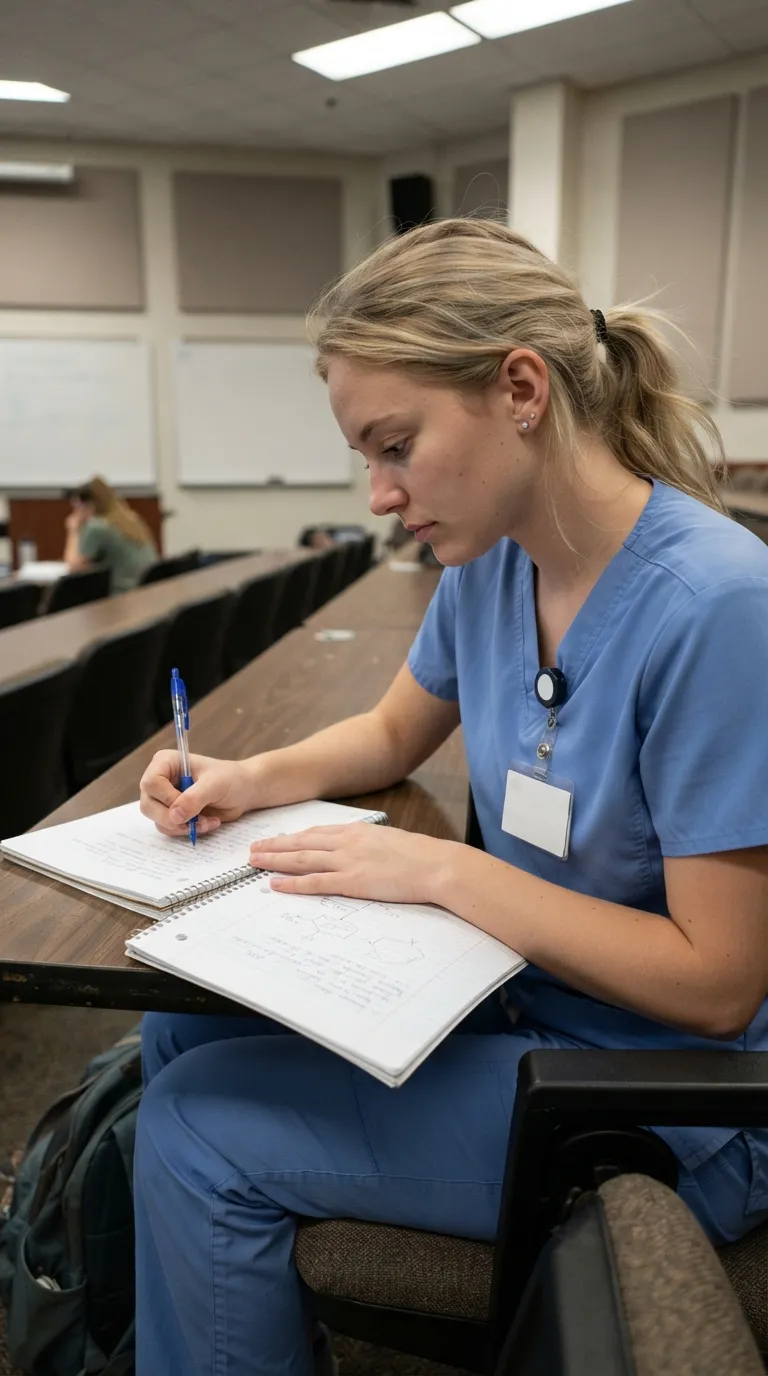
Notes earn their keep in week ten, not week one. Pages that made sense during the lecture often turn into decoration by exam week. One simple system, used in every class, beats four clever systems used once. Headings, short lines and space between ideas matter more than color.
- Leave a wide margin on every page; exam-week additions and instructor hints land there.
- End each lecture with a three-line summary written from memory before the book closes.
- Star anything the instructor repeats, demonstrates or calls a priority.
- Rewrite nothing for beauty; spend that time on practice questions instead.
Learn the Library and Tutoring Center Before You Need Them [Fundamentals]
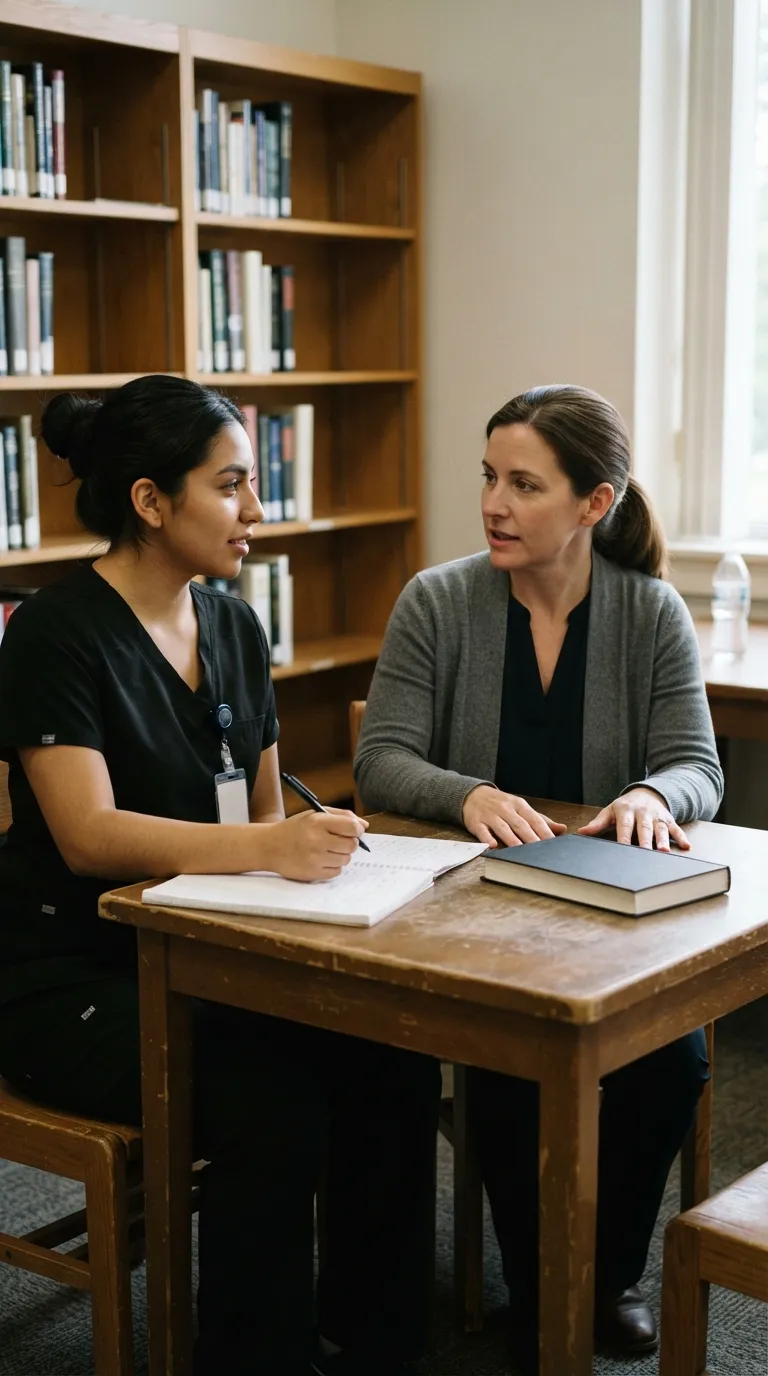
Week one: tour both · Learn: hours, booking rules, quiet rooms · Save: locations in the planner
Every campus hides a support system that new students find too late. The library lends more than books: reserve rooms, anatomy models, guides and staff who locate sources fast. The tutoring center handles the exact first-semester courses, often with tutors who passed them recently.
A calm visit in week one beats a desperate visit in week nine. Learn the hours, the booking rules and where the quiet rooms sit. When a hard unit lands, the route to help is already known, and asking early reads as planning, not panic.
Protect Your Sleep Like a Class [Med Surg]

Sleep is study equipment. A tired brain stores less, recalls slower and walks into clinicals with a shorter fuse. Students who guard a regular sleep window outperform the all-night pattern by the second month. Treat the wind-down like a clinical skill: practiced nightly, protected on purpose.
- Set a screens-off time thirty minutes before bed and hold it on school nights.
- Keep the wake time steady; sleep-in weekends undo weekday rhythm.
- Nap short if needed: twenty minutes restores more than two groggy hours.
- Move caffeine to the morning; late cups tax the night that follows.
Meal Prep on Your Day Off [Quick Win]

Block: two hours, one day off · Cook: grain, protein, two vegetables · Pack: containers that night
Hunger makes hard weeks harder. A student who eats from a vending machine at 9 p.m. studies worse and sleeps worse than one who packed dinner. Two hours of cooking on a day off covers the class days and clinical shifts, when the cafeteria line eats the whole break.
Keep the menu boring and repeatable, with a sauce that changes the mood. Pack containers the same night, tape a label on each lid, and set two portions aside, chilled, for the week that runs off the rails. Food handled once a week stops being a daily decision.
What you’ll need: A sturdy planner, two pens that write smoothly, highlighters, one folder for clinical paperwork, a watch with a second hand, a water bottle, a lunch container set, sticky notes for page flags, and a phone charger that lives in the clinical bag.
Keep a Small Wins List [Easy to Mix Up]

Motivation dips hardest around week six, when the newness fades and the grades feel slow. A running list of small wins fights that dip with evidence: a first successful blood pressure reading, a dosage test passed, a patient who asked for the student by name.
- Add one line after each clinical day, while the memory is warm.
- Keep the list in the planner, where rough days will find it.
- Read it before exams; recall of past success steadies the hand.
- Share one win with the study group; momentum spreads both ways.
Budget for the Hidden Costs [Easy to Mix Up]
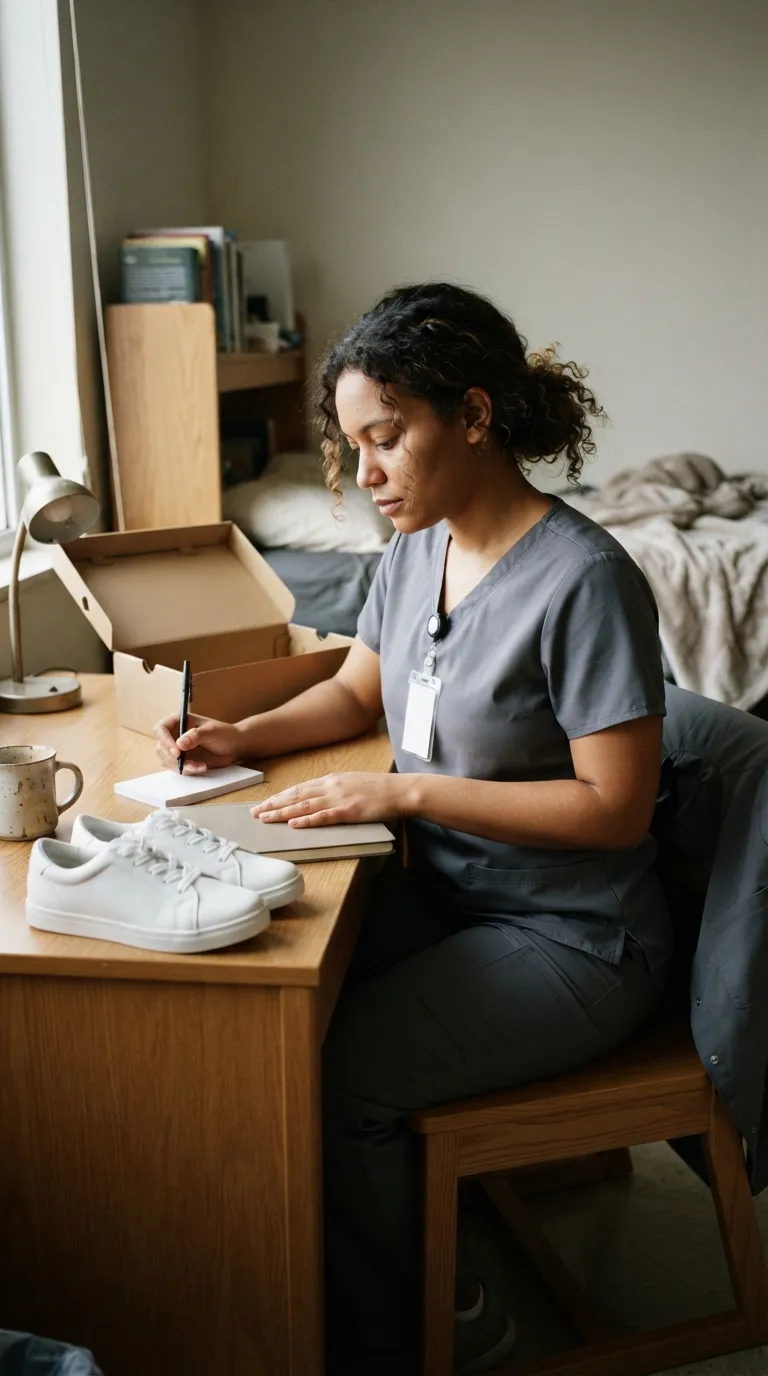
Expect: shoes, printing, exam fees · Watch: gear bought twice, rush shipping · Plan: one small monthly line
Tuition is loud; the quiet costs ambush the budget. Clinical shoes wear out, printers charge by the page, background checks and exam fees land mid-semester, and practice question apps renew quietly. Expecting these costs turns them into line items instead of emergencies.
One small monthly line for school costs covers the ambush. Buy gear once and buy it plain: shoes that fit the dress code, a stethoscope built to last, a bag with room to grow. Borrow before buying where the program allows, and split bulk supply orders with the study group.
Get Comfortable Being New in the Skills Lab [Med Surg]

The skills lab exists for one purpose: safe repetition before a real patient. Every expert nurse once fumbled a glove, a cuff and a catheter model. Booking open practice slots early builds hands that stay calm when the check-off clock runs, and lab staff teach best to students who arrive before panic week.
- Practice one skill per slot until the steps run in order without notes.
- Say each step out loud; check-offs are graded on the narration too.
- Pair up with a classmate and trade the patient role for honest feedback.
- Book a slot right after each new skill lands, not the week before testing.
Review a Little Every Day Instead of Cramming [High Yield]
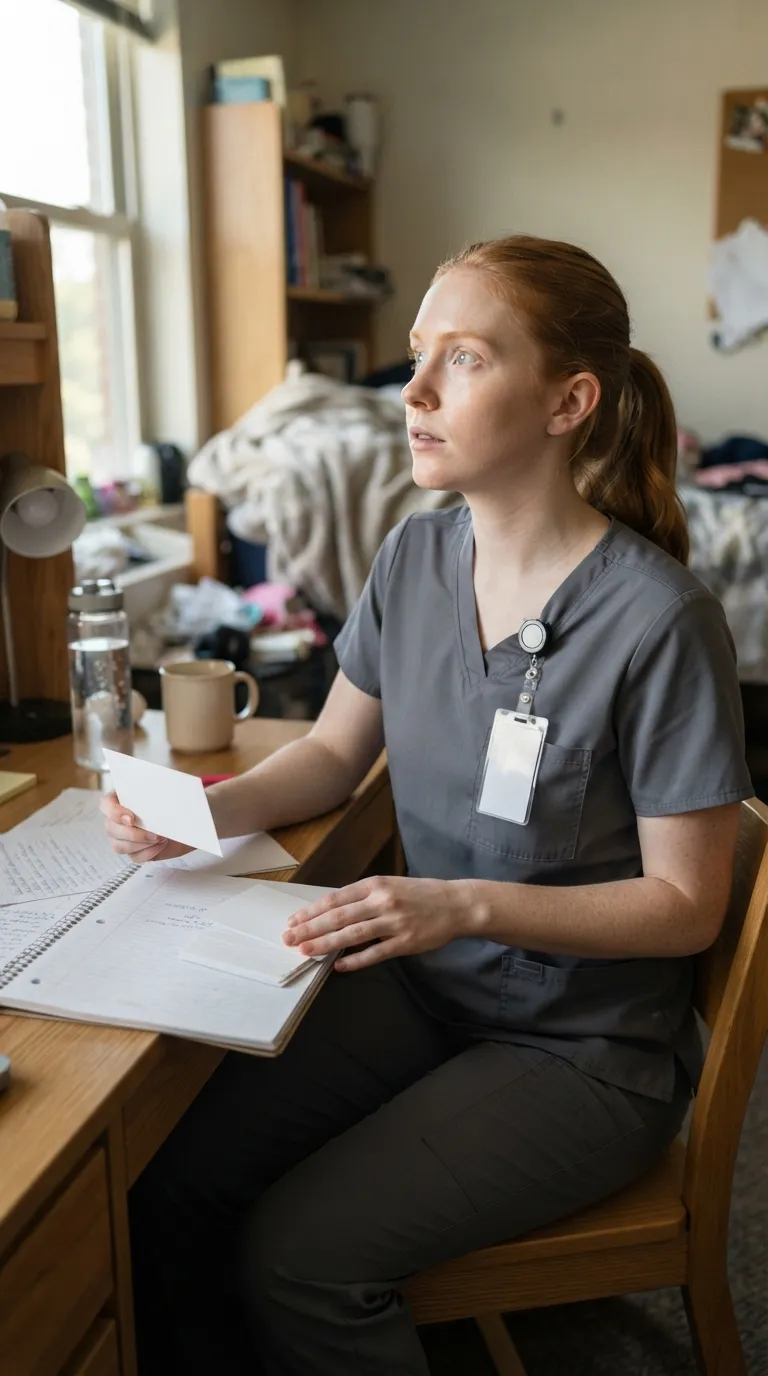
Dose: twenty minutes, old material · Mix: new and fading · Rule: review before new notes
Memory fades on a schedule, and short reviews interrupt the fade. Twenty minutes with older material each day, before the new chapter opens, keeps week two alive during week nine. The same minutes spent only on new material let old lessons drain away quietly.
This daily habit pays off longest. The review-first routine becomes the backbone of later terms, and students who keep it find med surg semester survival far less dramatic than feared. Small, steady review turns a mountain of content into a path walked daily.
Visit Office Hours Before You Are Struggling [Exam Favorite]

Office hours carry a myth: they exist for students in trouble. Instructors read them differently. A week-two visit about a confusing concept marks a student as serious, and the instructor learns a name and a face long before the exam. That early contact makes later questions, letters and references far easier to earn. Early beats desperate.
- Arrive with one specific question and the page or slide it came from.
- Ask how the instructor wants practice answers checked between visits.
- Bring a graded quiz once; error patterns teach faster than scores do.
- Follow up with a short thank-you note; courtesy is remembered at grading time.
Keep One Folder for All Clinical Paperwork [Clinical Pearl]
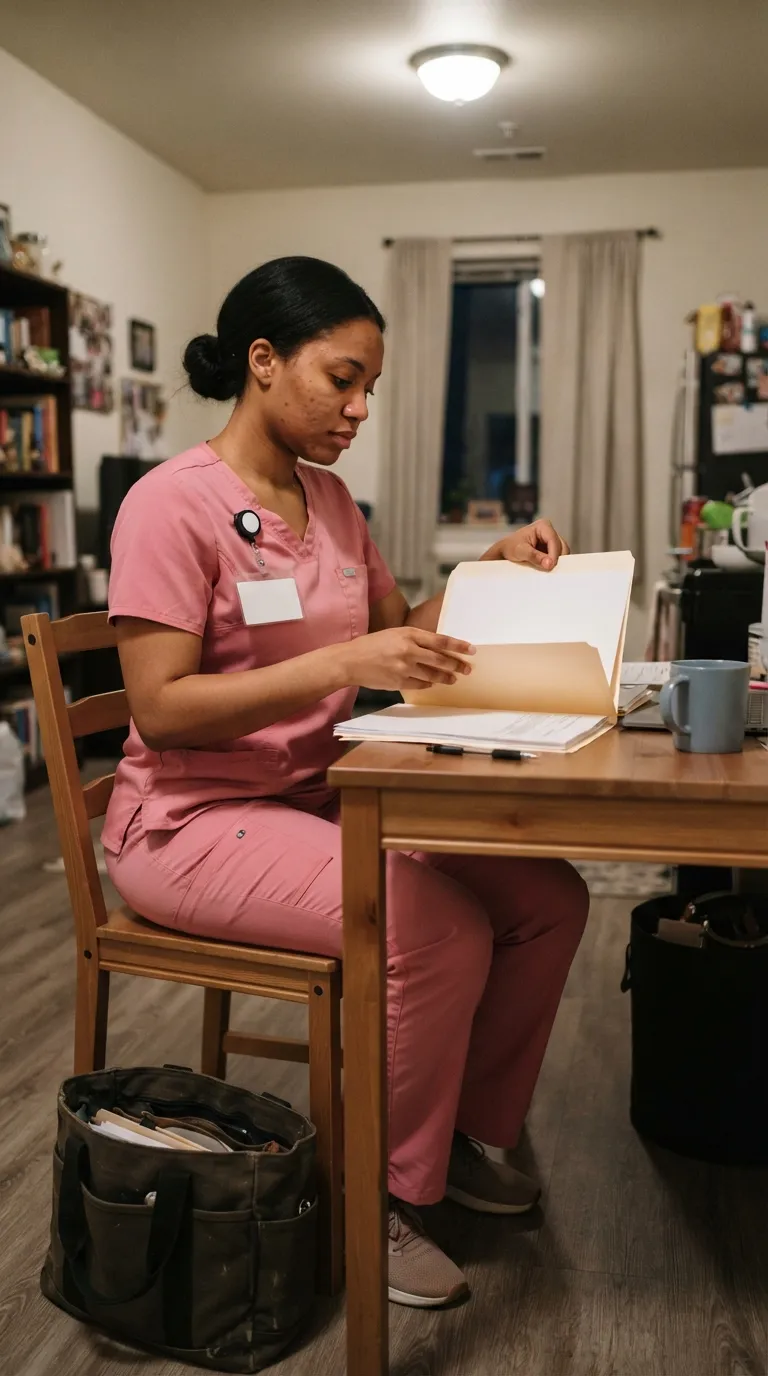
One folder: forms, care plans, evaluations · Sections: blank, finished, returned · Check: the night before clinicals
Clinical paperwork multiplies quietly: forms, care plan drafts, skills checklists, immunization records, evaluations. Scattered across bags, inboxes and car dashboards, one missing page can cost a full clinical day. One folder with the same sections all semester ends the search before it starts.
Stock the folder before the first clinical day: blank forms in front, finished work behind them, returned pages at the back. Check it during the night-before routine. When an instructor asks for a form mid-shift, the answer takes ten seconds, and that calm is worth the whole system.
Plan Something Fun Every Week [Easy to Mix Up]

A semester run at full throttle with no breaks ends in a crash around midterms. One planned pleasure a week keeps the term human: a walk with a friend, a show watched without guilt, a slow breakfast on the day off. Fun scheduled like a class happens; fun left to chance gets studied over.
- Put the plan in the planner, in ink, next to the study blocks.
- Keep it cheap and close: a park, a market, a friend’s kitchen table.
- Guard the slot when the week gets heavy; heavy weeks need it most.
- End the week by naming one good hour out loud.
What to Plan Next
With the basics running, the next step is range. Add one system at a time: the question bank habit this month, the skills lab routine next, the review rhythm after that. The nursing school survival guide maps the habits that carry past the first term, and the first semester is where each one is cheapest to build.
Choose the two weakest spots from this list and give them the next two weeks. Small systems, kept daily, compound quietly; by finals, the student who felt shaky in week one often looks like the calm one in the room. That calm is not luck. It is a planner, a rhythm and a folder, doing quiet work since week one.