
Your clinical patient has pneumonia, a fever, a weak cough and an oxygen saturation that keeps dipping: which problem do you act on first, and how do you prove your plan worked? That sorting job is the whole point of a care plan. This pneumonia nursing care plan works through 6 nursing diagnoses in priority order, airway and breathing first, so the sickest problem always gets treated before the quieter ones.
Each diagnosis below is written the way instructors grade it: a NANDA-I style statement with its cause and evidence, one measurable goal with a time frame, interventions with the rationale for each one, and an evaluation line that tells you how to judge the result. Use it for med surg care plan assignments, clinical paperwork and NCLEX questions that ask what the nurse does first.
Pneumonia Overview
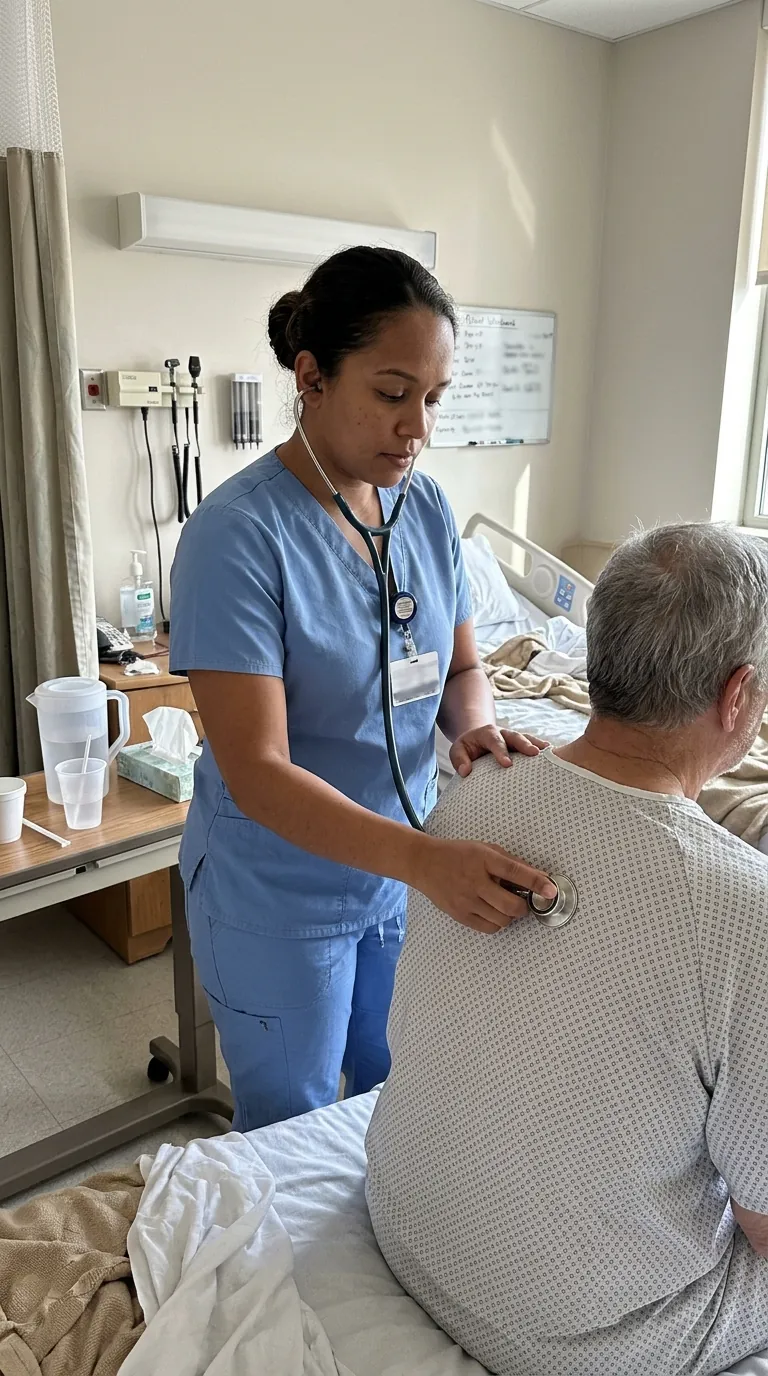
Pneumonia is an infection of the lung tissue itself. The tiny air sacs, the alveoli, fill with fluid, pus and cell debris, so oxygen crosses into the blood poorly and carbon dioxide builds up. Bacteria such as Streptococcus pneumoniae are the most common cause in adults living at home, viruses cause many cases too, and pneumonia that starts during a hospital stay involves different germs and is often harder to treat. The CDC overview of pneumonia sorts the types by where the infection was caught, which is the first thing to pin down in your assessment.
The classic findings are fever, a cough that brings up sputum, crackles over the affected lobe, fast breathing, shortness of breath and sharp chest pain on a deep breath. Older adults may show new confusion before any fever. Assessment starts with the airway and oxygen saturation, not the temperature, and care follows that same order. Standard precautions apply to every patient, and droplet isolation precautions are added when the cause is unknown or known to spread by droplets, following your facility policy. Every diagnosis in this plan hangs off those findings.
Ineffective Airway Clearance
| Nursing diagnosis | Ineffective Airway Clearance related to thick, sticky secretions and a weak, tiring cough, as evidenced by crackles and rhonchi over the right lower lobe, an ineffective cough, retained secretions and shortness of breath at rest. |
| Goal | The patient will cough up secretions with a strong, effective cough and have clearer breath sounds within 24 hours. |
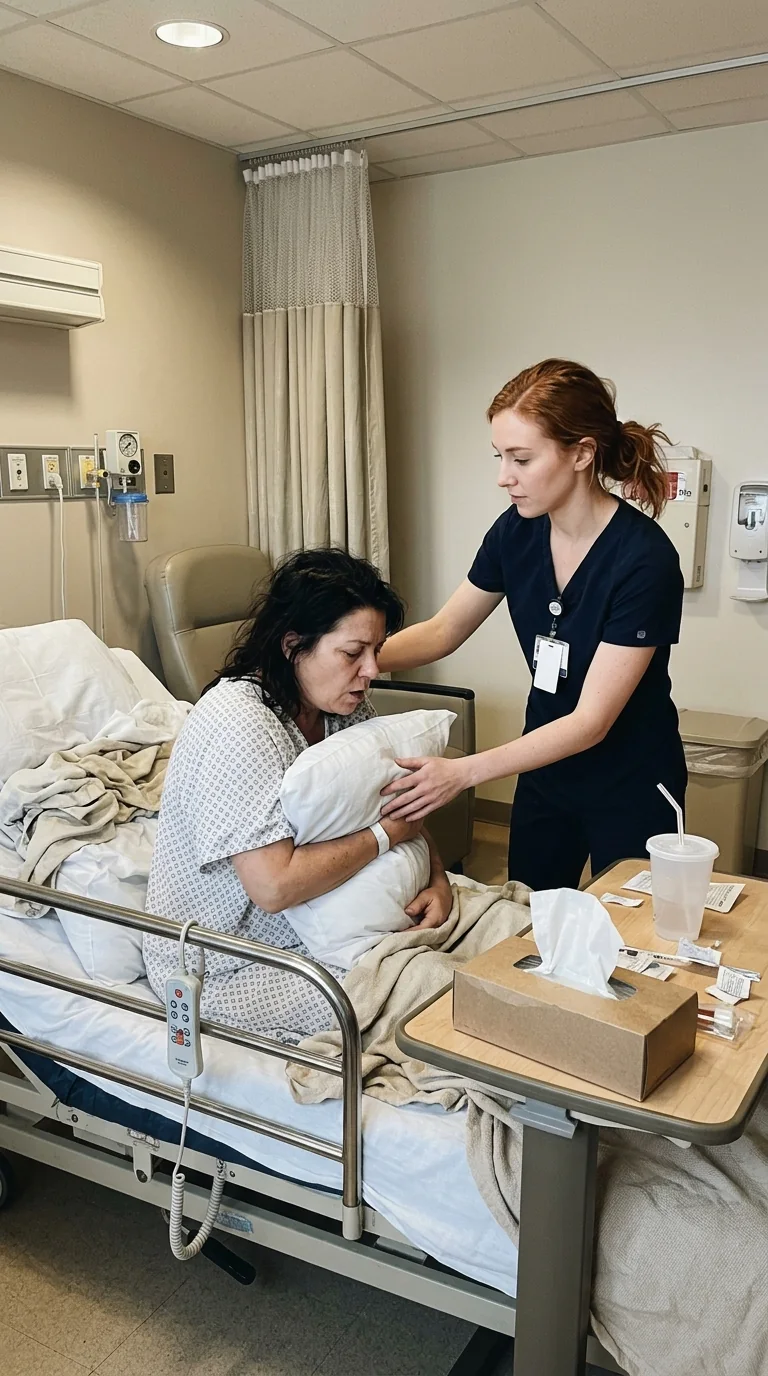
| Interventions | 1. Assess respiratory rate, depth, breath sounds and cough strength at least every 4 hours, and note how much sputum comes up and what it looks like. Rationale: the trend shows whether secretions are clearing or building up before the patient becomes exhausted. 2. Sit the patient upright with the head of the bed raised 30 to 45 degrees, and keep that position for coughing practice. Rationale: an upright position improves lung expansion and makes each cough stronger. 3. Encourage oral fluids, about 2 to 3 liters a day unless fluids are restricted. Rationale: good hydration thins sticky secretions so they are far easier to cough out. 4. Teach controlled coughing and huff coughing, and have the patient practice every 2 hours while awake, splinting the chest with a pillow if it hurts. Rationale: a practiced technique moves secretions up and out better than weak, repeated coughing that only tires the patient. 5. Suction the airway only when the patient cannot clear secretions alone, using sterile technique and brief passes. Rationale: routine suctioning injures the airway lining, drops the oxygen level and raises infection risk. |
| Evaluation | Goal is met when the patient coughs up secretions with a strong cough, breath sounds are clearer in the affected lobe and the respiratory rate settles toward 12 to 20 breaths a minute. |
Impaired Gas Exchange
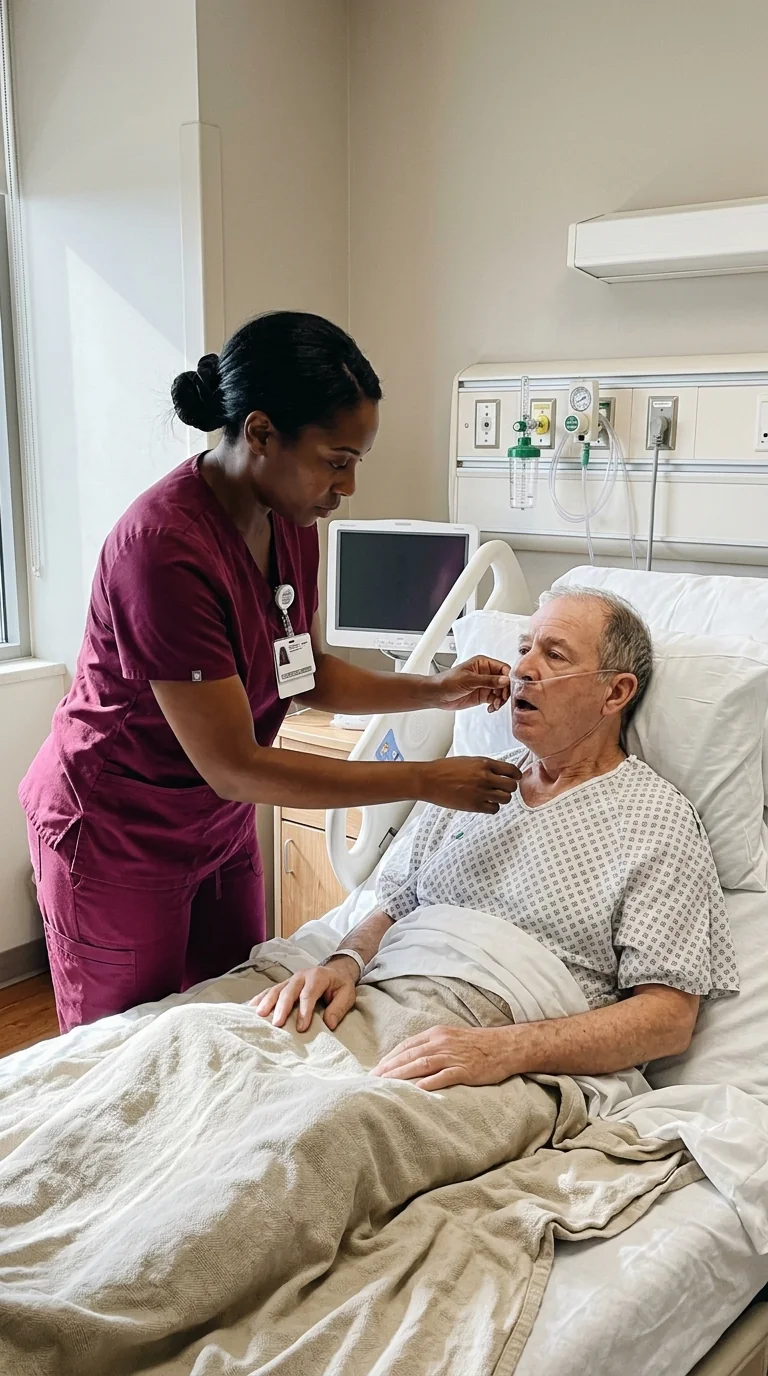
Impaired Gas Exchange related to fluid and debris filling the alveoli, as evidenced by an SpO2 below the patient’s baseline, a respiratory rate above 24 breaths a minute and new restlessness. The goal for the first 48 hours: the patient keeps SpO2 at or above 92 percent, breathes at 12 to 20 breaths a minute and stays alert, calm and oriented.
- Check SpO2 and respiratory rate at least every 4 hours, and score alertness with a Glasgow Coma Scale check whenever the patient seems more drowsy or confused than before. Rationale: a falling saturation together with a dropping level of consciousness is an early warning of hypoxemia, well before the lips turn blue.
- Give supplemental oxygen exactly as ordered, and check each round that the cannula prongs sit in the nostrils and the tubing is not kinked or pulled loose. Rationale: oxygen raises the amount reaching the blood while antibiotics treat the infection that caused the problem.
- Keep the patient sitting up at 45 to 90 degrees unless the blood pressure is too low to allow it. Rationale: upright positioning gives the lungs the most room to expand and ventilates the lower lobes best.
- Cluster nursing tasks together and plan rest periods between activities, including bathing and walking. Rationale: rest lowers oxygen demand at a time when the lungs cannot raise supply.
Evaluation: this part of the plan is working when the saturation holds at goal on the same or less oxygen, breathing slows toward the normal range and the patient reports less breathlessness at rest.
NCLEX tip: On priority questions, the pneumonia patient with a falling oxygen saturation and new restlessness is the one you see first. Airway and breathing findings outrank fever, pain and teaching needs every time, so scan the options for the breathing problem before anything else.
Hyperthermia
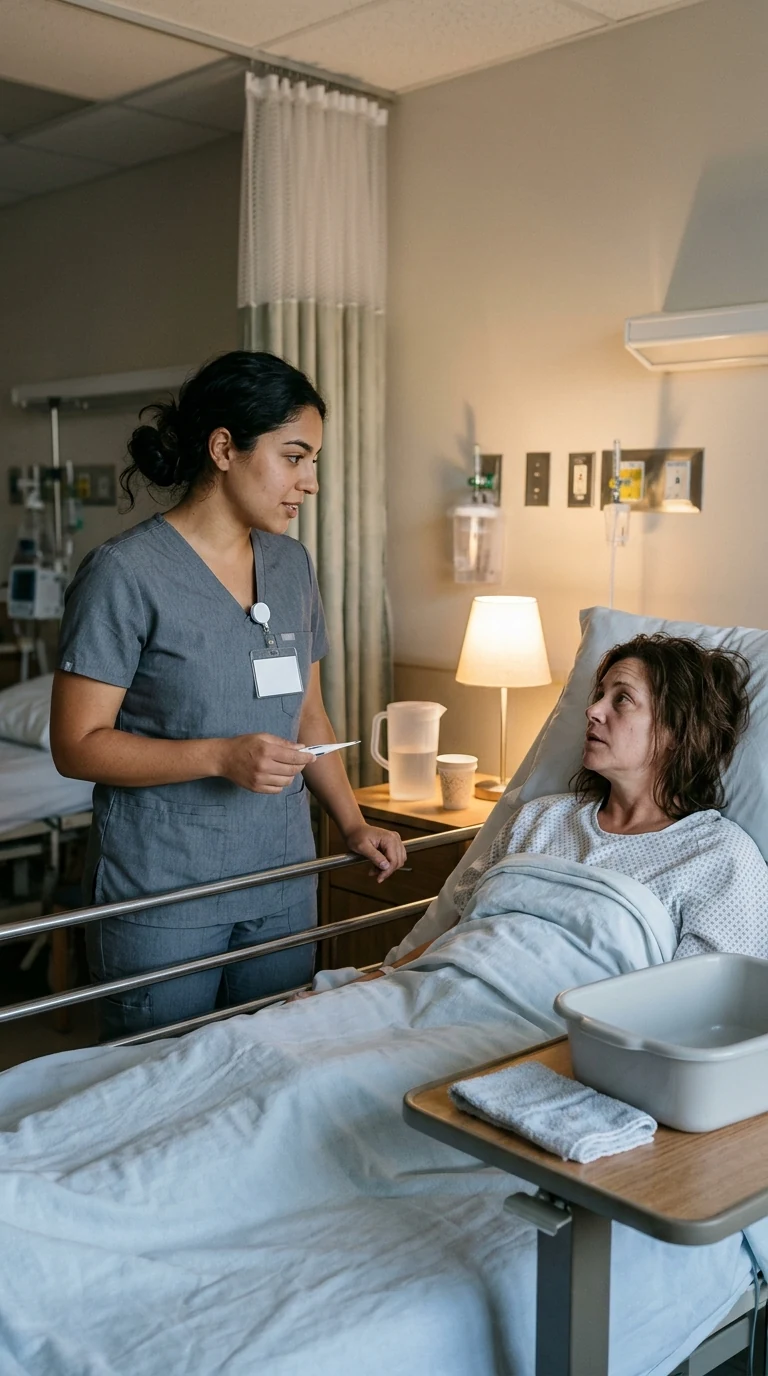
| Nursing diagnosis | Hyperthermia related to the infection and the body’s inflammatory response, as evidenced by a temperature of 101.8°F (38.8°C), flushed, warm skin, chills and a pulse above 100 beats a minute. |
| Goal | The patient’s temperature will fall below 100.4°F (38°C) within 24 hours of starting treatment and stay below it. |
| Interventions | 1. Monitor temperature, pulse, respiratory rate and blood pressure at least every 4 hours, and more often during chills or shaking. Rationale: fever raises heart rate and oxygen needs, and the trend, not one reading, shows whether treatment is working. 2. Give antipyretics such as acetaminophen as ordered, and note the temperature again about an hour later. Rationale: these medicines lower the body’s temperature set point, so heat can leave through the skin and the fever breaks. 3. Offer oral fluids regularly, small amounts often, as tolerated. Rationale: fever increases fluid loss through the skin and faster breathing, and dehydration slows recovery and thickens secretions. 4. Keep covers and clothing light and the room comfortably cool. Rationale: heavy bedding traps body heat and keeps the temperature up long after the set point has fallen. 5. Draw the blood cultures first, then give the first antibiotic dose on time as ordered. Rationale: treating the infection removes the cause of the fever, and cultures taken before the first dose are the ones that identify the organism. |
| Evaluation | Goal is met when the temperature stays below 100.4°F (38°C) for a full day, the chills and flushing stop and the pulse returns toward the patient’s normal range. |
Red flag: A respiratory rate climbing past 30, an SpO2 falling below 90 percent despite oxygen, new confusion or a dropping blood pressure can mean the infection has become sepsis. Call the provider or the rapid response team at once and stay with the patient.
Acute Pain
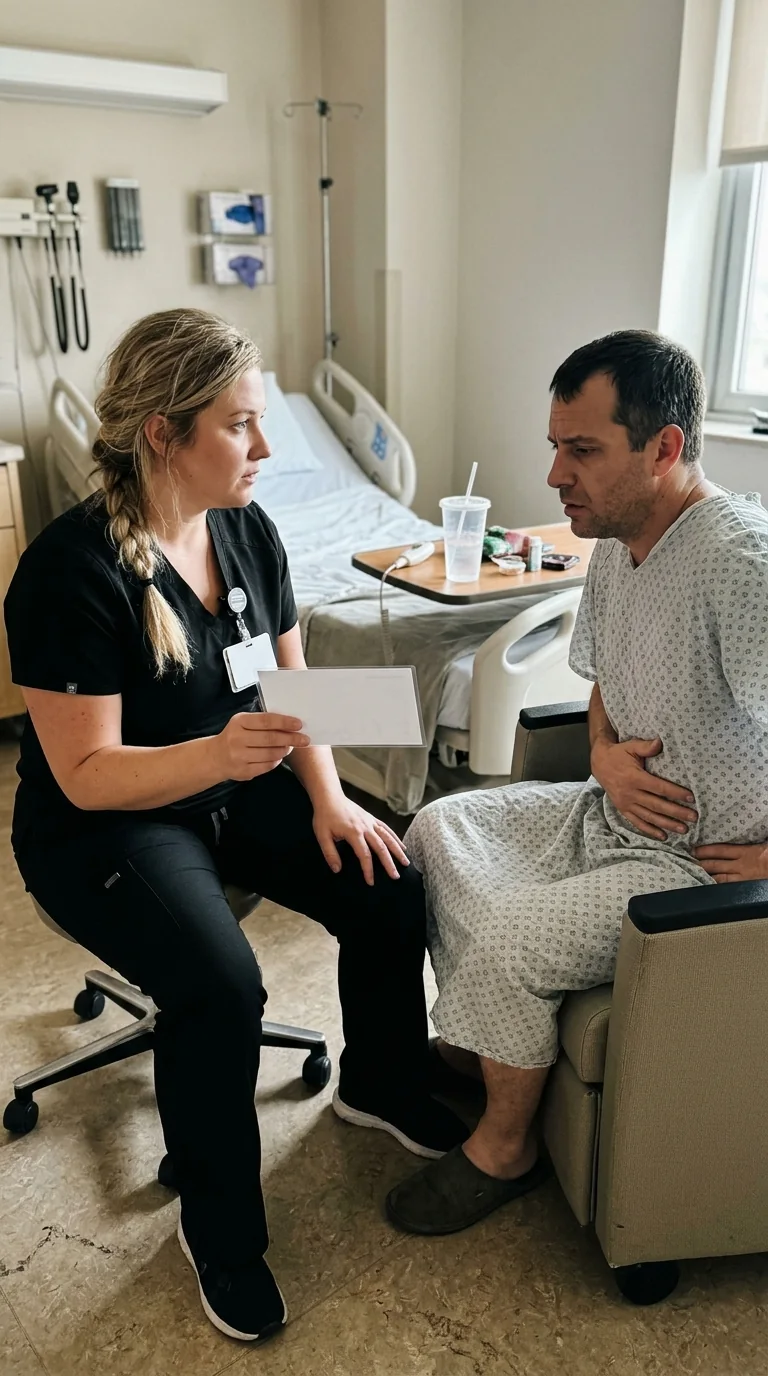
Acute Pain related to inflammation of the pleura, the lining around the lungs, as evidenced by the patient rating sharp pain at 6 out of 10 on a deep breath, guarding the chest and breathing in short, shallow breaths. The goal: within 2 hours of each intervention, the patient rates pain at 3 out of 10 or less and can take a deep breath and cough on request.
- Assess pain on a 0 to 10 scale before and after every intervention, and ask where it sits, what it feels like and what makes it better or worse. Rationale: the patient’s own rating is the standard measure of pain, and the pattern tells you which intervention to try next.
- Teach the patient to hug a small pillow firmly against the chest when coughing or changing position. Rationale: splinting supports the chest wall, so coughing hurts less and secretions clear instead of pooling.
- Give prescribed pain medicine as ordered, timed about 30 minutes before coughing practice, breathing exercises or getting up. Rationale: pain eased ahead of time is what makes deep breathing and movement possible at all.
- Help the patient into the position that eases the pain, often upright in a chair or lying on the affected side. Rationale: resting on the painful side splints it against the mattress and limits the chest movement that triggers the sharp pain.
Evaluation: pain control is working when the ratings fall to goal, breathing deepens, and the patient coughs and turns without guarding.
Activity Intolerance
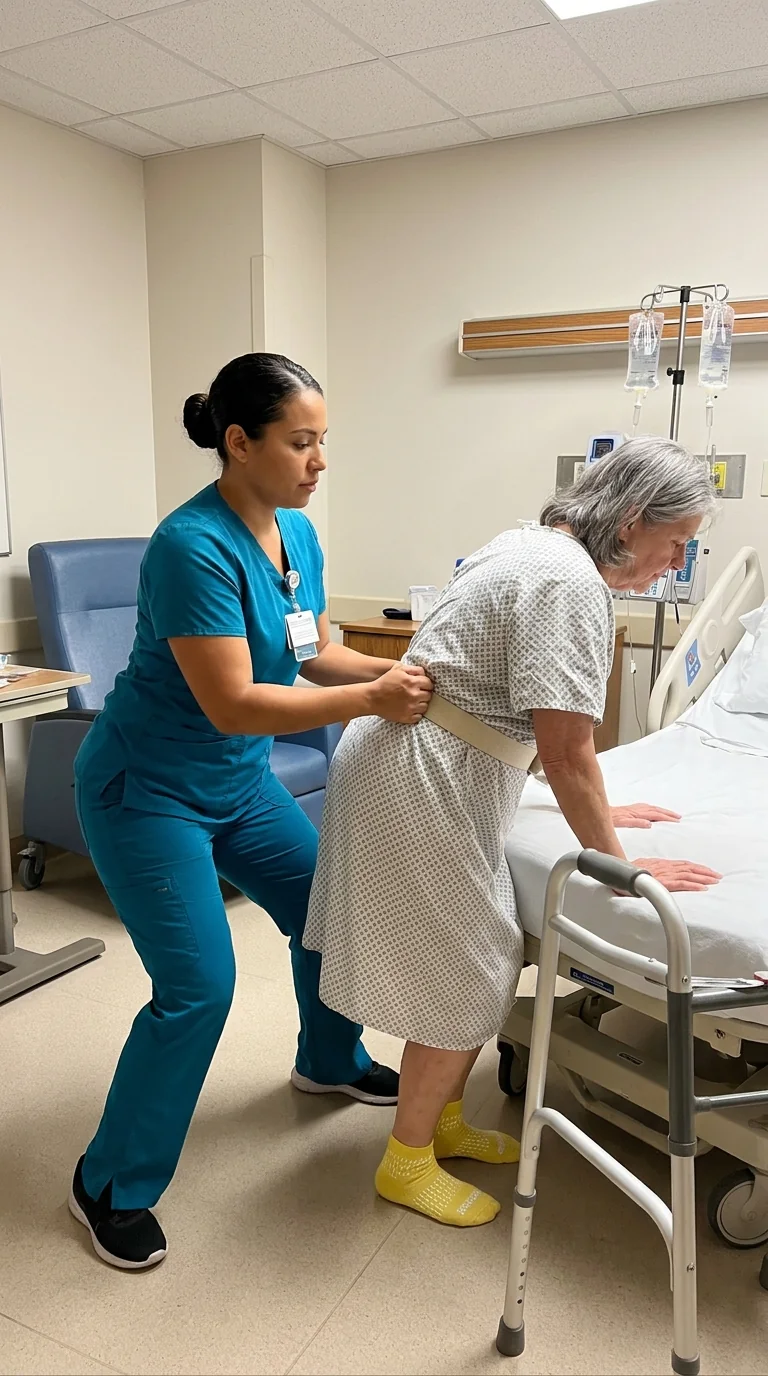
| Nursing diagnosis | Activity Intolerance related to an imbalance between oxygen supply and demand during infection, as evidenced by breathlessness on exertion, unusual tiredness after simple tasks and an SpO2 that drops when the patient walks. |
| Goal | Within 48 hours, the patient will walk to the bathroom and back with SpO2 staying at or above 90 percent and a heart rate that settles back toward baseline within 10 minutes of rest. |
| Interventions | 1. Check pulse, respiratory rate and SpO2 before, during and after each activity, and record how far the patient got. Rationale: the response to activity, not a guess, shows how much the patient can safely do today. 2. Build up in stages: sit on the edge of the bed, then sit in a chair, then take short walks, adding a little distance each time as tolerated. Rationale: graded activity rebuilds stamina without overloading a limited oxygen supply. 3. Cluster care tasks and leave real rest periods between activities, including after meals. Rationale: planned rest keeps the total oxygen demand of the day within what the lungs can deliver. 4. Teach the patient to stop and sit down at once if breathlessness spikes, dizziness starts or chest pain appears, and to call for help rather than push on alone. Rationale: stopping early prevents falls and dangerous drops in saturation. 5. Encourage walking in the room and the hallway several times a day as ordered, with help until steady. Rationale: regular movement helps the lungs expand, loosens secretions and lowers the risk of blood clots that comes with staying in bed. |
| Evaluation | Goal is met when the patient completes the short walk at goal saturation, recovers quickly at rest and reports a little less tiredness with the same task each day. |
Deficient Knowledge
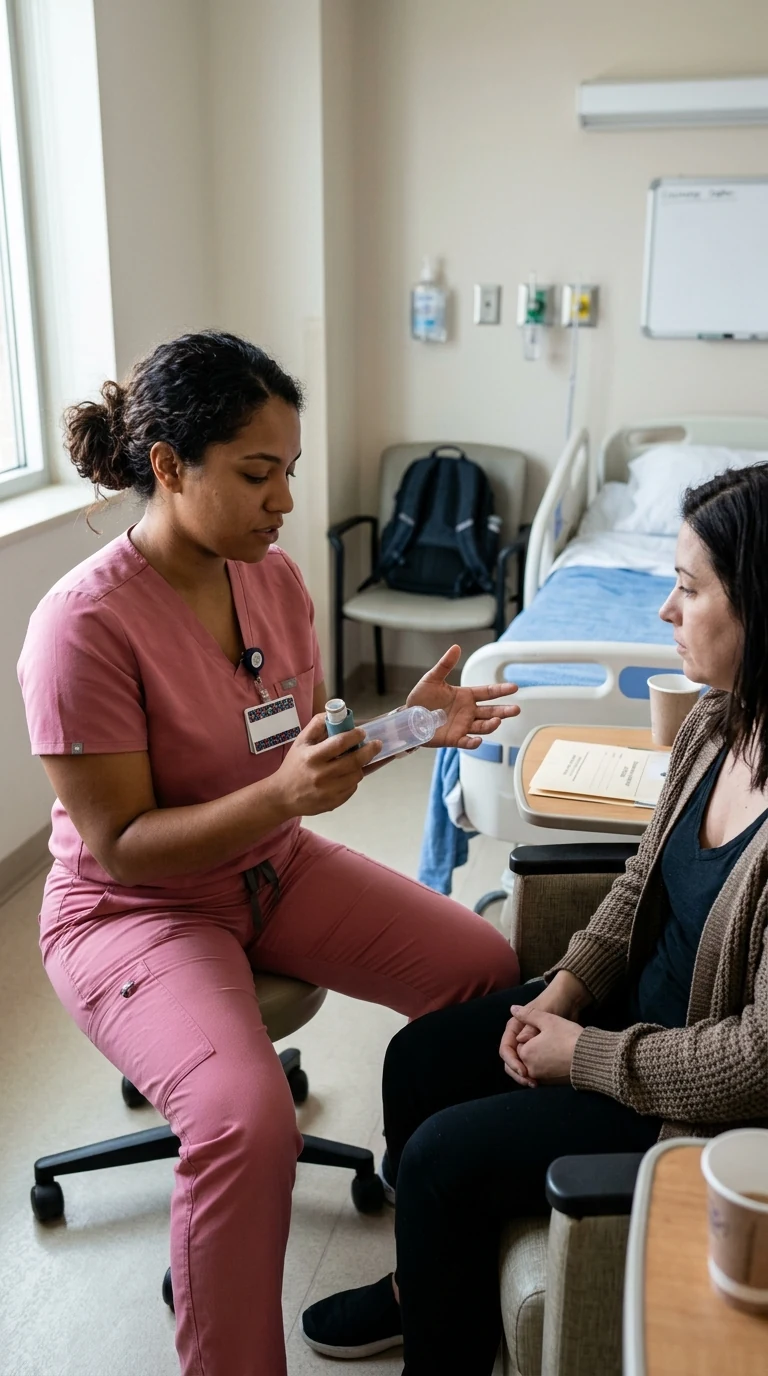
Deficient Knowledge related to a new diagnosis and an unfamiliar treatment plan, as evidenced by the patient’s questions about the antibiotic course and the statement that the medicine can stop once the fever breaks. The goal: before discharge, the patient explains in their own words the medicine schedule, three warning signs to report at once and the follow-up plan.
- Teach the antibiotic plan in plain words: every dose, on schedule, until the prescription is finished, even after the fever breaks and breathing feels normal. Rationale: stopping early lets surviving bacteria regrow, and partly treated infections are how resistant organisms develop.
- If an inhaler is prescribed, demonstrate it with the spacer slowly, then watch the patient do the whole sequence back. Rationale: a return demonstration proves the technique is right; nodding along to an explanation does not.
- Go over the warning signs one by one: worse breathlessness, chest pain, a fever that comes back, new confusion or coughing up blood all mean get care at once, day or night. Rationale: pneumonia can worsen again after discharge, and early treatment changes the outcome.
- Review prevention for the next episode: pneumococcal vaccination and a yearly influenza vaccine as recommended, careful hand hygiene and no smoking. Rationale: vaccination and clean hands lower the chance of another lung infection in a patient who has now had one.
Evaluation: teach-back confirms the learning when the patient repeats the schedule, the warning signs and the follow-up date correctly without prompts.
Evaluation and Teaching
Step back once a day and judge the whole plan, not just one diagnosis. The plan is working when the temperature stays down for a full day, breath sounds clear lobe by lobe, the saturation holds at goal on room air, the cough turns strong and productive, and the patient walks a little farther with less breathlessness. The MedlinePlus encyclopedia entry on community-acquired pneumonia in adults lays out the usual recovery timeline and the symptoms that should prompt a call, which makes a fair yardstick for your own evaluation.
Teaching runs alongside evaluation, not after it. Before discharge the patient should know the medicine schedule, the warning signs, the follow-up appointment and whether a repeat chest X-ray has been booked to confirm the lung has cleared. Add the daily habits that protect the recovery: fluids, rest broken up with short walks, deep breathing practice at home and no smoking. Write the key points down for the patient, because spoken teaching on a busy discharge day is easy to forget.
Questions Students Ask
Which diagnosis always comes first in a pneumonia care plan?
The one that threatens the airway or breathing, which here means airway clearance and gas exchange before everything else. Rank by the ABCs: a blocked airway kills fastest, poor gas exchange next, then circulation and safety problems. Fever, pain and teaching all matter, and all of them wait until the patient can breathe.
How often should you reassess a pneumonia patient?
At least every 4 hours for temperature, pulse, respiratory rate, blood pressure and SpO2 on a stable patient, and much sooner after any change, a new oxygen need or a worrying trend. Reassessment is what turns a care plan from a paper exercise into a working tool, because pneumonia can turn within a single shift.
Can one patient really have all six diagnoses at once?
Yes, and it is common. Care plans list every problem the assessment supports, then rank them. You treat the top diagnoses first and let the others share interventions: sitting a patient upright, for example, serves airway clearance, gas exchange, pain and activity tolerance in a single action.
Which Diagnosis Would You Put First?
Start where the danger is. Look at the patient’s breathing first: if secretions are pooling or the saturation is sliding, those two diagnoses own your first hour, and the fever chart can wait. These care plan study tips show the same ranking habit applied to any condition you meet on the unit.
Once breathing is steady, the rest falls into place: bring the fever down, ease the pain so the patient can cough, build activity back up in stages and teach before discharge. The order is not about which diagnosis sounds most serious on paper; it is about which one harms the patient first if it sits untreated. So on your next clinical shift, which finding will you check before all the others: the cough, the saturation or the temperature?
For study use only. Always follow your program, your facility’s policy and current drug and lab references.