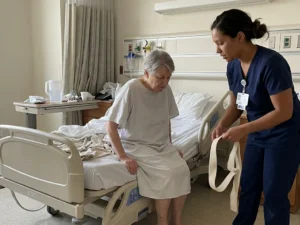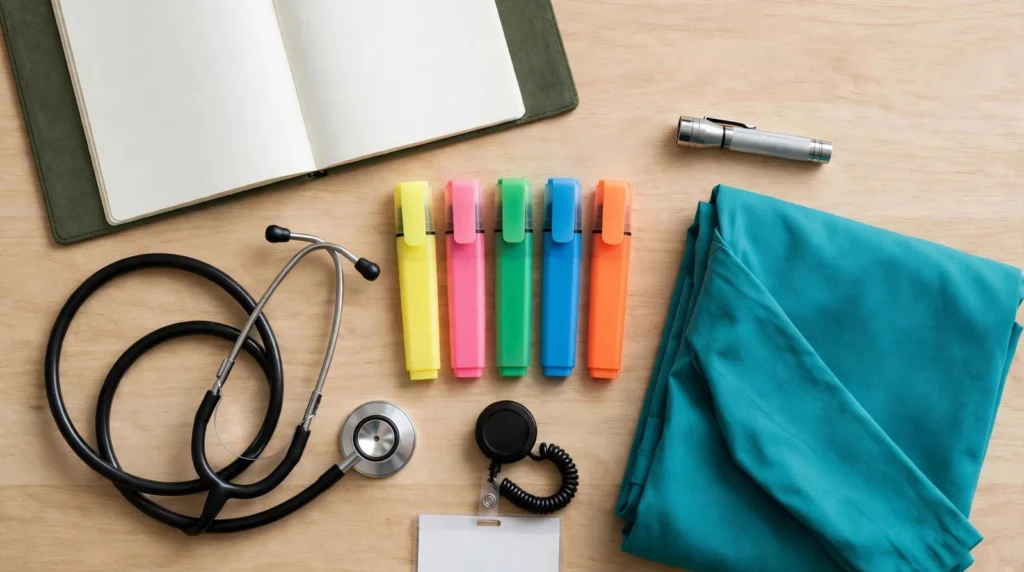

The charge nurse points to the sign on the door, and the next patient on the list needs precautions you have not used since skills lab. The sign names the type, the cart holds the gowns and masks, and the clock is already moving. This post gives you isolation precautions in a form you can study tonight and use on the unit tomorrow: 24 actions organized by transmission type, with the PPE, the room setup, and the nursing action for each one.
Read the groups in order, because each one builds on the last. Standard precautions apply to every patient, every time. Contact, droplet, and airborne precautions add layers on top of standard care, and the exam loves to test which layer fits which germ. Work through the actions one group at a time, and picture yourself walking through each door with the right gear on.
Standard Precautions
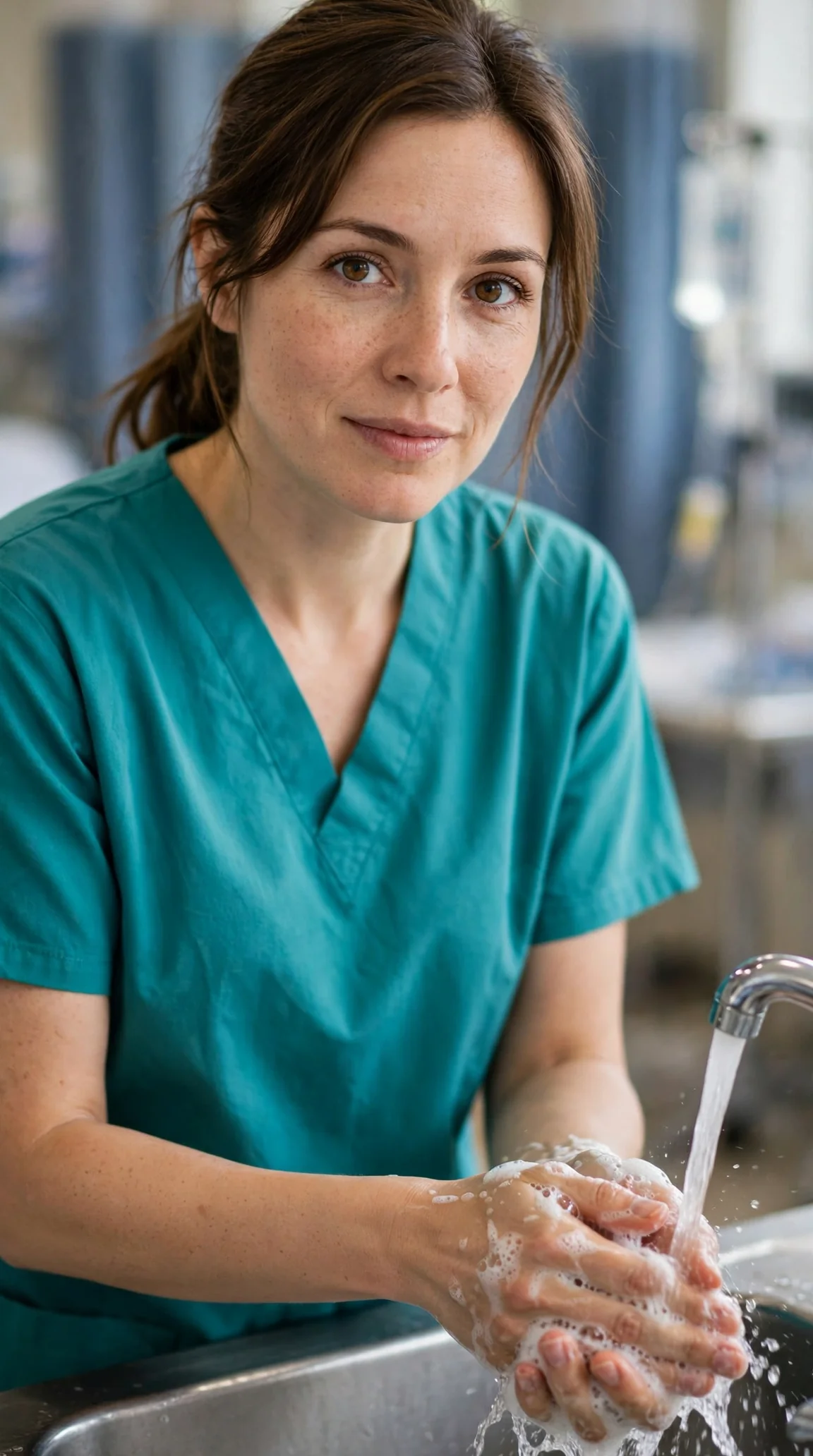
Standard precautions are the base layer for every patient, whether an infection is known or not. Treat all blood, body fluids, secretions, excretions, broken skin, and mucous membranes as if they could carry germs, and use barriers that match the task in front of you. The six actions below cover hands, checks, gloves, gowns, face protection, and equipment.
Hand Hygiene Before and After Care
Clean your hands before you touch a patient, before a clean task, after body fluid exposure, after you touch a patient, and after you touch the area around a patient. Use soap and water when hands look dirty or after caring for a patient with diarrhea. Rub sanitizer over all hand surfaces until dry, or wash with soap for at least 20 seconds.
Study tip: pair the two moments in your head as one habit, in and out. Sanitize on the way into the room and again on the way out, and the habit holds even on a rushed shift.
Check the Chart and Responsiveness First
Read the isolation order, the allergies, and the baseline notes before you gather PPE. A patient who cannot follow precautions needs closer watching and more help from the team, so check alertness and the ability to respond to simple commands as part of your first look. A quick check with glasgow coma scale scores helps you judge responsiveness in a standard way, and a low score tells you the patient may not call for help or keep a mask in place.
Chart the precaution type and the PPE you used, so the next nurse starts from the same facts. On the NCLEX, the priority is matching the precaution to the order and the patient, not memorizing a list without a reason.
Gloves for Body Fluid Contact
Wear clean gloves when you may touch blood, body fluids, secretions, excretions, broken skin, or mucous membranes, and when you handle soiled items. Change gloves between dirty and clean tasks on the same patient, and always change them between patients. Gloves are single use, so remove them after the task and clean your hands right away.
Study tip: put gloves on last when you dress in PPE, and take them off first when you undress, peeling from the wrist so the outside never touches your skin. The order matters as much as the gloves themselves.
Gowns for Splash Risk
Wear a gown when splashes or sprays of blood or body fluids could reach your clothes or skin, such as during wound care, suctioning, or helping a patient who vomits. Tie the gown at the neck and waist so your back stays covered, and keep the sleeves down over your wrists.
Remove the gown by rolling it inward so the dirty outside folds away from you, then drop it in the right bin and clean your hands. If the gown tears or soaks through, stop and replace it.
Masks and Eye Protection
Wear a surgical mask plus goggles or a face shield when sprays or splashes could reach your face, such as during suctioning, wound irrigation, or a coughing patient who cannot cover up. The mask must cover your nose and mouth fully, and the shield must cover your eyes from the side as well as the front. Glasses alone do not count as eye protection.
Study tip: think of face protection as one set, not two separate choices. If the task can spray, reach for the mask and the shield together before you start, not after the first splash.
Separate Clean and Used Equipment
Keep clean supplies apart from used items, and clean shared equipment between patients with the disinfectant your unit uses, following the contact time on the label. Wipe stethoscopes, cuffs, and thermometers even when they look clean. Place used items in the right bin or bag at the bedside instead of carrying them through the hall.
Sharps go straight into a puncture-proof container at the point of use, never recapped by hand. On the NCLEX, an equipment question almost always tests whether you cleaned it, contained it, or separated it.
Contact Precautions
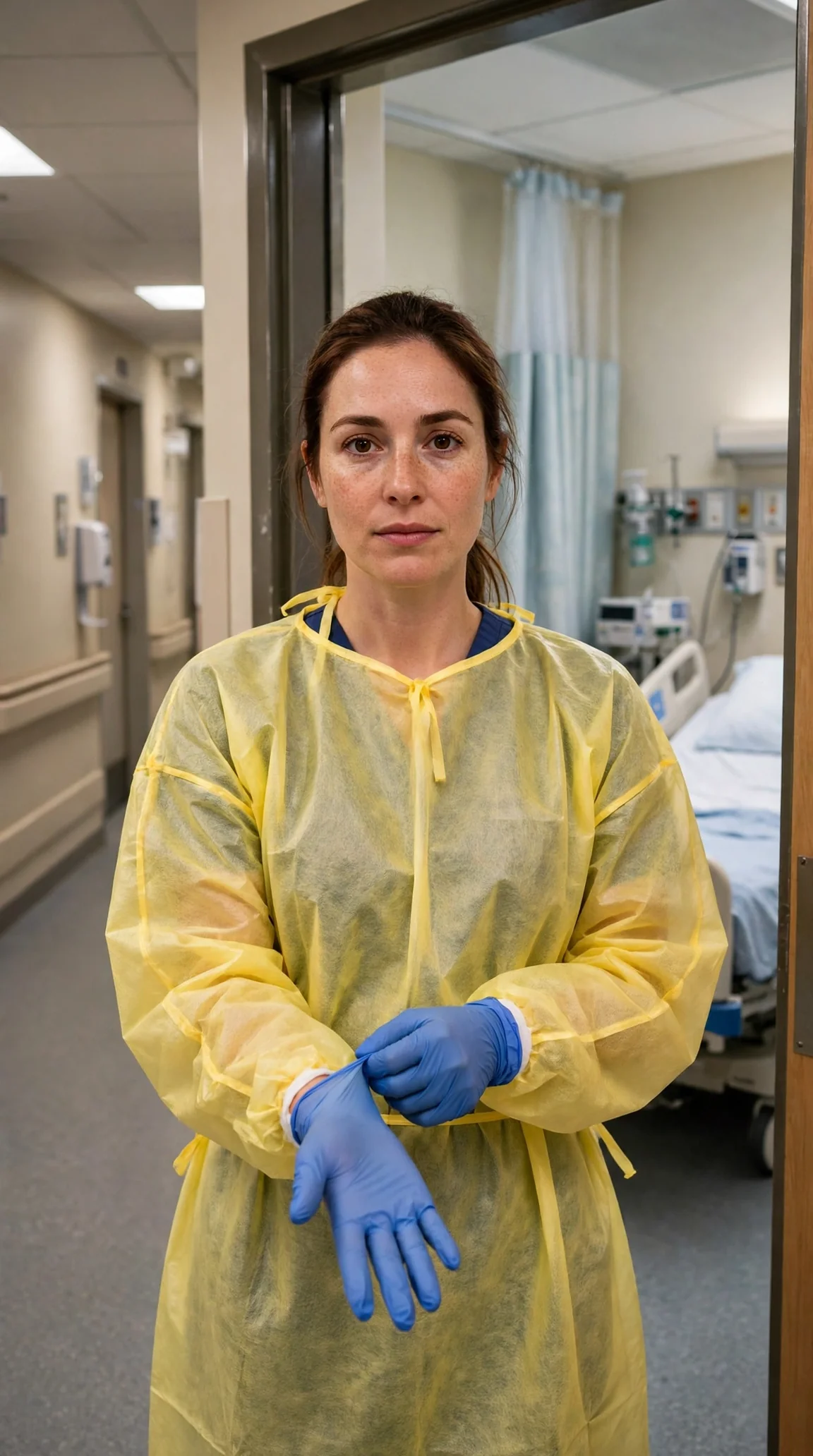
Contact precautions add a barrier layer for germs that spread by touch, either straight from a patient or from surfaces and equipment in the room. Think of organisms like MRSA, VRE, and C. difficile, which survive on skin, bedding, and bed rails. The six actions below cover placement, labs, gown and gloves, dedicated equipment, transport, and visitors.
Single Room Placement
Place the patient in a private room when one is open, with the door closed and the precaution sign posted where staff can see it before entry. When no private room is open, cohort patients with the same organism together, and keep their supplies apart from other patients.
Study tip: picture the room as a zone with one door in and one door out. Everything that enters the zone either stays there, gets cleaned, or goes into a sealed bag, and nothing drifts back to the hall uncleaned.
Watch Lab Values That Change Precautions
Check the chart for screens and cultures that confirm or extend contact precautions, such as a positive MRSA screen or a C. difficile toxin result. Low white cell counts change the picture, since a patient with few defenses needs protection from germs brought in, so review the lab values to watch before you plan the shift. A falling neutrophil count, a new fever, or a fresh positive screen each call for a fresh look at the precaution plan.
Tell the provider and the charge nurse when a result changes what the patient needs, and document the change. Labs turn a general precaution into a specific plan, and the exam tests whether you act on the result.
Gown and Gloves on Entry
Put on a gown and gloves before you enter the room, every time, even for a short visit such as handing over water. Germs spread by touch, so bare hands and uncovered sleeves pick them up from the bed rail, the call bell, and the sheets. Keep the gown tied and the gloves over the gown cuffs while you work, and remove both before you leave the room, then clean your hands.
Study tip: dress at the door, undress at the door. If you catch yourself walking in to grab one quick thing without a gown, stop at the threshold, because that quick thing is exactly how contact spread happens.
Dedicated Patient Equipment
Keep a stethoscope, blood pressure cuff, and thermometer in the room for that patient alone. When dedicated equipment is not possible, clean and disinfect the item fully before it leaves the room, following the contact time on the label.
Label the equipment clearly so a covering nurse does not grab it by mistake, and check at handoff that the dedicated set is still in the room. On the NCLEX, the right answer for shared equipment is almost always to clean it before reuse or to leave a dedicated set behind.
Limit Patient Transport
Move the patient out of the room only for tests or care that cannot happen at the bedside, and tell the receiving area about the precautions before the patient leaves. Cover the patient with a clean sheet for the trip, keep the route short, and clean transport equipment right after.
Study tip: ask one question before any transport, whether the test can come to the patient instead. Portable imaging and bedside procedures often remove the trip entirely, and that is the safest answer.
Teach Visitors Contact Rules
Show visitors how to put on a gown and gloves, where to clean their hands, and where to put used items when they leave. Keep the teaching short and hands-on. Ask visitors who feel ill to stay home, and keep children from sitting on the bed or touching dressings and lines.
Document the teaching and the visitor response, and repeat the key points at the next visit, because visitors rotate and each new person starts from zero. A family member who follows contact rules protects the patient and every patient after them.
Droplet Precautions
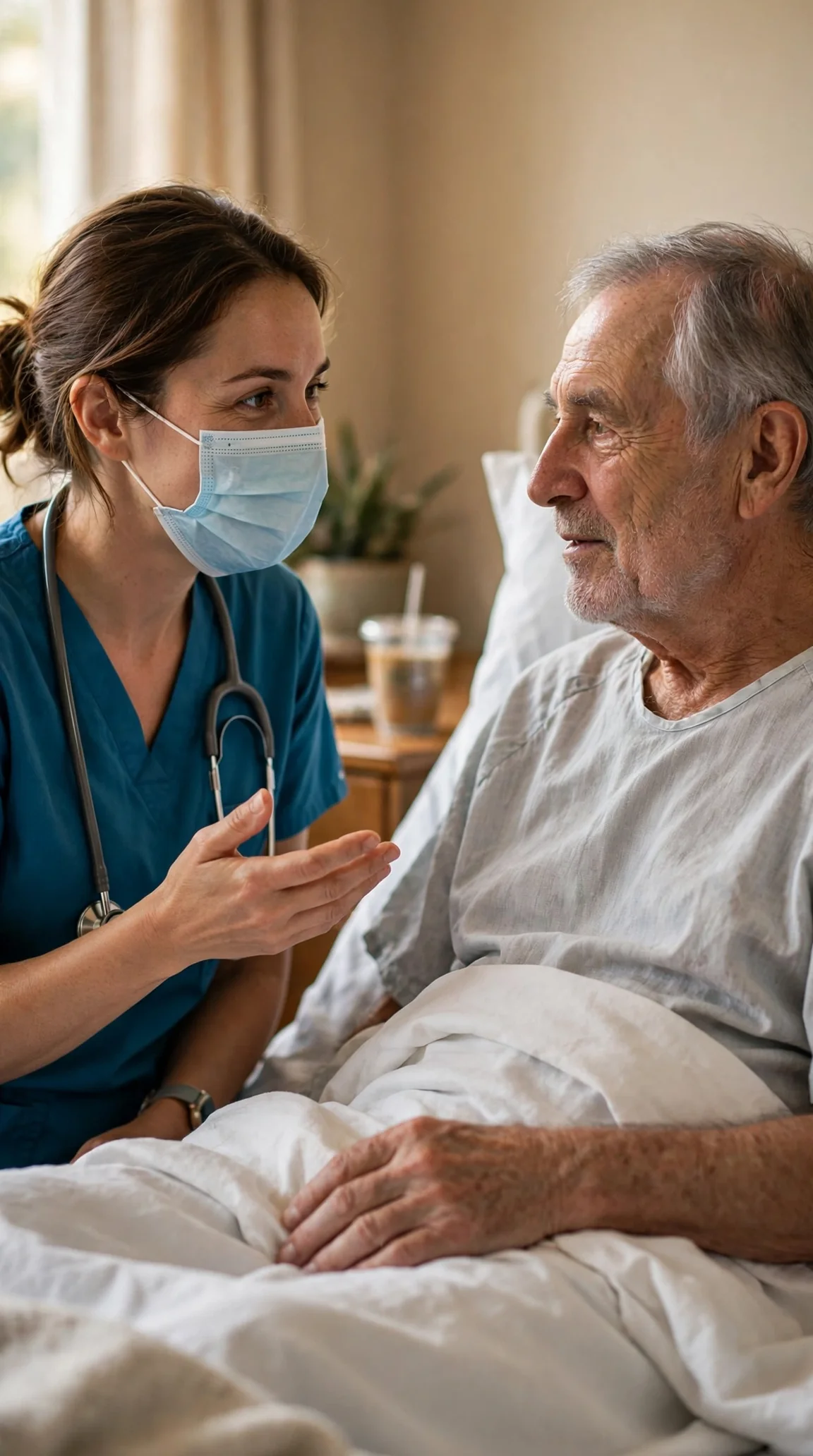
Droplet precautions cover germs that travel in large respiratory drops when a patient coughs, sneezes, or talks, and that fall to the ground within a short distance. Think of influenza, pertussis, and meningococcal disease. The six actions below cover placement, masks, planned entries, transport, eye protection, and cough hygiene.
Private Room or Cohort Placement
Place the patient in a private room when one is open, and cohort patients with the same organism when private rooms run out. Keep the door closed, the sign posted, and beds at least three feet apart in a shared room, with a curtain between them.
Study tip: remember the number three for droplets, three feet of space, and a mask when you step inside that space. One number carries the whole precaution in your head during a busy shift.
Surgical Mask Within Three Feet
Wear a surgical mask when you work within three feet of the patient, and keep it over your nose and mouth for the whole task. Droplets reach the face of anyone standing close during coughing or talking, so the mask matters most during hands-on care. Change the mask when it gets damp, and clean your hands after you remove it.
Do not confuse a surgical mask with a respirator here: droplet precautions call for a surgical mask, while airborne precautions call for a fitted respirator, and the exam tests that difference often. If the order says droplet, reach for the surgical mask first.
Plan Entries to Cut Room Trips
Gather everything you need before you enter a droplet room, and batch small tasks into one visit instead of five short trips. Each entry is a fresh exposure and a fresh round of PPE. Check the list at the door: meds, linens, water, and teaching sheets, then enter once and work through it.
Study tip: keep a small door checklist in your head, supplies, meds, and teaching, and run it before every droplet room. The same habit shows up in time management tips for nursing students, because planned entries are really planned time.
Patient Mask During Transport
Put a surgical mask on the patient for any trip out of the room, and keep it on until the patient returns. Tell the receiving area before the trip, and keep the route short and direct. The patient mask catches drops at the source.
If the patient cannot tolerate a mask, cover coughs with tissues, turn the head away from passersby, and clean hands after coughing. Document what you used and how the patient tolerated it, so the next trip starts from a known plan.
Eye Protection for Close Care
Add goggles or a face shield when close care could spray drops toward your eyes, such as suctioning or helping a coughing patient sit up. A surgical mask alone leaves the eyes open. Wear the shield over the mask, and clean reusable eye protection between patients.
Study tip: when a task makes you lean close to a coughing patient, reach for eye protection before you lean in. The decision takes two seconds at the cart and saves a full exposure.
Cover Coughs and Sneezes
Teach the patient to cover coughs and sneezes with a tissue or the elbow, to throw tissues away at once, and to clean hands right after. Keep tissues and a lined bin within reach of the bed. This habit, called respiratory hygiene, sits inside standard precautions too, but it matters most when droplet precautions are already in place.
Model the habit yourself when you cough in the room, and praise it when the patient does it well, because a patient who owns the habit keeps it up after you leave. On the NCLEX, cough hygiene is often the quiet right answer hiding behind a louder PPE choice.
Airborne Precautions
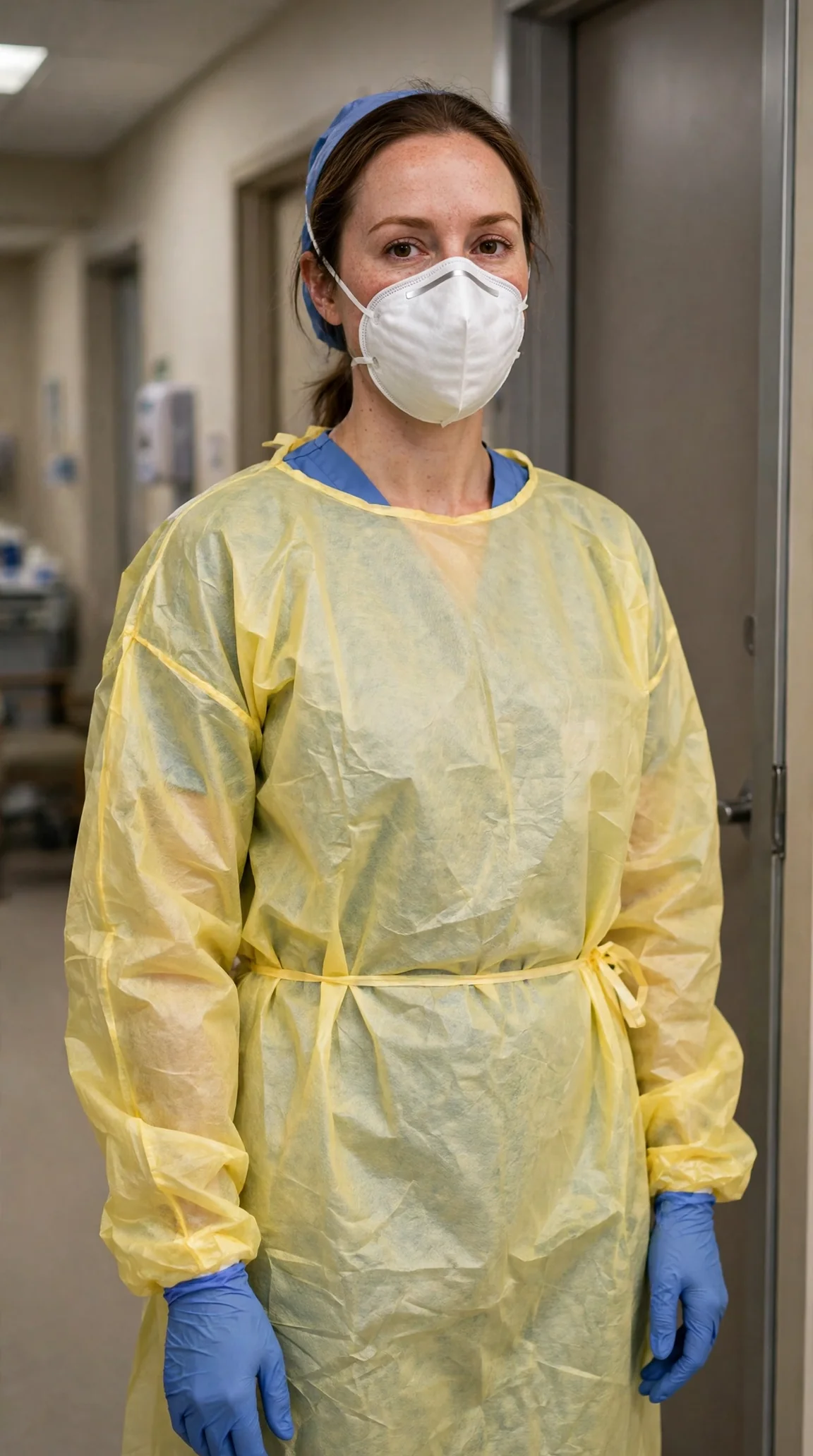
Airborne precautions cover germs that float in tiny particles and stay in the air over distance and time, such as tuberculosis, measles, and varicella. These particles slip past a surgical mask, so the room and the respirator carry the protection, not distance alone. The six actions below cover the room, the respirator, the care plan, masks outside the room, entries, and transfers.
Negative Pressure Room
Place the patient in a negative pressure room, where air flows into the room instead of out to the hall, and keep the door closed at all times. Check the pressure monitor each shift, and report a failed reading at once. When no negative pressure room is open, follow your facility policy and tell the charge nurse right away.
Study tip: picture the air moving one way, hall to room to outside, and the closed door as the valve that keeps it moving that way. Every time the door stands open, the picture breaks, and so does the protection.
Fit Tested N95 Respirator
Wear a fit tested N95 respirator before you enter the room, and check the seal each time by breathing in and out and feeling for leaks. The respirator must cover your nose, mouth, and chin with no gaps, and facial hair that breaks the seal breaks the protection. A surgical mask does not filter airborne particles, so it never substitutes for a respirator here.
Fit testing happens at least once a year and when your face shape or respirator model changes, and the result belongs to one model and size. If the seal check fails, try another size or model before you enter.
Write Precautions Into the Care Plan
Write the precaution type, the PPE, the room setup, and the patient teaching into the care plan, with a goal the team can measure, such as the patient naming the precautions and using the mask correctly by the end of the shift. A plan that names only the disease leaves the next nurse guessing, while a plan that names the precautions hands over a working routine. Review the plan when the organism, the room, or the condition changes, and update it the same shift.
Study tip: build the habit of writing precautions into every isolation care plan, and use care plan study tips to practice turning a precaution order into goals, actions, and evaluation. The exam rewards plans that connect the precaution to the patient, not plans that list facts alone.
Patient Mask Outside the Room
Put a surgical mask on the patient for any trip outside the negative pressure room, and keep it on until the patient returns. The patient mask catches particles at the source, while your respirator protects you, so both matter and neither replaces the other. Tell the receiving area before the trip, and keep the route short.
When the patient returns, remove the mask in the room, place it in the right bin, and clean hands. If the patient cannot tolerate a mask, limit the trip to what is truly needed, and document the plan and the tolerance for the next trip.
Limit Room Entries
Keep entries to staff who must enter for care, and keep students, observers, and nonessential visitors out of airborne rooms. Each entry uses a respirator, risks a broken seal, and opens the door that holds the pressure. Batch care at the bedside, and handle teaching and family updates outside the room when possible.
Study tip: before you open an airborne room door, ask whether the task needs hands in the room or only eyes on the patient. A window check, a monitor glance, or a phone call from outside often answers the question without an entry.
Notify the Team Before Transfer
Tell the receiving unit, the transport team, and any department along the route about the airborne precautions before the patient moves. The receiving room needs negative pressure ready, the transport team needs respirators fitted, and the route needs clearing. Hand over the organism, the precaution type, and the patient tolerance for a mask, in one clear message.
Document who you told and what you handed over, and confirm the receiving room is ready before the patient leaves. A transfer that starts with notice protects the patient, the team, and every person the route passes.
The Short Version
If you remember one thing: match the precaution to how the germ travels, then put on the PPE before you enter. Standard precautions cover every patient, contact adds gown and gloves for touch, droplet adds a surgical mask for close range, and airborne adds a negative pressure room and a fitted respirator for particles that float.
Study the groups side by side until the layers feel automatic, and walk through one room of each type in your head before your next clinical day. The nurse who knows which layer fits which germ walks into every room calm, covered, and ready.