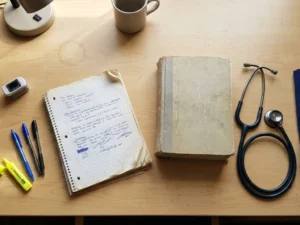

Why does a care plan come back covered in red ink when every part looks filled in? Usually one part was written before the one it depends on: goals with nothing to measure, interventions with no cause behind them. This guide walks through the parts of a nursing care plan in the order they are built, so you can write all 6 parts as one connected plan instead of six separate boxes.
Each step below uses the same pneumonia example, a patient with a productive cough, breathlessness and crackles in the lungs, so you can watch one set of findings travel through the whole plan. If care plans are new for you, pair this walk-through with these nursing care plan study tips before your next assignment is due.
Step 1: Assessment, the Data You Start With
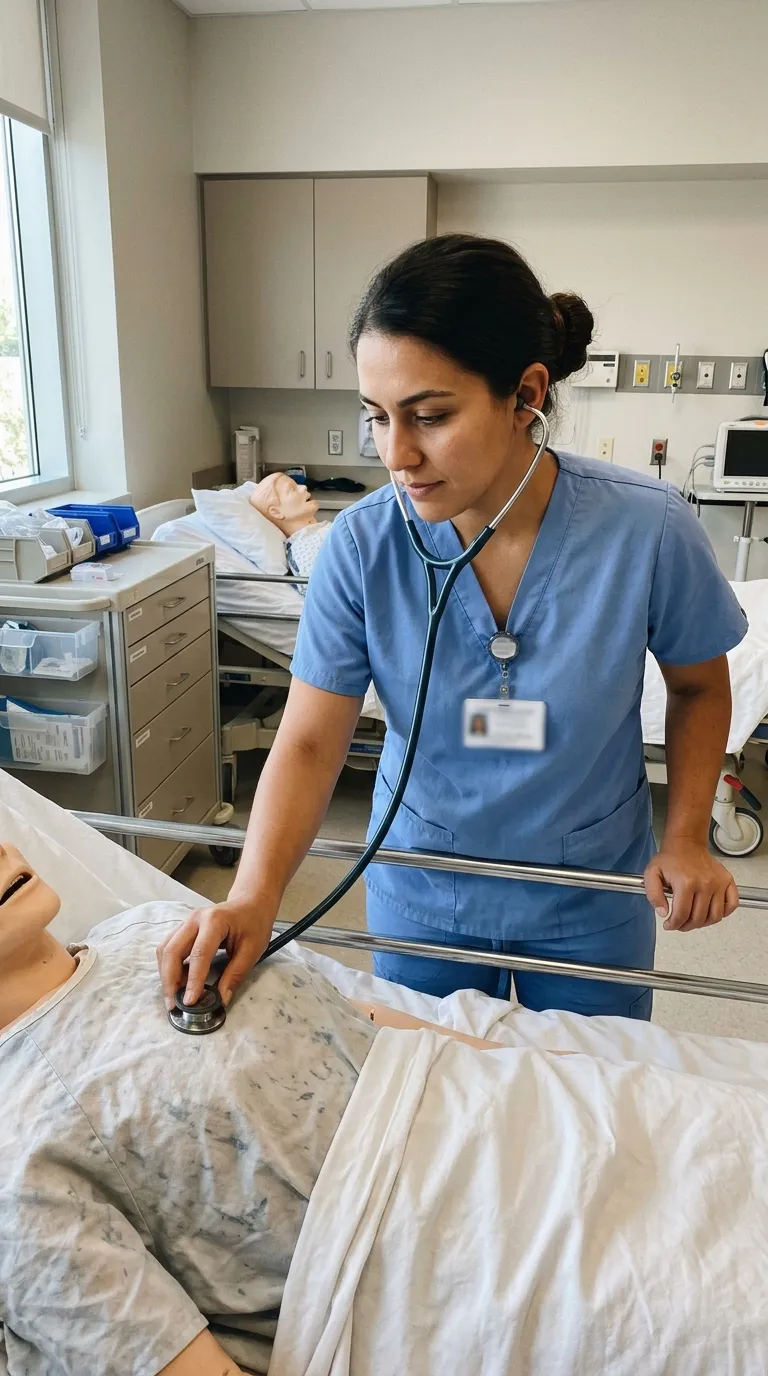
Assessment is the raw material for everything that follows, and it comes in two kinds. Subjective data is what the patient tells you in their own words; objective data is what you measure and find yourself. Interviewing well matters here: open questions and quiet listening, the same therapeutic communication skills you use at any bedside, pull out the details a chart never shows.
- Subjective data: the pneumonia patient reports a productive cough, breathlessness on the ward walk and a poor night of sleep.
- Objective data: vital signs, lung sounds and lab results; in this example, crackles heard in the lower lungs on auscultation.
- Cluster the cues: group findings that point the same way, cough, breathlessness and crackles together, before you name any problem.
- Verify surprises: recheck a finding that does not fit the pattern, and ask the patient what has changed since yesterday.
Step 2: Nursing Diagnosis in PES Format

The nursing diagnosis turns your clustered cues into one clear statement, written in PES format: the Problem, its Etiology, and the Signs and symptoms that prove it. It names the patient’s response to illness, never the medical diagnosis itself. The ANA overview of the nursing process places this step right after assessment for exactly that reason.
- Problem: the NANDA-I style label that fits the cues, here Ineffective Airway Clearance.
- Related to: the cause you can act on, here thick secretions held in the airways.
- As evidenced by: the proof from Step 1, a productive cough and crackles in the lower lungs.
- Priority: order competing diagnoses by airway, breathing, circulation and safety, so the breathing problem is planned first.
NCLEX tip: When a question hands you a care plan, check the diagnosis first: if the statement names a medical diagnosis instead of a patient response, or the evidence does not match the label, that option is wrong no matter how good the interventions sound.
Step 3: Goals and Expected Outcomes

Goals are written before interventions, on purpose: they set the target the interventions aim at. Every goal is patient-centered and starts with the words “The patient will”, so the outcome belongs to the patient, not to the nurse’s task list. One diagnosis usually carries one to three outcomes, and those outcomes are exactly what Step 6 compares against.
- Specific and measurable: say what will change and how you will know, such as easier breathing the patient can describe and airways clearer to hear.
- Achievable and relevant: the goal fits this patient’s condition today, not a full recovery by Friday.
- Time-bound: attach a deadline, by the end of the shift or within 24 hours, so Step 6 knows when to judge it.
Step 4: Nursing Interventions
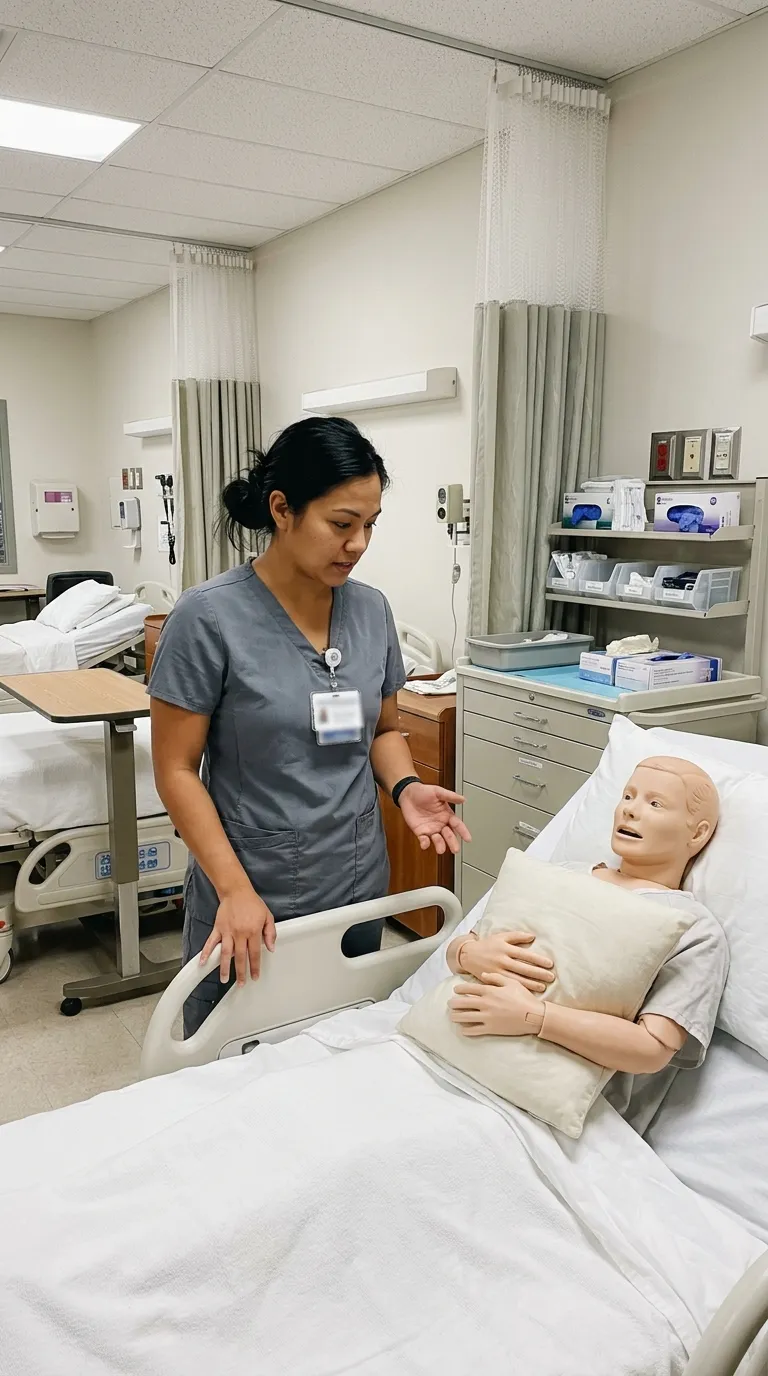
Interventions are the actions chosen to move the patient toward the goals, and each one names what will be done, how often and for how long. Write them so another nurse could pick up the plan mid-shift and carry it out the same way. Aim each action at the cause named in the diagnosis, the thick secretions here, not only at the cough it produces.
- Independent: nurse-initiated actions, such as sitting the patient upright and teaching deep breathing and a supported cough.
- Dependent: actions carried out exactly as the provider orders them, with a recheck after each one.
- Collaborative: work shared with the wider team, such as respiratory therapy for airway clearance help.
- Matched to the cause: if an action does not touch the etiology, it does not belong in this plan.
Step 5: Rationale, the Why Behind Each Action

The rationale is one scientific reason for each intervention, written in the same order as the Step 4 list. It answers a single question: how does this action help the cause? The Nurseslabs care plan guide treats this column as the proof that the plan was thought through, and instructors grade it that way too.
- Match the order: rationale one explains intervention one, so a reader can check the pair at a glance.
- Explain the mechanism: sitting upright lets the lungs expand more fully, so breathing takes less effort; that is a rationale.
- Never restate: “to help the patient breathe better” only repeats the intervention in other words and earns nothing.
Memory trick: Give every rationale the because test. Read the intervention, add the word because, and finish the sentence with the body process it changes. If you cannot finish that sentence, the intervention probably does not match the diagnosis yet.
Step 6: Evaluation and Revision
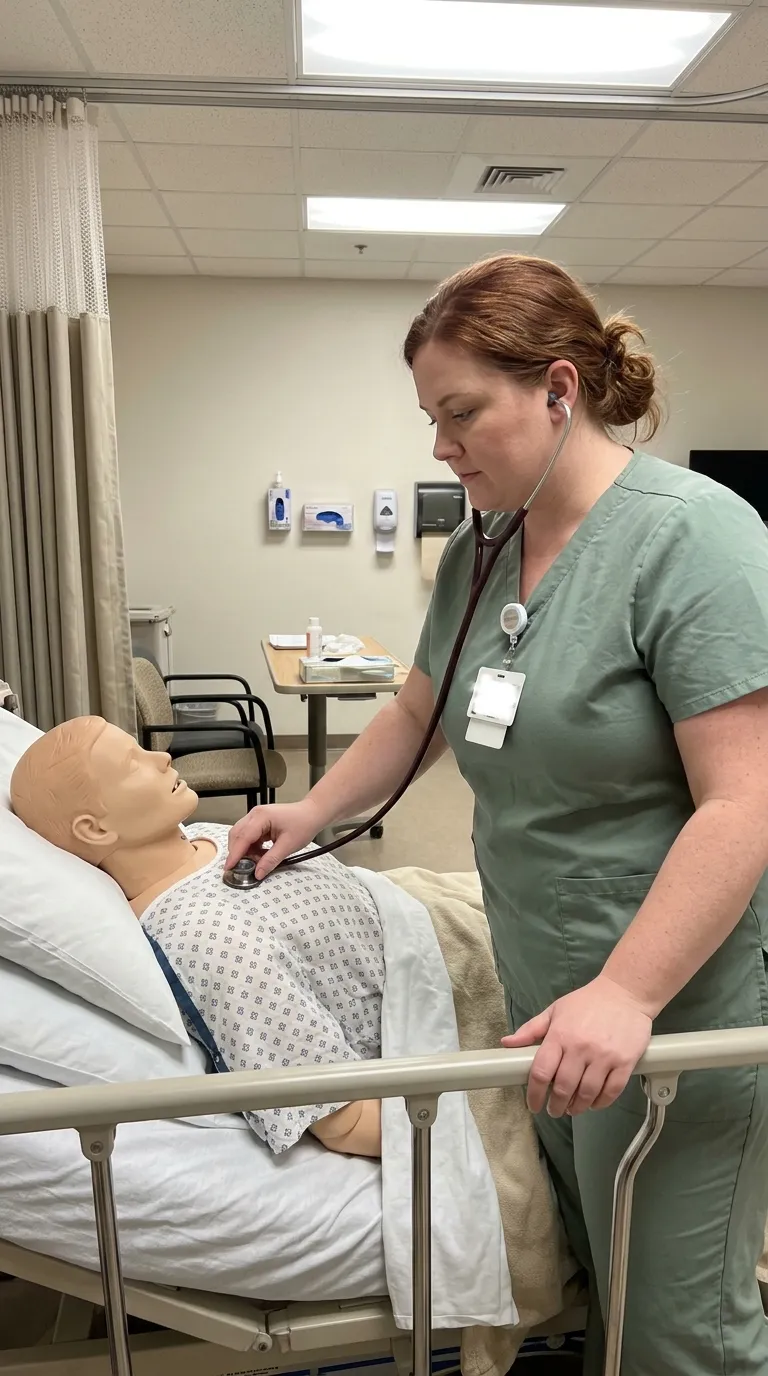
Evaluation closes the loop by going back to the patient at the time the goal set. Compare what you find with Step 3 word for word: the same breathing, the same cough, judged against the deadline you wrote. Then record one of three verdicts and act on it, because this verdict is what the next shift builds on.
- Goal met: the outcome happened as written; keep monitoring and move to the next priority.
- Partially met: progress is real but short of the target; keep the plan and adjust the timeline or the actions.
- Not met: loop back to Step 1, gather fresh data, and revise the diagnosis or the interventions.
- Keep it living: document the verdict, update the plan every shift and hand it over, never file it and forget it.
Common Mistakes
Most red ink lands on the same few errors. Check your draft against this list before you hand it in.
- Writing the medical diagnosis as the nursing diagnosis: pneumonia names the disease; your diagnosis names what the patient struggles with, like clearing secretions.
- Goals no one can measure: “the patient will feel better” cannot be judged at evaluation; add what will change and by when.
- Forgetting precautions in the plan: a patient who needs isolation precautions should have them written into the interventions, not left to memory.
- Treating the plan as finished: an unchanged plan on day three means evaluation never happened; every shift adds new data.
Questions Students Ask
Is a care plan the same thing as the nursing process?
Not quite. The nursing process is the five-step method nurses use to think: assess, diagnose, plan, implement, evaluate. A care plan is that thinking written down for one patient. The six parts here split the written plan the way most care plan forms do, with rationale given a part of its own.
How many nursing diagnoses should one care plan have?
Start with the one or two problems that threaten airway, breathing, circulation or safety, and write those well. A focused plan with one strong diagnosis, clear goals and matched interventions teaches you more, and grades better, than a long list of shallow ones. Add more as the picture grows.
What happens when a goal is not met?
Nothing has failed; the plan has done its job by showing you. Go back to assessment, look for what changed or what was missed, and revise the diagnosis, the goals or the interventions. Document the verdict and the change, so the next shift starts from the new plan.
Build On This Topic
You now have the skeleton every care plan hangs on: data, diagnosis, goals, actions, reasons and a verdict. The fastest way to make it stick is to write one full plan from a single example, start to finish, instead of rereading the parts on their own.
Work through the pneumonia nursing care plan next and label each of the 6 parts as you meet it, then draft your own version from different assessment data. When the order feels automatic, care plan assignments stop being red-ink events.
For study use only. Always follow your program, your facility’s policy and current drug and lab references.