

A fasting plasma glucose of 126 mg/dL or higher on two separate occasions confirms a diabetes diagnosis, and from that moment the nursing care has to cover far more than one number. This nursing care plan for diabetes works through 7 nursing diagnoses in priority order, glucose control first, then knowledge, infection, injury, skin, fatigue and nutrition, each with a measurable goal, interventions with rationales and an evaluation you can chart.
The two main patterns ask for different planning. Type 1 is autoimmune: the body destroys its own insulin-making cells, so insulin is always needed. Type 2 mixes insulin resistance with falling insulin production, and it builds slowly over years. Both patterns raise the same long-term risks, so the diagnoses below apply to either patient, with the details adjusted to the person in front of you.
Diabetes Overview

Diabetes mellitus is a disorder of glucose control: either the pancreas makes no insulin, as in autoimmune type 1, or the body stops responding to insulin well while production slowly falls, as in type 2. Without enough working insulin, glucose stays in the blood instead of moving into the cells, and the classic signs follow: urinating often, great thirst, great hunger, tiredness, blurred vision and cuts that heal slowly. A hemoglobin A1C of 6.5 percent or higher also confirms the diagnosis, and because A1C reflects average glucose over about 3 months, it shows the pattern rather than a single day. Before you write a single diagnosis, review the parts of a nursing care plan so each piece below sits in the right place, and keep the MedlinePlus diabetes summary open for the plain-language picture of both types.
Steady control is the point of the whole plan. Glucose that runs high for years damages small and large blood vessels, and from that damage come the complications students must connect to the plan: eye and kidney disease, nerve damage with loss of feeling in the feet, slow wound healing and a higher risk of infection and heart disease. A low reading is the opposite danger, and it arrives in minutes rather than years. Your assessment pulls the patterns together: recent weight change, thirst and urination habits, skin and foot condition, and the glucose log and last A1C the patient can show you. Those cues decide which diagnoses lead the plan and which ones wait. For the daily management that sits behind these diagnoses, work through the diabetes nursing notes alongside this plan.
Risk for Unstable Blood Glucose Level
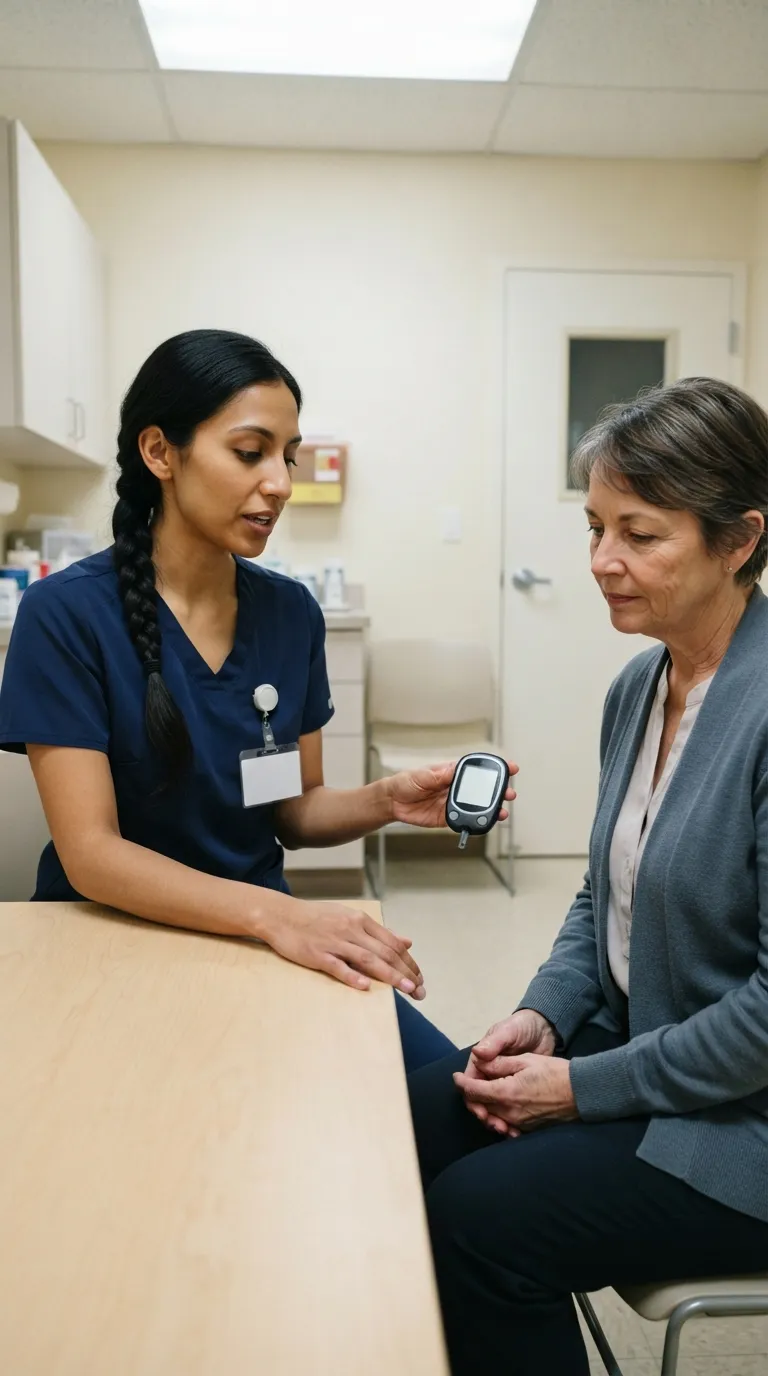
| Nursing diagnosis | Risk for Unstable Blood Glucose Level, as evidenced by risk factors that include variable meal timing and amounts, changes in activity, illness and stress, and treatment with insulin or oral glucose-lowering agents. |
| Goal | The patient will keep blood glucose within the target range set by the provider, with no reading below 70 mg/dL, over the next 48 hours. |
| Interventions | 1. Check blood glucose before meals and at bedtime, or as ordered, and chart every result with the time, food and activity around it. Rationale: single readings mislead; the pattern shows whether glucose swings high, low or both. 2. Teach the signs of a low reading: shakiness, sweating, fast heartbeat, hunger, irritability and confusion. Rationale: the patient who names the early signs treats the low while it is still mild. 3. Teach the 15-15 rule for a reading below 70 mg/dL: take 15 grams of fast-acting carbohydrate, recheck in 15 minutes, and repeat if the reading is still low. Rationale: a measured amount lifts glucose predictably without overshooting into a high. 4. Match medication timing to meals as ordered, and report illness, fever or poor intake the same day. Rationale: illness and missed meals are the two most common triggers of sudden swings. |
| Evaluation | The goal is met when the charted readings stay inside the target range for 48 hours, no reading falls below 70 mg/dL, and the patient treats any low reading with the 15-15 rule without prompting. If readings swing despite matched meals and medication, the pattern points back to timing, illness, stress or a technique problem with the checks. |
Deficient Knowledge
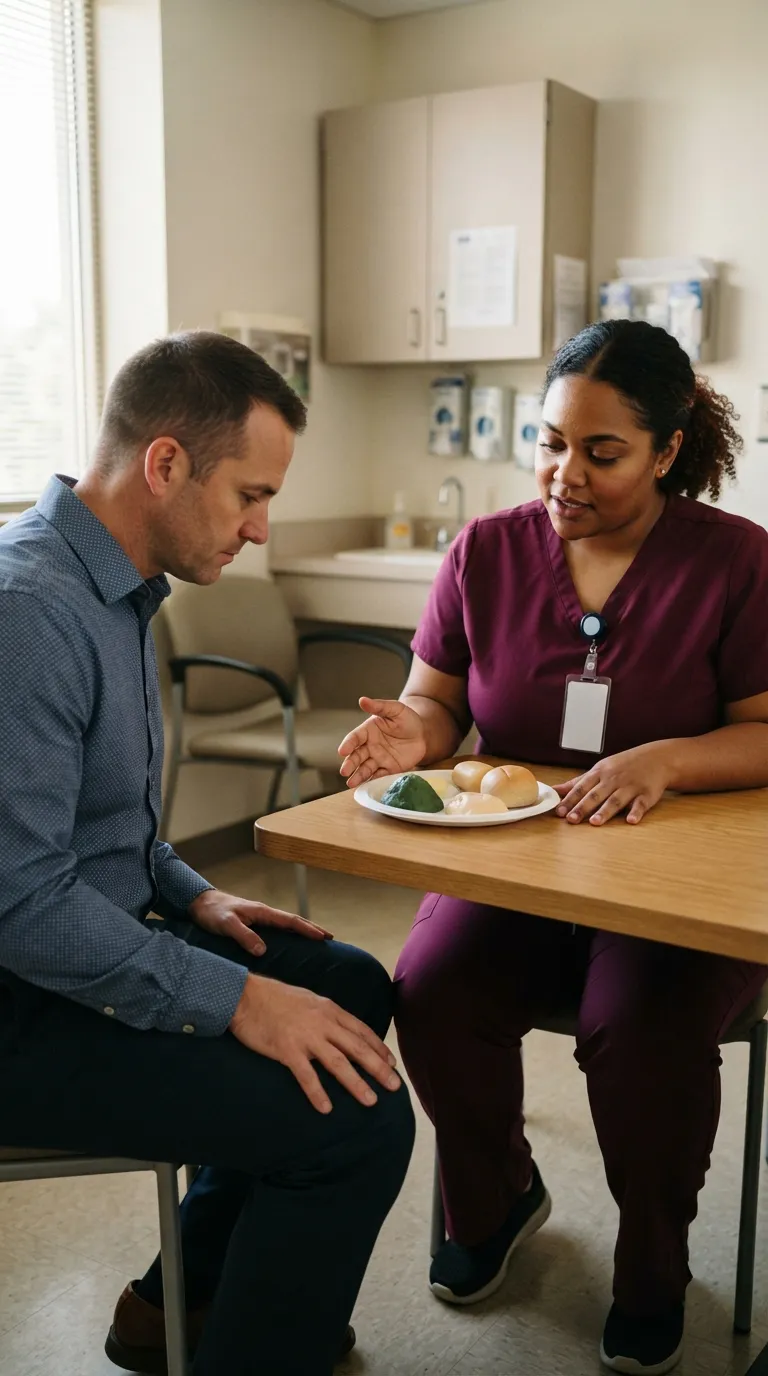
Deficient Knowledge related to a new diagnosis and an unfamiliar daily routine, as evidenced by repeated questions about food and medication, statements that insulin can stop once readings improve and no experience yet with a glucose meter. The goal: by discharge, the patient will explain what diabetes is in plain words, demonstrate a fingerstick glucose check and state exactly what to do for a low reading. Everything else in this plan depends on this teaching, because the patient, not the nurse, runs the plan at home.
- Short sessions: teach one topic at a time, the meter today and meal planning tomorrow, in sessions of about 15 minutes. Rationale: a new diagnosis already overloads attention, and small sessions are retained.
- Hands-on practice: have the patient handle the meter, strips and lancet and perform a check with supervision. Rationale: skills stick when the hands learn them, not when they are only described.
- Teach-back: after each topic, ask the patient to explain it back in their own words and correct gaps on the spot. Rationale: teach-back proves understanding rather than politeness.
- Sick-day rules: teach that illness raises glucose, that insulin continues even when meals are missed in type 1, and when to call the provider. Rationale: sick days are when new patients most often land in trouble.
Judge the teaching by what comes back: a correct meter demonstration, an accurate teach-back of hypo treatment and a written daily routine the patient can follow at home. Anything the patient cannot repeat is a topic to reteach, not a failure to record and forget.
NCLEX tip: When a question shows a patient on insulin who is shaky, sweaty or confused, check the blood glucose before any other action. Low and high blood sugar can look alike from the doorway, and the treatments are opposites, so the reading, not a guess, decides the first move.
Risk for Infection
| Nursing diagnosis | Risk for Infection, as evidenced by risk factors that include high blood glucose weakening white blood cell function, reduced circulation to the skin and feet, and frequent breaks in the skin from checks and injections. |
| Goal | The patient will show no fever, no burning on urination and no new redness or drainage at any skin break, over the next 7 days. |
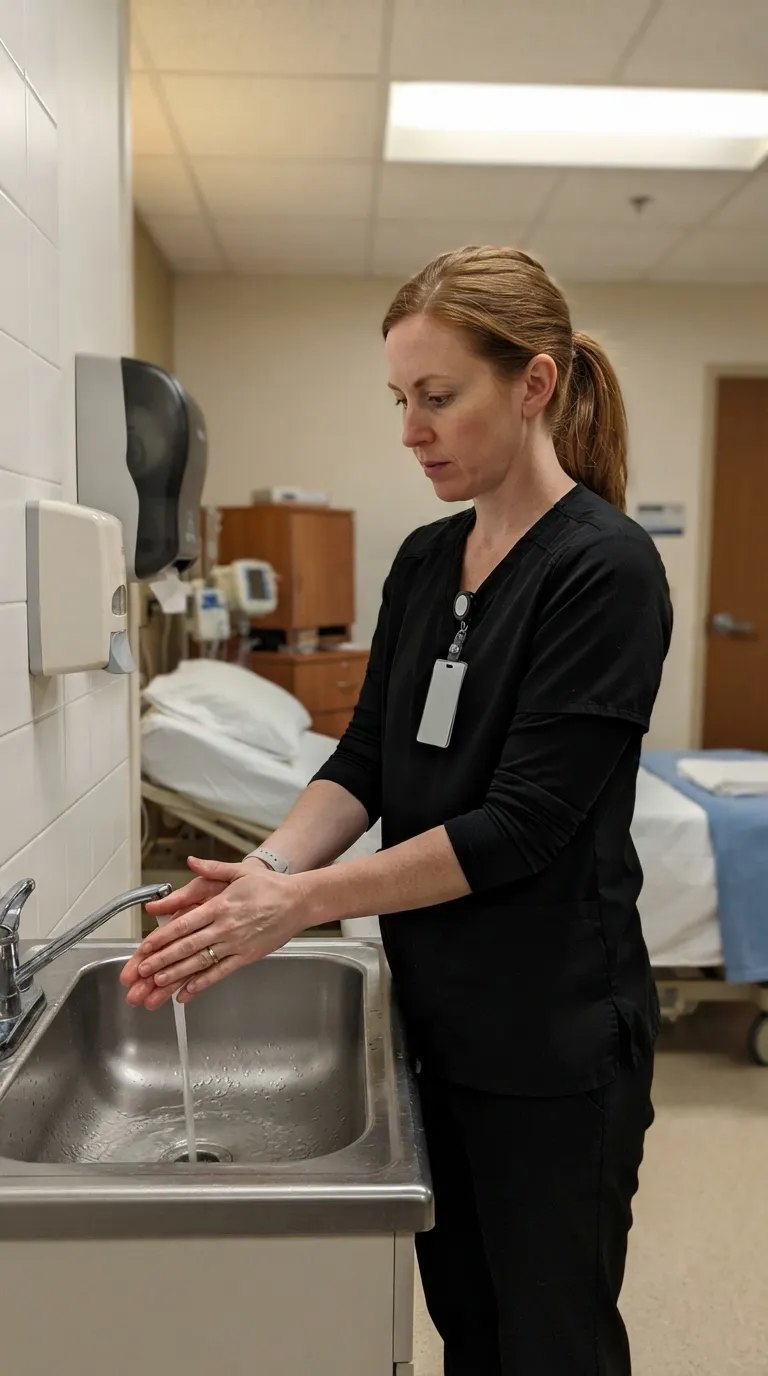
| Interventions | 1. Monitor temperature and glucose trends together and report a fever or a sudden rise in glucose. Rationale: infection pushes glucose up, so an unexplained rise can be the first sign of infection. 2. Use strict hand hygiene and clean technique for every fingerstick, injection and skin break. Rationale: most care-related infections enter through hands and broken skin. 3. Inspect the skin and feet daily, including injection sites, and report redness, warmth or drainage early. Rationale: reduced feeling and slow healing mean small problems grow quietly. 4. Teach the patient to report fever, burning when passing urine, a cough that deepens or a cut that reddens. Rationale: urinary and skin infections are the common ones in diabetes, and early treatment prevents spread. 5. Encourage steady glucose control as ordered and keep routine vaccinations current. Rationale: high glucose itself blunts the immune response, so control is an infection intervention, not just a number goal. |
| Evaluation | The goal is met when the patient stays without fever or local infection signs for 7 days, skin breaks heal on schedule and the patient names the early signs to report without prompting. |
Risk for Injury
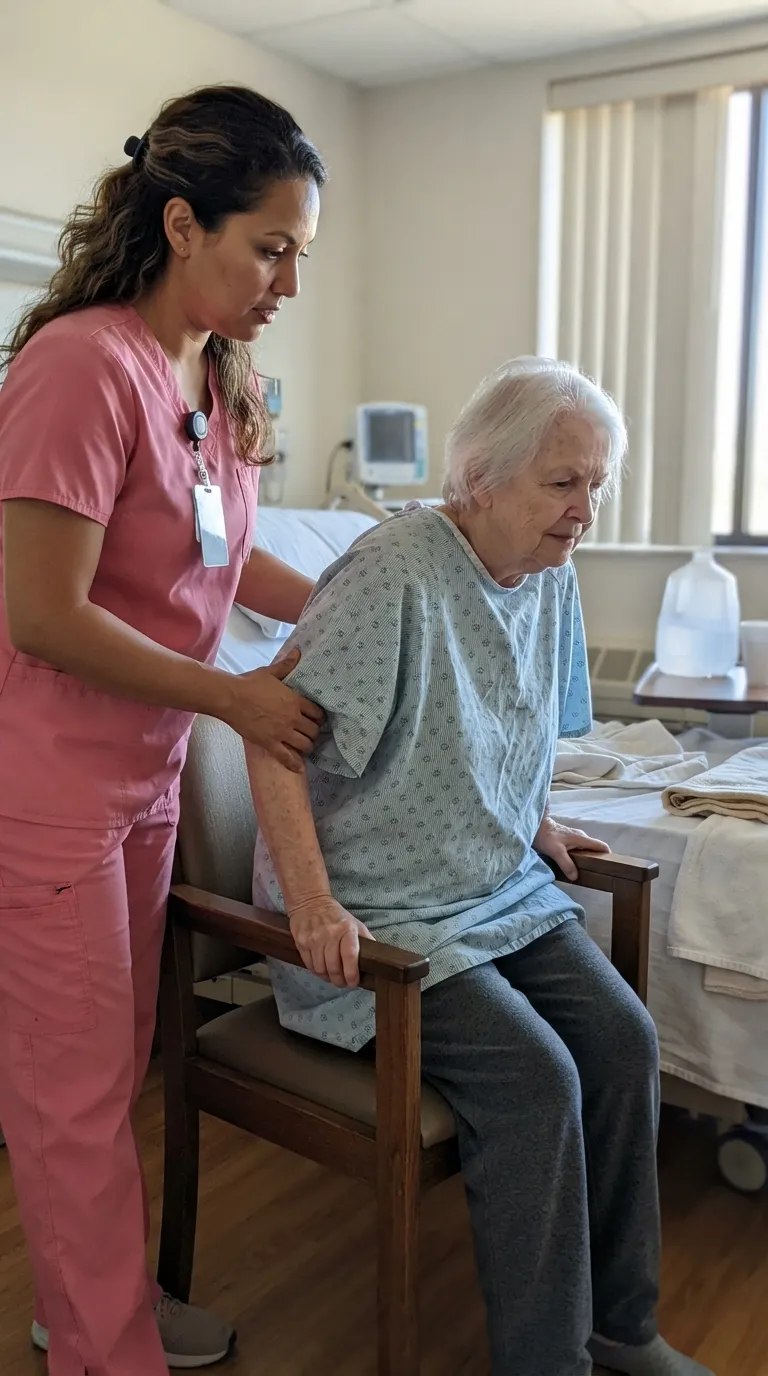
Risk for Injury, as evidenced by risk factors that include hypoglycemia episodes, blood pressure drops on standing and reduced feeling in the feet. The goal: the patient will move through the hospital stay and the first week at home with no fall, no injury and no driving episode while glucose is low.
- Check before driving: teach the patient to check glucose before driving and to never drive while a reading is low. Rationale: a low behind the wheel endangers the patient and everyone on the road.
- Rise slowly: teach sitting first, then standing, with a pause at each stage, above all after meals and medication. Rationale: staged rising lets blood pressure adjust and prevents the sudden drop that causes falls.
- Carry fast sugar: glucose tablets or an equivalent fast carbohydrate stay in a pocket, bag and car at all times, with medical identification worn. Rationale: treatment within reach shortens every low, and identification speaks when the patient cannot.
- Supervise after a low: stay with the patient and recheck until the reading is back in range and thinking is clear. Rationale: confusion and unsteady walking outlast the number on the meter.
Count the goal met when the chart and the patient agree: no falls, no injuries, glucose checked before driving and fast sugar found on the patient every time you ask. One near miss is a reason to tighten the plan, not to relax it. Review the plan after any low that needed help from another person, and document what triggered it.
Risk for Impaired Skin Integrity
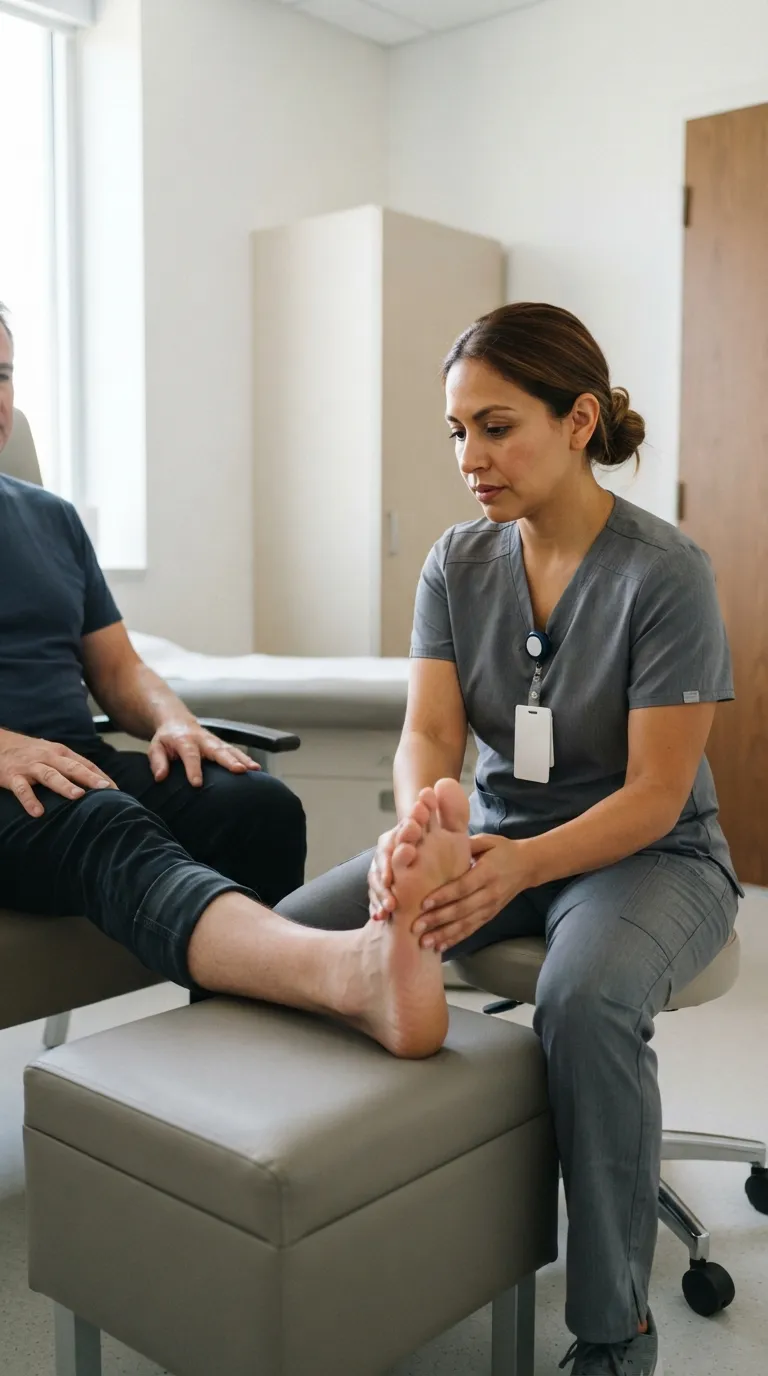
| Nursing diagnosis | Risk for Impaired Skin Integrity, as evidenced by risk factors that include loss of protective feeling in the feet, reduced circulation and high glucose slowing the repair of any break in the skin. |
| Goal | The patient will keep skin intact with no new break on either foot, and will demonstrate a full daily foot inspection, by discharge and over the first week at home. |
| Interventions | 1. Inspect the tops and soles of both feet every day, using a mirror or help for the soles. Rationale: loss of feeling means injuries happen silently, and only looking finds them. 2. Wash the feet daily with mild soap and lukewarm water, and dry them well, especially between the toes. Rationale: clean, dry skin resists breakdown, and trapped moisture softens skin until it splits. 3. Moisturize the feet but not between the toes, and never walk barefoot indoors or out. Rationale: dry skin cracks, wet skin between the toes macerates, and bare feet meet every sharp object first. 4. Shake out shoes before putting them on, choose well-fitting shoes and cut nails straight across or have them cut professionally. Rationale: a pebble or a nail nick is the usual start of a foot wound that heals slowly. 5. Report any break in the skin that does not start healing within a day or two. Rationale: early care of a small wound prevents the ulcer and infection that follow a missed one. |
| Evaluation | The goal is met when daily checks show intact skin on both feet, the patient performs the inspection in the right order without reminders and any break found is reported and dressed the same day. |
Fatigue

Fatigue related to wide glucose swings, broken sleep from night-time urination and low daily activity, as evidenced by reports of exhaustion by midday, long naps that do not refresh and unfinished daily tasks. The goal: the patient will report steadily improving energy and finish the normal daily routine with planned rests within 1 week.
- Smooth the swings: keep meal, medication and check times consistent from day to day. Rationale: glucose that swings less leaves energy steadier across the day.
- Move a little, daily: build a short walk after meals into the routine and lengthen it gradually. Rationale: regular activity improves insulin sensitivity and sleep, and post-meal walks blunt the glucose rise.
- Protect sleep: keep a regular bedtime, and review evening intake and readings when night urination breaks sleep often. Rationale: fragmented sleep is a fixable driver of daytime fatigue.
- Ask what else: report fatigue that does not lift as the pattern steadies. Rationale: persistent fatigue can come from anemia, thyroid problems or low mood, and those need their own review.
Judge progress in the patient’s own terms: waking rested more mornings than not, finishing the day’s tasks and needing shorter rests to do it. If energy does not follow the steadier glucose pattern, the evaluation points back to reassessment. Track sleep alongside the glucose log for the same week, because the two improve together more often than either improves alone.
Imbalanced Nutrition: More Than Body Requirements

| Nursing diagnosis | Imbalanced Nutrition: More Than Body Requirements related to food intake that exceeds activity and energy needs, as evidenced by a weight above the healthy range for height, large evening portions and daily sugar-sweetened drinks. |
| Goal | The patient will build every meal with the plate method, keep carbohydrate consistent from meal to meal and keep a simple food record for 7 days. |
| Interventions | 1. Teach the plate method: half the plate non-starchy vegetables, one quarter protein and one quarter carbohydrate foods. Rationale: the plate portions carbohydrate without weighing or counting at every meal. 2. Keep carbohydrate amounts consistent across meals and days. Rationale: steady carbohydrate makes glucose patterns predictable enough to judge and adjust. 3. Replace sugar-sweetened drinks with water or unsweetened drinks. Rationale: liquid sugar raises glucose fastest and adds energy without fullness. 4. Arrange a dietitian referral and review the food record together at follow-up. Rationale: a record shows the real pattern, and small agreed changes last longer than a strict list. |
| Evaluation | The goal is met when the food record shows the plate pattern at most meals, sweetened drinks are gone and the weight trend begins moving down slowly over the following weeks. Plate drawings or photos of real meals make the evaluation concrete at the follow-up visit. |
Evaluation and Teaching
Evaluate the plan as a whole, not one diagnosis at a time. The glucose log shows the daily pattern; the A1C trend, checked over months, shows whether the pattern is holding; teach-back shows whether the patient can run the plan alone. The same whole-plan judgment works in the nursing care plan for COPD: trends and demonstrations, not single readings. For the disease course behind the numbers, the MedlinePlus encyclopedia article on type 1 diabetes lays out how control protects the eyes, kidneys and nerves over time.
Teaching carries the plan home. Before discharge the patient should treat a low reading in front of you, run through the sick-day rules (keep taking insulin in type 1 even when not eating, check glucose and ketones more often when taught, sip fluids, and call when vomiting or unable to keep fluids down) and show you a complete foot inspection. If any of the three wobbles, that topic goes back on the teaching list before the patient leaves. Also make sure the patient leaves with fast-acting carbohydrate in hand and knows exactly where the glucose tablets live at home.
Quick Questions
What Blood Glucose Number Counts as Low, and What Do You Do First?
Below 70 mg/dL counts as low. Treat it at once with 15 grams of fast-acting carbohydrate, such as glucose tablets or juice, then recheck in 15 minutes and repeat if the reading is still low. Once the reading is in range, a snack with carbohydrate and protein helps hold it if the next meal is far away.
Why Does Glucose Control Come First in This Care Plan?
Because high and low glucose drive most of the other diagnoses on the list. Lows cause falls and confusion within minutes, while highs feed infection, slow healing and drain energy over weeks. Steady glucose first makes the skin, safety, knowledge and nutrition goals reachable; without it, every other goal is built on a moving floor.
What Is the Difference Between DKA and HHS?
DKA develops mostly in type 1 diabetes: glucose climbs with ketones and metabolic acidosis, bringing deep, rapid Kussmaul breathing, fruity-smelling breath, nausea and abdominal pain. HHS develops mostly in type 2: glucose often rises above 600 mg/dL with severe dehydration and confusion, but without significant ketones. Both are emergencies that need hospital care.
More Care Plans to Practice
The natural next step is a care plan where breathing, not glucose, sets the priority order. Work through the pneumonia nursing care plan next and compare its structure with this one: the same four parts in the same order, but airway and gas exchange take the top spots, and the goals are written against hours instead of days.
After that, rebuild this diabetes plan from a blank page for a different patient: a teenager with type 1, an older adult with type 2 and sore feet, a patient who keeps having morning lows. Each rebuild gets faster, and the diagnoses you choose without looking are the ones that will be there for you in clinicals and on the exam. Bring the same blank-page habit to clinicals: write the plan before you look at any suggested version, then compare the two.
For study use only. Always follow your program, your facility’s policy and current drug and lab references.