
Many students start a stroke care plan by copying the diagnosis list from a template, so every patient ends up with the same plan in the same order. After a stroke, the order is the treatment: the problem threatening the brain in the first hours outranks everything else. This nursing care plan for stroke lays out 7 diagnoses in real priority order, perfusion first, so you can see how an experienced nurse ranks them.
Each diagnosis comes with a measurable goal, interventions with the reason behind each one, and an evaluation line you can check at the bedside. Two callouts flag the exam angle and the finding that cannot wait, and the questions at the end cover the points students mix up most: which diagnosis leads, and why nothing goes in the mouth before a swallow screen.
Overview
A stroke interrupts blood flow to part of the brain, either because a clot blocks an artery, which causes about 87 percent of strokes, or because a vessel bursts and bleeds into the tissue. Brain cells in the core of the stroke die within minutes, and the tissue around it, the penumbra, survives only while some flow remains, which is why the last-known-well time drives every early decision. The MedlinePlus stroke overview covers the warning signs and emergency treatment in plain language.
Treatment runs against the clock: intravenous clot-busting treatment within 3 hours of onset for patients who qualify, up to 4.5 hours for selected patients, and a catheter procedure to pull out a large clot up to 24 hours in selected cases. Until a scan confirms the type, the plan guards two things above all: blood flow to the threatened tissue and a safe swallow, because food and fluid that slip into the lungs cause one of the deadliest complications of the first week. Each diagnosis below follows the same shape as the parts of a nursing care plan: statement, goal, actions with reasons, and a check that the goal was met.
Ineffective Cerebral Tissue Perfusion

| Nursing diagnosis | Ineffective Cerebral Tissue Perfusion related to a clot blocking a cerebral artery and interrupting blood flow to brain tissue, as evidenced by sudden weakness of the left arm and leg, a facial droop, slurred speech and a falling level of consciousness. |
| Goal | Within 24 hours, the patient’s level of consciousness and limb movement will stay stable or improve, with no new weakness, and serial neuro checks will show no decline from the admission baseline. |
| Interventions | 1. Run neuro checks as ordered, often every hour in the first day: level of consciousness, pupil size and reaction, and movement and strength in all four limbs, scored with the Glasgow Coma Scale or the NIH Stroke Scale as your unit uses. Rationale: small changes in these signs are the earliest warning that bleeding or swelling is stealing more brain tissue. 2. Keep the head and neck in a straight midline position, with the head of the bed raised about 30 degrees unless the provider orders the patient flat. Rationale: a turned head can slow blood draining from the brain, and position is one of the few perfusion levers the nurse controls directly. 3. Follow the blood pressure orders written for the stroke type: in ischemic stroke the pressure is usually left high so blood keeps reaching the penumbra, with treatment starting around 220/120, while the pressure is lowered carefully in hemorrhagic stroke. Rationale: dropping the pressure too fast starves tissue that is still alive, and a pressure surge after a bleed can make the bleeding worse. 4. Track the last-known-well time, the scan time and the treatment times, and protect the clot-busting window: a qualifying patient needs the drug within 3 hours of onset, and a catheter clot removal can still help selected patients up to 24 hours. Rationale: the penumbra dies a little more every minute, so the nurse who guards the clock guards brain tissue. 5. Check temperature and blood glucose on schedule and report a fever or a high reading at once. Rationale: fever and high blood sugar both make injured brain tissue die faster and worsen the final outcome. |
| Evaluation | Goal is met when serial neuro checks match or beat the admission baseline for a full day, the patient follows commands as before, and no new deficit appears. Any drop in consciousness or new weakness means the plan has failed, and the provider is called at once. |
NCLEX tip: Stroke priority questions almost always turn on time and change. The answer that checks the neuro status now, protects the last-known-well window or reports a new decline beats a comfort or teaching answer, because lost brain tissue does not come back.
Impaired Physical Mobility
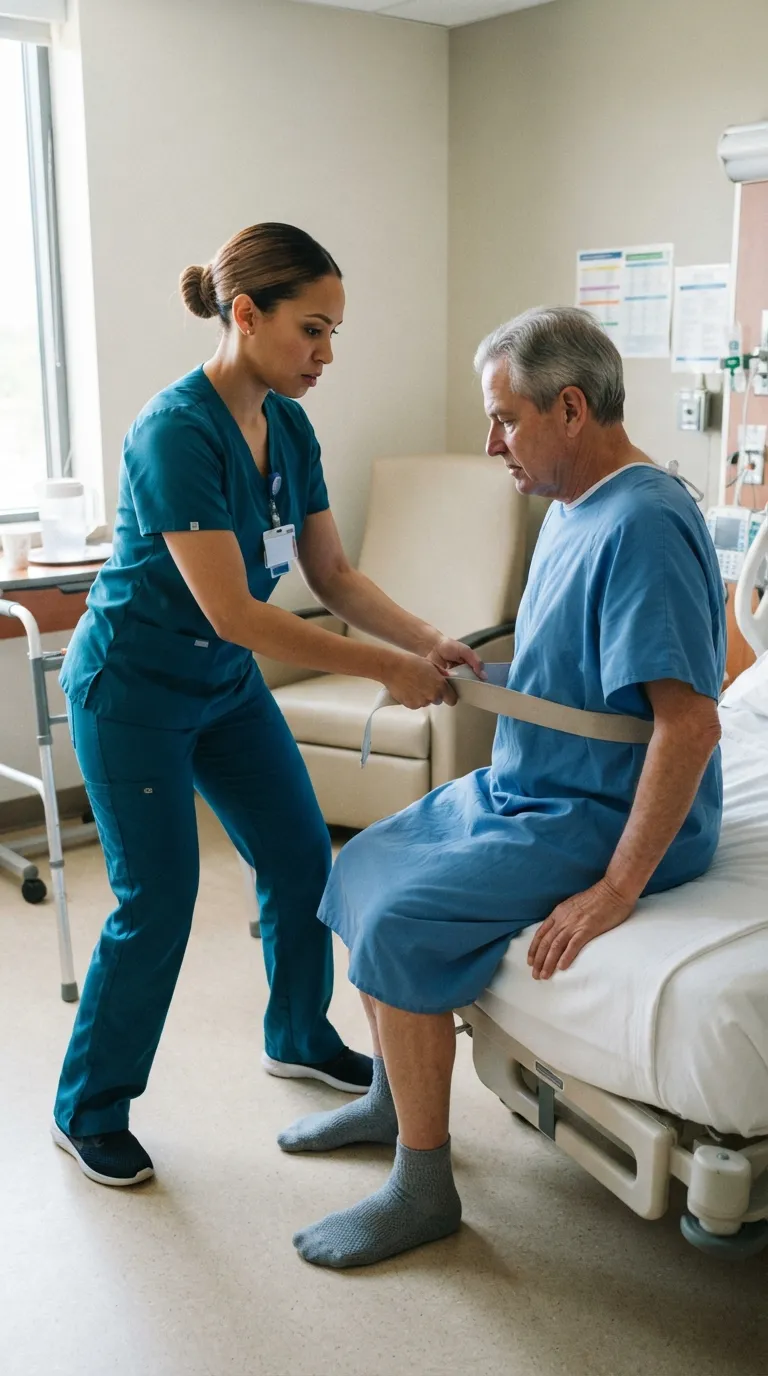
Impaired Physical Mobility related to one-sided weakness after the stroke, as evidenced by the patient being unable to lift the right arm against gravity, dragging the right leg when helped to stand and needing two people to move from bed to chair. The goal for the first 3 days: the patient sits on the edge of the bed for 10 minutes and moves to a chair with the help of one nurse, with no fall and no shoulder injury.
- Reposition on schedule: turn the patient at least every 2 hours, checking the skin over the heels, hips and weak shoulder each time. A limb the patient cannot move cannot report pressure pain, so the turning schedule protects skin the patient cannot protect alone.
- Support the weak arm: rest the arm on a pillow in bed or in a sling when the patient is up, and never pull on it during a transfer. The shoulder of a flaccid arm can slip partly out of its socket, and pulling on that arm is the most common way the injury happens.
- Guard against foot drop: use a footboard or high-top shoes as ordered while the patient is in bed. An unsupported foot rests pointed downward for hours at a time, and the calf muscle shortens until the foot no longer sits flat for walking.
- Check the goal daily: note how far the patient sat, stood or stepped and how much help it took, then compare it with the day before. Progress is real when the distance grows or the help needed shrinks at the same task.
Impaired Verbal Communication
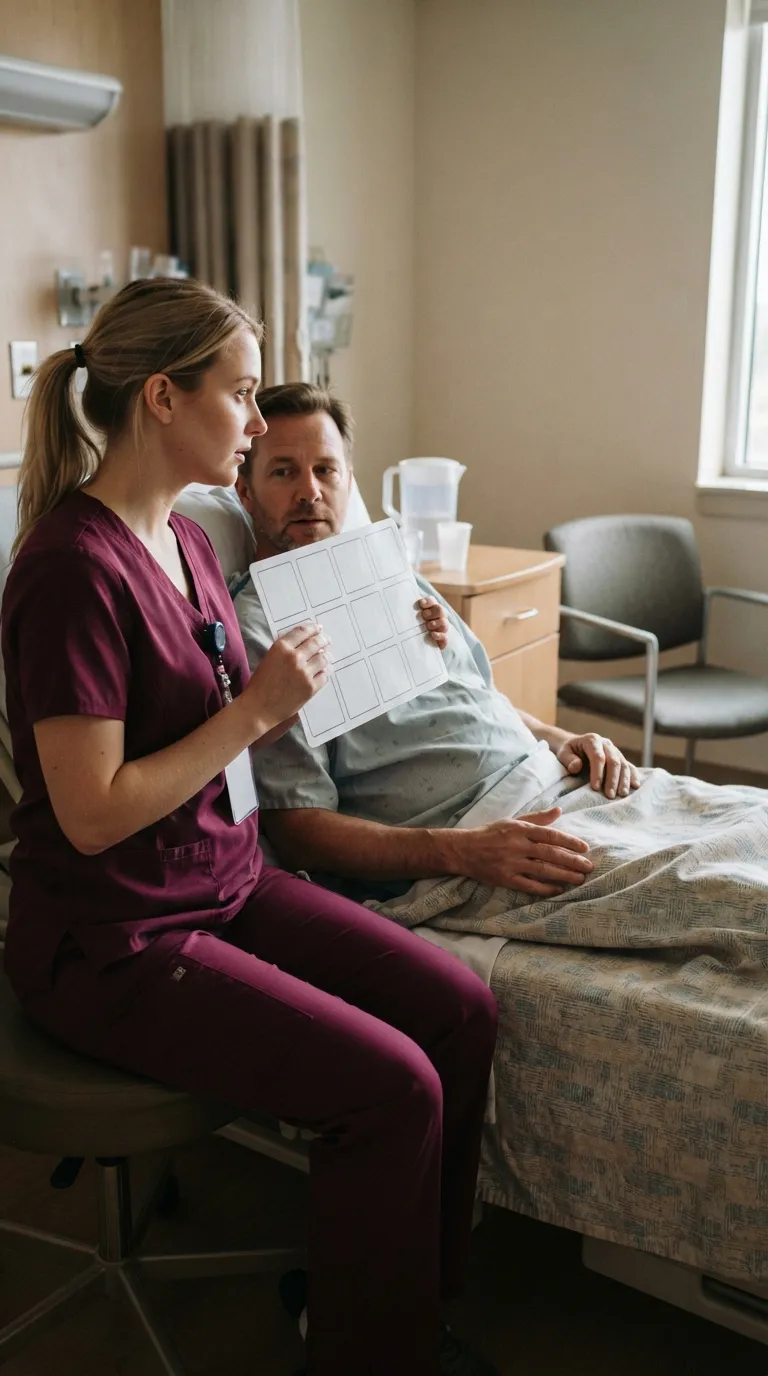
| Nursing diagnosis | Impaired Verbal Communication related to damage to the language areas of the brain, as evidenced by the patient speaking in short, broken phrases, failing to name common objects and showing frustration when the words will not come. |
| Goal | Within 48 hours, the patient will communicate basic needs, including pain, water and the toilet, using speech, gestures or the picture board, with no urgent need left unexpressed. |
| Interventions | 1. Speak in short, simple sentences, one idea at a time, and pause between them. Rationale: understanding is often stronger than speech after this kind of stroke, and long sentences overload the damaged language system. 2. Give the patient a picture board with everyday needs drawn on it, and keep it within reach of the working hand at all times. Rationale: pointing at a picture gets a need met in seconds while speech is still unreliable, which cuts frustration and unsafe solo trips out of bed. 3. Allow a full, unhurried minute for an answer, and resist finishing the patient’s sentences. Rationale: word-finding improves with practice, and answering for the patient removes both the practice and the dignity in one move. 4. Ask questions that can be answered yes or no when a need is urgent, and confirm the answer by showing the object or acting it out. Rationale: a closed question narrows the search for words and stops a guessed answer from sending care in the wrong direction. 5. Follow the speech therapist’s plan on every shift, using the same cues and the same board the therapist set up. Rationale: consistent practice across the whole team is what turns a therapy exercise into a working habit. |
| Evaluation | Goal is met when the patient gets pain, water and toileting needs across on the first try most of the time, by any method, and the frustration episodes grow shorter across the 48 hours. |
Unilateral Neglect
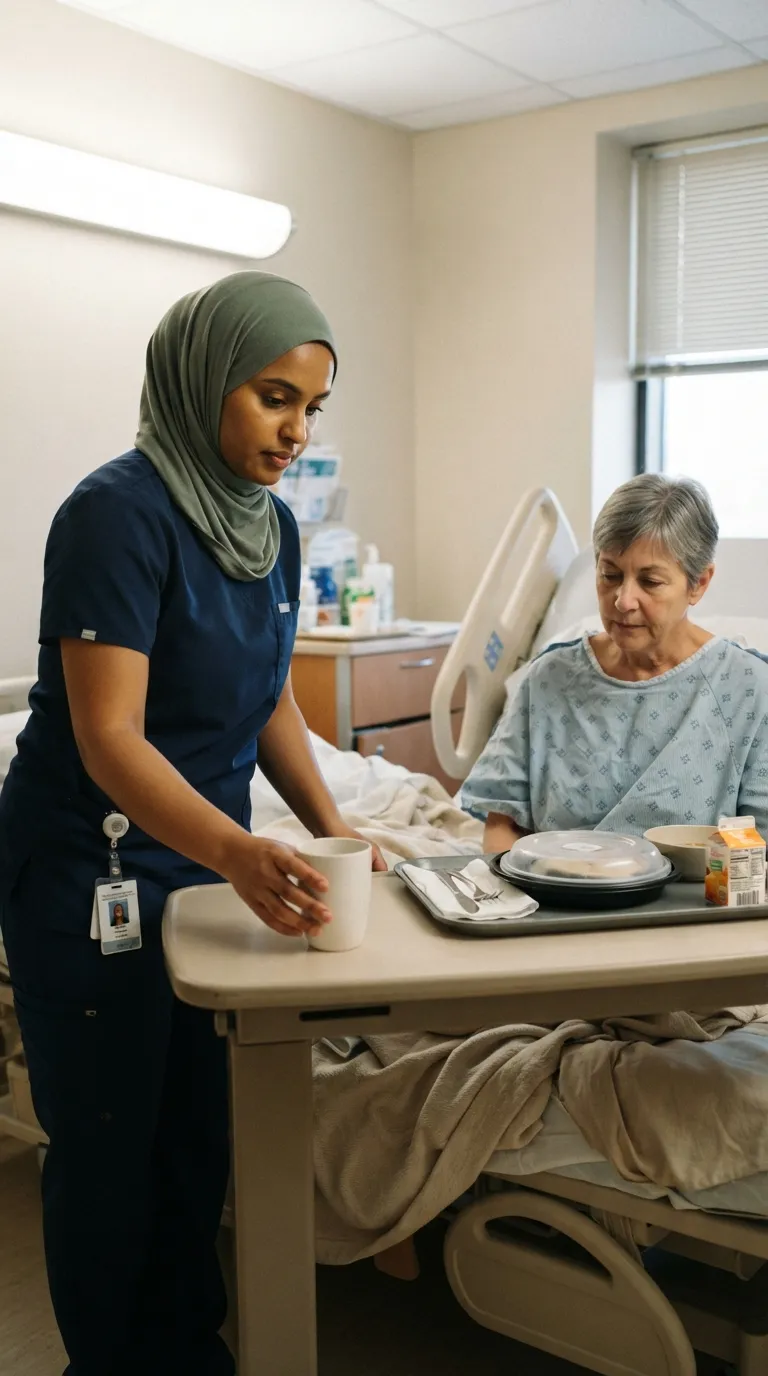
Unilateral Neglect related to damage to the brain’s attention center for one side of the body, as evidenced by the patient eating only the right half of the meal tray, ignoring people who approach from the left and leaving the left arm hanging off the bed. This label appears on any list of common nursing diagnoses, and students often confuse it with plain weakness; the muscles work, but the brain no longer pays attention to that side. The goal within 72 hours: the patient turns toward the left on cue, eats from both sides of the tray and keeps the left arm supported on the bed.
- Start from the safe side: place the call bell, water and tray items on the unaffected right side at first, so every need can be met while scanning training begins. A patient who cannot find a call bell parked on the neglected side will try to climb out of bed alone.
- Retrain the scan: teach the patient to turn the head and search the left side on a verbal cue, then move one item at a time to the left as finding it becomes reliable. Neglect is an attention problem, and guided scanning practice is how attention to that side gets rebuilt.
- Approach with a plan: greet the patient from the front, then move around to the neglected side during care so turning toward voices there becomes routine. Care tasks run all day, and each approach becomes scanning practice without extra therapy time.
- Check the goal at meals: watch one full meal a day and note how much of the left side of the tray gets eaten and where the left arm ends up. What the tray looks like after the meal is the most honest measure of whether the scanning practice is working.
Impaired Swallowing
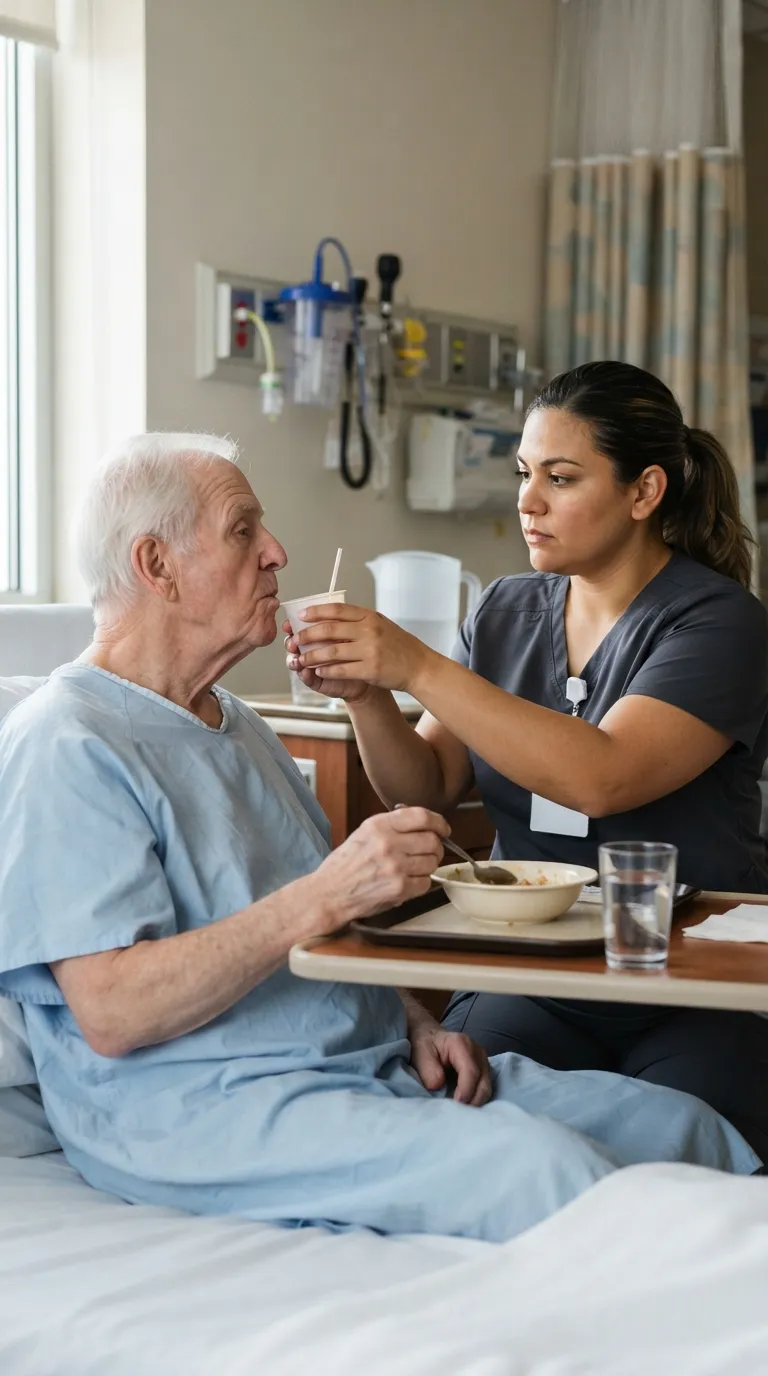
| Nursing diagnosis | Impaired Swallowing related to weakened swallowing and gag reflexes after the stroke, as evidenced by coughing on the first sips of water, a wet, gurgly voice after swallowing and food pocketed in the cheek. |
| Goal | Throughout the hospital stay, once the swallow screen is passed, the patient will take meals and fluids by mouth with no coughing fits, no wet voice and no signs of aspiration. |
| Interventions | 1. Keep the patient strictly nothing by mouth until a swallow screen is passed and documented. Rationale: a weak swallow lets fluid enter the airway silently, and aspiration pneumonia is one of the most common causes of death in the first week after a stroke. 2. Sit the patient upright for every meal with the head of the bed at 30 to 45 degrees, and keep the patient upright for at least 30 minutes after eating. Rationale: gravity pulls food toward the stomach instead of the airway, and staying up lets anything left behind clear rather than pool. 3. Teach the chin tuck for each swallow, and offer small bites and single sips, one at a time. Rationale: tucking the chin narrows the airway opening while the swallow passes, and small amounts give the weak reflex time to do its work. 4. Check the mouth for pocketed food after every meal, and give mouth care before and after eating. Rationale: food left sitting in the cheek slides toward the airway later, and a clean mouth lowers the germ load of anything that does slip down. 5. Follow the speech therapist’s diet order exactly, including thickened fluids if ordered, and keep suction equipment working at the bedside. Rationale: the thickness of a fluid changes the speed of the swallow, and suction that is already in the room is the suction that gets used in time. |
| Evaluation | Goal is met when the patient finishes meals without coughing, the voice stays clear and dry after swallowing, the mouth is empty at the post-meal check and the temperature stays normal, showing nothing has reached the lungs. |
Red flag: Sudden coughing that will not settle, a wet or gurgling voice, drooling, or a falling oxygen saturation during or after a meal can mean aspiration. Stop the meal, sit the patient fully upright, suction if needed and call the provider at once.
Self-Care Deficit
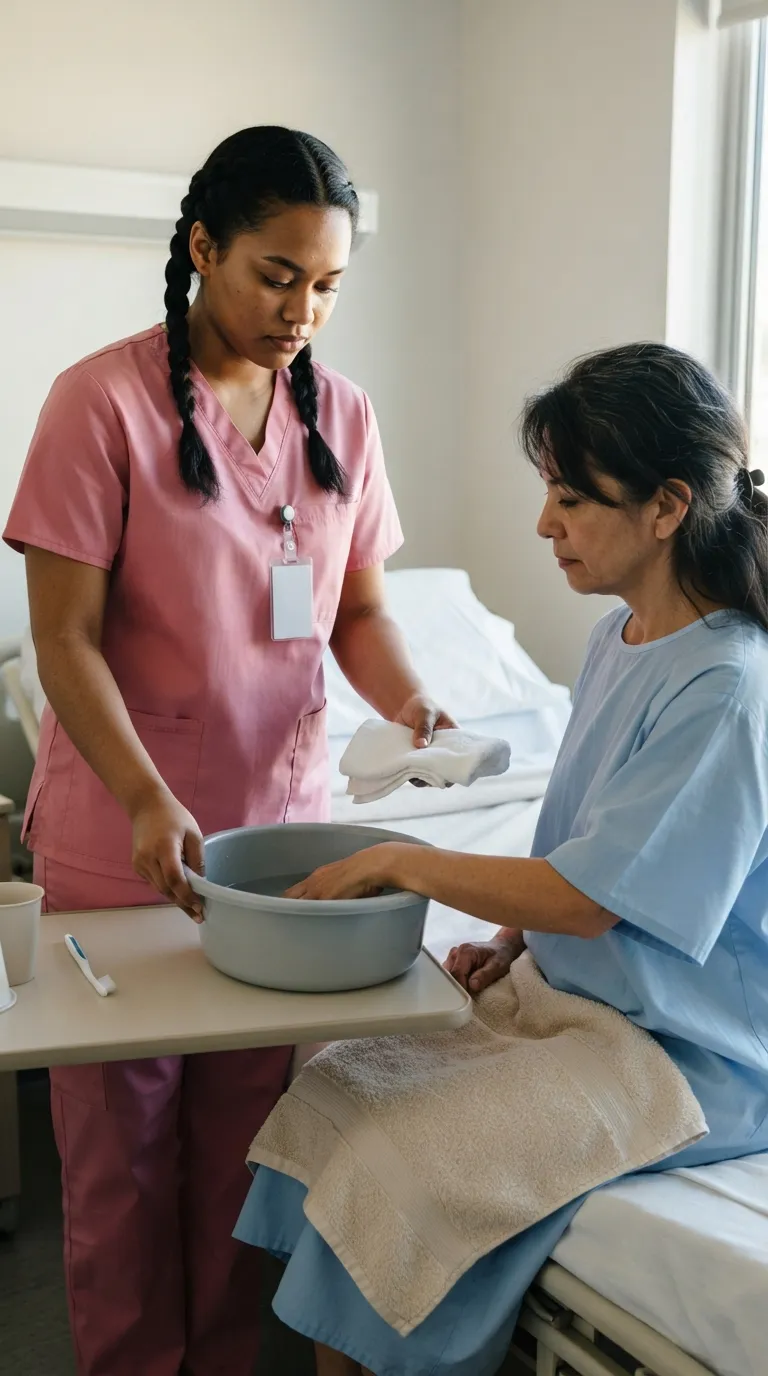
Self-Care Deficit related to one-sided weakness and low stamina, as evidenced by the patient being unable to wash or dress the affected side, dropping grooming items from the weak hand and needing full help with bathing on admission. The goal by discharge: the patient washes the face and upper body, brushes the teeth and pulls on a top while seated, with items set up in advance and only standby help.
- Set up on the strong side: place the basin, cloth, toothbrush and clothes within easy reach of the unaffected hand before the task starts. Self-care success begins with the setup, because a patient who cannot reach the soap fails before the first attempt.
- Let the patient do the work: hand over every step the patient can manage and assist only the weak side, even when doing it yourself would be faster. Every task the nurse takes over is practice the recovering brain loses, and the practice is the therapy.
- Dress the weak side first: guide the affected arm into its sleeve before the strong arm, and reverse the order when undressing. The weak limb bends the least, so dressing it while the garment hangs loose prevents pulling and shoulder strain.
- Check the goal daily: chart which tasks the patient completes alone each day, from washing the face to managing buttons. Progress is real when the list of solo tasks grows while the setup help stays the same.
Risk for Injury
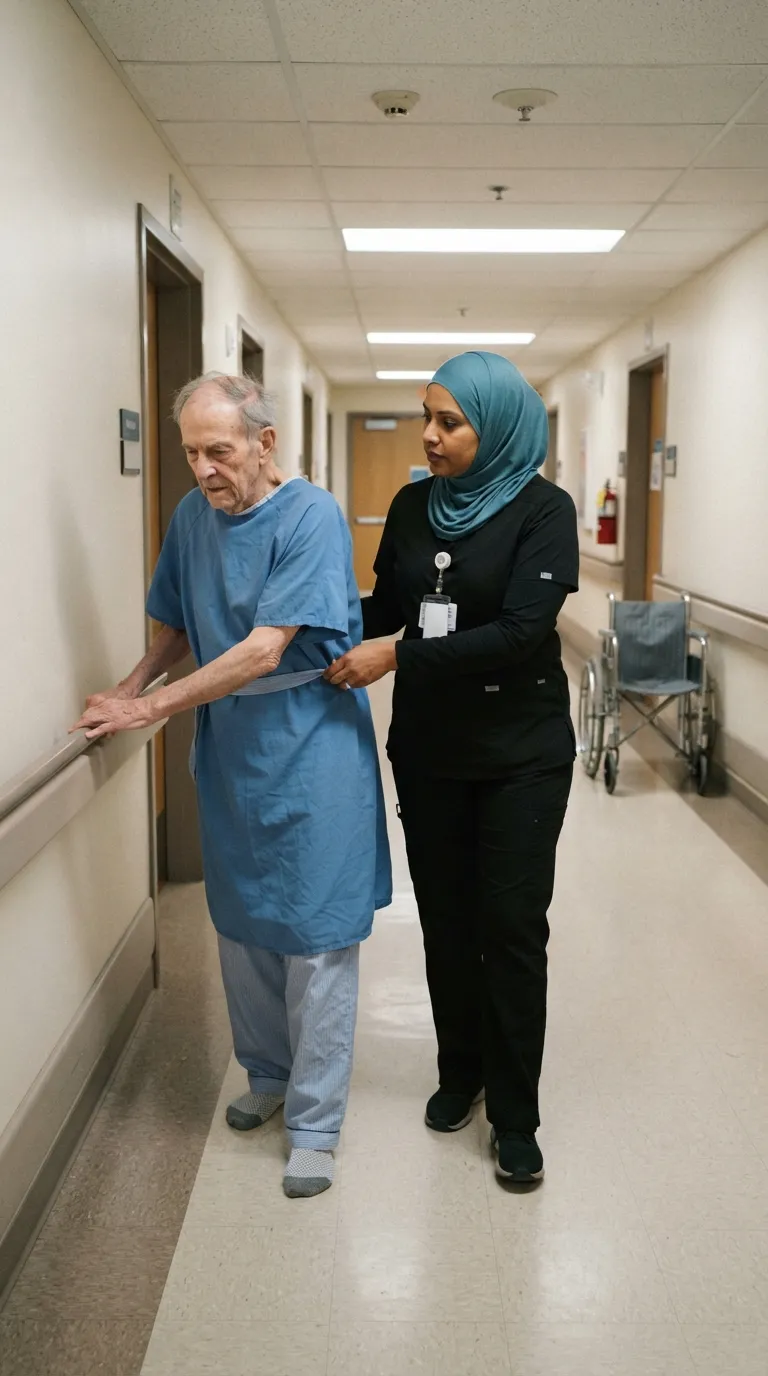
| Nursing diagnosis | Risk for Injury related to one-sided weakness, poor balance and reduced sensation on the affected side. |
| Goal | The patient will stay free of falls, skin injury and shoulder injury for the entire hospital stay. |
| Interventions | 1. Keep the bed at its lowest height with the brakes locked, and place the call bell on the patient’s unaffected side, within reach of the working hand. Rationale: falls happen when a patient with one working side reaches or climbs for help that sits on the side that cannot move. 2. Supervise every transfer and walk, using a gait belt, until the therapy team clears the patient to move alone. Rationale: balance and strength change day by day after a stroke, so a transfer that was safe yesterday can be a fall today. 3. Check the affected side on every round: the weak arm’s position, the skin over the heel and hip, and anything hot, sharp or heavy resting against skin that cannot feel it. Rationale: reduced sensation removes the patient’s warning system, so the nurse’s eyes have to replace it. 4. Clear the path to the bathroom, keep night lighting on and put non-slip footwear on before any standing. Rationale: most falls happen on the way to the toilet at night, in a hurry and in the dark. |
| Evaluation | Goal is met when the patient completes the stay with no fall, no bruise or break in the skin on the affected side and no shoulder complaint, and calls for help before every transfer. |
Evaluation and Teaching
Judge the whole plan once a shift, not just its parts. The plan is working when the neuro checks hold steady or improve, meals go down without coughing, the patient sits and stands a little longer each day, the skin stays whole and no fall has happened. A slip in any one of those, a new weakness, a wet voice after sips or a red patch over a heel, changes the ranking, and the diagnosis behind it moves up the list for the next shift.
Teaching starts with the family in the room. Walk them through the BE-FAST warning signs: balance loss, eye changes, face drooping, arm weakness, speech difficulty and time to call emergency help, and make clear that a second stroke is a real risk. Then cover the discharge basics: medicines taken exactly as prescribed, follow-up and rehab appointments kept, blood pressure checked as directed, and a home set up with the bed, chair and bathroom arranged for the weak side. What the family practices at the bedside, helping with scans, meals and transfers, is what the patient goes home to.
Quick Questions
Which nursing diagnosis comes first in a stroke care plan?
Ineffective cerebral tissue perfusion, every time. The tissue around the stroke is alive but starving, and the treatments that save it run inside a window measured in hours. Communication, mobility and self-care all matter, and all of them are rebuilt over days; perfusion is the only problem that gets worse while you watch.
Why must the swallow screen come before any food or drink?
Because a stroke can weaken the swallow without any obvious sign, and fluid that slips into the airway may not even trigger a cough. That silent aspiration seeds pneumonia, a leading cause of death in the first week. The screen takes minutes and sorts patients into safe to eat or nothing by mouth until therapy tests the swallow properly.
How often do neuro checks run in the acute phase?
As often as the provider orders, and in the first day that commonly means every hour, with tighter intervals right after clot-busting treatment. The point of the schedule is the trend: level of consciousness, pupils and limb movement compared with the last check. One softer grip or a slower pupil is a finding to report, not to watch quietly.
Which Diagnosis Would You Put First?
Start with the threat, not the template. If the neuro check has slipped since the last round, perfusion owns your next hour, and the bath, the teaching and the tray all wait. If breathing and swallowing are safe, the plan moves down the list in order: movement, communication, attention, self-care and protection from injury, each carrying its own goal for the shift.
That ranking habit travels well beyond stroke. The nurse who can say why one diagnosis leads can rebuild the plan when the patient changes, and the same ABC order shapes a nursing care plan for COPD just as it shapes this one. So before your next clinical shift, picture your stroke patient at 7 a.m.: which single finding would you check first, and which diagnosis would it move to the top of your plan?
For study use only. Always follow your program, your facility’s policy and current drug and lab references.