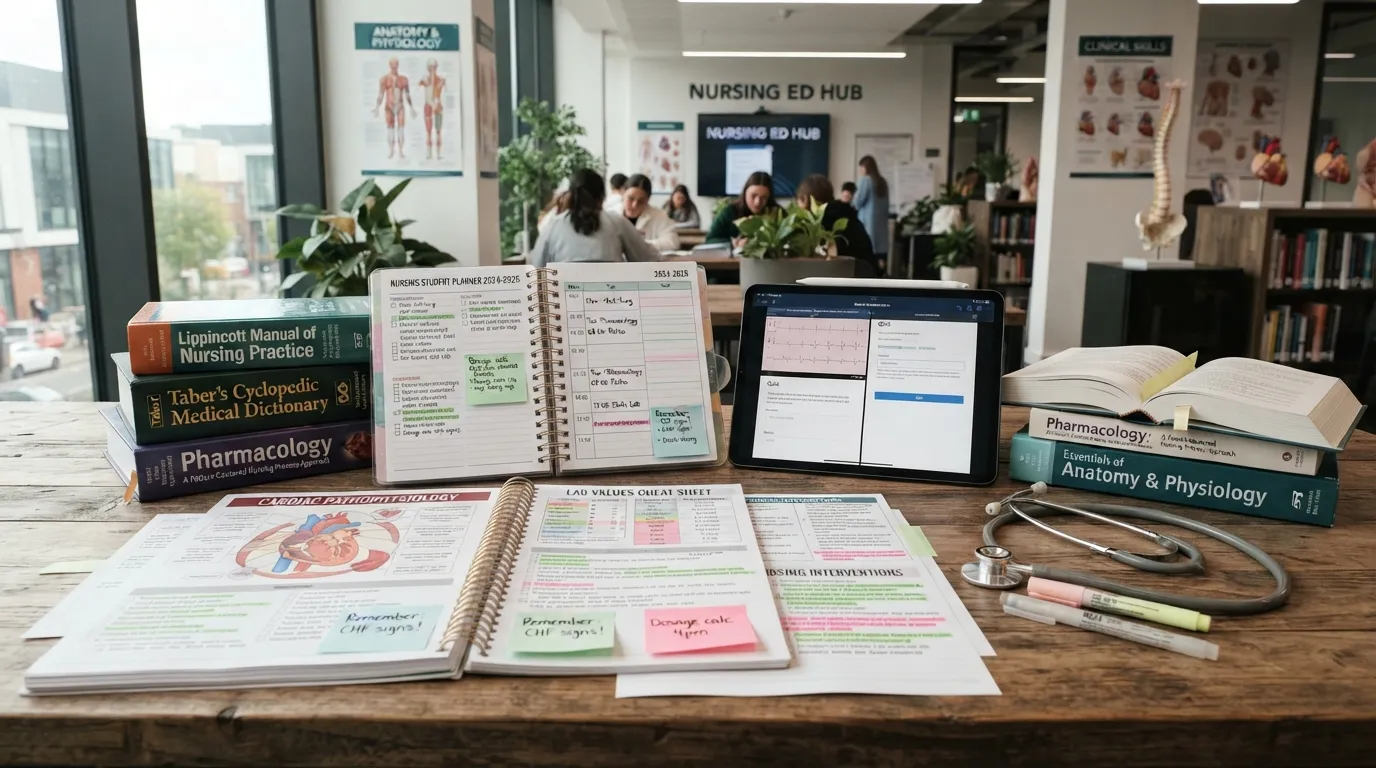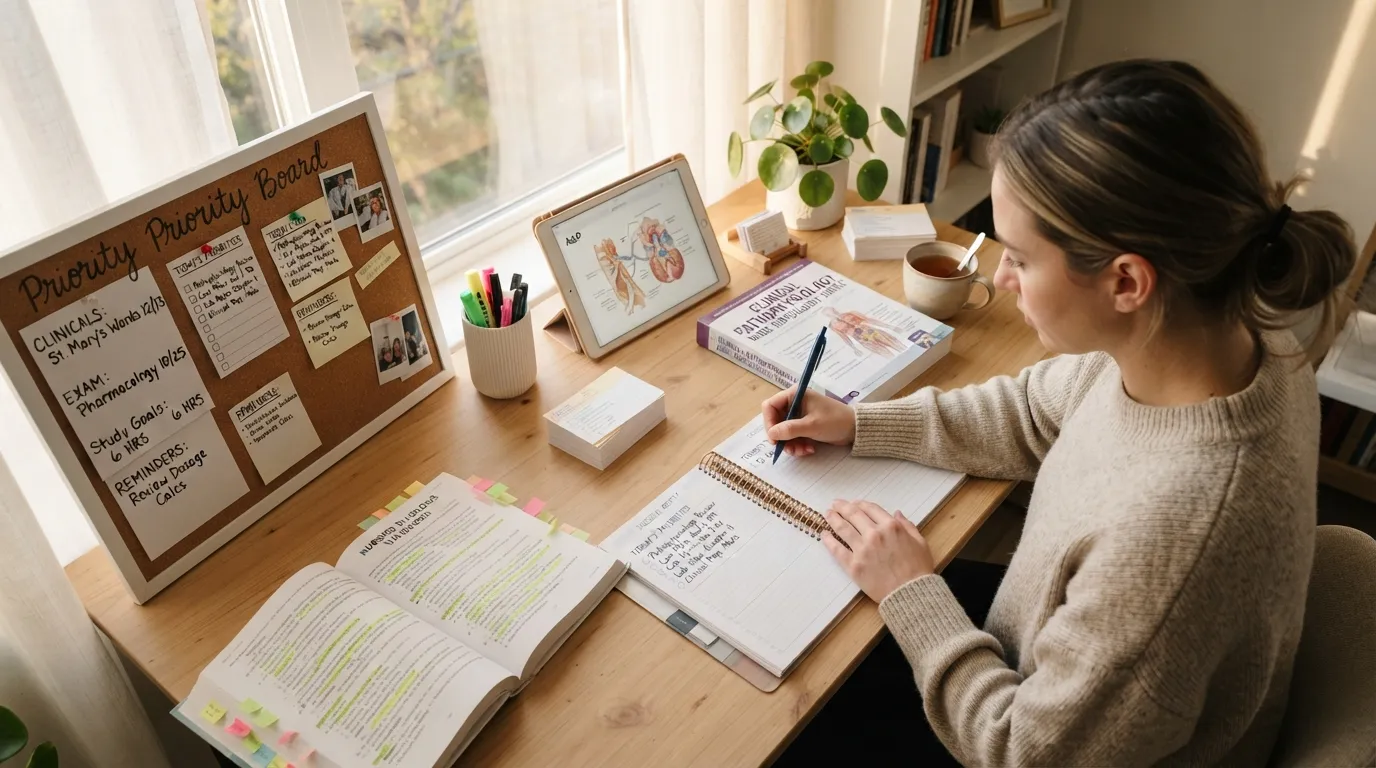


Learn the best Nursing Notes Taking Tips to create organized, useful notes that make nursing concepts easier to understand and review. These strategies help nursing students save time, improve recall, and build stronger study habits throughout their education.
Effective note-taking is more than copying information from lectures. It involves identifying important concepts, connecting related ideas, and organizing details in a way that makes future revision easier. Explore these practical note-taking ideas to improve your nursing school preparation.
Cornell Note Method

The Cornell note method helps nursing students turn large amounts of information into organized study resources. Instead of rewriting every lecture detail, divide your page into three sections: notes, questions, and a summary. Record important explanations during class, add review questions afterward, and write a short summary at the bottom.
This method works particularly well for subjects such as anatomy, physiology, pharmacology, and nursing fundamentals. It also makes self-testing easier because you can cover the main notes and answer the questions from memory.
- Notes section: Record key concepts and explanations.
- Question section: Write questions about important terms and processes.
- Summary section: Explain the main lesson in your own words.
Clinical Note Organization
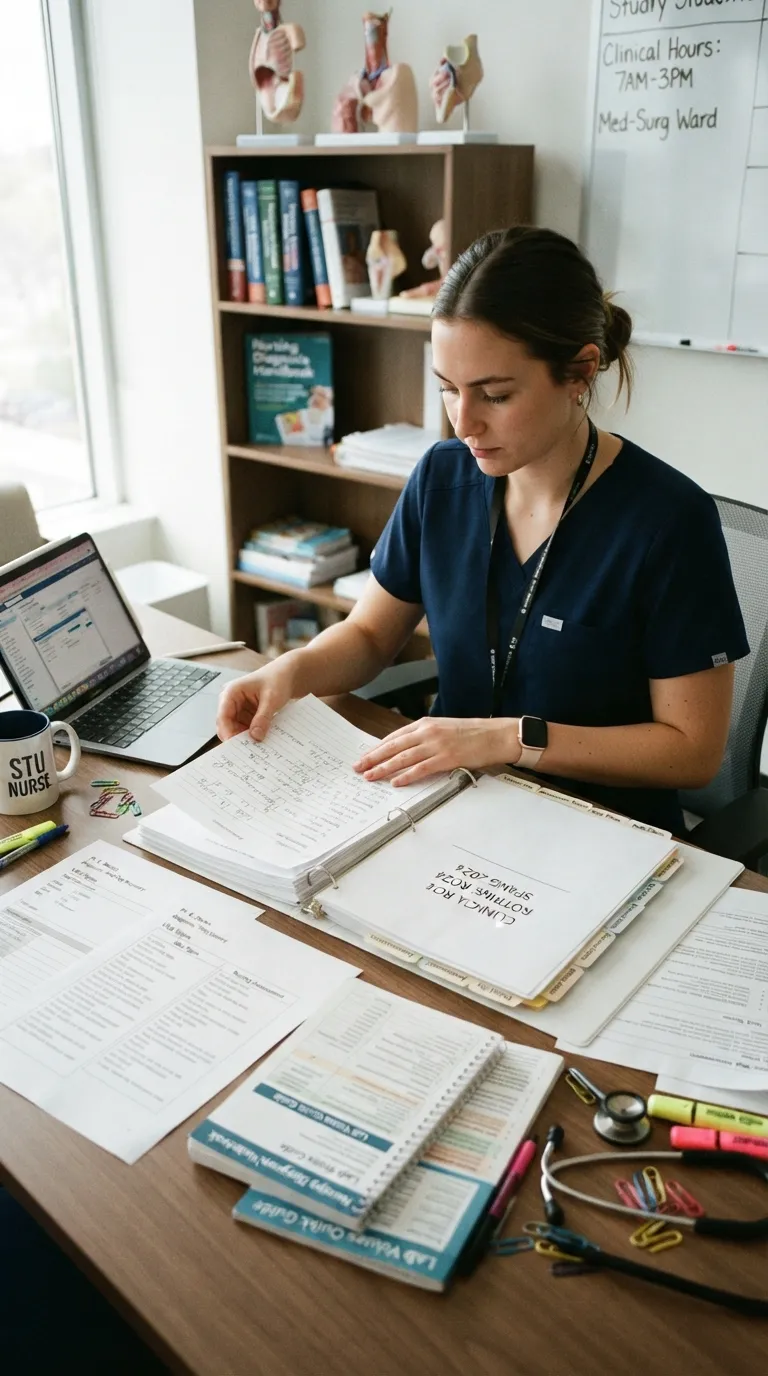
Organized clinical notes help nursing students quickly review skills, assessments, and patient care concepts when preparing for rotations. Create separate folders or notebook sections for clinical skills, health assessments, infection prevention, patient safety, and documentation principles.
A consistent structure prevents important information from getting lost among unrelated lecture notes. You can also use dividers, labeled digital folders, or a table of contents to locate information quickly. Keep personal study notes separate from actual patient records, and never include identifiable patient information in personal notebooks or unsecured digital files.
A useful clinical study page can include the skill’s purpose, required equipment, preparation steps, safety precautions, and key evaluation points. Always follow your school’s instructions and approved clinical policies.
Color Coding System
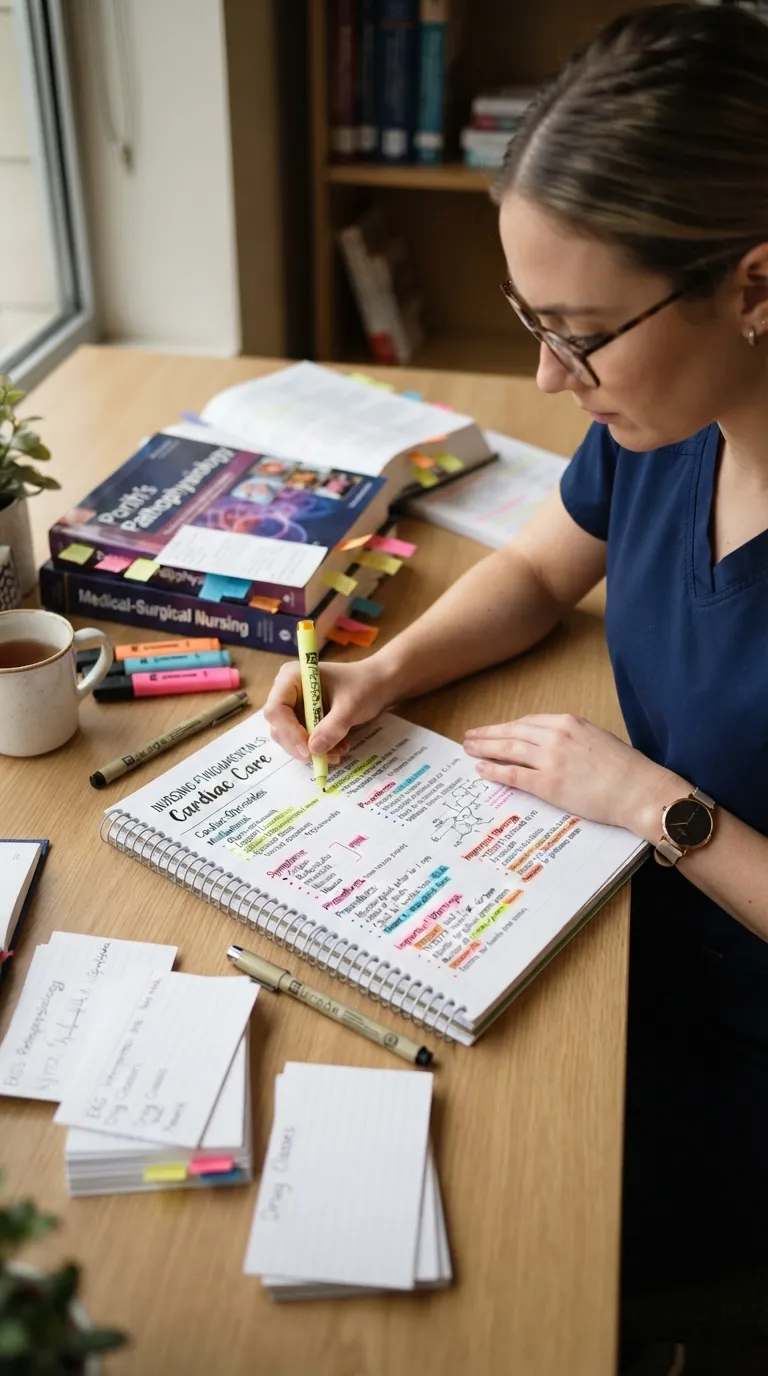
A color coding system makes nursing notes easier to scan when reviewing complicated subjects. Using specific colors for medications, assessments, symptoms, and safety points creates a visual pattern that supports quicker navigation. However, using too many colors can make pages distracting instead of helpful.
Choose three or four colors and apply them consistently across your notebooks. For example, use blue for definitions, green for nursing interventions, orange for important warnings, and purple for related clinical concepts. Highlight only the information that deserves attention rather than coloring entire paragraphs.
The goal is to make important information stand out without spending more time decorating notes than learning the material.
Abbreviation Strategy

A smart abbreviation strategy helps nursing students keep up with detailed lectures while maintaining accuracy. Creating a personal list of commonly used terms makes note-taking faster and more consistent, especially during lessons that introduce many clinical concepts.
Use abbreviations only when you understand their meaning and can interpret them correctly later. Avoid inventing shortcuts that might confuse you during revision. In clinical settings, follow your institution’s approved terminology and abbreviation policies because certain abbreviations can create medication and patient-safety risks.
- Create a glossary of frequently used course terms.
- Write the full term the first time when necessary.
- Review unfamiliar abbreviations after each lecture.
- Avoid unsafe or prohibited abbreviations in clinical documentation.
Key Point Filtering
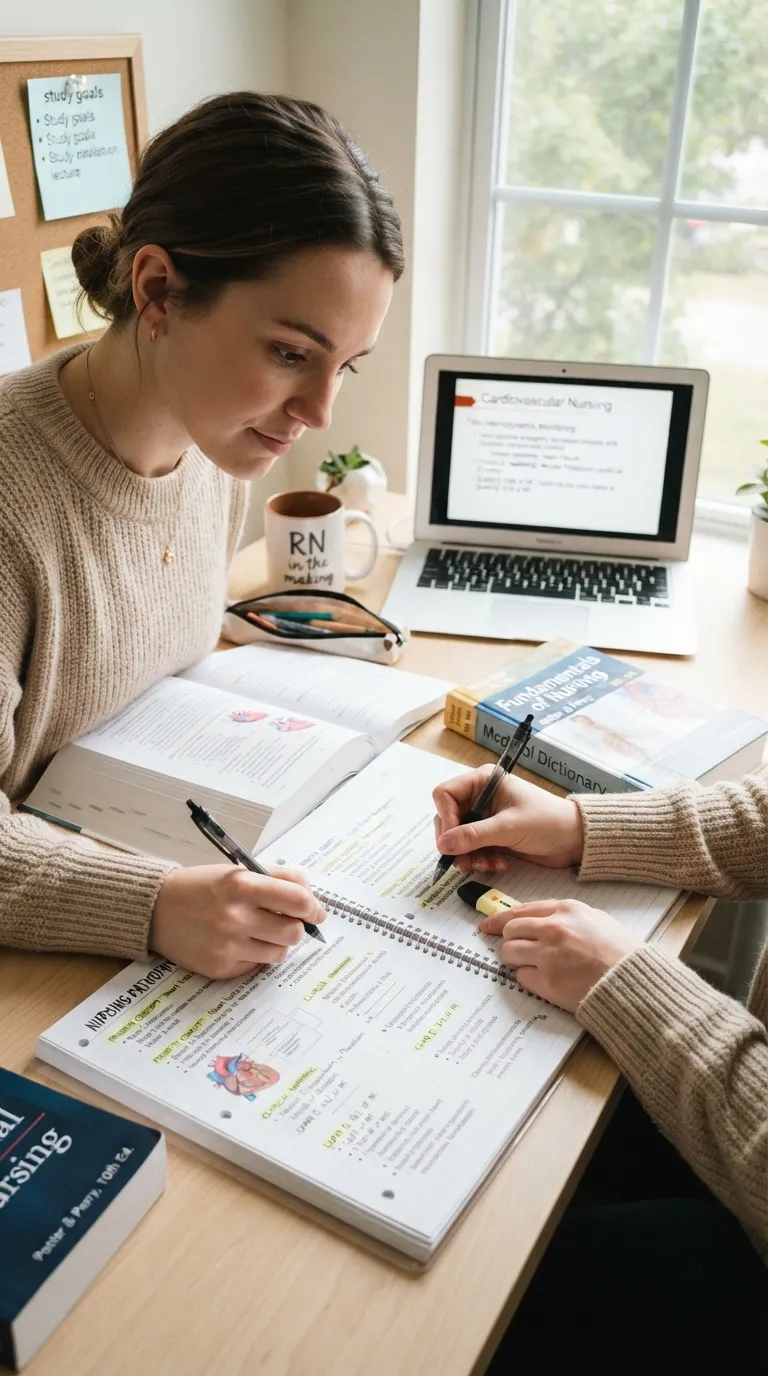
Key point filtering helps nursing students avoid spending hours reviewing unnecessary details. Rather than copying every sentence from a lecture, focus on information that supports understanding, clinical reasoning, and safe nursing practice. Pay attention to concepts your instructor explains repeatedly, important learning objectives, and relationships between symptoms and interventions.
For example, when studying hypertension, prioritize its basic meaning, contributing factors, potential complications, assessment considerations, and general management principles instead of copying every paragraph from the textbook.
After class, compare your notes with the lesson objectives and identify missing information. This process helps you create concise notes that are easier to review before quizzes and examinations.
Question Based Notes
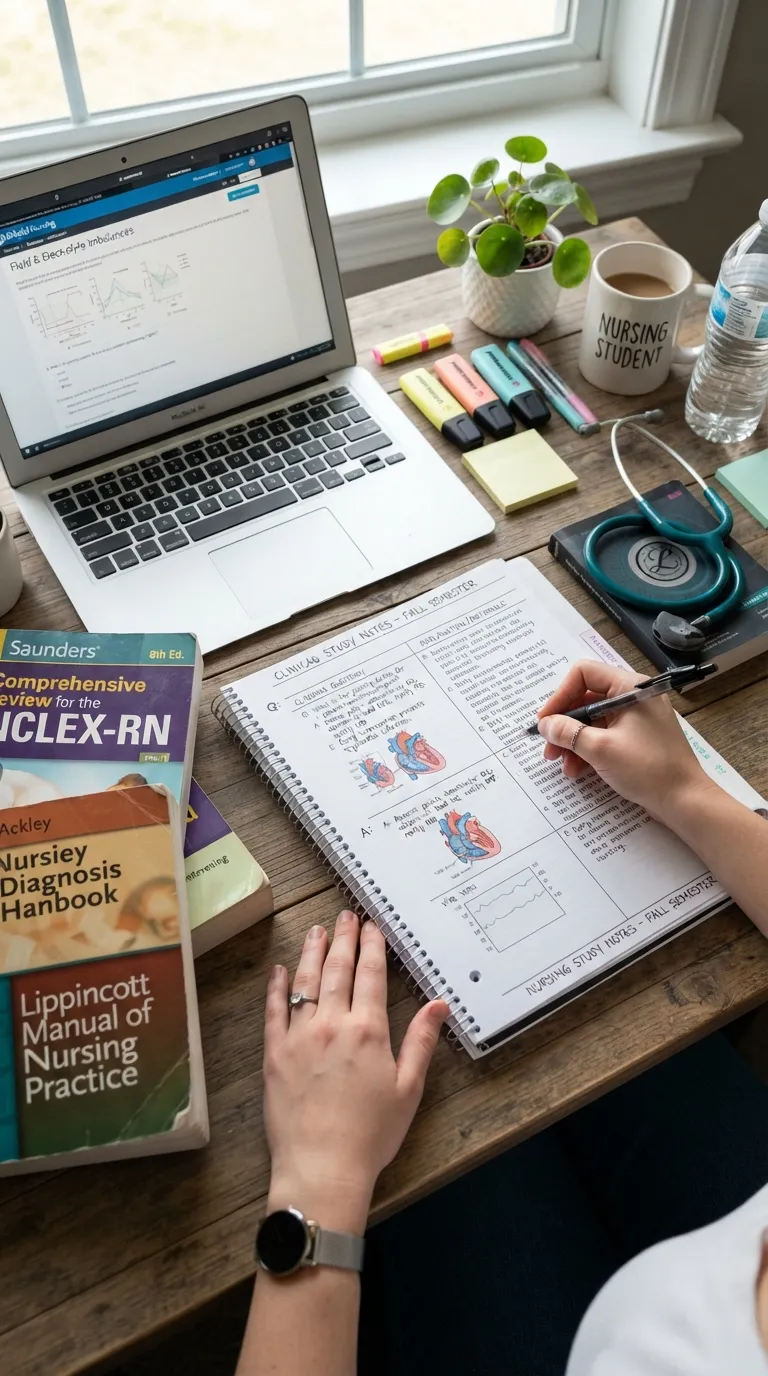
Question-based notes encourage nursing students to think beyond memorization. Instead of writing a heading such as “Signs of Hypoglycemia” and simply listing facts, turn the heading into a question: “What signs may indicate hypoglycemia?” Answering the question without looking at your notes helps reveal whether you understand the material.
You can use this method for definitions, disease processes, medications, and nursing interventions. Add questions beside important concepts or create a separate question column in your notebook. During revision, cover the answers and test yourself.
Useful question starters include:
- What causes this condition?
- Which findings require further assessment?
- Why is this intervention appropriate?
- What complications should nurses recognize?
Concept Linking Notes

Concept linking notes help nursing students understand why information matters instead of memorizing isolated facts. Connecting symptoms, underlying causes, assessments, interventions, and expected outcomes creates a stronger mental framework for exams and clinical learning.
For example, when studying dehydration, connect fluid loss with possible assessment findings, such as thirst, reduced urine output, and changes in vital signs. Then connect those findings with appropriate assessment and monitoring principles. This approach helps you understand relationships instead of treating every fact as a separate item.
Use arrows, short explanations, or simple flowcharts to show how one concept relates to another. Review the connections regularly and check them against reliable course materials to avoid learning incorrect relationships.
Lecture Preview Notes

Lecture preview notes give nursing students a stronger starting point before difficult lessons. Reviewing assigned reading, lecture slides, or basic terminology before class allows you to spend more time listening to explanations and understanding clinical applications.
You do not need to prepare complete notes in advance. A short preview of 10–15 minutes may be enough to identify unfamiliar vocabulary and develop questions for the instructor. Leave blank spaces to add examples or explanations during the lecture.
Try this simple preparation routine:
- Read the learning objectives.
- Identify three unfamiliar terms.
- Write down two questions.
- Review the previous lesson briefly.
This preparation can make complicated topics feel more manageable and help you participate more confidently during class.
Summary Page Technique
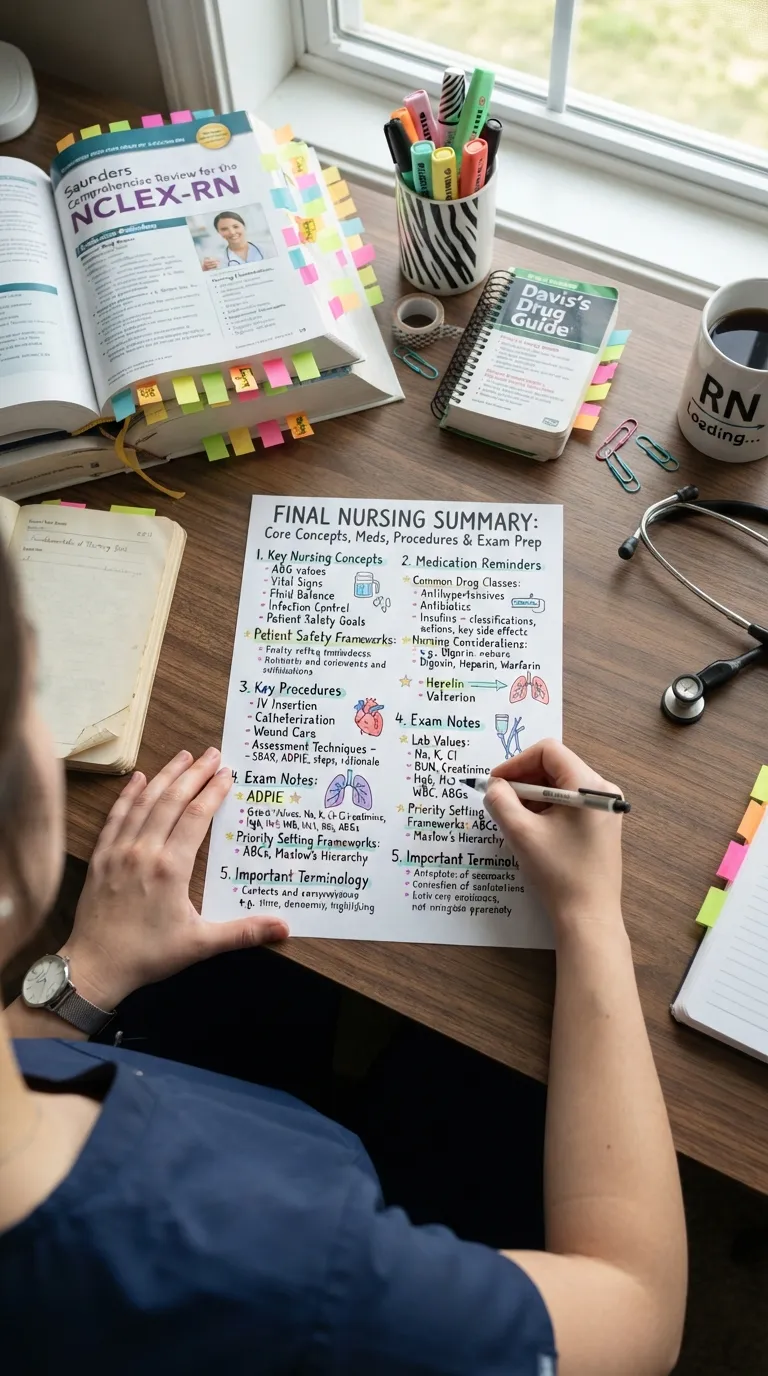
A summary page technique helps nursing students transform long lectures into useful review materials. After studying a topic, create a condensed page containing the most important definitions, mechanisms, assessment findings, and nursing considerations. Writing the summary in your own words encourages active thinking and highlights areas that need further attention.
For instance, a summary page about respiratory assessment might include normal assessment principles, common abnormal findings, relevant terminology, and when further evaluation is needed. Use headings and short phrases rather than copying entire textbook sections.
A summary page should support your original notes, not replace detailed course materials when you need additional explanations. Revisit it during spaced review sessions and update it whenever you discover an important gap in your understanding.
Digital Note Backup

Digital note backup gives nursing students extra security and flexibility when managing large amounts of coursework. Saving important notes digitally allows quick access during revision, lecture preparation, and schedule changes. It can also make searching for specific terms easier than browsing through several physical notebooks.
Use clearly named folders for each subject, semester, or examination. Keep a backup in a trusted cloud service or another secure location, and periodically check that important files open correctly. Protect your account with a strong password and avoid uploading confidential patient information to personal study platforms.
A simple folder system might include:
- Nursing Fundamentals
- Pharmacology
- Anatomy and Physiology
- Health Assessment
- Exam Review Sheets
Choose a digital system that is easy to maintain rather than switching between too many applications.
Medication Note Format

A medication note format helps nursing students organize details that are easy to confuse. Pharmacology often involves many drug names, classifications, therapeutic uses, adverse effects, and nursing considerations. Separating these details into consistent categories makes comparisons easier and supports more focused revision.
Create a study table with columns for the medication class, general purpose, important adverse effects, monitoring considerations, and relevant safety precautions. Include information about contraindications or interactions when required by your course materials.
For example, when studying antihypertensive medications, distinguish the general action of each drug class and the monitoring considerations associated with it. Verify medication information using current, authoritative references and your course resources. Study notes are learning aids, not substitutes for approved prescribing information or clinical guidance.
Visual Diagram Notes

Visual diagram notes help nursing students simplify information that feels overwhelming. Turning processes, body systems, and clinical relationships into visuals can make difficult topics easier to understand and remember. Diagrams are particularly useful for processes that involve several stages or connected structures.
Try drawing a basic pathway for blood circulation, a flowchart of the inflammatory response, or a labeled diagram of the respiratory system. Keep the visuals simple and include short labels rather than lengthy paragraphs. Add arrows to indicate direction and use consistent symbols for related processes.
If you struggle to draw, use boxes, circles, and arrows. The purpose is to represent the information accurately, not to create perfect artwork. Review the diagram by explaining each part aloud without reading its labels.
Lecture Recording Notes

Lecture recording notes give nursing students another opportunity to understand challenging lessons. If your instructor permits recording, revisit specific sections that explain difficult concepts rather than replaying entire lectures repeatedly. This approach saves time while helping clarify unfamiliar terminology and complicated processes.
During class, take brief notes with timestamps beside topics that need another explanation. Later, listen to those sections and add only the missing details. Recording should support active listening, not become a reason to postpone studying until the night before an examination.
Always ask permission when required, respect classmates’ privacy, and follow your school’s recording policies. For a more efficient routine, set a short review period after each lecture and resolve confusing points while the material is still fresh.
Priority Note Marking
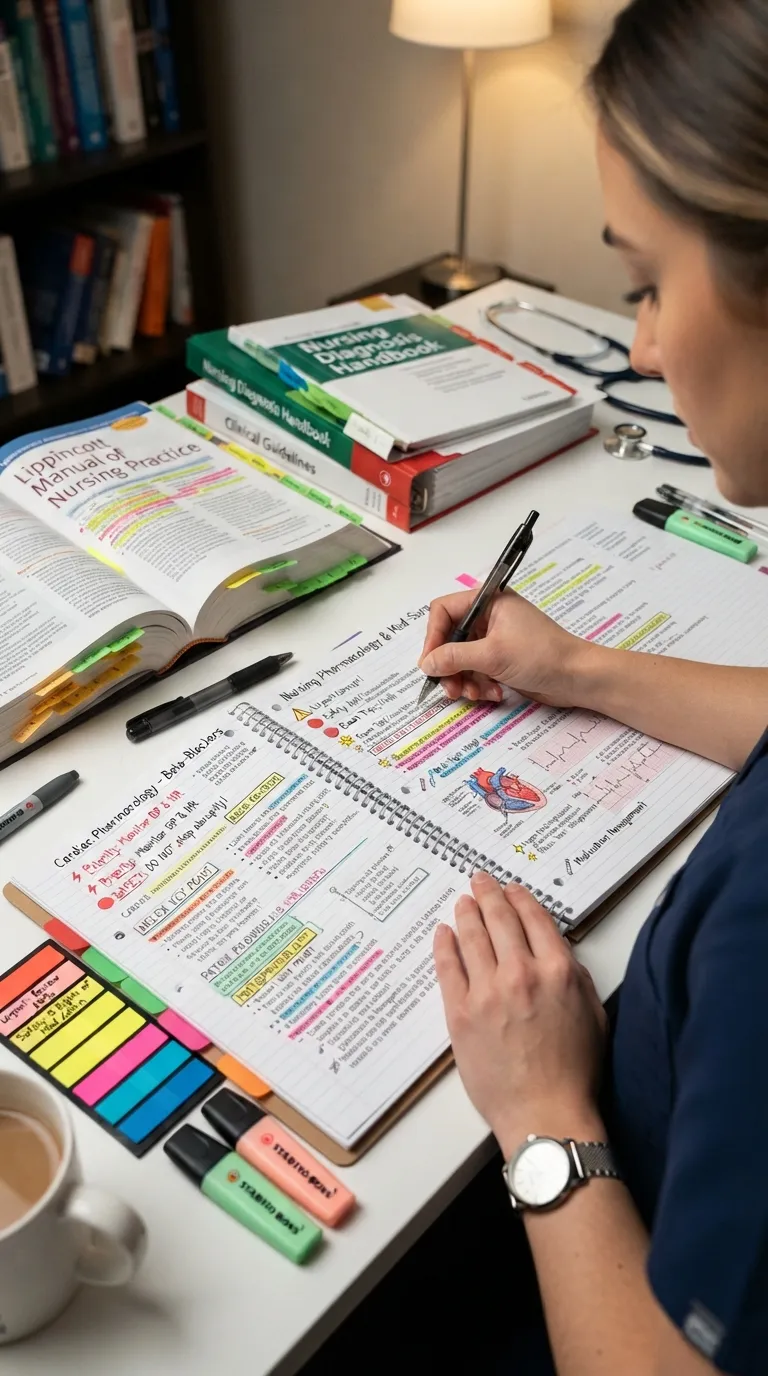
Priority note marking helps nursing students recognize which information deserves immediate attention. Simple symbols can distinguish essential concepts, confusing details, and topics that need another review. This makes it easier to plan revision when several examinations or assignments are approaching.
Develop a small symbol key and use it consistently. For example, an asterisk can mark an important concept, a question mark can identify something you do not understand, and an exclamation mark can indicate a safety-related point worth reviewing carefully.
Avoid marking every line as important. Select priorities according to your learning objectives, instructor guidance, and reliable course materials. Remember that a highlighted concept is not automatically more clinically urgent than another; actual patient-care priorities depend on the clinical situation and applicable protocols.
Lecture Comparison Notes

Lecture comparison notes are useful when nursing students study topics that seem similar but require different approaches. Creating a comparison table helps you recognize differences between conditions, medication classes, assessment findings, or nursing interventions.
For example, you might compare signs commonly associated with hypoglycemia and hyperglycemia, using your course materials to identify relevant distinctions. Keep the categories consistent across both sides so the differences are easy to understand.
A useful comparison table can include:
- Key definitions
- Common signs and symptoms
- Important assessment considerations
- Potential complications
- Relevant nursing interventions
Comparison notes are especially helpful before examinations that ask you to distinguish between related concepts. Check your sources carefully because clinical findings may overlap, and a single symptom rarely establishes a diagnosis by itself.
Question Based Notes

Question-based notes help nursing students move beyond copying information and start practicing recall. Although this technique is similar to creating a question column, you can also turn an entire lecture into a collection of short questions and answers for independent revision.
For instance, after studying infection prevention, create questions about hand hygiene, personal protective equipment, transmission precautions, and the reasons behind specific safety measures. Answer each question without looking at your notes before checking your response.
Keep answers concise but accurate, and return to questions you answered incorrectly after a few days. This repeated retrieval practice can strengthen long-term learning and reveal knowledge gaps more effectively than simply rereading the same page.
Color Coding System
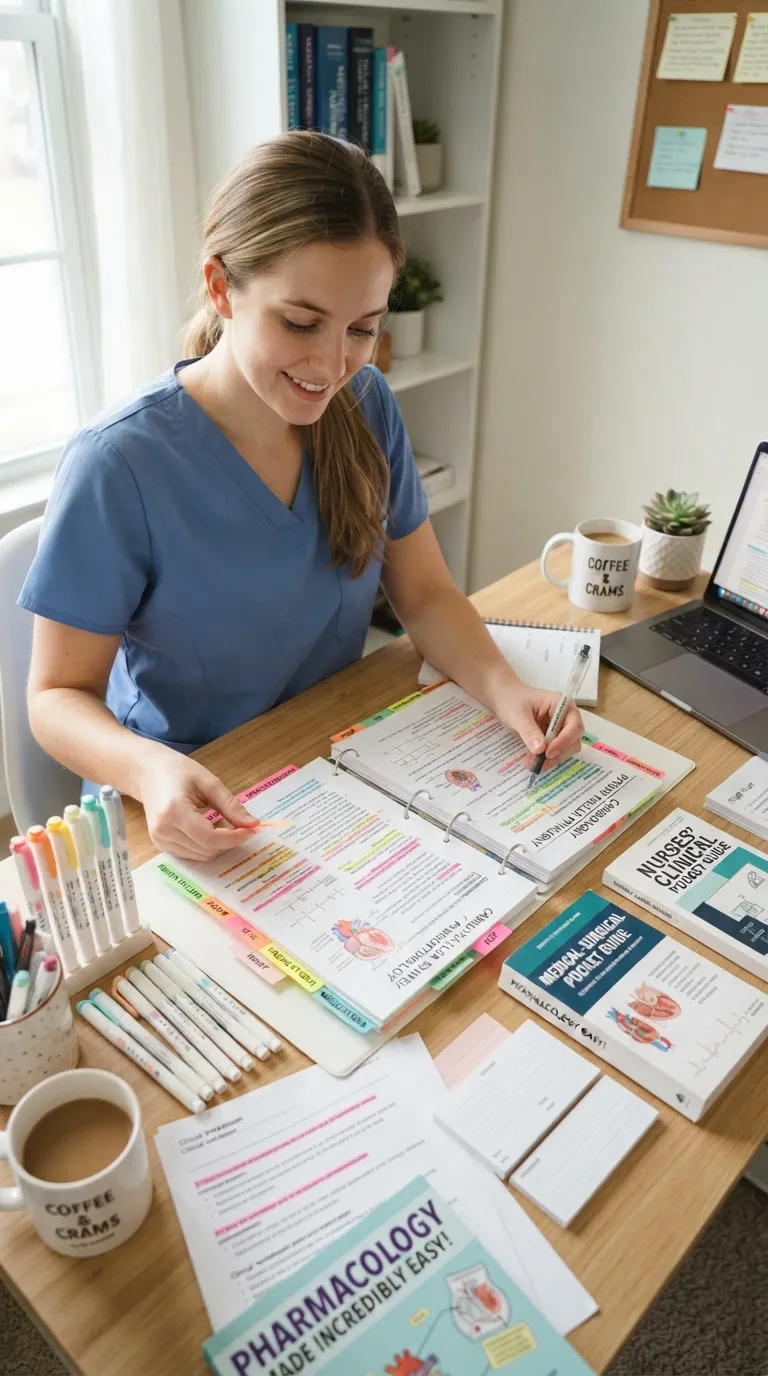
A consistent color coding system can make large amounts of nursing information easier to navigate. If your main notebook already uses color categories, apply the same system to digital notes, summary sheets, and flashcards. Keeping the colors consistent reduces the mental effort required to interpret your study materials.
For example, you might use one color for definitions, another for assessment findings, and a third for safety considerations. You can also pair colors with written labels or symbols so that your notes remain accessible when printed in black and white.
Avoid introducing new colors every time you study a different subject. A small, familiar system is usually more practical than a complicated scheme. Review your color key occasionally and change it only when the existing arrangement is difficult to maintain.
Patient Scenario Notes

Patient scenario notes help nursing students understand how knowledge applies to realistic learning situations. Instead of memorizing isolated facts, use fictional or instructor-provided scenarios to connect symptoms, assessment findings, nursing interventions, and expected outcomes.
For example, a practice scenario involving a patient with shortness of breath can help you organize what information needs assessment, which findings may require urgent escalation, and how nursing priorities are determined. Explain the reasoning behind each decision rather than listing actions without context.
Use a structured format:
- Scenario: Briefly describe the learning situation.
- Assessment: Identify relevant findings.
- Priority: Explain the immediate concern.
- Action: Review appropriate nursing responses.
- Evaluation: Consider how outcomes would be assessed.
Always follow your course guidance and established clinical protocols when reviewing scenarios.
Reflection Note Pages
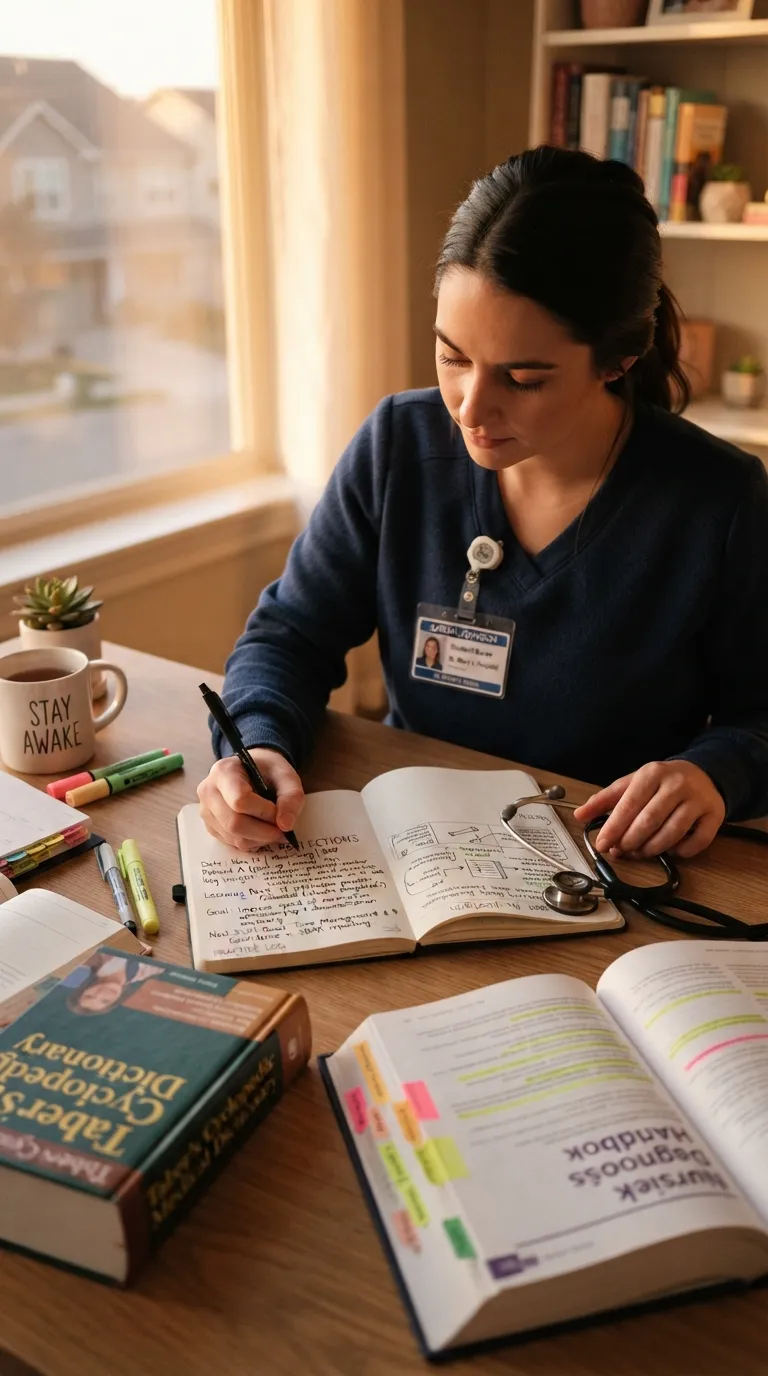
Reflection note pages allow nursing students to learn from educational experiences instead of relying only on textbooks. After a class, laboratory session, simulation, or clinical rotation, write a few sentences about what you learned, what challenged you, and what you want to improve.
Reflection is most useful when it identifies a specific next step. For example, if you found a clinical skill difficult during a supervised practice session, note which part needs additional demonstration or practice. Discuss questions with your instructor and follow the approved learning plan.
You can organize each reflection around three prompts:
- What did I understand well today?
- Which concept or skill needs more practice?
- What will I do differently next time?
Keep reflections professional, respectful, and free from identifiable patient details.
Organized Note Archive

An organized note archive creates a reliable system that supports nursing students throughout their education. Keeping materials categorized makes future revision faster and prevents useful information from becoming difficult to find. At the end of each week, spend a few minutes sorting new notes and removing unnecessary duplicates.
Arrange materials by subject, unit, and topic. Give digital files descriptive names and use a similar structure for physical folders. You can also maintain an index listing the location of important summaries, medication tables, diagrams, and practice questions.
Before examinations, use your archive to identify topics that need attention instead of starting from scratch. Review older notes periodically, update outdated information with reliable sources, and keep course-specific guidance clearly identified.
Closing Thoughts
Effective nursing note-taking is about understanding information, organizing it clearly, and making revision easier. Techniques such as Cornell notes, concept maps, medication tables, comparison charts, and patient scenarios can help you build a study system that suits your learning needs.
Start with two or three methods instead of changing everything at once. For example, use question-based notes after lectures, create a summary page at the end of each topic, and review difficult concepts through practice questions. Adjust your approach as you discover which methods help you understand and recall information most effectively.
If you are looking for more ways to improve your nursing school routine, explore related Study Tips for practical ideas on planning study sessions, preparing for exams, and developing consistent learning habits.
Save these Nursing Notes Taking Tips on Pinterest and try one strategy today to make your nursing study routine more organized and manageable.