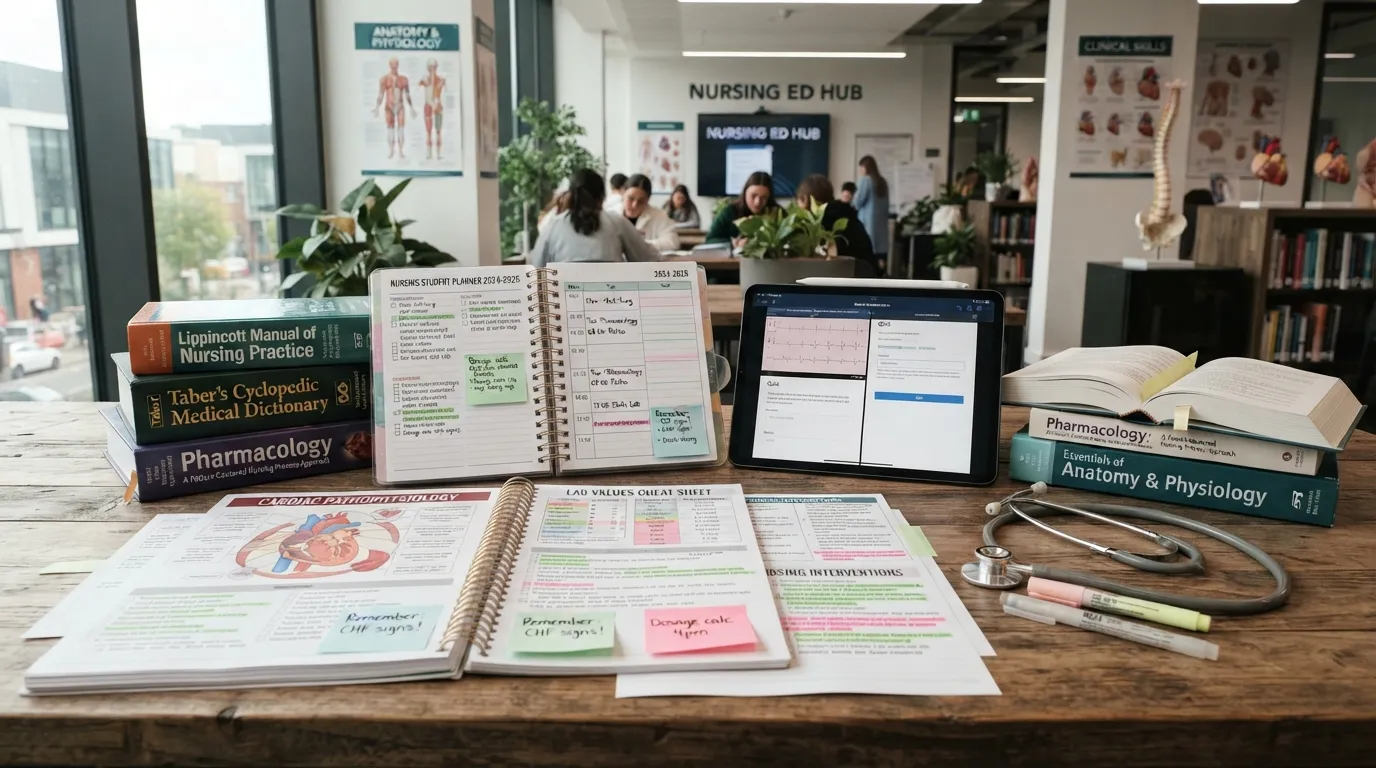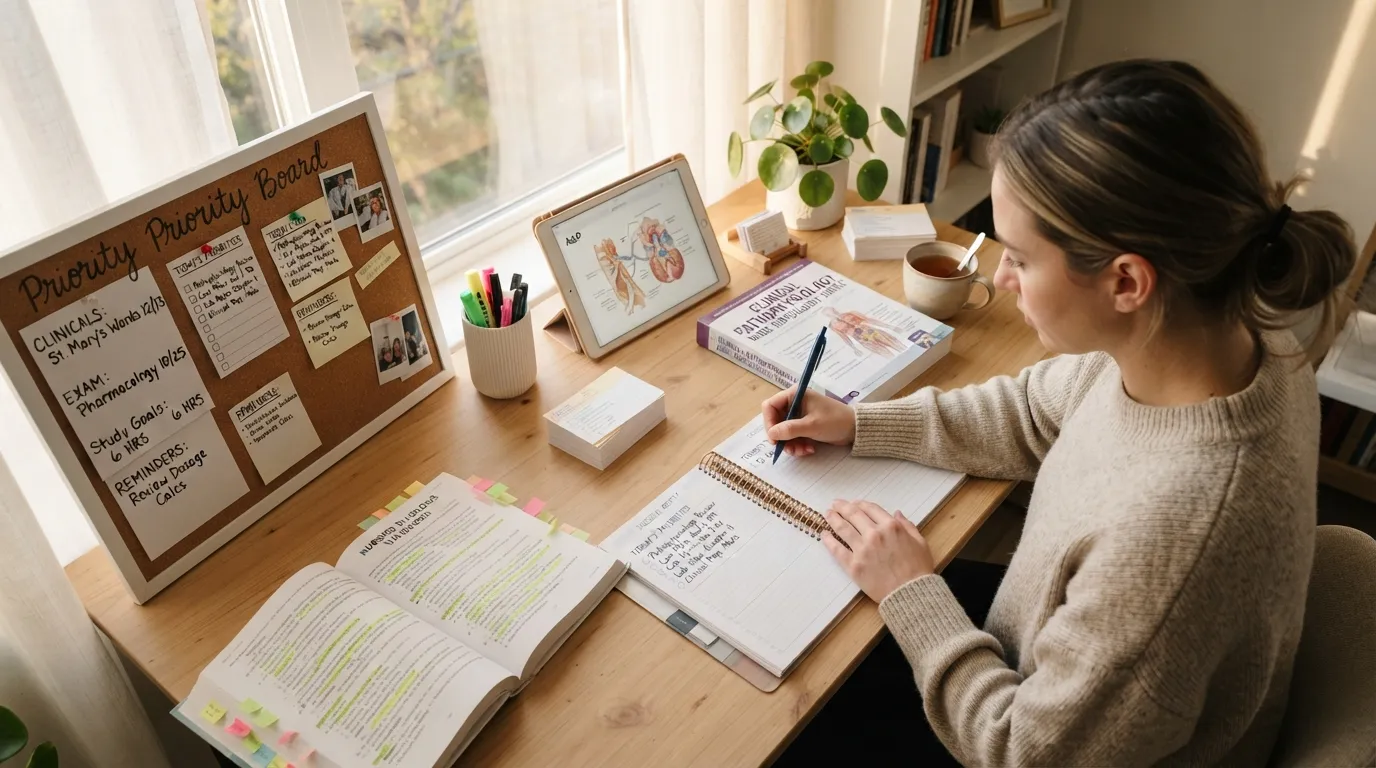


Nursing Flashcards Ideas can turn ordinary nursing notes into active study tools that help you recall information, recognize important details, and practice clinical reasoning. The key is to make cards that test your memory instead of simply repeating textbook content. From quick-check prompts and mini case studies to mistake cards and concept links, different flashcard styles can target different learning needs. Building a personalized system also makes it easier to focus on the material you actually find challenging.
Flashcards can be especially helpful when you have several subjects to study and limited time between classes, clinical rotations, and exams. Instead of reviewing every chapter from the beginning, you can focus on specific concepts that need more attention. Try different card formats, review challenging material regularly, and keep your answers short enough to remember but detailed enough to understand.
1. Use One-Word Prompts

A single-word prompt can act like a mental trigger. Instead of placing the entire explanation on the card, give yourself just enough information to activate what you already learned and then check your answer afterward. For example, a card containing the word edema could prompt you to recall its meaning, possible causes, assessment findings, and relevant nursing considerations.
This method works well for terminology, anatomy, common symptoms, and important nursing concepts. Start with a familiar topic, then gradually use prompts that require more detailed recall. If a word brings several unrelated facts to mind, narrow the card to one specific question so your review stays focused.
- Front: Edema
- Back: Swelling caused by excess fluid in body tissues.
- Extra prompt: What assessment findings might accompany edema?
2. Build “What Would You Do?” Cards

Scenario prompts make studying feel more like a decision-making exercise than ordinary memorization. Asking yourself what you would actually do encourages you to connect knowledge with the type of judgment nursing questions often require. Rather than simply asking for a definition, describe a short patient situation and identify the appropriate next step based on your course materials.
Keep each scenario simple enough to review in a minute or two. You might include a change in symptoms, a new assessment finding, or a question about patient safety. After answering, explain why your response fits the situation. For clinical decisions, always use current course guidance, established protocols, and appropriate supervision rather than treating a flashcard as a substitute for clinical judgment.
3. Turn Notes Into Triggers

Your notes already contain the information you need, but they may not be organized for active recall. Turning selected notes into short triggers helps transform passive material into something you can test yourself on later. Review your lecture notes and highlight facts, processes, or relationships that are important to understand. Then turn those details into direct questions instead of copying complete paragraphs.
For example, a page of notes about infection prevention might become several cards covering hand hygiene, standard precautions, personal protective equipment, and transmission-based precautions. Separating these concepts makes it easier to identify what you know and what needs more practice.
- Choose one important fact or concept at a time.
- Write a clear question on the front.
- Put a concise answer on the back.
- Add a short explanation only when it helps clarify the concept.
4. Create “Explain It Simply” Cards

If you cannot explain a concept simply, that may reveal a gap in your understanding. These cards are useful because they force you to reduce complicated material into language that makes sense to you. Choose a topic from your textbook, such as inflammation, oxygenation, or fluid balance, and explain it in your own words without looking at your notes.
Avoid memorizing a complicated textbook definition when a clear explanation would help you understand the idea better. Once you can explain the basics, add the relevant terminology and details required by your nursing course. This approach helps you recognize whether you understand a concept or have only memorized its wording.
A helpful card might ask, “Explain the purpose of pulse oximetry in two sentences.” Your answer should describe what the device estimates and why the result must be interpreted alongside the patient’s overall condition.
5. Make “Red Flag” Cards

Not every detail deserves equal attention. Creating cards around clinically important warning signs can help you identify information that deserves stronger recall, especially when studying patient assessment and safety-related concepts. Use your lectures, assigned readings, and approved clinical resources to identify warning signs relevant to your current topic.
Keep the front of each card specific. Instead of writing “Important symptoms,” ask which findings require prompt assessment or escalation in a particular situation. On the back, include the expected findings and the appropriate response described in your learning materials.
- Warning signs associated with respiratory distress.
- Significant changes in level of consciousness.
- Symptoms that may indicate a serious medication reaction.
- Unexpected changes in vital signs that require further assessment.
These cards should reinforce safe recognition and escalation, not encourage you to make clinical decisions from an isolated symptom.
6. Create “Why” Cards

A strong study card does not always ask what something is. Asking why can uncover whether you actually understand the relationship between a clinical finding, nursing action, and expected outcome. For instance, instead of asking what position is used in a particular situation, ask why that position may be appropriate according to the patient’s condition and the procedure being performed.
These cards are especially useful for pathophysiology, medication principles, and nursing interventions. They help you connect the information you learn in lectures with the reasoning behind it. When your answer feels incomplete, return to the relevant textbook section and rewrite the card with a clearer explanation.
You can also use follow-up questions to deepen your understanding:
- Why is this assessment important?
- Why might this finding occur?
- Why is a particular intervention appropriate?
- What outcome would you expect to monitor?
7. Use Mini Case Studies

Mini cases turn flashcard review into a quick clinical-thinking exercise. They can help you practice identifying the important information in a situation without requiring a full-length practice exam every time you study. Create a short, fictional patient scenario using concepts from your course, then ask one focused question about the information provided.
For example, a case might describe a patient reporting dizziness after standing. Your prompt could ask which additional assessment information would help clarify the situation. The back of the card should explain the relevant reasoning rather than simply provide an unexplained answer.
Keep cases short and avoid including unnecessary details that distract from the learning objective. As your understanding improves, introduce more complex scenarios involving several related concepts. Use instructor-approved examples and reliable educational references to check the accuracy of your answers.
8. Build Mistake Cards
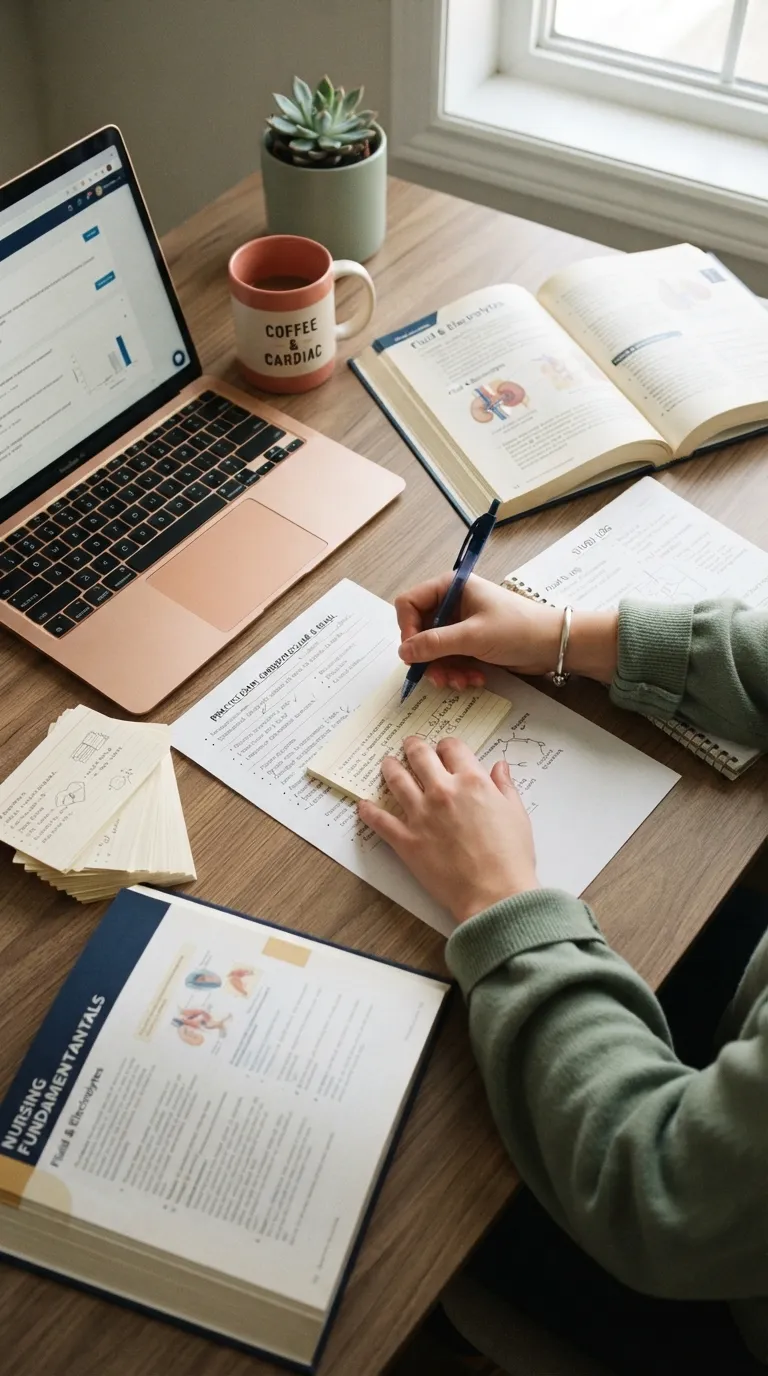
Your mistakes can tell you exactly where your study time is most valuable. Instead of keeping a generic collection of facts, create personalized cards from the questions and concepts that have actually caused you difficulty. After completing a practice quiz, review every incorrect answer and determine whether the problem involved missing knowledge, confusing terminology, or misunderstanding the question.
Turn each mistake into a short prompt that tests the concept again. Include a brief explanation of why the correct answer is appropriate and, when useful, why your original choice was incorrect. This makes each card more useful than simply recording the correct option.
For a simple system, label your cards as Needs Review, Improving, or Confident. Spend more time on the first group, then move cards between groups as your recall improves. Revisit difficult cards after a short interval instead of reviewing only the material you already know well.
9. Make “First Step” Cards

Priority questions often require you to distinguish an immediate concern from something that can wait. Cards built around first actions can help you practice that decision-making process in short, repeatable sessions. Use questions from your nursing coursework to practice recognizing the relevant patient information, identifying immediate safety concerns, and understanding the reasoning behind a priority response.
Do not assume every question has the same automatic answer. The appropriate action depends on the specific scenario, the patient’s condition, and the protocols or principles taught in your course. Review the explanation carefully, especially when two options appear reasonable.
After answering each card, ask yourself what information made the first step appropriate. This extra explanation helps you develop a repeatable reasoning process instead of memorizing isolated answers.
10. Turn Formulas Into Recall Prompts

Calculation cards can help you remember the structure behind a problem before you begin solving it. Keep the prompts focused on the process, units, and concepts you are expected to know rather than turning one card into a full worksheet. You can create separate cards for a formula, the meaning of its variables, and the steps needed to solve a practice problem.
For medication calculations, make sure you understand the prescribed dose, available concentration, measurement units, and any relevant safety checks. Verify your calculations against course materials and instructor guidance. Flashcards can reinforce learning, but they should never replace independent verification when performing actual clinical calculations.
Consider organizing your formula cards into small groups:
- Basic mathematical conversions.
- Formula recall and variable identification.
- Dimensional analysis and unit cancellation.
- Practice problems with checked solutions.
Keep worked examples on the back when a formula is difficult to apply. Practicing the calculation is just as important as remembering the formula itself.
11. Make “Before You Answer” Cards

Sometimes students know the content but rush through the question. A small collection of strategy cards can remind you to pause, identify what is being asked, and organize your reasoning before selecting an answer. These cards are useful for practice exams, multiple-choice questions, and questions that include several plausible options.
Create prompts that encourage a consistent routine. For example, one card might ask what the question is actually testing, while another reminds you to distinguish relevant information from background details. When reviewing your answer, consider whether you responded to the question asked or simply recognized a familiar term.
Helpful reminders include:
- Read the entire question before choosing an answer.
- Identify key words such as first, best, or priority.
- Compare options against the information in the scenario.
- Review the explanation after answering.
Over time, these reminders can help make your practice sessions more deliberate and less rushed.
12. Create Concept-Link Cards
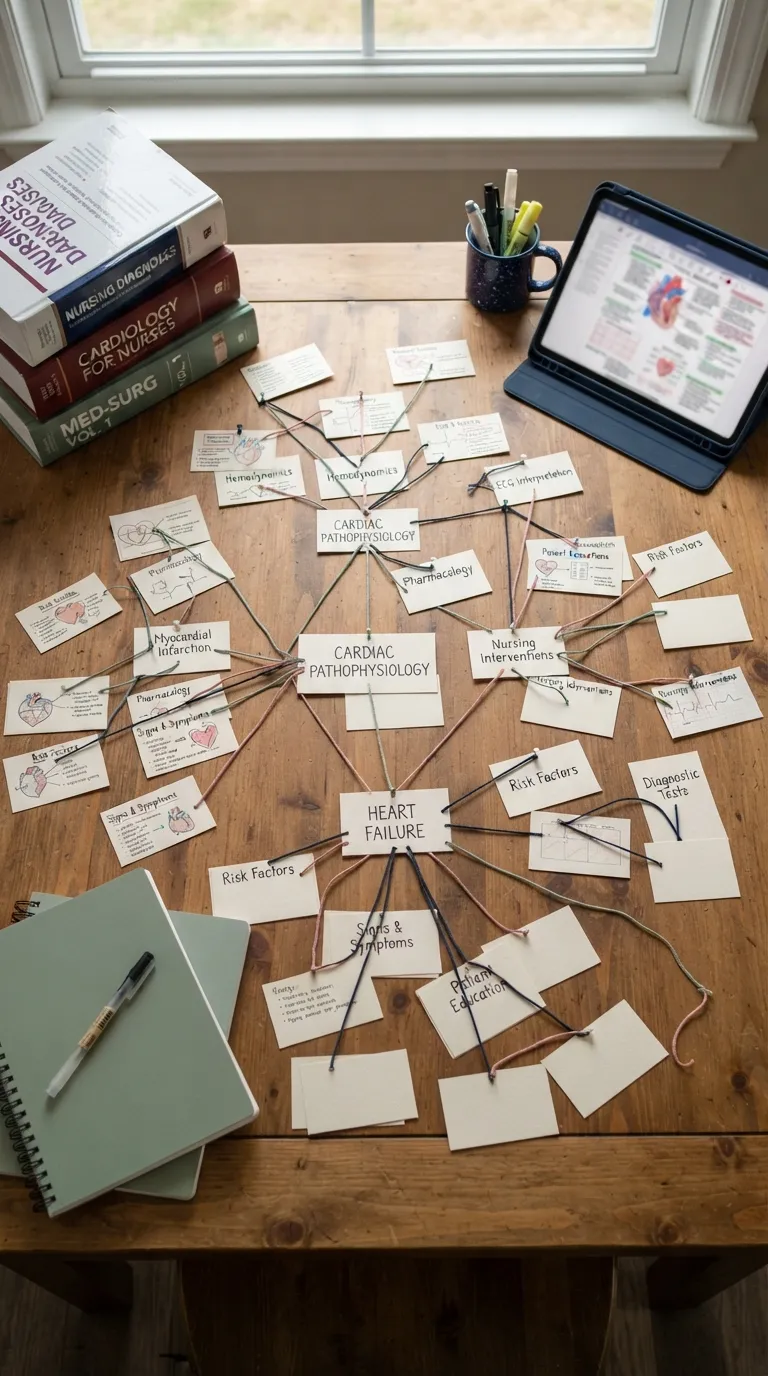
Nursing concepts rarely exist completely on their own. Linking related cards can help you see how assessment findings, body processes, treatments, and expected outcomes fit together instead of remembering each item as an isolated fact. For example, you could connect a card about fluid balance with related cards on intake and output, assessment findings, and the principles behind fluid management.
Try adding a small note at the bottom of each card that names a related topic. This creates a simple path between ideas without making the main question too complicated. You can also use different colored tabs or subject labels to organize related cards, especially when studying several systems at once.
The goal is to understand how concepts relate to one another. When you can explain those connections in your own words, you are better prepared to approach questions that combine information from different parts of your coursework. If you enjoyed this, Nursing Study Guide Ideas Every Student Needs is a good next step.
13. Use “Choose the Best” Cards

Choosing between plausible answers is often harder than recalling a definition. These cards let you practice comparing options and explaining why one choice better matches the patient situation or question being asked. Use short multiple-choice prompts based on your study materials, and make sure the answer options are clear and educationally accurate.
After selecting an answer, explain why it is the best fit and why the alternatives are less appropriate in that specific context. This additional step helps you learn from the reasoning instead of memorizing a letter or answer position. Rotate the location of the correct answer so you do not begin guessing based on a pattern.
You can start with straightforward terminology questions before moving to scenarios that require interpretation. Keep the explanations concise enough for regular review, but include additional detail whenever an incorrect option reflects a common misunderstanding.
14. Create “What Changes?” Cards

A small change in a patient scenario can completely alter the reasoning required. This type of card helps you practice noticing which details actually matter rather than memorizing one response for every similar situation. Write a basic scenario, then change one important detail and ask how that change affects your interpretation.
For example, you might compare two educational scenarios that differ in a patient’s reported symptoms or assessment findings. Your task is to identify what new information matters and whether your reasoning should change. Use instructor-approved examples so that the scenarios and explanations remain accurate.
These cards are also useful for understanding how risk factors, medical history, and changing assessment results can influence a nursing question. Keep each variation focused on one meaningful difference so you can clearly identify the reason behind your answer.
15. Make “Teach a Classmate” Cards

Explaining material to another person can reveal gaps that are easy to overlook when studying alone. Teaching-style cards turn review into a conversation and encourage you to organize information clearly enough for someone else to understand. Write prompts such as “Explain the purpose of a health assessment” or “Describe the difference between an expected finding and a concerning change.”
You can practice aloud, record a short explanation, or review the card with a classmate. If you cannot explain the topic without reading your notes, mark the card for another review session. Check your explanation against reliable course materials to make sure you have not simplified the concept so much that important details are lost.
This method can also make group study more productive. Each person can prepare several cards, take turns explaining the answers, and discuss any differences in understanding.
16. Create “Spot the Error” Cards

Finding an intentional mistake can be more engaging than simply recalling a fact. These cards encourage you to examine details carefully and explain what makes a statement or clinical decision incorrect. Write a short statement containing one clear error, then ask yourself to identify and correct it.
For example, a terminology card might confuse two related definitions. Your task would be to locate the incorrect detail and provide the accurate explanation. You can also use this approach for anatomy, infection prevention, and calculation steps.
Keep the correction on the back of the card, along with a brief explanation of why the original statement was wrong. Avoid creating confusing examples with several possible errors, particularly when learning a topic for the first time.
17. Make “Explain the Difference” Cards
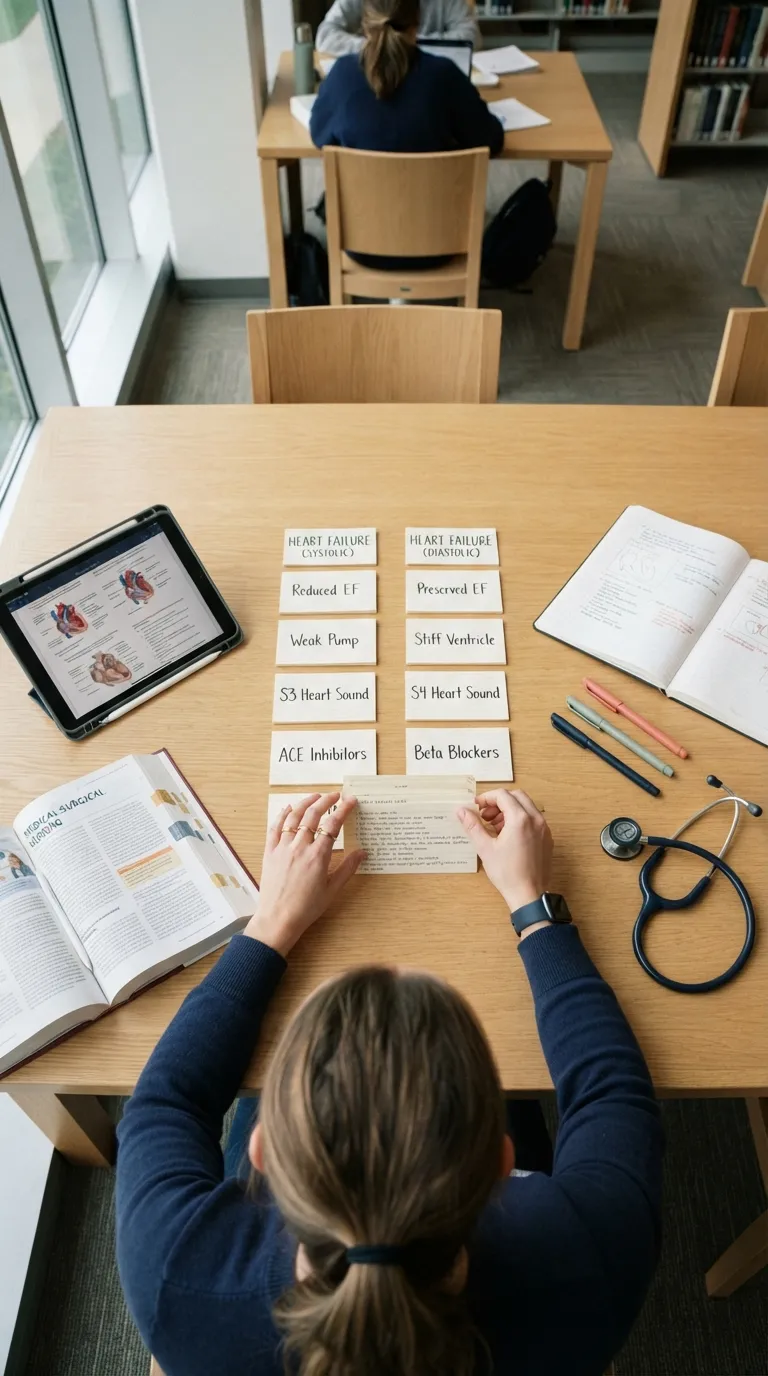
Similar concepts can blur together when you study them separately. Difference-based cards force you to identify the specific feature that separates two topics and can make confusing material easier to distinguish. Choose two concepts that you regularly mix up, then write a question that requires you to compare their defining features.
For instance, you might compare related anatomical terms, assessment methods, or categories of precautions. Put the key differences on the back in a short table or two-column list if that format makes the information clearer.
- Identify the main feature of each concept.
- Note the most important difference.
- Add one example of when each concept applies.
- Review the pair together until you can explain the distinction without looking.
This format is particularly helpful before exams that cover several similar terms or closely related concepts.
18. Use Audio Flashcard Practice

Flashcard practice does not always have to happen with physical cards. Recording your own questions and explanations can add another way to review material, particularly when you want a change from sitting at your desk. Record a question, leave a pause so you can answer from memory, and then play the explanation.
Audio cards can work well for definitions, verbal explanations, terminology, and short concept reviews. Keep each recording focused on one question so you can replay difficult material without listening to a long recording. You can also create separate playlists for different subjects, such as fundamentals, pharmacology, or health assessment.
Use audio review as a supplement to written practice, especially for formulas, diagrams, and topics that require you to interpret visual information. Make sure your recordings are accurate and update them whenever your course materials change.
19. Create Quick-Check Cards

Quick-check cards are useful when you have only a few minutes available. A small collection of difficult concepts can give you a productive retrieval session without requiring you to unpack an entire study setup. Choose five to ten cards that focus on material you are currently learning or repeatedly forgetting.
Rather than rushing through as many cards as possible, pause long enough to answer each question before checking the back. Mark incorrect answers for another review and move on from familiar concepts when you can recall them accurately.
Good times for a quick review include a short break between study blocks or a few minutes before starting a planned study session. Keep the cards focused so a brief review remains manageable instead of becoming another overwhelming task.
20. Make Exam Countdown Cards

A countdown collection can make exam preparation feel more manageable by narrowing your attention to the concepts that still need reinforcement. It works best when you adjust the cards as your understanding improves rather than simply reviewing the same pile every day. Begin by identifying the subjects covered on the exam and creating a manageable set of cards for each topic.
As the exam approaches, use practice questions and class materials to identify weak areas. Give those areas more attention while continuing to review important concepts you already understand. Avoid filling the final days with unnecessary new cards if doing so prevents you from revisiting challenging material.
A simple countdown routine might include reviewing difficult cards early in the week, practicing mixed questions as the exam gets closer, and using the final review session to reinforce key concepts. Allow enough time for rest and sleep rather than relying on last-minute cramming.
21. Build a Personal Master Deck

A personal master deck brings your most useful cards together in one organized collection. Instead of keeping every card you have ever created, focus on accurate prompts that address important course concepts and the mistakes you are most likely to repeat. Organize the deck by subject, topic, or difficulty so you can find the right cards without wasting study time.
Your master deck should change as your knowledge develops. Remove duplicate cards, rewrite confusing questions, and separate topics that have become too broad. Keep challenging cards in regular rotation while reviewing familiar concepts occasionally to check that your knowledge remains strong.
For a simple system, divide your deck into three groups:
- Review often: Concepts you frequently forget or misunderstand.
- Review sometimes: Topics you can answer correctly but still need to reinforce.
- Ready for a check: Concepts you can explain confidently and want to revisit later.
A well-maintained deck becomes a personal study resource that reflects your learning needs instead of a large collection of disconnected facts.
Ready to Start?
Smart flashcard studying is not about creating the biggest deck. It is about creating useful prompts that make you retrieve, explain, compare, and apply nursing knowledge. Choose the card styles that match your coursework, keep difficult concepts in regular rotation, and gradually build a personal collection of high-value cards.
For better results, combine flashcards with practice questions, lecture review, and other active study methods. Check your answers against reliable educational resources, particularly for clinical concepts and medication calculations. With these Nursing Flashcards Ideas, your study sessions can become more focused, flexible, and purposeful without turning every review session into hours of rereading.