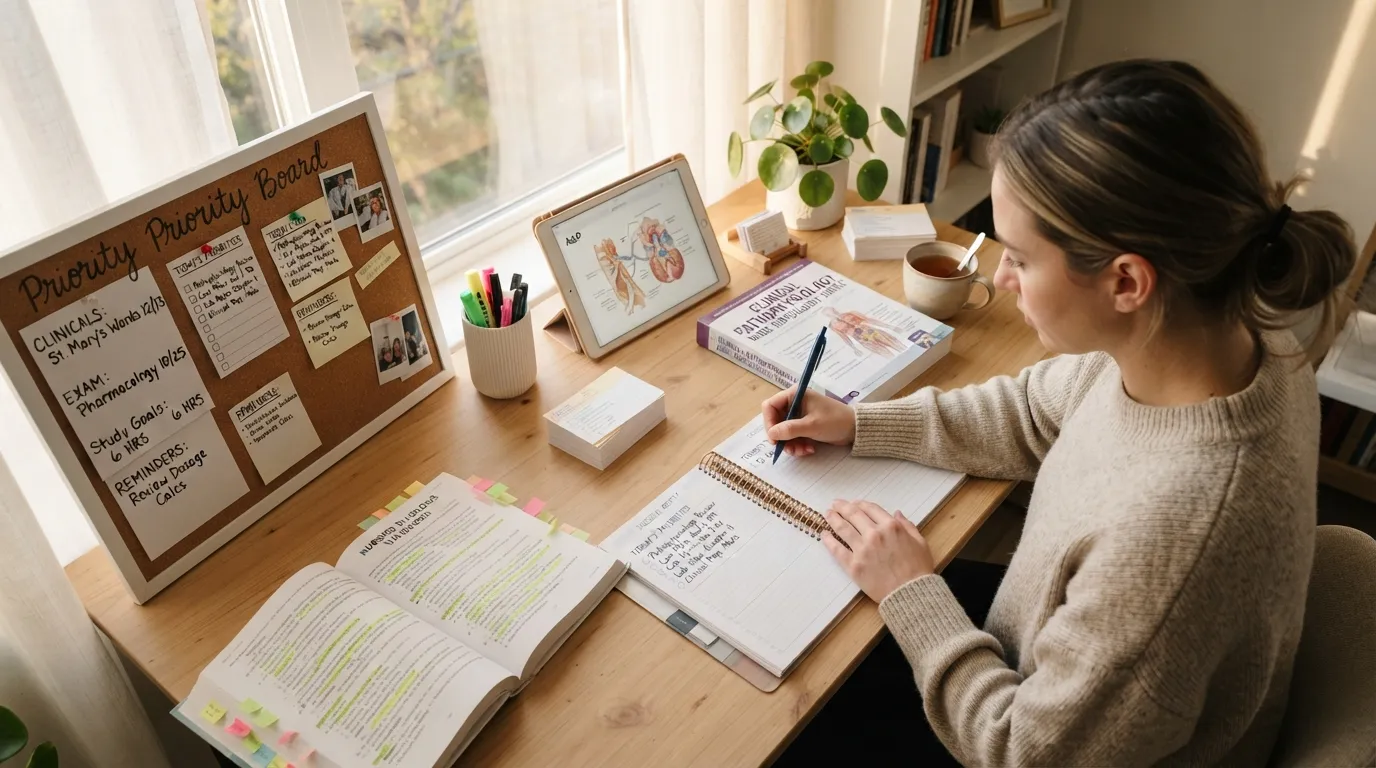


NCLEX Study Notes can make exam preparation easier when they focus on clinical reasoning instead of overwhelming you with pages of information. The most useful notes help you recognize priorities, connect patient findings, understand nursing responsibilities, and quickly review high-value concepts. Instead of copying entire textbook chapters, create short, organized notes that highlight safety concerns, assessment clues, patient education, communication, delegation, and common clinical patterns.
Use charts, comparison tables, concept maps, and brief examples to make difficult topics easier to revisit. Whether you’re building your study binder or preparing for your next practice session, these 25 ideas can help you create a more focused review system. Aim for active recall and consistent practice, not simply reading the same notes repeatedly.
Client Needs Overview
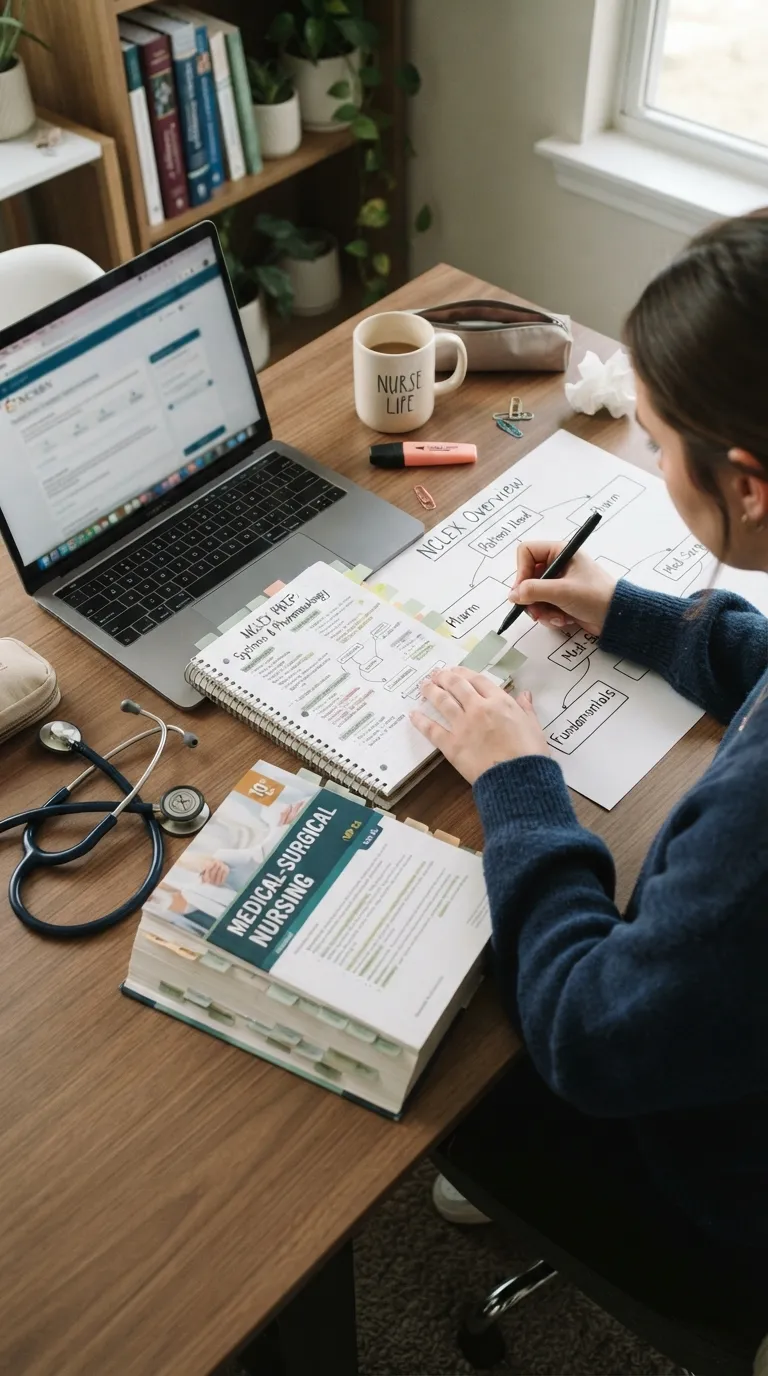
A broad overview helps prevent NCLEX preparation from becoming a random collection of facts. Start by grouping your notes into major areas so you can understand how individual concepts fit into the bigger picture. This organization also helps you identify weak areas before spending too much time reviewing topics you already understand.
Consider organizing your study materials around:
- Management of care and patient safety
- Health promotion and maintenance
- Psychosocial integrity
- Physiological adaptation and basic care
Use your current NCLEX test plan to confirm the relevant client needs categories and content expectations.
Safety Priority Clues

Safety should become a recurring lens in your exam notes. When reviewing a scenario, train yourself to ask what information suggests immediate danger and what problem requires attention first.
Pay attention to sudden changes, serious symptoms, environmental hazards, and risks that could lead to patient harm.
Priority Framework Notes

Priority frameworks are useful when they support clinical reasoning rather than replace it. Build notes that show the purpose of each framework and practice applying them to different fictional situations.
Remember that no single rule automatically answers every question. The patient’s condition, available information, and urgency all influence the best response.
ABC Assessment Review

ABC thinking can help organize urgent assessment priorities. Use your notes to connect airway, breathing, and circulation concepts with the kinds of patient findings that may signal increasing urgency.
Add short scenarios to practice recognizing when breathing difficulties or signs of poor circulation require immediate attention.
Stable Vs Unstable

Comparing stability is often more useful than memorizing a single priority rule. Build notes around changes in condition, unexpected findings, and signs that a patient’s status may be worsening.
A comparison chart can help you distinguish a patient with an established, unchanged condition from someone experiencing a new or potentially dangerous change.
Acute Vs Chronic

Acute-versus-chronic comparisons can make priority decisions easier to organize. Focus your notes on what is expected, what is new, and what suggests that the patient’s condition requires more immediate attention. Chronic conditions still deserve careful assessment, especially when new symptoms or unexpected changes appear.
- Acute conditions: Usually develop suddenly and may require prompt assessment or treatment.
- Chronic conditions: Generally develop over time or persist for an extended period and often require ongoing management.
- New changes: Pay attention to sudden worsening, unexpected symptoms, or changes from the patient’s normal baseline.
- Priority setting: Consider the severity of the findings, potential complications, and immediate safety risks rather than relying on the diagnosis alone.
- NCLEX practice: Compare two patients and identify which assessment findings suggest the more urgent need for nursing attention.
Nursing Process Flow

The nursing process gives you a structure for working through complex scenarios. Instead of jumping straight to an intervention, practice identifying the information you need and following the reasoning process step by step. Organizing your notes around assessment, diagnosis, planning, implementation, and evaluation can make the decision-making process easier to remember.
- Assessment: Collect relevant subjective and objective patient information.
- Diagnosis: Identify nursing problems based on the assessment findings.
- Planning: Establish appropriate, measurable patient outcomes and prioritize care.
- Implementation: Carry out suitable nursing interventions and prescribed treatments.
- Evaluation: Reassess the patient and determine whether the expected outcomes have been achieved.
- NCLEX practice: Review patient scenarios and identify which step of the nursing process is most appropriate at that point.
Assessment Before Action

One helpful review habit is asking whether the nurse has enough information to act safely. Your notes should also recognize that some emergencies require immediate intervention rather than additional assessment. When practicing questions, consider whether the situation calls for collecting more information, taking an appropriate action, or promptly escalating the concern.
- Gather information: Assess symptoms, vital signs, relevant history, and other findings when the patient’s condition allows.
- Recognize red flags: Identify signs of deterioration, breathing difficulties, altered consciousness, or other potentially life-threatening changes.
- Avoid assumptions: Do not base decisions solely on a medical diagnosis or a single finding when further assessment is appropriate.
- Act promptly: When an immediate threat is apparent, initiate appropriate emergency measures and seek assistance according to clinical protocols.
- Reassess: Monitor the patient’s response after an intervention and report persistent or worsening concerns.
- NCLEX practice: Ask yourself whether additional assessment is safe, an immediate intervention is needed, or the situation requires urgent escalation.
Delegation Decision Guide

Delegation questions often test whether you can match the right task to the right situation. Build a comparison guide using your current educational materials because role expectations and scope details can depend on jurisdiction and setting.
Include these general considerations in your review:
- The patient’s stability and complexity of care
- The task’s predictability and required skills
- The team member’s training and authorized responsibilities
- The need for supervision, communication, and follow-up
Always verify specific delegation rules against the nursing standards and scope-of-practice guidance relevant to your education.
Infection Control Basics

Infection-control topics are easier to review when organized into clear categories. Use visual comparison notes and rely on your current nursing program resources for the specific guidance you are expected to know.
Include hand hygiene, appropriate protective equipment, safe handling of equipment, and prevention of infection transmission in your revision materials.
Isolation Precaution Clues

Infection-control topics are easier to review when organized into clear categories. Use visual comparison notes and rely on your current nursing program resources for the specific guidance you are expected to know. Include hand hygiene, appropriate protective equipment, safe handling of equipment, and prevention of infection transmission in your revision materials.
- Hand hygiene: Review when to clean hands and how proper technique reduces the spread of microorganisms.
- Personal protective equipment (PPE): Understand the appropriate use of gloves, gowns, masks, and eye protection according to exposure risks.
- Equipment safety: Learn the principles of cleaning, disinfection, and sterilization as appropriate for different equipment.
- Transmission prevention: Review safe injection practices, respiratory hygiene, and proper disposal of contaminated materials.
- Standard precautions: Apply these precautions to all patients, regardless of their known infection status.
- NCLEX practice: Identify which infection-control action best protects the patient, healthcare worker, and surrounding environment.
Therapeutic Communication

Isolation questions become easier when you recognize the underlying transmission concept rather than memorizing disconnected precautions. Keep your review chart simple and verify specific requirements against your current nursing course materials. A useful chart can compare transmission categories, protective measures, and the purpose of each precaution.
- Contact precautions: Focus on preventing the spread of microorganisms through direct contact with the patient or contaminated surfaces.
- Droplet precautions: Review measures that reduce exposure to infectious respiratory droplets.
- Airborne precautions: Understand the need for appropriate respiratory protection and specialized room requirements for infections transmitted through the air.
- Protective equipment: Match PPE to the transmission risk and the facility’s infection-control policy.
- Patient placement: Review room requirements, transport precautions, and instructions for limiting transmission.
- NCLEX practice: Read the infection scenario carefully and identify the transmission category before selecting the appropriate precautions.
Patient Education Principles

Patient education is more than giving instructions. Your notes should emphasize individualized teaching, understandable communication, readiness to learn, and ways to determine whether the patient actually understands the information.
Include teach-back examples and reminders to consider language needs, cultural preferences, health literacy, and the patient’s ability to participate.
Documentation Essentials

Documentation questions often reward precise thinking. Keep your notes centered on objective information, accurate recording, appropriate timing, and professional communication rather than trying to memorize isolated examples. Review how to distinguish observable findings from assumptions and why corrections should follow the documentation policies used in the clinical setting.
- Objective language: Record observable findings and patient statements without personal judgments.
- Accuracy: Document the care provided, relevant assessment findings, and the patient’s response truthfully.
- Timeliness: Complete documentation promptly according to workplace policies.
- Completeness: Include relevant findings, interventions, outcomes, and communications with the healthcare team.
- Corrections: Follow approved procedures for correcting errors without concealing or falsifying the original record.
- Confidentiality: Protect patient information and access records only for authorized purposes.
- NCLEX practice: Distinguish factual documentation from assumptions, opinions, or unsupported conclusions.
Legal And Ethical Concepts

Legal and ethical topics can overlap, but they are not identical. Build separate notes for each area and focus on the patient rights, professional responsibilities, and decision-making principles emphasized by your program.
Include confidentiality, privacy, accountability, autonomy, beneficence, and nonmaleficence where relevant to your course materials.
Informed Consent Concepts

Informed consent questions often connect with patient autonomy and professional roles. Keep your notes focused on the general principles while using your current nursing curriculum for jurisdiction-specific requirements.
Review the importance of voluntary decision-making, understandable information, and the patient’s opportunity to ask questions. Learn how the nurse’s responsibilities differ from those of the professional obtaining consent.
Vital Sign Trends

A single vital sign rarely tells the whole story. During review, practice looking at trends and combinations of findings so you become more comfortable interpreting the patient’s overall condition. Compare baseline measurements with newer results and consider how symptoms, medications, age, and other clinical information may affect your interpretation.
- Temperature: Review changes that may indicate infection, inflammation, or altered temperature regulation.
- Heart rate: Consider the rate, rhythm, symptoms, medications, and the patient’s baseline.
- Respiratory rate: Pay attention to breathing effort, pattern, oxygenation, and changes in respiratory status.
- Blood pressure: Compare readings with baseline values and assess for symptoms of poor perfusion or significant changes.
- Oxygen saturation: Interpret readings alongside respiratory symptoms, the patient’s condition, and any prescribed target range.
- Trend recognition: Compare repeated measurements rather than interpreting each result in isolation.
- Clinical escalation: Recognize concerning changes and report deterioration promptly according to clinical protocols.
- NCLEX practice: Review fictional patient data and identify which combination of findings requires the most immediate attention.
Fluid Balance Concepts

Fluid balance combines assessment with accurate recording. Use simple fictional examples to practice recognizing changes while keeping calculations and clinical interpretations aligned with the methods taught in your program.
Organize your notes around intake, output, weight changes, edema, urine characteristics, and relevant assessment findings.
Electrolyte Pattern Review

Electrolytes can seem like a long list of numbers, but patterns make them easier to study. Organize each concept around its broad physiological role and the patient findings your course emphasizes. Comparison tables can help you connect sodium, potassium, calcium, and other electrolytes with their general functions and potential clinical concerns.
For each electrolyte, consider recording:
- Its main physiological role
- The expected laboratory range used by your course
- Common causes of abnormal results
- Important assessment findings and safety concerns
Use your assigned textbook or clinical references to verify ranges and interpretations rather than relying on one universal set of values.
Lab Value Patterns

Laboratory review should go beyond memorizing numbers. Connect important findings with the patient’s condition and focus on the ranges and interpretations specifically required by your current nursing resources.
Include units in your notes and remember that laboratory reference intervals can vary between facilities and testing methods.
Emergency Response Priorities

Emergency questions can test how quickly you recognize a dangerous change. Keep your notes centered on assessment, immediate safety, escalation, and the clinical reasoning principles taught in your nursing program. Practice scenarios involving sudden deterioration so you can recognize concerning findings and understand when rapid assistance is needed.
- Airway and breathing: Assess for airway obstruction, respiratory distress, and inadequate breathing.
- Circulation: Check for signs of poor perfusion, severe bleeding, and hemodynamic instability.
- Rapid assessment: Identify changes in consciousness, vital signs, and other signs of clinical deterioration.
- Immediate intervention: Initiate appropriate emergency measures within your training and scope of practice.
- Escalation: Activate the emergency response system or rapid response team according to the patient’s condition and facility protocol.
- Patient safety: Reduce immediate hazards, obtain necessary assistance, and prepare relevant equipment.
- Reassessment: Evaluate the patient’s response to interventions and communicate any worsening findings promptly.
- NCLEX practice: Prioritize life-threatening problems, distinguish urgent from nonurgent findings, and recognize when immediate assistance is necessary.
Mental Health Nursing Concepts

Mental health topics often require careful communication and safety-focused reasoning. Review these concepts through patient-centered scenarios rather than relying only on definitions. Organize notes around therapeutic relationships, coping strategies, patient rights, risk assessment, and respectful communication. Avoid assuming that every patient responds to the same intervention in the same way.
- Therapeutic relationships: Maintain professional boundaries, build trust, and communicate with empathy and respect.
- Therapeutic communication: Use active listening, open-ended questions, clarification, and reflection to encourage patients to express their concerns.
- Safety assessment: Recognize warning signs of self-harm, suicide risk, aggression, or other immediate safety concerns and follow appropriate assessment and escalation procedures.
- Coping strategies: Review healthy coping mechanisms, stress management, and ways to support emotional regulation.
- Patient rights: Understand confidentiality, dignity, informed decision-making, and applicable legal protections.
- Mental status assessment: Organize observations of appearance, behavior, mood, affect, thought processes, cognition, and perception.
- De-escalation: Use a calm tone, respectful language, appropriate personal space, and a nonthreatening approach when a patient becomes distressed.
- Individualized care: Consider the patient’s experiences, preferences, cultural background, and specific needs when planning care.
- NCLEX practice: Select responses that promote safety, preserve dignity, and support communication without judgment or unnecessary confrontation.
Maternal-Newborn Priorities

Maternal-newborn review becomes more manageable when you distinguish expected changes from findings that may require further assessment. Use timelines and comparison charts to organize the concepts covered in your course. Include prenatal care, labor, postpartum recovery, newborn assessment, and patient education, paying particular attention to warning signs emphasized in your study materials.
- Prenatal care: Review routine assessments, recommended screening, maternal health education, and warning signs during pregnancy.
- Labor assessment: Understand the stages of labor, contraction patterns, cervical changes, and maternal-fetal monitoring concepts.
- Fetal well-being: Review fetal heart rate assessment and recognize patterns that require further evaluation or prompt intervention.
- Postpartum assessment: Monitor maternal vital signs, uterine tone, vaginal bleeding, pain, and signs of complications.
- Postpartum warning signs: Recognize heavy bleeding, severe headache, visual changes, chest pain, difficulty breathing, and other symptoms requiring urgent evaluation.
- Newborn assessment: Review breathing, heart rate, temperature regulation, feeding, activity, and other indicators of newborn adaptation.
- Newborn safety: Understand safe sleep practices, infection prevention, appropriate identification, and temperature maintenance.
- Patient education: Provide clear guidance about breastfeeding or other feeding methods, maternal recovery, newborn care, and when to seek medical attention.
- NCLEX practice: Compare expected maternal or newborn findings with concerning changes, then determine the appropriate assessment, intervention, or escalation based on the clinical situation.
Pediatric Nursing Priorities

Pediatric nursing questions can require you to think differently about age, development, communication, and family involvement. Create age-based comparison notes to make these differences easier to recall.
Review developmental milestones, age-appropriate communication, medication safety principles, growth patterns, and the importance of involving caregivers appropriately.
SATA Thinking Practice

Select-all-that-apply questions require careful evaluation of each option rather than guessing how many answers should be selected. Practice judging every statement against the scenario, your nursing knowledge, and the priority described in the question. Treat each option as an individual decision and avoid selecting an answer simply because it sounds generally correct.
A helpful practice routine is to:
- Read the complete question before evaluating the options.
- Decide whether each statement is supported by the scenario.
- Eliminate choices that conflict with safety or established nursing principles.
- Review the rationale for every option after answering.
This approach helps you understand why an answer is appropriate instead of relying on memorization alone.
Conclusion
Strong NCLEX Study Notes should help you recognize patterns, connect nursing concepts, and make safer clinical decisions instead of simply memorizing isolated facts. Organizing topics by priorities, patient needs, assessment findings, communication, safety, and clinical reasoning can make review sessions much more productive. As you continue preparing, revisit difficult concepts regularly and use active recall instead of repeatedly rereading the same pages.
Practice questions can then help you apply those concepts in unfamiliar situations and identify areas that still need attention. Keep your study materials aligned with your current nursing program resources and official NCLEX preparation guidance, since exam content and testing information can change. Consistent review, thoughtful practice, and strong clinical reasoning are more valuable than last-minute cramming.