


Nursing math can feel intimidating when a single question combines medication amounts, unit conversions, decimals, weight, and time. The good news is that these problems become much easier when you use a consistent process instead of trying to solve everything mentally. These NCLEX nursing math dosage calculations strategies are designed to help nursing students practice the skills behind common dosage questions, from identifying units to checking whether a final answer makes sense. Whether you’re reviewing before a nursing math exam or building confidence for NCLEX-style questions, these practical ideas can help you approach calculations with greater accuracy and less guesswork.
1. Understand the Calculation Setup

The setup is often more important than speed. Once you know exactly what quantity is being requested, the calculation becomes much easier to organize. Start by identifying the information provided, the value you need to find, and the appropriate formula for the problem.
Write down the units alongside each number so you can track conversions and avoid mixing up quantities during the calculation. Taking a few extra moments to organize the problem can help you reduce mistakes, check your reasoning, and solve nursing dosage questions with greater accuracy and confidence.
2. Track Every Unit

Unit tracking gives you a built-in consistency check. If the final unit does not match what the question asks for, stop and reassess the setup before accepting the number. Keep units attached to every value throughout the calculation, especially when converting between milligrams, grams, milliliters, and hours.
Crossing out units that cancel can help you see whether the remaining unit is correct for the answer you need. This simple habit makes calculation errors easier to identify and helps you develop greater accuracy when solving nursing dosage problems.
3. Master Ratio Reasoning

Ratios become especially useful when you can explain what each side represents. Understanding the relationship makes it easier to catch a setup that does not logically match the problem.
4. Practice Fraction Skills

A few minutes of fraction practice can make more complex calculations feel less intimidating. Focus on accuracy first, then work toward smoother execution. Review basic skills such as simplifying fractions, dividing one fraction by another, and converting fractions into decimals when needed. These skills are useful for solving medication dosage problems that involve ratios, proportions, and different units of measurement.
As your accuracy improves, practice similar questions regularly to build speed without sacrificing careful reasoning. Over time, consistent practice can help you approach nursing calculations with greater confidence and fewer avoidable mistakes.
5. Review Decimal Placement
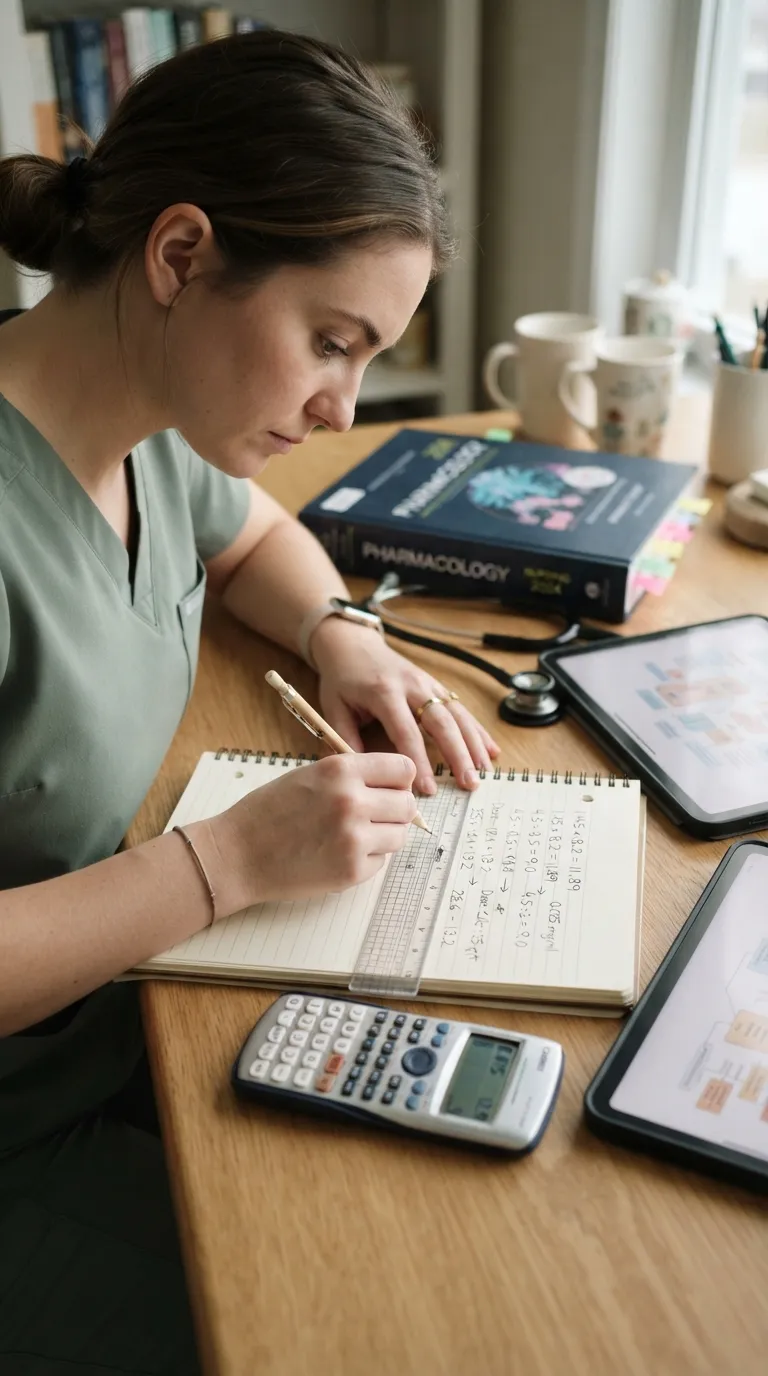
A quick estimate can be surprisingly useful. If your calculated result is wildly different from the approximate size you expected, inspect the decimal placement before moving forward. Estimating the expected answer before completing the calculation gives you a useful reference point for checking your work.
Pay particular attention to decimal points, unit conversions, and whether you multiplied or divided correctly, as these are common sources of errors in dosage calculations. Developing this habit can help you identify unreasonable results early, improve your calculation accuracy, and approach nursing exam questions with greater confidence.
6. Convert Units Before Solving

Do not rely on mental conversion when the problem requires precision. Write the conversion clearly so each step can be checked. Start by identifying the original unit and the unit required for the final answer, then apply the correct conversion factor.
Keeping each step visible makes it easier to spot mistakes involving decimal placement, multiplication, or division. This approach is especially useful in nursing dosage calculations, where accurate unit conversions are essential for obtaining reliable results and supporting medication safety.
7. Learn Formula Selection

Strong calculation skills involve recognition as well as arithmetic. Once you identify the problem type, you can choose the method your course teaches and apply it consistently.
8. Check Your Estimation

Estimation does not replace the actual calculation. It acts as a reasonableness check that can help you notice a misplaced decimal or incorrect operation.
Before finalizing your answer, consider whether the result makes sense based on the medication amount, prescribed dose, and units provided. This simple habit can help you identify possible errors early and improve accuracy when practicing nursing dosage calculations.
9. Practice Tablet Calculations

Use only the calculation and rounding conventions taught by your program. Practice should help you recognize the relationship between the ordered amount and the available strength.
10. Practice Liquid Calculations

Liquid calculations become easier when you treat the units as part of the problem. Before finalizing the answer, verify that the volume makes sense for the scenario and follows your course’s instructions.
11. Review Weight-Based Problems

Weight-based questions can involve several steps. Slow down enough to identify what each number represents before performing the arithmetic.
12. Understand Safe-Dose Questions

For real clinical practice, medication safety decisions should follow current orders, institutional policies, and appropriate clinical resources. For exam preparation, follow the assumptions and rules specified in the question.
If any instruction seems unclear, verify the relevant information with an appropriate clinical resource or qualified healthcare professional. Building this habit helps nursing students distinguish exam based calculations from real-world clinical responsibilities and reinforces safe medication practices.
13. Practice IV Rate Problems

Write the time and volume clearly before calculating the rate. This makes it easier to identify whether the requested answer is expressed per hour, minute, or another specified unit.
14. Review Infusion Time

After calculating, ask whether the amount of time seems reasonable for the values provided. A quick plausibility check can catch an inverted relationship or unit mistake.
15. Practice Reconstitution Math

Reconstitution problems can contain several pieces of information that look similar. Separate the original amount, added diluent, and resulting concentration before beginning the arithmetic.
16. Drill Multi-Step Problems
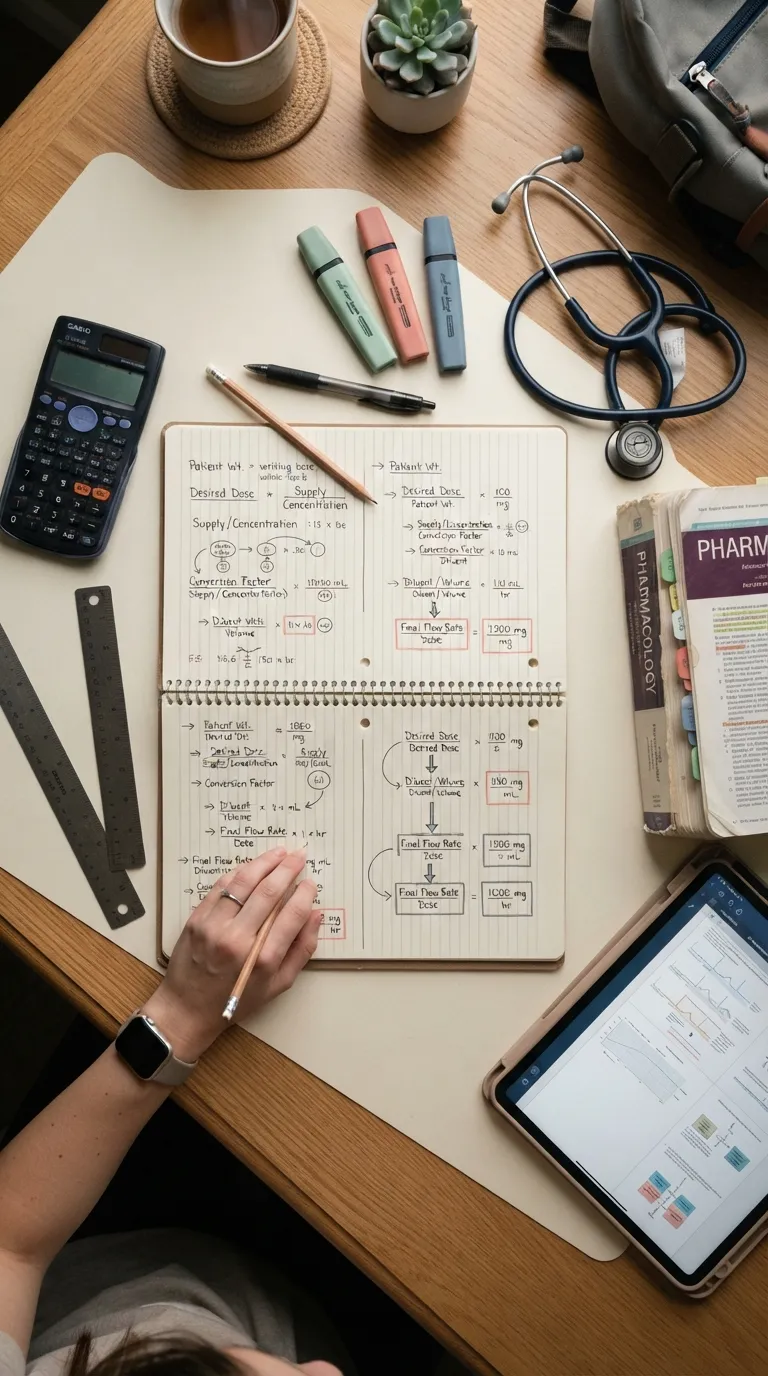
Breaking a complicated problem into smaller stages makes errors easier to locate. If the final answer looks wrong, you can return to the specific step rather than starting the entire calculation again.
17. Use Dimensional Analysis Carefully

Dimensional analysis works best when you understand what each factor is doing. Do not place conversion factors mechanically make sure the units cancel toward the quantity you need.
18. Memorize Key Conversions

Do not assume every exam permits the same reference materials. Learn the conversion rules and resources your particular educational program expects you to use.
19. Practice Rounding Rules

A correct calculation can still be presented incorrectly if the required rounding convention is ignored. Make rounding the final checkpoint rather than an afterthought.
20. Use a Consistent Scratch Layout
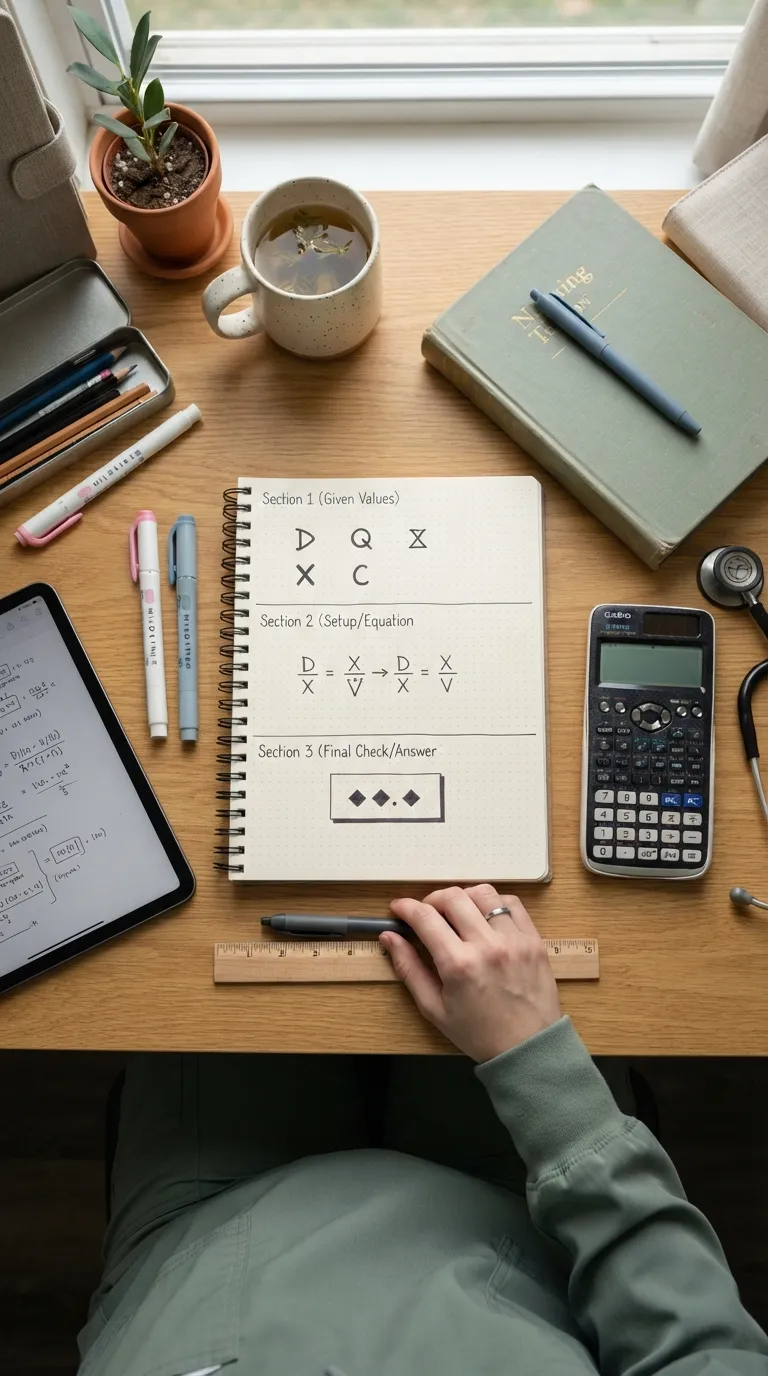
A consistent layout makes your work easier to audit. If you make an error, you can quickly see where the given information ends and the calculation begins.
21. Separate Practice From Memorization

The goal is to make the calculation process familiar through repeated application. When you miss one, solve it again rather than simply reading the correct solution.
22. Create a Calculation Error Tracker

Patterns often appear after several practice sessions. You may discover that your biggest issue is not arithmetic itself but unit conversion, setup, decimal placement, or rushing through the question.
23. Build a Final Calculation Check

A final check should be quick but consistent. For exam preparation, it can become a valuable habit that helps you catch preventable setup, arithmetic, unit, and rounding errors before submitting an answer.
Last Words
Mastering dosage calculations is less about doing complicated math quickly and more about developing a reliable process. The best NCLEX nursing math dosage calculations practice combines careful reading, accurate unit tracking, consistent setups, estimation, and repeated problem-solving. Focus on one calculation skill at a time, then gradually mix different question types as your confidence grows. Keep track of the mistakes you make so your practice sessions target actual weaknesses instead of repeating what you already know. With steady practice and a careful approach, nursing math can become a much more manageable part of your exam preparation.