


Nursing School Study Hacks help students organize learning, improve memory, and prepare more effectively for exams and clinical practice. Nursing school often involves challenging subjects, detailed lectures, practical assessments, and a busy schedule, so having a reliable study routine can make a real difference.
Exploring practical strategies can help make difficult nursing topics easier to understand while building stronger study habits. These simple ideas can help you manage your coursework, review important concepts, and create a more effective nursing school routine.
Smart Study Planning

A smart study plan helps nursing students control their workload instead of feeling controlled by it. Breaking large responsibilities into smaller study sessions makes difficult semesters feel more manageable and realistic. Start each week by reviewing your class schedule, upcoming exams, assignments, and clinical preparation requirements.
Then divide your available time between challenging subjects, regular revision, and practice questions. For example, you might reserve one evening for pharmacology review and another for nursing fundamentals. Keep your schedule flexible enough to accommodate unexpected assignments or additional practice. A realistic plan is more useful than an overly ambitious timetable that becomes difficult to maintain. By knowing what to study each day, you can reduce last-minute cramming and approach your nursing coursework with greater confidence.
Clinical Connection Method
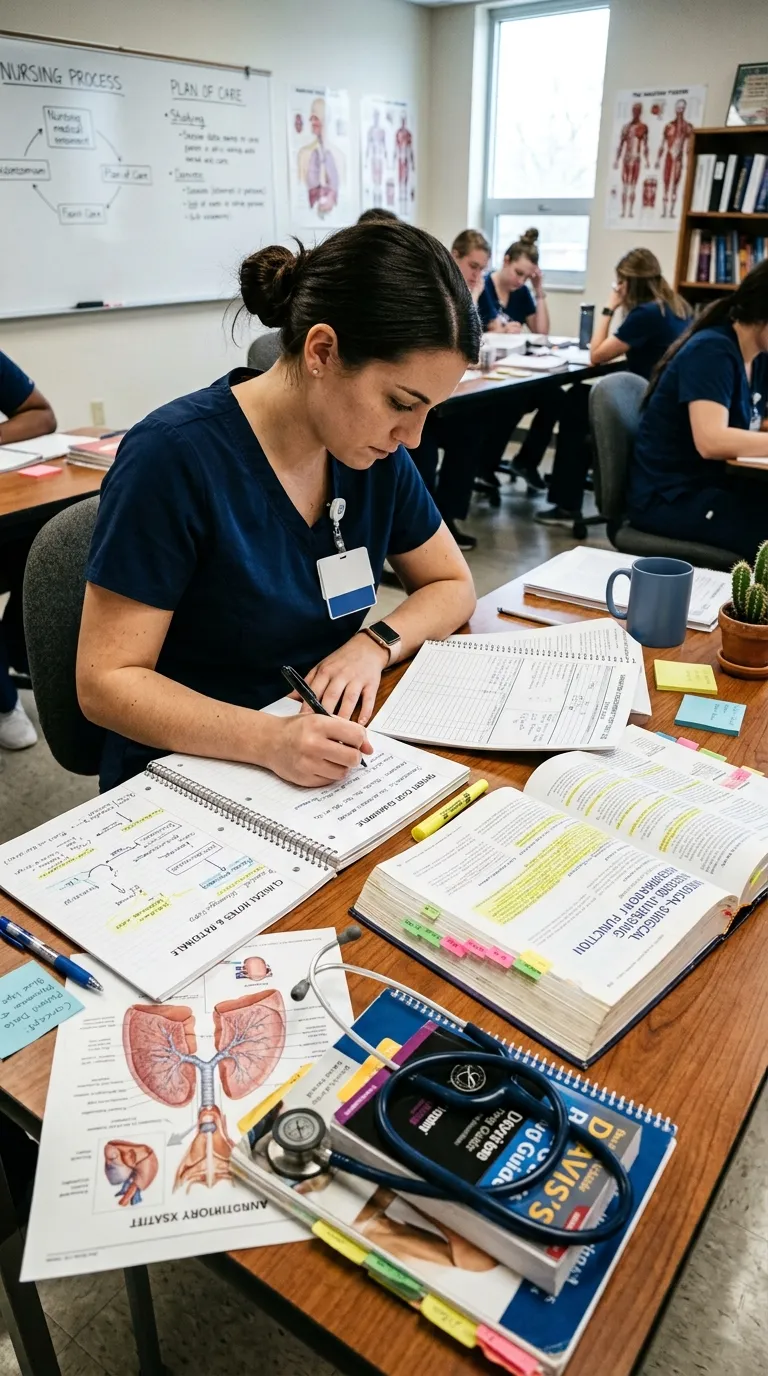
The clinical connection method turns complicated information into meaningful knowledge. When students understand how concepts appear in patient care, they often remember details longer and apply them more confidently. Instead of memorizing a condition only through its definition, connect it with common symptoms, relevant assessments, potential complications, and appropriate nursing interventions. For example, while studying dehydration, review how fluid loss may affect vital signs, urine output, and a patient’s overall condition.
Use your course materials and instructor-approved examples to connect classroom concepts with clinical situations. This approach helps you understand why information matters rather than simply remembering isolated facts. It also encourages you to think critically about patient needs and prepares you to discuss nursing concepts more clearly during class, simulation exercises, and clinical learning experiences.
Exam Strategy Map
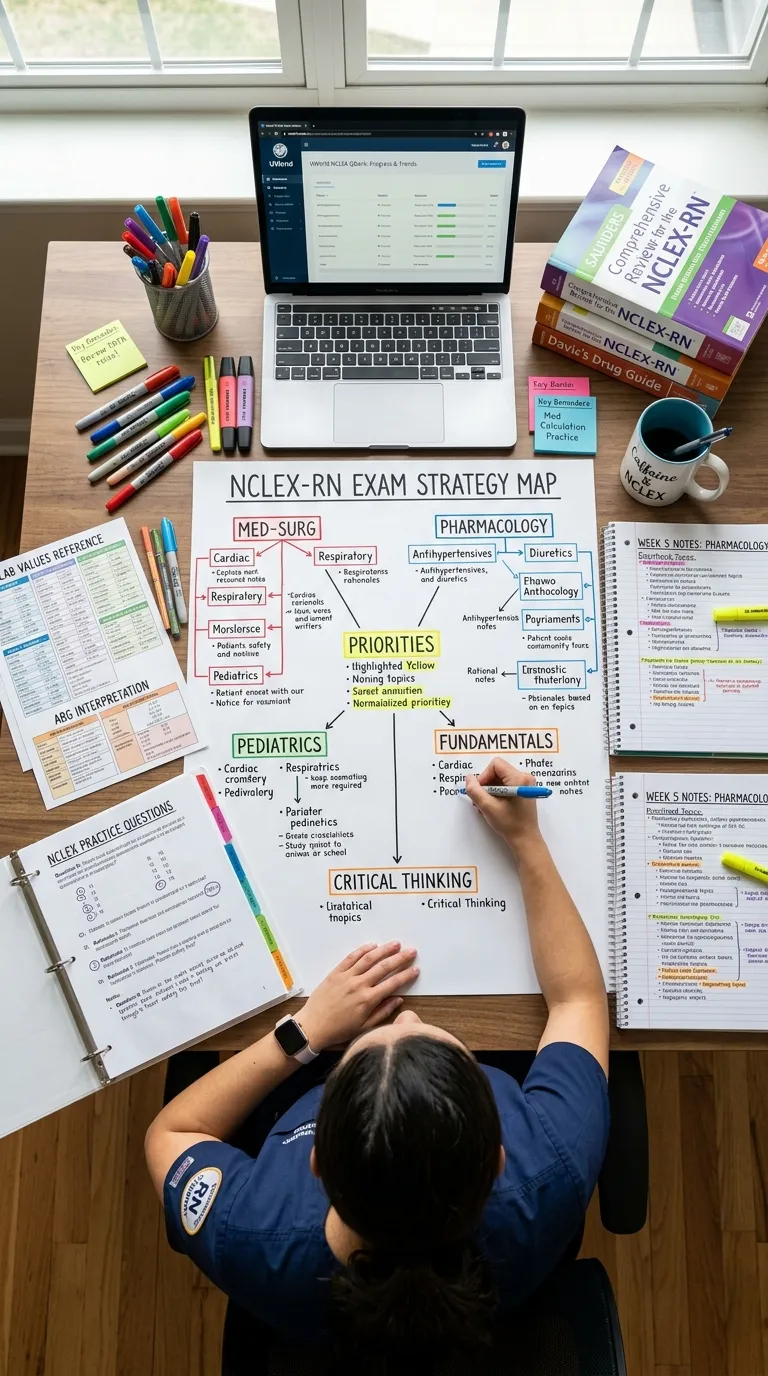
An exam strategy map helps nursing students study with purpose instead of spending equal time on every topic. Reviewing patterns from previous mistakes can reveal where extra practice is needed most. Begin by listing the main subjects included in an upcoming examination, then identify the concepts you understand well and those that still cause confusion. Pay attention to instructor guidance, learning objectives, and practice questions from approved course resources.
If you repeatedly struggle with prioritization questions or medication calculations, schedule additional time for those areas. You can also track your progress after each review session to see whether your understanding is improving. Remember that the goal is not simply to complete more questions but to understand the reasoning behind each answer. A clear strategy helps you use study time efficiently and prepare more confidently.
Focused Review Blocks

Focused review blocks help nursing students make progress without feeling exhausted by endless study hours. Concentrating on one goal at a time improves understanding and makes difficult subjects easier to manage. Choose a specific task before beginning, such as reviewing five medication classes, learning a group of medical terms, or answering ten practice questions. Set a manageable study period, such as 25–40 minutes, and remove distractions during that time.
After completing the block, take a short break before moving to another task. If a topic requires additional attention, schedule another session instead of trying to learn everything at once. Keep your phone notifications off and place only the materials you need on your desk. This approach creates a clear beginning and end for each session, helping you stay organized and maintain concentration throughout a demanding nursing school schedule.
Memory Shortcut Techniques
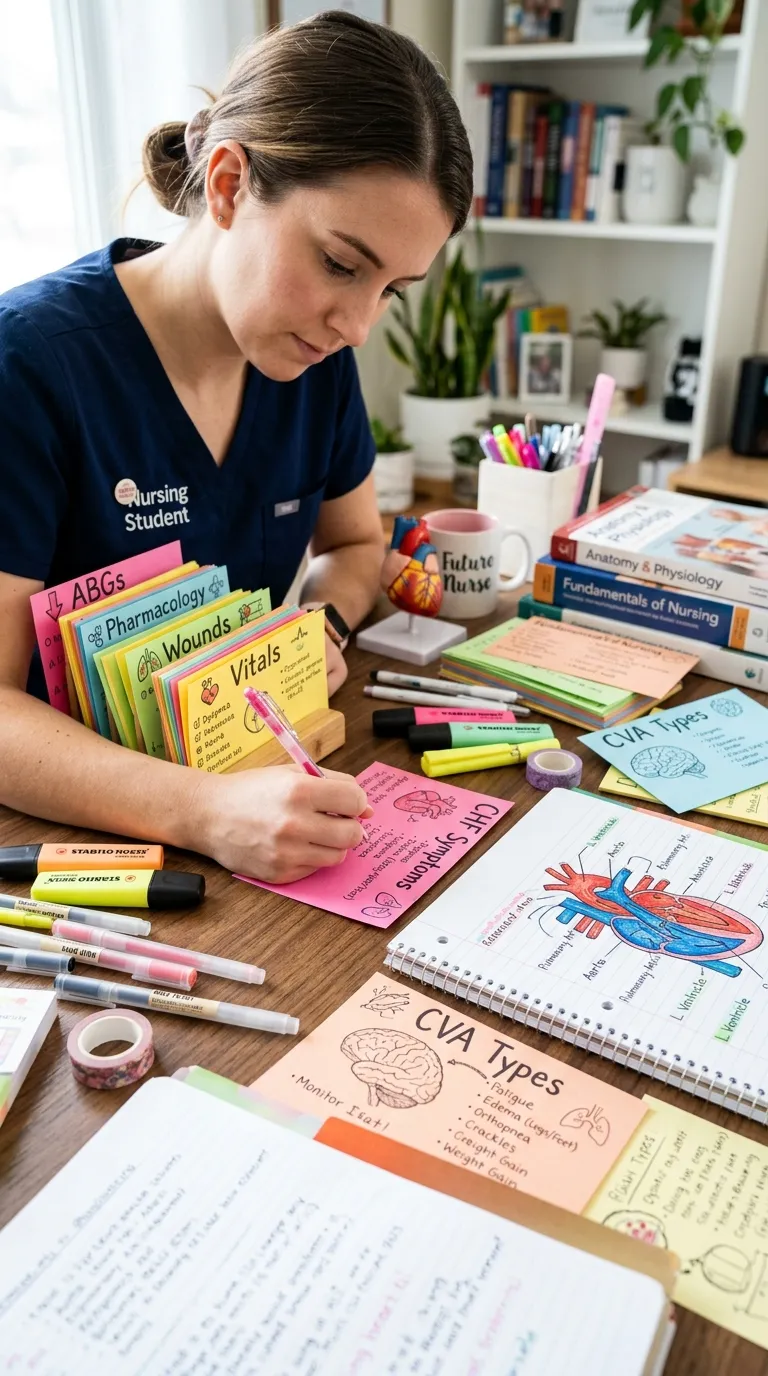
Memory shortcut techniques help transform overwhelming nursing information into easier patterns. Creating personal connections with concepts can improve recall when students need to access information quickly during exams or clinical situations. Try grouping related information, using simple acronyms, drawing concept maps, or creating short associations that make difficult material easier to remember. For example, organize symptoms, risk factors, and nursing interventions into separate categories instead of studying them as one long list.
You can also use visual diagrams to connect body systems or compare similar conditions. However, memory shortcuts should support accurate understanding rather than replace it. Always check that your mnemonics and summaries match your textbooks and instructor-approved resources. Combine these techniques with practice questions and active recall so you learn not only how to remember information but also how to apply it appropriately.
Study Material Sorting
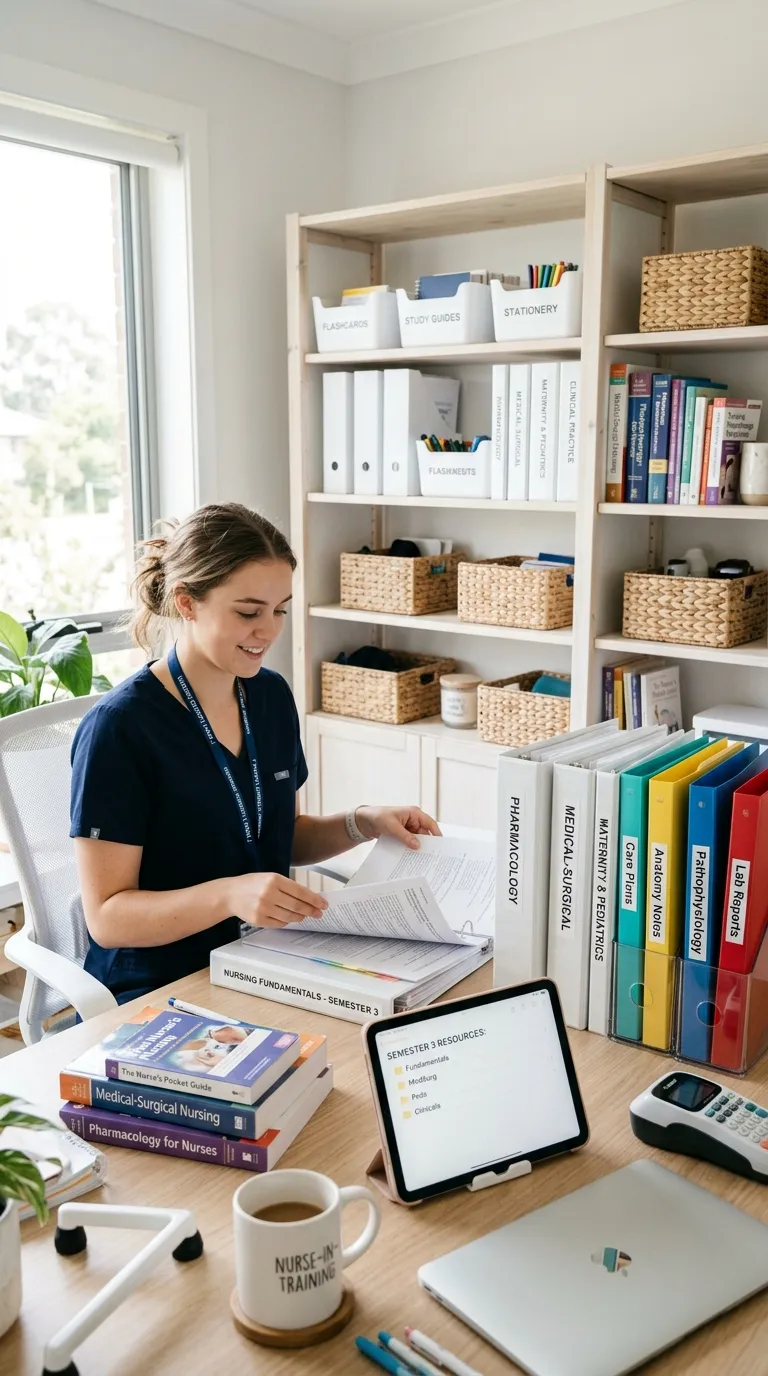
Study material sorting creates a reliable system for busy nursing students. When resources have a clear place, more time can be spent learning instead of searching through scattered notes and files. Organize your materials by subject, course, or examination topic, using clearly labeled folders for lecture notes, assignments, practice questions, and revision summaries. If you prefer digital resources, create separate folders on your computer and use descriptive file names that are easy to recognize.
Keep your most frequently used materials accessible without allowing your workspace to become cluttered. It can also help to maintain a single checklist of topics that need reviewing before each examination. Spend a few minutes organizing your materials at the end of every week. A consistent system makes it easier to find important information, identify missing resources, and return to previous lessons when preparing for exams.
Nursing Concept Breakdown
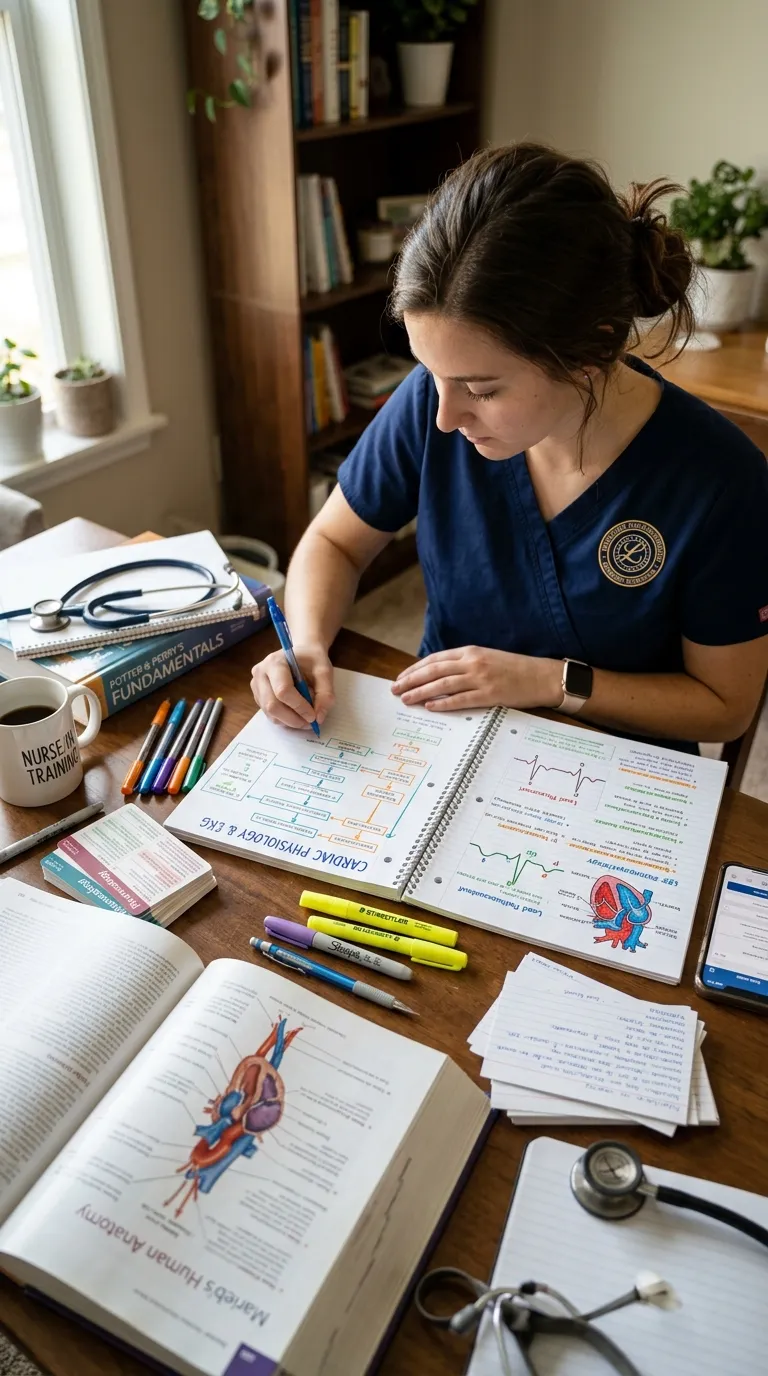
Nursing concept breakdown helps students handle challenging subjects without becoming overwhelmed. Separating a complex topic into smaller connections creates a clearer learning path and strengthens clinical understanding. When studying a disease or nursing procedure, divide the material into manageable parts, such as its definition, causes, signs and symptoms, assessment findings, treatment principles, and nursing responsibilities.
Review each part individually before connecting everything into a complete explanation. For example, when learning about heart failure, begin with the basic concept and then explore how it affects circulation, breathing, assessment findings, and patient care. Use a simple chart or concept map to show how the details relate to one another. If a section remains confusing, return to that specific area instead of restarting the entire chapter. This method makes difficult lessons easier to approach and helps build a stronger foundation for future nursing topics.
If this was interesting, Nursing Study Guide Ideas Every is too.
Clinical Skill Repetition
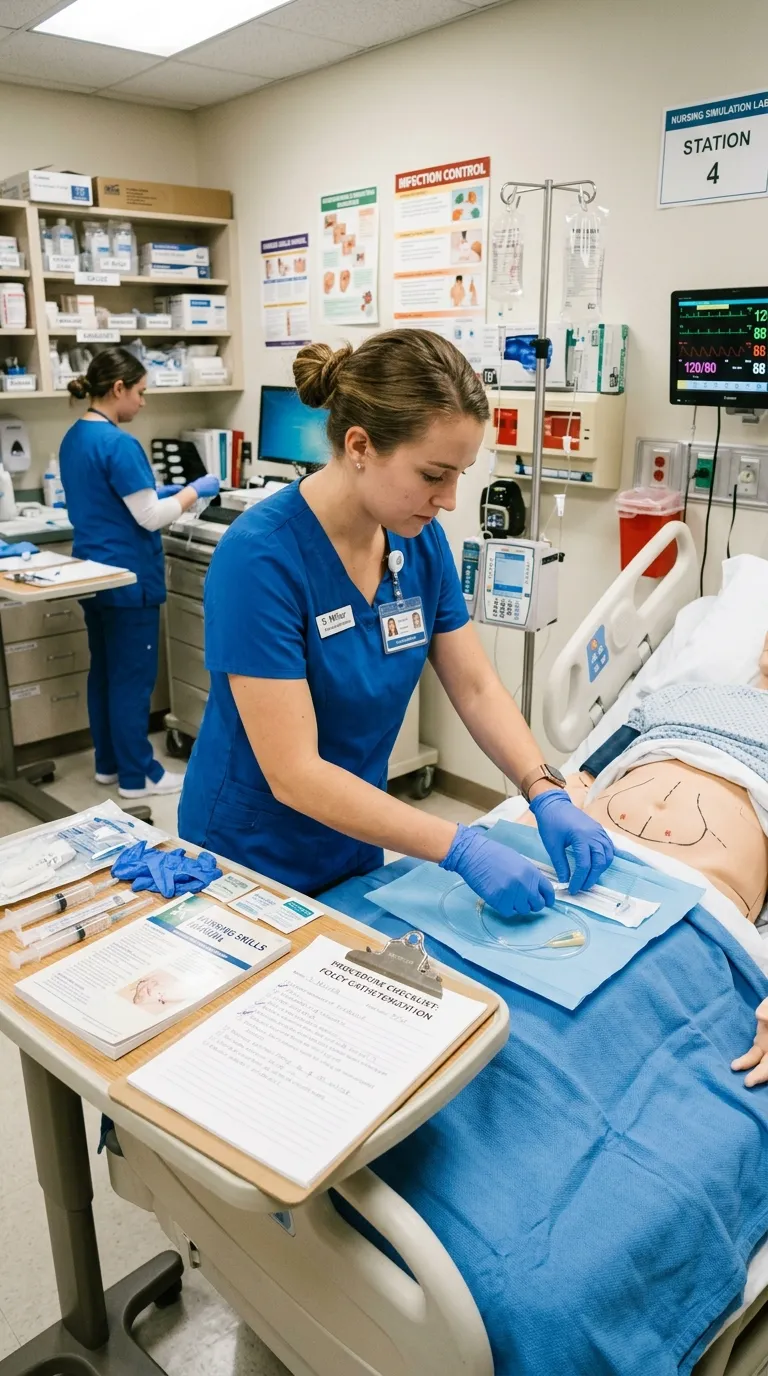
Clinical skill repetition connects classroom learning with real nursing performance. Practicing procedures multiple times helps students feel more prepared and reduces hesitation during laboratory assessments and clinical rotations. Begin by reviewing the procedure checklist and learning the purpose of each step before practicing. During supervised skills sessions, focus on correct technique, patient identification, infection prevention, communication, and safety requirements.
Ask your instructor for feedback when you are unsure about a step, and repeat the procedure according to your program’s guidance. You can also rehearse the sequence verbally before entering a skills laboratory. However, repetition should never mean practicing an incorrect technique until it becomes familiar. Use current course protocols and instructor-approved demonstrations to correct mistakes early. Consistent, supervised practice helps you recognize the details that matter and develop safer, more organized clinical habits over time.
Question Analysis Habit
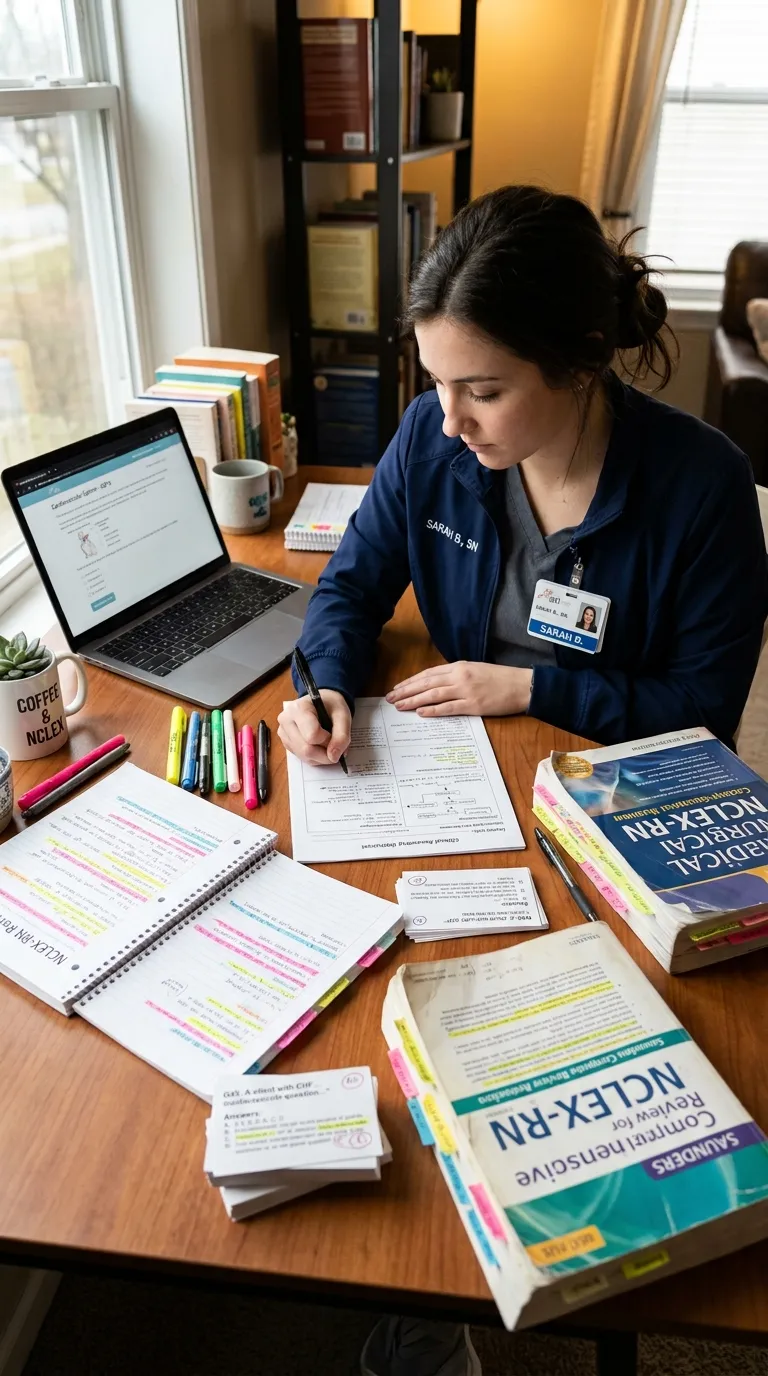
Question analysis habit teaches nursing students how to think through problems instead of memorizing answers. Understanding reasoning patterns prepares students for challenging exams and real patient-care decisions. After answering a practice question, read the explanation carefully, including the reasons the other options are incorrect. Identify the main concept being tested and notice whether the question focuses on assessment, safety, prioritization, patient education, or a nursing intervention.
Pay particular attention to words that describe urgency or ask what should happen first. If you answer incorrectly, determine whether the problem came from missing knowledge, misreading the question, or choosing an answer without sufficient reasoning. Record recurring mistakes in a dedicated review notebook and revisit them during the week. This habit turns practice questions into valuable learning opportunities and helps you develop a more thoughtful approach to nursing examinations.
Active Recall Routine
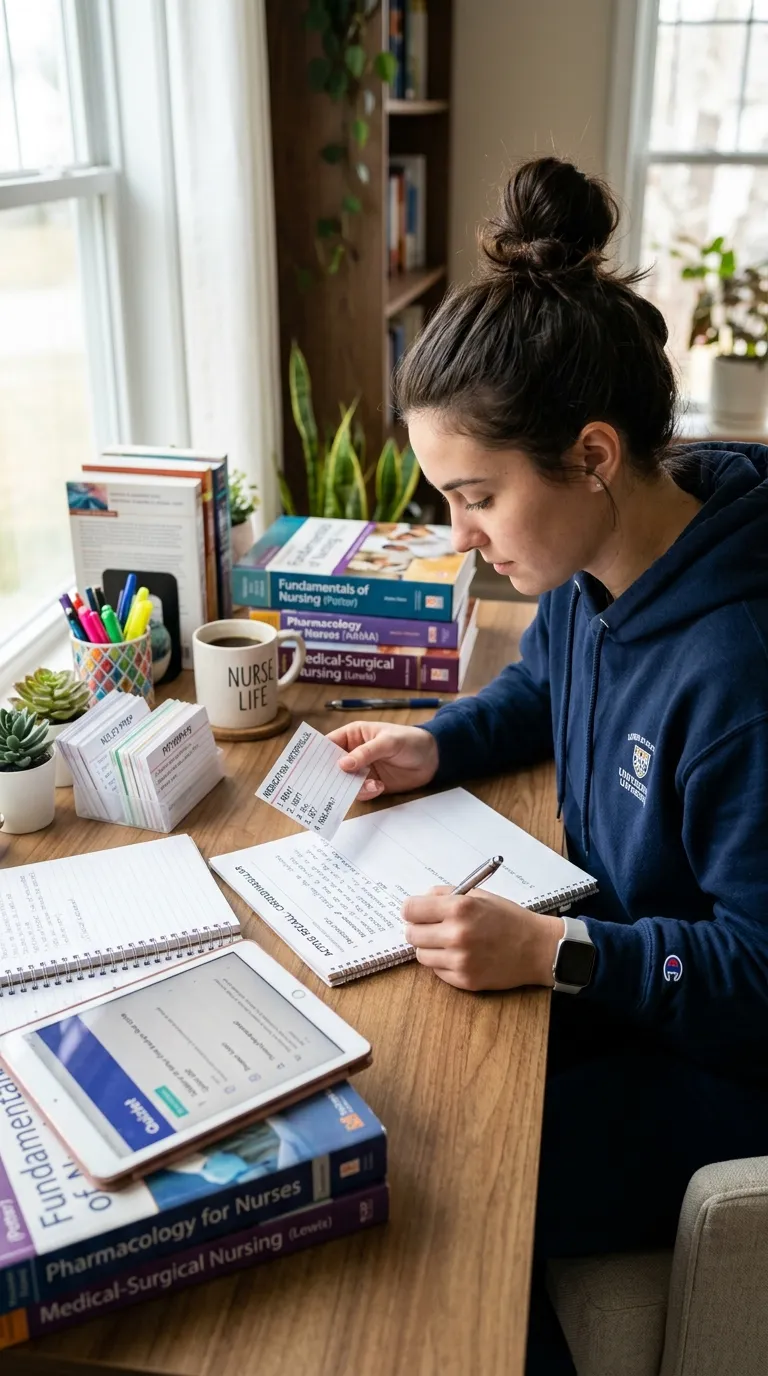
Active recall routine changes studying from simple reading into a memory-building practice. Nursing students can improve retention by regularly challenging themselves to explain concepts without depending on their notes. After completing a lecture or textbook section, close the material and write down the main points you remember. You might explain a disease process, list common assessment findings, or describe the purpose of a nursing intervention.
Once you finish, compare your response with your course materials and identify any missing or inaccurate details. Repeat the exercise later to check whether your understanding has improved. You can also use flashcards, blank diagrams, or short self-quizzes to make recall more engaging. Rather than repeatedly rereading the same pages, use these exercises to discover what you truly know. Active recall is especially useful when reviewing large amounts of nursing information before an examination.
Clinical Priority Lists

Clinical priority lists help nursing students focus on the decisions that matter most. Organizing information around safety, urgency, and patient needs creates a stronger connection between studying and clinical thinking. When reviewing a clinical scenario, identify the available assessment findings, recognize possible warning signs, and consider which information requires prompt attention. In your study notes, separate routine nursing responsibilities from situations that require immediate escalation according to your training and clinical protocols.
Practice questions involving prioritization can help you compare different patient situations and explain your reasoning. For example, consider why a sudden change in breathing or consciousness may require more urgent attention than a routine comfort request. Always use instructor-approved frameworks and follow the protocols applicable to your clinical setting. Developing this habit helps you organize your knowledge around patient safety instead of treating every clinical detail as equally urgent.
Study Environment Upgrade

A study environment upgrade can improve focus by removing small barriers that make studying harder to begin. A comfortable and organized space helps nursing students build a routine they can maintain throughout demanding semesters. Choose a location with adequate lighting, a comfortable chair, and enough room for your notes, textbooks, and laptop. Keep frequently used supplies nearby so you do not have to interrupt every session to find them.
If noise makes concentration difficult, consider a quiet room or suitable background sounds that do not distract you. Put your phone away or silence nonessential notifications while working on challenging material. You do not need an expensive desk or a perfectly decorated room to create an effective study area. Even a small, consistently organized corner can work well. Preparing your environment before each session helps reduce distractions and makes it easier to focus on the task ahead.
Pharmacology Memory System

A pharmacology memory system helps nursing students manage one of the most challenging parts of their coursework. Organizing medications by patterns, uses, and safety concerns creates a clearer way to review important details. Rather than memorizing long lists of individual drugs, group medications by class and compare their general purposes, common adverse effects, precautions, and relevant monitoring requirements. Create a structured chart with separate columns for medication class, examples, key safety points, and important patient education.
Use your prescribed course resources to verify details, especially when studying contraindications, interactions, and administration considerations. You can also test yourself by covering one column and recalling the information from memory. Avoid relying on drug-name patterns alone because medications within the same class may have important differences. A consistent review system makes pharmacology easier to organize while keeping patient safety and accurate information at the center of your learning.
Weekly Progress Check
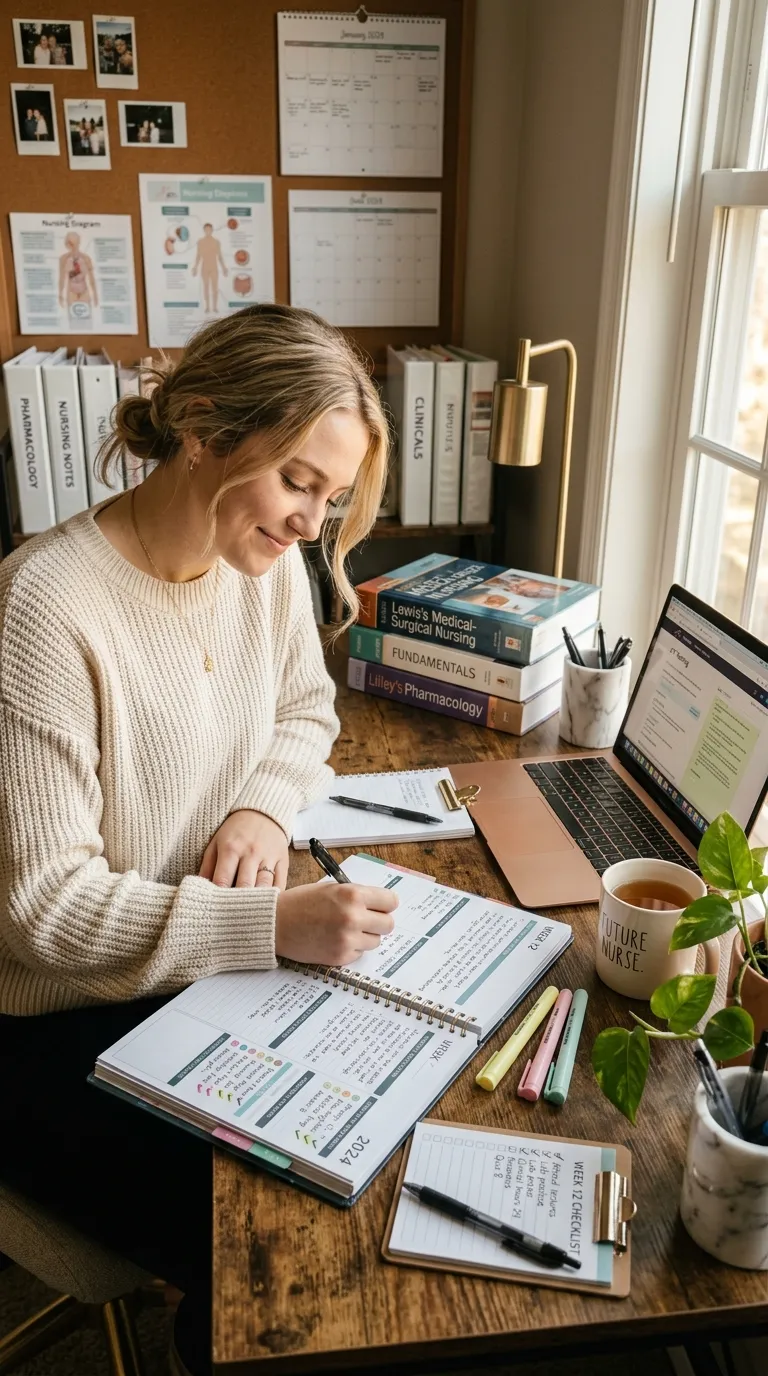
Weekly progress checks help students adjust their study approach before falling behind. Looking at completed tasks, difficult topics, and upcoming responsibilities creates a more intentional learning routine. At the end of each week, review your timetable and mark the lessons you have completed, the subjects that need more practice, and the assignments approaching their deadlines.
Consider which study methods helped you understand the material and which sessions were less productive. For example, you may discover that practice questions helped with prioritization while concept maps made anatomy easier to review. Use these observations to plan the next week instead of repeating a routine that is not working. Keep your goals realistic and allow time for rest and unexpected changes. A short weekly review can help you recognize progress, correct small problems early, and maintain a clearer sense of direction throughout nursing school.
Resource Comparison Method
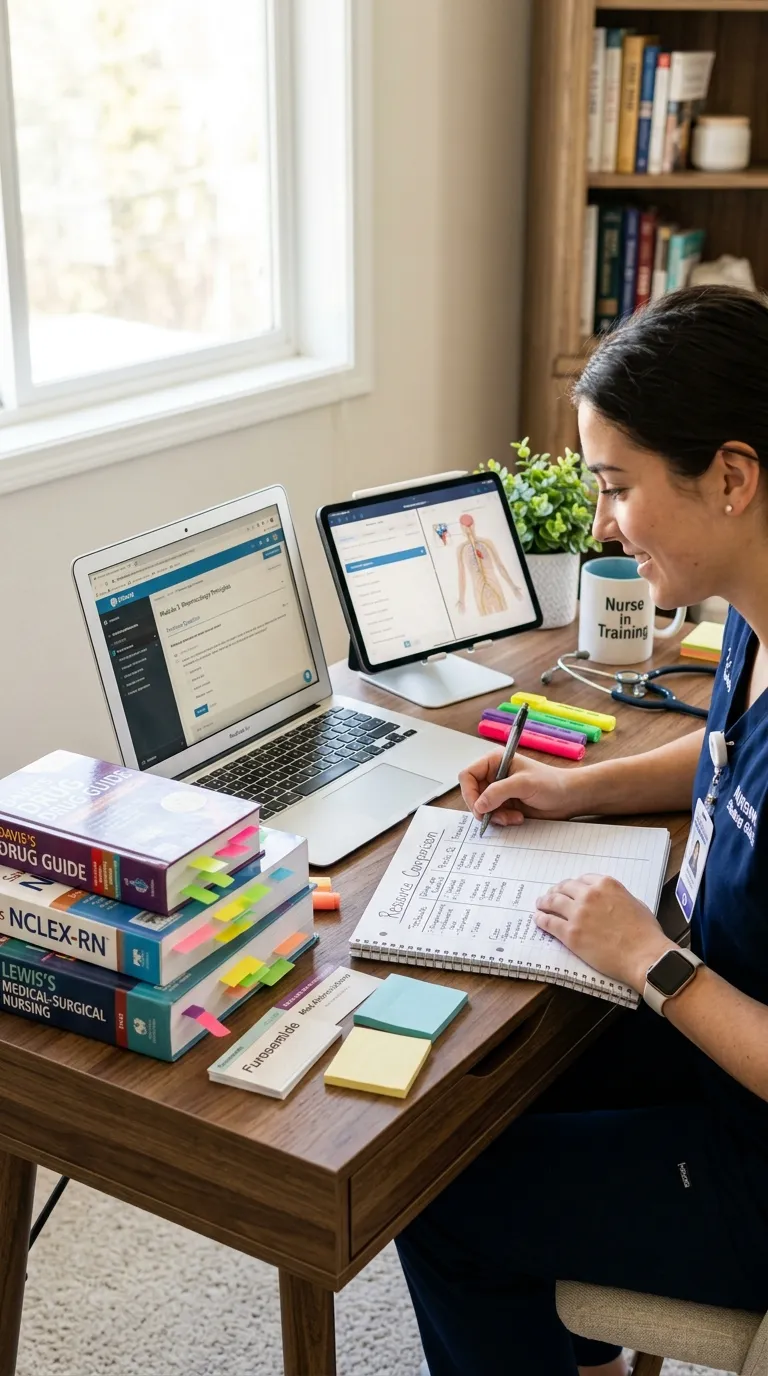
The resource comparison method helps nursing students avoid information overload. Choosing a few trusted tools creates a more focused study system and prevents wasted time switching between unnecessary materials. Begin with your assigned textbooks, lecture notes, and instructor-recommended resources, then add supplementary materials only when they help clarify a difficult concept. If two resources explain the same topic differently, compare their definitions and verify important details against reliable course materials.
Avoid collecting multiple videos, summaries, and study guides without setting aside time to learn from them. Instead, choose one primary resource for each subject and use additional explanations to address specific knowledge gaps. Keep a short list of useful websites, reference books, and practice tools so you can return to them when needed. This approach reduces distractions, makes revision more manageable, and helps ensure that your study time is spent understanding information rather than constantly searching for new resources.
Clinical Reflection Notes

Clinical reflection notes turn everyday learning experiences into valuable study material. Writing down challenges, questions, and improvements helps nursing students develop deeper understanding beyond memorizing textbook information. After a supervised clinical learning experience or skills session, take a few minutes to reflect on what you learned, which concepts became clearer, and what you would like to review again. You might note a communication technique, a procedure step that needs additional practice, or a question to discuss with your instructor.
Connect each reflection with relevant concepts from your coursework to strengthen the relationship between theory and practice. Keep these notes professional and follow your institution’s confidentiality policies. Never include patient names or other identifying details in personal study records. Reviewing reflections regularly can help you recognize learning patterns, identify areas for improvement, and prepare more effectively for future clinical experiences.
Nursing Math Practice
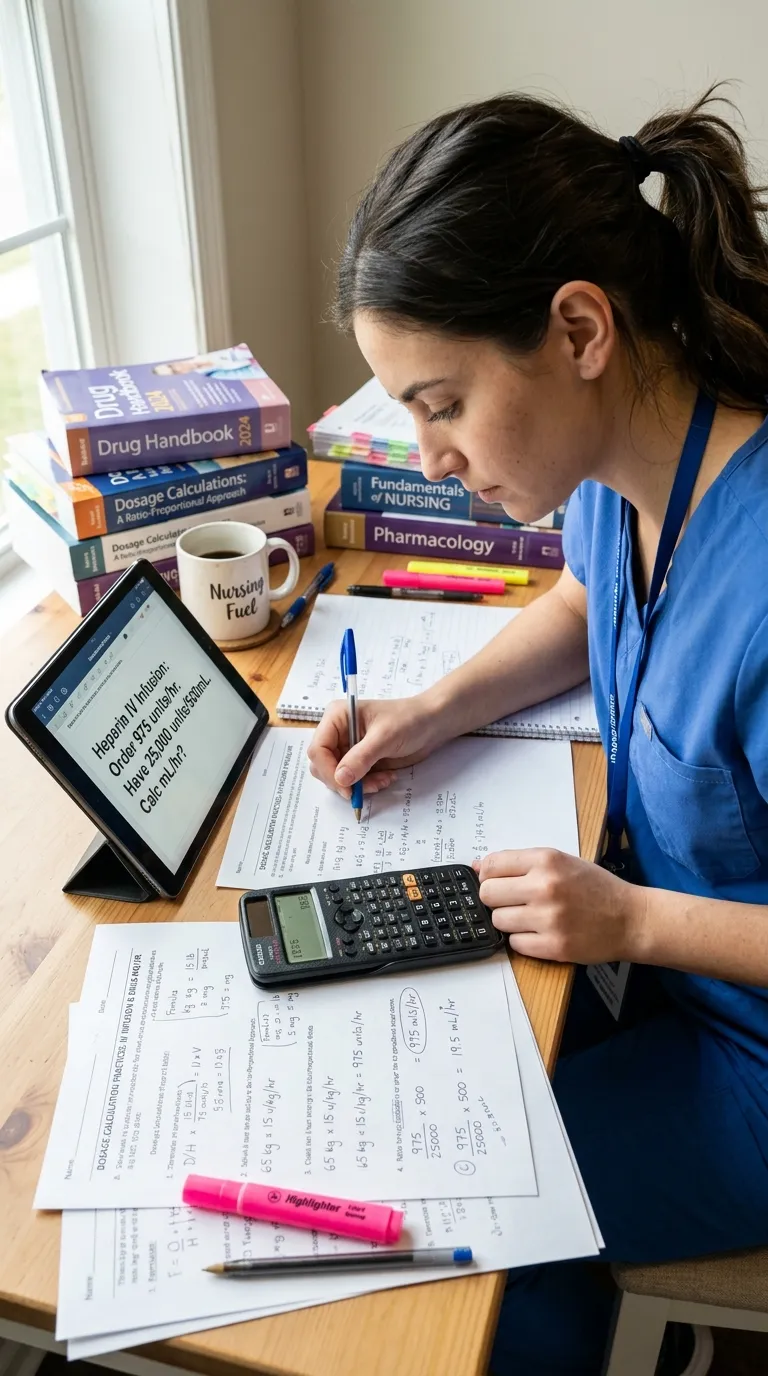
Nursing math practice becomes easier when students treat calculations as a skill that improves with repetition. Regular problem-solving sessions create opportunities to build accuracy and confidence before important assessments. Start by reviewing the mathematical principles behind the problems, including unit conversions, fractions, decimals, ratios, and the formulas required by your course. Work through practice questions slowly and write down each step instead of relying on mental calculations.
After solving a problem, check the units, review the arithmetic, and consider whether the final answer is reasonable. If you make a mistake, identify the exact step where the error occurred and solve a similar question to reinforce the correct method. Use instructor-approved practice materials and follow the rounding and notation rules specified by your program. During clinical practice, medication calculations must be checked according to institutional procedures and appropriate supervision. Consistent practice helps develop careful habits that are essential for safe nursing work.
Lecture Review Strategy
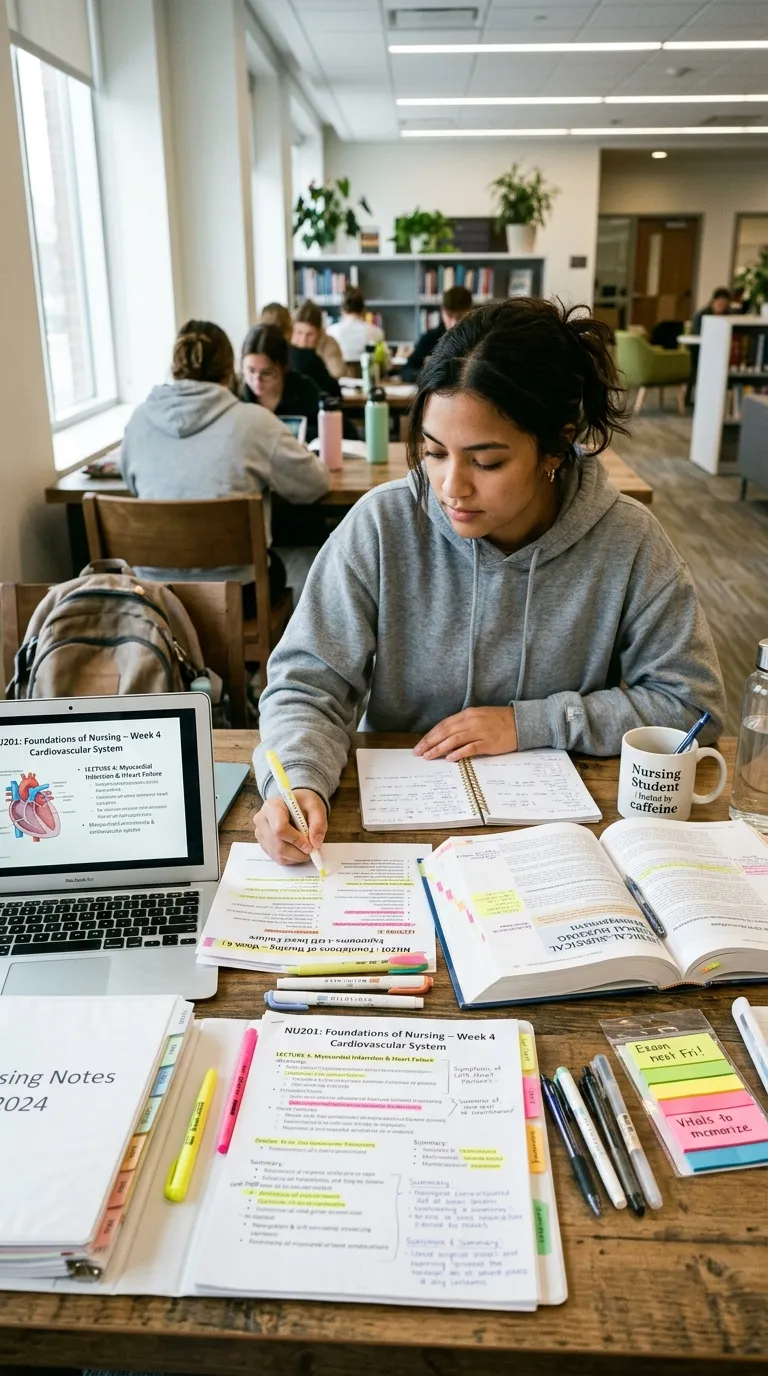
A lecture review strategy helps nursing students capture important details before they become difficult to remember. Reviewing class material shortly after learning creates stronger connections and makes future exam preparation easier. Try to revisit your lecture notes within 24 hours, while the topic is still familiar. Fill in incomplete points, highlight concepts you did not fully understand, and turn important information into questions that you can answer later without looking at the notes.
For example, transform a heading about infection prevention into a question about the purpose of a specific precaution. Compare your notes with assigned reading and instructor-provided learning objectives to identify missing details. Avoid copying the entire lecture word for word, because the goal is to clarify and organize the information. A brief, focused review after each class can reduce the amount of material you need to relearn during examination week.
Exam Mistake Review

Exam mistake review helps nursing students understand the reasoning behind challenging questions. Instead of simply moving on, analyzing errors creates a personalized guide for smarter future studying. After completing a practice test, record the questions you answered incorrectly or guessed on, along with the concept each question tested. Determine whether you misunderstood the topic, overlooked an important detail, misinterpreted the wording, or rushed your decision.
Then review the relevant course material and write a short explanation of why the correct answer makes sense. Include a note about what you will look for when a similar question appears again. Revisit your mistake log before the next practice session to check whether you have improved. Avoid judging your progress only by your score; understanding why an answer is correct is equally important. Over time, this habit can reveal recurring weaknesses and make your revision more focused and productive.
Study Accountability Partner

A study accountability partner can make challenging nursing courses feel more manageable. Sharing goals, explaining concepts, and reviewing difficult topics together creates a supportive learning environment. Choose a classmate who has a similar commitment to studying and agree on a realistic schedule for meeting or checking in. Before each session, select a few clear objectives, such as reviewing cardiovascular concepts, discussing practice questions, or testing each other on medical terminology.
Take turns explaining topics in your own words, and use reliable course resources to verify information when answers differ. It is also helpful to spend some time studying independently so you can identify your personal knowledge gaps. Keep group sessions focused by limiting unrelated conversations and setting a clear finishing time. A supportive study partner can encourage consistency, introduce different ways of understanding difficult material, and help you stay motivated during demanding weeks.
Self Care Balance

Self-care balance is an important part of successful nursing school preparation. Students who protect their physical and mental energy can build more sustainable study habits and maintain better focus throughout their education. Nursing coursework may involve long study sessions, clinical responsibilities, and emotionally demanding learning experiences, so regular breaks and realistic expectations matter.
Try to maintain a consistent sleep schedule, eat regular meals, drink enough water, and include some physical activity in your routine. Schedule short breaks between study blocks instead of expecting yourself to concentrate for hours without interruption. If your workload becomes overwhelming, consider discussing your concerns with an academic adviser, instructor, or appropriate student support service. Taking time to rest does not mean you are neglecting your education. A balanced routine helps you return to your work with more energy and supports steady progress over the long term.
Nursing Study Flashcards
Nursing study flashcards help students review important information in short, manageable sessions. Create cards for medical terminology, lab values, disease symptoms, and medication concepts, placing a question on one side and its answer on the other. Spend 10–15 minutes reviewing the cards daily, separating difficult topics from the ones you already remember.
Revisit challenging cards more frequently instead of repeatedly studying familiar information. For clinical subjects, include brief explanations rather than memorizing isolated facts. Flashcards work especially well between classes or during short study breaks, making them a practical addition to a busy nursing school schedule.
Teach-Back Study Technique
The teach-back study technique helps nursing students discover whether they truly understand a topic. After reviewing a concept, explain it aloud in simple language as if teaching a classmate who has never studied it before. Try explaining subjects such as blood pressure regulation, infection prevention, or fluid balance without looking at your notes.
Whenever you struggle to explain a detail, return to your textbook or trusted course material and review that part again. You can also record a short explanation or practice with a study partner. This technique turns passive reading into active learning and helps identify knowledge gaps before exams and clinical assessments.
To Sum It Up
Use active recall, mistake reviews, and clinical reflection notes to create a smarter approach to nursing school studying. Start with one reliable habit, such as organizing resources or practicing priority questions, and build from there. Save these Nursing School Study Hacks on Pinterest and try new strategies to make your nursing journey more confident.