
One A1C result quietly averages about three months of blood glucose, so one good week at the meter cannot hide a rough semester. This diabetes nursing guide turns the topic into 20 points: the cutoffs that name the disease, the four insulin profiles, and the emergency patterns the NCLEX loves to test.
The first table puts all 20 points on one screen for fast review. Then the groups slow down: numbers and diagnosis, insulin and medication safety, then complications and sick day care. Say each cutoff out loud once; numbers you can say are numbers you can recall in the testing center.
Quick Reference
| Study Point | Key Fact | Nursing Action |
|---|---|---|
| Type 1 and type 2 | No insulin made vs insulin resistance | Name the type first |
| A1C bands and goal | 6.5 percent or more; goal under 7 | Recheck until at goal |
| Fasting glucose cutoffs | 126 mg/dL or more | Water only, 8 hours |
| Random and two hour numbers | 200 mg/dL or more on either | Needs classic symptoms |
| Targets on treatment | 80 to 130 premeal; under 180 after | Compare meter logs |
| A1C as average glucose | 7 percent is about 154 mg/dL | Translate for patients |
| Rapid acting lispro | Starts in 15 minutes, lasts 3 to 5 hours | Meal tray first |
| Short acting regular | Peaks 2 to 4 hours, lasts 5 to 8 | Only IV insulin |
| Intermediate NPH | Peaks 4 to 12 hours; cloudy vial | Roll, watch peaks |
| Long acting glargine | No clear peak, about 24 hours | Never mix it |
| Drawing up and mixing | Clear before cloudy | Regular first |
| Storage, sites, rotation | In use vials last about 28 days | Rotate sites |
| Hypoglycemia, 15-15 rule | Under 70 mg/dL: 15 grams, recheck in 15 | Juice or tablets |
| Metformin and sulfonylureas | Metformin spares lows; sulfonylureas cause them | Ask about meals |
| DKA | Ketones, acidosis, Kussmaul breathing | Fluids, insulin, potassium |
| HHS and the chart | Often over 600 mg/dL, no ketones | Fluids first |
| Eyes, kidneys, nerves | Small vessel damage over years | Yearly screening |
| Heart, vessels, foot care | Daily foot checks, never barefoot | Report sores fast |
| Sick day rules | Illness raises glucose | Insulin continues |
| Red flags | Ketones plus glucose over 240 mg/dL | Call early |
Core Numbers and Diagnosis
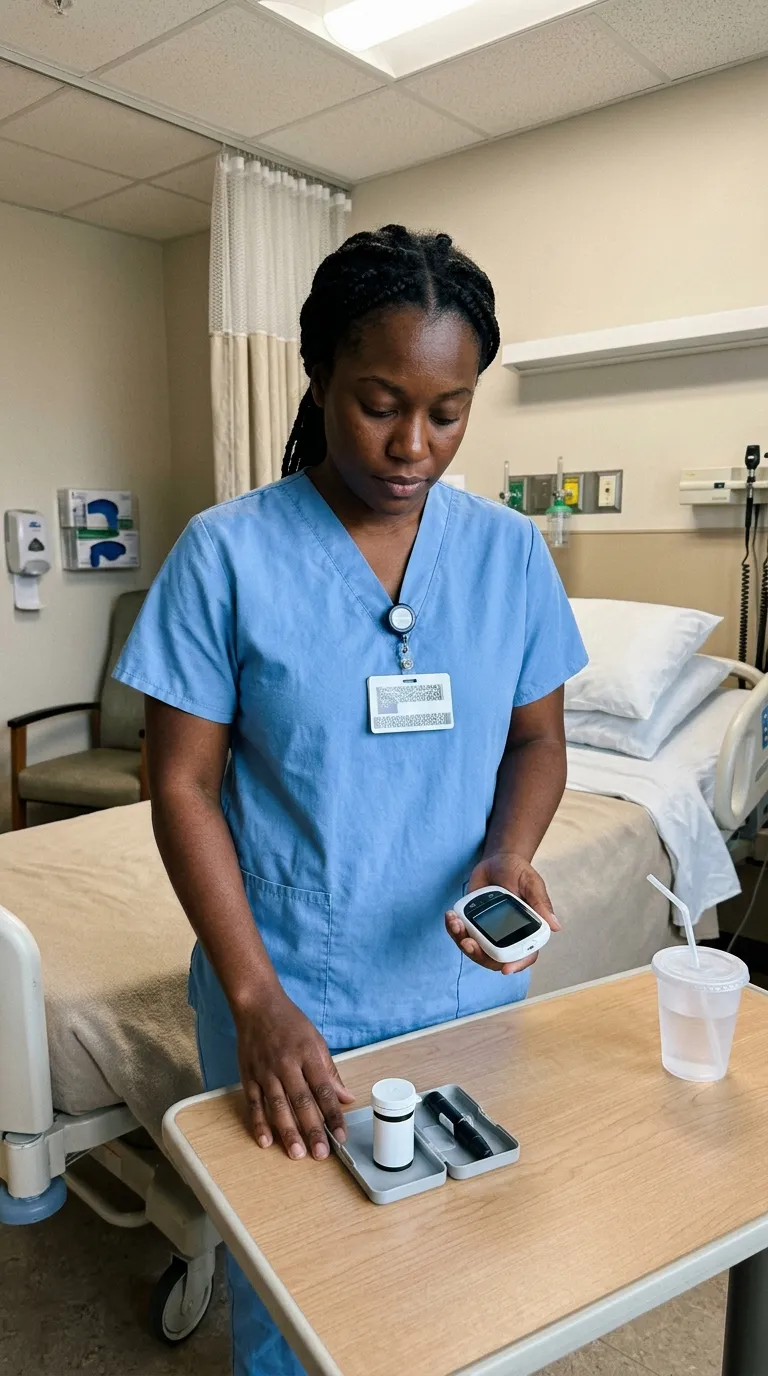
Six points hold the numbers: the two types, the cutoffs, and the targets used on treatment.
Type 1 and Type 2 in One Minute
Course: Med Surg · Remember: the type names the cause
Type 1 is autoimmune: the immune system destroys the insulin making cells of the pancreas, so insulin is absent and injections are required for life. It often starts young and comes on fast. Type 2 is resistance first: cells answer insulin poorly and the pancreas slowly falls behind. Sorting the two types first makes later numbers easier to file, one of the study tips that actually work for a chapter this size.
A1C Bands and the Under 7 Goal
A1C reports the share of hemoglobin coated with glucose: an average of the last two to three months.
| Band | A1C Result |
|---|---|
| Normal | Under 5.7 percent |
| Prediabetes | 5.7 to 6.4 percent |
| Diabetes | 6.5 percent or higher |
| Goal on treatment, most adults | Under 7 percent |
Confirm a first high result with a second test, unless classic symptoms pair with a random glucose of 200 mg/dL or higher. The MedlinePlus A1C test page shows how the sample is read.
Fasting Glucose Cutoffs
Course: Med Surg · Remember: 8 hours, water only
The normal fasting band is 70 to 99 mg/dL. From 100 to 125 mg/dL is prediabetes, and 126 mg/dL or higher on two separate days confirms diabetes. Teach patients to treat the draw as step one of the morning routine: water only after midnight.
Random and Two Hour Numbers
Two more tests can name the disease, and both turn on the same number: 200.
| Test | Diabetes Result |
|---|---|
| Random glucose, with classic symptoms | 200 mg/dL or higher |
| Two hour glucose, 75 g tolerance test | 200 mg/dL or higher |
| Two hour result, prediabetes range | 140 to 199 mg/dL |
Classic symptoms are the three polys (urinating often, unusual thirst, unexplained hunger), often with blurred vision.
Targets Once Diabetes Is Diagnosed
Course: Med Surg · Source: ADA targets
Diagnosis cutoffs are not treatment targets. For most adults with diabetes, the goal before a meal is 80 to 130 mg/dL, and under 180 mg/dL two hours after the meal starts. Goals loosen for older adults, so use the individual goal in the chart.
A1C as Average Glucose
Patients think in meter numbers, not percentages.
| A1C | Average Glucose (eAG) |
|---|---|
| 6 percent | 126 mg/dL |
| 7 percent | 154 mg/dL |
| 8 percent | 183 mg/dL |
| 9 percent | 212 mg/dL |
An A1C of 7 percent sounds abstract; an average near 154 mg/dL shows what the daily checks should look like.
Study tip: Build one ladder per test: fasting 99 or under, 100 to 125, then 126 and up; A1C under 5.7, 5.7 to 6.4, then 6.5 and up.
Insulin and Medication Safety
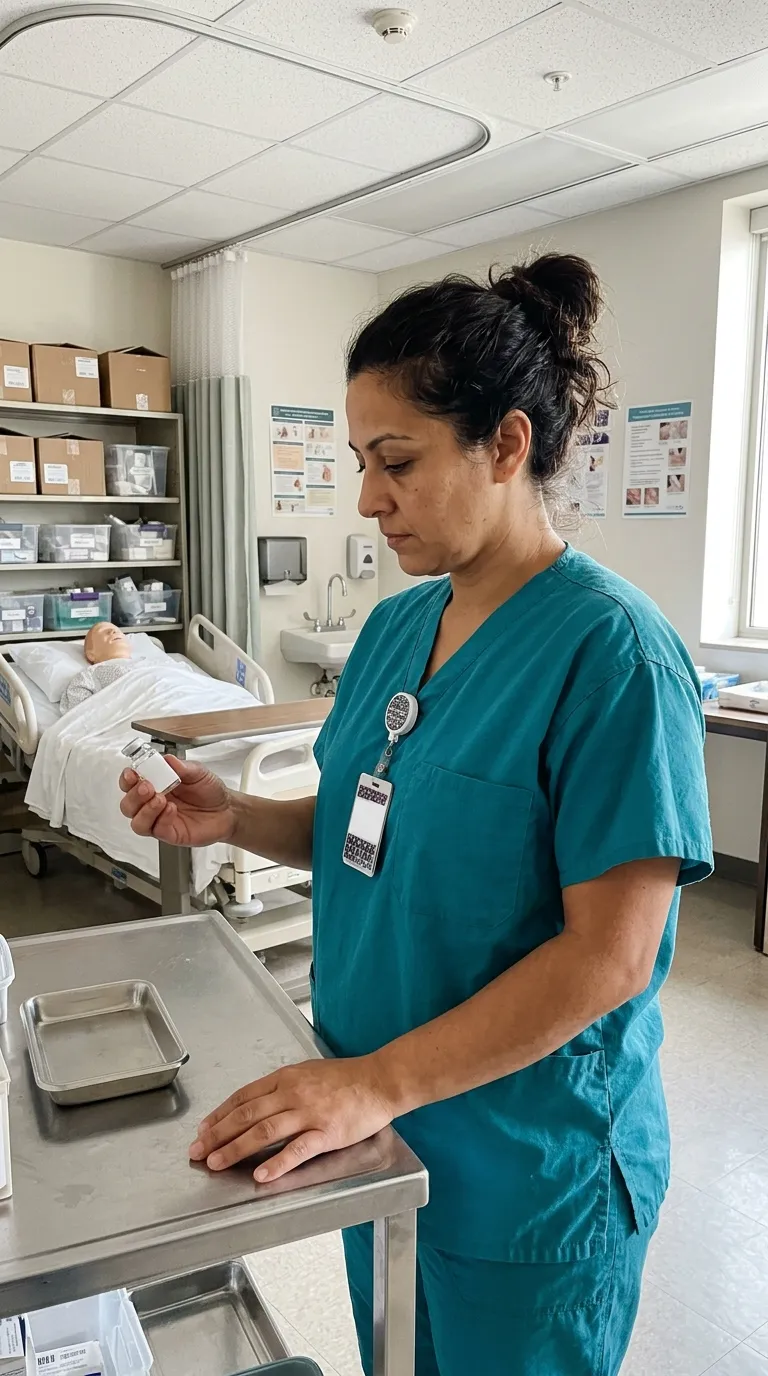
Eight points run from the fastest insulin to the oral agents, ending with the low glucose rule.
Rapid Acting Lispro
Course: Med Surg · Onset: about 15 minutes · Remember: food must be on the way
Lispro starts working in about 15 minutes, peaks at 1 to 2 hours and lasts 3 to 5 hours, so it is given right with meals. See the tray before the dose: a delayed meal plus insulin on board sets up a preventable low.
Short Acting Regular
Regular is the slower insulin, and the only one that can run through an IV line.
| Phase | Timing |
|---|---|
| Onset | 30 to 60 minutes |
| Peak | 2 to 4 hours |
| Duration | 5 to 8 hours |
Give it about 30 minutes before the meal so its peak lands with the food; expect it again in IV protocols for DKA.
Intermediate Acting NPH
Course: Med Surg · Look: cloudy · Remember: roll, never shake
NPH starts in 1 to 2 hours, peaks somewhere between 4 and 12 hours and lasts 12 to 18 hours, usually twice a day. That wide peak is where lows hide, often mid afternoon or overnight. Roll the vial gently between your palms until evenly cloudy; shaking whips in bubbles and makes the dose uneven.
Long Acting Glargine
Glargine is the background insulin: a slow, steady supply with no peak to plan meals around.
| Phase | Timing |
|---|---|
| Onset | 1 to 2 hours |
| Peak | No pronounced peak |
| Duration | About 24 hours |
Two rules never bend: glargine is never mixed with another insulin, and never given IV. It is clear in the vial, so clear does not always mean rapid.
Drawing Up and Mixing Rules
Course: Med Surg · Order: clear before cloudy
For a mixed dose of regular and NPH, the order protects the vials. Inject air into the NPH vial, then into the regular vial, draw up the regular (clear) dose, then draw the NPH (cloudy) to the combined total. The same unit by unit care runs through all dosage calculation examples: count the units twice.
Storage, Sites and Rotation
Insulin fails when storage or sites go wrong, and the glucose log takes the blame.
| Rule | How It Goes |
|---|---|
| Unopened vials | Refrigerator; never freeze them |
| Vial or pen in use | Room temperature is fine; most discarded after 28 days |
| Site rotation | Rotate within one area, a finger width apart |
| Tired sites | Lumps or dents (lipohypertrophy) absorb poorly |
Teach patients to feel their usual sites weekly; a rubbery lump is a site to retire.
Hypoglycemia and the 15-15 Rule
Course: Med Surg · Cutoff: under 70 mg/dL · Remember: 15 grams, 15 minutes
Signs arrive in two waves: shaky, sweaty, hungry, racing heart first, then confusion and slurred speech. Treat any reading under 70 mg/dL with 15 grams of fast carbohydrate (4 ounces of juice or glucose tablets), recheck in 15 minutes, and repeat if still under 70. Add a snack if the next meal is far away. Nothing by mouth for a patient who cannot swallow safely; that one needs IV dextrose or glucagon.
Metformin and Sulfonylureas
Two oral agents cover most type 2 questions; they differ on which one can cause a low.
| Agent | Watch For |
|---|---|
| Metformin | Upset stomach; held for contrast studies; can lower B12 |
| Sulfonylureas such as glipizide and glyburide | Hypoglycemia, worse when meals are skipped; some weight gain |
Metformin does not cause lows on its own, one reason it is usually the first oral agent in type 2.
Complications and Sick Day Care
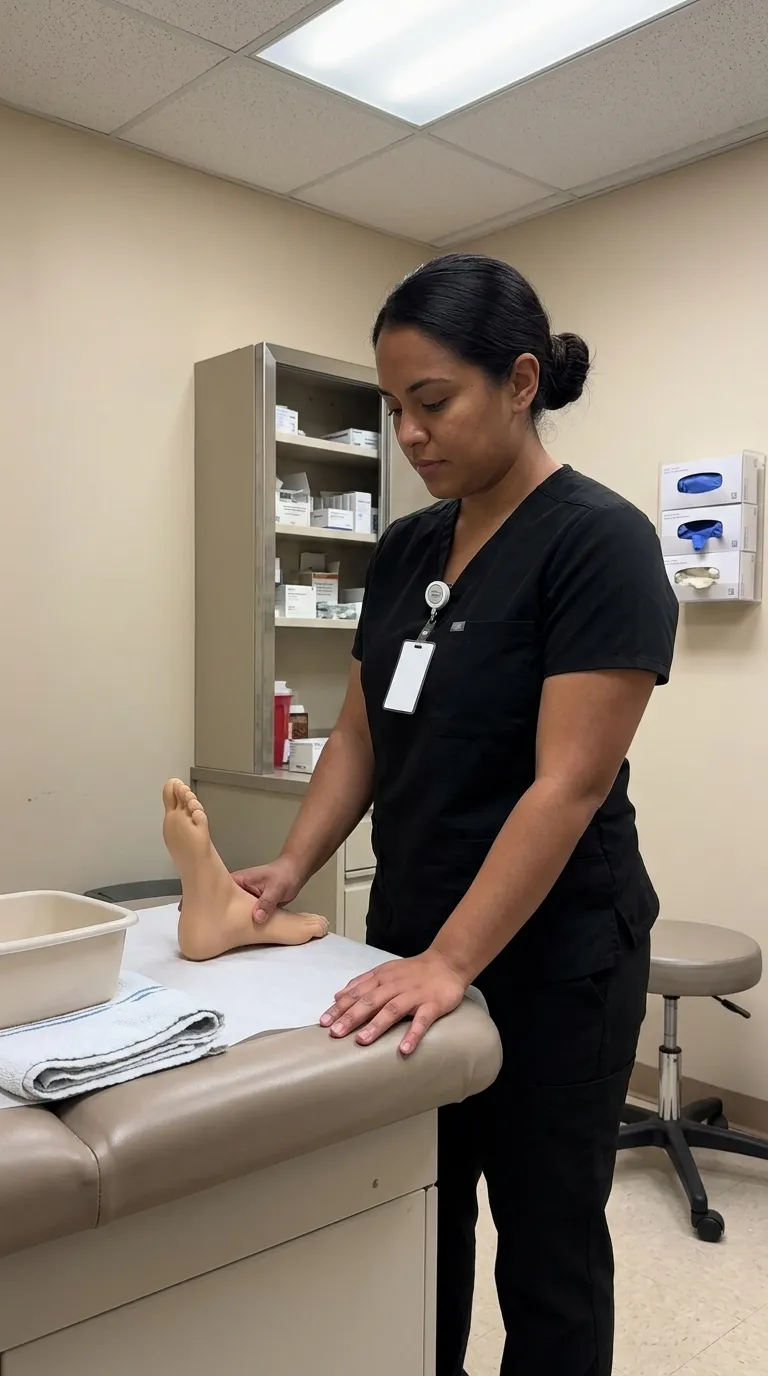
Six points split the two high glucose emergencies, the long term damage and the sick day rules. The MedlinePlus diabetes summary backs up this group.
DKA, the Acid Emergency
Course: Med Surg · Remember: ketones plus acid
In diabetic ketoacidosis, a body starved of insulin burns fat and pours out ketones, so the blood turns acidic. Glucose runs high, usually above 250 mg/dL, breathing turns deep and fast (Kussmaul respirations), the breath can smell fruity, and the patient is dry and nauseated.
NCLEX tip: When a stem pairs Kussmaul breathing, fruity breath and ketones, the exam is testing DKA priorities: fluids first, then insulin, with potassium checked before the insulin runs.
HHS and the Complications Chart
Hyperosmolar hyperglycemic state is the slow emergency of type 2. Glucose climbs for days, often past 600 mg/dL, water follows it out, and the patient arrives dehydrated and confused, but without ketones or acidosis.
| Feature | DKA | HHS | Hypoglycemia |
|---|---|---|---|
| Usual patient | Type 1 | Type 2 | Either type, on treatment |
| Glucose | High, often 250 mg/dL or more | Very high, often over 600 mg/dL | Under 70 mg/dL |
| Ketones | Present | Absent or trace | Not a feature |
| Blood acid | Acidosis | No major acidosis | Normal |
| Breathing | Deep and fast (Kussmaul) | Fast, from dehydration | Normal |
| Onset | Hours to a day | Days to weeks | Minutes |
| First nursing moves | Fluids, then insulin; check potassium | Fluids first, then insulin | 15 grams fast carbs, recheck in 15 |
Sort any emergency stem with three questions: how high is the glucose, are ketones present, and how does the patient breathe.
Eyes, Kidneys and Nerves
Course: Med Surg · Pattern: small vessel damage
The long term bill for high glucose arrives in the small vessels. Retinopathy threatens vision, nephropathy leaks protein into the urine years before the kidneys fail, and neuropathy starts as burning or tingling in the feet. The lab values that flag kidney damage early are urine albumin and creatinine.
Heart, Vessels and Foot Care
Diabetes also drives heart attack and stroke, and leaves the feet numb and slow to heal.
| Do | Do Not |
|---|---|
| Wash daily in lukewarm water, dry well | Soak feet; test water with numb toes |
| Moisturize tops and soles | Put lotion between the toes |
| Inspect daily; a mirror helps | Walk barefoot, indoors or out |
| Trim nails straight across, file edges | Dig into corners or cut calluses |
| Wear clean socks, shoes that fit | Wear shoes without shaking them out |
A sore that is red, warm or slow to heal gets reported the same day; numbness hides injury.
Sick Day Rules
Course: Med Surg · Trigger: fever or infection · Remember: insulin is never simply stopped
Illness raises glucose even when the patient eats almost nothing, because stress hormones push it up. So insulin continues, especially in type 1, glucose and ketones get checked more often, and fluids are sipped steadily. The watch list mirrors the pneumonia nursing care plan: breathing, fluids and a stubborn temperature.
Red Flags to Report at Once
Some findings cannot wait for the next check.
| Finding | Why It Cannot Wait |
|---|---|
| Glucose over 240 mg/dL with ketones | DKA may be building |
| Vomiting; cannot keep fluids down | Dehydration speeds both emergencies |
| Deep, fast breathing or fruity breath | Signs of acidosis |
| Drowsy, confused or hard to wake | The brain is short of fuel or water |
| A foot sore turning red or not healing | Infection in a numb, poorly perfused foot |
When in doubt, call early.
Quick Questions
How often should the A1C be rechecked?
About every three months while doses are changing or the goal is unmet, and at least twice a year once stable at goal. The test averages roughly three months of glucose, so sooner rechecks mostly repeat the picture.
Why juice instead of a chocolate bar for a low?
Juice and glucose tablets are almost pure fast carbohydrate, so they reach the blood within minutes. A chocolate bar carries fat, and fat slows absorption, the wrong direction at 62 mg/dL. Treat fast first, then snack once the number recovers.
Can type 2 diabetes turn into DKA?
Yes. HHS is the classic type 2 emergency, but severe infection, a heart attack or missed medication can push a type 2 patient into ketones and acidosis too. Sort by the pattern, ketones plus acid, rather than by the type on the chart.
The Short Version
If you remember one thing: every diabetes emergency on the exam is a glucose number plus a pattern, so read the ketones, the breathing and the mental status before you pick an answer.
Review this sheet in short passes: numbers one day, insulins the next, emergencies last. Simple organization tips for nursing students, like one binder section per system, keep it easy to return to.
For study use only. Always follow your program, your facility’s policy and current drug and lab references.