


A dosage calculations nursing cheat sheet can make nursing math review feel more organized and less overwhelming. The goal is not to memorize every problem but to recognize patterns, understand units, and build reliable checking habits.From decimal rules and unit checks to error tracking and practice strategies, small study techniques can make calculation practice more effective. A well-organized reference can also help you quickly revisit concepts that need extra attention.Use these tips as a study aid alongside your nursing course materials, instructor guidance, and approved clinical resources. For real medication administration, always follow current facility policies and professional safety procedures.
1. Build a One-Page Reference

A good dosage calculations nursing cheat sheet should reduce clutter rather than create more of it. Keep your reference page focused on concepts you repeatedly forget, and organize it so you can find information quickly during review.
2. Create a Unit Checklist

Units provide an important safety check during nursing math. Make them visible throughout your setup instead of treating them as decoration you can remove once the arithmetic begins.
3. Mark Your Trouble Spots

Your mistakes can tell you what belongs on your personal cheat sheet. Instead of repeatedly solving the same kind of problem without reflection, track where your reasoning tends to break down.
4. Use Estimation Before Exact Math
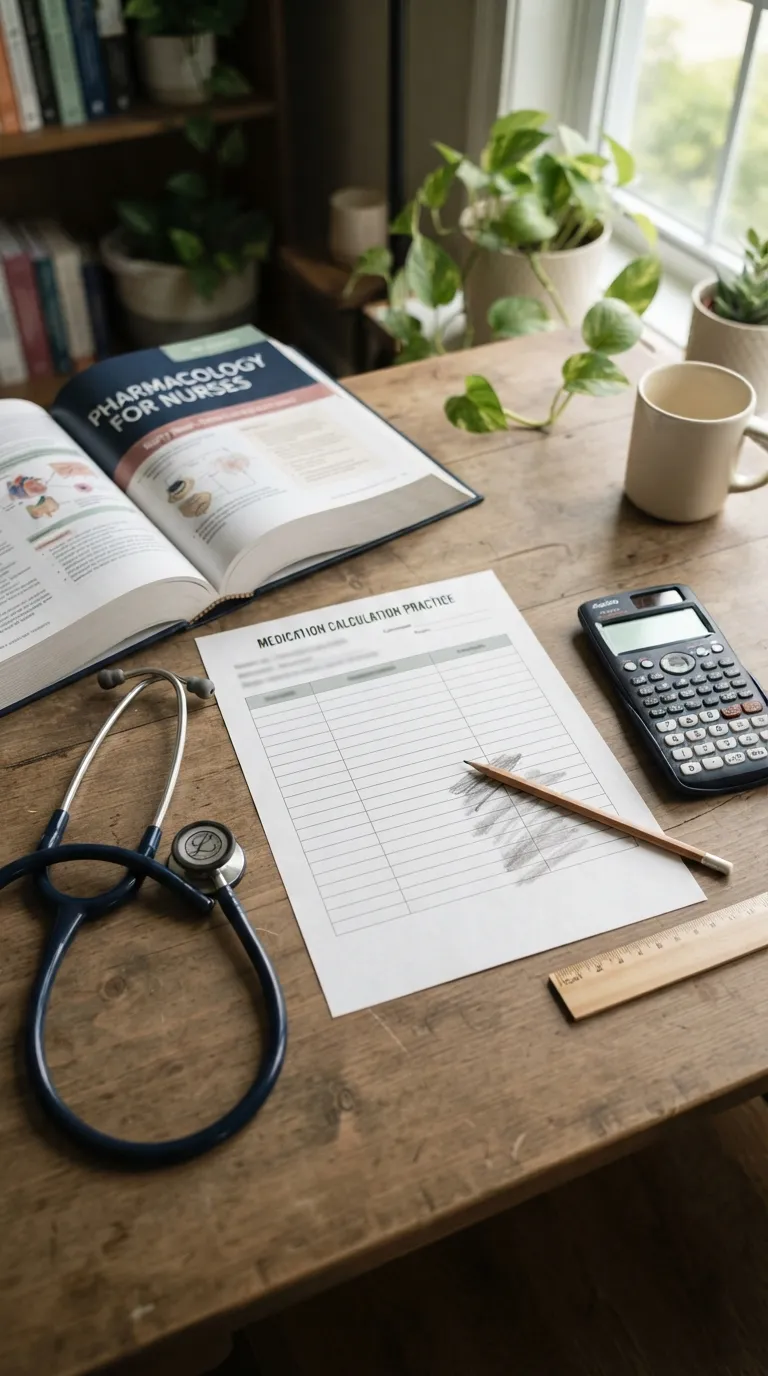
Estimation gives you a quick sense of whether an answer looks reasonable. It is not a substitute for calculation, but it can help you catch an obviously unexpected result before moving on.
5. Keep Decimal Rules Visible

Decimal placement deserves its own reminder because a small formatting mistake can have a major effect on a medication calculation. Keep the rules taught by your nursing program easy to find during study sessions.
6. Separate Setup From Arithmetic

Separating setup from arithmetic makes errors easier to locate. If your answer is wrong, you can determine whether the problem came from interpreting the information or performing the calculation itself.
7. Practice Without the Calculator First

Using a calculator is useful, but it should not hide whether you understand the calculation. Occasionally solve the setup manually first, then use the calculator as a verification tool.
8. Build a Rounding Reminder

Rounding rules can vary depending on the calculation and the instructions used by your nursing program. Keep your course-specific expectations on your study sheet rather than relying on a generic rule.
9. Learn to Spot Distractors

Not every number in a nursing math question necessarily belongs in the calculation. Practice identifying which details actually affect the requested answer before building your setup.
10. Make an Error-Checking Routine

A consistent checking routine is more useful than simply looking at the final number again. Use the same sequence each time so you develop a reliable habit for reviewing your work.
11. Organize Formulas by Purpose

A formula is easier to remember when you know what problem it solves. Organizing your reference material by purpose can help you recognize the appropriate method more quickly during practice.
12. Track Speed Without Sacrificing Accuracy

Exam preparation eventually requires working efficiently, but speed should come after accuracy. Track both measures so you can see whether you are becoming faster because you understand the process or simply rushing.
13. Turn Mistakes Into Mini Notes

A wrong answer does not have to become wasted practice. Turn recurring mistakes into tiny study notes that explain the misunderstanding and show what you should look for next time.
14. Review From Blank Templates

Blank templates are useful when you want to practice the process without being guided by a completed example. Over time, remove more of the visual support until you can organize the problem independently.
15. Keep Clinical and Exam Rules Separate
Image Description:
A nursing student organizing two separate study folders for nursing school calculations and clinical medication-safety references, with calculator, textbook, clipboard, pencil, tablet, and stethoscope. Capture a slightly elevated 35mm editorial perspective with soft natural light. Use deep navy, sage green, warm cream, dusty rose, and muted coral accents. Show clear separation between academic practice and clinical guidance, realistic textures, subtle shadows, and softly blurred background. Premium nursing education editorial photography, ultra-photorealistic DSLR quality, Pinterest-worthy composition, no readable text, patient data, numbers, logos, or watermarks.
- Keep exam instructions with your course notes.
- Keep clinical policies separate.
- Do not assume an exam shortcut applies clinically.
- Use current approved references in practice.
- Ask your instructor when rules differ.
<!– IMG: section-15 | keyword: dosage calculations nursing cheat sheet | heading: Keep Clinical and Exam Rules Separate | alt: nursing student organizing exam and clinical calculation resources | prompt: A nursing student organizing two separate study folders for nursing school calculations and clinical medication-safety references, with calculator, textbook, clipboard, pencil, tablet, and stethoscope. Capture a slightly elevated 35mm editorial perspective with soft natural light. Use deep navy, sage green, warm cream, dusty rose, and muted coral accents. Show clear separation between academic practice and clinical guidance, realistic textures, subtle shadows, and softly blurred background. Premium nursing education editorial photography, ultra-photorealistic DSLR quality, Pinterest-worthy composition, no readable text, patient data, numbers, logos, or watermarks. –>
A study cheat sheet is an educational tool, not a replacement for clinical policy. Keep exam strategies separate from real-world medication procedures and always follow current institutional guidance when patient care is involved.
16. Refresh Your Cheat Sheet Regularly

Your cheat sheet should evolve as your skills improve. Remove concepts that no longer cause difficulty and replace them with the mistakes or topics that currently need the most attention. For real medication administration, always rely on current institutional policies, instructor guidance, and approved clinical references rather than a personal study sheet alone.
Conclusion
Strong dosage calculation skills come from consistent practice, careful organization, and thoughtful checking. Instead of relying on one formula or memorizing isolated examples, focus on understanding what each value represents and why a particular calculation method applies.Keep your personal cheat sheet simple, update it as you discover weak areas, and turn mistakes into useful study notes. With regular practice, you can approach nursing math questions with greater confidence and a clearer process.Remember that a study cheat sheet is for learning—not a substitute for clinical guidance. Always verify medication calculations using current institutional policies, approved references, and your instructor’s instructions when preparing for real patient care.