


Nursing School Organization Ideas can make busy school days feel more manageable by giving every assignment, class, clinical, and study session a clear place. When your materials and schedule are organized, you spend less time searching for what you need and more time actually learning. Nursing students often balance lectures, exams, clinical preparation, assignments, study sessions, and personal responsibilities at the same time.
A simple organization system can help you see upcoming priorities without creating another complicated task to maintain. From organizing digital files and clinical supplies to planning weekly study blocks and resetting your workspace, these ideas are designed for real nursing-school routines. Choose the strategies that fit your schedule and build your system one habit at a time.
1. Build One Master Calendar

A master calendar gives you one reliable place to see the entire semester. Add fixed commitments first, then use the remaining space to plan study sessions around your actual workload. You can also use a weekly study planner to organize daily tasks and a nursing study schedule to balance exam preparation, assignments, clinical rotations, and personal responsibilities.
Include important dates such as:
- Exams, quizzes, and assignment deadlines
- Clinical rotations, lab sessions, and skills assessments
- Study blocks, personal appointments, and rest days
Review the calendar at the beginning of each week so you can adjust your plans before deadlines become stressful.
2. Create a Weekly Reset

A short weekly reset prevents small tasks from quietly becoming a stressful pile. Spend a few minutes reviewing what is finished, what is overdue, and what needs attention next. Choose a consistent time, such as Sunday evening, to prepare for the upcoming week.
During your reset, check your course announcements, update deadlines, organize loose notes, and identify your three most important priorities. This habit helps you start Monday with a clearer idea of what needs to be done.
3. Separate Each Course

Separating courses makes retrieval much faster. Whether you prefer physical binders or digital folders, use the same structure for every subject so you always know where new material belongs. Give each course its own clearly labeled section and avoid mixing lecture notes with unrelated assignments.
For example, you might organize each subject into these categories:
- Lecture notes and presentation slides
- Reading assignments and reference materials
- Practice questions and exam reviews
- Completed assignments and instructor feedback
A consistent structure also makes it easier to review older material when concepts from previous courses appear again.
4. Use a Clinical Binder

A dedicated clinical binder can reduce the time spent searching for materials before clinical days. Keep it limited to useful, approved resources rather than filling it with every handout you receive. Use labeled dividers for relevant checklists, course instructions, and other permitted learning materials.
Review the binder regularly and remove outdated pages when appropriate. Always follow your nursing program’s confidentiality rules, and never store identifiable patient information in personal notes or unsecured documents.
5. Organize Digital Folders

Digital clutter can become just as distracting as a messy desk. Create a predictable folder system early in the semester and use it consistently for slides, assignments, readings, and study resources. Start with one main folder for nursing school, then create separate folders for each course.
Inside each course folder, use subfolders for weekly lectures, assignments, clinical preparation, and exam revision. Keep a backup of important academic files using an approved storage option. A few minutes of organization now can save you from searching through dozens of downloads later.
6. Name Files Consistently
Consistent file names make future searches much easier. A simple naming pattern can help you find the exact lecture or assignment without opening dozens of unrelated documents.
Try a format such as course name, topic, and date. For example, Pharmacology_MedicationSafety_Week03 is easier to recognize than LectureFinalUpdated2. Use the same pattern for your documents throughout the semester, and include assignment numbers when they are relevant.
7. Keep a Deadline List

A deadline list turns vague stress into visible tasks. Keep it separate from your long-term calendar so you can quickly see what needs action within the next few days. Place urgent assignments near the top and mark tasks as complete when you finish them.
A simple list can include the task name, due date, estimated time, and current status. Update it daily rather than creating a new list every morning. This makes it easier to recognize which responsibilities need immediate attention and which can wait.
8. Plan Around Clinical Days

A realistic schedule accounts for energy as well as available hours. Put demanding study blocks on days when you can concentrate and leave simpler review tasks for periods when you are tired after clinicals. Avoid filling every evening with intensive study if you know you need time to recover.
On clinical days, focus on manageable activities such as:
- Reviewing a short set of flashcards
- Checking the next day’s assignments
- Preparing questions for your instructor
- Organizing notes from approved learning activities
This approach keeps your study routine consistent without expecting the same energy level every day.
9. Pack Your Clinical Bag
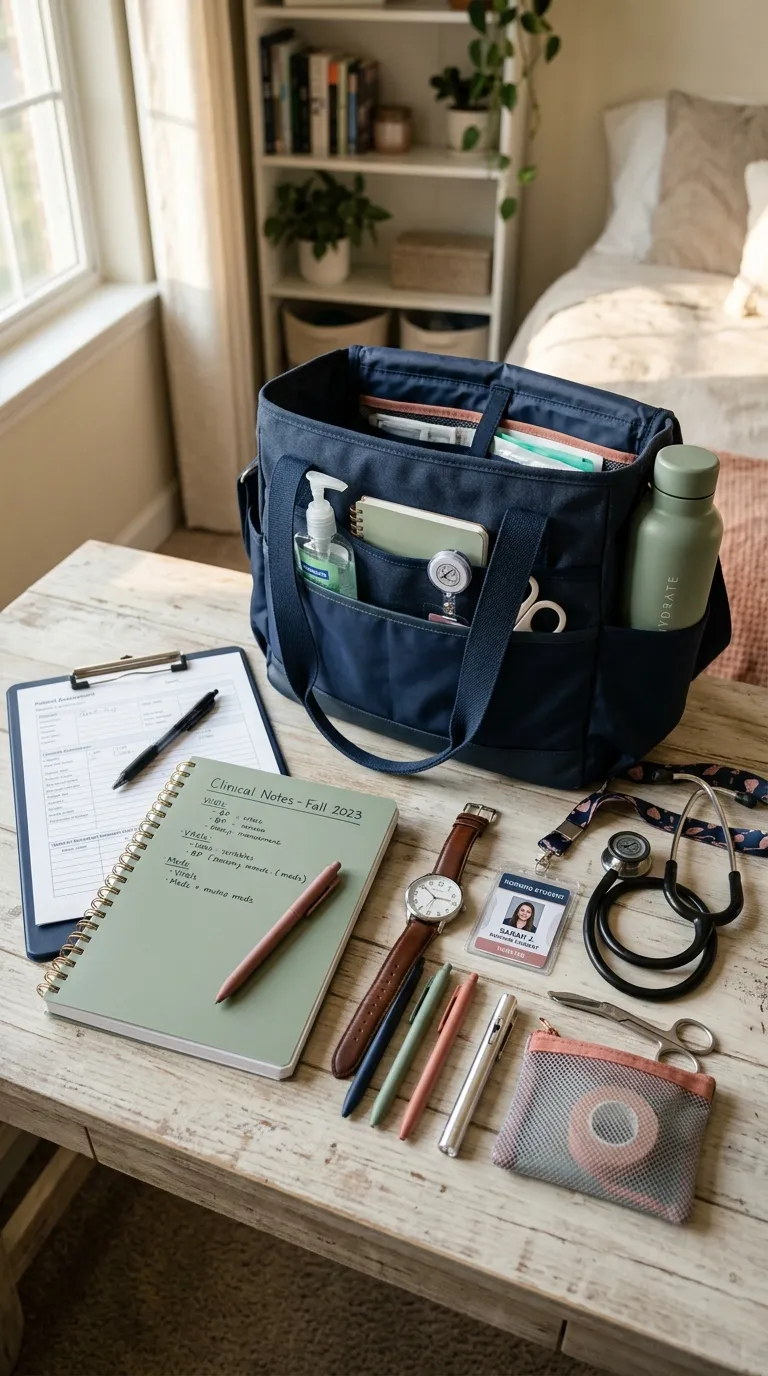
Packing your clinical bag in advance removes one more decision from a busy morning. Keep only the items your program or clinical placement permits and needs. A small checklist near your desk or inside a planner can help you remember essential supplies.
Depending on your placement requirements, your checklist might include your identification badge, approved uniform items, pens, a notebook, and any required equipment. Check the list the evening before clinical rather than rushing to find missing items before leaving home.
10. Create a Study Station

A dedicated study station creates a visual boundary between studying and relaxing. It does not need to be elaborate; the goal is simply to make your most-used materials easy to access. A small desk, comfortable chair, good lighting, and a clear work surface are often enough.
Keep frequently used supplies nearby and move unrelated items out of the way. If you study in a shared room or a small apartment, use a portable storage box to keep your materials together. This allows you to create a functional study area without needing an entire room.
11. Use a Three-Task Rule

An enormous daily to-do list can create unnecessary pressure. Choosing three meaningful priorities gives your day direction while leaving room for unexpected school responsibilities. Select tasks that genuinely move your work forward instead of filling the list with tiny activities.
For example, your three priorities might be completing a reading assignment, reviewing one difficult nursing concept, and preparing materials for clinical. Smaller tasks can still be completed when time allows, but your main priorities remain clear. This system is especially helpful during exam weeks when several deadlines compete for attention.
12. Color-Code Carefully

Color coding works best when it communicates something quickly. A small, consistent palette is easier to remember than assigning a different color to every possible category. You could use one color for exams, another for assignments, and a third for clinical commitments.
Apply the same colors across your calendar, planner, and digital schedule whenever possible. Avoid spending too much time decorating your system. The purpose is to make important information easier to recognize, not to create another task that takes time away from studying.
13. Keep a Catch-Up Block

A schedule with no breathing room can collapse when one assignment takes longer than expected. A catch-up block gives you flexibility without forcing every delay into tomorrow’s workload. Reserve a short period each week for unfinished tasks, unexpected reading, or topics that need another review.
Use this time for the most important unfinished work rather than automatically completing everything on your list. If you finish your tasks early, the block can become extra revision time or a chance to rest.
14. Track Assignment Progress
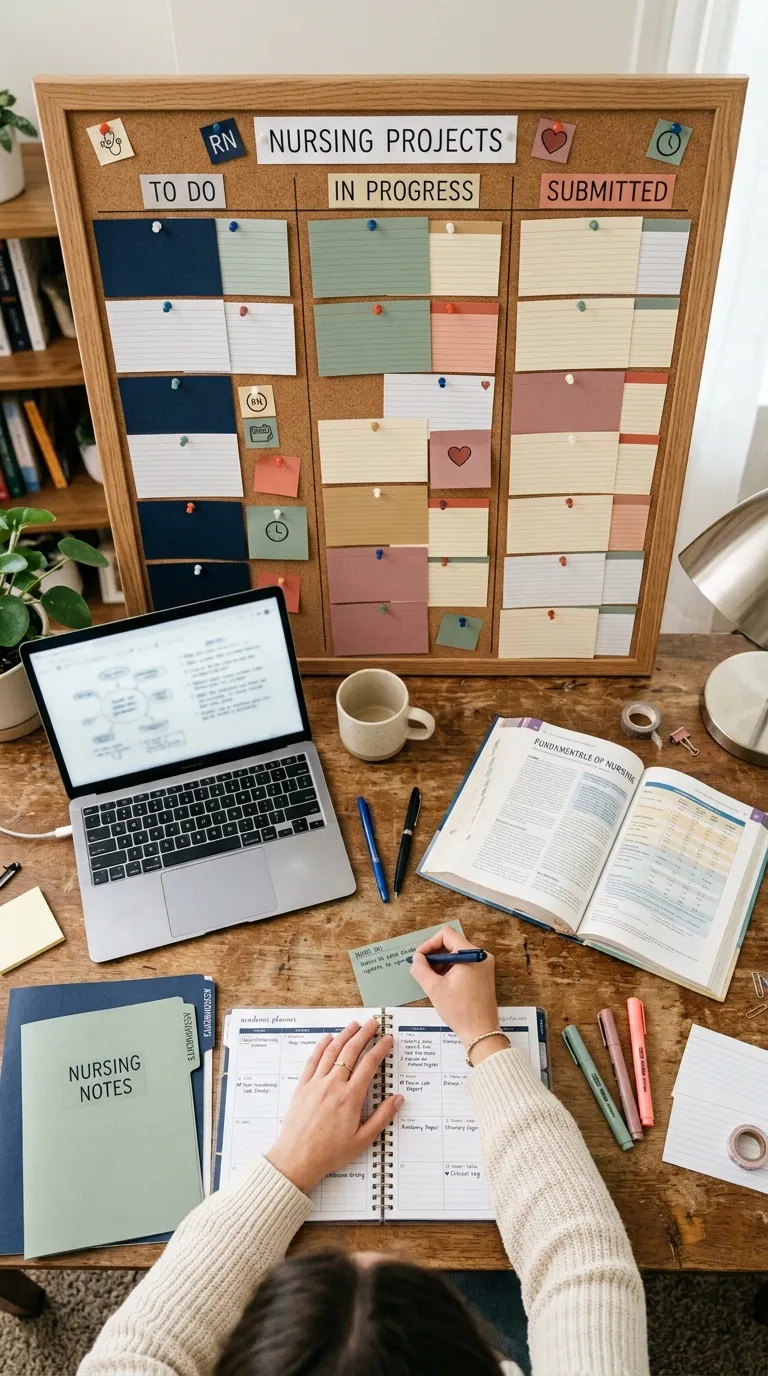
Large assignments become easier to manage when you can see their individual stages. Instead of writing “finish paper,” divide the project into smaller actions with realistic personal deadlines. This approach helps you begin earlier and recognize problems before the submission date.
For a research paper, your progress list could include:
- Read the assignment instructions and rubric
- Gather appropriate academic sources
- Create an outline and draft the main sections
- Review citations, edit the draft, and submit the work
Breaking projects into manageable steps makes progress easier to measure and reduces the temptation to leave everything until the final evening.
15. Store Notes by Topic

Organizing notes by topic can make exam review more efficient because related information stays together. Keep the system simple enough that adding new material takes less than a minute. You might group notes by major concepts, medication classes, assessment findings, or course units.
When reviewing nursing content, connect related information instead of memorizing isolated facts. For example, organize medication notes around the drug class, intended effects, important precautions, and relevant monitoring principles covered in your course. Use your instructor’s guidance and approved learning resources to check accuracy.
16. Use a Backpack Checklist

A backpack checklist can prevent small forgotten items from disrupting the day. Keep the list short and adjust it according to your actual classes and clinical requirements. Store frequently used supplies in the same compartments so you can find them quickly.
Check your bag before leaving home and remove unnecessary items at the end of the day. A lighter, organized backpack can make moving between classrooms, the library, and clinical settings more comfortable.
17. Schedule Review Windows

Short review windows can fit more naturally into a nursing student’s busy schedule than long study marathons. Use them for recall, quick summaries, or revisiting concepts that were difficult earlier. For example, a 15-minute session between classes might be enough to review flashcards or summarize one lecture topic.
Try to spread review across several days rather than relying entirely on last-minute cramming. Regular practice helps you identify knowledge gaps earlier, giving you more time to revisit challenging concepts before an exam.
18. Protect Sleep Planning

Organization should make nursing school more sustainable, not encourage nonstop studying. Protecting sleep and recovery can help you approach demanding academic and clinical responsibilities with a clearer mind. When planning your week, include a realistic bedtime and avoid routinely scheduling study sessions late into the night.
If your workload feels overwhelming, reconsider your priorities and break large tasks into smaller steps. A practical schedule should account for meals, rest, commuting, and personal responsibilities rather than treating every available hour as study time.
19. Prepare Meals Ahead

Meal preparation is another form of organization because it reduces decisions during busy days. Keep the routine practical rather than complicated so it remains manageable during demanding weeks. Preparing a few basic meals or snacks ahead of time can make it easier to eat regularly between classes and study sessions.
Choose foods you enjoy and can store safely. Even preparing lunch the night before or keeping a reusable water bottle ready can reduce morning stress. The goal is convenience, not creating a complicated meal-planning routine.
20. Keep an Errand List

Personal tasks can easily compete with schoolwork when they are not visible. Keep a small running list and handle several errands together instead of repeatedly breaking concentration throughout the week.
Group similar tasks, such as grocery shopping, picking up supplies, or handling routine appointments, whenever your schedule allows. Check the list during your weekly reset and choose a realistic time for important errands. This keeps personal responsibilities visible without allowing them to dominate every study session.
21. Declutter Every Friday

A weekly declutter takes only a few minutes but can make the next study session feel much easier. Keep active materials accessible and move completed or outdated items elsewhere. Clear your desk, organize loose papers, empty unnecessary downloads, and return supplies to their usual places.
Before finishing, check whether any assignment documents need to be saved or backed up. A tidy workspace does not need to look perfect. It simply needs to help you begin the next study session without wasting time searching for materials.
22. Use a Morning Launch Routine

A short morning launch routine keeps you from spending the first part of the day deciding what needs to happen. Prepare most items the night before so the morning requires fewer decisions. Check your calendar, confirm your first commitment, and make sure your bag contains the supplies you need.
A simple routine might include:
- Review the day’s schedule
- Check your packed bag and lunch
- Confirm transportation and class times
- Identify the most important task for later
Keep the routine short enough to follow even when you have an early lecture or clinical shift.
23. Create an Exam Countdown

An exam countdown turns one large deadline into smaller preparation steps. Spread the work across several days rather than assuming one long session will be enough. Start by identifying the topics covered, then divide them into manageable review sessions based on difficulty and importance.
For example, you can use the first few sessions to review key concepts, the next sessions for practice questions, and the final session to revisit weak areas. Leave some flexibility for unexpected assignments. Always use course objectives and instructor guidance to decide what deserves the most attention.
24. End With a Five-Minute Reset

The final five minutes of a study session can make the next one much easier. Put everything away, note what remains unfinished, and decide exactly where you will begin tomorrow. Save your documents, close unnecessary browser tabs, and return frequently used supplies to their proper places.
Before leaving your desk, write down one clear next step, such as reviewing a specific topic or completing the next section of an assignment. This small habit reduces the time needed to get started again and helps you finish each session with a sense of direction.
Conclusion
The best Nursing School Organization Ideas are not about creating a perfect planner or an Instagram-worthy desk. They are about building simple systems that help you find materials faster, remember deadlines, prepare for clinicals, and protect time for studying and recovery. Start with just a few habits, such as a master calendar, weekly reset, organized course folders, clinical preparation routine, and daily priority list. Once those feel natural, add systems that fit your own schedule and learning style.
Remember that your organization system should support your education rather than become another source of pressure. Review what works at the end of each week, adjust routines that feel too complicated, and make room for unexpected responsibilities. Nursing school can become much easier to manage when your organization system reduces decisions instead of creating more work. Keep it simple, flexible, and realistic enough to use throughout the entire semester.
Choose foods you enjoy and can