
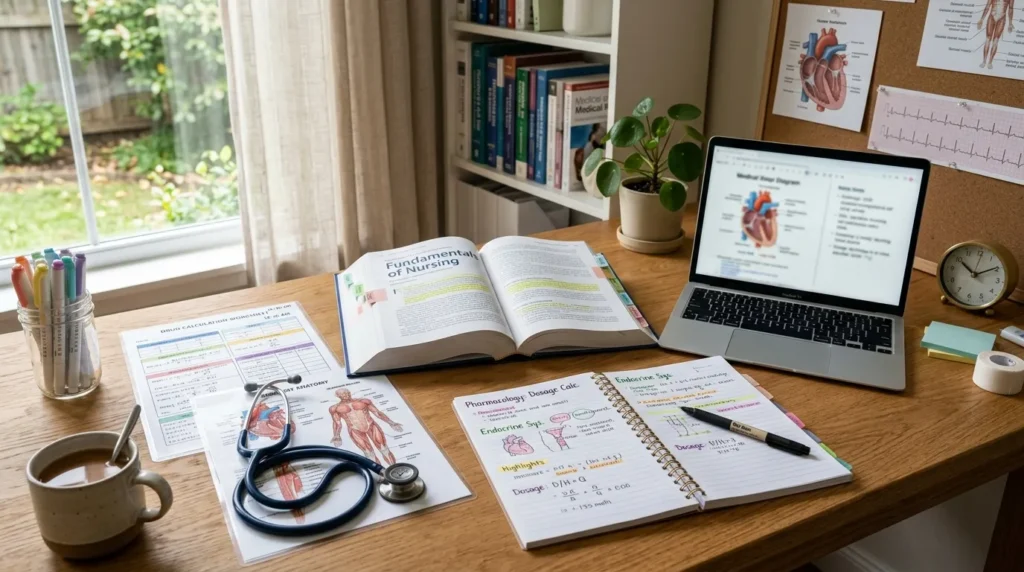

This guide shares practical Nursing Study Tips to help students study more effectively, improve memory, and feel more confident when preparing for exams. Nursing school involves learning a wide range of topics, including anatomy, pharmacology, patient care, medical terminology, and clinical skills. Remembering all this information can feel challenging, especially when assignments, lectures, and exam deadlines start to pile up. Using the right study strategies can make learning easier and help you manage your time more wisely. From creating a realistic study schedule and taking organized notes to practicing active recall and reviewing difficult concepts regularly, small changes can make a meaningful difference.
These simple and practical tips can help you understand complex nursing topics, retain important information for longer, and prepare for exams without feeling overwhelmed. Whether you are a new nursing student or already working through advanced courses, these strategies can help you build stronger study habits, improve your exam preparation routine, and develop a more organized approach to nursing education.
1. Active Recall Practice
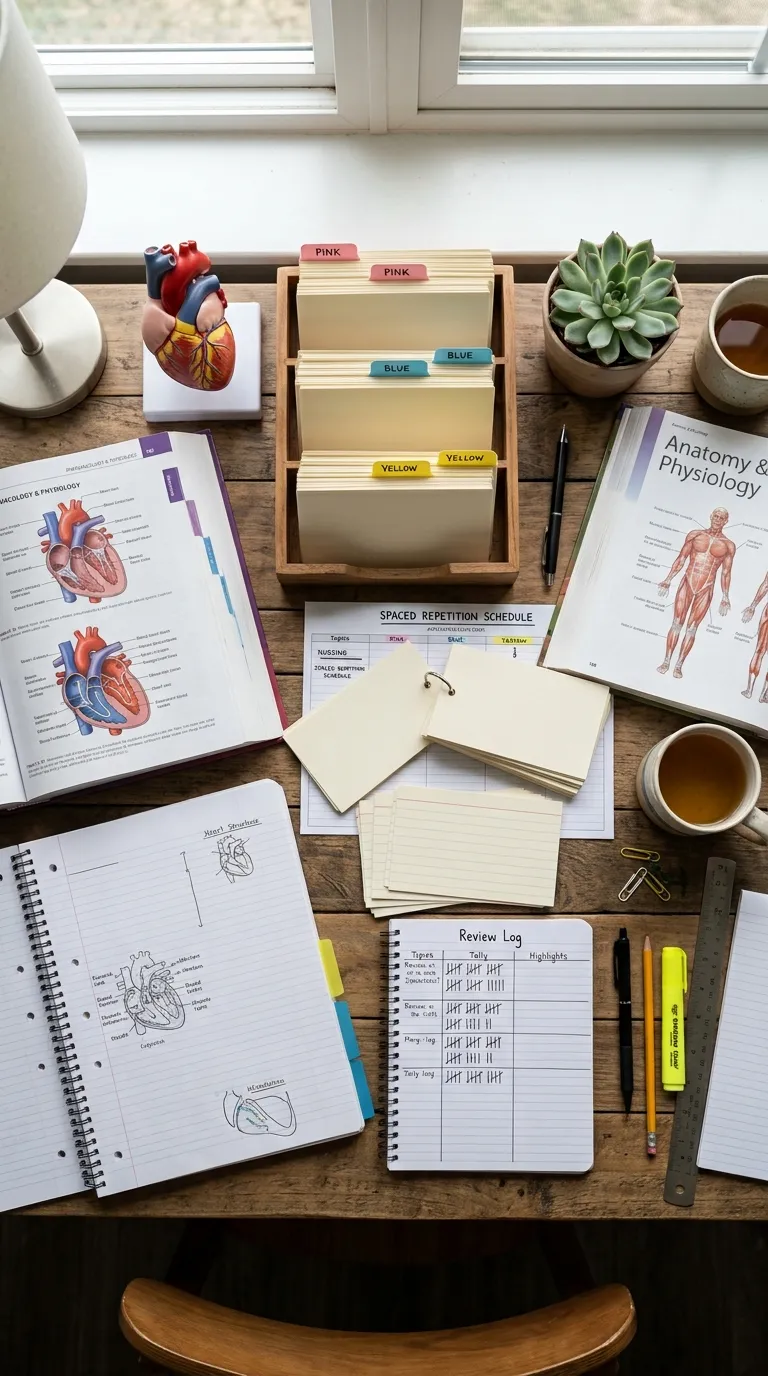
Test your memory before looking at your notes to find out which nursing concepts you can explain confidently and which still need work. After reading a chapter about diabetes, for example, close the textbook and write down the major symptoms, possible complications, and important nursing assessments you remember.
Then compare your answers with your study material and correct any missing details. Flashcards can help you review medication classifications, laboratory values, medical terminology, and disease symptoms in short sessions throughout the week. Keep difficult questions in a separate pile so you can revisit them more often. This method turns revision into an active learning exercise instead of a passive reading session and helps you identify gaps before exam day.
2. Smart Study Scheduling
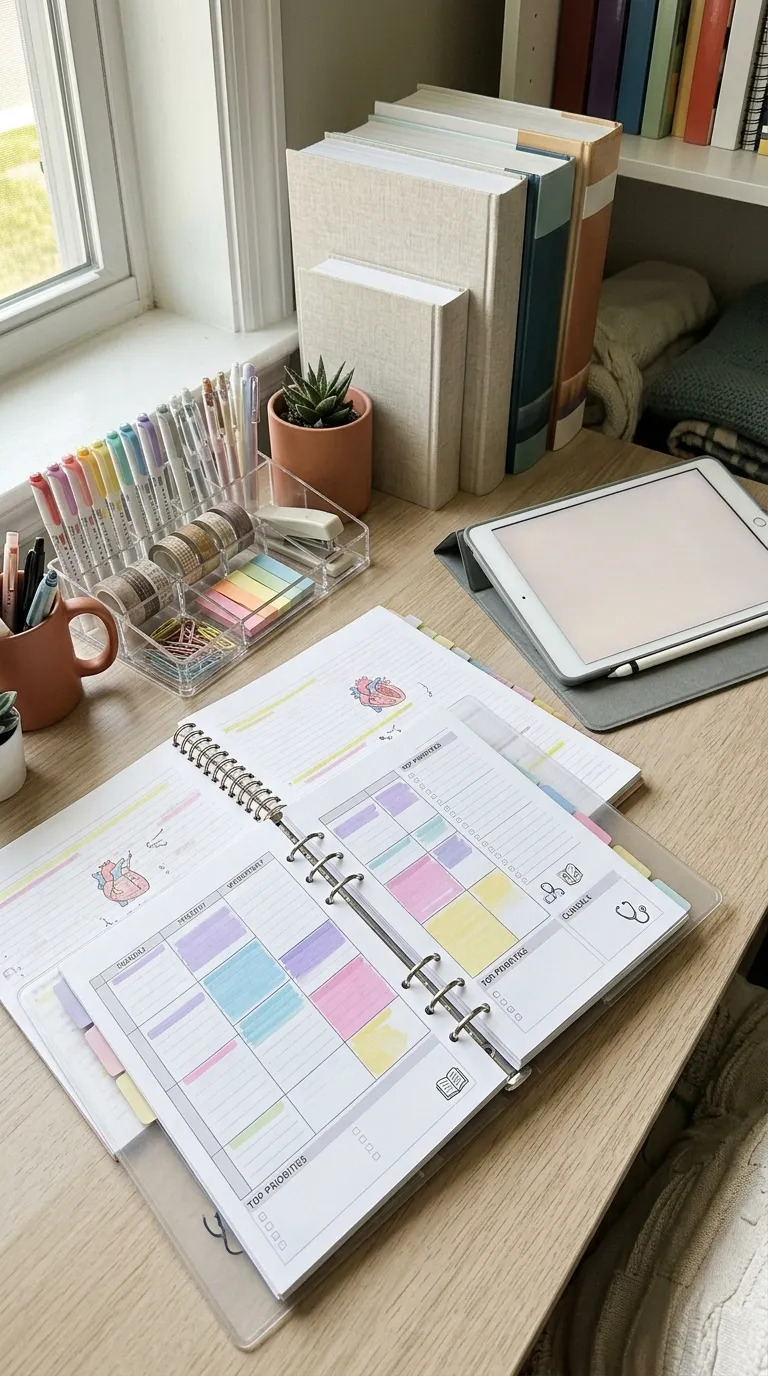
Divide your weekly workload into manageable study blocks rather than trying to cover every subject in one sitting. Start by writing down upcoming exams, assignment deadlines, clinical commitments, and the topics you find most difficult. Then assign specific tasks to different days, such as reviewing cardiovascular disorders on Monday and practicing dosage calculations on Tuesday.
Leave some open time for unexpected assignments or topics that take longer than expected. Short breaks between sessions can also help you return to your work with better concentration. At the end of each week, check which tasks you completed and adjust the next schedule accordingly. A flexible plan makes it easier to balance nursing coursework without turning every free hour into study time.
3. Medication Math Drills
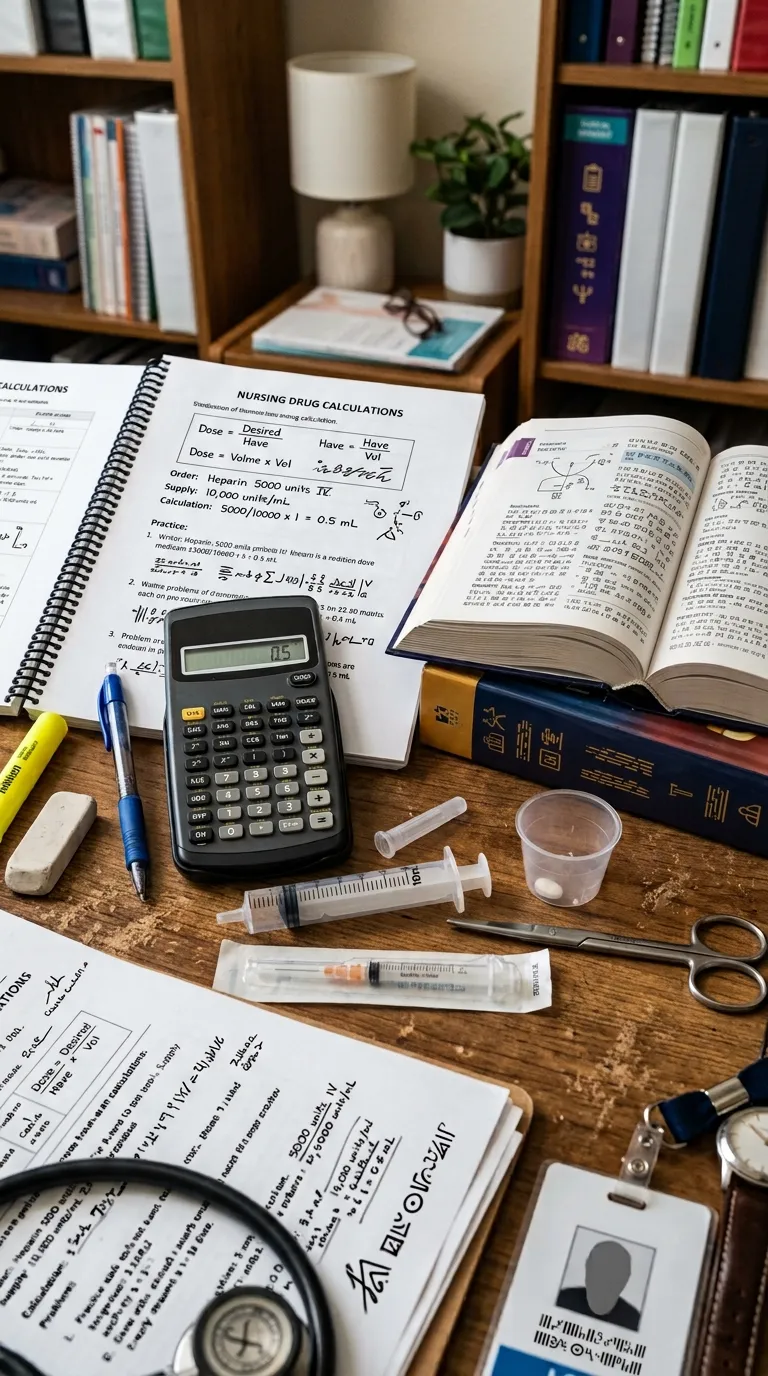
Work through dosage problems with paper and pencil so you can see exactly how each calculation develops. Begin by identifying what the question provides, what answer it requires, and which units appear in the medication order. For example, a tablet problem may ask you to determine how many tablets are needed when the prescribed dose differs from the available strength. Write the formula, substitute the correct values, and include the unit in your final answer.
Once basic problems become familiar, practice liquid doses and weight-based calculations using reputable nursing resources. Keep a record of errors, such as confusing milligrams with micrograms or misplacing a decimal point. Review these mistakes before attempting another set. In clinical practice, follow institutional medication safety procedures and required independent checks rather than relying on memory alone.
4. Concept Map Learning
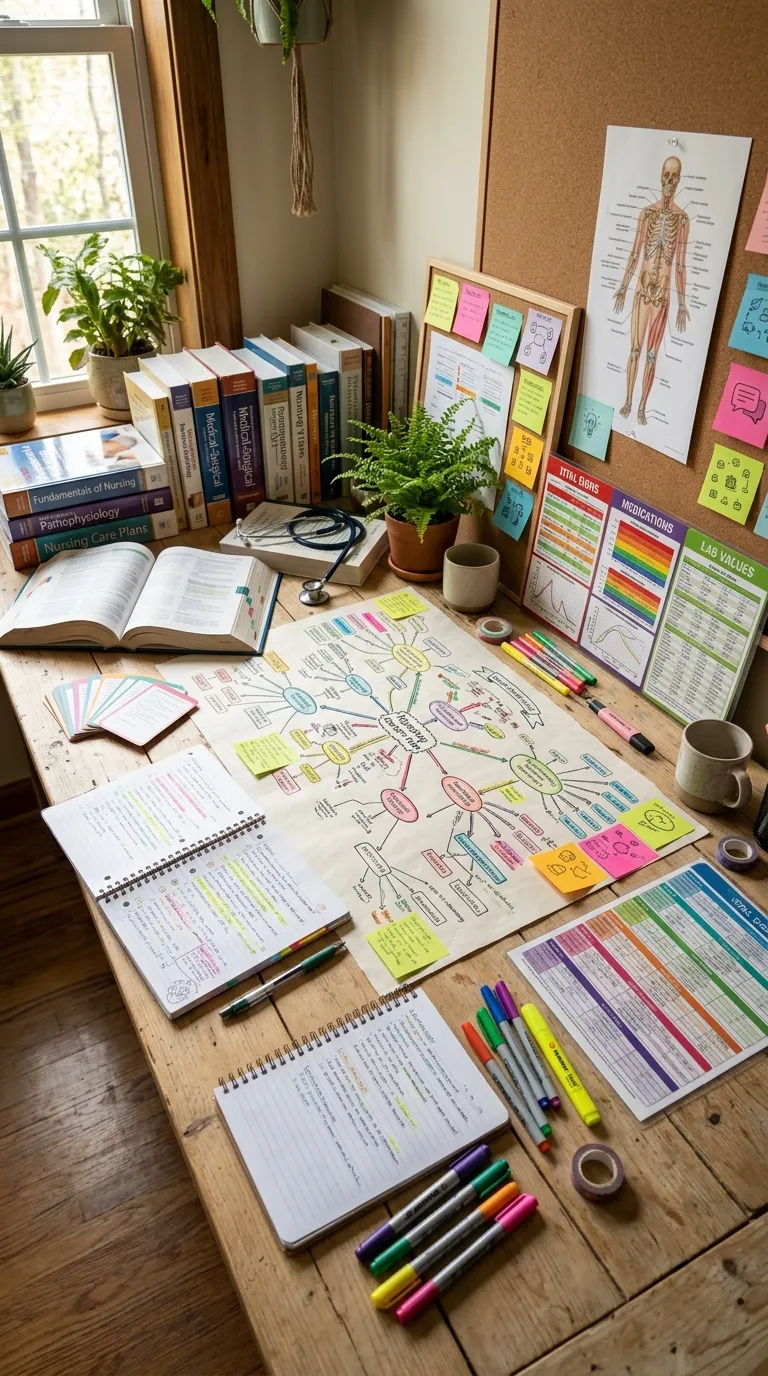
Build a visual connection between a disease, its underlying causes, common symptoms, diagnostic findings, treatments, and nursing considerations. For a cardiac condition, you might place the disorder in the center and draw branches for assessment findings, prescribed medications, possible complications, and patient education.
Add arrows wherever one concept helps explain another, such as how a change in cardiac function may affect circulation. Keep each branch brief enough to review quickly, and use your textbook or course materials to verify clinical details. If the map becomes crowded, divide it into smaller sections instead of squeezing everything onto one page. This format is particularly useful when a test asks you to connect several related facts rather than recall a single definition.
5. Clinical Scenario Practice

Use patient-based questions to practice applying nursing knowledge when several details appear in the same problem. Read the scenario carefully and identify the patient’s main concern, relevant assessment findings, and any signs that suggest an immediate safety risk. For instance, a question involving a sudden change in consciousness may require you to distinguish urgent assessment needs from routine care activities.
Before choosing an answer, consider what the question actually asks and whether the options involve assessment, intervention, or follow-up. Afterward, read the rationale for every option, including the incorrect ones. Write down the clinical principle behind any mistake and review it later. This process helps you understand how nursing concepts work together and prepares you to reason through unfamiliar exam questions.
6. Focused Study Environment

Set up your study area so that the materials needed for the current task are easy to reach. Keep your textbook, notebook, calculator, and relevant course notes nearby, but move unrelated items away from the desk. Put your phone on silent or place it outside your immediate workspace if notifications interrupt your concentration.
If your home is noisy, consider using a quiet library or another suitable study location. Before beginning, write one specific goal, such as completing ten practice questions or reviewing a single lecture topic. A clear target gives each session a purpose and makes it easier to recognize when the task is finished. You do not need an expensive desk or elaborate setup; a comfortable, consistent place is often enough.
7. NCLEX Question Practice

Choose practice questions that match the nursing subjects you are currently studying, then review the explanations instead of focusing only on your score. When you miss a question, identify whether the problem came from a knowledge gap, a misread instruction, or difficulty applying a clinical principle. For example, if you repeatedly struggle with patient-priority questions, revisit the assessment findings and safety considerations that guide those decisions.
Keep a mistake log with three details: the topic, the reason your answer was incorrect, and the fact or principle you need to remember. Revisit that log during later study sessions to check whether your understanding has improved. Use current, reputable NCLEX preparation materials and follow the exam plan applicable to your testing date.
8. Organized Nursing Notes
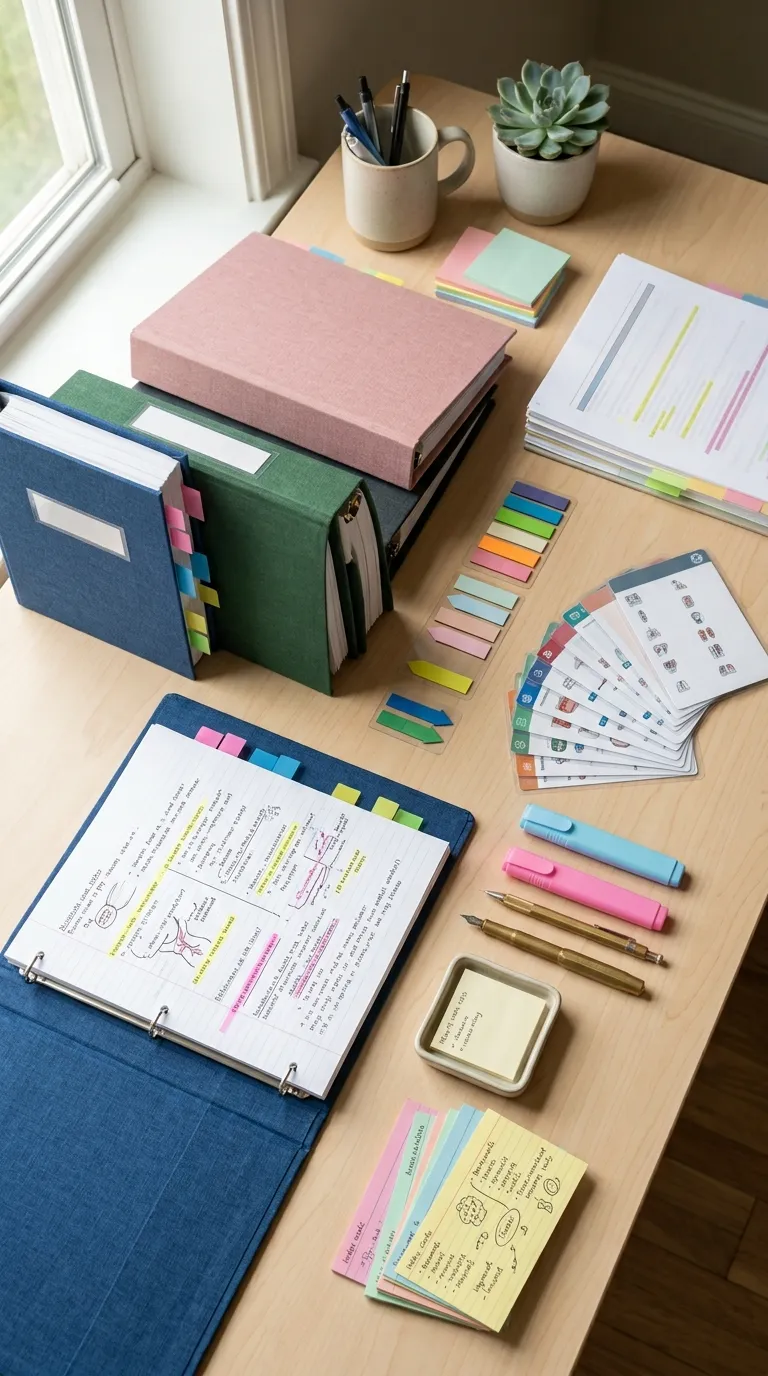
Organize your notes around information you will need to retrieve quickly, rather than copying entire textbook passages. For disease-related topics, useful categories may include causes, signs and symptoms, diagnostic tests, treatments, nursing assessments, and patient education. Pharmacology notes can follow a different structure, covering drug class, intended effect, important adverse effects, precautions, and relevant monitoring requirements.
Use consistent headings and short explanations so related information is easy to compare across topics. Mark confusing concepts with a question or symbol and return to them after checking a reliable source. At the end of each lecture, write a brief summary of the most important points in your own words. This creates a practical revision resource without requiring you to rewrite the same material repeatedly.
9. Teaching The Material

Choose one difficult concept and explain it aloud without reading directly from your textbook. Imagine you are helping a classmate understand why a particular symptom occurs or why a nursing assessment matters. If you cannot explain a step clearly, pause and identify the missing connection before continuing. For example, when reviewing a medication, describe its intended effect, the precautions associated with its use, and the information a nurse may need to monitor according to the course material.
Avoid using complicated terminology when a simpler explanation would be accurate. Once you can explain the basics, check your account against a trusted reference to catch misunderstandings. This technique reveals whether you genuinely understand a topic or have only become familiar with the wording in your notes.
10. Clinical Skill Review

Break each clinical procedure into its main stages and study the purpose of each step, not just its order. Start with the relevant equipment, preparation, patient identification, safety checks, procedure steps, and documentation requirements described in your course materials. Create a checklist to help you remember the sequence, then use approved demonstrations or instructor guidance to clarify unfamiliar actions.
If your school provides a simulation lab, supervised practice can help you apply the checklist while receiving feedback. Pay particular attention to infection prevention, patient privacy, communication, and situations in which a procedure should be paused or escalated. Review the official skills checklist rather than relying on a short online summary. Practical preparation is strongest when knowledge is combined with supervised practice and current institutional protocols.
11. Group Study Sessions

Give each group session a clear purpose so the time is spent solving problems rather than simply reading the same notes together. Before meeting, ask everyone to bring a few questions about a topic such as fluid and electrolyte balance, pharmacology, or patient assessment. Take turns explaining answers and asking follow-up questions that reveal how well the group understands the material.
If members disagree, consult course textbooks or instructor-approved resources instead of accepting the most confident explanation automatically. You can also use short quizzes to identify subjects that deserve another review session. Keep the group small enough for everyone to participate, and agree on a finishing time to maintain focus. Independent revision between meetings remains important because each student needs to be able to answer questions without assistance.
12. Sleep And Recovery

Plan your revision so that rest does not become the first thing you sacrifice when exams approach. Repeated late-night study sessions can leave you tired and make it harder to concentrate on detailed questions the following day. Set a reasonable stopping time, prepare the materials you will need for your next session, and aim for a consistent sleep schedule.
For most adults, health guidance recommends at least seven hours of sleep per night, although individual needs can vary. Brief breaks during long study periods can also provide time to stretch, drink water, or eat a meal. If you have several exams close together, spread revision across multiple days whenever possible. Protecting time for recovery supports a more sustainable routine than relying on last-minute cramming.
13. Exam Day Strategy

Prepare the practical details before the morning of your exam so they do not compete with your attention. Confirm the exam time, location, required identification, permitted materials, and any instructions provided by your school. Choose a manageable final review that covers key summaries and previously missed questions instead of attempting to learn several new chapters at once.
During the test, read each question carefully, identify what it is asking, and pay attention to qualifying words such as first, immediate, or best. If a question feels difficult, use the available time to consider the relevant nursing principles rather than rushing into an answer. Follow the exam’s rules for marking and changing responses. A steady pace and careful reading help you make the best use of the preparation you have completed.
14. Priority Topic Review
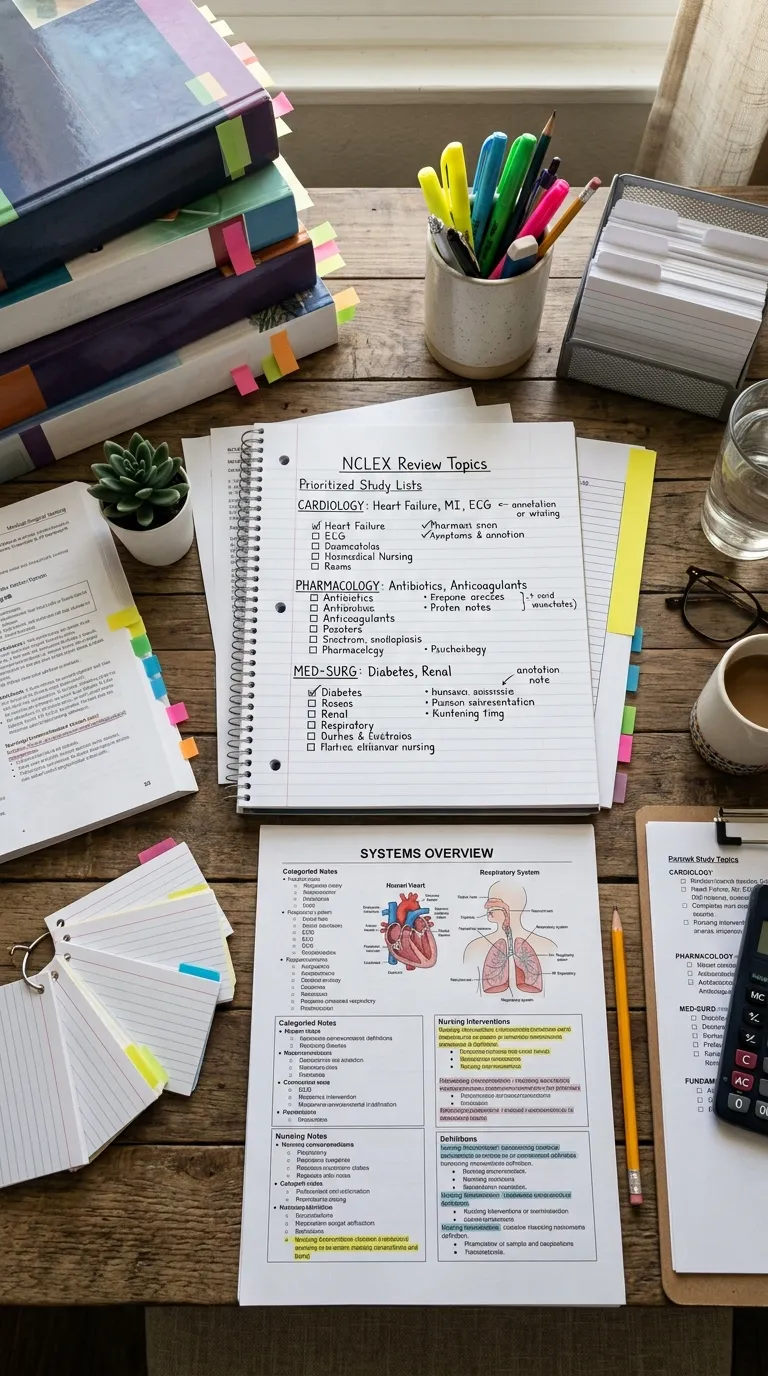
Decide which subjects deserve the most attention by comparing your practice results with your course objectives and upcoming assessments. A topic you repeatedly misunderstand may need more review than one you can already explain accurately. Make a short priority list with three categories: concepts you understand well, concepts that need another review, and concepts you cannot yet explain.
Begin with the weakest important areas, especially foundational material that supports several other topics. For nursing subjects, this may include patient safety principles, assessment findings, medication calculations, or disease processes covered in your syllabus. Reassess your list after completing practice questions and move topics between categories as your understanding changes. This approach directs study time toward actual learning needs rather than simply spending equal time on every chapter.
15. Consistent Daily Practice
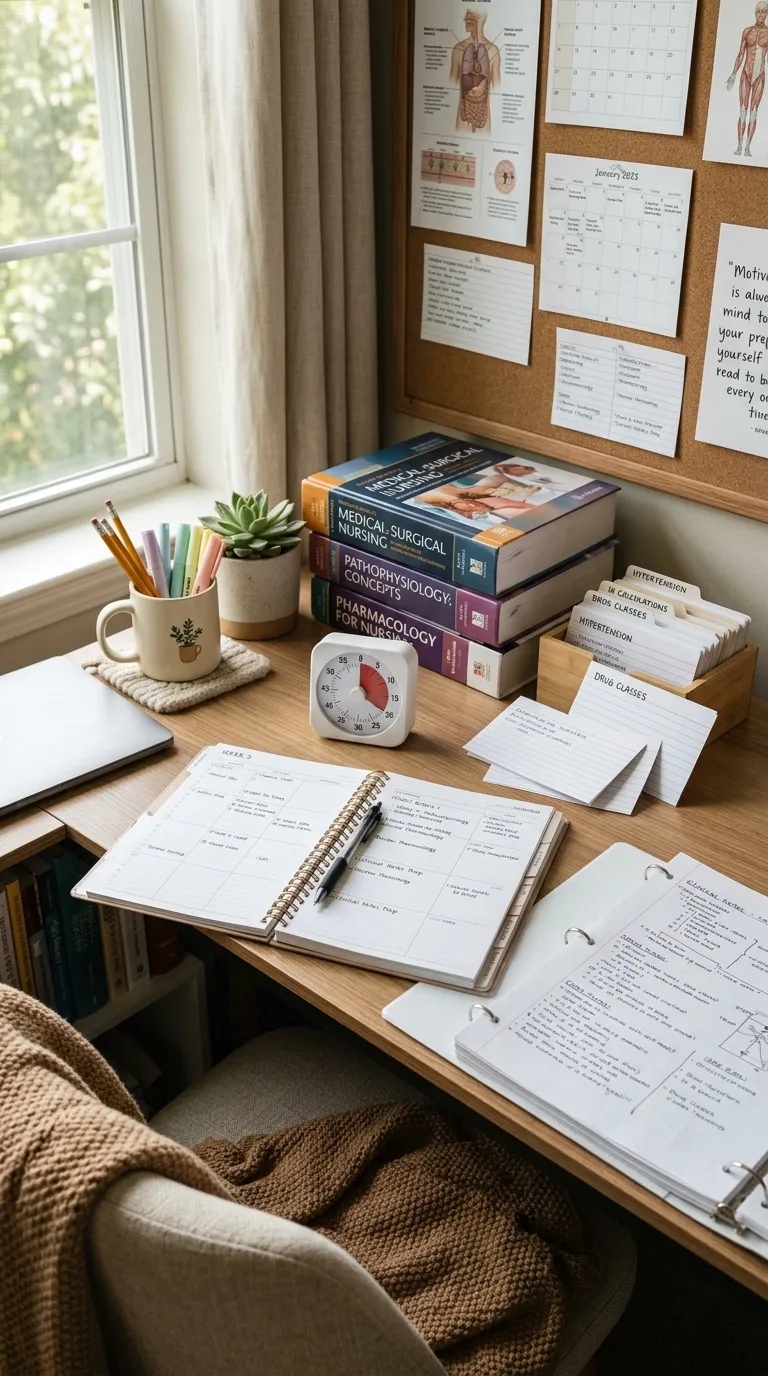
Create a manageable routine that you can maintain even during busy weeks of lectures, assignments, and clinical placements. A session might include reviewing yesterday’s notes, answering a small set of practice questions, and revisiting one difficult concept. On days when time is limited, focus on a short task instead of abandoning the routine completely.
Use a weekly checklist to track completed sessions and note which topics still need attention. Every few days, return to older material so that your revision includes previous chapters as well as new lessons. Keep your targets realistic and adjust them when your academic workload changes. Consistency does not mean studying for hours every day; it means returning to the material regularly, checking your understanding, and making steady progress toward your learning goals.
Conclusion
Use active recall, medication practice, and organized notes to make your nursing preparation more effective and easier to manage. Start with one strategy like clinical scenario practice and build a consistent routine that supports long-term success.
Save these Nursing study tips on Pinterest and use them to create a confident, focused path toward your next exam.