
Many students file pneumonia away as one flat fact, an infection in the lungs that gets antibiotics, and that shortcut collapses on the first case study. Exams and clinicals ask harder things: which type it is, which finding just changed, and what you do before the first dose. These 15 nursing pneumonia points fix the gap, grouping types, signs, labs and bedside care into notes you can review fast and use on the unit.
The order matches a real shift: what it is, what it looks like, what the labs say, then what you do. Read it once, star what your instructor keeps testing, and keep it open during clinicals. When falling oxygen starts to starve the tissues, the shock nursing notes show the emergency at the end of that road.
| Course | Med Surg |
| Best for | Nursing students reviewing pneumonia before med-surg exams and respiratory clinical days |
| Study time | 15 to 20 minutes |
What It Is and Why It Happens (Fundamentals)
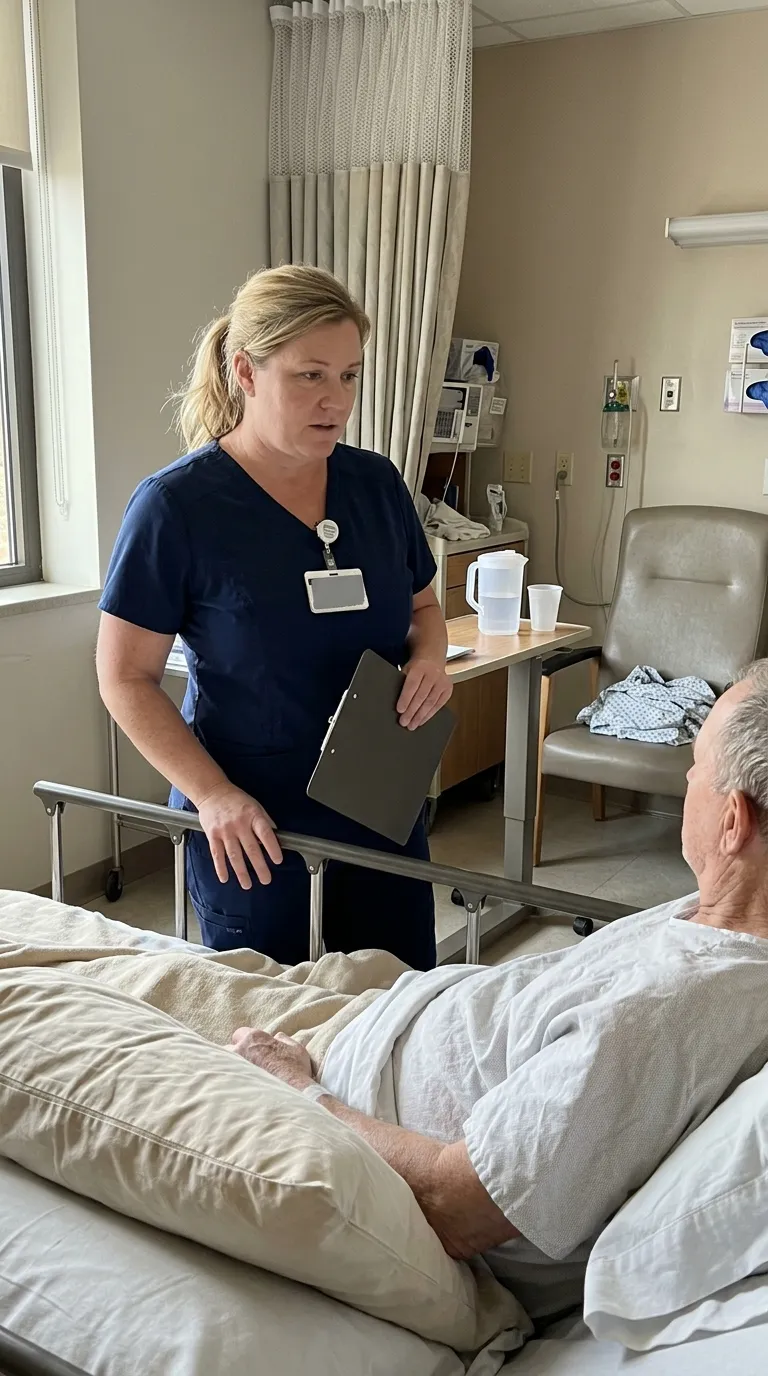
Pneumonia inflames the air sacs of one or both lungs, filling them with fluid and pus so oxygen cannot cross into the blood. Nurses sort it by where it started and how it got in, because the likely germs and the first antibiotics change with the type.
Community-Acquired Pneumonia (Quick Win)
This is the pneumonia of everyday life, caught outside any hospital, and the type most exam questions describe. The MedlinePlus guide to community-acquired pneumonia notes bacteria cause most adult cases, Streptococcus pneumoniae most often, with viruses such as influenza causing a large share too.
- What it is: pneumonia starting outside the hospital, or within the first 48 hours of an admission
- Key signs: fever, productive cough, shortness of breath and sharp chest pain on breathing in
- Key labs/tests: chest X-ray, sputum culture and blood cultures, usually drawn before the first antibiotic dose
- Nursing priority: assess breathing and oxygen first, then get the cultures so treatment can start on time
Hospital-Acquired and Ventilator Pneumonia (Easy to Mix Up)
Hospital-acquired pneumonia starts 48 hours or more after admission; ventilator-associated pneumonia appears more than 48 hours after a breathing tube goes in. Hospital germs run tougher, with resistant organisms such as MRSA and Pseudomonas high on the suspect list.
Prevention is nursing work here: hand hygiene, scheduled oral care, and the head of the bed at 30 to 45 degrees for ventilated or aspiration-risk patients.
Study tip: 48 hours is the exam dividing line. Before it, think community germs; after it, hospital germs and resistance.
Aspiration Pneumonia (Clinical Pearl)
Aspiration happens when food, liquid, vomit or mouth fluids slip past the airway defenses into the lungs. The chemical irritation can turn into infection over a day or two, most often in the right lower lobe when the patient was sitting up.
- What it is: lung infection after inhaled food, fluids or stomach contents, usually where swallowing is weak or awareness lowered
- Key signs: coughing or choking during meals, a wet or gurgly voice after swallowing, new fever and crackles in the days after
- Nursing priority: stop the meal and report coughing or a wet voice at once; keep the patient fully upright to eat and request a swallow screen
Patients at Highest Risk (Fundamentals)
Some patients get pneumonia more easily and crash faster once they have it: age over 65, chronic lung disease such as COPD, smoking, a weak immune system, stroke or dementia with swallowing problems, and recent surgery or trauma. A case study stacking two or three of these is telling you who to watch closest.
Study tip: when a stem describes an older patient with COPD who smokes, rank pneumonia high before you reach the choices.
Signs and Symptoms (High Yield)
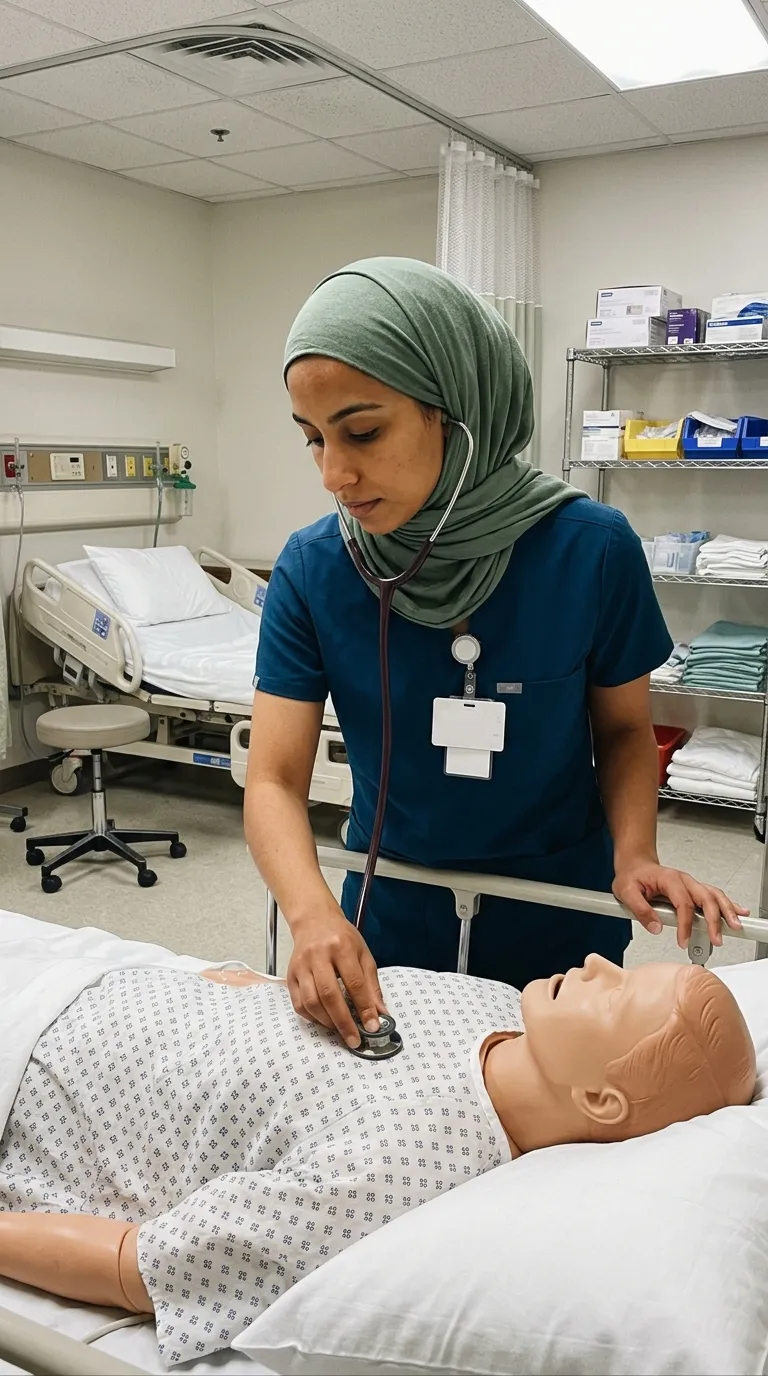
Signs come from air sacs filling with fluid and the body fighting back. No single finding proves pneumonia, but the cluster below, in a patient with the right history, is the picture exams draw again and again. Turn it into flashcards with the study tips for nursing students that keep recall active.
The Classic Sign Cluster (High Yield)
Learn this cluster as one picture and pneumonia stems get easy to spot: fever is the immune response, the cough clears infected fluid, and the pain comes from the inflamed lung lining rubbing with every breath.
- Key signs: fever with shaking chills, productive cough with greenish or yellow sputum, sometimes rusty or blood streaked, plus shortness of breath
- Key signs: sharp chest pain that worsens on a deep breath or cough, called pleuritic pain
- Key labs/tests: temperature, respiratory rate and pulse oximetry on every suspected patient, repeated when the picture changes
- Nursing priority: full vital signs and lung sounds on admission; compare every later set against that baseline
Breath Sounds and Chest Findings (Med Surg)
Over the infected lobe, listen for crackles, the fine popping of air through fluid, and bronchial breath sounds, louder and harsher than healthy lung sounds. Percussion over the fluid-filled area sounds dull instead of hollow, and the chest wall vibrates more under your fingers when the patient speaks: increased fremitus.
One classic check is egophony: the patient says “E” and, over consolidation, it returns as “A” through the stethoscope. Findings cluster over one lobe in typical bacterial pneumonia, so chart by lobe and side.
Study tip: chart “crackles, right lower lobe”, not “lungs abnormal”. The next nurse needs the map, not a summary.
Pneumonia in Older Adults (Easy to Mix Up)
After 65, pneumonia walks in quietly. Fever may be low or missing, the cough mild, and the first real clue is sudden confusion, weakness, poor appetite, or new unsteadiness.
- What it is: the same infection with a blunted response, so mental status changes can arrive before the classic lung signs
- Key signs: new confusion, unusual weakness and falls, poor appetite, and a quietly rising breathing rate
- Nursing priority: treat new confusion as a possible infection sign; check temperature, saturation and lung sounds before blaming age or dementia
Red Flags That Mean Escalate Now (Exam Favorite)
Pneumonia turns dangerous when oxygen delivery fails or infection spills into the bloodstream as sepsis. Escalate at once for a respiratory rate climbing past 30, a saturation that falls despite running oxygen, or a patient who cannot finish a sentence for breath. Worsening confusion, systolic pressure under 90, pale or mottled skin and drying urine output belong on the same urgent list.
Sit the patient upright, keep the oxygen on, stay in the room and call the provider or rapid response team. Never chart it and check again in an hour.
Study tip: red flags are changes, not numbers alone. Note the first rate and saturation so a drift shows by mid-shift.
NCLEX tip: Priority questions love pneumonia. A choice naming a finding that changed and threatens oxygen, like a falling saturation or a climbing rate, outranks a steady fever or a routine teaching point every time.
Labs and Diagnostics (Exam Favorite)
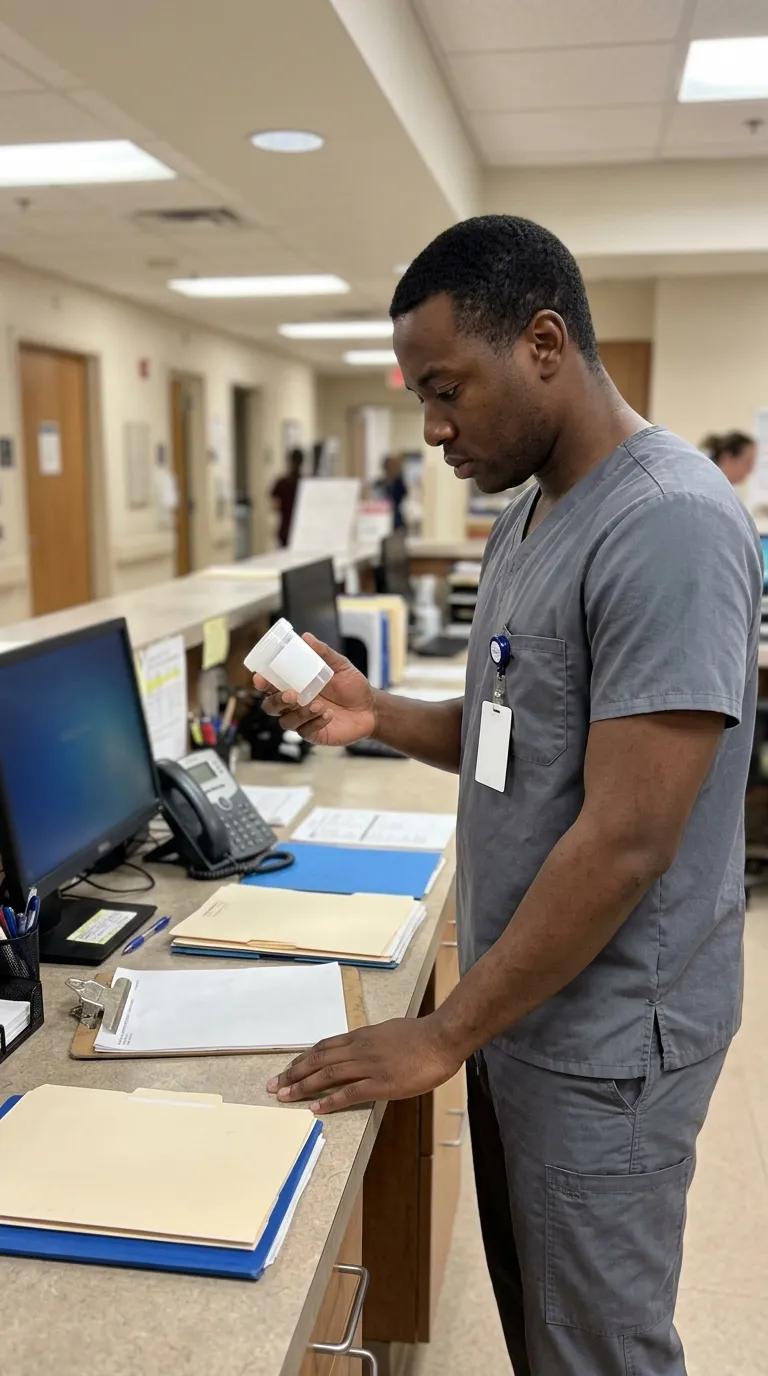
Tests do three jobs: confirm the infection, hunt for the germ, and grade how sick the patient is. Collection order matters as much as results, because one rushed step can spoil the culture that guides treatment.
Cultures Before Antibiotics (Fundamentals)
Antibiotics kill bacteria fast: good for the patient, bad for the lab. A culture drawn after the first dose may grow nothing and leave the team guessing for days, so samples come first whenever the condition allows.
- What it is: sputum culture and sensitivity plus blood cultures, collected before the first antibiotic dose so the organism can still grow
- Key labs/tests: sputum from a deep cough, not saliva; blood cultures per facility protocol, usually two sets from different sites
- Nursing priority: collect cultures first, then give the first dose promptly; cultures never become a reason to delay treatment
CBC, Blood Gas and Oxygen Numbers (Quick Win)
The CBC usually shows a raised white cell count in bacterial infection: the normal adult range is about 4,500 to 11,000 cells per mcL, and bacterial pneumonia often drives it well above that. A normal or low count does not clear the patient; viral pneumonia or a worn-down immune system can keep it flat.
Blood gas results show how the lungs are coping. A PaO2 under 80 mmHg on room air is hypoxemia, and fast breathing blows off carbon dioxide early, giving a respiratory alkalosis. Pulse oximetry tracks saturation between draws, and a lactate of 2 mmol/L or higher warns of building sepsis.
Study tip: read every PaO2 next to the oxygen running: 75 on room air and 75 on 4 liters tell two different stories.
Chest X-Ray and Sputum Clues (Clinical Pearl)
The chest X-ray confirms the diagnosis for most patients. Fluid-filled air sacs show as white patches called infiltrates, and one solid lobe of consolidation points to a bacterial cause. The film lags the patient: it can look worse while the patient improves and may take weeks to clear.
- Key signs: sputum that turns thick, colored or rusty, with rust-colored sputum the classic pneumococcal clue
- Key labs/tests: chest X-ray for infiltrates, repeated only as ordered; sputum charted every shift
- Nursing priority: send the patient to imaging with oxygen and monitoring if the saturation runs low, and report any blood-streaked sputum the same shift
CURB-65 Severity Scoring (High Yield)
CURB-65 turns five quick checks into one score that helps the provider choose the treatment setting: home, a hospital unit, or intensive care. One point each, under a minute to score.
The checks are new Confusion, Urea (BUN over 20 mg/dL), Respiratory rate of 30 or more, Blood pressure (systolic under 90 or diastolic 60 or less), and age 65 or older. Scores of 0 to 1 often mean home treatment, 2 means hospital care, and 3 or more need a higher level of care.
Study tip: run CURB-65 on every pneumonia case study; the score often hides in the choices as the admission decision.
Memory trick: Picture a curb at the hospital door: check Confusion, Urea, Respiratory rate, Blood pressure, and 65 or older before the patient crosses it. One point each; the total points to the level of care.
Nursing Care and Priorities (Clinical Pearl)
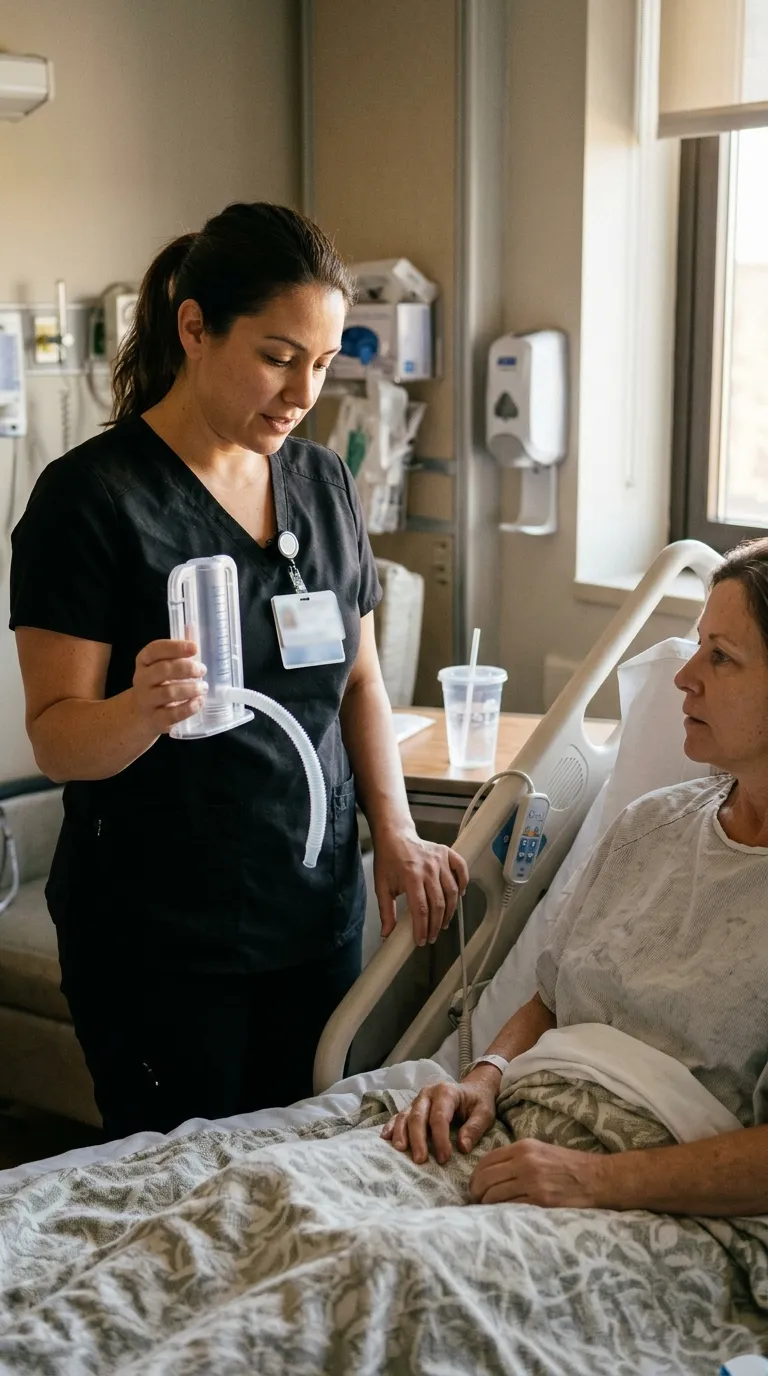
Bedside care follows one order: oxygen in, treat the infection, clear the secretions, then teach habits that keep pneumonia away.
Oxygen and Positioning First (Exam Favorite)
Breathing outranks everything else. A patient who cannot move air cannot wait for paperwork, so the first moves are position and oxygen, then a fresh look at the numbers.
- What it is: the first-response care for any pneumonia patient whose breathing or saturation slips
- Key signs: respiratory rate, saturation and work of breathing, rechecked after every change
- Nursing priority: sit the patient upright or in high Fowler position, give oxygen as ordered, and reassess; when care grows past these basics, a full care plan for pneumonia maps what follows
Antibiotics, Fluids and Fever Care (Med Surg)
Once cultures are drawn, the first dose goes in promptly, and the full course matters: home patients take every dose until the prescription is finished, even when breathing eases by day three. Stopping early lets the toughest bacteria survive and return stronger.
Fluids thin secretions for coughing up. As long as the provider allows it, aim for at least 6 to 10 cups a day, about 1.4 to 2.4 liters, holding back only for a heart or kidney restriction. Fever care: antipyretics as ordered, light covers, and intake watched so fever cannot quietly dehydrate the patient.
Study tip: teach the day-three trap. Feeling better means the medicine is working, not that the infection is gone.
Clearing the Airway and Prevention Teaching (Quick Win)
Recovery is active work. Breathing exercises reopen air sacs the infection collapsed, walking beats bed rest, and the discharge vaccine talk protects next winter. The CDC guide to pneumonia prevention backs the yearly flu shot and the pneumococcal vaccine for at-risk adults. Diabetes raises pneumonia risk too, so these notes pair well with the diabetes nursing notes in the same exam week.
- What it is: the daily recovery routine plus the teaching that prevents a second round
- Key signs: secretions loosening, a stronger cough, and saturation holding steady on less oxygen
- Nursing priority: coach 10 spirometer breaths every hour while awake, deep breathing and coughing every 2 hours, oral care, an early hallway walk, and vaccine teaching before discharge
Where to Start Reviewing
Start with the group matching your weakest spot, not the one that feels easiest. If every pneumonia stem blurred into “give antibiotics”, begin with the sign cluster and red flags, because recognition is what the exam scores first. When the last practice test is graded and your study partner has earned a thank-you, the christmas gifts for nursing students list holds small, clinical-friendly ideas.
Then take the care group to the bedside on your next clinical day: position first, cultures before the dose, spirometer every hour. Fifteen points is one focused evening, and each will meet you again in a case study or at a real bedside. Which of the fifteen will you turn into a flashcard before tonight ends?
For study use only. Always follow your program, your facility’s policy and current drug and lab references.