
Many students can recite the six link names in order like a chant, yet freeze when an exam stem or a real shift asks where to break the chain. Memorizing names is not the same as using them at the bedside. These chain of infection nursing notes turn the chant into a working tool: 14 points that show what each link means, where it shows up during care, and which nursing action cuts it.
Work through the links in order first, then move to the bedside breaks and the patients who need the closest watch. Each point stays in plain words, so the notes serve both unit exams and clinical days.
| Course | Best for | Study time |
|---|---|---|
| Med Surg | Infection control questions on unit exams and the NCLEX | About 20 minutes |
The First Three Links
The chain starts with the germ itself and ends, for this group, with the door it leaves through. The CDC infection control basics lay out this same order, and exams expect it in sequence: agent, reservoir, then portal of exit. Learn these three as a story, not three loose facts, because questions test them in sequence.
The Infectious Agent
Every chain starts with a living germ that can cause disease. Four groups cover almost everything on a med surg unit, and the group matters because it shapes how the germ spreads, how long it survives outside the body, and which precautions stop it.
- What it is: Bacteria, viruses, fungi and parasites are the four agent groups; each one needs a host to live and multiply.
- Key signs: Whether an agent causes disease depends on its type, its numbers and the host it meets, so the same germ can leave one patient well and make another very ill.
- Nursing priority: Name the agent group first on every isolation question, because the group points straight to the route and the precaution that follows.
The Reservoir
The reservoir is the place where the agent lives and multiplies between patients. It is not always a sick person in a bed. People who carry a germ with no symptoms at all can pass it on during ordinary care, which is why precautions never depend on how ill someone looks.
- People, including carriers with no symptoms, are the most common reservoir on a nursing unit.
- Animals, soil, water and food can each hold an agent and bring it to a patient.
- Equipment surfaces, bed rails and shared supplies count as reservoirs when cleaning lapses.
- Standard precautions treat every patient and every surface as a possible reservoir, every time.
The Portal of Exit
To infect the next person, the agent has to leave the reservoir first. That exit door is the portal of exit, and each door pairs with a body fluid or opening that nursing care touches every shift.
- What it is: The portal of exit is how the agent leaves the body: blood, respiratory secretions from coughs and sneezes, the gastrointestinal tract, broken skin and mucous membranes, urine and other body fluids.
- Key signs: One more exit route matters on maternity units: the placenta route, where an agent passes from mother to baby before or during birth.
- Nursing priority: Match gloves, gown and mask to the exit you will meet, and contain secretions and fluids at the source with tissues, dressings and closed drainage.
The Last Three Links
The second half of the chain follows the germ on its trip and into the next person. Transmission questions are exam favorites because each route pairs with one precaution set, and the entry door explains the attention lines, tubes and wounds get.
The Mode of Transmission
Transmission is the trip between exit and entry. Contact spread moves by touch, direct skin to skin or indirect through contaminated objects called fomites. Droplet spread rides larger particles that travel a short distance, about 3 to 6 feet, then fall. Airborne spread uses tiny particles that stay suspended and travel farther. Think of a cough in a waiting room: asthma nursing care shows why droplet spread lands hardest on airways that are already vulnerable.
- Contact is the most common route in hospitals, and hands and gloves carry it.
- Droplet precautions fit illnesses such as influenza, where particles fall within about 3 to 6 feet.
- Airborne precautions fit tuberculosis, measles and chickenpox, which call for a fit-tested respirator and a special room.
- Vehicle spread travels in contaminated food, water or medication, and vector spread arrives by insects such as mosquitoes and ticks.
The Portal of Entry
The portal of entry is the door the agent uses to get into the next host. It mirrors the exit list almost exactly, with one addition students forget: care itself can cut new doors into a patient.
- What it is: Agents enter through mucous membranes, by being inhaled into the lungs, by being swallowed, or through broken skin.
- Key signs: IV lines, urinary catheters and surgical wounds are entries made by care itself, and each one stays open as long as the device stays in.
- Nursing priority: Guard every entry: keep dressings intact, keep closed drainage closed, and question any line or tube that no longer has a clear job.
The Susceptible Host
The last link is the person the agent finally meets. A susceptible host is someone whose defenses are too weak, too young, too old or too stressed to stop the agent. Diabetes is the worked example to remember: high blood sugar slows white cells and wound healing, so a small skin break can become a serious infection.
- Age at both ends raises risk: infants with new immune systems and older adults with slower ones.
- Chronic disease, led by diabetes, plus medicines that suppress immunity, lower the guard further.
- Poor nutrition, broken skin and invasive devices each open another way in.
- Stress and exhaustion wear defenses down, in patients and in the nurses caring for them.
Memory trick: Picture a bicycle chain. The germ’s trip needs every link in place: agent, reservoir, exit, trip across, entry and host. Remove one link anywhere and the chain cannot turn, so no infection starts.
Breaking the Chain at the Bedside
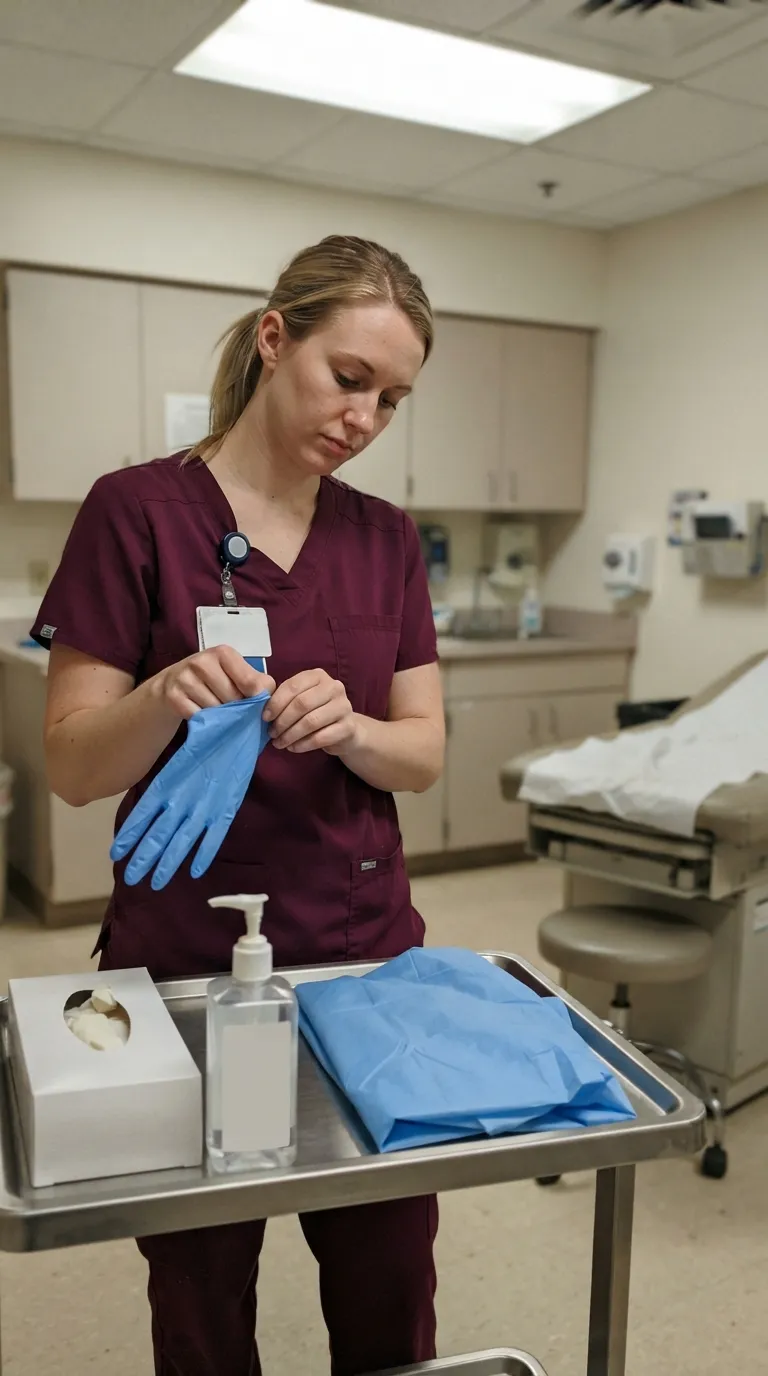
Knowing the links earns exam points; breaking them protects real patients. The four points in this group are the daily habits that cut the chain during ordinary care. These plain-word notes follow the same notes system as nursing notes taking tips that keep study pages short, ordered and easy to review the night before an exam.
Hand Hygiene First
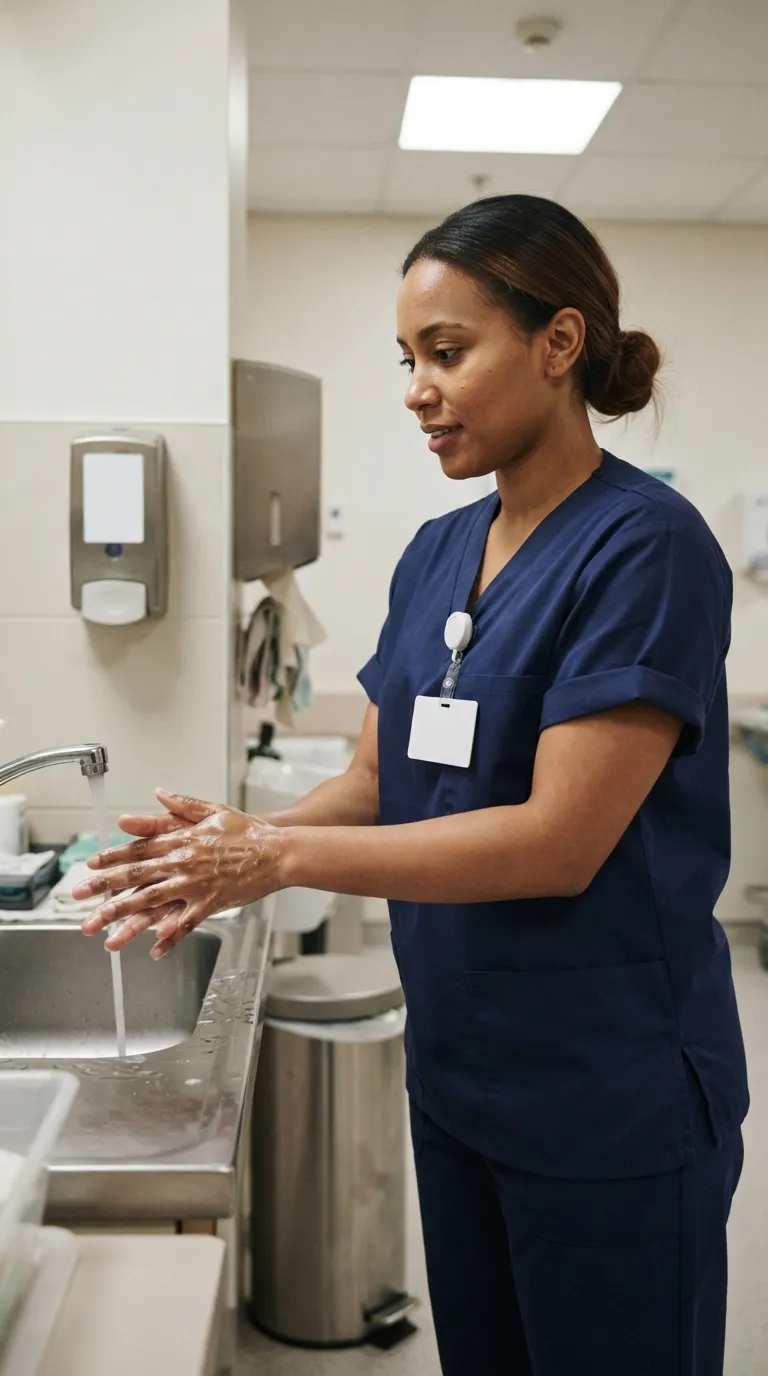
If you keep only one habit from this whole post, keep this one. Hand hygiene is the single most effective way to break the chain, because hands touch the reservoir, the exit, the trip and the entry in almost every task.
- What it is: Clean hands with soap and water or an alcohol-based rub, per facility policy, at every key moment of care.
- Key numbers: The key moments are before and after patient contact, after glove removal, after body fluid contact and before aseptic tasks such as dressing changes or line care.
- Nursing priority: Clean hands even when gloves were worn, because gloves tear, leak and pick up germs while they come off.
PPE Matched to the Task
Personal protective equipment only works when it matches the task in front of you. Gloves, gown, mask and eye protection are chosen for the fluid risk of the job, not worn by habit for every job. Too little leaves you exposed; too much wastes supplies and still misses the point.
- Standard precautions apply to every patient, no matter the diagnosis or how well the patient looks.
- Add transmission-based precautions on top, chosen by the route the organism travels.
- Put equipment on before the task and take it off in the order your facility teaches, then clean hands.
- Change gloves between patients and between dirty and clean tasks on the same patient.
Cleaning, Disinfection and Sterile Technique
Three words that students swap on exams do three different jobs on surfaces and instruments. The difference is how many germs each method removes or kills, and the stakes decide which one a task demands.
- What it is: Cleaning removes dirt and many germs physically with friction and detergent, before anything stronger can work.
- Key signs: Disinfection kills most germs on surfaces but not every spore, while sterilization destroys all microbes including spores and is used for instruments that enter sterile tissue.
- Nursing priority: Never skip cleaning to jump straight to disinfection, because dirt shields germs from the chemical meant to kill them.
Safe Sharps and Waste Handling
A used needle is a portal of entry waiting for a hand. Sharps safety is a short routine with no shortcuts, and it protects everyone who handles waste after you.
- Never recap a used needle, not even once, and never bend or break it by hand.
- Activate the safety device right after the injection, using the method the device was built for.
- Drop the sharp straight into the sharps container at the point of use, before you carry it anywhere.
- Keep containers upright, below eye level, and replace them before they overfill.
When the Host Is Vulnerable
The host link decides who needs the closest watch. New mothers sit high on that list while a newborn with a brand-new immune system lies beside them, a risk picture that maternity drug notes also flag when they cover care right after birth. The four points here cover immunity, natural defenses, isolation by route and the highest-risk patients.
Vaccination Builds the Wall
Vaccination breaks the chain at the host link, before any exposure happens. A vaccine trains the immune system to meet an agent fast, so the trip ends at the door instead of starting an illness.
- What it is: Vaccines build immunity ahead of exposure, protecting the patient who receives one and the patients around that person.
- Key signs: Staff vaccines are part of the same wall: flu and hepatitis B shots for nurses protect patients who cannot be vaccinated or whose immunity stays weak.
- Nursing priority: Check vaccine status on admission for high-risk patients and teach that a vaccine prevents illness rather than treating one already started.
Skin, Nutrition and Rest Defenses
Long before vaccines and gloves, the body guards itself. Intact skin and mucous membranes form the first wall, normal flora crowd out invaders, stomach acid kills many swallowed germs, and the cough and sneeze reflexes push particles back out of the airway.
- Keep skin intact and dry: moisture and pressure open the first wall to germs.
- Sleep and nutrition keep immunity working, so rest and protein are infection care, not extras.
- Treat every break in the skin as a portal of entry until it closes.
- Teach patients the same defenses: hand hygiene, wound cover and rest during illness.
Isolation Precautions Match the Route
Isolation is not one setting. The precaution set follows the organism and the way it travels, and it always sits on top of standard precautions, never instead of them.
- What it is: Contact, droplet and airborne precautions are chosen by how the organism travels: touch, short-range particles, or tiny particles that stay in the air.
- Key signs: The sign on the door names the route, the equipment to wear and whether the door stays closed, so read it before every entry, not just the first.
- Nursing priority: When the route is unclear, start with the precaution set that fits the symptoms and ask infection prevention to confirm, rather than waiting unprotected.
Watch the Highest-Risk Patients
Some patients need the chain watched on every shift. Newborns and older adults anchor the list, joined by post-surgical patients, patients with diabetes or immune suppression, and anyone carrying an invasive line or tube.
- Check lines, tubes and wounds on every round for redness, swelling, pain or new drainage.
- Watch temperature and white cell trends, not single values, for the earliest infection clues.
- Report a new fever, a rising heart rate or fresh confusion in a high-risk patient the same shift.
- Teach family visitors the same rules: clean hands on entry and stay home while ill.
Which Part Trips You Up?
Most students lose points on the same two links: the trip across and the door in. If those two still blur together, go back to Group 2 and rebuild them with one patient story each, a cough for droplet spread and a catheter for an entry made by care.
Then test the host link against a patient you already know well: the diabetes nursing notes show how one chronic condition weakens several defenses at once, which is why that patient group sits on every high-risk list. Which link will you redraw first tonight: the trip, the door in, or the host at the end?
For study use only. Always follow your program, your facility’s policy and current drug and lab references.