
The instructor sets a manikin’s saturation low, lays six devices on the tray, and asks which one goes on first. There is no single right answer, only a right match between the patient and the device. These 14 notes walk through oxygen delivery devices one at a time, with the flow rate, the FiO2 range and the one check that keeps each device safe.
Work through them in order and the pattern gets simple: low flow for small needs, masks as needs climb, precise devices when the concentration must be exact, and pressure or high flow when plain oxygen is not enough. By the last note you will know what to reach for, what to set, and what to recheck five minutes later.
Nasal Cannula
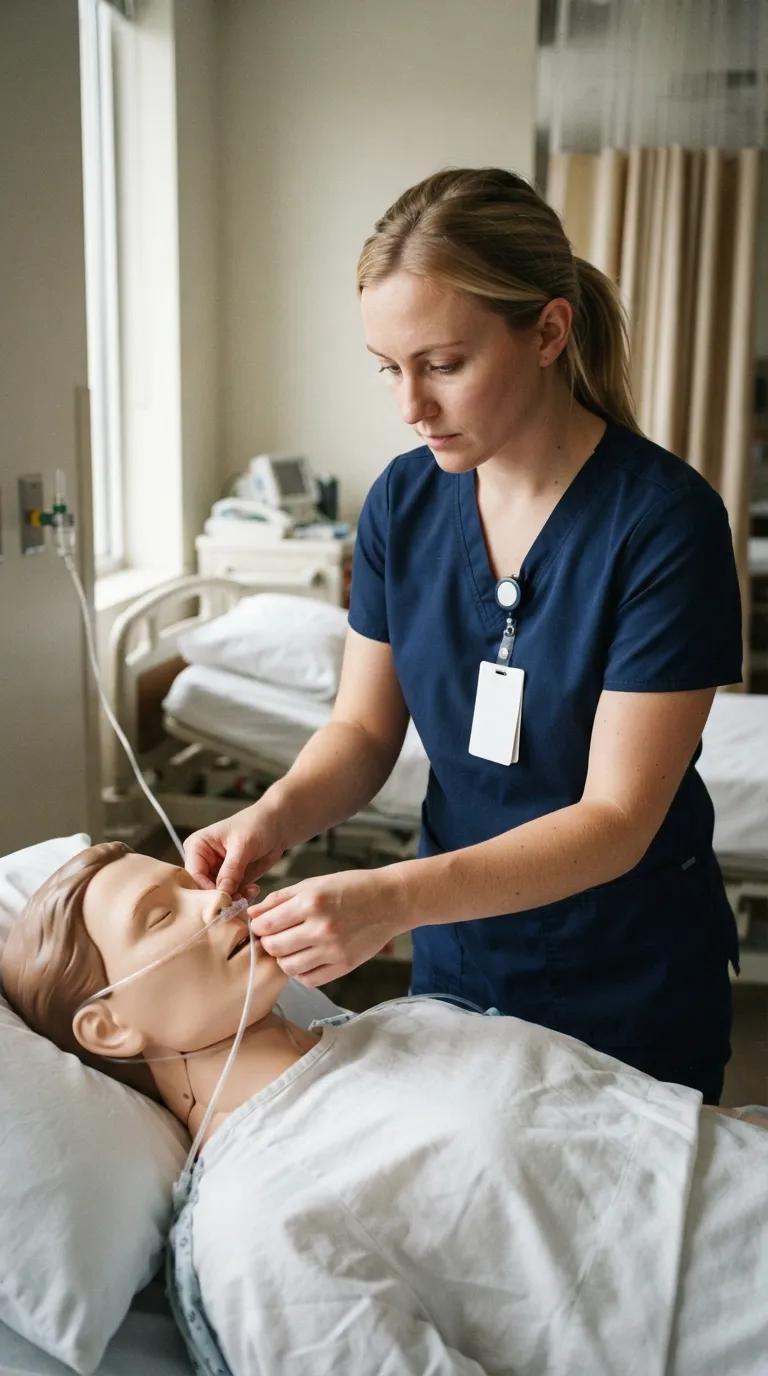
The cannula is where most oxygen therapy starts. Two short prongs sit at the nostrils and the patient breathes a mix of piped oxygen and room air, so the dose stays gentle and the patient can still talk, eat and cough with it on.
- Flow: 1 to 6 L/min. Higher flows dry the nose and add nothing, because room air still does most of the mixing.
- FiO2: about 24 to 44 percent. Each liter above room air adds roughly 4 percent.
- Comfort: above 4 L/min, add humidification so the gas does not dry the nose and throat.
- Skin: check behind the ears and inside the nostrils each shift, and pad the tubing where it rubs.
Simple Face Mask
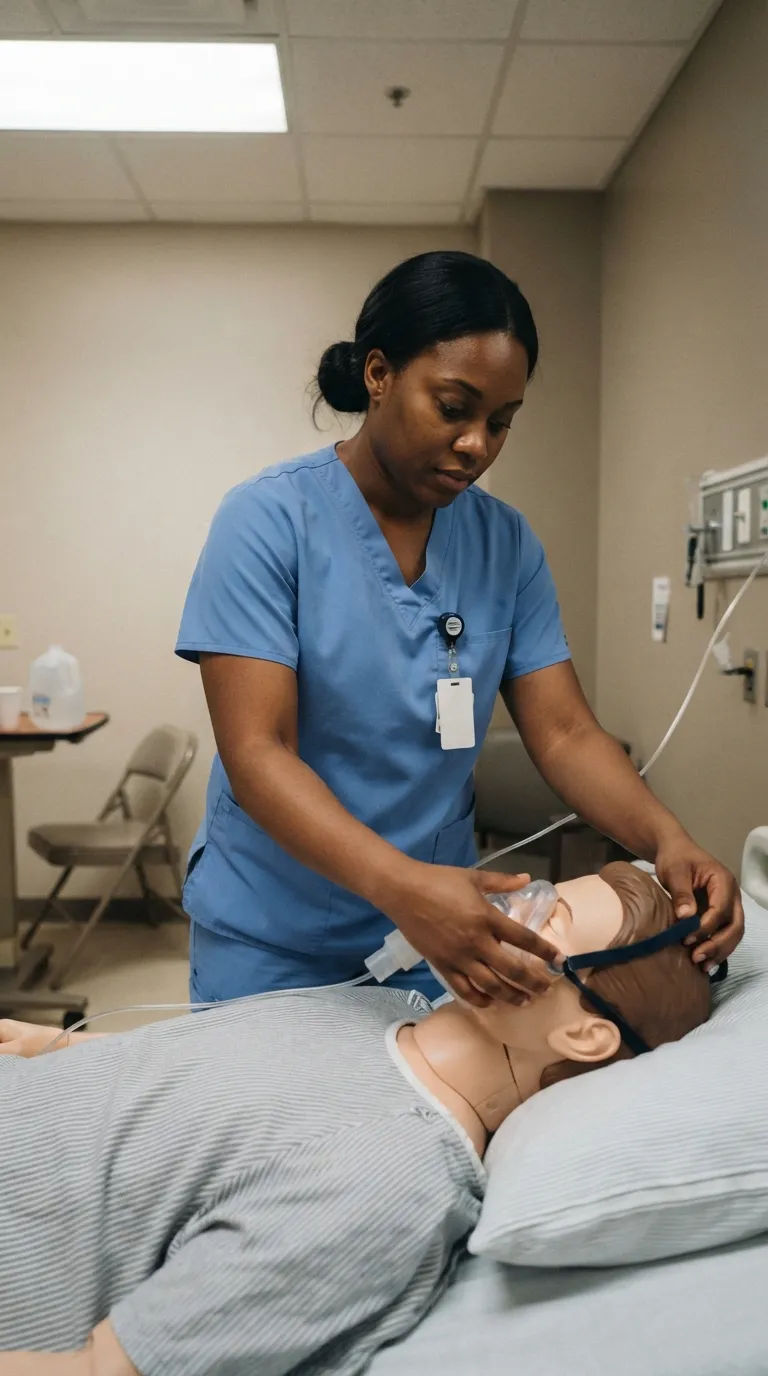
A simple mask covers the nose and mouth and holds a small pool of oxygen in front of the face. It runs at 5 to 10 L/min and delivers about 40 to 60 percent oxygen, a step up for a patient who needs more than a cannula can give but does not need a sealed system.
Never let the flow drop below 5 L/min: the mask traps exhaled air, and too little fresh flow lets carbon dioxide build up inside it. The concentration is rough rather than exact, so reassess after fitting: breathing, saturation, and the heart behind the breathlessness, since new gallops or murmurs belong to the heart sounds picture. Lift the mask for meals and swap back to a cannula.
Partial Rebreather Mask
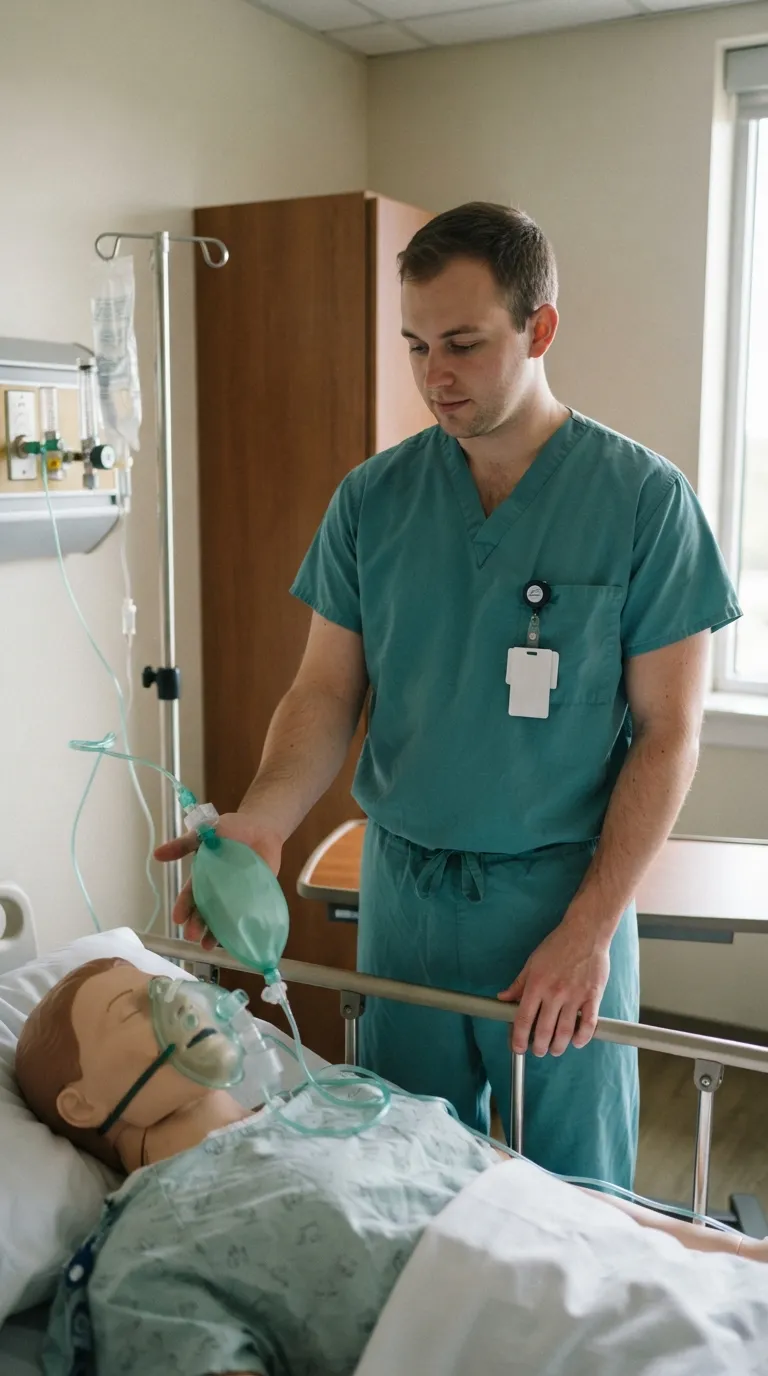
This mask adds a reservoir bag. The first part of each breath out, air from the dead space that never reached the lungs and is still rich in oxygen, flows back into the bag and is breathed again, which lifts the concentration without a tighter seal.
- Flow: 6 to 11 L/min, high enough to keep the bag working through the whole breath.
- FiO2: about 35 to 60 percent, between a simple mask and a non-rebreather.
- Bag check: the bag should stay partly inflated and never pull flat against the mask as the patient breathes in.
- If it flattens: raise the flow, then check the tubing and connections for a leak or a kink.
Non-Rebreather Mask
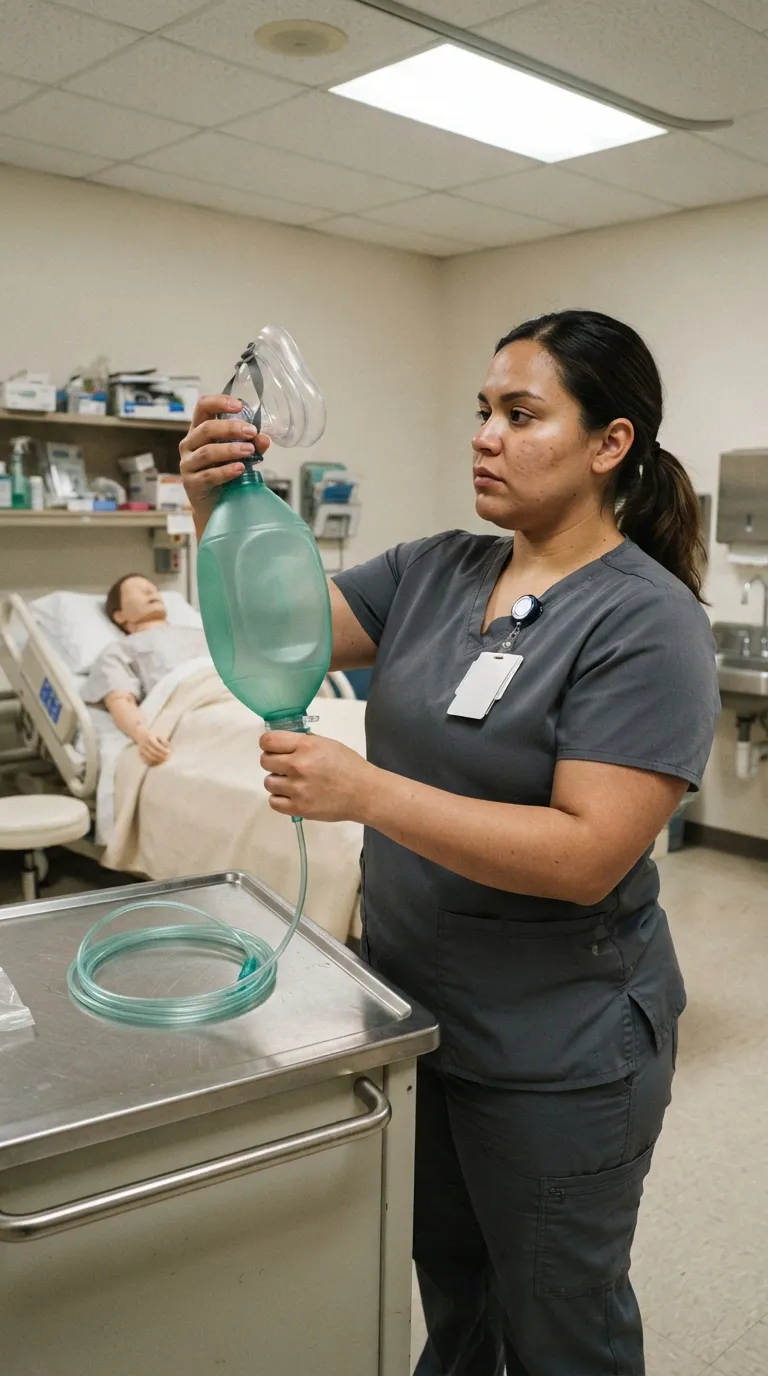
The non-rebreather is the strongest of the simple masks, used when a patient needs a lot of oxygen fast. One-way valves between the bag and the mask keep exhaled air out of the bag, and valves over the side ports limit room air, so the patient breathes nearly pure oxygen from the reservoir.
Run it at 10 to 15 L/min for an FiO2 of about 80 to 95 percent. Prime the bag with oxygen before the mask goes on, and keep it at least two-thirds inflated. Never leave one on a patient with the oxygen turned off: the valves that raise the concentration can block fresh air.
Venturi Mask
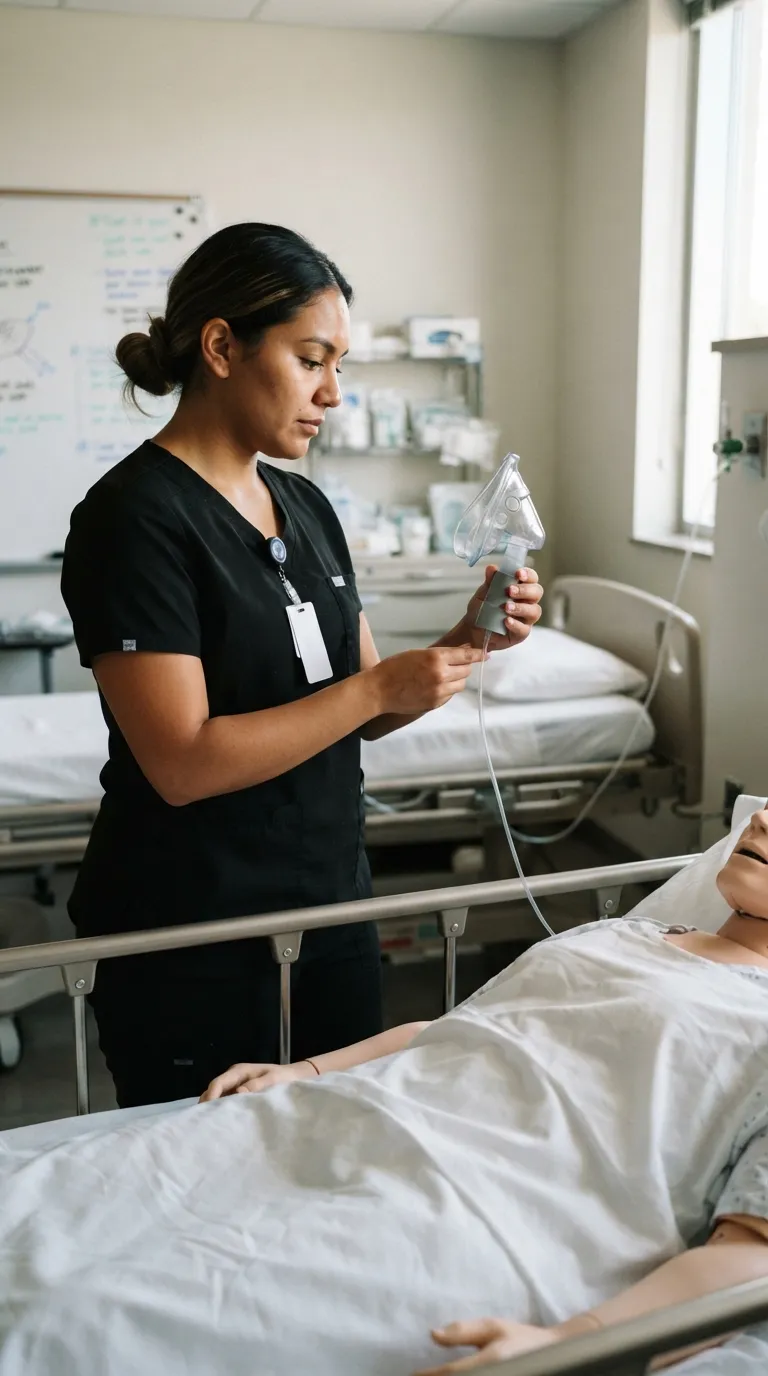
The Venturi mask mixes piped oxygen with room air pulled through a sized opening, and that fixed mixing makes it the most precise device on this list. When your study tips for clinicals say to learn one device cold, this is the one instructors reach for.
- FiO2: about 24 to 60 percent, set by the color coded adapter or the dial on the mask.
- Flow: set the rate the chosen adapter calls for; the total flow at the face is higher than the dial reading.
- Ports open: keep the entrainment openings clear of bedding, gowns and hands, or the mix changes.
- Best fit: the device of choice when the concentration must stay exact, classically for a patient with COPD.
NCLEX tip: when an exam stem names COPD and asks which device to choose, pick the one that controls the concentration exactly. Precision beats power whenever the question worries about carbon dioxide retention.
Face Tent

A face tent is a soft, open shell that sits under the chin and showers the face with oxygen rich mist. It suits patients who cannot tolerate anything strapped over the nose and mouth: facial burns, facial trauma, jaw surgery, or a frightened patient who keeps pulling a mask off.
Because the shell is open, room air mixes freely and the FiO2 is only roughly 28 to 50 percent. The tent delivers humidity well, which soothes injured airways, but the number on the flowmeter means less here than anywhere on the list: judge this device by the saturation reading and the patient’s breathing, not by the dial.
Tracheostomy Collar
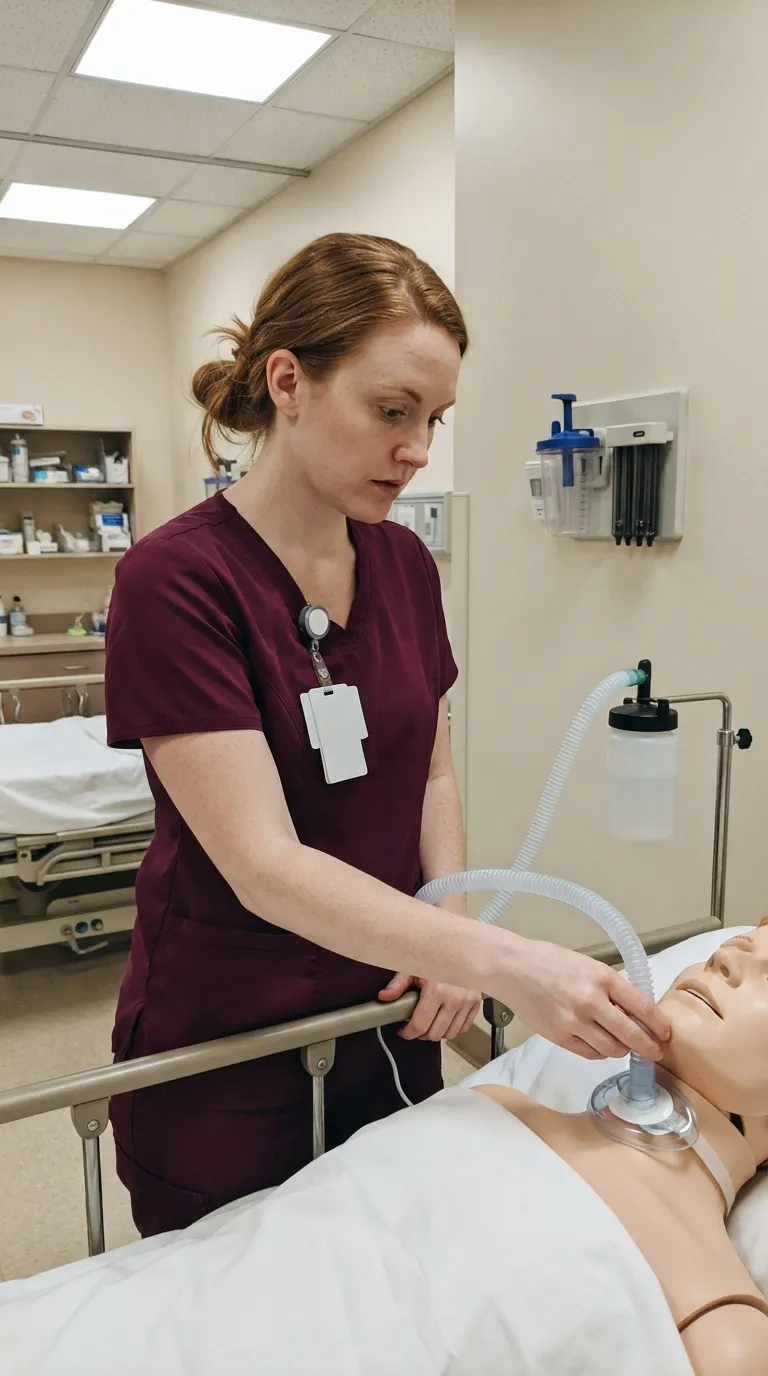
The collar is a small dome that fits over a tracheostomy tube and delivers humidified oxygen right at the stoma. Trach care sits on every skills check-off list, right beside the foley catheter steps, because both punish a skipped detail. The upper airway that warms and filters air is bypassed here, so the gas must arrive already moist.
- Flow: commonly 4 to 10 L/min, set to the ordered FiO2 and the patient’s saturation.
- Humidity: keep the humidifier source filled; dry gas thickens secretions and can plug the tube.
- Water trap: empty water that pools in the tubing away from the stoma, never toward it.
- Watch: check the skin around the stoma and keep suction at the bedside for a mucus plug.
T-Piece Adapter
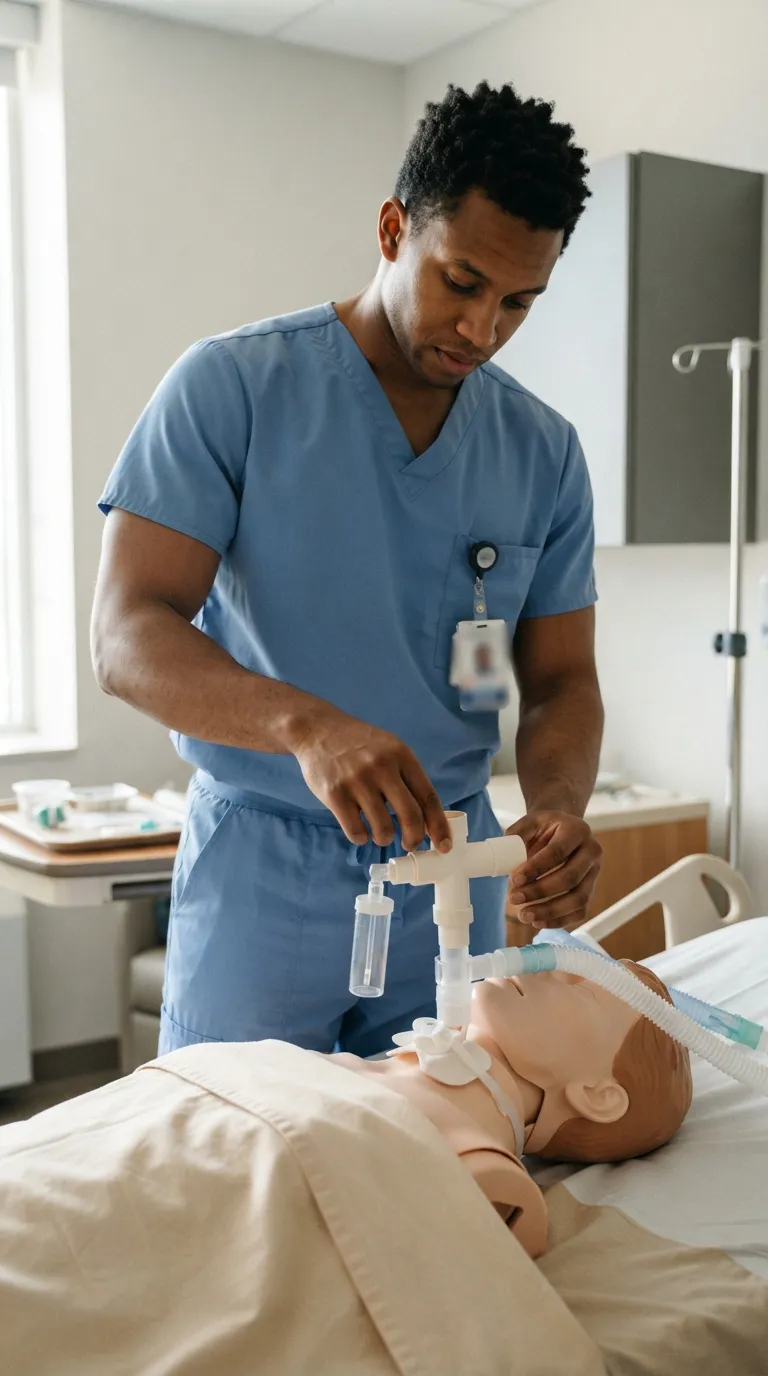
The T-piece, also called a Briggs adapter, snaps onto a tracheostomy or endotracheal tube. Oxygen flows across the top of the T while the patient breathes through the tube, and a short length of wide tubing on the open arm acts as a small reservoir.
Flow and FiO2 are set by the order and read off the blender or flowmeter, from plain room air all the way up to full oxygen. Keep the reservoir arm open, never capped, and drain water that condenses in the tubing away from the airway. Breathing trials off the ventilator often run on a T-piece, so watch fatigue as closely as saturation.
Oxygen Hood
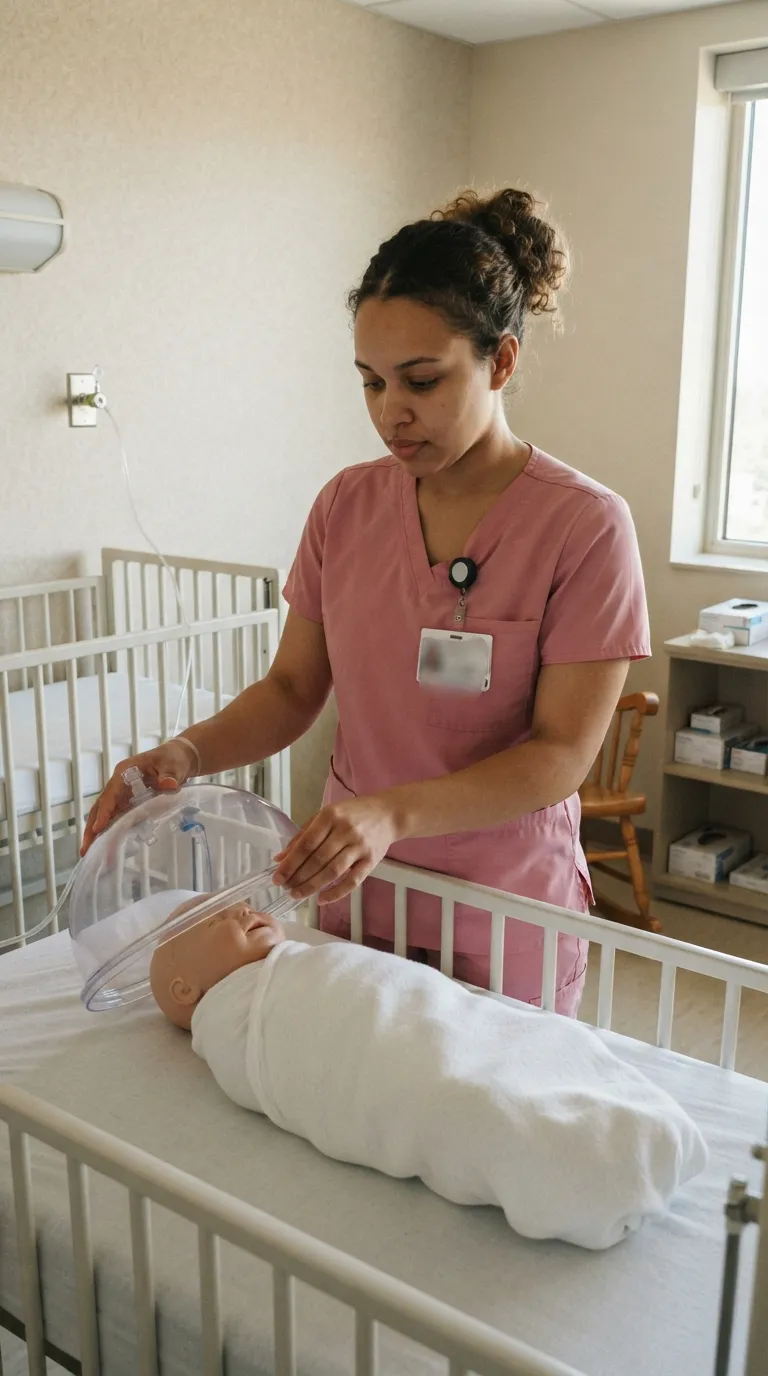
For an infant who needs oxygen, a clear hood settles over the head while the body stays tucked warm under blankets outside it. The hood holds a steady pool of oxygen around the baby’s face without anything strapped on, and it is the standard delivery method for young infants.
- Flow: at least 7 L/min, commonly 10 to 15, so carbon dioxide is washed out of the hood.
- FiO2: up to about 80 to 90 percent, confirmed by an analyzer sampling the air inside the hood.
- Fit: the hood rim should clear the neck and shoulders without rubbing, and the baby stays covered and warm.
- Never: never let the flow fall while the hood is on; exhaled gas collects inside it fast.
Bag-Valve Mask
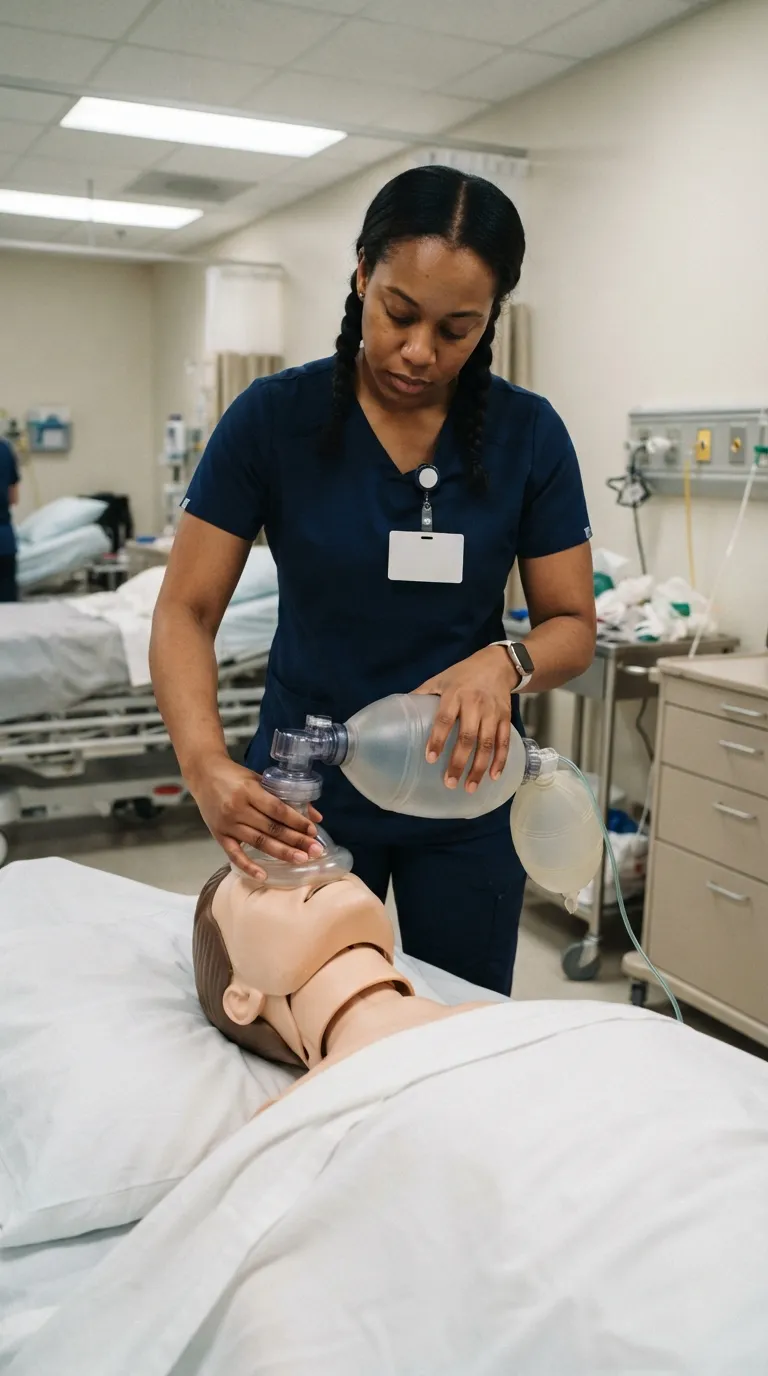
The bag-valve mask is the emergency device: a self-inflating bag, a one-way valve and a mask, squeezed by hand for a patient who is not breathing or not breathing enough. With a reservoir attached and oxygen at 15 L/min, it delivers close to 100 percent, the highest concentration on this list.
Seal first, squeeze second: a leaking mask wastes every squeeze, so use both hands on the mask when a second rescuer can squeeze the bag. Squeeze only enough to see the chest rise, over about a second. It belongs to the same emergency family as the chest tube facts: airway first, then the tube skills that keep air moving.
High-Flow Nasal Cannula
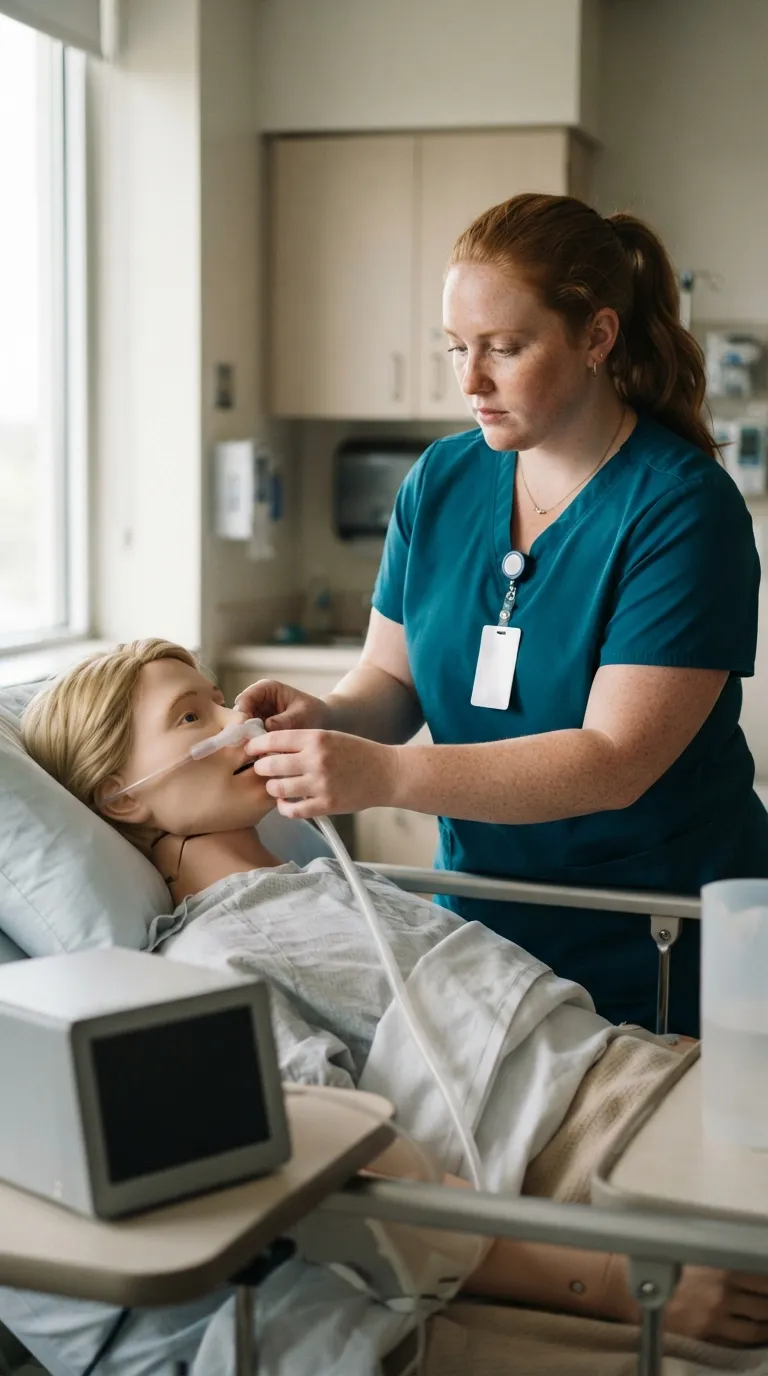
High-flow therapy pushes heated, humidified oxygen through wide nasal prongs at rates no ordinary cannula can touch. Because the flow can meet or beat the patient’s own breath in, the concentration stays close to what the device is set to deliver, even when the patient breathes hard.
- Flow: up to about 60 L/min, set separately from the FiO2 on the device.
- FiO2: dialed in directly, up to 100 percent, and steadier than a mask at the same setting.
- Why it helps: the stream washes exhaled gas out of the upper airway and adds a small positive pressure effect.
- Fit: prongs fill about half the nostril; the heat and humidity keep high flow comfortable for hours.
CPAP and BiPAP
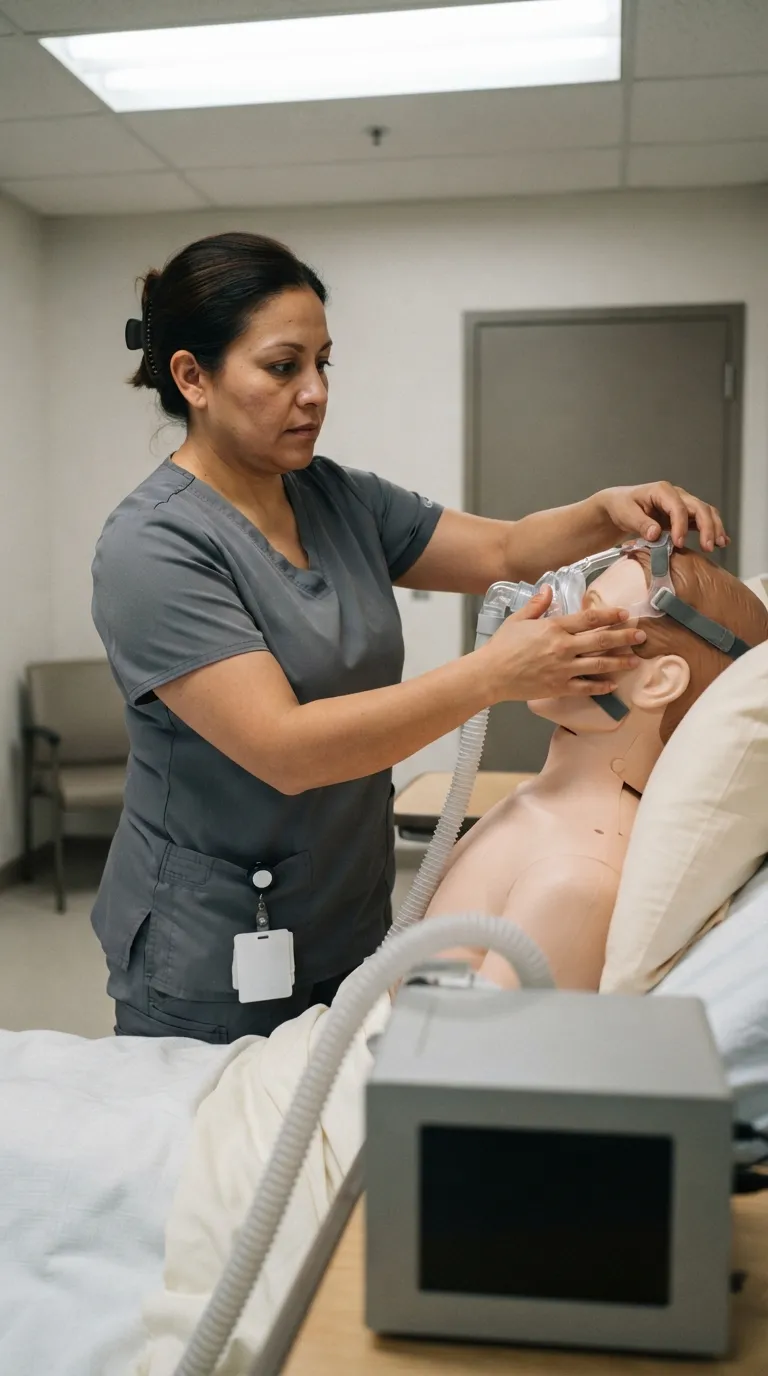
These two deliver oxygen under steady positive pressure through a tight mask. CPAP holds one pressure through the whole breath cycle; BiPAP pushes harder on the breath in and eases off on the breath out. Both keep small airways and air sacs open, which is why they shine in sleep apnea and in the fluid-loaded lungs of acute heart failure.
Watch the skin at the seal, the bridge of the nose above all, and report a mask that must be overtightened to hold. Never leave a confused, vomiting or drowsy patient on one unattended: a patient who cannot protect the airway does not belong behind a sealed mask. Fluid decisions run alongside these devices, and the IV fluids notes keep that picture straight.
Home and Portable Oxygen
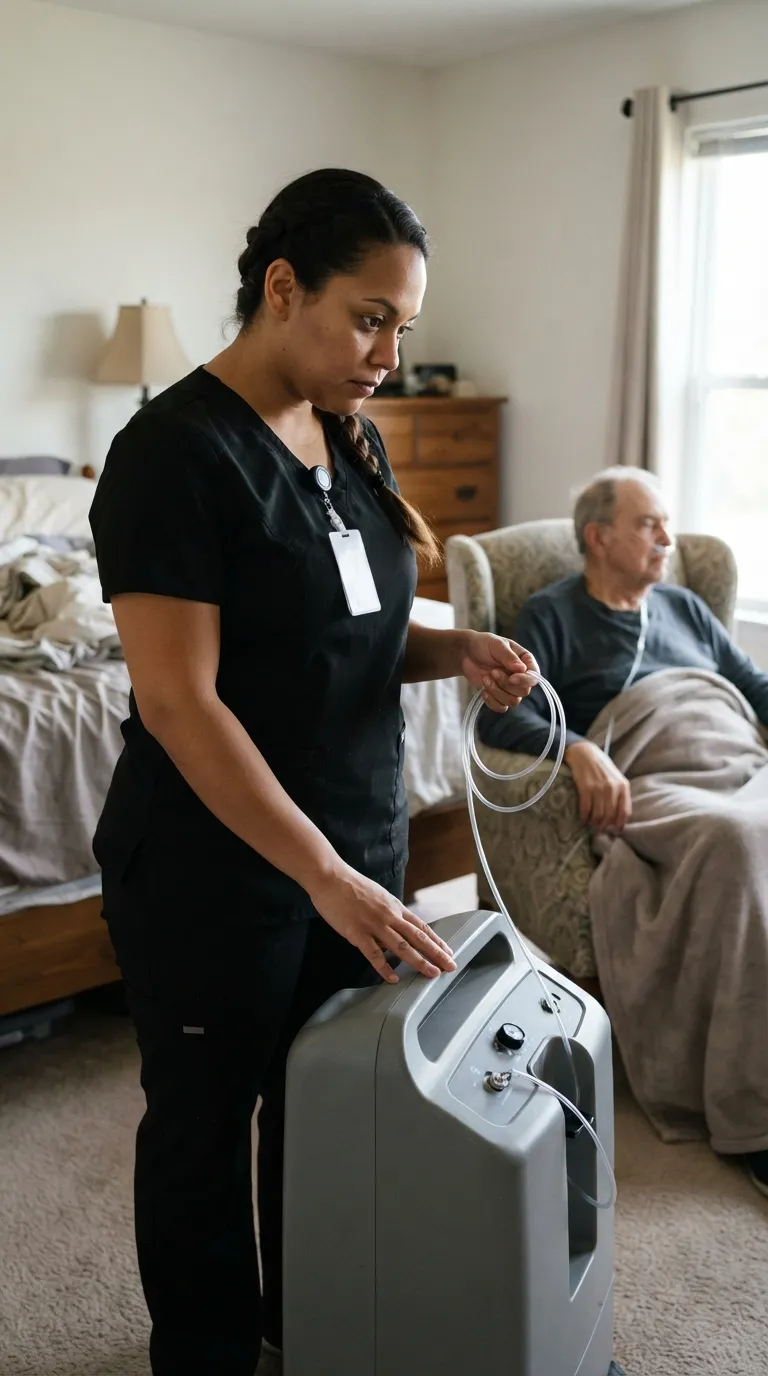
At home, the device is only half the setup; the source matters too. A concentrator pulls oxygen from room air and runs on electricity, cylinders store it compressed in green tanks, and liquid systems store it cold in a base unit with a portable flask to carry.
- Cylinders upright: secure every tank standing, chained or in a stand; a falling tank can shear its valve.
- No oil or grease: keep both off the fittings; oxygen makes fires start faster and burn hotter.
- Flame distance: no smoking and no open flame near any source; post the warning and mean it.
- Backup plan: know the reserve cylinder, its running time, and what to do when the power fails.
Titration, Monitoring and Fire Safety
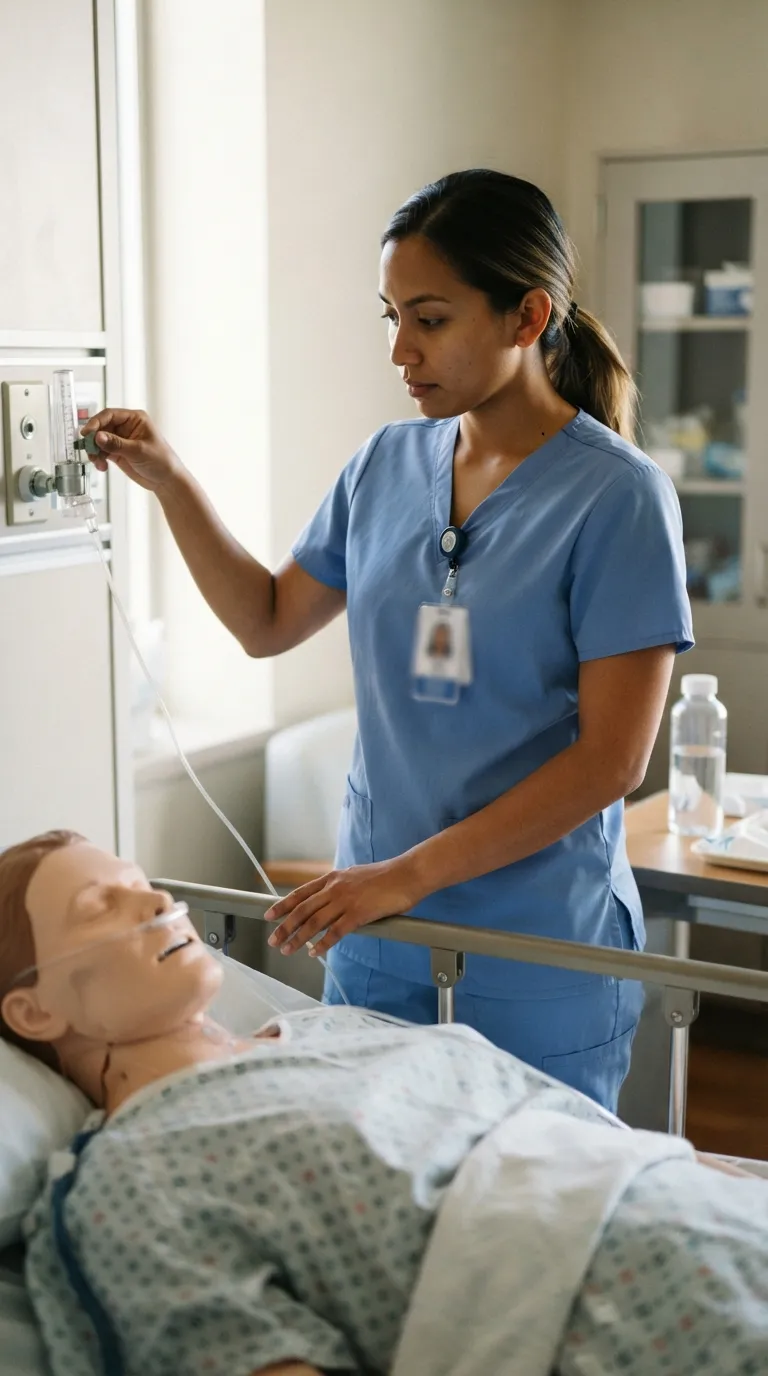
Whichever device is running, the work is the same: titrate to the target on the order. For most adults that target is a saturation of 94 to 98 percent. For a patient at risk of holding on to carbon dioxide, the order often sets 88 to 92 percent, and that lower range is still a target, not a reason to fear oxygen.
Never withhold oxygen from a patient who is struggling to breathe: give it, then titrate down while you monitor. Recheck the rate, the effort, the saturation and the skin under prongs or straps, and pair the numbers with a fresh listen to lung sounds. Close every setup with fire safety: no smoking near oxygen, and real distance from open flames and sparks.
Before Your Check-Off
One last tip: learn every device as three numbers and one check. The flow range, the FiO2 range, the saturation target, and the one thing that goes wrong first: a flat bag, a covered port, a dry nose, a loose seal. If you can say those four out loud for a device, you can run it safely.
For the practical study move: line the devices up on the skills lab table in order of FiO2, weakest to strongest, and talk through one patient for each. Ten minutes of saying numbers out loud beats an hour of rereading them in silence.