
It is 3 a.m. on a med-surg unit when a patient decides the bathroom cannot wait for the call light to be answered. He swings his legs over the rail, stands on a numb foot, and the nurse finds him on the floor beside the bed, lucky to have only a bruise. Most hospital falls follow this same script, which is why fall prevention is a scored, charted part of every shift, not a poster on the wall.
These 18 points cover the whole routine in order: how risk is scored, what gets set up at the bedside, which medicines and blood pressure changes raise the danger, and what to do in the first minutes after a fall happens anyway.
Score the Risk With Morse
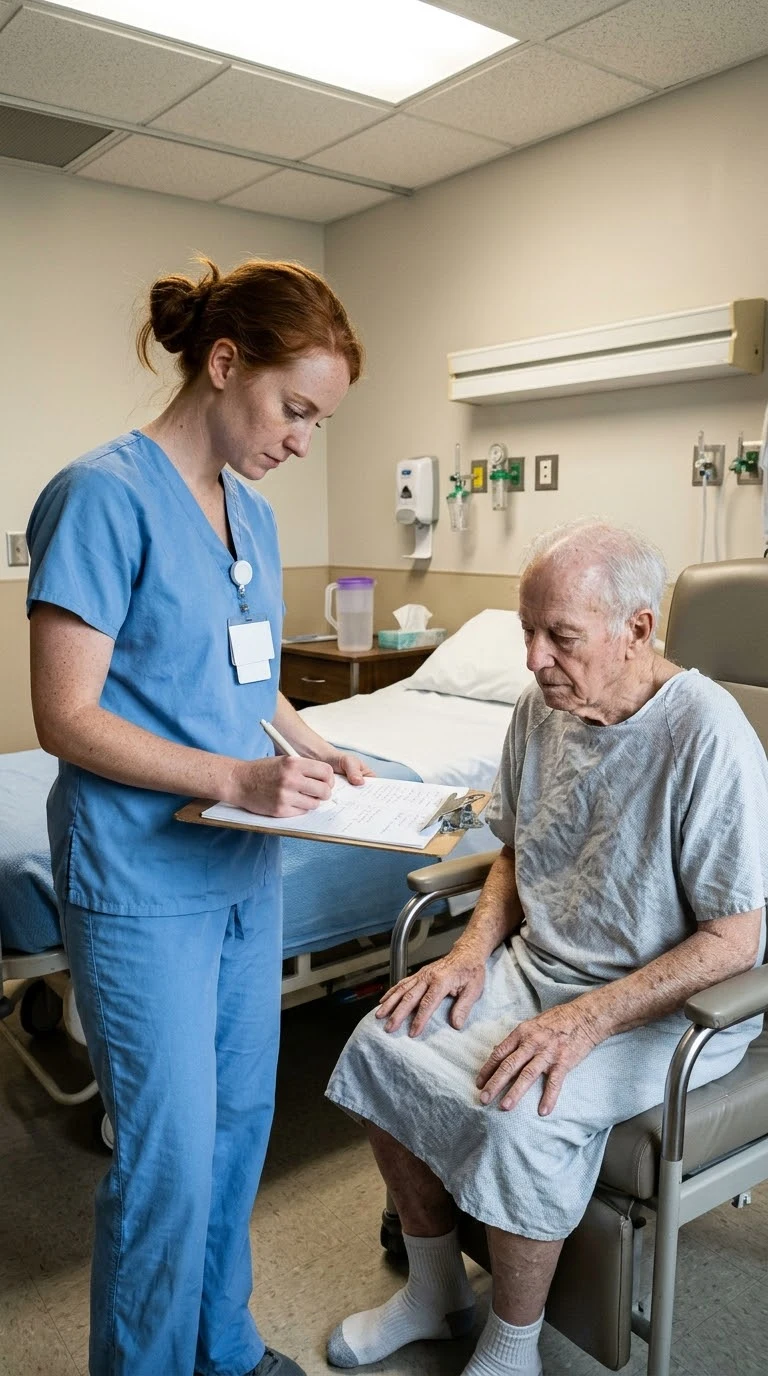
The Morse Fall Scale turns a quick bedside assessment into a number the whole team can act on. The nurse scores six factors from the chart and the bedside, and the total sets the supervision level for that shift.
- Six factors: history of falling, a secondary diagnosis, the ambulatory aid in use, an IV line or heparin lock, the patient’s gait, and mental status.
- The range: scores run from 0 to 125, so small changes move the total fast.
- Common bands: many facilities read under 25 as low risk, 25 to 50 as moderate, and over 50 as high.
- Facility first: bands differ by workplace, and your facility’s own cutoffs always rule.
Reassess Every Shift and After Changes

A Morse score is a snapshot, not a label for the whole admission. A patient who scored low on Monday can be a different risk by Tuesday, so the standard is a fresh score every shift, and again after anything that changes the picture.
A new sedative, a return from surgery, one dizzy episode in the hallway, or a new IV line all change the total. Score again, document the new number, and act on it the same shift: more rounding, a room closer to the desk, or a sitter, whatever the new band calls for. Hand the new score over at handoff.
Keep the Call Light in Reach
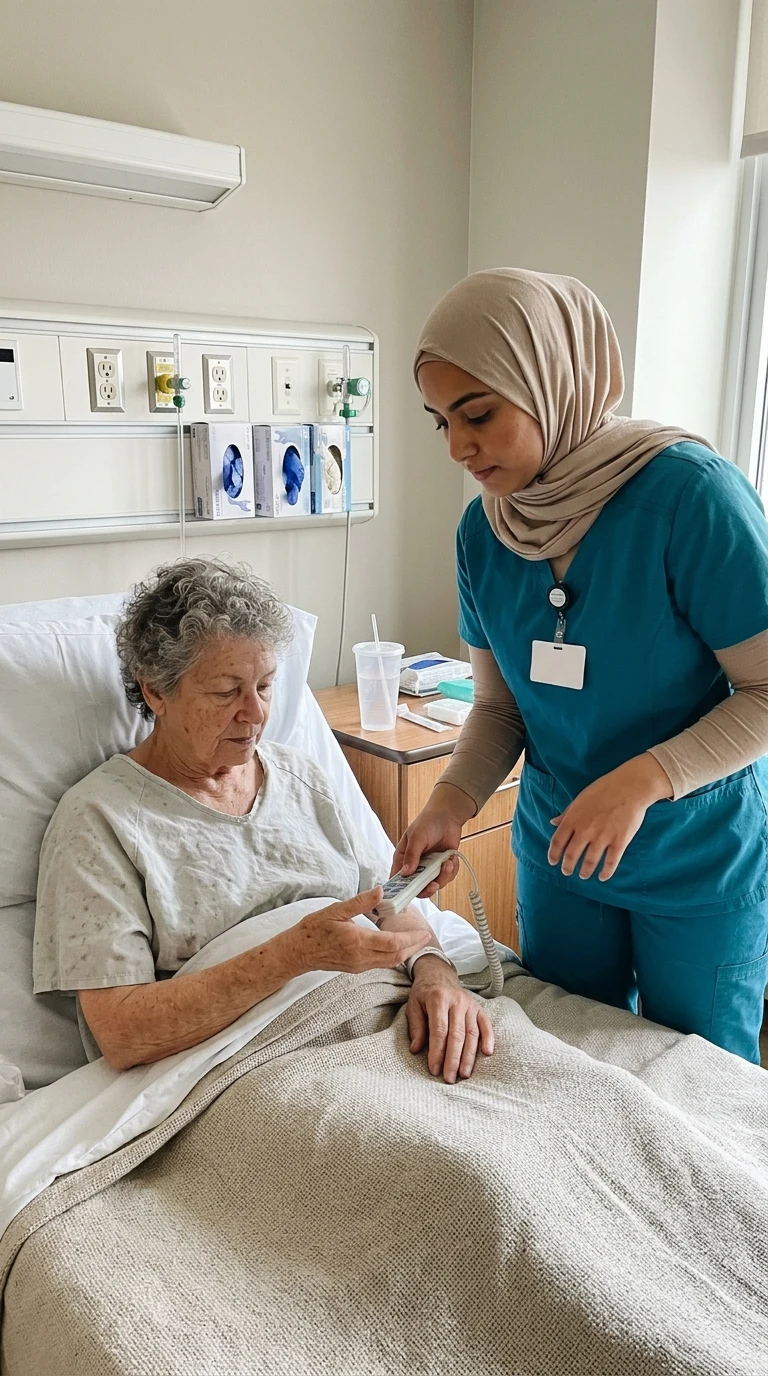
Patients rarely fall while a nurse is watching. They fall in the minutes after deciding they cannot wait, so the call light has to be where a hand lands without thinking: clipped at the pillow or resting on the bed where the patient’s hand actually lies.
- Place it by the hand: the cord or remote sits on the side the patient favors, not hooked on the far rail.
- Test it: press it during setup rounds and confirm the signal reaches the desk.
- Teach the call: show the patient how to call before standing, at admission and every shift change.
- Answer fast: a promptly answered light teaches the patient that calling works.
Bed Low, Brakes Locked
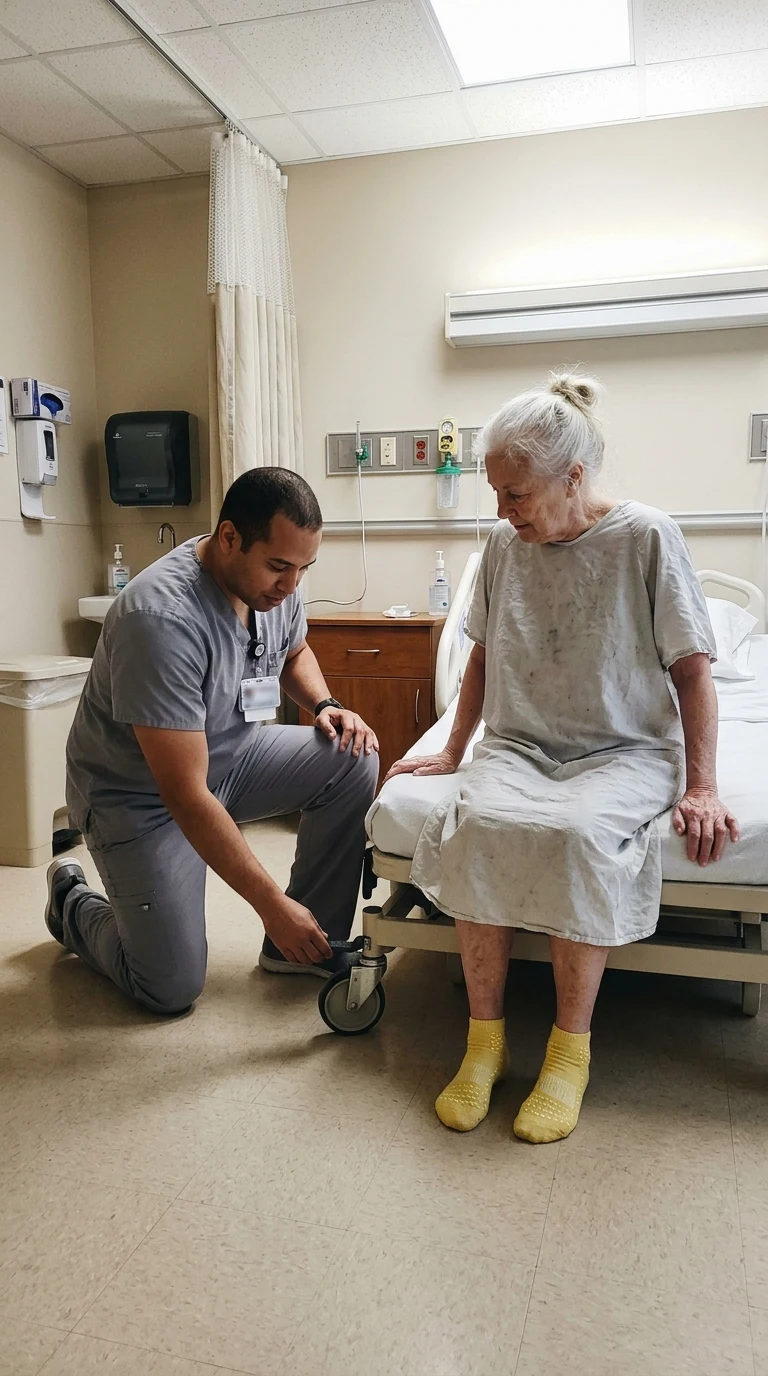
Most inpatient falls happen in the patient’s own room, and most of those start with getting out of bed. The setup that prevents them takes seconds: the bed at its lowest height, so feet land flat instead of dropping, and the wheels locked, so the bed cannot roll away as the patient pushes up.
Set the top side rails per facility policy, and place the bedside table within easy reach so nothing tempts a long stretch. A low bed also shortens the drop when a fall does happen, which softens the injury. Recheck the setup after housekeeping, after transport, and every time you leave the room.
Non-Skid Socks and Real Shoes
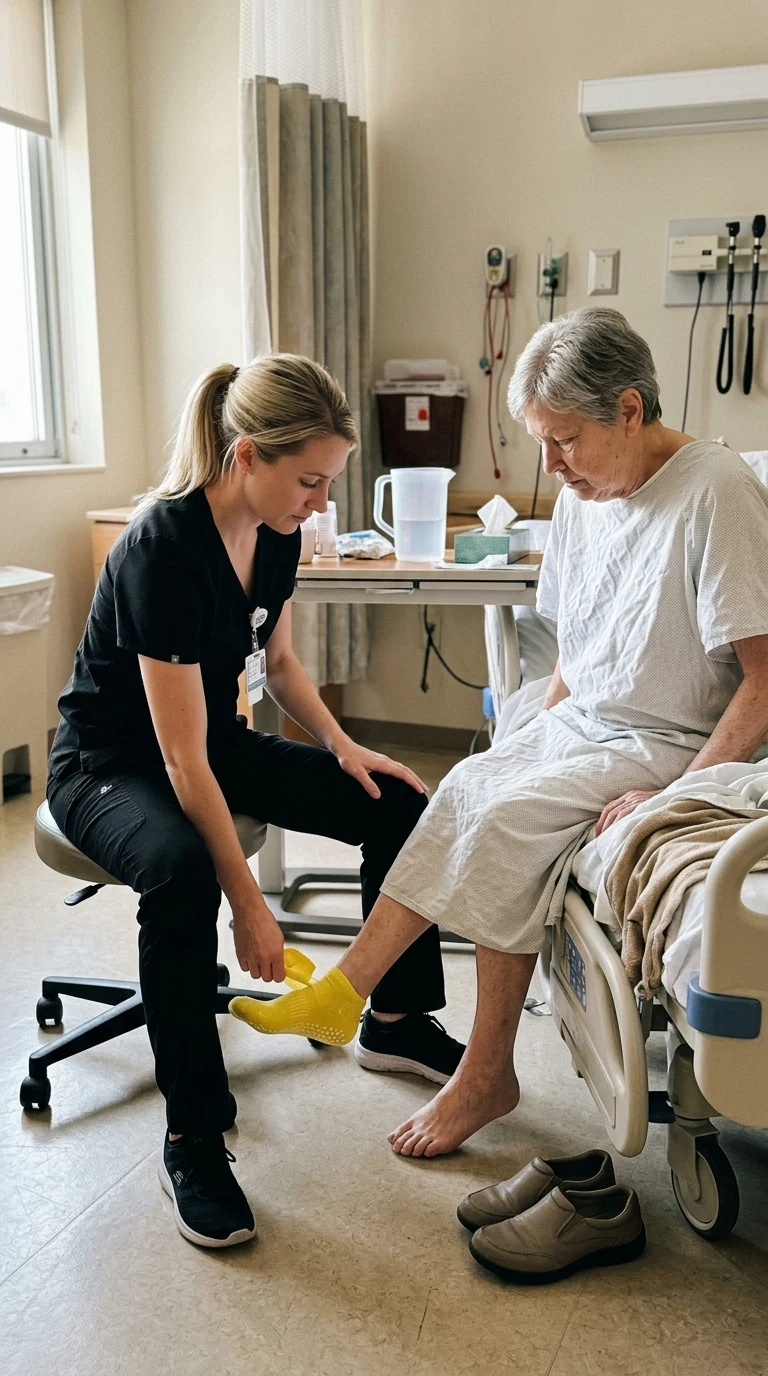
Bare feet and smooth socks slide on hospital floors, and loose slippers fold under a heel. Footwear is part of the fall setup, checked like the call light: grip on the sole, a closed back, and a fit that stays on.
- Grip socks: the yellow non-skid socks most units stock, sized so the tread sits under the foot.
- Real shoes: firm, low-heeled shoes with a closed back for hallway walks and trips to the bathroom.
- At the bedside: shoes and socks live beside the bed, never across the room.
- Check the fit: swelling changes through the day, so recheck straps and heels by evening.
Clear the Path to the Bathroom
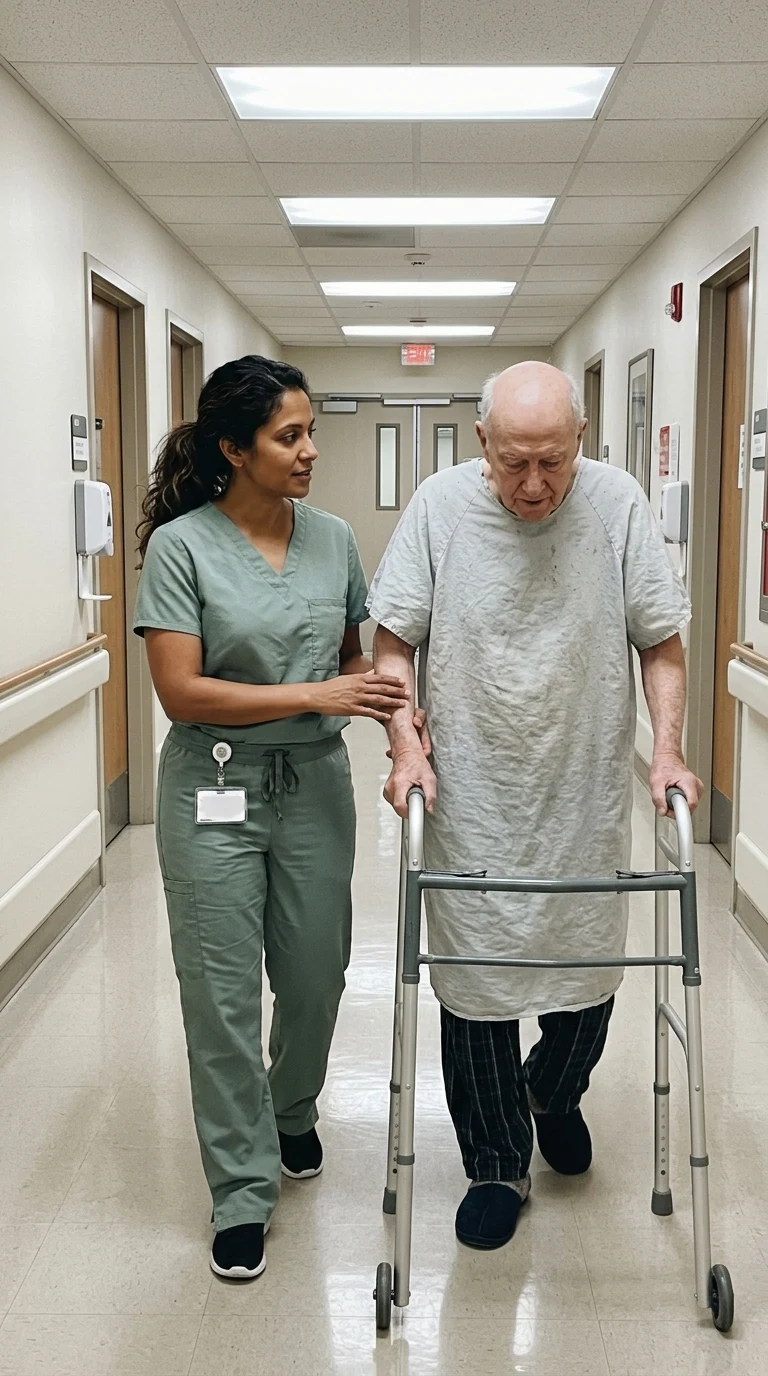
Walk the route your patient walks: from the bed to the bathroom door. Anything in that line is a trip waiting for a dark room and a hurried patient: a chair pulled out, an IV cord across the floor, a bedside table drifted into the walkway. Check at setup and again on night rounds.
Move furniture back against the wall, coil cords out of the path, and place the nightstand and overbed table so the walking line stays open all shift. Mop any spill the moment you see it, and report a loose floor tile or a wobbling handrail the same day.
Round for Toileting on a Schedule
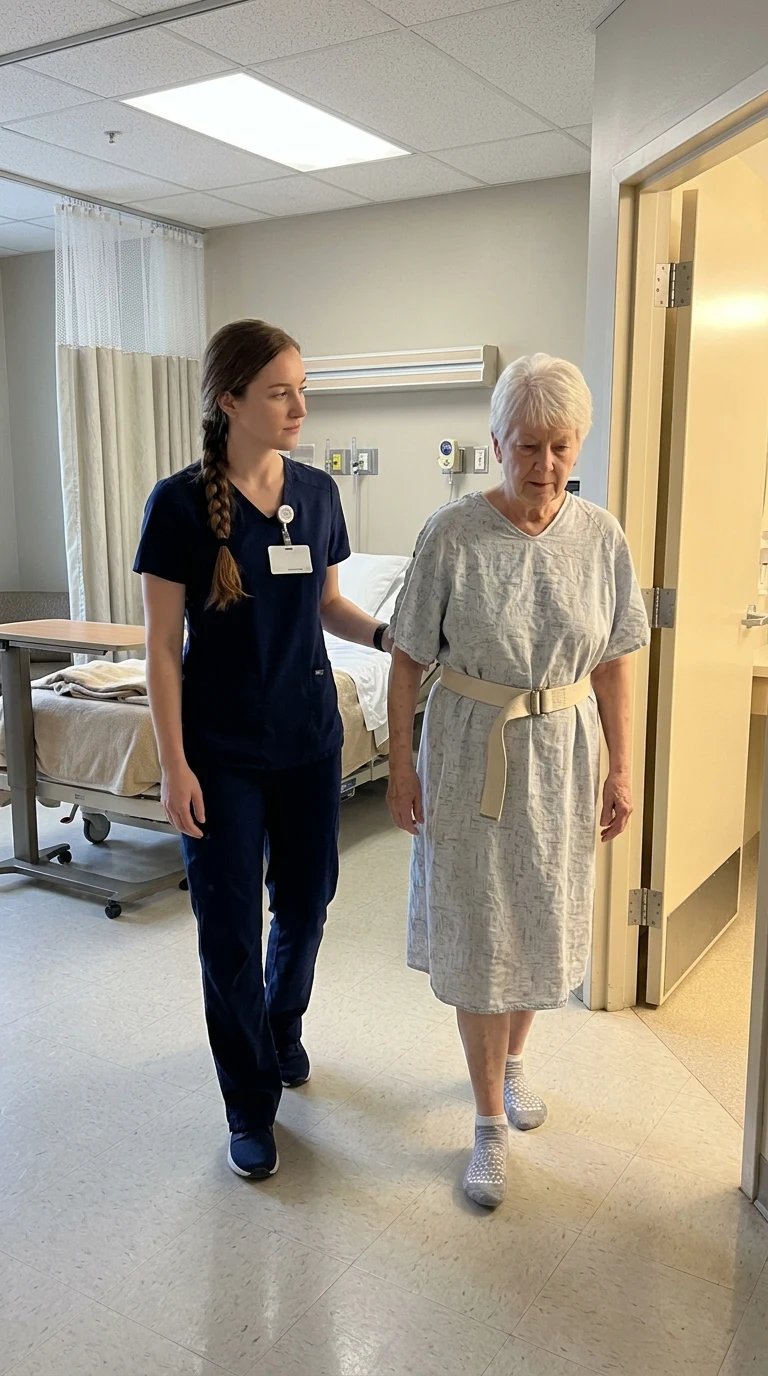
Waiting to be asked is the gap most falls slip through. A patient who needs the bathroom will try alone, so scheduled rounds offer the trip before the urge becomes urgent, about every 2 hours while awake.
- On the clock: build bathroom offers into regular rounds, plus one before sleep and one on waking.
- Stay close: walk with the patient and wait within reach, without leaving them alone on the toilet.
- Night matters most: falls cluster around bathroom trips, above all at night.
- Every room counts: patients in isolation rooms get the same scheduled rounds, timed with the unit’s isolation precautions so no visit gets skipped.
Review the Medication List

Medicines are one of the strongest fall predictors on the chart. Sedatives and sleeping pills slow reaction time, opioids cloud thinking, blood pressure medicines drop pressure on standing, diuretics send patients hurrying to the bathroom, and blood sugar medicines can drop glucose until the patient feels faint.
Read the list with falls in mind at admission and whenever it changes. A new drug or a raised dose means closer supervision for the first doses, and dizziness is a finding to report to the provider, not just a line to chart and move past. Ask the pharmacist to flag combinations that stack risk, like a sedative on top of a new pain medicine.
NCLEX tip: When a question describes an older patient who gets dizzy standing up after a new blood pressure medicine or a new sedative dose, the priority is to keep the patient seated or get them back to bed, and stay with them. Check orthostatic vital signs before the patient walks anywhere.
Check Orthostatic Blood Pressures
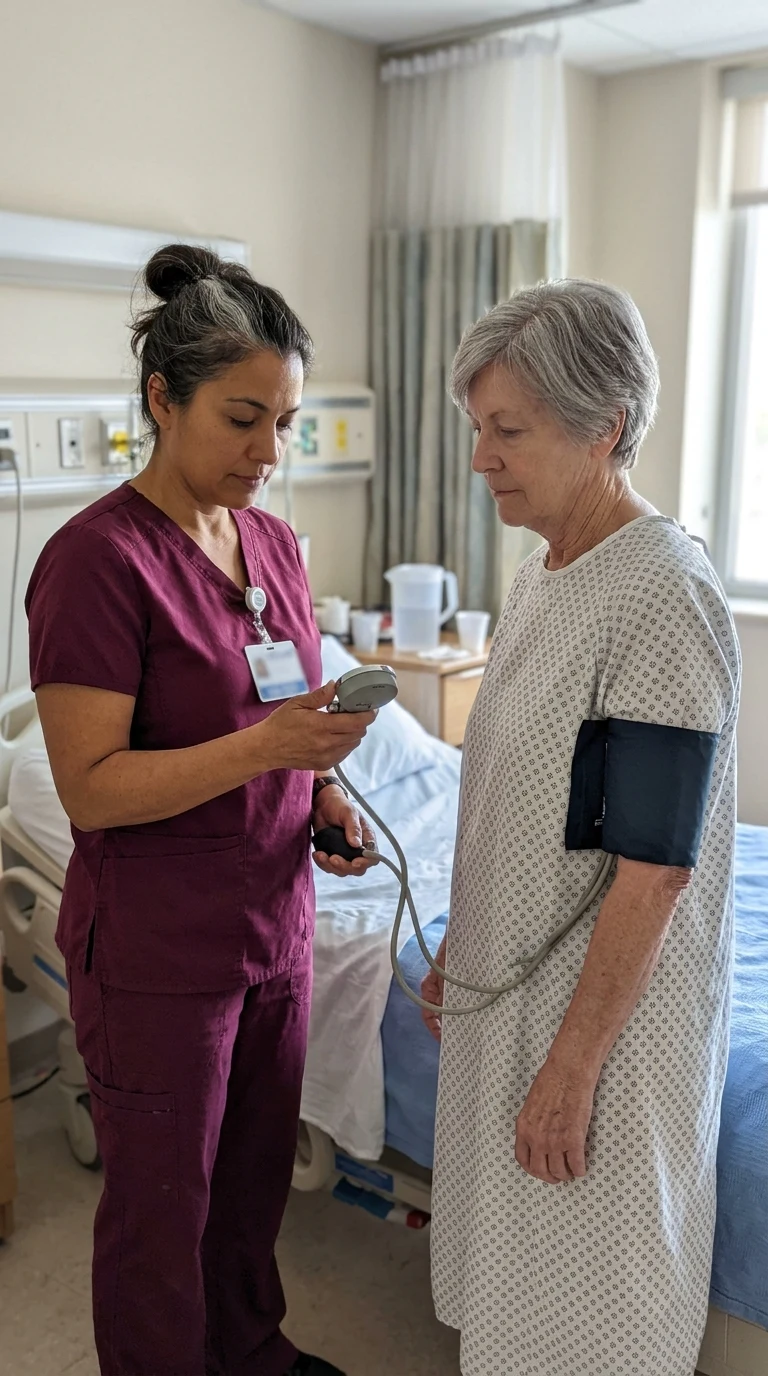
Dizziness on standing often has a number behind it. Orthostatic vital signs catch the drop: measure blood pressure and pulse with the patient lying down, then again at 1 minute and 3 minutes after standing, and compare the readings.
- The thresholds: a systolic drop of 20 mmHg or more, or a diastolic drop of 10 mmHg or more, counts as positive.
- Symptoms count too: clear dizziness or lightheadedness on standing makes the test positive even near the lines.
- Sit them back down: end the test at the first wobble, sit the patient down, and keep them supervised.
- Report and chart: document all three readings and tell the provider the same shift.
Dangle, Sit, Then Stand

After surgery or days in bed, blood pools low and pressure lags when a patient sits or stands too fast. The staged rise protects against that lag: raise the head of the bed first, then dangle the legs over the edge, then sit for a minute, and only then stand with support. Each stage takes about a minute, and the pause is the point.
For at-risk patients, a gait belt around the waist gives you a hold that a sleeve or an arm cannot. Stop the whole sequence at the first sign of dizziness, pallor or nausea, sit the patient back down, and try again later.
Light the Room at Night
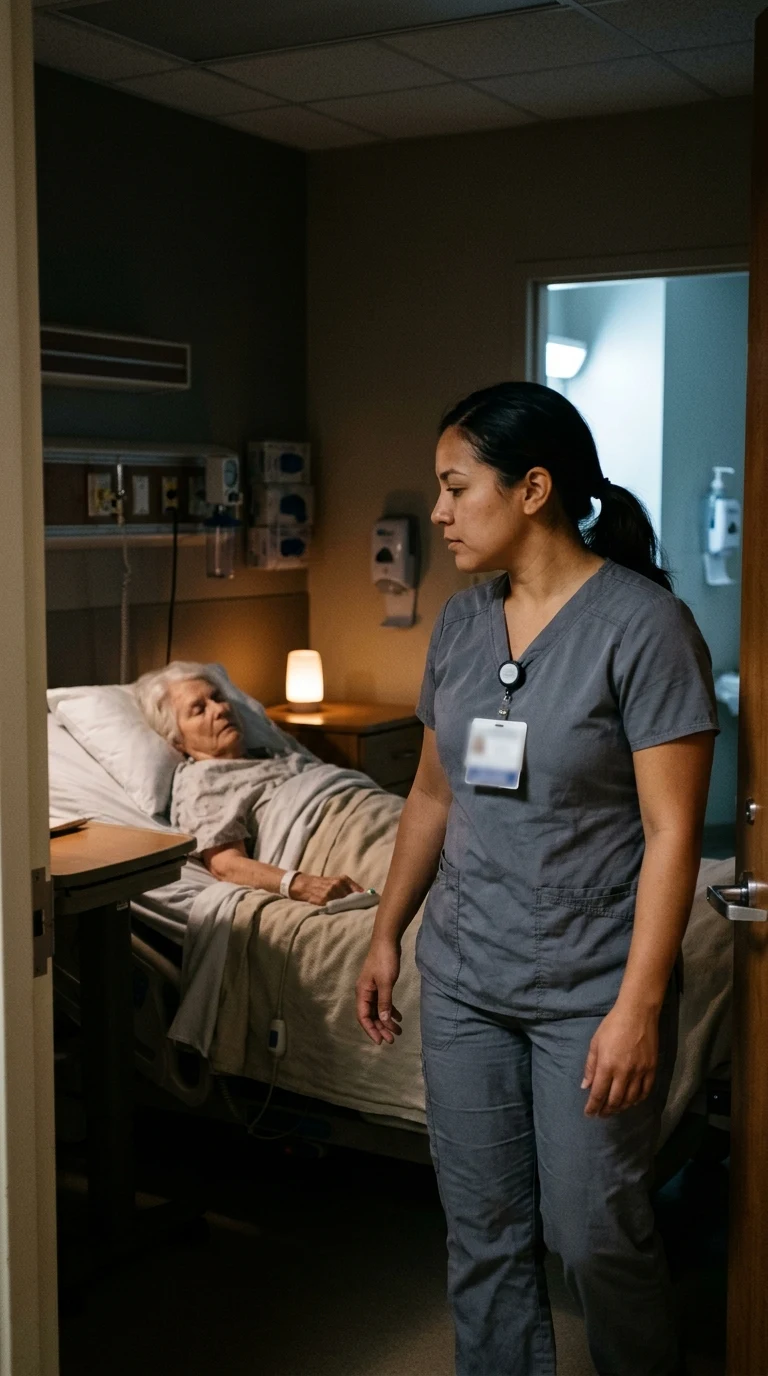
Most night falls happen in a room the patient does not know, in the dark, on the way to a bathroom they cannot see. Lighting is a nursing intervention here, set up before the patient ever has to search for it.
- Night light on: a low light stays on all night, enough to show the bed edge and the floor.
- Bathroom light: the bathroom lit, or its switch easy to find from the bed in the dark.
- Things where hands land: call light, glasses and water placed where the patient can find them in the dark.
- Show the layout: on the first evening, point out the bathroom door.
Use Bed and Chair Alarms Wisely
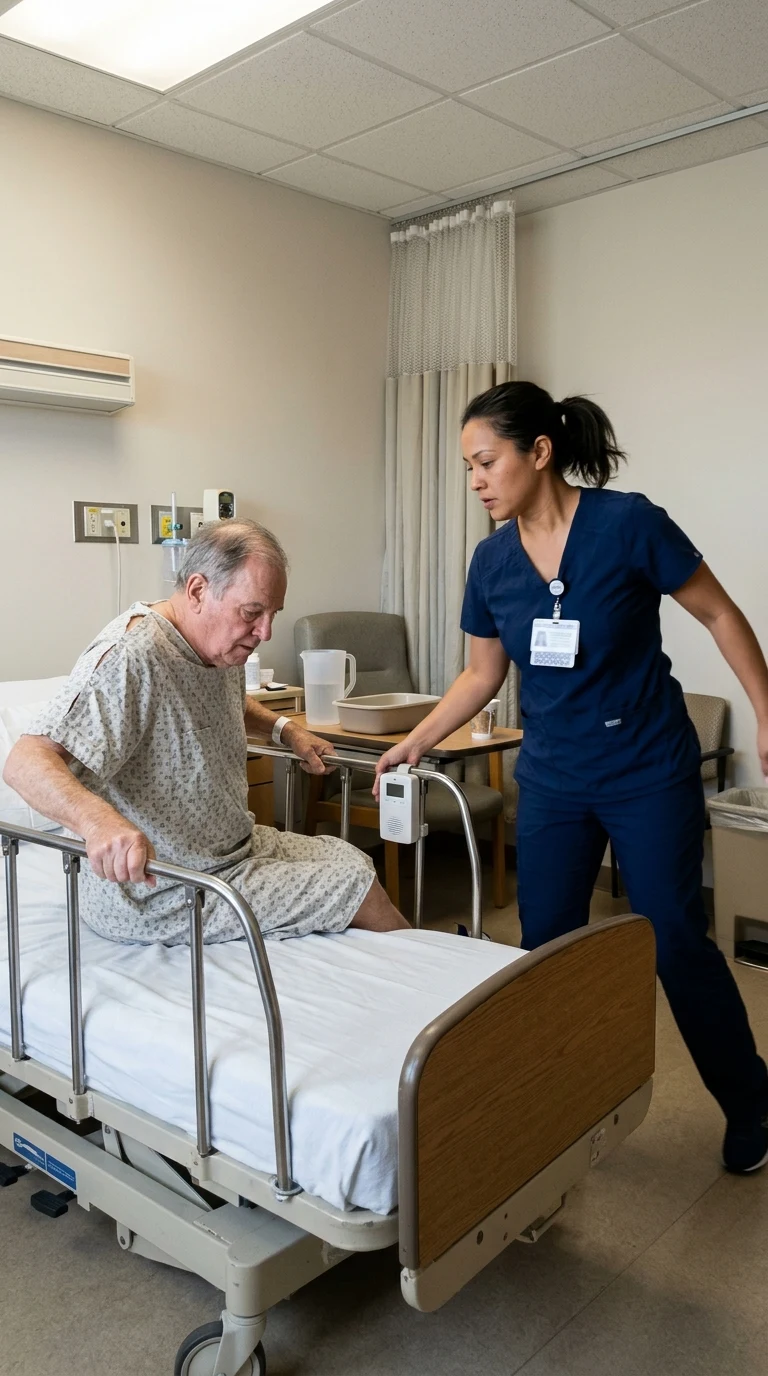
An alarm is a bell, not a barrier. Bed and chair alarms earn their place by calling for help early, when a high-risk patient starts to rise, but the sound only helps if a nurse reaches the bedside before the patient is fully up.
Pair alarms with rounding and a room close to the desk, never as a substitute for either. Check the batteries and the sensor pad position on every round. A determined patient who can climb out can still beat the alarm, so treat every alarm as a signal to reassess the plan, not just to silence the box and leave.
Keep Daily Items Within Reach

Patients climb out for small things: a drink of water, the phone, their glasses, a tissue. Every reach across the bed is a lean too far for weak legs, so the setup puts the day’s items on one side, in the same places, every time.
- The set: water, phone, glasses, tissues and the call light grouped on the bedside table within arm’s reach.
- Same side: the walker stands on the patient’s stronger side, in the same spot after every trip.
- No stretching: nothing the patient needs sits on the windowsill, the far rail or the floor.
- Reset each round: each round ends with the table checked and items pulled back within reach.
Glasses On, Hearing Aids In
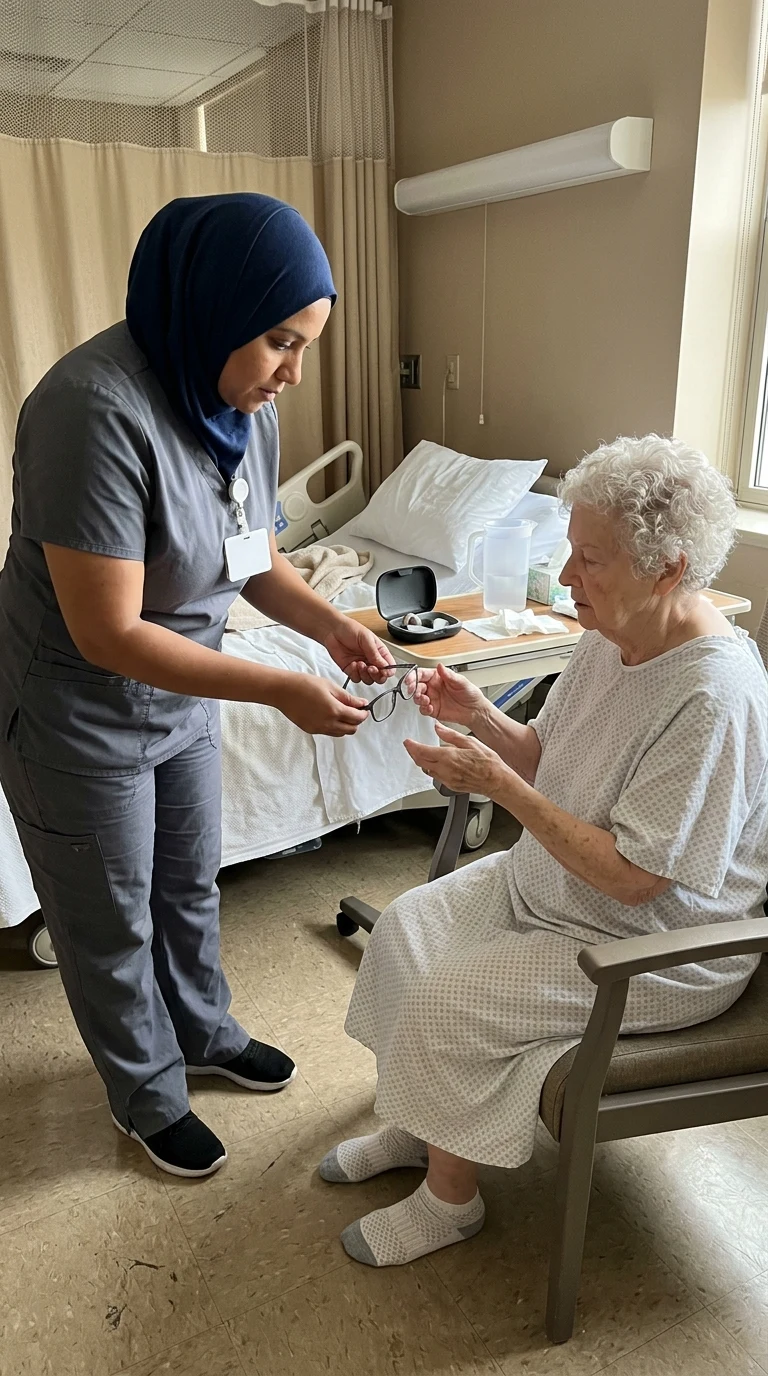
A patient judges the edge of the bed, the distance to the chair and the nurse’s instructions through eyes and ears. Without glasses, the floor looks closer than it is; without hearing aids, a call to wait for help never registers. Falls rise when both aids sit in a drawer.
Make the aids part of morning care: glasses cleaned and on, hearing aids in with working batteries, before the first walk of the day. Ask the family to bring the home pairs rather than leaving the patient to manage without. Chart where the aids are kept, and check them after any trip off the unit.
Fit the Walker or Cane Right
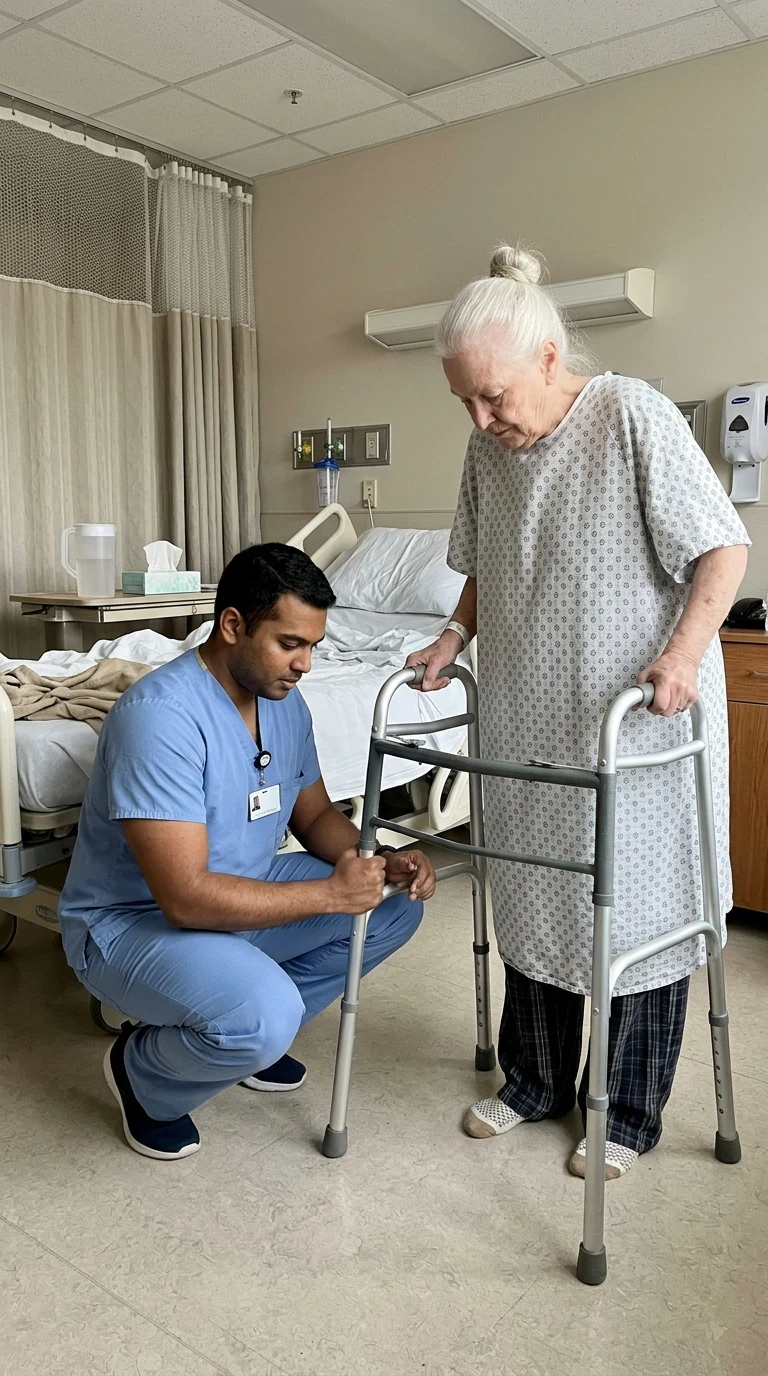
A walking aid only prevents falls when it fits the person using it. A walker set too low bends the patient forward; set too high, and the arms cannot take weight through it. The check takes a minute.
- Wrist-crease height: with the patient standing and the arm hanging relaxed, the handle should meet the crease of the wrist.
- Tips that grip: rubber tips worn smooth skate on tile, so check them and send worn ones for replacement.
- Every trip: the device is used on every walk, even the short one to the bathroom at night.
- No furniture walking: hands sliding along beds and walls mean the device sits out of reach or unused.
Round Hourly With the 4 Ps
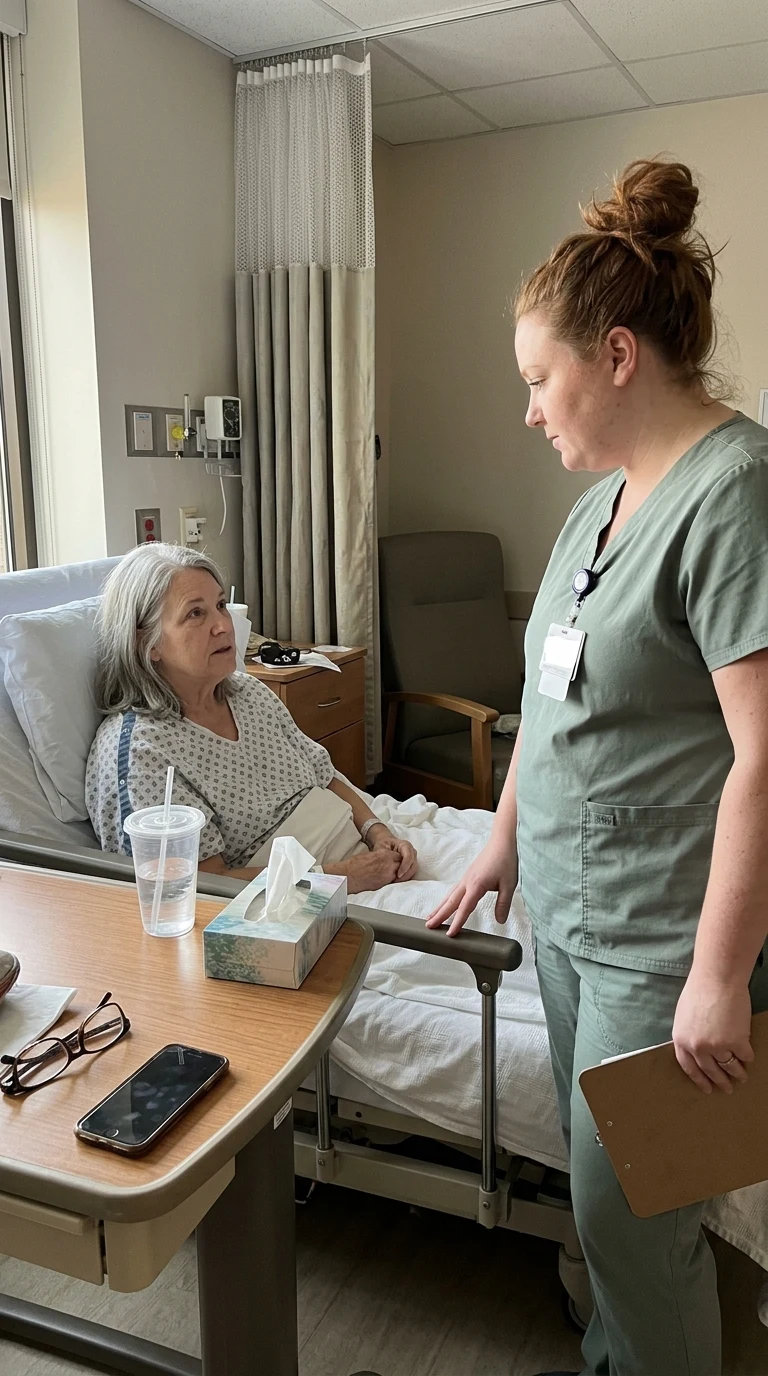
Hourly rounding works because it answers the reasons patients get up alone before those reasons turn urgent. The 4 Ps give the round its checklist: pain, personal needs, position and possessions. A nurse in the room every hour while the patient is awake catches all four on one pass.
Ask about pain and offer medicine before it peaks. Offer the bathroom, change the position, and set possessions back within reach before you leave. Document the round, and hand any unfinished need to the next nurse instead of letting it wait.
Flag the Risk at Handoff

A fall plan only works if every nurse on the unit knows it. The risk status travels: spoken in handoff, flagged in the chart, and marked where the team can see it: the plain colored wristband or door marker your facility uses.
- Say it out loud: name the high-risk patients and scores in every handoff, not just in the chart.
- Mark it visibly: the wristband or door marker goes on at admission and stays on while the risk stays high.
- Include the floats: float and agency nurses hear the names first, since they do not know the patients yet.
- Update the flag: when a new score lowers the risk, change the markers so the team keeps trusting them.
After a Fall, Assess Before Moving

When a fall happens anyway, the first job is assessment, not lifting. Unless the patient is in danger where they are, leave them where they fell and assess first: check for injuries and pain, take vital signs, and ask how it happened and where it hurts.
If the head was struck, or the patient takes blood thinners, neuro checks follow, and a Glasgow Coma Scale score gives the whole team one shared baseline to compare against. Notify the provider, follow your facility’s post-fall protocol step by step, and document the facts you observed: the position found, the injuries seen, and what the patient said.
Which Step Will You Practice First?
Eighteen points is a lot to change in one shift, so start where your unit leaks most. If falls cluster at night, start with the lighting, the toileting rounds and the call light setup. If they follow new medicines, start with the medication review and the orthostatic checks, and let the rest build over the week.
Students who want to turn a risk score into a written plan can work through these nursing care plan study tips next, one patient at a time. So, on your next clinical shift, which step will you practice first: the score, the setup, or the rounding?