

Normal breath sounds run through the diaphragm of your stethoscope, not the bell, so almost every chest exam starts with the flat side of the chest piece. These 12 lung sounds walk you through the three normal sounds first, then the nine abnormal and voice sounds, with where each is heard, what it sounds like and what it usually means.
Each sound gets a short spec line or a study tip, so the details you need on a skills check-off sit in one place. Practice the order on a classmate or manikin first: apices to bases, side to side, one full breath at every spot. By the last sound you will know which findings you can chart and which ones get reported the same shift.
| Course | Health Assessment |
| Best for | Nursing students learning chest assessment before clinicals and skills check-offs |
| Study time | 10 to 15 minutes |
Vesicular Breath Sounds
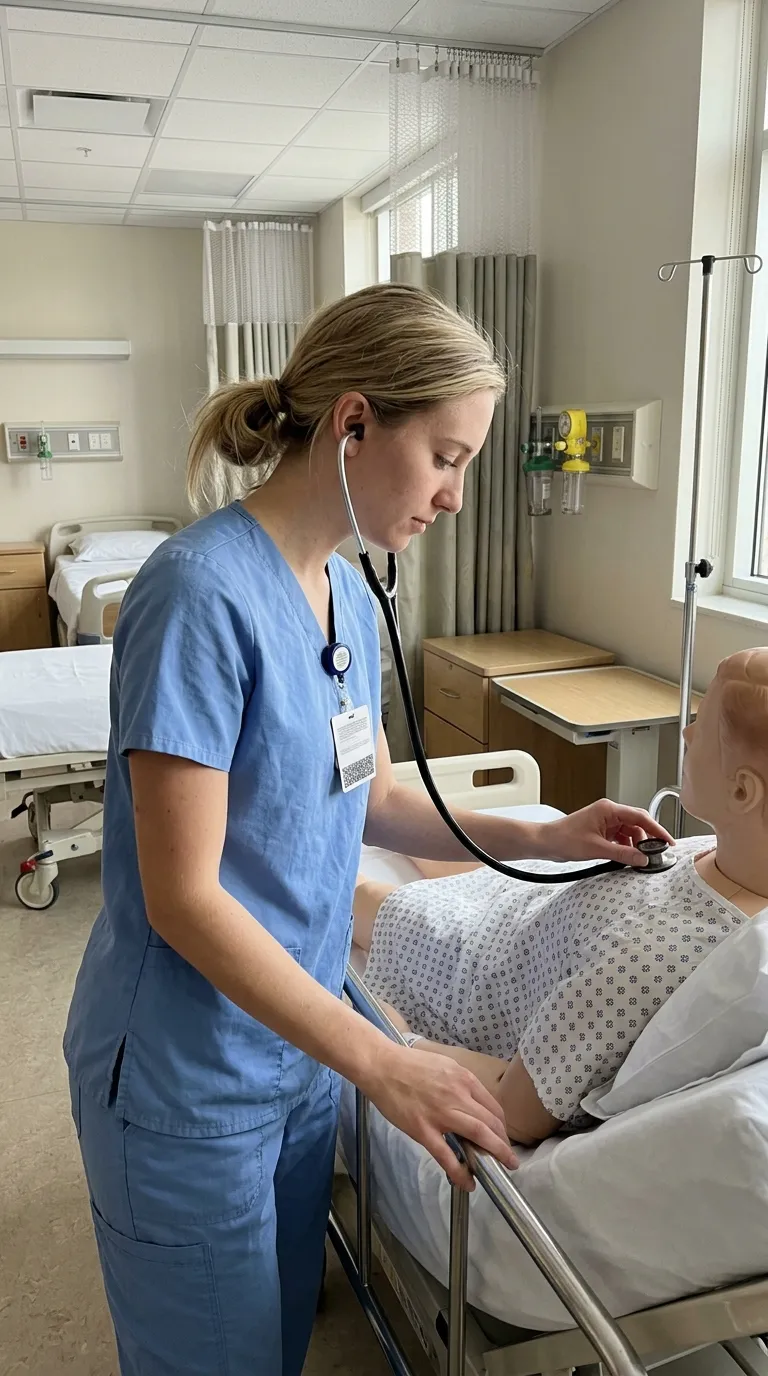
Pitch: low · Loudness: soft · Heard over: most of both lung fields
Vesicular is the sound of a healthy lung periphery: soft, low-pitched and gentle, like a breeze moving through leaves. You hear it over most of the front and back of the chest.
Inspiration is longer and a little louder than expiration, and the two run together with no pause between them. Learn it well: every abnormal finding in this list is judged against it. The habit matches heart sounds: work in a set order, comparing each spot with the same spot on the other side.
Bronchial Breath Sounds
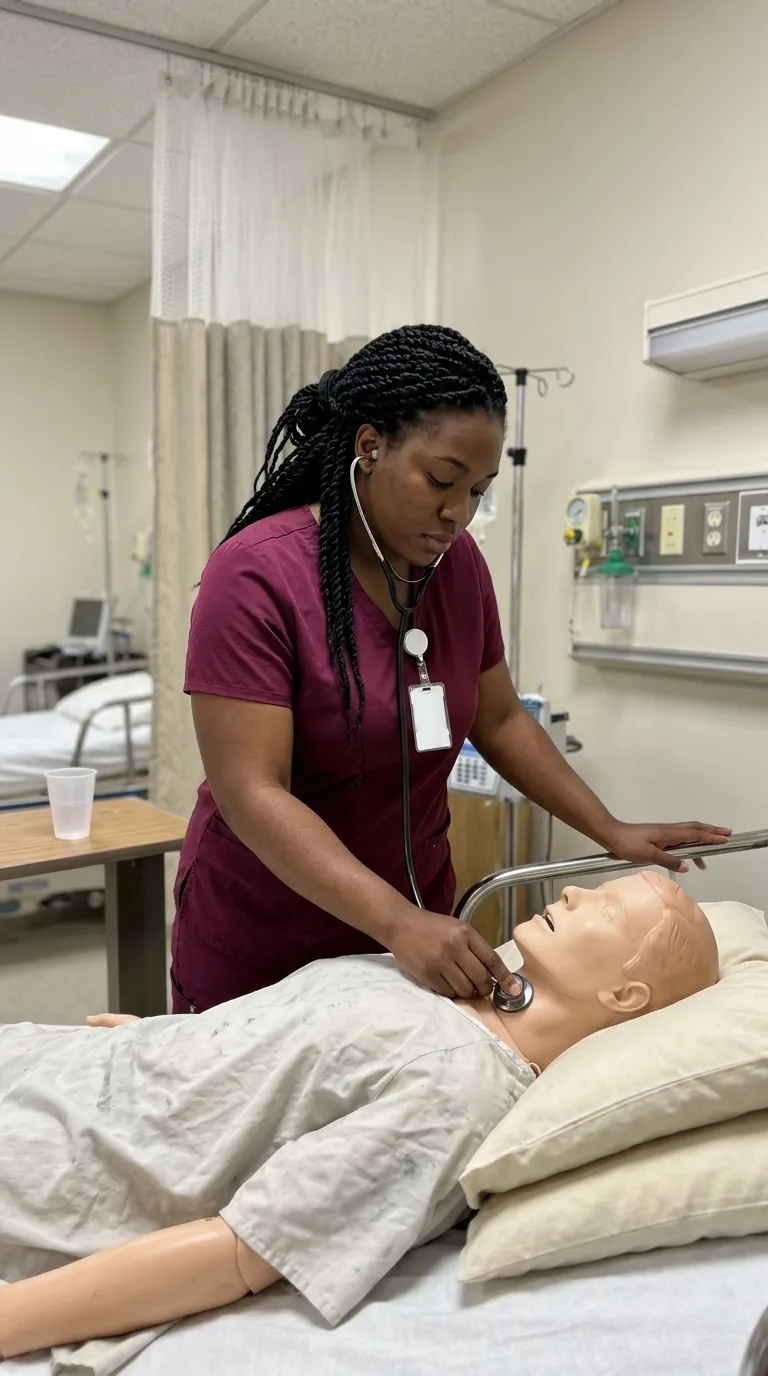
Bronchial sounds are loud, hollow and tubular, the noise air makes moving through the trachea. Place the diaphragm over the front of the neck and you will hear expiration come out longer and stronger than inspiration, with a short silent gap between the two.
That sound is normal only over the trachea. The same hollow sound out over the lung fields is abnormal: solid, airless lung carries it outward, so bronchial sounds at the periphery signal consolidation, most often pneumonia.
Study tip: listen over your own trachea for ten seconds before practice rounds, so your ear files the hollow sound where it belongs.
Bronchovesicular Breath Sounds
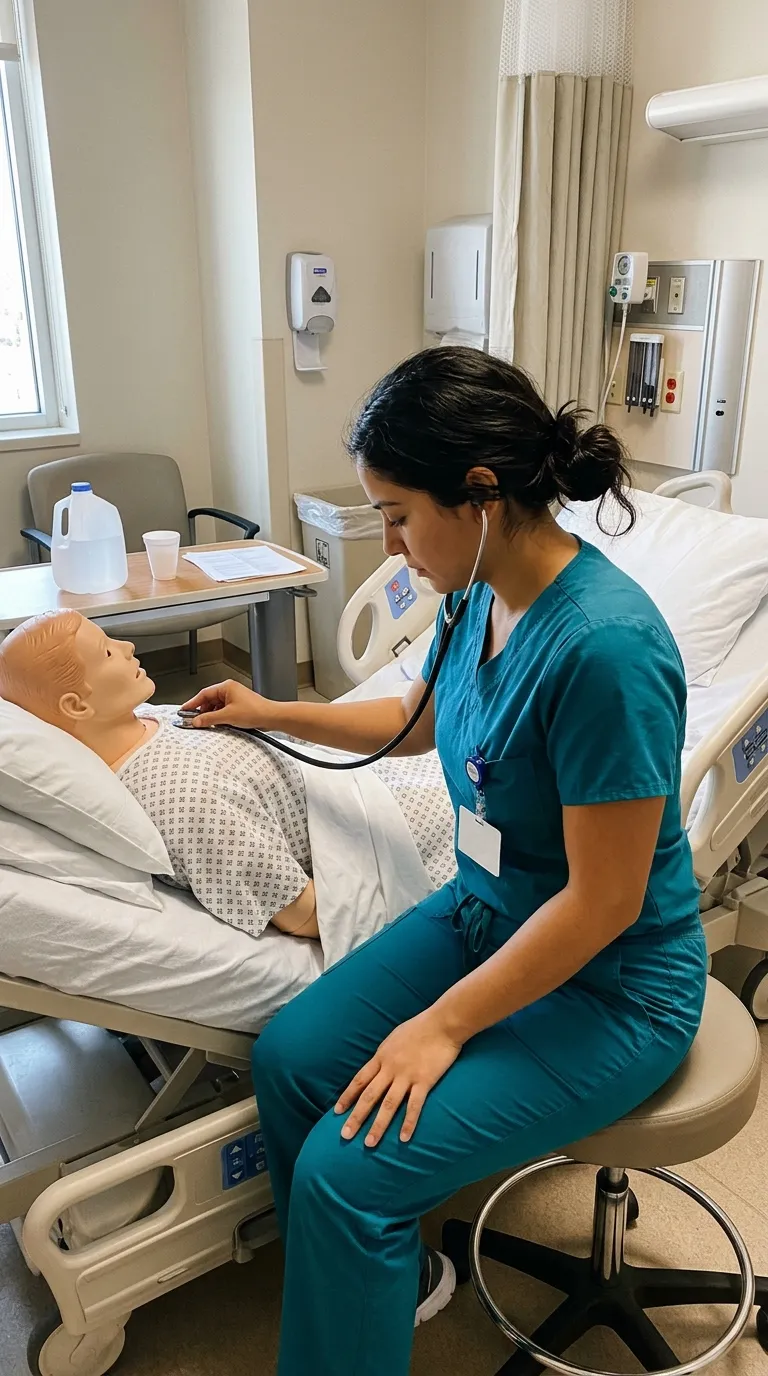
Pitch: medium · Inspiration and expiration: about equal · Heard over: the main bronchi
Bronchovesicular sounds sit halfway between the other two, medium in pitch and volume, because the chest piece sits over a main bronchus. In front, listen at the first and second intercostal spaces beside the sternum; in back, listen between the scapulae.
Inspiration and expiration run about equal in length here. Hear this medium, blowing quality far out at the edges of the chest instead, and think consolidation: a big-airway sound is traveling through lung that should have softened it.
NCLEX tip: when a stem puts bronchial sounds out over the lung fields, the finding is abnormal and points to consolidation, usually pneumonia. The exam tests the swap: right sound, wrong place.
Fine Crackles
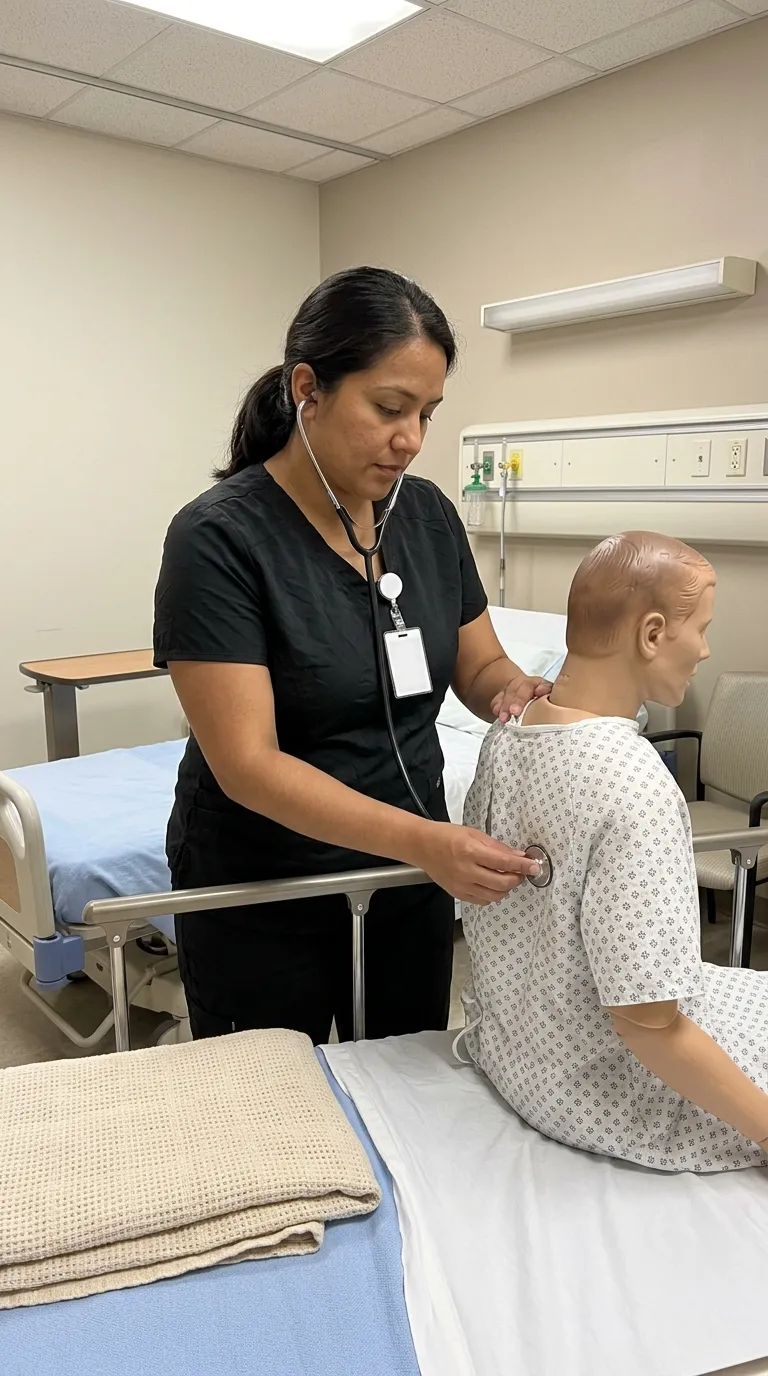
Fine crackles are short, high-pitched pops that arrive late in inspiration, most often low at the bases. The classic comparison is hair rolled between your fingers next to your ear, or a hook-and-loop fastener pulling apart.
They do not clear when the patient coughs, which separates them from sounds made by loose secretions. Collapsed or fluid-lined air sacs snapping open make the noise, so the causes to study are atelectasis, early pulmonary edema and pneumonia.
Study tip: roll a lock of your own hair beside your ear; that dry popping is the pitch and length to hunt for.
Coarse Crackles
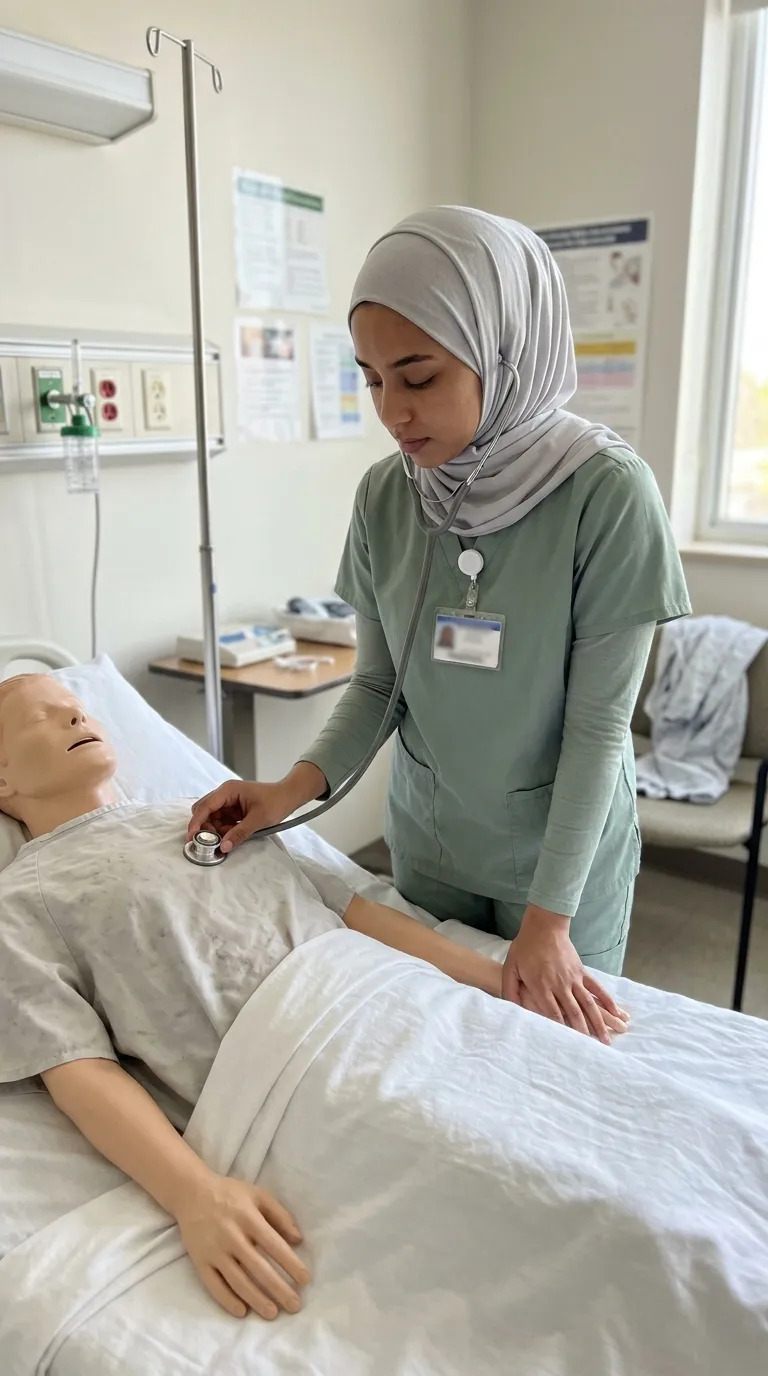
Pitch: low · Timing: inspiration into expiration · May partly clear with coughing
Coarse crackles are the lower, louder cousins: longer bubbling and gurgling pops that start early in inspiration and sometimes spill into expiration. Air moving through secretions in the larger airways makes them, so they may shift, soften or partly clear after a strong cough.
You will meet them in bronchitis, in loosening pneumonia, and when fluid backs up into the lungs. That is why a patient receiving IV fluids gets regular lung checks: new coarse crackles and faster breathing can be an early sign the heart is falling behind.
Wheeze Sounds
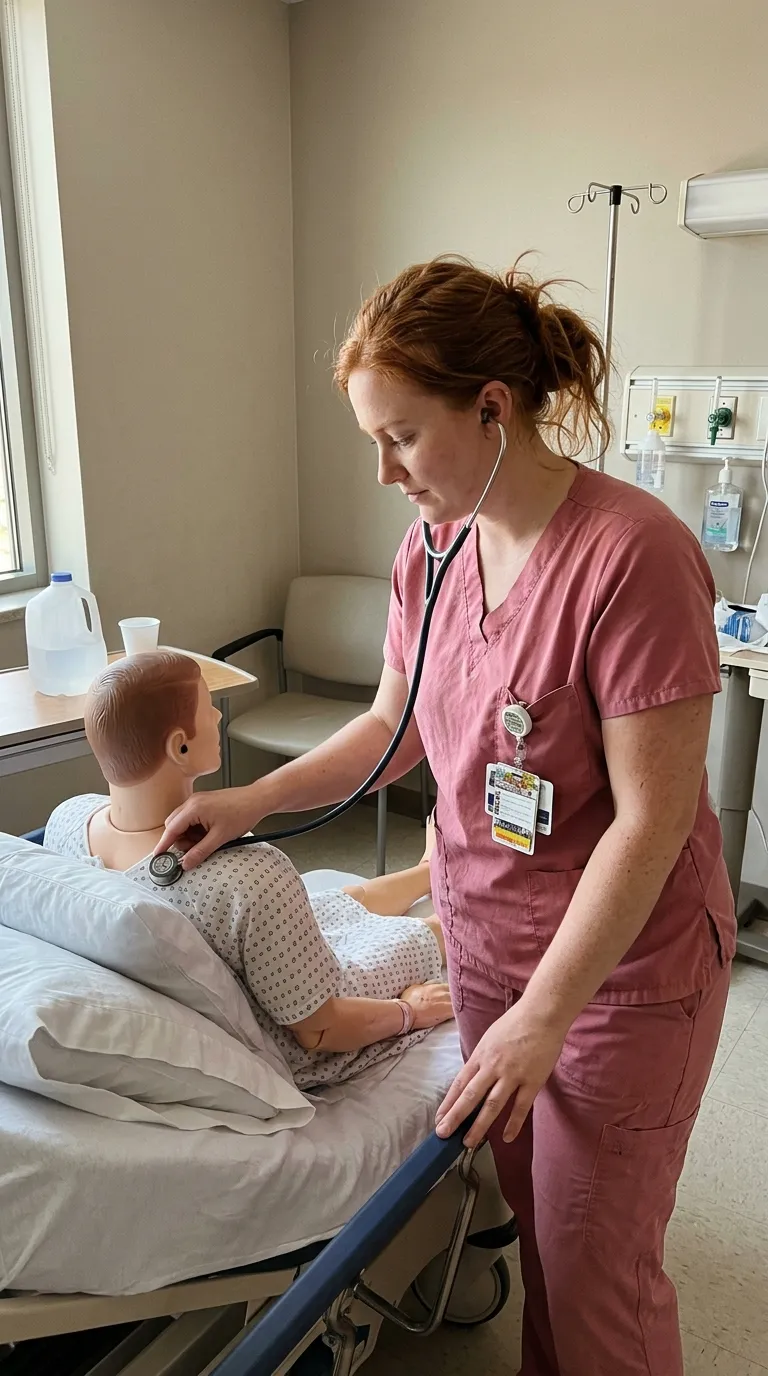
A wheeze is a continuous, musical whistle made by air squeezing through a narrowed airway. It rides mostly on expiration, when airways narrow a little more, and a loud one carries across the room without the stethoscope.
Asthma is the cause exams reach for first, with COPD flare-ups and allergic reactions close behind. One warning matters: if a struggling patient suddenly sounds quieter, do not relax. A wheeze fades when almost no air moves at all, and that silence is worse, not better.
Study tip: hum one note through pursed lips as you breathe out; that steady tone is a wheeze’s shape, only slower.
Rhonchi Sounds
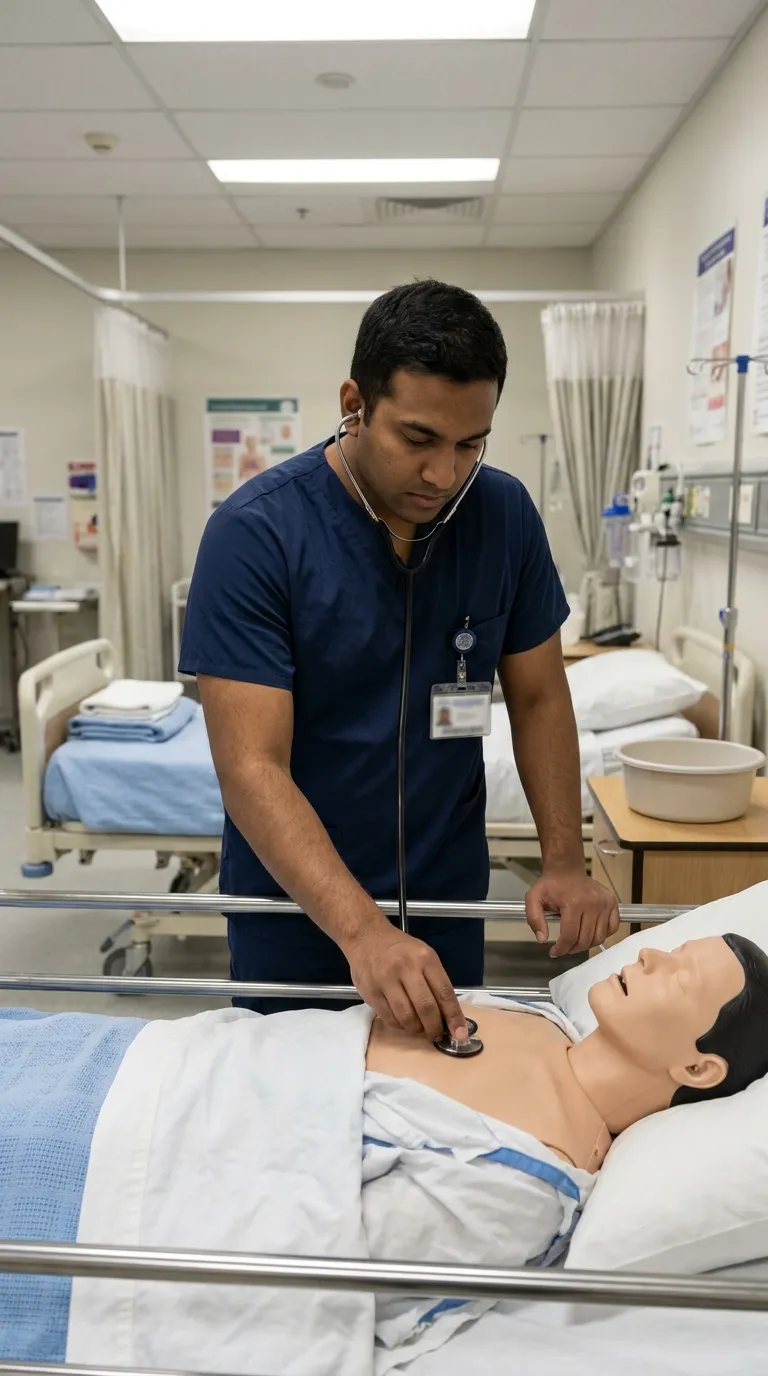
Pitch: low · Sound: snoring · Heard over: trachea and large bronchi
Rhonchi are low, snoring or moaning sounds that rumble through both halves of the breath. Secretions in the large airways vibrate as air passes, so you hear them best over the center of the chest, near the trachea and main bronchi.
The bedside test is simple: ask the patient to cough, then listen again. Rhonchi often change, move or clear for a few breaths after coughing or suctioning. That clearing is how exam questions separate rhonchi from wheezes, which hold their note no matter how hard the patient coughs.
Upper Airway Stridor
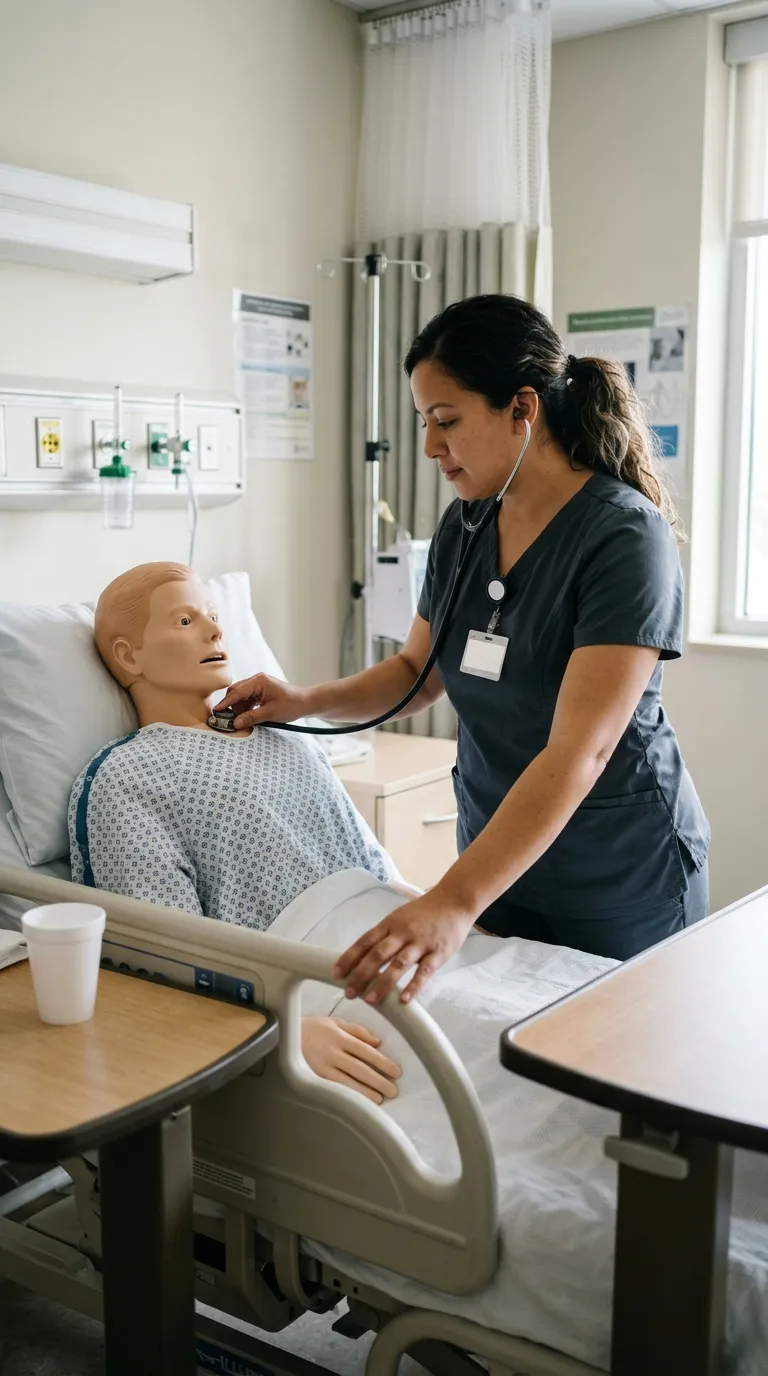
Stridor is the harsh, high-pitched crowing sound of a narrowed upper airway, heard best over the front of the neck and often audible from the doorway. It peaks on inspiration, when air is pulled hard through the tight spot.
The causes are blockages, not lung problems: a foreign body, swelling after a breathing tube comes out, laryngospasm, or croup in a child. Treat new stridor as the emergency on this list: airway first, before the full assessment and the charting.
Study tip: file stridor under airway, not lungs; its address, the neck, tells you where the problem lives.
Safety note: stridor is an airway emergency, not a chart-and-move-on finding. Sit the patient up, call for help and stay; never leave a patient with new stridor alone.
Pleural Friction Rub
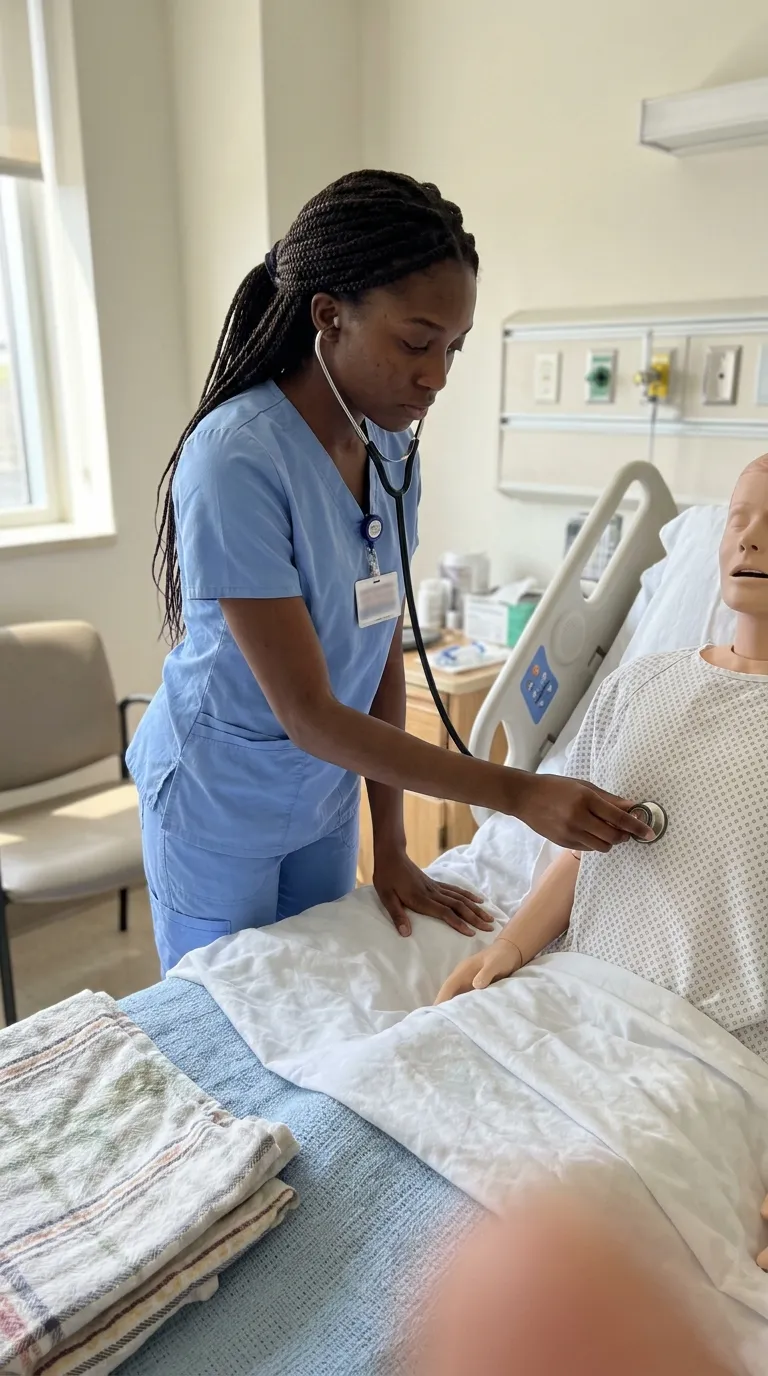
Sound: grating, leathery · Timing: both phases · Pain: often pleuritic
When the two pleural layers lose their smooth glide, the chest piece picks up a rough, grating creak, like leather pieces worked against each other or boots on packed snow. It stays local, over one inflamed patch, usually low and to the side.
Unlike crackles, a rub sounds on the way in and out, and coughing does not move it. It travels with pleuritic pain, the sharp catch that makes the patient guard each deep breath, and it shows up with pleurisy and pneumonia that reaches the lung surface.
Diminished Breath Sounds
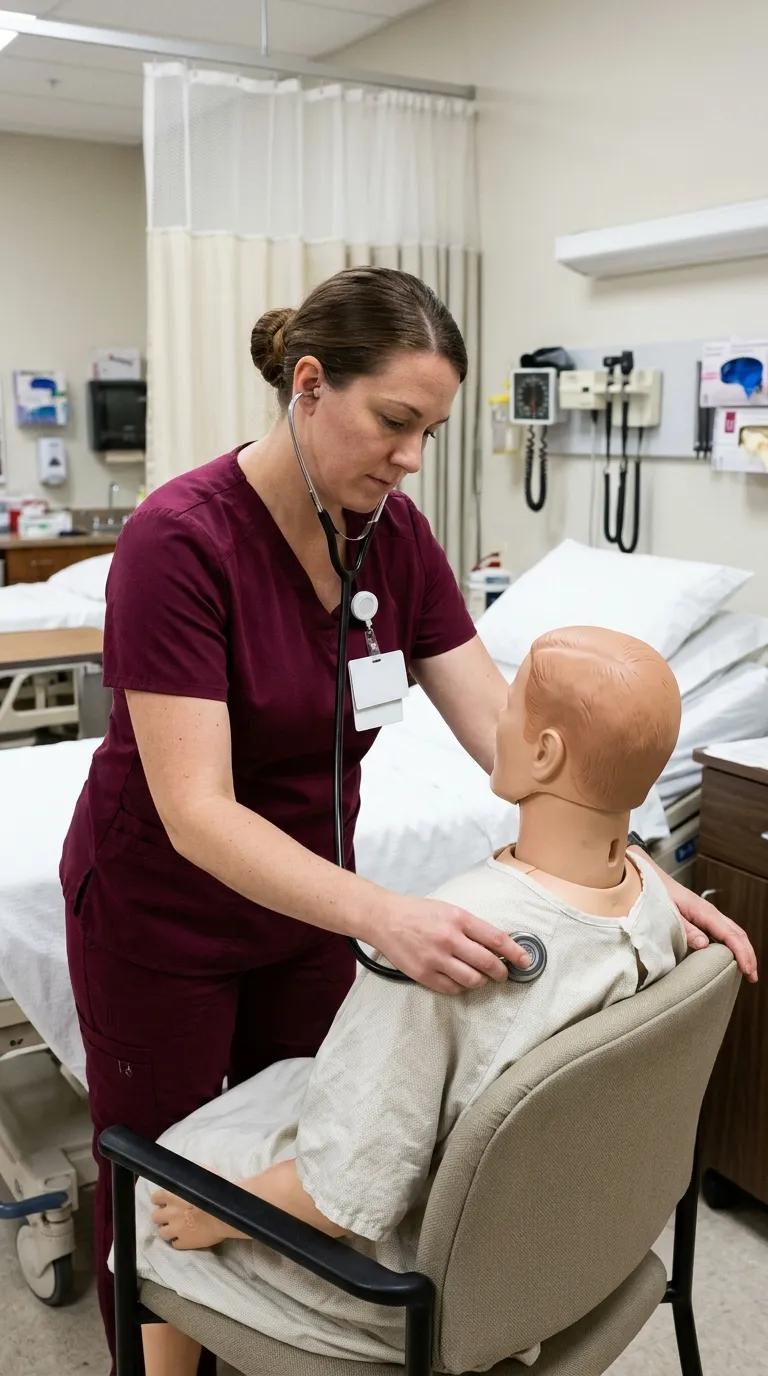
Diminished sounds are vesicular sounds turned down: present, but faint enough that you lean in to catch them. Less air is moving, or something muffles the sound on its way to your ears.
The causes split the same way. Shallow breathing from pain or sedation moves less air; a thick chest wall, the overinflated chest of COPD, or fluid and air in the pleural space muffle the rest. A brand-new drop on one side only is the version to report. Check your own gear first: a well-sealed stethoscope sits near the top of the nursing student essentials list for a reason.
Study tip: before you chart diminished, borrow a classmate’s stethoscope for one spot; ruling out your own earpieces takes seconds.
Absent Breath Sounds
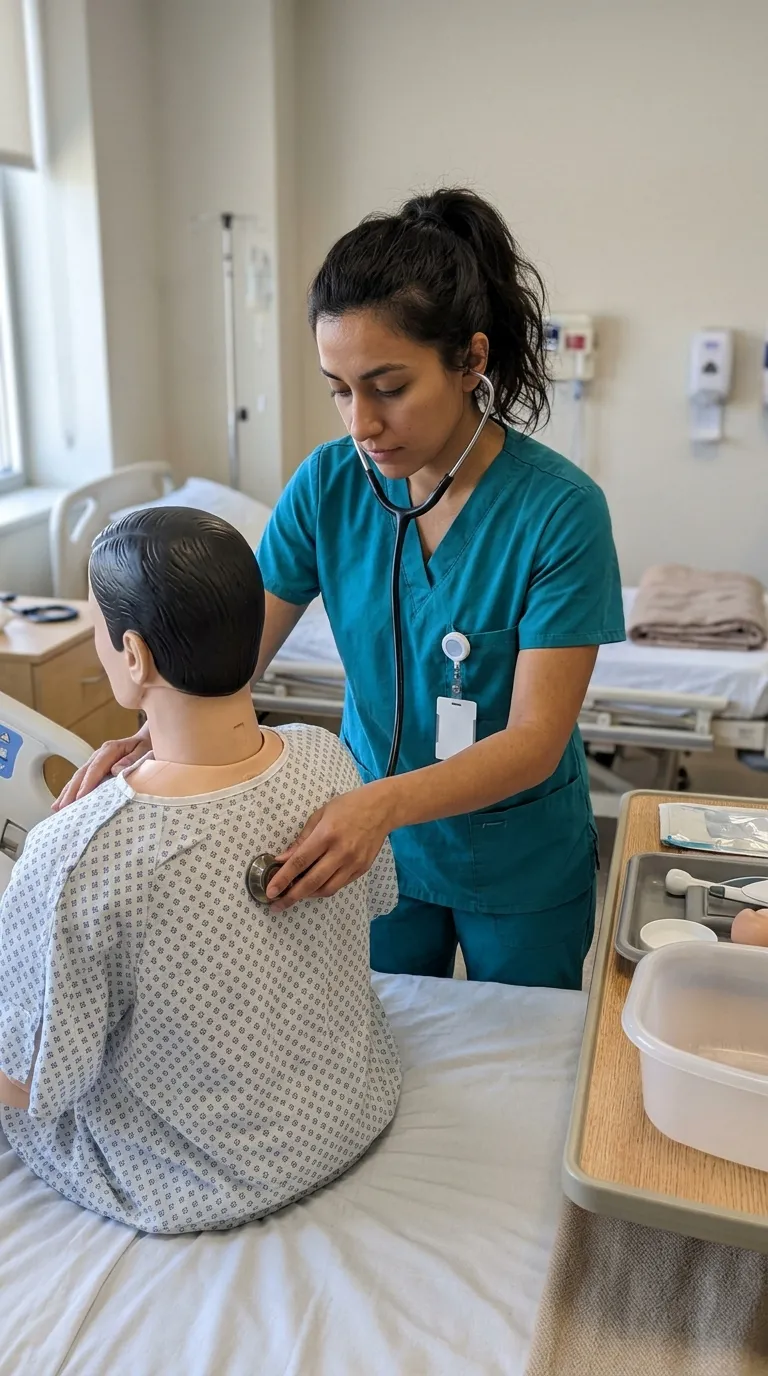
Sound: none over the area · Compare: same spot, other side · Action: report same day
Absent means exactly that: over one region of the chest, where vesicular sounds should be, you hear nothing through a full breath. Air is not reaching that section of lung, or something stands between lung and chest piece.
The three causes to know are a large pleural effusion, a pneumothorax and a collapsed segment or lobe. Check the oxygen saturation, sit the patient up, compare the other side, and report it the same day with your other findings, not at the end of the shift.
Egophony Voice Sound

Egophony is a voice sound you test on purpose: with your chest piece on the patient’s back, the patient says a long, steady “eee”. Through healthy, air-filled lung it arrives muffled, and the “eee” stays an “eee”.
Over consolidated lung the sound sharpens and changes shape: the “eee” comes through as a nasal “aaa”, the E-to-A change. Egophony belongs to the same family as bronchophony and whispered pectoriloquy, and all three point the same way: solid lung carries voice too well. Build the test into a steady habit before clinicals, the same small daily reps behind nurse morning routine secrets that stick.
Study tip: practice the E-to-A test on a classmate with a healthy chest first, so the muffled normal version is the one your ear expects.
Questions Students Ask
Which side of the stethoscope do you use for lung sounds?
The diaphragm, the flat, larger side. Breath sounds are mostly high-frequency, and the diaphragm picks those up best when it is held firmly against the skin. Save the bell for low-pitched sounds like extra heart tones. A gown dulls everything, so the chest piece goes on skin or one thin layer.
How do you tell crackles from a pleural friction rub?
Use timing and the cough test. Crackles are brief pops that cluster in inspiration and sit deep in the chest. A rub is a grating creak heard in both directions over one small patch, it does not change after a cough, and it often arrives with sharp pain on a deep breath.
Which lung finding should you report right away?
Stridor, absent sounds over a whole region, and a new one-sided drop in breath sounds with falling oxygen saturation all get reported the same shift. Note what you heard, where you heard it, the saturation and the patient’s breathing effort, then stay with the patient until the provider has the picture.
Which Step Will You Practice First?
Start with the three normal sounds on a healthy classmate until vesicular, bronchial and bronchovesicular sit in separate boxes in your ear. Work apices to bases, one full breath per spot, always comparing sides. That baseline is the whole skill: every abnormal sound here is a change from it.
Then add one abnormal sound per study session, crackles first, because the bases are where you will listen most in clinicals. Students who clear this check-off early free their final semester for exams and for planning their bsn graduation pictures. Which of the twelve sounds will you practice first?