


The Best Nursing Student Study Tips for Beginners share simple strategies to organize studying, improve learning, and feel confident in nursing school.
Build stronger habits with practical methods that make difficult topics easier to understand and remember. Explore these beginner-friendly ideas to create a study routine that supports long-term nursing success.
Study Foundation
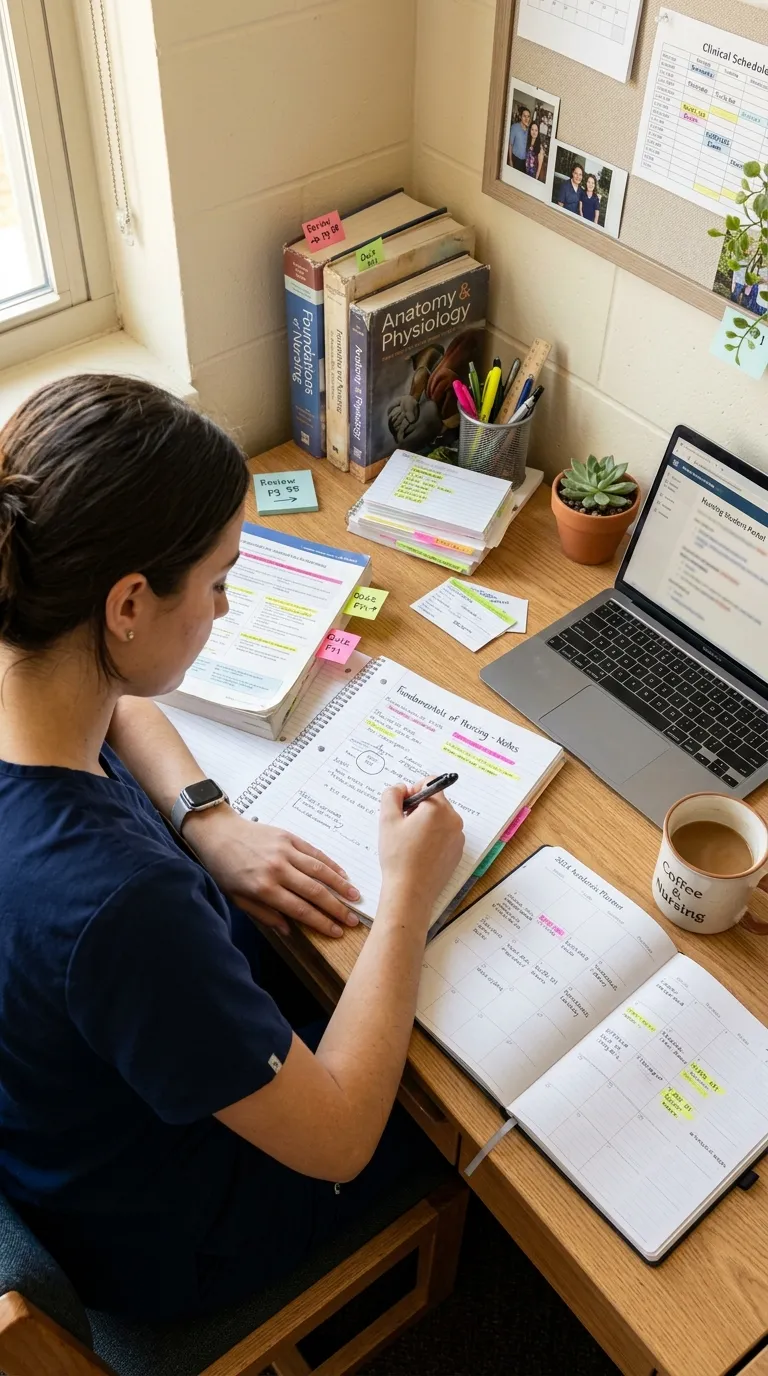
Starting with the right system makes nursing school feel less intimidating and more achievable. A dedicated study area, organized resources, and a simple routine help beginners build confidence before tackling complex subjects. Choose a quiet place with good lighting, keep essential supplies nearby, and remove distractions before beginning each session. Small preparation habits often create the biggest difference over time.
A beginner-friendly study space should include:
- Nursing textbooks and class notes
- A notebook for important concepts
- Highlighters, pens, and sticky notes
- A weekly schedule for assignments and exams
Smart Note System

Effective notes are not about writing every word from a lecture. Beginners learn faster when they create focused notes that highlight nursing actions, important symptoms, medication details, and clinical connections. Organize information under clear headings and rewrite complicated explanations in simple language. This makes future review sessions more efficient and helps you identify information that needs additional attention.
Concept Connections

Nursing becomes easier when students understand how information fits together instead of treating every topic separately. Concept connections help beginners recognize patterns between body systems, patient conditions, and nursing decisions. For example, when studying dehydration, connect its causes with symptoms, assessment findings, potential complications, and appropriate nursing interventions. This approach encourages understanding instead of relying entirely on memorization.
Practice Question Routine

Practice questions help beginners discover the difference between knowing information and applying it. Instead of only memorizing definitions, students learn how to analyze situations, recognize priorities, and develop decision-making skills. Start with a small set of questions after completing a topic. Review both correct and incorrect answers to understand the reasoning behind each response.
Clinical Learning

Hands-on learning creates a stronger connection between theory and practice. Beginners often feel more prepared when they understand not only what steps to follow but also why each nursing action matters in real care environments. Before a clinical session, review relevant procedures, safety precautions, and patient communication techniques. Always follow instructor guidance and approved clinical protocols when practicing nursing skills.
Medication Basics
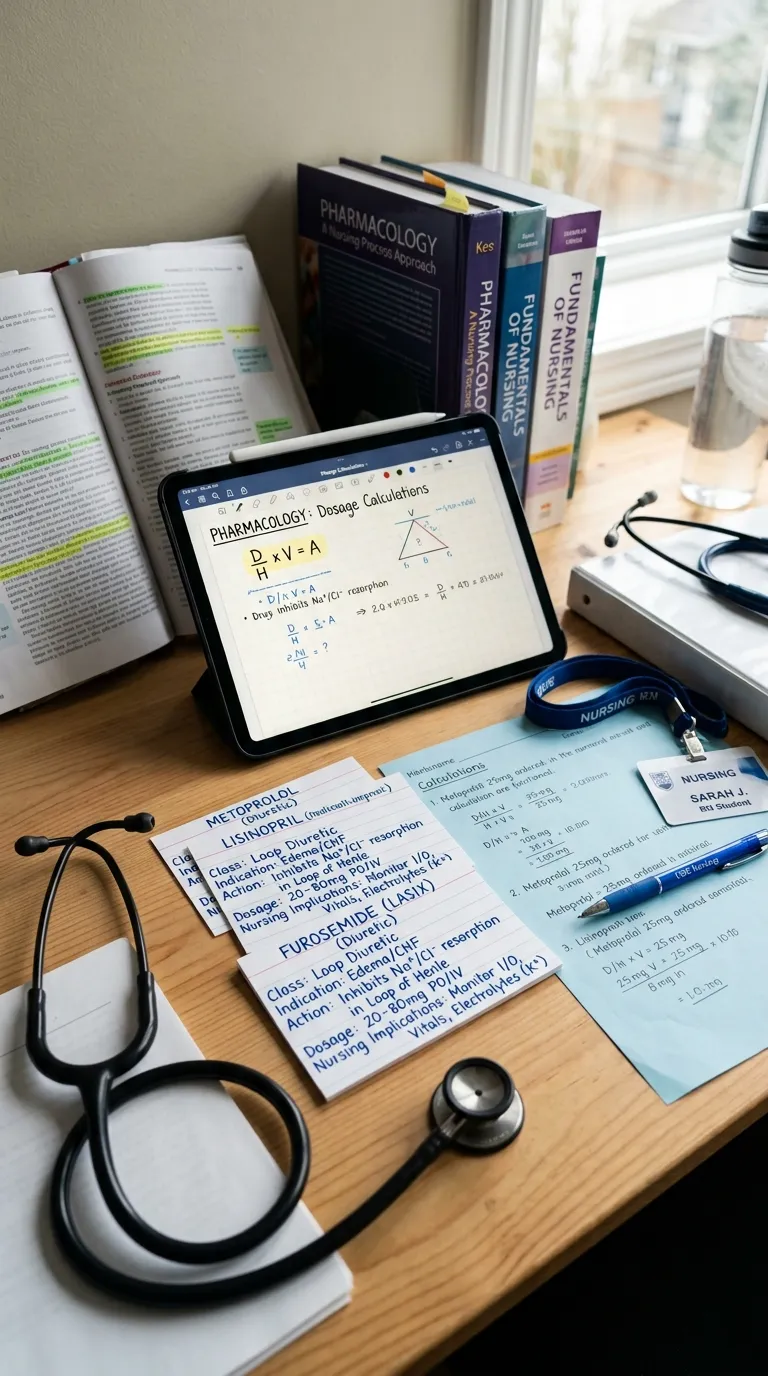
Medication topics can feel difficult because every detail matters, but beginners can make them manageable with organized review methods. Learn medication purposes, common side effects, safety concerns, and nursing responsibilities together. Instead of memorizing long lists in one sitting, study a few medications at a time and compare their similarities and differences. Use course-approved resources to verify medication information.
Time Planning Skills
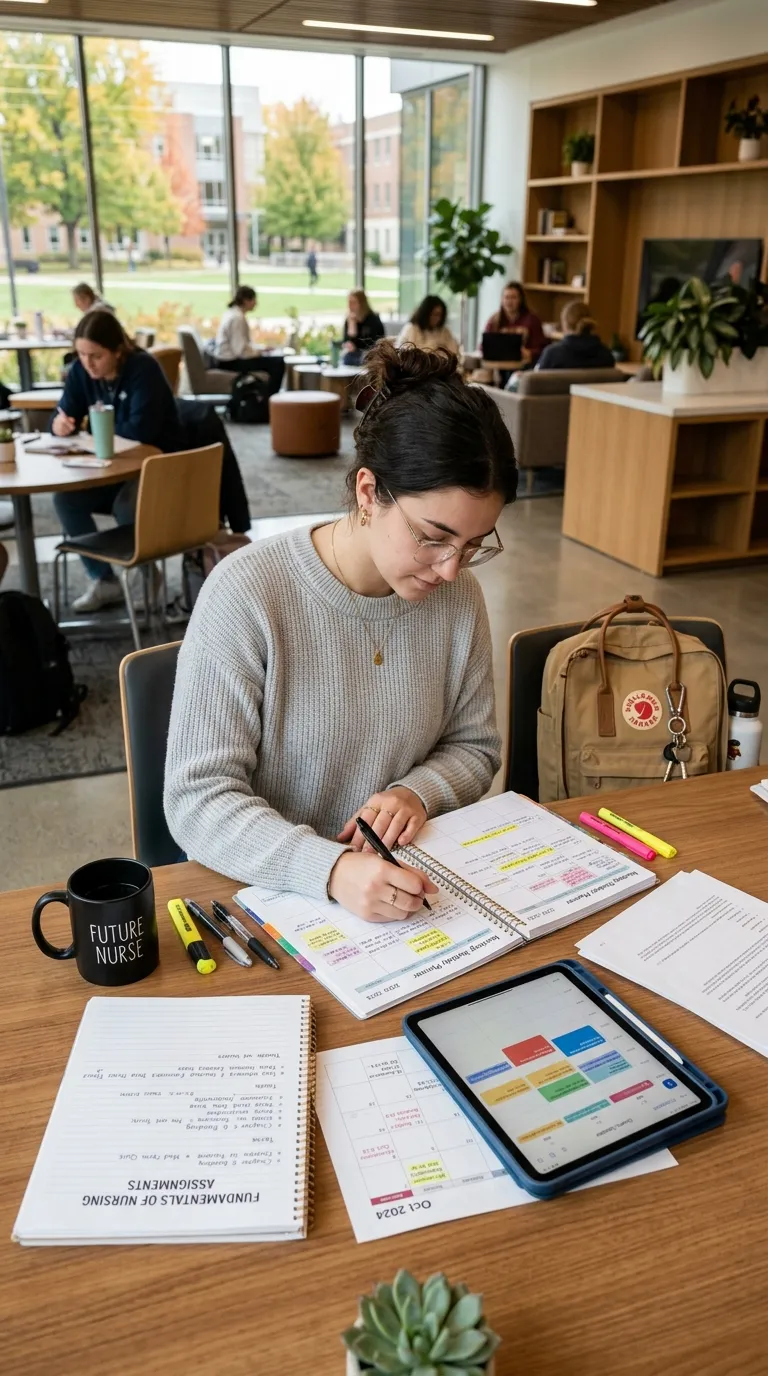
A realistic study plan gives nursing beginners more control over their busy schedules. Instead of trying to study everything at once, divide tasks across the week to create steady progress. Include time for lectures, assignments, clinical preparation, practice questions, and rest. A flexible schedule also makes it easier to adjust when unexpected responsibilities appear.
Memory Building

Strong memory comes from creating meaningful connections, not simply reading information repeatedly. Beginners can improve retention by linking nursing concepts to real examples, visual patterns, and practical situations. Use flashcards for terminology, draw diagrams for body systems, and test yourself without looking at your notes. Revisiting information over several days can also help strengthen long-term recall.
Study Resource Choice
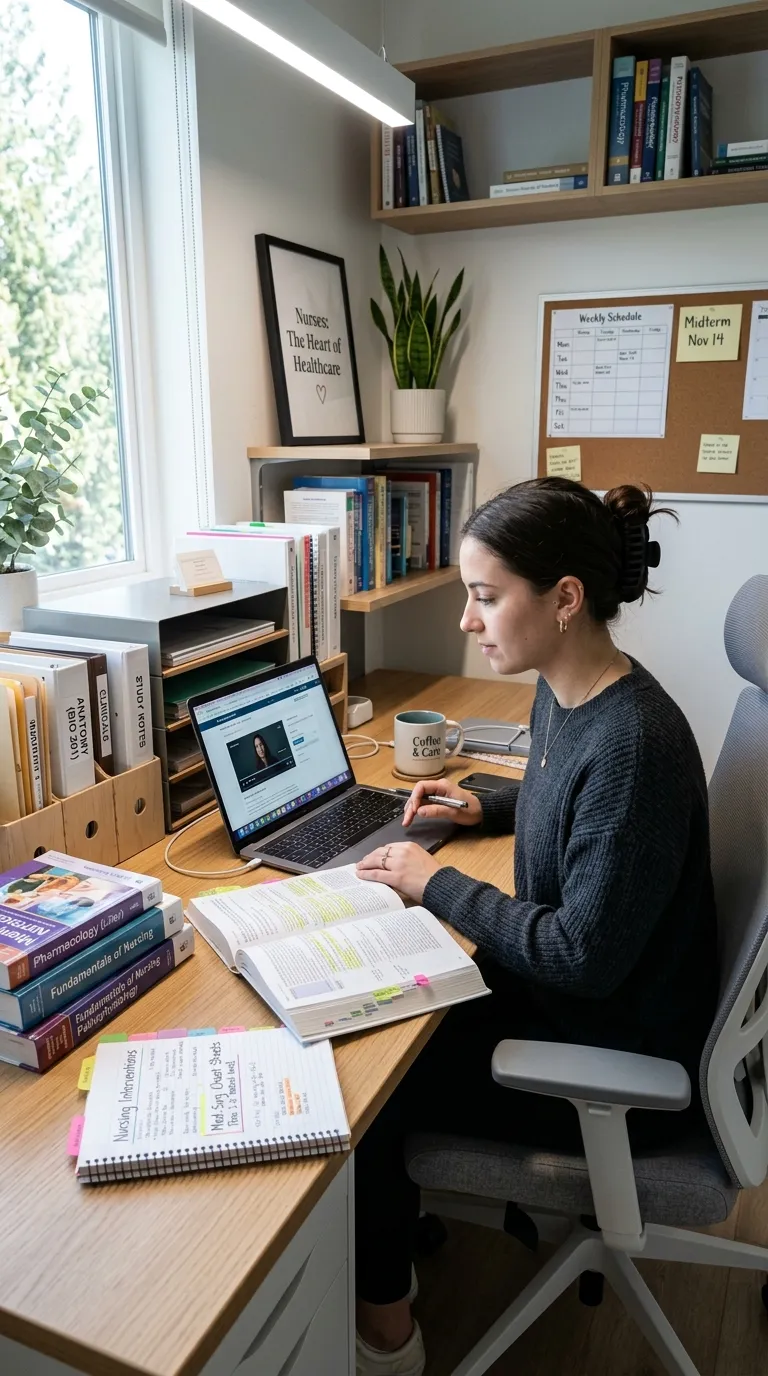
Having more study materials does not always mean learning more effectively. Beginners usually benefit from choosing a few reliable resources and using them consistently instead of constantly searching for new information. Start with lecture notes, assigned textbooks, and instructor-recommended materials. Additional resources should clarify difficult concepts rather than distract you from course objectives.
Focus Study Sessions

Focused studying helps beginners avoid spending hours with little progress. Give each session one clear purpose, such as reviewing cardiovascular terminology or practicing dosage calculations. Study for a manageable period, then take a short break before continuing. Put your phone away and keep unrelated browser tabs closed to protect your attention.
Clinical Reflection Notes

Reflection allows nursing beginners to learn beyond textbooks and lectures. Writing down what went well, what felt challenging, and what needs more practice creates a personal learning record. After a class or supervised clinical experience, consider these questions:
- Which skill or concept did I understand better today?
- What would I like to practice again?
- What question should I ask my instructor?
Keep reflection notes professional and avoid including identifiable patient information.
Exam Review Strategy

A strong exam review strategy helps beginners feel prepared instead of overwhelmed. Review summaries, practice application questions, and focus on weaker areas rather than simply studying longer. Begin preparing several days or weeks before an exam when possible. Divide the material into smaller sections and revisit challenging concepts throughout the week.
Clinical Vocabulary Practice

Medical terminology becomes easier when beginners understand the meaning behind words instead of memorizing long lists. Connect terms to body systems, conditions, and patient situations to improve recall and communication. Create flashcards with the term on one side and its meaning and a simple example on the other. Review a few cards daily to build familiarity gradually.
Healthy Study Balance

Successful nursing students understand that rest supports learning rather than competing with it. Protecting sleep, eating regular meals, drinking enough water, and making time for personal activities can help beginners maintain focus. Avoid sacrificing every break to study. A balanced routine is generally easier to maintain than an exhausting schedule that leaves little time for recovery.
Peer Learning

Learning with classmates can make challenging nursing subjects feel more approachable. Beginners often discover new ways to understand concepts when they explain ideas, ask questions, and compare study approaches with peers. Form a small study group with clear goals instead of trying to cover every topic in one session.
Try these peer-learning strategies:
- Review one topic: Focus on a single body system, disease process, or nursing concept.
- Take turns explaining: Let each student explain a topic in their own words.
- Practice questions together: Discuss why an answer is correct and why other options may be incorrect.
- Share study resources: Exchange helpful notes, flashcards, and revision techniques.
Make sure everyone has an opportunity to participate. If a topic remains confusing, confirm the information with your instructor or trusted course materials.
Digital Study Organization

Digital organization can make nursing school more manageable by creating a simple system for notes, assignments, and learning resources. Arrange files by subject, semester, or clinical area so important information remains easy to find. A well-organized digital workspace also saves time when examinations and assignment deadlines approach.
Keep your digital study system simple with these habits:
- Create subject folders: Separate pharmacology, anatomy, fundamentals, and other nursing subjects.
- Use clear file names: Include the topic and date so you can locate documents quickly.
- Track important dates: Add examinations, assignment deadlines, and skills assessments to a digital calendar.
- Back up your files: Save important documents in a secure backup location to prevent accidental loss.
Review your folders weekly and remove unnecessary duplicates. Choose a system that feels easy to maintain rather than spending too much time organizing instead of studying.
Skill Repetition

Nursing skills become more comfortable through repetition, feedback, and understanding—not through one-time practice. Beginners can develop confidence by learning the purpose behind each action and recognizing the safety steps involved. Repeated practice also helps students identify areas that need more attention before a skills assessment.
Make each practice session more effective by following these steps:
- Use an approved checklist: Follow the steps provided by your instructor or nursing program.
- Understand each action: Learn why a step matters instead of memorizing the sequence alone.
- Identify missed steps: Review mistakes and focus your next practice session on those areas.
- Ask for feedback: Request guidance from an instructor when a procedure feels confusing.
Practice clinical procedures only within your training and follow your program’s supervision requirements. Never perform unfamiliar procedures on patients independently.
Learning Reflection

Reflection helps nursing students become more aware of their learning progress. Taking a few minutes each week to review challenges, improvements, and successful habits can reveal which study methods are genuinely helpful. It also gives beginners an opportunity to adjust their routines before small learning difficulties become bigger problems.
Use these questions during a weekly reflection:
- Which topic did I understand better this week?
- What concept still needs additional review?
- Which study method helped me remember information?
- What can I change to make next week’s study sessions more productive?
Write short answers in a notebook or digital journal. You do not need a lengthy report; a few honest observations can help you make practical improvements over time.
Confidence Building

Confidence in nursing school develops through consistent actions rather than overnight changes. Beginners who prepare regularly, practice skills, and track their progress may feel more comfortable facing new academic and clinical challenges. Instead of comparing your progress with classmates, focus on what you are learning and how your understanding improves.
Build confidence through small, achievable actions:
- Set realistic goals: Choose one or two topics to review during each study session.
- Track your progress: Record completed chapters, improved quiz scores, or skills you understand better.
- Celebrate small wins: Recognize progress, even when a difficult subject takes extra time.
- Ask questions: Seek clarification whenever a concept or instruction is unclear.
Remember that asking for help is a valuable part of learning. You do not need to know everything immediately; developing knowledge and sound judgment takes time and practice.
Long-Term Routine

A successful nursing journey depends on study habits that can continue for months, not just during exam weeks. A flexible routine helps beginners balance coursework, revision, personal responsibilities, and clinical preparation without feeling pressured to follow a perfect schedule every day.
Create a routine you can maintain by focusing on a few essentials:
- Plan weekly priorities: Identify upcoming exams, assignments, and difficult subjects.
- Schedule focused sessions: Use manageable study periods with short breaks.
- Review regularly: Revisit previous material to strengthen understanding and recall.
- Adjust when necessary: Change your schedule when clinical rotations, deadlines, or workloads increase.
Start with two or three habits and add more only when you feel ready. Consistency is more useful than creating a complicated timetable that becomes difficult to follow.
Conclusion
Organized notes, peer learning, clinical reflection, and focused study sessions can make complex nursing topics easier to manage. Start with a consistent routine and choose strategies that match your learning needs. Small daily habits can create meaningful progress for beginners using the Best Nursing Student Study Tips for Beginners.
Remember that nursing school is a learning process, and you do not need to master everything at once. Review your progress regularly, ask for help when needed, and adjust your study methods as your workload changes. Save these ideas on Pinterest and try one new strategy today to build confidence throughout your nursing journey.