
Most nursing programs hand students a supply list before the first clinical rotation, and nearly every item on it comes out of the student’s own pocket. That is why practical nurse gifts work so well: the right gear gets used on the very next shift. Below are 25 gift ideas for nursing students, grouped by the job each one does, from clinical gear and study tools to comfort fixes and keepsakes.
Every idea here solves a school problem: long shifts, heavy study weeks or a budget already stretched by tuition. Each item notes what to check before you buy, like scrub colors, unit rules and sizes. If you are bundling several pieces together, the survival kit basics show how the whole kit comes together for day one.
Clinical Gear They Use Every Shift
These are the tools a student reaches for on the unit, in skills lab and during check-offs. Buy the sturdy version of each one, because clinical gear gets dropped, washed and borrowed, and cheap versions rarely survive a semester of rotations. When in doubt, match the program’s supply list first.
A Stethoscope Built for Student Budgets
Every nursing student needs a stethoscope from the first skills lab, and a solid mid-range model hears heart, lung and bowel sounds clearly. Fit matters more than branding: earpieces that seal well and tubing that resists kinking make practice sessions and clinical assessments far easier.
- Sound: a tunable diaphragm picks up low and high tones from one side of the chest piece.
- Comfort: soft ear tips and a headset angled toward the ear canal help during long practice labs.
- Color: a bright tube color stands out in a shared lab bin and comes home again.
- Honest limit: some programs test on school-owned scopes, so check the supply list before you spend.
Penlights in a Multipack
Budget: around $10 a pack · Best for: neuro checks and skills lab · Buyer’s check: disposable beats rechargeable here
Penlights vanish. They roll off bedside tables, ride home in scrub pockets and die mid-check, which is why students go through them in packs. A multipack of disposable penlights with pupil gauges on the barrel costs little and keeps a spare in every pocket and bag.
Choose a warm white light over a harsh blue one, since it is gentler on a patient’s eyes during night checks. If the student is heading into a pediatrics rotation, a pack with a few soft colors goes down well on the unit.
Bandage Scissors That Stay Sharp
Bandage scissors cut tape, dressings and stuck packaging all shift long, and dull ones turn a ten-second task into a wrestling match. A pair with a flat bottom blade slides under bandages without poking skin, which is the whole design.
- Blade: stainless steel holds an edge through a semester of tape and gauze.
- Handle: one larger loop fits fingers comfortably during long dressing changes.
- Holster clip: a retractor or pocket clip keeps them out of the laundry pile.
- Care: a quick wipe after each use keeps the pivot moving smoothly.
What you’ll need: before you shop, get the student’s scrub color and shoe size, the program’s dress code rules for watches and jewelry, and the unit rules on scents. Two minutes of asking first saves a return trip later.
A Watch With a Second Hand
Cost: around $15 to $30 · Best for: counting respirations and pulses · Buyer’s check: many programs ban smartwatches in clinicals
Counting a pulse or a respiratory rate still runs on a second hand. Many programs require an analog watch in clinicals and during skills testing, and some ban smartwatches on the unit entirely, so a simple watch with a clear second hand and large numbers is a useful gift.
A silicone band survives hand washing and sanitizer splashes better than leather. A clip-on fob watch is the backup pick for units that allow nothing on the wrist below the elbow.
A Badge Reel That Survives the Semester
A student’s ID badge opens doors, clocks them in and identifies them, and the flimsy reel from orientation rarely lasts a semester. A sturdier retractable reel with a strong clip keeps the badge at hip height and out of the way during care.
- Cord: a steel or braided cord outlasts the thin string on giveaway reels.
- Clip: an alligator clip grips scrub fabric better than a slide-on clip.
- Length: a longer cord reaches card readers without unclipping.
- Style: one small, plain charm is fine on most units; skip anything dangling or noisy.
A Clinical Bag With Real Pockets
Budget: around $30 to $50 · Best for: keeping gear in one place · Buyer’s check: it must fit a stethoscope case and a water bottle
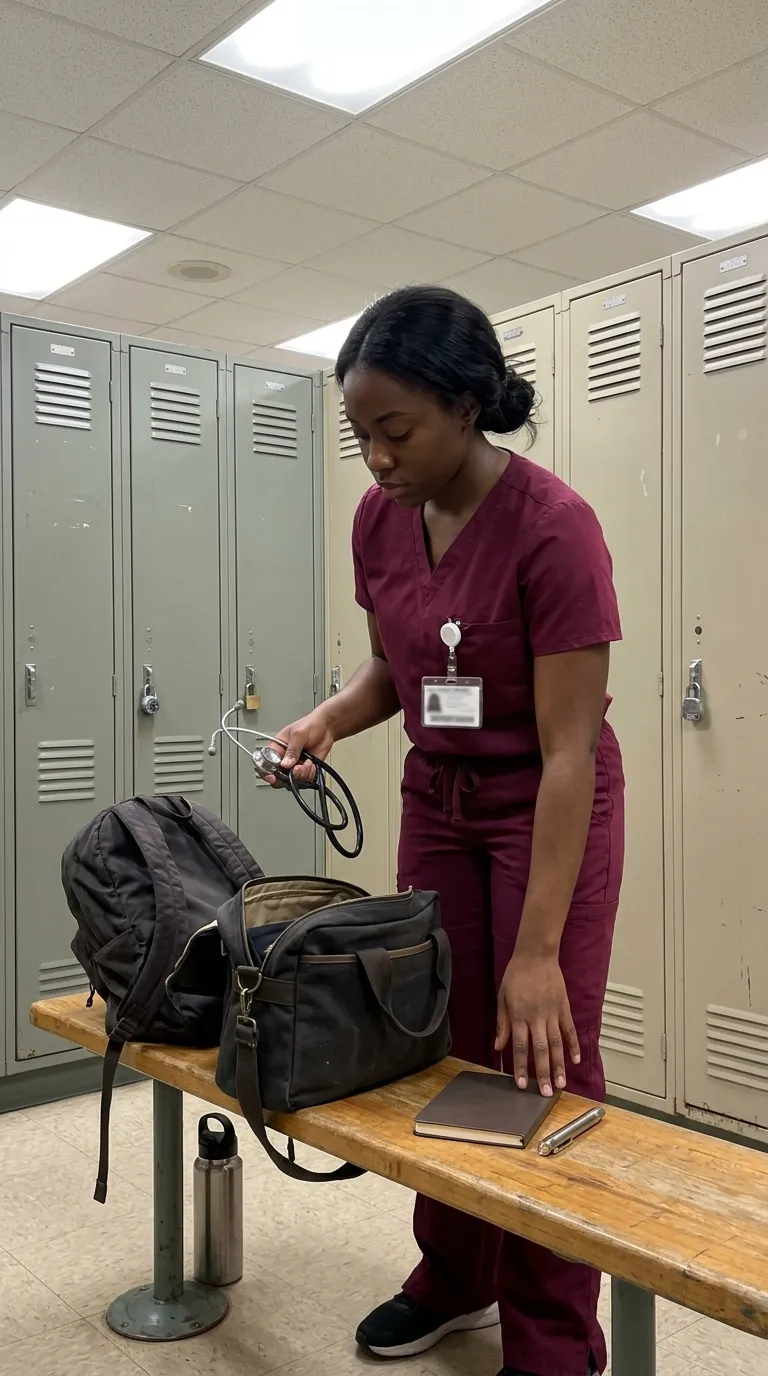
Clinical mornings start early, and a bag with real pockets ends the daily scramble. Look for one padded section for the stethoscope, a wipeable lining for the penlight and scissors pocket, and a separate spot for a notebook, snacks and a phone charger.
Shoulder straps beat tote handles on the walk from the parking lot. A dark color hides scuffs and matches any scrub color the program assigns.
A Pocket Notebook for the Unit
Students are told to write everything down: vitals, intake, the question they meant to ask the instructor. A small notebook that fits a scrub pocket turns that advice into a habit, and the pages survive a full rotation of reference notes.
- Size: pocket-sized, so it lives in the scrub top instead of the bag.
- Pages: tear-resistant paper shrugs off sanitizer splashes and rain on the walk in.
- Layout: plain lined pages work for vitals, med lists and report notes alike.
- Habit: many students keep one per rotation and file them as study notes later.
Study and Tech for Exams

Lectures, care plans and NCLEX practice questions eat most of a student’s week, so study gifts get used daily. These picks suit a dorm desk or a library table, and most still earn their place later, when that student starts shopping for gift ideas for graduating nurses instead.
Blank Flashcards in Bulk
Cost: around $10 to $15 · Best for: pharm and lab values · Buyer’s check: blank cards beat pre-printed sets for most classes
Flashcards remain the workhorse of nursing school study, because writing a drug class or a lab range by hand fixes it in memory. A bulk pack of blank cards, ideally in a few colors, lets the student sort by system: cardiac in one color, antibiotics in another.
Add a binder ring or a small card box so finished decks stay together in a backpack. Pre-printed decks look tidy, but they rarely match the order an instructor teaches.
A Lap Whiteboard for Practice Questions
A whiteboard turns passive review into active recall. The student writes the answer from memory, checks it, erases and moves on, and the questions that survive three erasures are the ones that need study time before the exam.
- Size: lap-sized boards fit a dorm desk and travel to study groups.
- Surface: a smooth, low-ghosting board stays readable after hundreds of practice runs.
- Markers: fine-tip markers keep cramped dosage math legible.
- Routine: ten minutes of write, check, erase beats rereading a chapter twice.
Study tip: use the whiteboard for the missed questions only. Write each missed question’s key fact from memory every night for a week, and the fact usually sticks by the third or fourth round.
Pens and Highlighters That Last
Budget: around $12 to $20 · Best for: notes, practice charts and care plans · Buyer’s check: black ink is the clinical standard
Students write constantly: lecture notes, practice charts, care plans and clinical paperwork. A bundle of smooth black pens covers the paperwork, since black ink is the standard for clinical documents, and a set of mild highlighters keeps textbook pages readable instead of neon.
Gel pens that skip or smear end up abandoned in a drawer, so pick a well-known everyday line rather than a novelty set. A pen with a clip survives longer, because it rides the scrub pocket instead of the bottom of a bag.
A Planner for Rotating Clinical Days
Nursing school schedules refuse to sit still: clinical days rotate, skills labs move, and exam dates land on top of work shifts. A planner with roomy blocks and a month view helps the student see the week whole instead of living reminder to reminder.
- Layout: hourly blocks on clinical days, open space on class days.
- Durability: a spiral or disc binding lies flat on a crowded desk.
- Extras: a pocket for loose handouts and a page marker earn their keep.
- Start date: undated planners work for programs that start in any term.
A Power Bank for Long Days
Cost: around $20 to $35 · Best for: clinical days and commutes · Buyer’s check: match the student’s phone connector
Between the alarm, the commute and a 12-hour clinical day, a student’s phone rarely sees a charger. A slim power bank keeps it alive for drug reference apps, group study chats and the ride home, without hunting for an outlet in the hospital hallway.
A 10,000 mAh bank gives roughly two full phone charges and still fits a scrub pocket or a bag side pouch. Check the connector before you buy; a built-in cable removes one more thing to forget.
A Book Light for Late Study Sessions
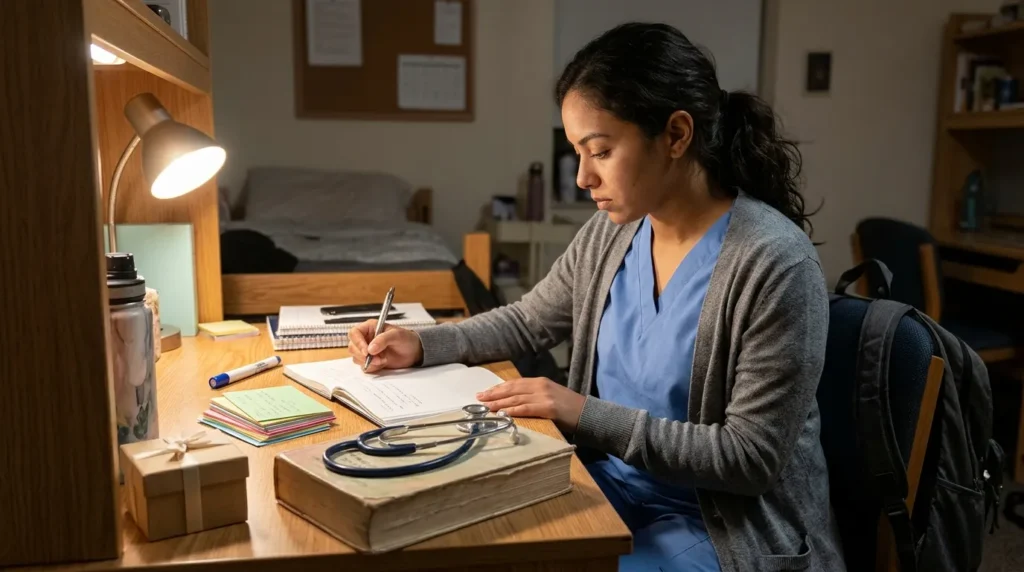
Dorm rooms and shared apartments make late study a negotiation. A clip-on book light with a warm setting lets the student finish a chapter after a roommate’s lights-out, and it doubles as a reading light on early commutes.
- Brightness: two or three levels, with the lowest gentle enough for a shared room.
- Clip: a padded clip grips a textbook cover without tearing pages.
- Battery: rechargeable models end the hunt for coin batteries at midnight.
- Angle: a flexible neck points light at the page, not the ceiling.
Comfort for Long Clinical Days
Twelve hours on hard floors is the part of nursing school nobody warns families about. Comfort gifts sound small and feel enormous by hour nine, especially the ones that help feet, legs and lunch breaks recover.
Compression Socks for 12-Hour Days
Budget: around $15 to $25 a pair · Best for: clinical days on hard floors · Buyer’s check: ask for shoe size and calf size
Standing and walking for a full clinical day leaves legs aching and ankles swollen. Graduated compression socks, the kind that squeeze gently at the ankle and ease up the calf, are standard among working nurses for this reason, and students feel the difference in the first week.
Mild compression, often labeled 15 to 20 mmHg, suits most students for long shifts. Plain colors are the safe buy, since some programs require socks that match the uniform policy.
Cushioned Insoles for Clinical Shoes
Clinical shoes take the miles, but insoles take the impact. A pair of cushioned insoles sized to the student’s shoe softens hard hospital floors, and they cost far less than new shoes.
- Fit: trim-to-fit insoles work in most clinical shoe brands and sizes.
- Support: a firm arch section matters more than thick foam alone.
- Swap: insoles move between shoes, so one pair covers clinical and work shoes.
- Timing: give them before the first full week of clinicals, not after the sore feet start.
A Water Bottle That Holds a Whole Shift
Cost: around $20 to $30 · Best for: staying hydrated between breaks · Buyer’s check: it must fit a car cup holder and a bag pocket
Students get pushed off the unit for water less often than they plan, so a large insulated bottle that keeps water cold from the morning huddle to the last med pass is a quiet hero. A 32 to 40 ounce size usually lasts until a break.
A straw lid encourages quick sips and closes with one hand. Pick a bottle with a handle and a base that fits a cup holder, since clinical mornings start in the car.
An Insulated Lunch Bag
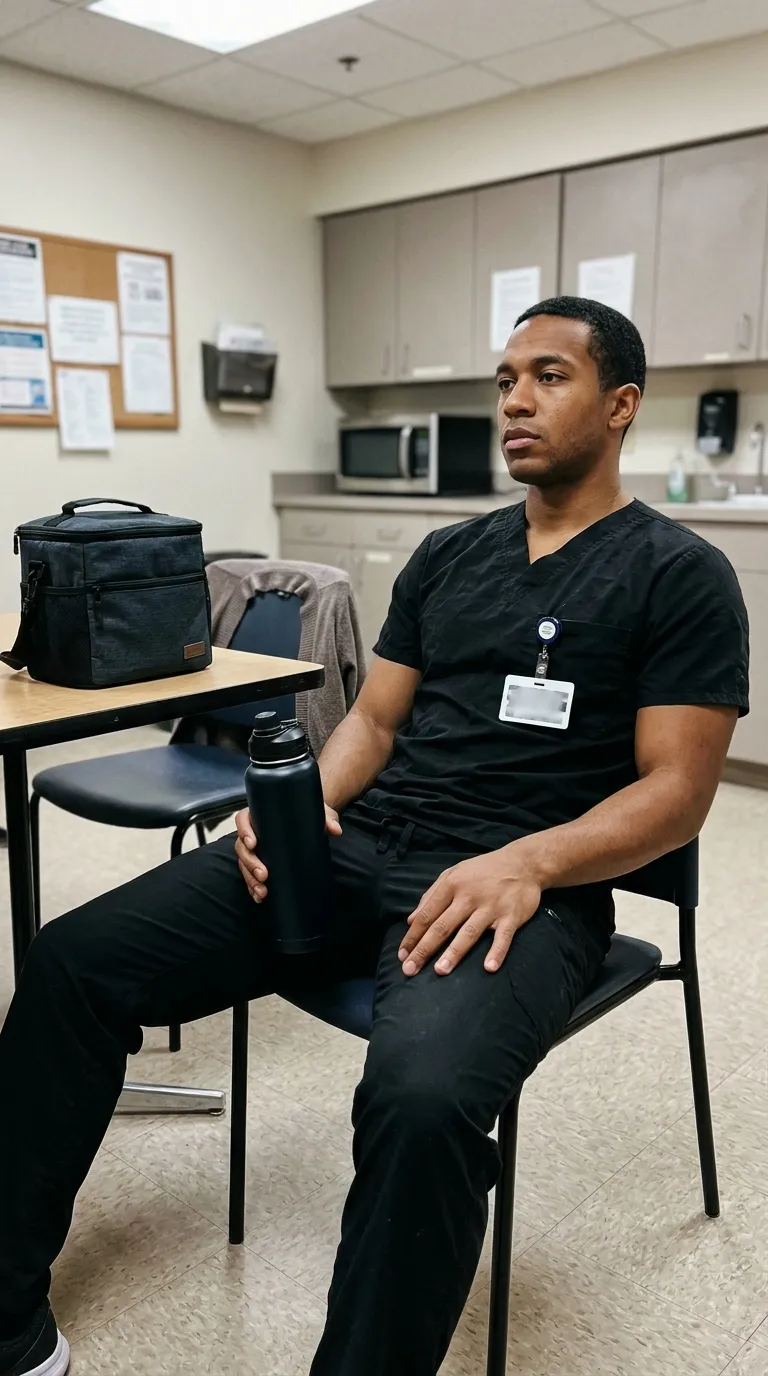
The cafeteria line at noon can eat half a lunch break, so many students pack food from home. An insulated lunch bag with room for a meal, a snack and an ice pack keeps that break for eating and sitting down instead.
- Space: tall enough for a meal container, a drink and a piece of fruit.
- Lining: a wipeable lining handles soup leaks without a lasting smell.
- Ice pack: a slim reusable pack keeps food safe through a morning of clinicals.
- Strap: a shoulder strap leaves both hands for the clinical bag and a coffee.
Unscented Hand Cream
Budget: around $8 to $15 · Best for: hands washed forty times a day · Buyer’s check: unscented only, most units are scent-restricted
Constant hand washing and sanitizer leave student hands dry and cracked by mid-rotation. A rich, unscented hand cream is the version that gets used, because most units restrict fragranced products around patients with breathing problems and nausea.
This is the gift where the plain tube beats the pretty scented set. Look for a thick cream rather than a thin lotion, and a small tube for the clinical bag plus a larger one for home.
A Leakproof Travel Mug
The 5 a.m. coffee only helps if it reaches the clinical site still hot and still inside the mug. A leakproof travel mug with a locking lid survives the commute in a bag next to the stethoscope, which is where lesser mugs fail.
- Seal: a locking, spill-proof lid is the feature that matters most.
- Size: 16 to 20 ounces covers the commute without a refill stop.
- Cleaning: a wide mouth and few parts make daily washing realistic.
- Grip: a textured or handled side works with cold, early-morning hands.
Keepsakes, Thank-Yous and Milestones
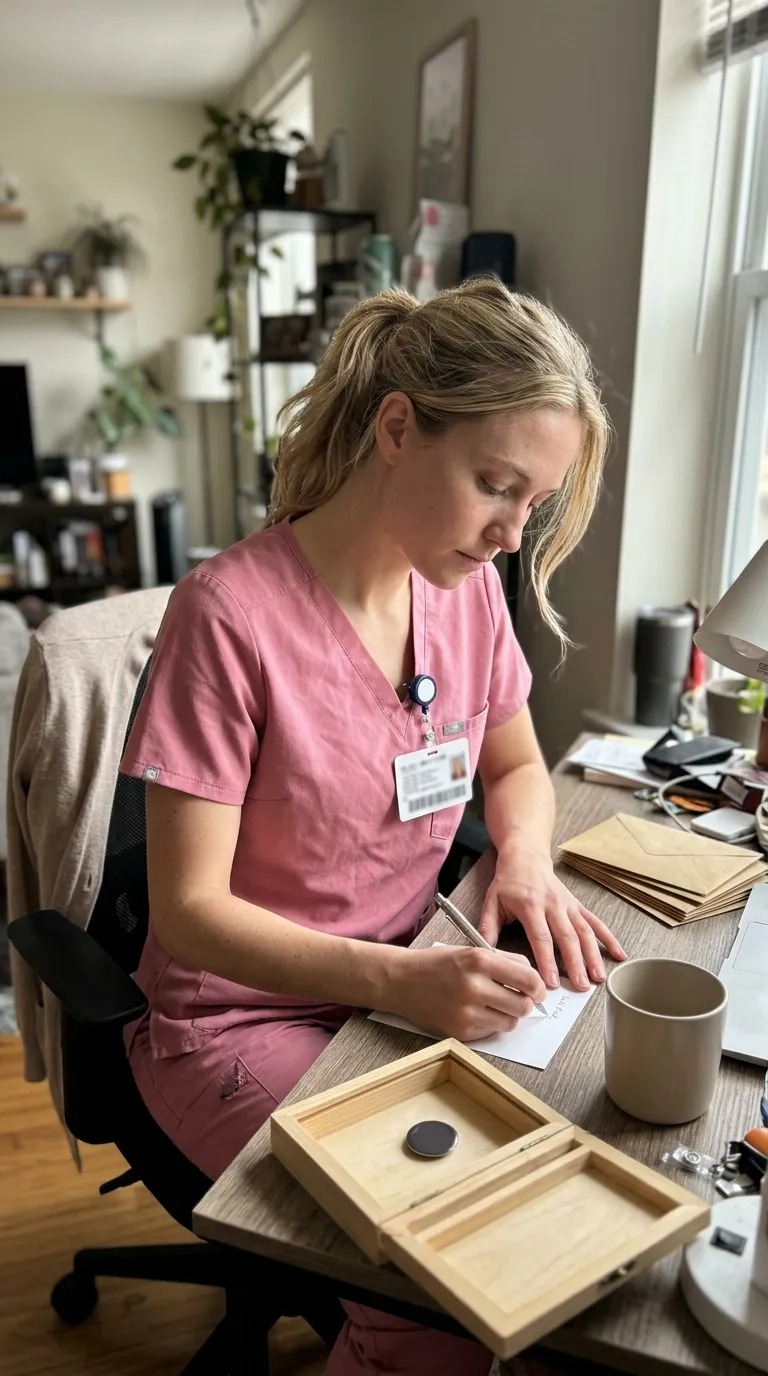
Not every gift has to be gear. The milestones of nursing school, a finished rotation, a pinning, a graduation, deserve marking, and these are the keepsakes students actually keep instead of donating by spring.
Thank-You Note Cards for Preceptors
Cost: around $10 · Best for: the last day of each rotation · Buyer’s check: blank inside beats pre-written messages
On the last day of a rotation, students thank the preceptors and nurses who taught them, and a handwritten note still stands out in a unit full of group emails. A box of blank-inside note cards lets the student write something specific while the rotation is fresh.
If the giver is the one saying thanks, a small present paired with the note works well too; these thank-you gifts for their preceptors cover the most appreciated options.
A Charm Keychain for the Clinical Bag
A small keychain on the clinical bag zipper is the one decorative gift most dress codes allow. Pick a flat, sturdy charm, a tiny stethoscope, a caduceus or the student’s graduation year, in metal that survives daily locker tosses.
- Size: flat charms stay quiet and never snag on gloves or gowns.
- Metal: stainless or enamel-coated charms handle sanitizer wipes.
- Ring: a strong split ring beats a thin jump ring for daily use.
- Taste: keep it plain and school-safe; units frown on jangly extras.
A Graduation Cap Decorating Kit
Budget: around $15 to $25 · Best for: the final semester · Buyer’s check: confirm the school’s cap rules first
Many graduates decorate the top of the mortarboard for photos, and a kit of card stock, letter stickers, fabric paint and glue gun refills covers most designs. Some schools restrict cap decorations, so this gift lands best a few weeks before graduation, once the rules are known.
For design direction, these nurse graduation cap ideas run from a single painted stethoscope to full themed boards.
A Coffee Shop Gift Card
It sounds plain, and it is the gift students mention most. Early clinical mornings and late study sessions run on coffee, and a gift card removes the daily math of whether the budget stretches to a cup before a 6 a.m. shift.
- Amount: around $15 to $25 covers several early-morning runs.
- Place: pick the shop on the route between home and the clinical site.
- Format: a physical card survives a dead phone battery.
- Pairing: tuck it inside a note card for a gift that still feels personal.
A Shadow Box for the Pinning Pin
Cost: around $20 to $35 · Best for: after the pinning ceremony · Buyer’s check: a small box suits a pin and one photo
At the pinning ceremony, each graduate receives a nursing pin, and most pins then vanish into a drawer. A shadow box with a fabric back gives the pin, a name card and one photo a permanent home on a desk or shelf.
Choose a box deep enough for the pin’s clasp and simple enough to match a first apartment. It is a graduation-season gift that costs little and gets kept for an entire career.
A Journal for Clinical Reflections
Many programs assign reflection writing, and even where they do not, students process hard clinical days on paper. A plain, sturdy journal with a lay-flat binding becomes the private half of nursing school, the debrief nobody grades.
- Binding: lay-flat stitching survives a year of backpack travel.
- Paper: thicker pages handle gel pens without bleed-through.
- Size: small enough for the clinical bag, big enough for real entries.
- Cover: a plain, professional cover suits a student who will carry it onto units.
Our Quick Pick
If you remember one thing: buy for the clinical day first. The stethoscope, penlights and compression socks in the first group get used on every shift, while the keepsakes land hardest at the milestones they mark.
And a short study note to pass along with the gift: the study tools pay off fastest inside a routine, flashcards reviewed after lecture, the whiteboard saved for missed questions, and the planner checked once a week before the week checks you.