


Nursing Exam Preparation Tips can help you organize review, strengthen clinical reasoning, and prepare more confidently for challenging tests. From error tracking to realistic practice exams, these strategies focus your time on what actually needs improvement. Use the ideas below to build a focused preparation routine that works with your nursing school schedule.
Build a Topic Matrix
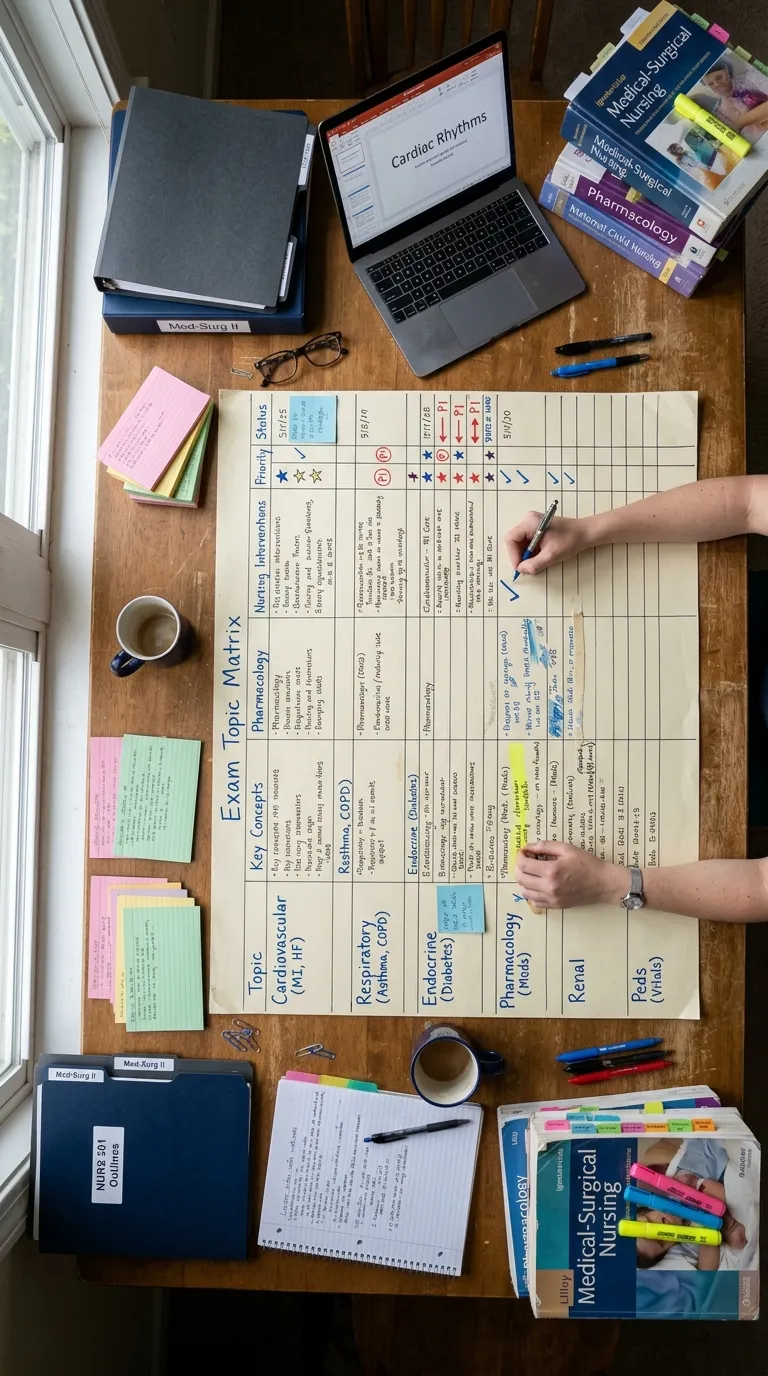
A topic matrix gives exam preparation a clear starting point instead of leaving you to guess what deserves attention. I’ve found that separating familiar material from uncertain topics makes review sessions far more targeted. Divide your course content into subjects and rate your understanding of each one. This helps you recognize where extra practice is needed before exam day.
Your matrix can include:
- Strong topics: Concepts you can explain without checking your notes.
- Developing topics: Material you understand but sometimes forget.
- Weak topics: Areas that require more practice and clarification.
Update the matrix after completing practice questions so your study plan reflects your actual progress.
Recreate Patient Scenarios

Scenario practice makes studying feel closer to the reasoning required in clinical situations. Instead of memorizing an isolated fact, you learn to recognize what information changes the nursing decision. Read a short patient case and identify the most important assessment findings before choosing an intervention. Consider the patient’s symptoms, vital signs, medical history, and immediate risks. This approach helps you connect textbook knowledge with practical nursing judgment.
After answering, explain why your selected response is appropriate and why the other options are less suitable. Always use your course materials and current clinical guidance when reviewing patient-care decisions.
Use a Question Ladder
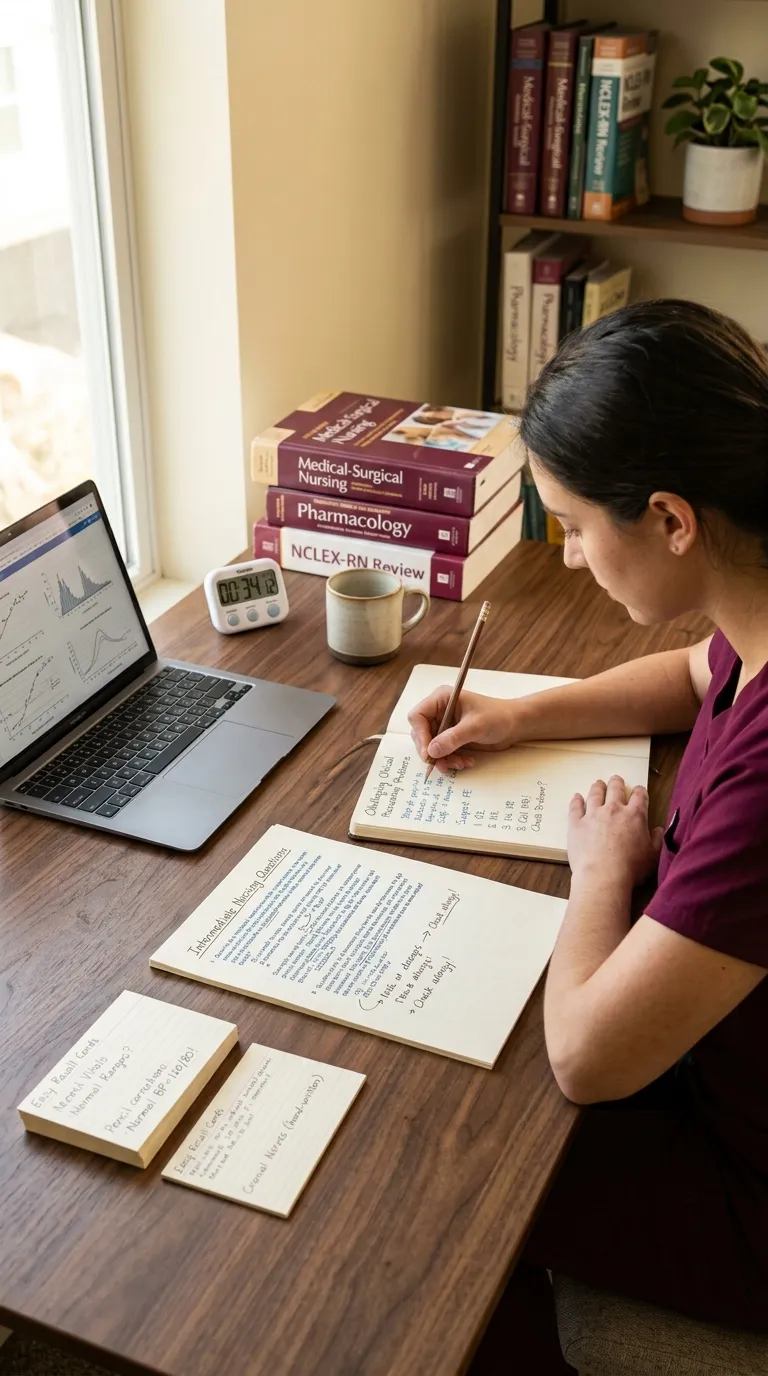
A question ladder gives your preparation a natural progression from remembering information to applying it. This is more useful than jumping immediately into the hardest questions and confusing difficulty with productive studying.
Start with basic recall questions, move to questions that test understanding, and then attempt application and clinical judgment problems. For example, review normal vital sign ranges before practicing questions about recognizing concerning changes in a patient’s condition.
Increase the difficulty gradually as your accuracy improves. If you repeatedly struggle with advanced questions, return to the underlying concept instead of answering more questions without understanding your mistakes.
Create a Red Flag Sheet

A red flag sheet gives you a compact way to review details that can signal an urgent change in patient status. Keeping these points together makes final revision faster and more clinically focused. Include important warning signs, safety precautions, and assessment findings emphasized in your nursing course.
Organize the sheet by body system or clinical topic so information is easy to find. For instance, you might create separate sections for respiratory concerns, neurological changes, infection warning signs, and medication safety. Keep the information accurate and concise, using trusted course resources rather than unverified online summaries.
Practice Under Interruption
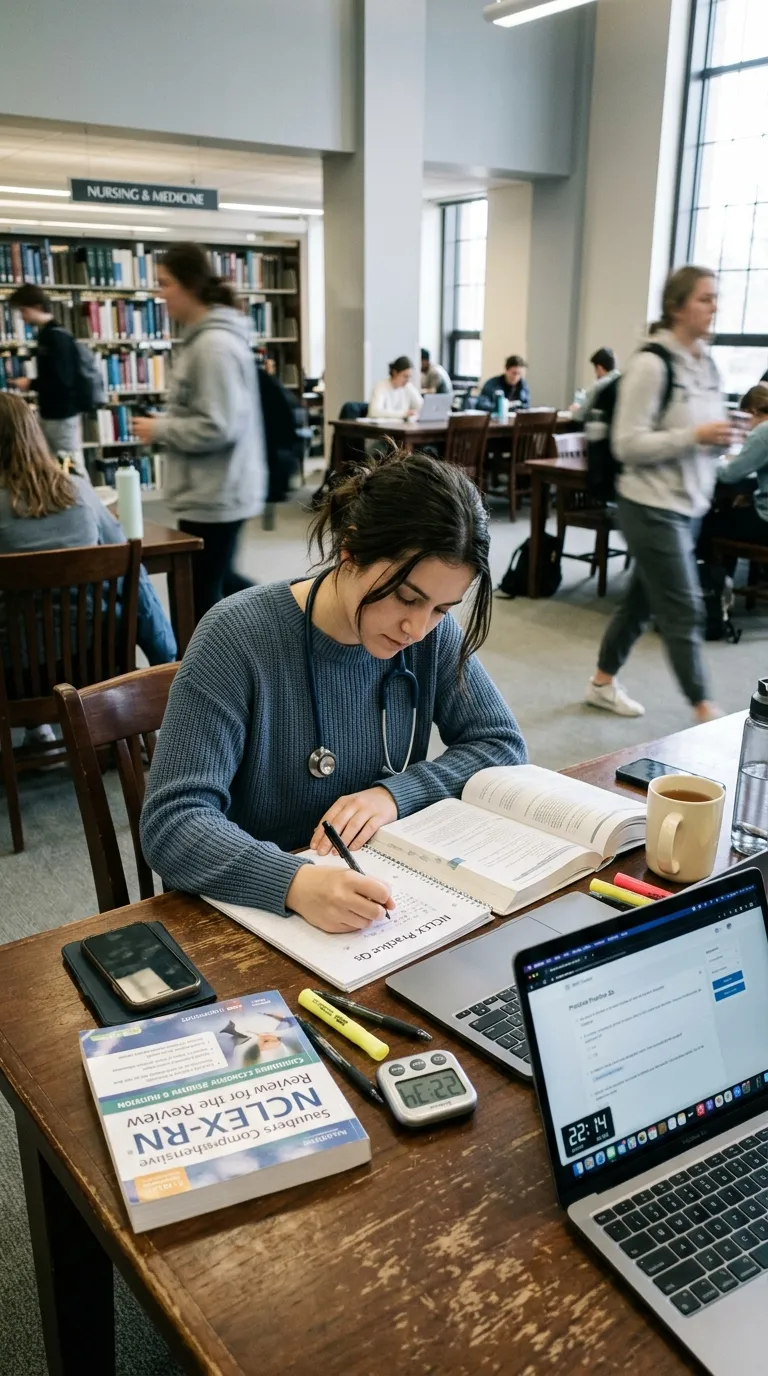
Perfect silence is not always available during nursing school, so practicing attention recovery can be useful. The goal is not to create distractions but to become better at calmly returning your focus when one occurs. Complete a short study session in a normal environment, and practice returning to your question after an ordinary interruption.
Try these simple habits:
- Keep your current task written beside your notes.
- Silence unnecessary notifications before beginning.
- Mark your stopping point so you can resume quickly.
- Take a brief pause if you need to reset your concentration.
Use quiet conditions for your most demanding practice sessions, too. The aim is to strengthen focus without making every study session unnecessarily difficult.
Audit Your Study Time
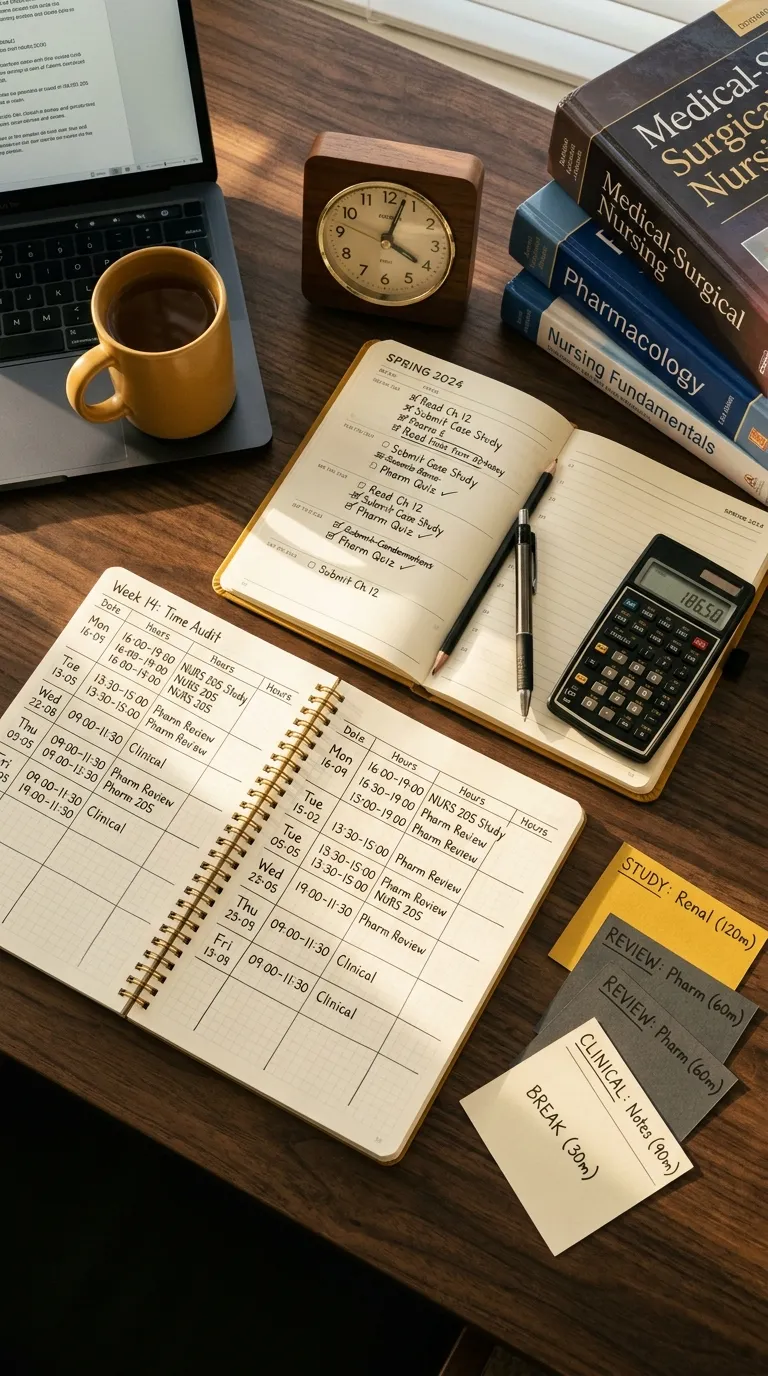
Auditing your study time reveals whether your routine is actually producing learning. I’ve noticed that students often discover they need fewer total hours and more deliberate practice once they see where their time is going. Track how long you spend reading, reviewing flashcards, answering questions, and checking explanations.
At the end of the week, ask yourself which activities helped you understand the material and which ones consumed time without much progress. You may discover that repeatedly highlighting textbook passages takes longer than answering practice questions and reviewing the reasoning behind each answer.
Use these observations to adjust your next week’s schedule. A realistic plan with focused sessions is often more useful than a packed timetable that is difficult to maintain.
Build an Error Notebook

An error notebook turns wrong answers into a personal revision resource. Instead of repeatedly studying everything, you can return to the exact reasoning problems that have been slowing you down. Record the question topic, the reason your answer was incorrect, and the concept you need to review.
For each mistake, consider whether you misunderstood the question, forgot a fact, confused two conditions, or rushed through the options. Write a short explanation in your own words and revisit the entry during later study sessions.
Avoid copying entire questions or explanations without processing them. The purpose is to identify patterns and understand how to approach similar questions more effectively next time.
You’ll probably also find Nursing Note-Taking Tips Every Student Needs helpful for organizing your study materials.
Rehearse Clinical Explanations

Rehearsing clinical explanations exposes gaps that can stay hidden during silent reading. If you cannot clearly explain why something happens or what you would assess next, that topic deserves another look. Choose one concept, explain it aloud in simple language, and check your explanation against reliable nursing resources.
For example, describe why a particular assessment finding matters, what additional information you would gather, and which safety concerns require attention. You do not need a perfect presentation. You simply need to make your reasoning understandable and accurate.
This technique can also work with a study partner. Take turns explaining concepts and asking follow-up questions to identify areas that need clarification.You’ll probably also find Nursing Notes Taking Tips Every interesting.
Rotate Question Formats
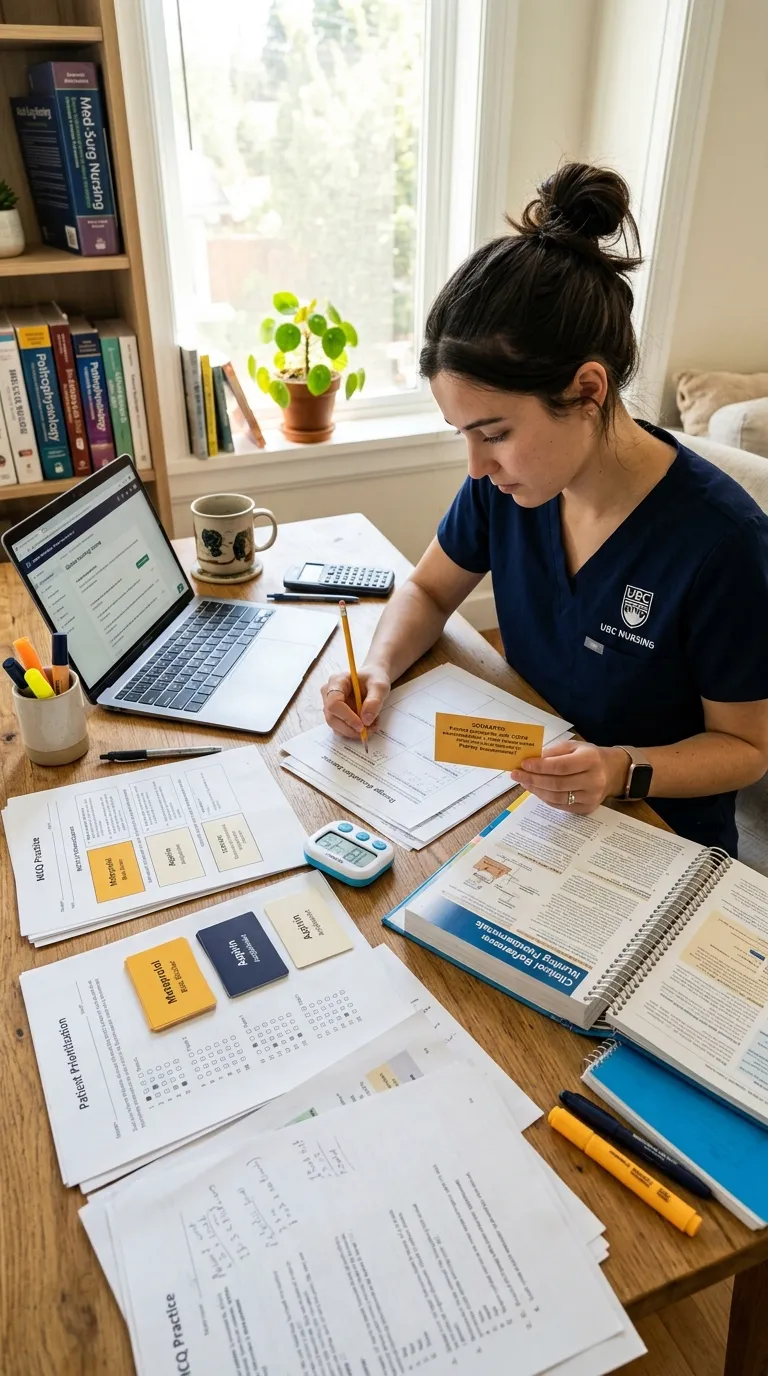
Rotating question formats keeps preparation from becoming too predictable. Nursing exams can require different kinds of thinking, so practicing across formats helps you concentrate on the clinical concept instead of the appearance of the question.
Include multiple-choice questions, select-all-that-apply questions, case-based questions, and dosage calculations when these formats match your course assessments. Read the directions carefully because different question types may require different answering strategies.
After each practice set, focus on the reasoning behind your responses rather than your score alone. A correct answer reached through an incorrect assumption may still reveal a gap in understanding.
Prioritize High-Risk Topics

Smart preparation starts with deciding what deserves your attention most. Prioritizing high-risk material prevents familiar topics from consuming your limited study time while harder concepts remain untouched. Review your course objectives, instructor guidance, previous practice results, and recurring mistakes before choosing what to study next.
Consider prioritizing topics that involve patient safety, infection prevention, medication administration, changes in patient condition, and clinical prioritization when they are relevant to your syllabus. These areas often require more than simple memorization.
Create a short daily priority list with two or three important tasks. Complete the most challenging task when your concentration is strongest, and leave familiar material for shorter review sessions.
Use Comparison Tables

Comparison tables are especially useful when two conditions look similar but require different nursing responses. Seeing differences side by side makes subtle details easier to recognize when an exam question deliberately creates confusion.
You can compare symptoms, assessment findings, risk factors, expected results, and nursing considerations. For example, organize related disorders into columns and highlight the findings that distinguish one condition from another.
Keep each table focused on a specific learning objective. Too much information can make comparisons difficult to use, so include only details that help you recognize meaningful differences. Review the table from memory before checking your notes to make the activity more effective.
Schedule Retrieval Reviews

Retrieval reviews work because they make you pull information from memory instead of simply recognizing familiar notes. I’ve noticed this approach becomes particularly useful when several exams are close together and older material is easy to forget.
Review a topic shortly after learning it, then revisit it over the following days. Adjust the timing according to how easily you can recall the information. Topics that remain difficult may need more frequent review, while familiar material can be revisited less often.
Useful retrieval activities include:
- Answering flashcards without looking at the back.
- Writing down key concepts from memory.
- Explaining a process aloud.
- Completing a short practice quiz.
Check your answers afterward and correct misunderstandings before moving to another subject.
Simulate Exam Conditions
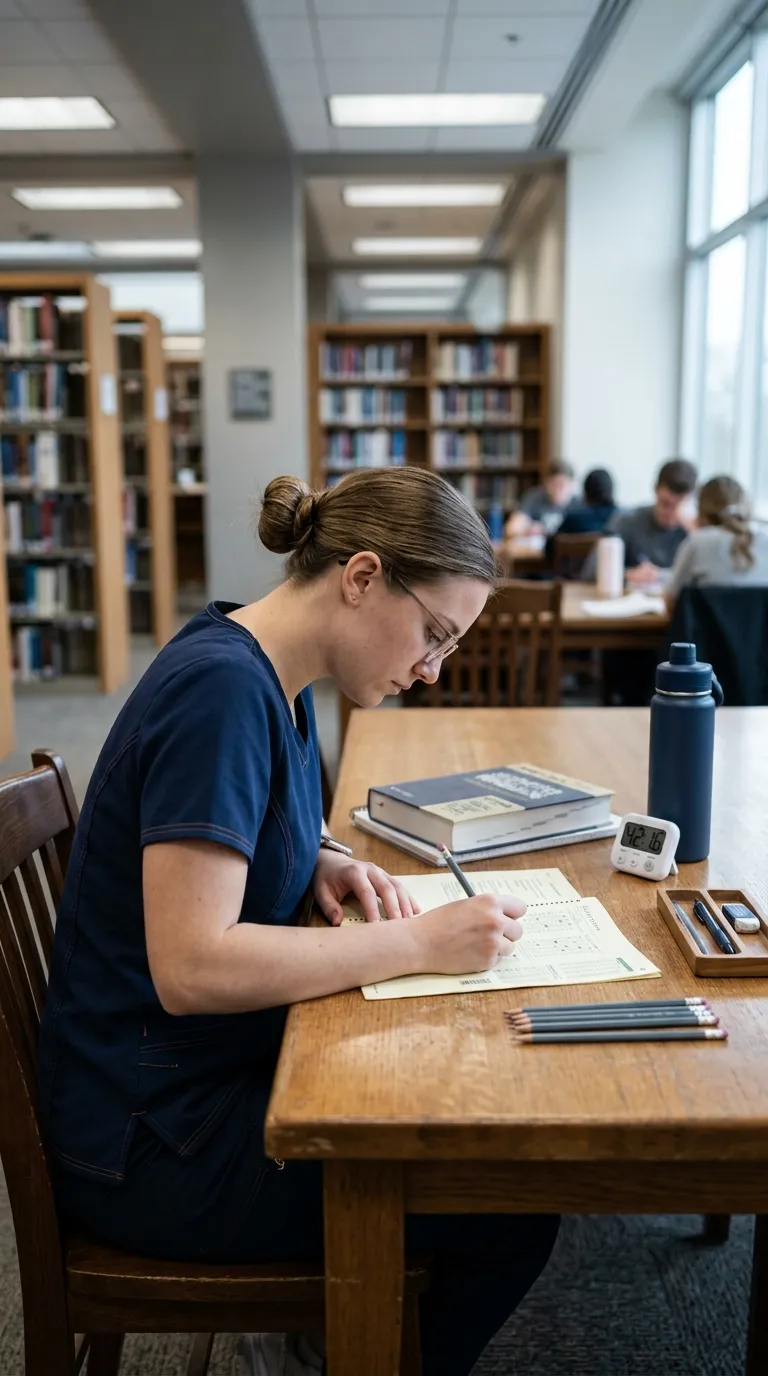
A practice test should feel enough like the real assessment to reveal your weak habits. Simulating the testing environment can uncover problems with pacing, concentration, or second-guessing before they affect your actual score. Choose a question set that matches your course content and follow the time limits when possible.
During the practice test, avoid checking notes or searching for answers. Once you finish, review both incorrect responses and correct answers that required guessing. Pay attention to whether you spent too long on individual questions or changed answers without a clear reason.
Use the results to plan your next review session. The goal is not simply to achieve a high practice score but to understand what needs improvement before the actual examination.
Review Safety Priorities

Safety questions often become easier when you stop asking only, “What is correct?” and start asking, “What could harm the patient first?” That shift helps turn memorized facts into practical clinical prioritization.
When answering a scenario, identify the patient’s immediate concern, relevant assessment findings, and any signs of deterioration. Read every option carefully and distinguish between actions that address an urgent threat and those that can reasonably wait.
Remember that the correct response depends on the details provided, the patient’s condition, and the scope of nursing practice. Avoid applying a single priority rule mechanically to every question. Practice explaining why one option is most appropriate in the specific situation described.
Protect Your Sleep Window

Late-night cramming can feel productive while leaving you too tired to think clearly the next day. Protecting a consistent sleep window gives your final preparation a better chance of translating into focused exam performance.
Build a realistic stopping time into your schedule, especially before a major assessment. Prepare your materials in advance so you do not spend the final evening searching for notes or organizing unfinished tasks. If a topic remains difficult, write down what you need to revisit rather than extending your study session indefinitely.
A steady routine, regular meals, hydration, and short breaks can also help you feel more prepared. Aim for consistent sleep instead of sacrificing rest to cover every last detail.
Review Instructor Emphasis

Instructor emphasis can help you decide where deeper review is worthwhile, especially when your course covers a huge amount of material. Use those clues alongside your official course objectives rather than assuming every repeated comment will appear on the exam.
Look back at lecture notes, assigned readings, learning outcomes, and review sessions. Pay attention to concepts your instructor explains in detail or connects to patient safety and clinical decision-making.
Make a list of the topics you need to revisit, then confirm them against the syllabus. This keeps your preparation aligned with the course instead of relying on rumors about what might appear on the test.
Practice Dosage Calculations

Dosage questions reward a careful process more than rushing toward an answer. Writing units throughout the calculation makes it easier to catch mismatched measurements before they turn into avoidable mistakes.
Practice converting units, interpreting medication orders, and identifying the information needed to solve each problem. Write down the formula, substitute the values carefully, and check that the final unit matches what the question requests.
Before accepting an answer, ask yourself:
- Did I use the correct prescribed dose?
- Are the units consistent?
- Did I convert measurements correctly?
- Does the result make sense for the question?
Use instructor-approved methods and verify medication calculations carefully. Accuracy and safe reasoning matter more than finishing a calculation quickly.
Create a Final-Day Checklist

Preparation does not end when you close the textbook. A simple final-day checklist removes small logistical problems from your morning so your attention can stay on the exam instead of searching for missing supplies.
Prepare the essentials in advance, including your identification, required stationery, permitted calculator, exam instructions, and travel arrangements. Check the assessment location and start time using the official information provided by your school.
Your checklist can also include a short review of key concepts, a planned bedtime, and time for breakfast. Avoid adding a long list of new topics at the last minute. Keep the final evening manageable so you can begin exam day feeling organized rather than overwhelmed.
Use Strategic Guessing

When an answer is uncertain, strategic elimination gives you a structured way to make the best decision available. Focus on what the question actually tells you, especially patient safety and priority clues, rather than guessing based on which option looks familiar.
First, identify the main task in the question. Then remove options that contradict the scenario, fall outside the information provided, or do not address the issue being tested. Compare the remaining choices with the patient’s condition and the course principles you have studied.
If you cannot solve a question quickly, follow your exam’s rules for marking and returning to unanswered items. Do not spend too much time on one difficult question at the expense of others.
Finish With Confidence Review

The final review should make your knowledge feel organized, not make you question everything you have learned. Focus on high-value reminders and recurring mistakes, then give your mind enough space to approach the exam clearly.
Review your error notebook, comparison tables, dosage calculation steps, and concise notes on challenging concepts. Avoid trying to memorize large amounts of unfamiliar material at the last moment. Instead, remind yourself of the strategies you will use to read questions carefully and evaluate each option.
Before finishing, identify a few things you have improved during preparation. Confidence does not mean knowing every answer immediately; it means trusting your study process, recognizing uncertainty, and applying your knowledge carefully.
Conclusion
Review your recurring mistakes, practice under timed conditions, and prioritize patient-safety concepts before exam day. Start with one focused strategy, then add comparison tables or retrieval reviews as your preparation becomes stronger. Consistent practice and thoughtful review can help you identify weak areas and approach challenging questions more systematically. Save these Nursing Exam Preparation Tips on Pinterest and use them to prepare for your next nursing exam with greater confidence.