


How to Pass Nursing Exams becomes much easier when your preparation focuses on active learning, clinical reasoning, smart practice, and a calm exam-day routine. Instead of cramming everything at the last minute, build habits that help you understand and apply nursing concepts.
From using practice questions and reviewing mistakes to protecting your sleep and adjusting your study plan, small changes can make exam preparation feel more manageable. The goal is not to study endlessly it is to study with purpose.
Understand the Exam Blueprint
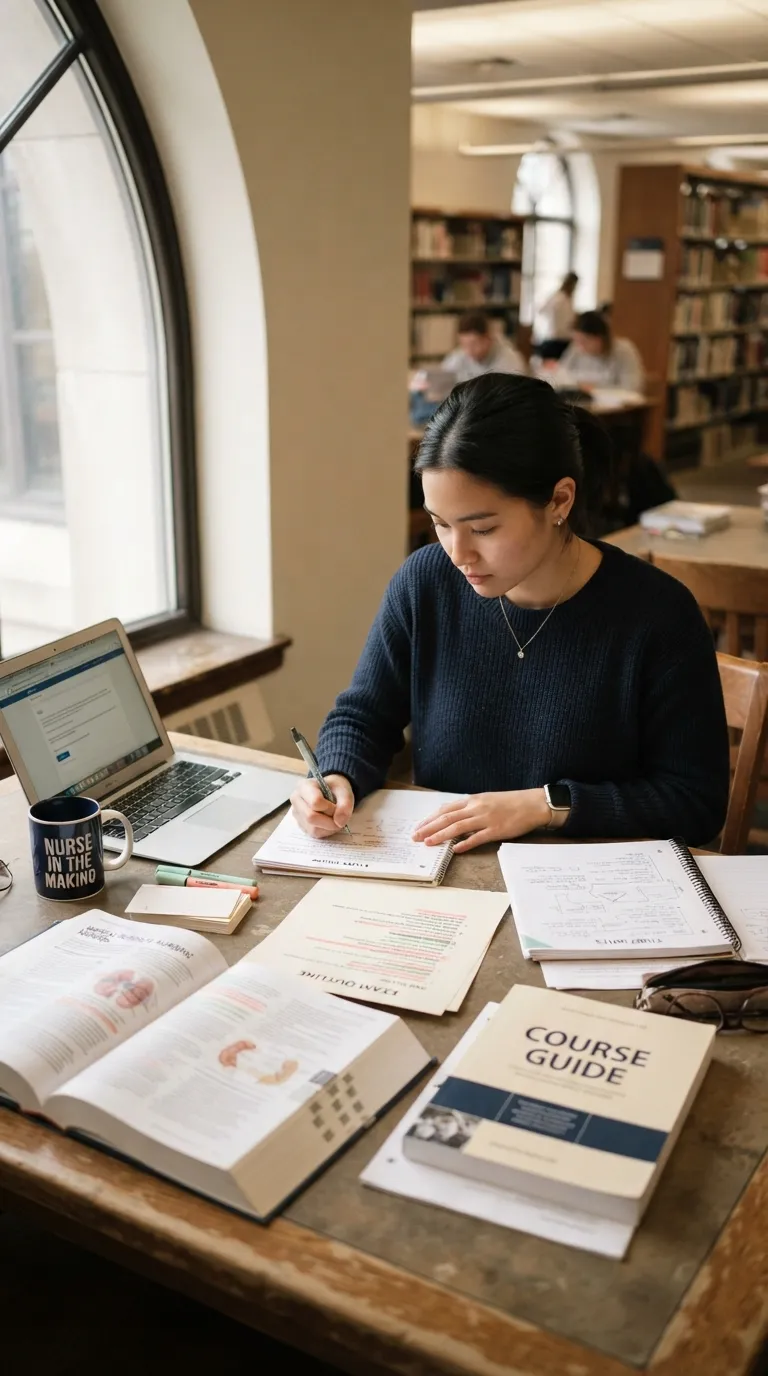
Before studying harder, understand what you are actually preparing for. An exam blueprint or course outline can show where your attention belongs and prevent you from spending hours on minor details while overlooking heavily tested concepts. Review the topics your instructor emphasizes and identify how much time you should dedicate to each area.
A simple topic checklist can help you organize your preparation. Include major subjects, important concepts, and areas where you feel less confident. This gives you a realistic starting point instead of leaving you to guess what to study next.
Start With Learning Objectives

Learning objectives give your studying a clear destination. Rather than rereading entire chapters without direction, use them to determine what you should understand, explain, compare, or apply before entering the exam.
Turn each objective into a question and try to answer it without looking at your textbook. If you struggle to explain the concept clearly, return to the relevant material and review it. This method helps you focus on understanding rather than simply completing pages of reading.
Use Retrieval Practice

Simply looking at notes can create the feeling that you know more than you actually do. Retrieval practice reveals what you can produce without help, making it easier to identify the information that still needs work.
After studying a topic, close your notes and recall the main ideas from memory. You can write a short summary, explain the concept aloud, or answer practice questions. Check your response afterward and correct any missing or inaccurate information.
Try these simple retrieval methods:
- Write down important facts without checking your notes.
- Explain a nursing concept in your own words.
- Answer five to ten questions after completing a study session.
Regular recall sessions can make revision more active and help you recognize which concepts need additional attention.
Compare Similar Concepts

Nursing exams often test concepts that look similar but require different responses. Comparing related ideas side by side helps you notice the distinctions instead of relying on vague recognition.
For example, you might compare similar symptoms, medication classifications, infection-control precautions, or nursing interventions. Create a small comparison chart that highlights the differences, relevant assessment findings, and situations in which each concept applies. Keep the information focused so the chart becomes a useful revision tool rather than another lengthy set of notes.
Study With Priority Questions

Passing nursing exams is not only about knowing facts. Many questions require you to decide what matters most in a particular situation, so practicing prioritization can strengthen the clinical reasoning needed to choose between several plausible answers.
When reviewing a patient scenario, pay attention to the information that could change the urgency of care. Consider the patient’s current condition, potential safety risks, and whether an assessment or intervention is needed first. Follow the clinical frameworks taught in your course rather than relying on memorized shortcuts.
With regular practice, you can become more comfortable distinguishing an urgent concern from an issue that can be addressed later.
Review Your Wrong Answers

Wrong answers can be some of your most useful study material. Instead of simply marking them incorrect and moving on, examine the reasoning behind each mistake so you can recognize the same trap when it appears in a different question.
Create an error log with the question topic, your selected answer, the correct answer, and the reason you missed it. You may discover that your mistakes come from unfamiliar content, rushed reading, or difficulty choosing between two reasonable options.
Review this log every few days. Revisit the questions you previously missed and try answering them again without looking at the explanation. This helps you measure whether your understanding has improved.
Mix Study Topics
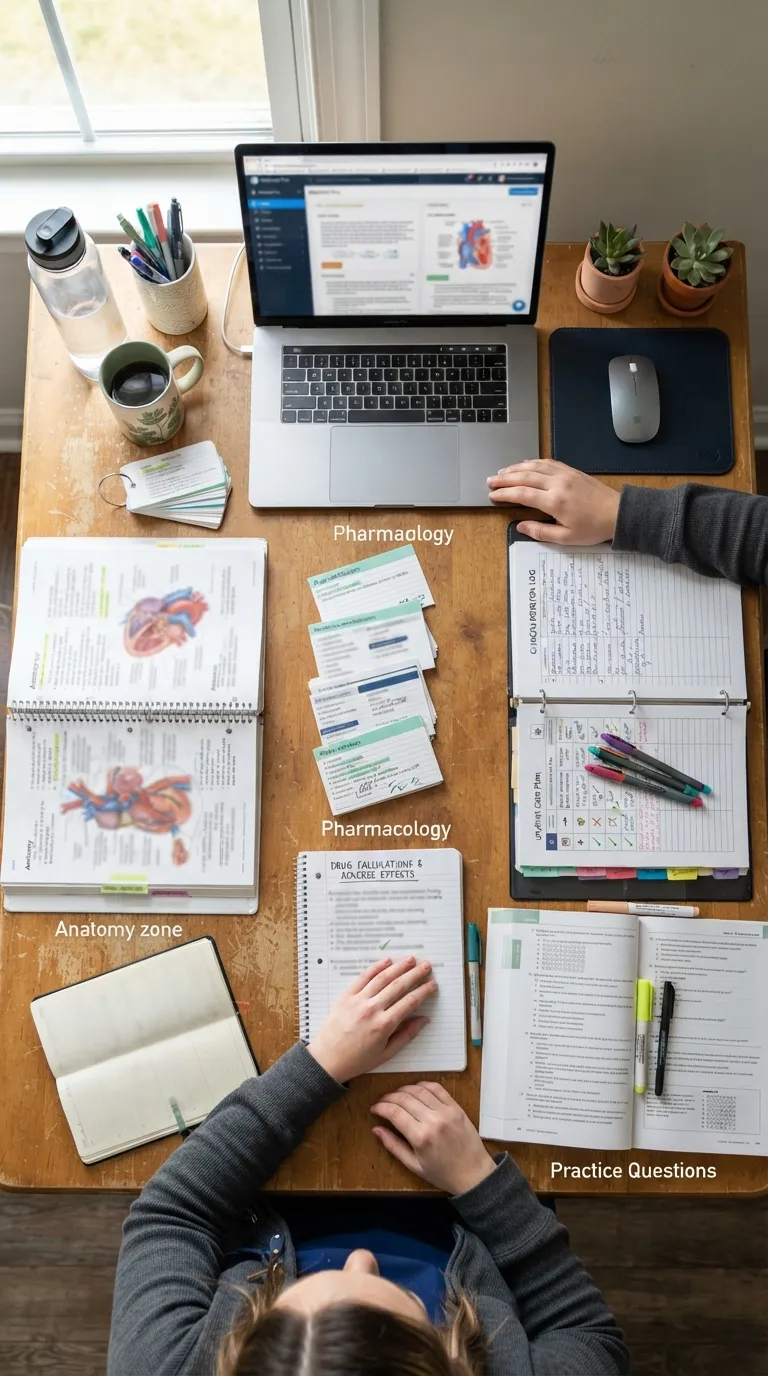
Studying one topic repeatedly can make it feel familiar without guaranteeing that you can recognize it later in an unfamiliar question. Mixing subjects creates more opportunities to decide which knowledge applies to the problem in front of you.
For example, combine questions about pharmacology, health assessment, and nursing fundamentals in one practice session. Start with manageable groups of questions and gradually increase the variety as you become more comfortable.
This approach may feel more challenging than reviewing a single chapter, but that challenge can reveal whether you genuinely understand a concept or have simply become familiar with its wording.
Explain the Why

Memorizing an answer may help once, but understanding the reason behind it is more transferable. When you know why an intervention, assessment, or priority makes sense, you are better prepared for questions that change the wording or scenario.
Whenever you learn a new concept, ask yourself what causes the problem, what findings you might expect, and why a particular nursing action is appropriate. Connect the explanation to information you have already studied.
You can also explain the concept to a classmate or pretend you are teaching a beginner. If you cannot explain it clearly, identify the confusing part and review that specific area instead of starting the entire chapter again.
Use Timed Practice

Knowing the material is only part of exam preparation. Timed practice can help you become more comfortable making decisions under a time limit and reveal whether you spend too long analyzing questions that could be approached more efficiently.
Begin with a short set of questions and give yourself a reasonable time limit. Afterward, review both your answers and your pacing. If you consistently spend too much time on certain questions, practice identifying the main problem and eliminating clearly unsuitable options.
Remember that speed should not replace accuracy. Your goal is to develop a steady rhythm that allows you to read carefully, think clearly, and finish the assessment within the available time.
Practice Without Notes

Practice becomes more valuable when it shows what you can do without assistance. Working independently first gives you a clearer picture of your current understanding and makes the review afterward much more targeted.
Choose a small set of questions, put your notes aside, and answer using only your knowledge and reasoning. Once you finish, check the explanations and return to your study material for the concepts you missed.
Avoid treating every incorrect answer as proof that you are unprepared. Instead, use the results to identify specific gaps and make your next study session more focused.
Use Case-Based Flashcards

Flashcards become more useful when they encourage you to think instead of simply recognize a definition. Turning information into small patient scenarios can help you practice connecting symptoms, findings, interventions, and priorities.
For example, instead of writing only a medication name on one side and its classification on the other, include a question about its purpose, relevant precautions, or information that requires attention. Keep each card focused on one main learning point.
Useful flashcard topics include:
- Common laboratory values and their clinical significance.
- Medication classifications and important safety considerations.
- Assessment findings associated with selected conditions.
- Nursing concepts that you frequently confuse.
Use your course materials to verify clinical details and keep your cards accurate.
Separate Facts From Reasoning

Not every exam concept should be studied in exactly the same way. Some information needs accurate recall, while other questions test whether you can use that information to make a sound clinical decision.
Laboratory ranges, terminology, and medication classifications may require repeated recall. Patient scenarios, prioritization, and intervention questions usually require you to interpret information and apply what you know.
Separate these learning needs when planning your revision. Use flashcards for recall-based material and practice questions for application. Combining both methods helps you prepare for different question styles without spending all your time memorizing isolated facts.
Read Questions Carefully

Sometimes the biggest challenge is not the content but understanding what the question is actually asking. Slow down enough to identify the central problem and the details that meaningfully change the decision before choosing an answer.
Pay particular attention to words such as first, priority, best, most appropriate, and requires further assessment. These terms can change what the question expects from you. Also, check whether the question asks for an assessment, an intervention, a teaching point, or an evaluation.
Before selecting an answer, briefly summarize the question in your own words. This small habit can help reduce mistakes caused by rushing or overlooking an important detail.
Eliminate Weak Options

When several answers look possible, elimination can make the decision more manageable. Removing choices that clearly conflict with the situation allows you to spend your attention comparing the strongest remaining options.
Start by identifying answers that do not address the question, contradict the information provided, or are inconsistent with the principles taught in your nursing course. Then compare the remaining choices against the patient’s condition and the specific task being asked.
Avoid eliminating an answer simply because it looks unfamiliar. If two options seem reasonable, return to the question and look for the detail that distinguishes them.
This is the kind of thing you’ll also find in Nursing Student Organization Tips.
Simulate Exam Conditions

A calm practice environment can make it easier to identify what still needs improvement. Simulating the structure of an actual exam gives you a chance to work on pacing, concentration, and decision-making before the real assessment.
Choose a quiet location, silence unnecessary notifications, and complete a practice set within the allotted time. Avoid checking your notes between questions because this can make your performance appear stronger than it would be during an actual assessment.
Afterward, evaluate your results honestly. Look at your accuracy, time management, and concentration. Use what you learn to adjust your next practice session rather than repeating the same routine without a clear goal.
Protect Your Final Review

The last review should feel like reinforcement, not an emergency rescue mission. By this point, your main work should already be done, so use the final session to strengthen important concepts and address a few remaining uncertainties.
Focus on your error log, key summaries, difficult concepts, and information your instructor has emphasized. Avoid opening several unfamiliar topics at the last minute unless there is a specific reason to review them.
A useful final review can include:
- Revisiting a few questions you previously answered incorrectly.
- Reviewing concise summaries of high-priority topics.
- Checking important definitions and concepts you tend to confuse.
Finish with enough time to rest. A clear, rested mind is more helpful than another exhausted hour of studying.
Avoid Last-Minute Cramming

Cramming can create a false sense of urgency while leaving you exhausted. A calmer approach spreads learning across time and gives your brain more opportunities to retrieve and connect important information before exam day.
Try to divide a large topic into smaller sessions throughout the week. Review the material shortly after learning it, return to it a few days later, and test yourself again before the exam. This spaced approach can support longer-term retention and make revision less overwhelming.
If you fall behind, prioritize the most important learning objectives instead of attempting to memorize every page overnight. A realistic plan that you can follow is more useful than an ambitious schedule that leaves you with little time to sleep.
Prepare Your Exam Morning

Exam morning should be about arriving prepared, not creating a new study crisis. Having your essentials ready and leaving enough time to get where you need to be can help you begin the assessment with a clearer head.
Prepare your identification, permitted supplies, clothing, transport arrangements, and any required documents the evening before. Eat a meal or snack that works for you, drink water, and leave enough time to arrive without rushing.
If you review anything in the morning, keep it brief and familiar. Avoid comparing your preparation with classmates who may be discussing different topics, because those conversations can increase anxiety without improving your readiness.
Use a Calm First Pass

The beginning of an exam can set the pace for everything that follows. A steady first pass helps you avoid wasting too much time on one difficult question and gives you a chance to build momentum as you work through the assessment.
Read each question carefully and answer the ones you can reasonably solve. If your exam format and rules allow it, mark difficult questions for review and return to them later. Keep track of the time without checking the clock so frequently that it interrupts your concentration.
If anxiety rises, pause briefly, relax your shoulders, and take a few slow breaths. Then return your attention to the question in front of you instead of worrying about the entire exam at once.
Trust Your Preparation

Exam anxiety can make prepared students doubt every decision. Confidence does not mean assuming every answer is correct; it means using the reasoning you practiced and making deliberate choices instead of allowing panic to control the process.
When you feel uncertain, revisit the facts in the question and compare the available options. Change an answer when you notice a clear reason to do so, not simply because you become uncomfortable with your original choice.
Remember that confidence develops through preparation. Each practice session, reviewed mistake, and concept you understand gives you another reason to trust your ability to work through challenging questions.
Take Care of Your Body

Your brain does not study in isolation from the rest of your body. Hydration, food, movement, and regular breaks can support the energy and attention you need to stay engaged with demanding nursing material.
Long study sessions without breaks can make concentration harder to maintain. Try working in focused blocks followed by short breaks, adjusting the timing to suit your schedule and attention span. During breaks, stand up, stretch, or walk briefly instead of spending every minute looking at another screen.
Protect your sleep as well. Staying up late to cover one more chapter can leave you tired when you need to concentrate. A sustainable study routine should make room for recovery rather than treating rest as wasted time.
Reset After a Difficult Exam

It is easy to spend hours analyzing questions after an exam has already ended. A brief reset can help you separate useful reflection from unproductive worry and preserve your energy for whatever comes next.
Give yourself time to relax before evaluating the experience. If you want to reflect, write down a few observations about your pacing, preparation, or question types while the experience is still fresh. Avoid assuming that you performed poorly simply because some questions felt difficult.
Once you have taken away the useful lessons, allow yourself to move forward. You cannot change completed answers by repeatedly replaying them, but you can use the experience to prepare more effectively for your next assessment.
Adjust Your Next Study Plan

Every exam can provide information about how you learn best. Instead of measuring success only by the grade, consider what the experience taught you about your preparation, time management, weak areas, and test-taking decisions.
If you struggled with content knowledge, schedule more targeted review and retrieval practice. If you understood the material but ran out of time, include timed question sets. If anxiety interrupted your concentration, practice a consistent pre-exam routine.
Make one or two meaningful changes at a time. You do not need to rebuild your entire study system after every test. Small adjustments make it easier to identify which strategies are helping and which ones need further improvement.
Focus on Progress

Improving your exam performance is a process, and it rarely happens in a perfectly straight line. Some subjects will feel easier than others, and certain question types may take longer to master. Comparing your current skills with your earlier performance can give you a more useful picture of your progress than worrying about what other students are doing.
Keep track of practical signs of improvement, such as answering more practice questions correctly, explaining difficult concepts with less help, recognizing recurring mistakes, and managing your time more effectively.
Celebrate these small improvements while staying honest about what still needs work. You do not have to feel completely confident every day to make progress. Consistent effort, thoughtful review, and a flexible study plan can gradually make nursing exam preparation feel more manageable.
In the End
Nursing exams can feel overwhelming, especially when several subjects, clinical responsibilities, and deadlines compete for your attention. A better approach is to replace panic with a clear strategy. Use practice questions to test your knowledge, study the reasoning behind answers, identify your weak areas, and give yourself enough time to prepare.
On exam day, read carefully, manage your pace, and trust the preparation you have completed. Learning How to Pass Nursing Exams is not about finding one perfect study trick. It is about developing consistent habits that improve your understanding, confidence, and ability to apply nursing knowledge when it matters most.