

Your instructor slides a printed lab report across the desk and gives the class five minutes to circle every line that falls outside its range. This cheat sheet puts all 18 cbc lab values on one page, with the adult range, the unit and one line on what each value tells you, so a full panel stops looking like a wall of numbers.
The values sit in the three groups you already think in: red cells, white cells and platelets, with the red cell indexes and the differential broken out line by line. Read the quick reference table first, then use the group notes before clinicals to connect each number to the patient in the bed. Ten quiet minutes with one panel each morning, the habit behind nurse morning routine secrets, beats a panicked cram the night before the exam.
| Course | Lab Values |
| Best for | Nursing students who read CBC reports in clinicals and lab value exams |
| Study time | 10 to 15 minutes |
Quick Reference

One page, three cell lines. The table below is the whole sheet: print it, tape it inside your clinical notebook, and check patient results against it line by line. One line you will not find here is ESR: it is ordered as its own inflammation test, not as part of the CBC.
| Lab Value | Normal Adult Range | What It Tells You |
|---|---|---|
| Red blood cell count | Women 4.2-5.4, men 4.7-6.1 million/mcL | Cells that carry oxygen |
| Hemoglobin | Women 12-16, men 14-18 g/dL | Oxygen protein in red cells |
| Hematocrit | Women 37-47%, men 42-52% | Red cell share of blood |
| MCV | 80-100 fL | Average red cell size |
| MCH | 27-33 pg | Hemoglobin in each red cell |
| MCHC | 32-36 g/dL | Hemoglobin concentration in red cells |
| RDW | 11.5-14.5% | How much cell sizes vary |
| Reticulocyte count | 0.5-2.5% | Young red cells from marrow |
| White blood cell count | 5,000-10,000 /mcL | Total infection fighting cells |
| Neutrophils | 55-70% | Main defense against bacteria |
| Band neutrophils | 0-5% | Young neutrophils released early |
| Lymphocytes | 20-40% | Targeted and viral defense |
| Monocytes | 2-8% | Cleanup cells, become macrophages |
| Eosinophils | 1-4% | Allergy and parasite defense |
| Basophils | 0.5-1% | Histamine release in reactions |
| Absolute neutrophil count | 1,500-8,000 /mcL | Real neutrophil strength |
| Platelet count | 150,000-400,000 /mcL | Cells that start clots |
| Mean platelet volume | 7.5-11.5 fL | Average platelet size |
Ranges vary slightly between labs and references; use the ranges your program gives you.
- Start with the three headline numbers: hemoglobin, white count and platelets.
- Then read the red cell indexes to sort any anemia by cell size.
- Check the differential before the total: the mix often matters more than the sum.
- Pair the panel with the patient in front of you: bleeding, fever and new medications explain most surprises, and the ABG interpretation steps cover the gas panel that often arrives with it.
Red Blood Cell Values
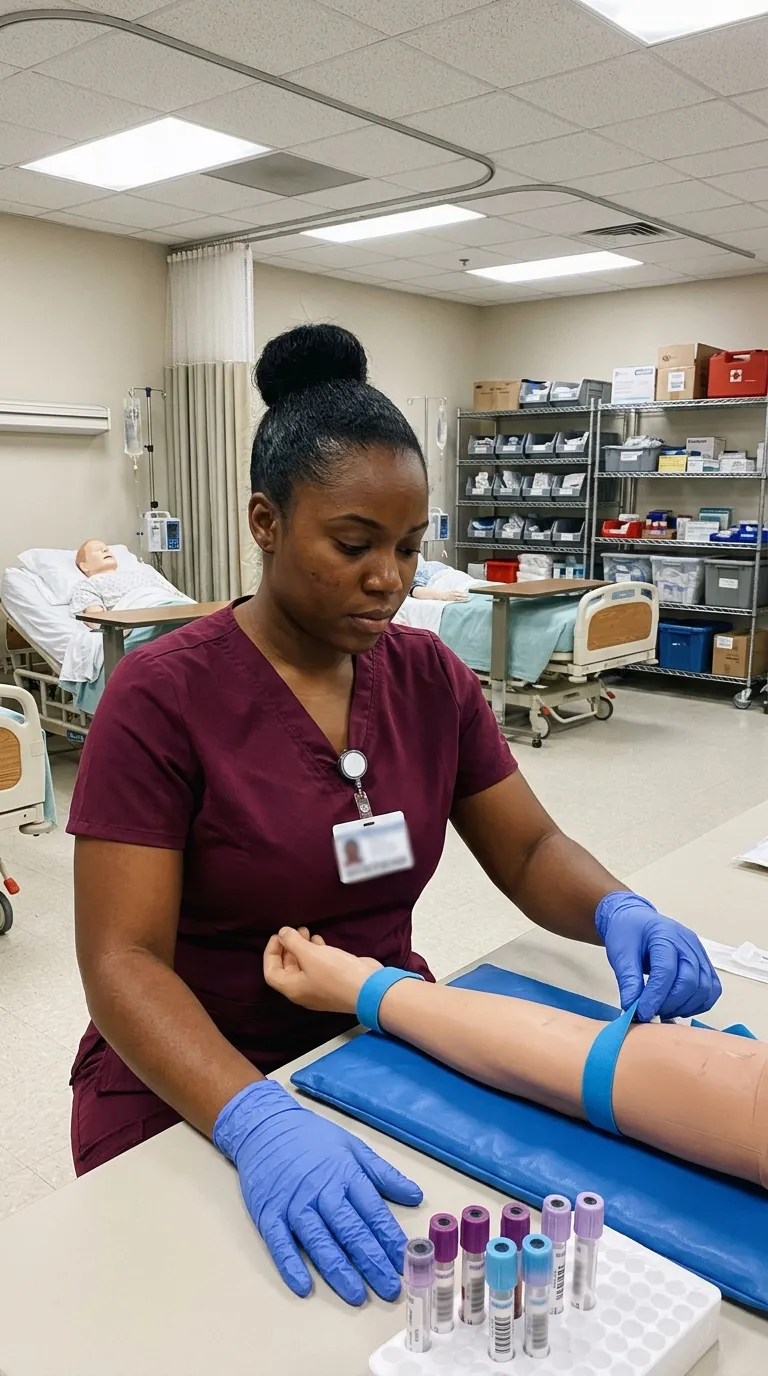
Course: Lab Values · Focus: oxygen delivery · Remember: hemoglobin first
Red cell values answer one question: how well does this blood carry oxygen? The count, the protein and the packed share come first, then the indexes describe the cells themselves: size, hemoglobin load and how even they run. The MedlinePlus complete blood count page walks through what the panel measures and why it gets ordered.
Red Blood Cell Count
The red blood cell count, women 4.2 to 5.4 and men 4.7 to 6.1 million per mcL, sets the ceiling for oxygen delivery. It falls with bleeding, poor production and fast cell destruction, and it climbs at altitude or with dehydration. Read it beside hemoglobin, never alone: the two should move together, and a gap between them is a finding.
Hemoglobin
Hemoglobin, women 12 to 16 and men 14 to 18 g/dL, is the value nurses watch hardest in bleeding and anemia. A fall of 1 to 2 g/dL after surgery or delivery matters even inside the normal band, which is why the trend anchors the postpartum hemorrhage study notes. Pale skin, a fast pulse and breathlessness set the urgency.
Hematocrit
Hematocrit, women 37 to 47 percent and men 42 to 52 percent, is the red cell share of the blood, roughly three times the hemoglobin. It drops as IV fluids dilute the blood and rises when a patient dries out, so a normal value in a dehydrated patient can still hide anemia. The MedlinePlus hematocrit test page explains how the percentage is read.
MCV
Mean corpuscular volume, 80 to 100 fL, sorts anemias by cell size before anything else. Small cells, a low MCV, point to iron deficiency; large cells point to vitamin B12 or folate problems. That one split decides which follow-up test comes next, so exam questions build whole cases around it.
MCH
Mean corpuscular hemoglobin, 27 to 33 pg, weighs the hemoglobin inside one average red cell. It falls with the same iron problems that shrink the MCV, so the two usually travel together. On its own it rarely changes care; read it as a supporting line that confirms the size story the MCV started.
MCHC
Mean corpuscular hemoglobin concentration, 32 to 36 g/dL, measures how densely hemoglobin packs into each cell. Low values mean pale, underfilled cells, another iron deficiency clue. Because it is a ratio of two measured values, it stays steady when fluids shift the counts, which makes it a useful cross-check.
RDW
Red cell distribution width, 11.5 to 14.5 percent, measures how much red cell sizes vary across the sample. A wide RDW is often the earliest sign of a new deficiency, rising while the MCV still sits in range. Mixed deficiencies push it highest, because small and large cells circulate side by side.
Reticulocyte Count
Reticulocytes, 0.5 to 2.5 percent, are young red cells fresh out of the marrow, so this count grades production. Anemia with a high count means the marrow answers and cells are being lost or destroyed. Anemia with a low count means production itself is failing, a very different workup.
White Blood Cell Values

White cell values answer the infection question. The total gives the headline, but the differential, the percentage mix of the five types, tells you what kind of fight is on: bacteria push neutrophils up, viruses lean on lymphocytes. A sick patient can pair a wild white count with a gas problem too, as the respiratory acidosis notes show on the blood gas side.
| Lab Value | Normal Range |
|---|---|
| White blood cell count | 5,000-10,000 /mcL |
| Neutrophils | 55-70% |
| Band neutrophils | 0-5% |
| Lymphocytes | 20-40% |
| Monocytes | 2-8% |
| Eosinophils | 1-4% |
| Basophils | 0.5-1% |
| Absolute neutrophil count | 1,500-8,000 /mcL |
Ranges vary slightly between labs and references; use the ranges your program gives you.
White Blood Cell Count
The white count, 5,000 to 10,000 per mcL, is the infection headline. High counts suggest infection or inflammation; steroids and stress can lift it with no infection at all. Very low counts leave a patient defenseless. Always ask what changed since the last draw: the trend outranks any single value.
Neutrophils
Neutrophils, 55 to 70 percent, are the first responders to bacteria and the largest share of the white count. They surge early in bacterial infection, tissue damage and steroid use. When a question stem pairs a high white count with a neutrophil jump, the exam is pointing at bacteria until proven otherwise.
Band Neutrophils
Bands, 0 to 5 percent, are young neutrophils the marrow releases early when demand outruns the mature supply. A band share climbing past its range is called a left shift, and it signals a serious bacterial infection working hard. Bands rising beside a climbing white count is a report-it finding, not a wait-and-see one.
Lymphocytes
Lymphocytes, 20 to 40 percent, run the targeted immune response: antibody making and virus hunting. They rise most in viral infections and fall with steroids, stress and immune disorders. On differential questions, lymphocytes up with neutrophils steady points away from bacteria and toward a virus.
Monocytes
Monocytes, 2 to 8 percent, are the cleanup crew: they leave the blood, become macrophages and clear dead cells and debris. They rise in chronic infections and slow, long inflammation rather than sudden illness. A lone high monocyte line rarely drives care; it supports the pattern the rest of the panel paints.
Eosinophils
Eosinophils, 1 to 4 percent, defend against parasites and drive much of the allergy response. Counts climb with asthma, hay fever, drug reactions and parasitic infections. A sudden eosinophil jump in a patient on a new medication is worth flagging early: the drug itself may be the trigger.
Basophils
Basophils, 0.5 to 1 percent, are the rarest white cells and carry histamine, the chemical behind much of an allergic reaction. Small rises appear with allergies, inflammation and some marrow disorders. They seldom lead a case, but they complete the differential picture, and exam writers love asking which cell carries histamine.
Absolute Neutrophil Count
The absolute neutrophil count, 1,500 to 8,000 per mcL, turns percentages into the real defense number: multiply the white count by the neutrophil and band share. A white count of 8,000 at 65 percent gives an ANC of 5,200. Under 1,500 is neutropenia; under 500, precautions are strict and a fever is an emergency.
Platelet Values

Course: Lab Values · Focus: bleeding risk · Remember: check before procedures
Platelet values answer the clotting question, and they decide whether procedures, injections and even toothbrushing stay gentle. This is the smallest group on the sheet and the one to check before any needle or surgery; the wider lab normal values sheet keeps the clotting times that sit beside it.
Platelets
Platelets, 150,000 to 400,000 per mcL, plug vessel holes and start every clot. Below 100,000, watch for bruising, petechiae and gum bleeding; below 50,000, small bumps matter and procedures get rescheduled. A sudden plunge in a patient on heparin raises HIT, heparin-induced thrombocytopenia, and gets reported the same shift.
MPV
Mean platelet volume, 7.5 to 11.5 fL, is the average platelet size, and young platelets run large. A high MPV with a low count means the marrow is pushing out young cells to keep up with loss or destruction. Read it beside the count itself and the lab values reference for the full bleeding picture.
Quick Questions
What does a CBC with differential add?
The plain CBC gives totals: red cells, white cells, platelets, hemoglobin and hematocrit. The differential splits the white count into its five types, each as a percentage, and labs often add the absolute neutrophil count. That split is what separates a bacterial pattern from a viral one on exam questions.
Can dehydration change CBC results?
Yes. When plasma volume falls, the cells left behind look more concentrated, so red cell count, hemoglobin and hematocrit all read higher than the true cell supply. After fluids, the same patient can show a clear drop with no new bleeding. That is why nurses read CBC values beside intake, output and weight.
Which CBC values matter most in an infection?
Start with the total white count, then the neutrophils and bands, then the absolute neutrophil count. Rising neutrophils with a left shift point to bacteria; a low ANC warns that the patient cannot fight back. Lymphocytes carry the viral side of the story, so read the whole differential before you chart a conclusion.
The Takeaway for Clinicals
If you remember one thing: read the CBC in three passes, red cells for oxygen, white cells for infection, platelets for clotting, and let the one odd line out pull the rest of the story behind it.
Study move: take one practice panel a day, cover the ranges, call each line normal or not, then check yourself against the table. A week of that drill and the 18 values stop being a list and start being a reflex you can use at the bedside.
For study use only. Always follow your program, your facility’s policy and current drug and lab references.