

Your fundamentals instructor slides a printed lab panel across the desk and gives the class ten minutes to circle every abnormal result. The students who finish calmly are not smarter; they simply know the core lab normal values by heart. This post gathers the 45 values nursing programs test most, grouped the way panels are ordered, each with its range, unit and the one warning sign that matters.
Start with the quick reference table, then read the three groups underneath it. Each group explains what a value measures, what high or low results mean, and what to watch or report. Ranges are adult values in US units, the set the NCLEX draws from.
| Course | Lab Values and NCLEX prep |
| Best for | Nursing students memorizing ranges for exams and clinicals |
| Study time | 20 to 30 minutes |
Quick Reference

This table holds all 45 values with the adult range and a reminder of what each one tracks. Save it to your phone, then learn the story in the groups below.
| Lab Value | Normal Range | What It Tells You |
|---|---|---|
| Sodium | 135-145 mEq/L | Water balance |
| Potassium | 3.5-5.0 mEq/L | Heart rhythm |
| Chloride | 98-106 mEq/L | Acid-base balance |
| Calcium | 9.0-10.5 mg/dL | Bones, nerves, clotting |
| Magnesium | 1.3-2.1 mEq/L | Muscle steadiness |
| Phosphorus | 3.0-4.5 mg/dL | Energy and bone |
| BUN | 10-20 mg/dL | Kidney waste |
| Creatinine | 0.6-1.2 mg/dL | Kidney filtering |
| BUN-to-creatinine ratio | 10:1-20:1 | Hydration versus kidney injury |
| eGFR | 90-120 mL/min/1.73 m2 | Kidney function |
| Glucose (fasting) | 70-99 mg/dL | Blood sugar |
| Hemoglobin A1C | Below 5.7% | Three-month sugar average |
| Red blood cells | Women 4.2-5.4, men 4.7-6.1 million/mcL | Oxygen-carrying cells |
| Hemoglobin | Women 12-16, men 14-18 g/dL | Oxygen-carrying protein |
| Hematocrit | Women 37-47%, men 42-52% | Red cell share of blood |
| White blood cells | 5,000-10,000 /mcL | Infection-fighting cells |
| Neutrophils | 55-70% | Bacterial first responders |
| Lymphocytes | 20-40% | Virus defense cells |
| Platelets | 150,000-400,000 /mcL | Clot-building cells |
| MCV | 80-100 fL | Red cell size |
| Reticulocytes | 0.5-2.5% | New red cells |
| ESR | Men 0-15, women 0-20 mm/hr | Inflammation marker |
| PT | 11-12.5 seconds | Clotting speed (warfarin) |
| INR | 0.9-1.2 | Clotting ratio |
| aPTT | 30-40 seconds | Clotting speed (heparin) |
| Fibrinogen | 200-400 mg/dL | Clot-building protein |
| D-dimer | Below 0.50 mcg/mL FEU | Clot fragments |
| Blood pH | 7.35-7.45 | Acid-base balance |
| PaCO2 | 35-45 mmHg | Carbon dioxide control |
| PaO2 | 75-100 mmHg | Arterial oxygen |
| SaO2 | 95-100% | Oxygen loading |
| Bicarbonate (HCO3) | 22-26 mEq/L | Metabolic base |
| ALT | 4-36 units/L | Liver injury enzyme |
| AST | 0-35 units/L | Liver, muscle enzyme |
| ALP | 30-120 units/L | Duct and bone enzyme |
| Total bilirubin | 0.3-1.0 mg/dL | Waste pigment |
| Albumin | 3.5-5.0 g/dL | Main blood protein |
| Total protein | 6.4-8.3 g/dL | Albumin plus globulins |
| Troponin I | Below 0.04 ng/mL | Heart injury marker |
| BNP | Below 100 pg/mL | Heart stretch marker |
| Total cholesterol | Below 200 mg/dL | Cholesterol total |
| LDL cholesterol | Below 100 mg/dL | Artery-clogging cholesterol |
| HDL cholesterol | Men above 40, women above 50 mg/dL | Protective cholesterol |
| Triglycerides | Below 150 mg/dL | Blood fat stores |
| Creatine kinase | Men 55-170, women 30-135 units/L | Muscle injury enzyme |
Ranges vary slightly between labs and references; use the ranges your program gives you.
- First pass: read the table once, saying each range out loud.
- Second pass: cover the ranges and recall each from the name.
- Weekly check: redo missed groups.
Electrolytes and Kidney Values
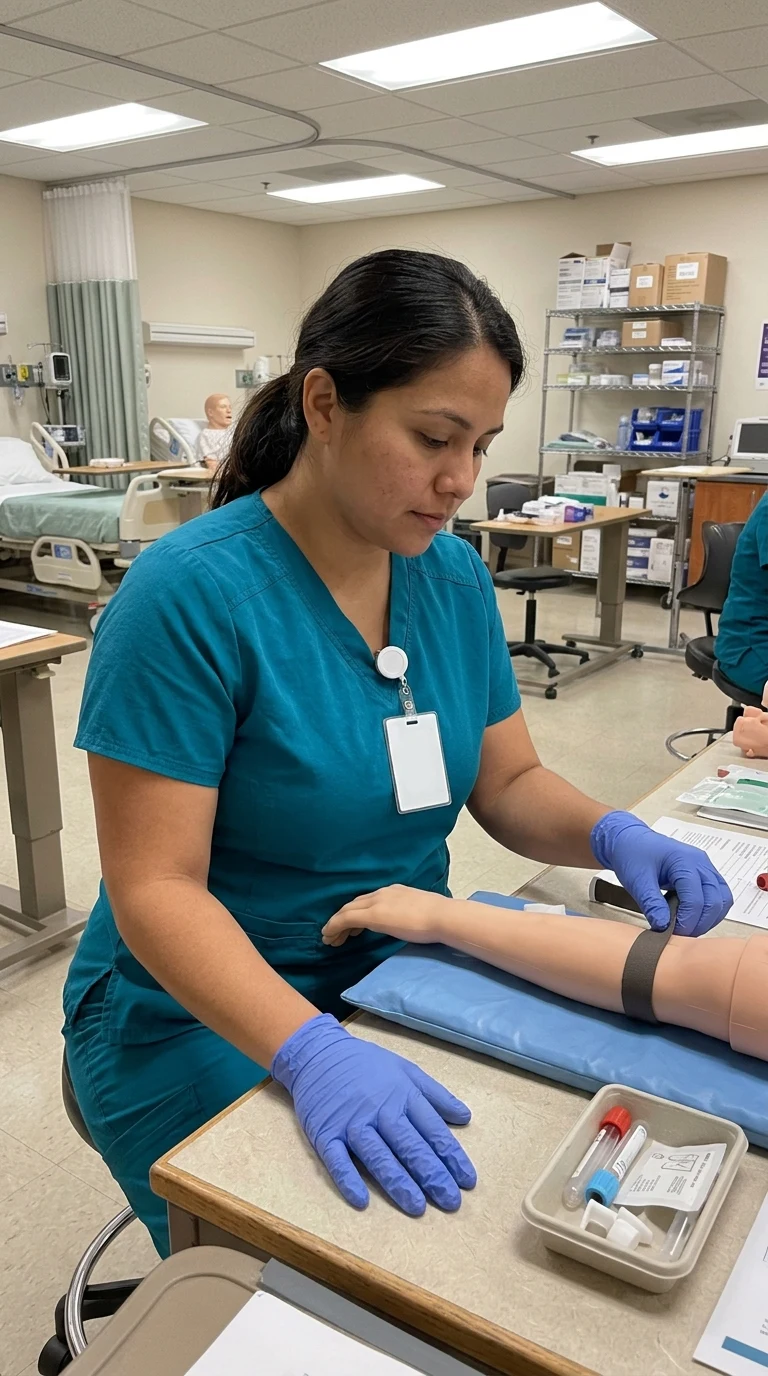
Course: Fundamentals · Focus: electrolytes, kidneys, glucose · Remember: potassium first
Electrolytes steer water, nerves and the heartbeat, and the kidney values sit beside them because the kidneys set most of these numbers. Learn this group as pairs: sodium with water, potassium with the heart, BUN with creatinine. Copy this group into your notebook first; these nursing notes ideas keep lab pages easy to review.
Sodium
Sodium, 135 to 145 mEq/L, is the main electrolyte outside the cells, so it tracks water more than salt. Low sodium blurs thinking and can trigger seizures; high sodium usually means water loss. Check fluids and mental state every time.
Potassium
Potassium, 3.5 to 5.0 mEq/L, runs the heartbeat’s electrical reset, which is why it carries the red flag here. Too much slows and widens the ECG; too little flattens it and weakens muscles. Recheck hemolyzed samples before treating the number.
Red flag: A potassium of 6.0 mEq/L or higher, or any high potassium with ECG changes, is an emergency. Keep the patient on the monitor, stop potassium sources, and call the provider or the rapid response team right away.
Chloride
Chloride, 98 to 106 mEq/L, travels with sodium and holds the acid-base balance. It rises with dehydration and falls with vomiting or heavy IV fluids. Read it beside sodium and bicarbonate, never alone.
Calcium
Calcium, 9.0 to 10.5 mg/dL, steadies nerves, muscles, clotting and bones. Low calcium causes tingling, cramps and twitchy facial muscles; high calcium slows gut and thinking. Low albumin can drag the total down.
Magnesium
Magnesium, 1.3 to 2.1 mEq/L, keeps potassium and calcium behaving. Low magnesium, common with diuretics and poor intake, makes the heart irritable and reflexes jumpy. When potassium will not correct, check magnesium first.
Phosphorus
Phosphorus, 3.0 to 4.5 mg/dL, stores energy in ATP and builds bone. It moves opposite to calcium: kidney failure pushes it up while calcium drops. Very low phosphorus weakens breathing muscles, a trap when malnourished patients restart eating.
BUN
Blood urea nitrogen, 10 to 20 mg/dL, measures waste the kidneys clear from protein breakdown. It climbs with dehydration, gut bleeding and kidney failure, so it hints at the cause rather than naming it. Read it beside creatinine.
Creatinine
Creatinine, 0.6 to 1.2 mg/dL, is the steadier kidney marker: muscles make it at a constant rate and only the kidneys remove it. A rising creatinine means falling filtration. The MedlinePlus basic metabolic panel guide shows how it is reported with BUN on the standard panel.
BUN-to-Creatinine Ratio
The ratio, normally 10:1 to 20:1, separates dry kidneys from damaged ones. Above 20:1 with both values up points to poor flow before the kidney, often dehydration. A normal ratio with both up points inside the kidney.
eGFR
Estimated glomerular filtration rate, 90 to 120 mL/min/1.73 m2 in adults, turns age, sex and creatinine into one kidney score. Below 60 for three months marks chronic kidney disease. Drug doses and contrast studies hinge on it.
Glucose (Fasting)
Fasting glucose, 70 to 99 mg/dL, is the sugar check behind half of clinical teaching. Below 70 is hypoglycemia: shaky, sweaty, confused, treated fast. Pair it with the A1C below and the lab values reference for the panels it joins.
Hemoglobin A1C
Hemoglobin A1C, below 5.7% in adults without diabetes, shows the two-to-three-month average blood sugar, since glucose sticks to red cells for life. At 6.5% or higher it diagnoses diabetes. Anemia can skew it, so read it beside daily readings.
Blood Counts and Clotting

The complete blood count, or CBC, counts the cells that carry oxygen, fight infection and build clots; the clotting times sit with it because platelets and factors work together. The MedlinePlus complete blood count page explains each line of the report.
| Lab Value | Normal Range |
|---|---|
| Red blood cells | Women 4.2-5.4, men 4.7-6.1 million/mcL |
| Hemoglobin | Women 12-16, men 14-18 g/dL |
| Hematocrit | Women 37-47%, men 42-52% |
| White blood cells | 5,000-10,000 /mcL |
| Neutrophils | 55-70% |
| Lymphocytes | 20-40% |
| Platelets | 150,000-400,000 /mcL |
| MCV | 80-100 fL |
| Reticulocytes | 0.5-2.5% |
| ESR | Men 0-15, women 0-20 mm/hr |
| PT | 11-12.5 seconds |
| INR | 0.9-1.2 |
| aPTT | 30-40 seconds |
| Fibrinogen | 200-400 mg/dL |
| D-dimer | Below 0.50 mcg/mL FEU |
Ranges vary slightly between labs and references; use the ranges your program gives you.
Red Blood Cells
Red blood cells carry oxygen on hemoglobin; the count sets the ceiling for oxygen reaching tissue. Low counts come from bleeding, poor production or fast destruction. Pair it with hemoglobin first.
Hemoglobin
Hemoglobin is the number nurses watch most in bleeding and anemia. A drop of 1 to 2 g/dL after surgery or trauma matters even inside the normal band. Pale skin, fast pulse and breathlessness tell you the urgency.
Hematocrit
Hematocrit is the red cell share of blood, roughly three times the hemoglobin. It falls with IV fluids and rises with dehydration, so a normal value in a dry patient can hide anemia.
White Blood Cells
White blood cells, 5,000 to 10,000 per mcL, are the infection gauge. High counts suggest infection or inflammation; very low counts leave a patient defenseless, hence neutropenic precautions. Steroids and stress can lift it with no infection at all.
Neutrophils
Neutrophils are first responders to bacteria and make up over half the white cells. A left shift, extra young forms called bands, signals the marrow rushing reinforcements. An absolute count under 500 is a severe infection risk.
Lymphocytes
Lymphocytes run the targeted immune response and rise most in viral infections. They fall with steroids, stress and immune disorders. On differential questions, lymphocytes up with neutrophils steady points away from bacteria.
Platelets
Platelets plug vessel holes and start clots. Below 100,000, watch for bruising and gum bleeding; below 50,000, small bumps matter and procedures get rescheduled. Heparin can crash the count in HIT, so a sudden fall gets reported.
MCV
Mean corpuscular volume sorts anemias by red cell size. Small cells point to iron deficiency; large cells point to B12 or folate problems. That split decides the follow-up test.
Reticulocytes
Reticulocytes are young red cells, proof the marrow is answering. Anemia with a high count means the marrow works and cells are being lost or destroyed. Anemia with a low count means production is failing.
ESR
The erythrocyte sedimentation rate is a slow, general inflammation signal. It rises with infection, arthritis flares and tissue injury, and drifts down as patients recover. It supports a story, never names a disease.
PT
Prothrombin time measures how fast the cascade finishes its outside path. Warfarin stretches it, which is why PT is never reported alone. Liver disease and vitamin K shortage stretch it too, so read it with the med list.
INR
The INR standardizes PT so every lab reports warfarin effect the same way. Most warfarin patients aim for 2.0 to 3.0, higher for some mechanical valves. An INR past target with bruising or bloody urine means call the provider.
aPTT
Activated partial thromboplastin time tracks the inside path of the cascade and watches heparin infusions. Nurses draw it on schedule and adjust the drip by the unit’s heparin nomogram. Far above range means bleeding watch.
Fibrinogen
Fibrinogen is the raw material the cascade turns into fibrin, the mesh of a clot. It rises with inflammation and falls when factors get consumed, as in DIC. Low fibrinogen in a bleeding patient is serious.
D-Dimer
D-dimer is the fragment left when a clot breaks down, so a normal result helps rule out fresh clots in low-risk patients. It also rises after surgery, in pregnancy and with age, so a high result starts imaging.
Blood Gases, Liver and Heart
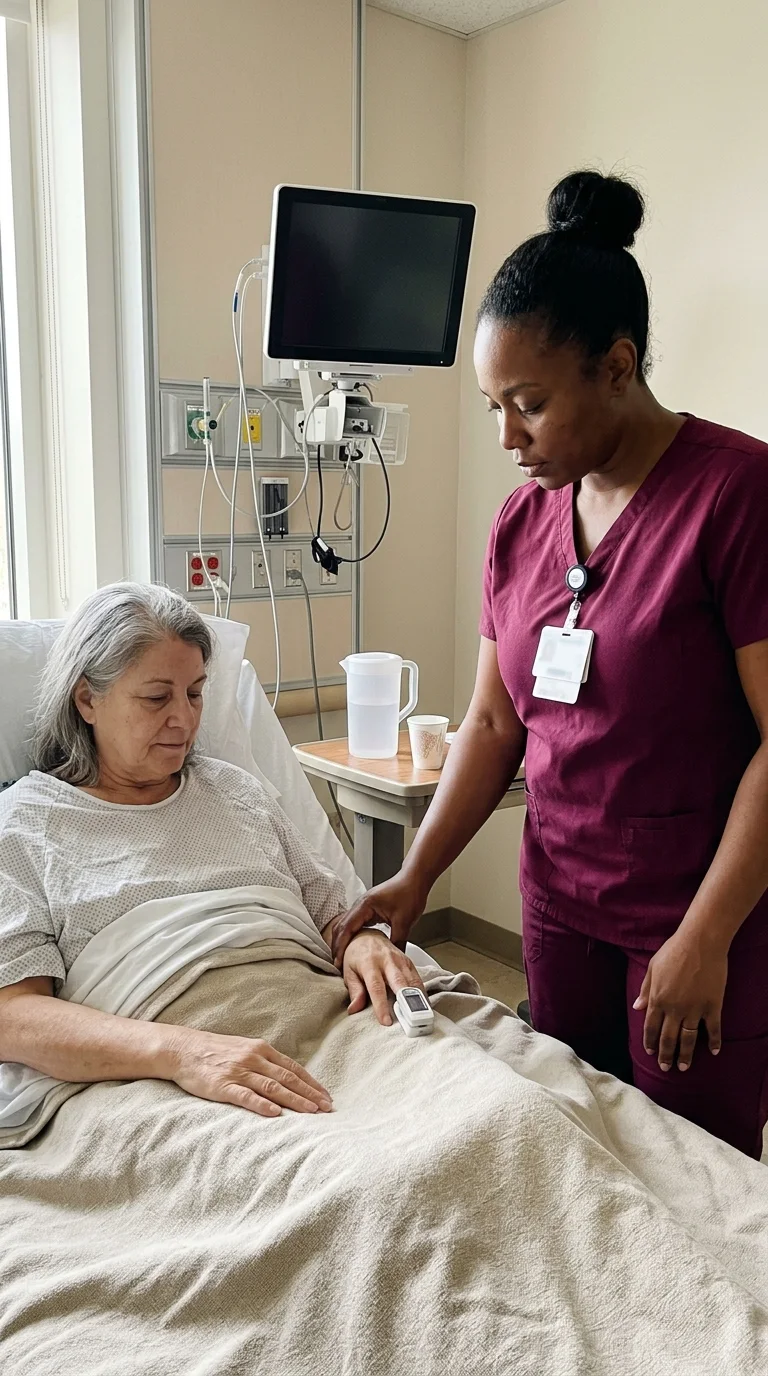
Course: Med Surg · Focus: gases, liver enzymes, heart markers · Remember: pH first
The blood gases show how breathing and the kidneys split the acid-base work, the liver enzymes show liver injury or blockage, and the heart markers show damage and strain. The MedlinePlus arterial blood gas test page explains how the gas sample is drawn and read.
Blood pH
Blood pH, 7.35 to 7.45, is the tightest range on this sheet; enzymes fail outside it. Read it first: below 7.35 is acidosis, above 7.45 is alkalosis. The full ABG interpretation steps show how pH, PaCO2 and the three values vote together.
PaCO2
PaCO2, 35 to 45 mmHg, is the respiratory half of acid-base balance, set minute by minute by breathing. High PaCO2 means carbon dioxide is trapped, as in COPD flares or sedation. Low PaCO2 means the patient is blowing it off, often from pain or anxiety.
PaO2
PaO2, 75 to 100 mmHg on room air, measures oxygen dissolved in arterial blood. It falls with pneumonia, lung fluid and poor ventilation. Age lowers it slowly, so 75 can be ordinary in an older adult.
SaO2
SaO2, 95 to 100%, is the share of hemoglobin loaded with oxygen, the number the fingertip probe estimates. Cold fingers, dark nail polish and poor circulation fool the probe, so warm the hand first.
Bicarbonate
Bicarbonate, 22 to 26 mEq/L, is the metabolic half of acid-base balance, guarded by the kidneys over hours to days. When PaCO2 stays high, bicarbonate climbs to compensate, so read them together; the respiratory acidosis notes show that pattern worked through.
ALT
Alanine aminotransferase lives inside liver cells, so it leaks into blood when they are injured by hepatitis or medicines such as acetaminophen. It is the most liver-specific enzyme here. ALT in the thousands means acute injury, not chronic drift.
AST
Aspartate aminotransferase sits in liver, heart and muscle, so it rises with liver injury and after hard exercise or muscle damage. Read it beside ALT: both up together strengthens the liver story.
ALP
Alkaline phosphatase rises when bile ducts are blocked and when bone builds fast, which is why growing children run higher. With bilirubin up and pale stools, think blocked duct. With calcium and phosphorus off, think bone.
Total Bilirubin
Bilirubin is the yellow pigment left when old red cells break down; the liver clears it. When it builds up, skin and the whites of the eyes yellow first. Newborn jaundice is watched for this same chemistry.
Albumin
Albumin, 3.5 to 5.0 g/dL, is the main protein the liver makes, and it holds fluid inside vessels. Low albumin leaks fluid into tissue as edema and appears in chronic illness, liver failure and poor protein intake. It changes over weeks.
Total Protein
Total protein, 6.4 to 8.3 g/dL, is albumin plus the globulins, the antibody family. It rises with dehydration and some blood cancers, and falls with protein loss. Read it as background for albumin.
Troponin I
Troponin I leaks from injured heart muscle and rules a heart attack in or out. It rises within hours, peaks around a day, and stays up for days. Any rise with chest pain is reported at once.
BNP
B-type natriuretic peptide spills from stretched heart walls, so it climbs when the heart fails and fluid backs up. Below 100 pg/mL makes heart failure unlikely. Kidney failure and age nudge it up, so trend it.
Total Cholesterol
Total cholesterol, below 200 mg/dL, sums the carriers that move fat through blood. It screens risk; it does not locate it. The LDL and HDL split below tells you far more.
LDL Cholesterol
Low-density lipoprotein carries cholesterol into artery walls, which is why treatment targets it. Below 100 mg/dL is the goal for most adults, lower after a heart event. Diet, activity and statins move it over months.
HDL Cholesterol
High-density lipoprotein carries cholesterol back to the liver, the cleanup route, so higher is protective. Healthy adults run above 40 mg/dL for men and above 50 for women. It rises with exercise and falls with smoking.
Triglycerides
Triglycerides, below 150 mg/dL, are the blood’s fat stores and climb after meals and with uncontrolled diabetes. Very high levels, above 500 mg/dL, can inflame the pancreas. Fasting samples keep it honest.
Creatine Kinase
Creatine kinase leaks from damaged muscle, heart and brain. After a fall, a hard workout or a long lie, high CK warns the kidneys about muscle breakdown. Troponin tracks heart attacks now.
Quick Questions
Which values matter most for the NCLEX?
Potassium, sodium, glucose, calcium and the gas trio of pH, PaCO2 and bicarbonate appear again and again, because each changes the next nursing action. Learn electrolytes and gases first, then counts, then liver and heart markers. That order matches how test plans weight them.
Why do lab ranges differ between labs?
Each lab sets ranges from its own machines, methods and the healthy people it tests, so small shifts are normal. Your program and facility use their printed ranges as the rule. The ranges here are the widely taught adult values, close enough for exam study.
How can you memorize all 45 values?
Group them, as this sheet does, and learn one group per day with its story: what the value measures and what breaks when it moves. Write ranges by hand, say them aloud, and quiz a classmate. Spaced review beats one long cram.
The Short Version
If you remember one thing: check potassium, glucose and pH first on any panel, because each can turn dangerous fast and each has a clear first action.
Build the habit in short daily passes: one group a day, ranges said aloud, misses written by hand. Students who spread review across the week, the steady rhythm these nursing school survival tips build on, walk into the exam knowing the sheet.
For study use only. Always follow your program, your facility’s policy and current drug and lab references.