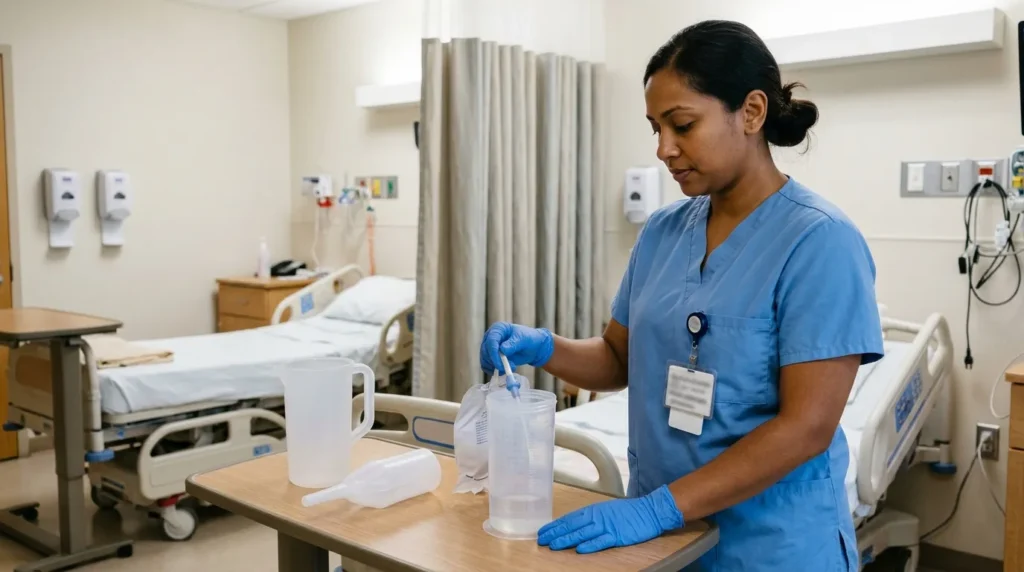

A full 240 mL cup of ice chips melts down to about 120 mL of water, and that one fact explains half the errors on a student fluid record. These 15 notes collect the measuring rules behind intake and output that clinical instructors actually check: what counts, how to measure it, and which numbers get reported.
Each note gives the rule, the number behind it and the trap that catches students, from ice chips and piggybacks to Foley bags and daily weights. Read them before your next clinical shift, and keep them beside the flowsheet while you chart.
Count Every Route In
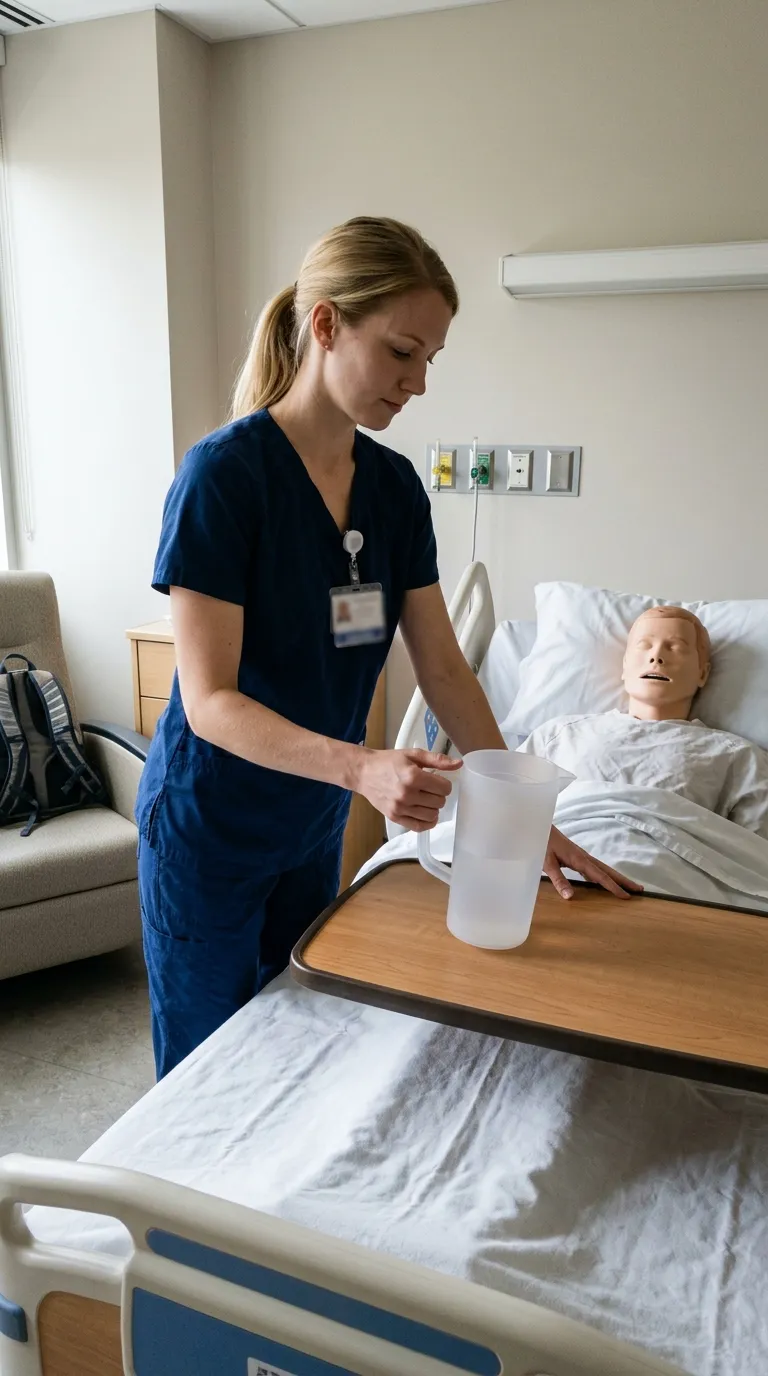
Intake means every fluid that crosses into the body during your shift, not just what the patient drinks from a cup. A glass of water is the easy part. The misses hide in IV lines, tube feeds and the small cup of water handed over with the morning pills.
- Oral fluids: water, juice, coffee, tea and soup, plus anything else the patient drinks, measured in milliliters.
- IV routes: primary infusions, piggyback medications and blood products all count, at the volume that actually infused.
- Tube feeds and pill water: enteral feedings, tube flushes and the water swallowed with medications go on the intake side too.
Ice Chips Count at Half

Ice chips are the classic clinicals trap. A cup packed with ice is roughly half air, so when it melts it gives only about half its volume in water. A 240 mL cup of ice chips charts as 120 mL of intake, every time.
Chart the melted value when you hand the cup over, not at the end of the shift when the cup size is a guess. If the patient refills the cup, each refill counts again, at half.
Study tip: write the half value on your brain sheet the moment you give the cup, so the math is done before rounds get busy.
Foods That Melt Count Too
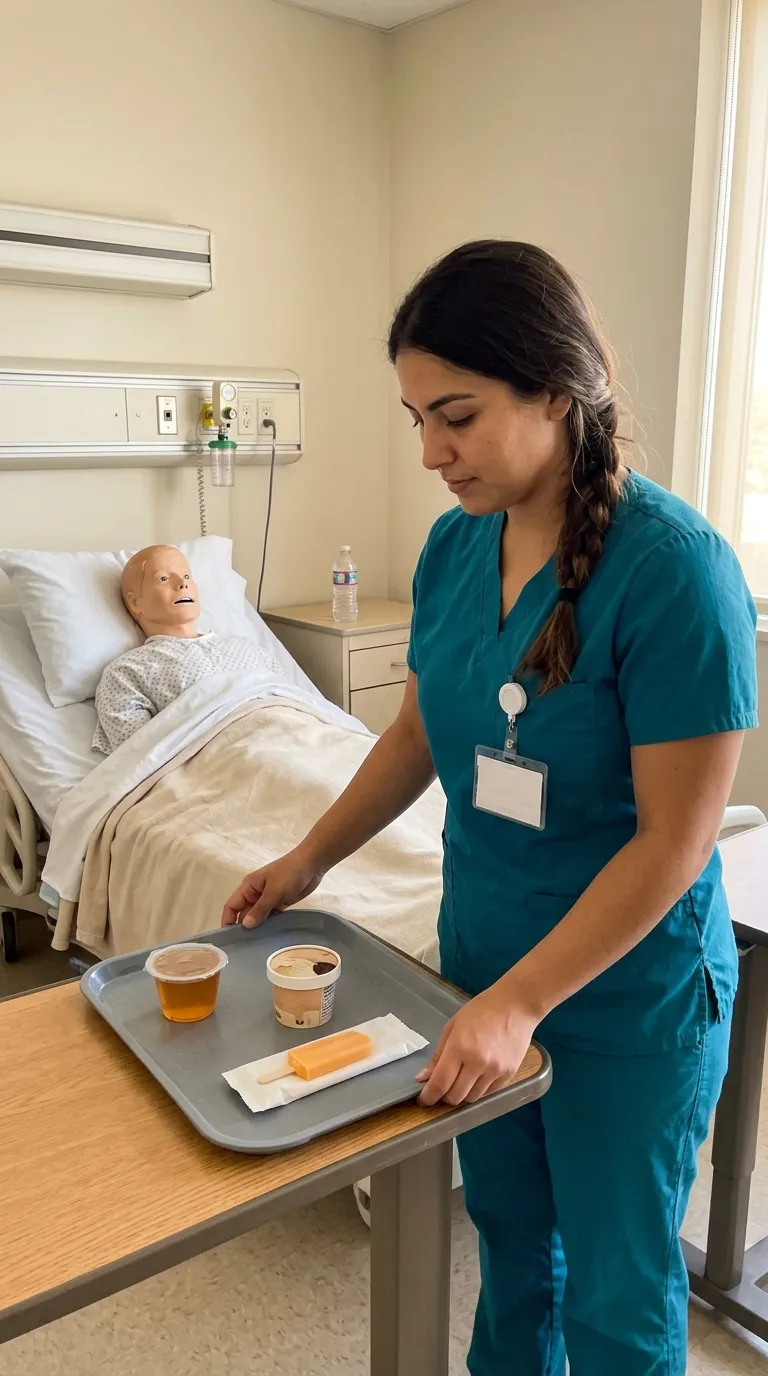
If it is liquid at room temperature, it counts as intake, even when it arrives on a food tray. Gelatin, ice cream, popsicles and clear soups melt down in the stomach the same way they melt on the counter, and the fluid total has to include them.
- Gelatin and ice cream: chart the served volume, using the size on the unit’s container list.
- Popsicles and clear soups: count them at the volume served, the same way you count a drink.
- What stays off: solid foods like toast, eggs and meat do not go on the fluid record unless the plan says otherwise.
Know Your Container Volumes

No two units stock the same cups, and a guessed volume can swing a shift total by hundreds of milliliters. Most units post a container list in the nourishment room or inside the charting system. A common set runs: juice cup 120 mL, water glass 240 mL, coffee mug 180 to 240 mL.
Learn the set on your assigned unit during the first shift, and use those numbers for every patient on that unit. When a container is not on the list, measure its contents in a graduate once instead of guessing at it all week.
Study tip: copy the container list into your clinical notebook on day one; it answers half of all intake questions before they are asked.
Convert Ounces to Milliliters

Charts run in milliliters, but cups, cans and patients talk in ounces. Convert every volume before you write it down, and never chart ounces on a record that expects milliliters. The whole conversion rests on one anchor number.
- The anchor: 1 ounce equals 30 mL, so multiply the ounces by 30 to get the charted value.
- Common sizes: an 8 oz glass is 240 mL, a 12 oz can is 360 mL, and a 4 oz juice cup is 120 mL.
- The check: if a converted number looks huge or tiny next to the cup in your hand, run the math again before you chart it.
Study tip: Build a small conversion card for your badge: 1 oz = 30 mL, 8 oz = 240 mL, ice at half. Three short lines cover nearly every intake number you will meet in clinicals.
Measure in a Graduate, Never Eyeball

A bedside pitcher with faded markings invites a guess, and guesses compound across three shifts. Pour the fluid into a graduated container, set it on a flat surface, and bend down to read it at eye level. Read the bottom of the meniscus, the curve at the surface of the fluid.
Do the same for everything you empty: the urinal, the drain reservoir, the suction canister. One measuring habit, applied everywhere.
Study tip: read the graduate at the counter, never over the bed; a flat surface and eye level are what make the number real.
The 30 mL Urine Rule
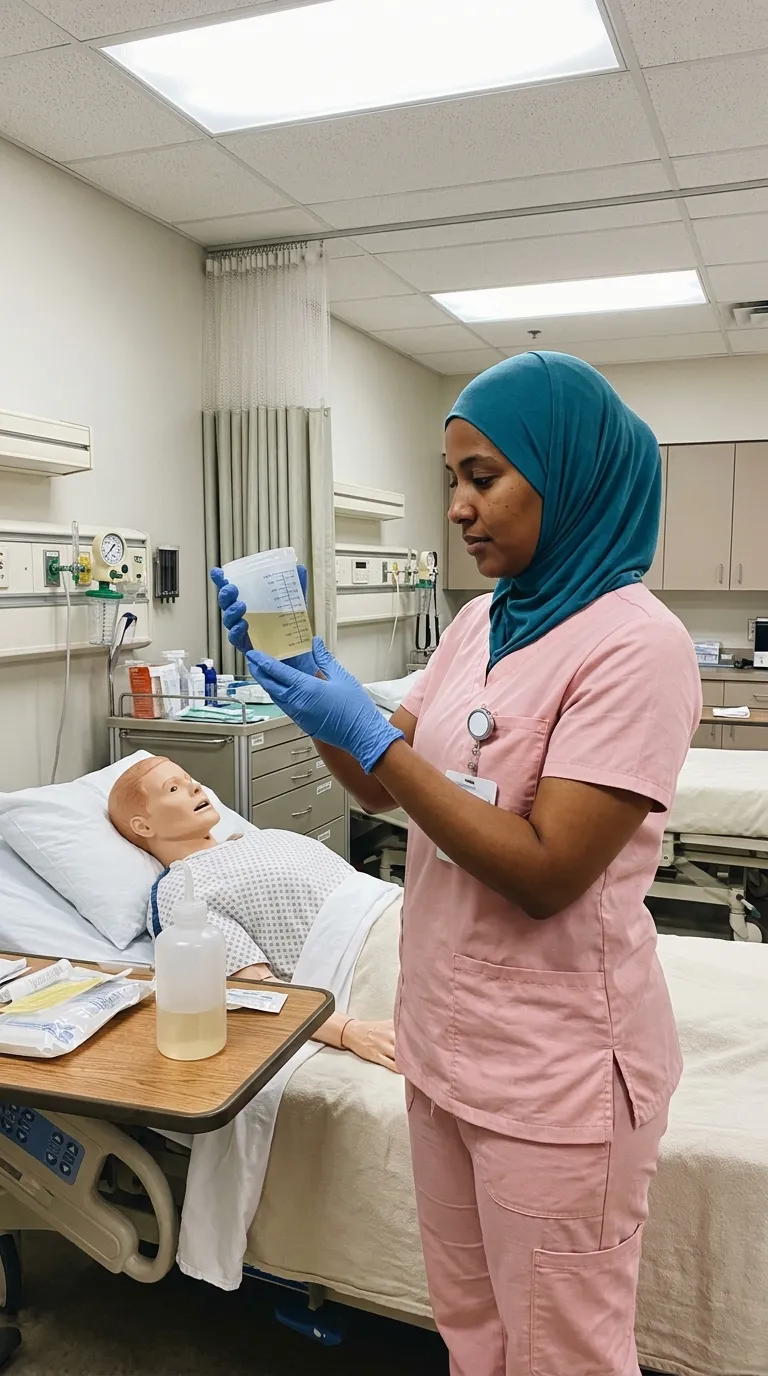
The kidneys announce trouble early, and urine output is where they announce it. A healthy adult makes at least 0.5 mL of urine per kilogram per hour, which works out to about 30 mL an hour for most adults. Two quiet hours in a row is a finding, not a curiosity.
- The threshold: urine under 30 mL/hr for 2 hours running means notify the provider during the same shift.
- The causes: the MedlinePlus page on decreased urine output lists the reasons your instructors expect you to name first.
- The habit: glance at the Foley bag or urinal on every round, so a falling trend shows up before the shift total does.
Count Every Route Out
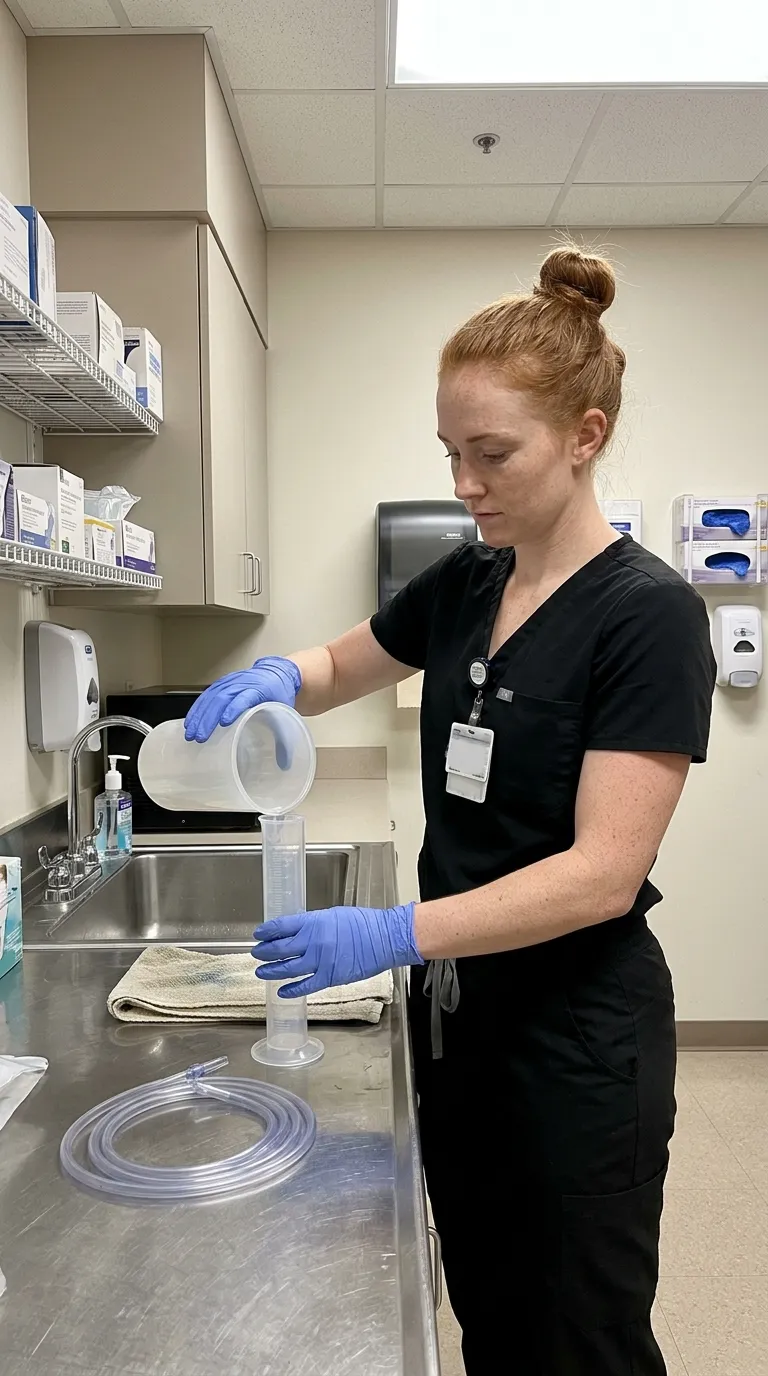
Output is more than urine. Liquid stool, vomit, wound drainage, drain reservoirs and NG suction all leave the body as measurable fluid, and each one gets its own line on the record. A shift total that counts only urine can miss half of what the patient lost.
Sweat and the moisture in every breath are real losses too, but nobody can pour them into a graduate. These insensible losses are estimated by the provider and stay out of your measured totals.
Study tip: as you empty anything, a bag, a drain or a canister, name the route quietly to yourself; the habit keeps a route from being skipped.
NG Irrigation In, Drainage Out
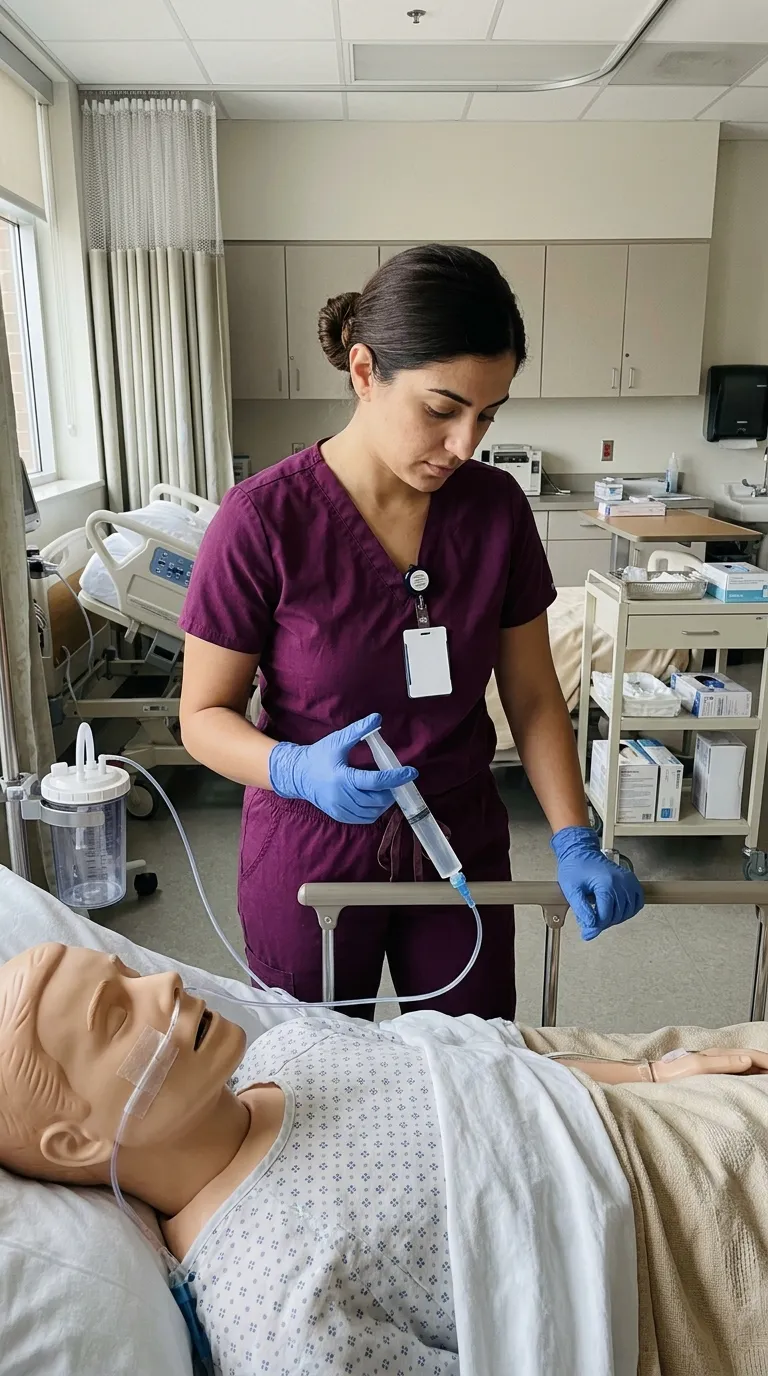
A nasogastric tube moves fluid in both directions, and both directions belong on the record. The water or saline used to irrigate the tube is intake. Everything the suction canister collects is output. Chart only one side, and the balance for that shift is fiction.
- Irrigation in: record every milliliter of irrigation fluid, including the flushes that follow medications.
- Drainage out: read the suction canister at the same times each shift and record the volume you find.
- The trap: a busy shift charts the drainage and forgets the irrigation, which makes the patient look drier than they are.
Empty the Foley Into a Graduate
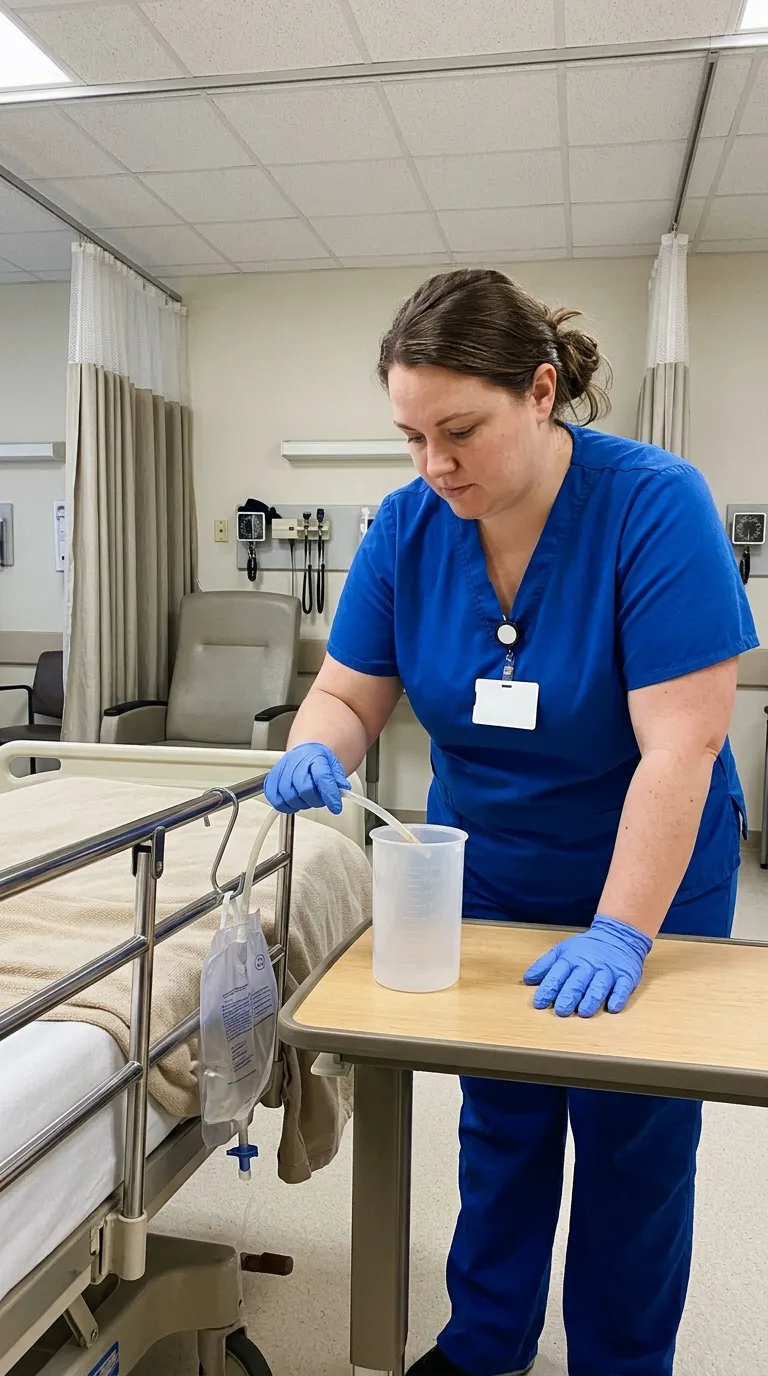
The numbers printed on a Foley drainage bag are rough guides, not charting values. For the recorded number, drain the bag into a clean graduated cylinder, let the fluid settle, and read it at eye level on a flat surface.
Volume is only half of the entry. Note the color and clarity beside it: pale yellow and clear reads very differently from dark amber or cloudy, and the urinalysis values cheat sheet shows the findings that pair with each change.
Study tip: empty the bag at the same point in every round, so each shift number covers the same span of time as the last one.
IV Fluids and Piggybacks All Count

If the pump pushed it in, it counts. Primary bags are the obvious part; the misses are the piggyback antibiotics, the IV push medications and the small volumes that ride along with them. The pump keeps the running total, so let it do the counting.
- Primary infusions: record the volume infused during your shift, not the size of the bag hanging on the pole.
- Piggybacks and pushes: add every piggyback bag, plus the fluid in IV push medications, per your facility’s policy.
- Pump totals: read the infused total off the pump at the same time every shift, so hours never overlap or vanish.
Wound Drains Get Measured, Not Guessed
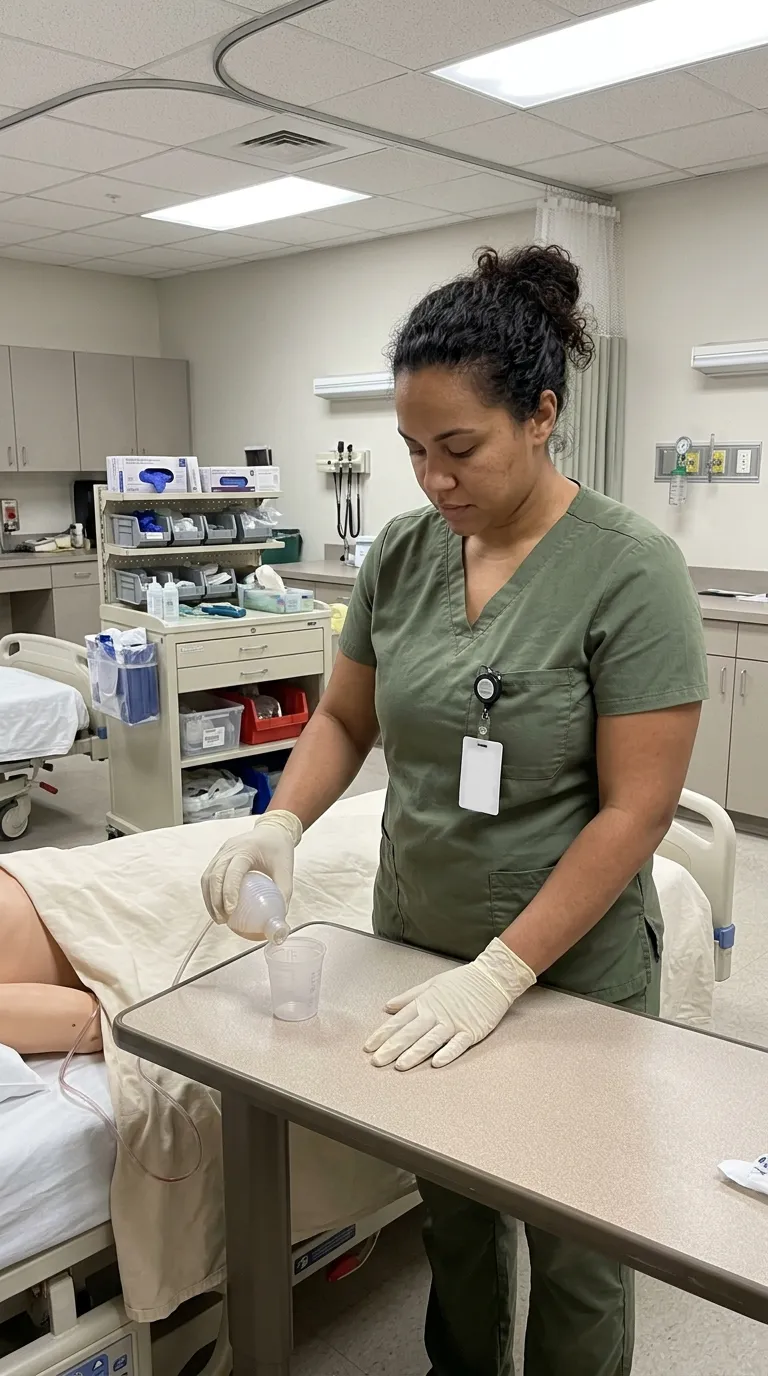
A JP or Hemovac reservoir that looks about half full can hold anything from 20 to 80 mL. Empty the reservoir into a graduate, record the exact milliliters, and write the color and character beside the number: serous, sanguineous, or a mix of the two.
Then re-establish the suction before you leave: compress the reservoir, close the port, and confirm it stays compressed. A drain left expanded stops draining, and the next shift’s low number will be a lie.
Study tip: measure the drains on the same trip as the Foley, so both numbers land on your brain sheet together.
One Kilo Equals One Liter
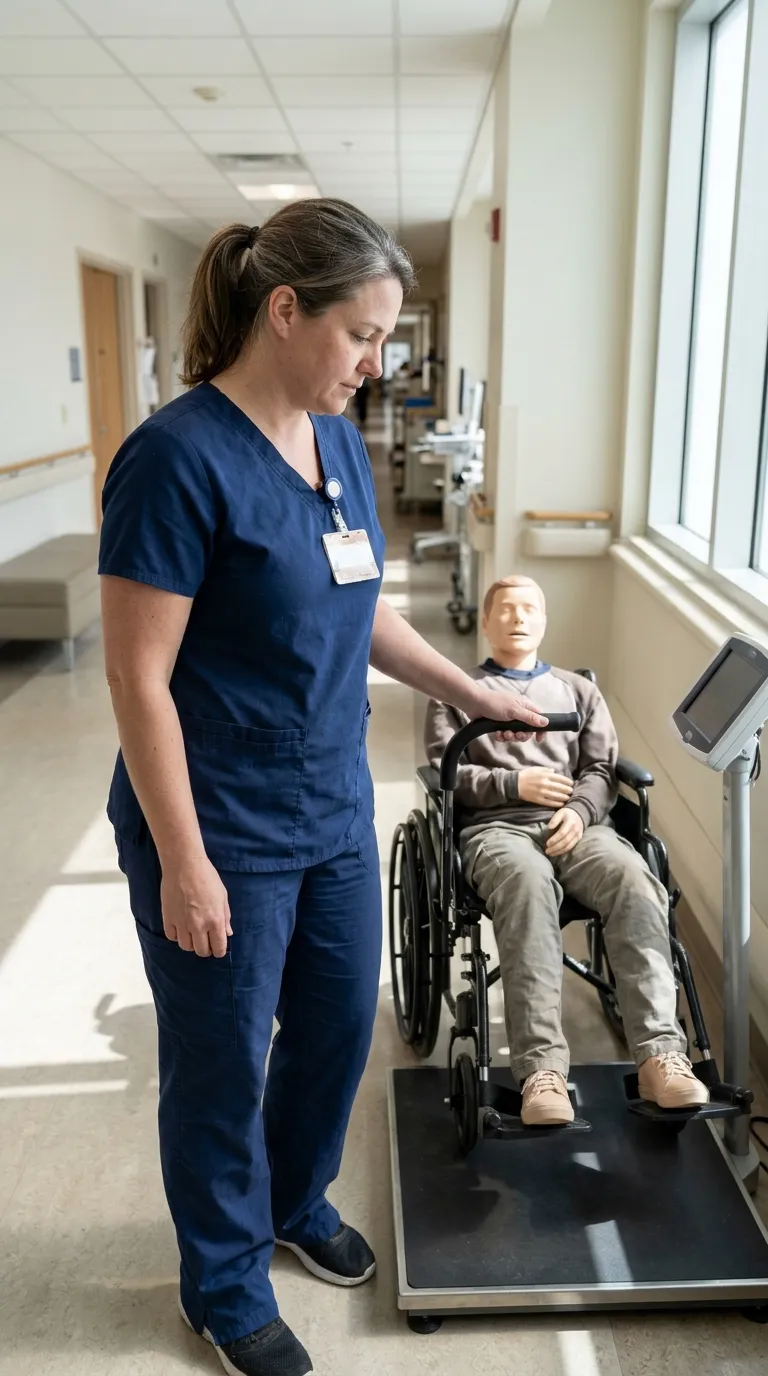
When the record and the patient disagree, believe the scale. Daily weight is the most accurate fluid check on the unit because fluid is heavy: a change of 1 kg overnight is about 1 liter of fluid gained or lost. The blood chemistry tells the same story, as the metabolic panel lab values show when the kidneys fall behind.
- Same setup: weigh at the same time each day, on the same scale, in the same amount of clothing.
- The math: up 2 kg in two days means roughly 2 liters held; call it in together with the intake and output totals.
- The cross-check: a weight jump with intake far above output confirms the record; a jump with even totals means a route was missed.
Memory trick: One kilo, one liter. Say it as a pair every time you chart a weight, and a 2 kg weekend jump reads at once as about 2 liters of fluid to report.
Keep Shift and 24-Hour Totals

Single numbers tell little; totals tell the story. Add intake and output at the end of every shift, then again across the full 24 hours. A typical adult moves about 2000 to 3000 mL each way in a day, so the two sides should sit fairly close unless the care plan aims for a gap on purpose.
Fluid balance is electrolyte balance at one remove: the MedlinePlus overview of electrolytes explains the sodium and potassium shifts that follow when the totals stay one-sided for days.
Study tip: total your brain sheet about 30 minutes before the shift ends, while there is still time to hunt down a missing route.
Report the Red-Flag Numbers

Some totals can wait for rounds; these cannot. Report them during the same shift, with the patient’s signs attached, because a number plus a symptom is what brings a fast response.
- Urine: under 30 mL/hr for 2 hours running, or a Foley that suddenly stops draining altogether.
- Balance: a 24-hour gap over about 500 mL in either direction, with no explanation written in the plan.
- Sudden changes: a drain or vomit volume that jumps, or new crackles and edema beside a positive balance; the breathing side of that picture sits in the respiratory acidosis notes.
Which Part Trips You Up?
Most students lose marks in one of three places: a route they never counted, a container they guessed at, or a red-flag number they held until rounds. Pick the one that sounds most like you and drill it first on your next shift, because this is a habit skill, not a memory skill.
From here, the natural next step is the chemistry behind the numbers: work through the electrolyte lab values cheat sheet and match each value to the totals that move it. Then think back to your last clinical day: which route would you still miss tonight, the ice chips, the irrigation, or the piggyback?
For study use only. Always follow your program, your facility’s policy and current drug and lab references.