


Effective Study Tips for Nursing Students help beginners study smarter, organize coursework, and build confidence with practical learning strategies. Create stronger habits that make difficult nursing topics easier to understand, remember, and apply in real situations. Explore these proven ideas to develop a successful study routine for nursing school.
Priority Based Planning

Starting with clear priorities makes nursing study sessions more productive and focused. Instead of treating every topic equally, students can identify important concepts, upcoming assessments, and weak areas that deserve more attention. Create a short daily list before opening your textbooks, and begin with the tasks that need the most effort.
A simple priority list can include:
- Review difficult nursing concepts.
- Complete upcoming assignments.
- Practice questions related to weak areas.
This approach helps prevent last-minute stress and makes each study session more purposeful.
Smart Note Structuring

Well-structured notes help nursing students process complicated information more efficiently. Using sections for symptoms, interventions, medications, and key reminders creates a quick reference system that supports faster revision and deeper understanding.
Keep notes short enough to review quickly but detailed enough to explain the main concept. Use headings, tables, and highlighted terms to separate essential information from supporting details. For example, notes about a disease can include its causes, common symptoms, diagnostic tests, nursing interventions, and patient education. This structure makes it easier to compare conditions and locate important information before exams.
Clinical Connection Practice

Connecting study material with real clinical situations helps nursing students remember information more naturally. When learners understand why a concept matters for patient care, studying becomes more meaningful than simple memorization.
For example, when learning about dehydration, consider which assessment findings might indicate fluid loss and what information a nurse should report. Linking classroom knowledge to realistic scenarios encourages students to think about patient safety, assessment, and appropriate interventions. Always use reliable learning materials and instructor guidance when reviewing clinical examples.
Active Recall Sessions
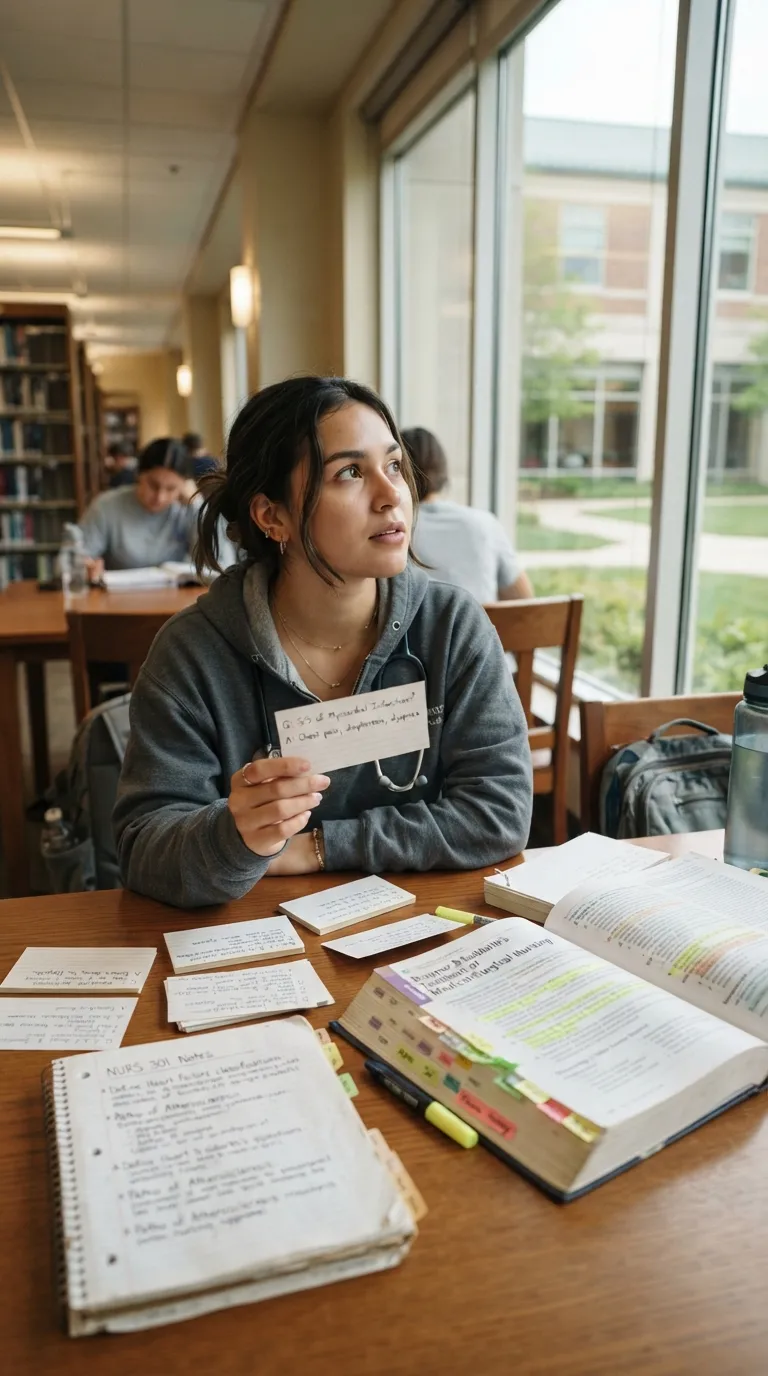
Active recall is one of the most effective ways to strengthen memory because it requires students to actively retrieve information. Beginners can practice explaining concepts instead of repeatedly rereading notes. After studying a topic, close the textbook and write down everything you remember before checking your answers.
Try these simple techniques:
- Answer flashcards without looking at the back.
- Explain a nursing concept aloud in your own words.
- Write down key symptoms or interventions from memory.
Review missing information and repeat the process later. This helps identify knowledge gaps before they become problems during exams.
Nursing Concept Mapping

Concept maps help nursing students see the bigger picture instead of memorizing isolated facts. By connecting conditions, assessments, and interventions visually, learners can build stronger understanding that supports clinical thinking.
Start with one central topic and draw branches for related symptoms, risk factors, diagnostic findings, treatments, and nursing responsibilities. Use arrows to show how one concept connects to another. For example, a map about diabetes might connect blood glucose levels with common symptoms, monitoring, medication management, and patient education. Keep each map focused on one topic so it remains easy to understand and useful during revision.
Practice Question Review

Practice questions become more valuable when students study the reasoning behind each answer. Reviewing rationales helps beginners understand clinical priorities and develop the thinking patterns needed for nursing exams.
After answering a question, explain why the correct option fits the scenario and why the other options are less appropriate. Keep a record of recurring mistakes so you can recognize patterns in your understanding. If you repeatedly struggle with prioritization questions, spend additional time reviewing assessment findings, patient safety, and the wording of each scenario. Learning from mistakes is more useful than simply counting correct answers.
Medication Study Charts

Medication topics become easier when students organize information instead of memorizing long lists. Creating comparison charts helps beginners recognize drug purposes, nursing responsibilities, and important patient monitoring points.
A useful medication chart may include:
- Generic medication name and drug class.
- Main purpose and expected therapeutic effect.
- Important adverse effects and precautions.
- Relevant monitoring and patient education.
Use your course materials and trusted medication references to verify details. Pay particular attention to medication safety, contraindications, and monitoring requirements because these details can vary between drugs and individual patients.
Focused Study Blocks

Focused study blocks help nursing students make progress even when their schedules are crowded. Setting a specific goal for each session creates direction and prevents spending hours reviewing without a clear purpose.
Try studying for 25–40 minutes, followed by a short break, and adjust the timing to suit your concentration. During each block, work on one task, such as reviewing cardiovascular assessment or completing practice questions. Put your phone away and keep unrelated tabs closed. Before finishing, summarize what you learned and identify the next step. This makes it easier to return to studying without wasting time deciding where to begin.
Clinical Reflection Notes

Reflection turns everyday nursing experiences into valuable learning opportunities. Writing short notes about challenges, questions, and discoveries helps students improve their approach and build confidence throughout their education.
After a class, simulation, or supervised clinical experience, consider what went well, what felt difficult, and what you need to review. For example, you might discover that you understand a procedure but need more practice explaining it clearly. Follow your institution’s privacy rules and never include identifiable patient information in personal notes. Reflection should support learning, professional development, and safe practice.
Time Management System

Good time management allows nursing students to study consistently without sacrificing rest or personal responsibilities. A simple weekly system helps beginners understand where their time goes and creates space for important learning activities.
At the beginning of each week, note examination dates, assignment deadlines, classes, clinical shifts, and personal commitments. Then divide larger tasks into smaller steps instead of leaving everything until the last day. Leave some flexible time for unexpected responsibilities or topics that require extra attention. A realistic schedule is more useful than a perfect-looking plan that becomes impossible to follow.
Study Group Learning

Studying with others can improve understanding when the group stays focused on discussion and problem-solving. Teaching a concept to classmates often reveals knowledge gaps and strengthens confidence before exams.
Choose a few classmates who share similar learning goals and agree on the topic before meeting. Each person can explain one concept, ask questions, or prepare practice scenarios for the group. Avoid turning every session into an informal conversation without a clear outcome. If group members disagree about a clinical topic, consult reliable course resources or ask an instructor rather than relying on guesses.
NCLEX Strategy Practice

Exam preparation becomes stronger when students focus on reasoning instead of memorizing answers. Practicing scenario-based questions helps beginners develop the clinical judgment needed for nursing assessments and future patient care.
Read each question carefully, identify the central problem, and pay attention to details about patient condition, safety, and urgency. Practice explaining why one answer is more appropriate than another. If you are preparing for the NCLEX, use current official examination resources alongside your regular study materials. Remember that exam strategies should support sound clinical reasoning rather than replace a proper understanding of nursing principles.
Anatomy Visual Review
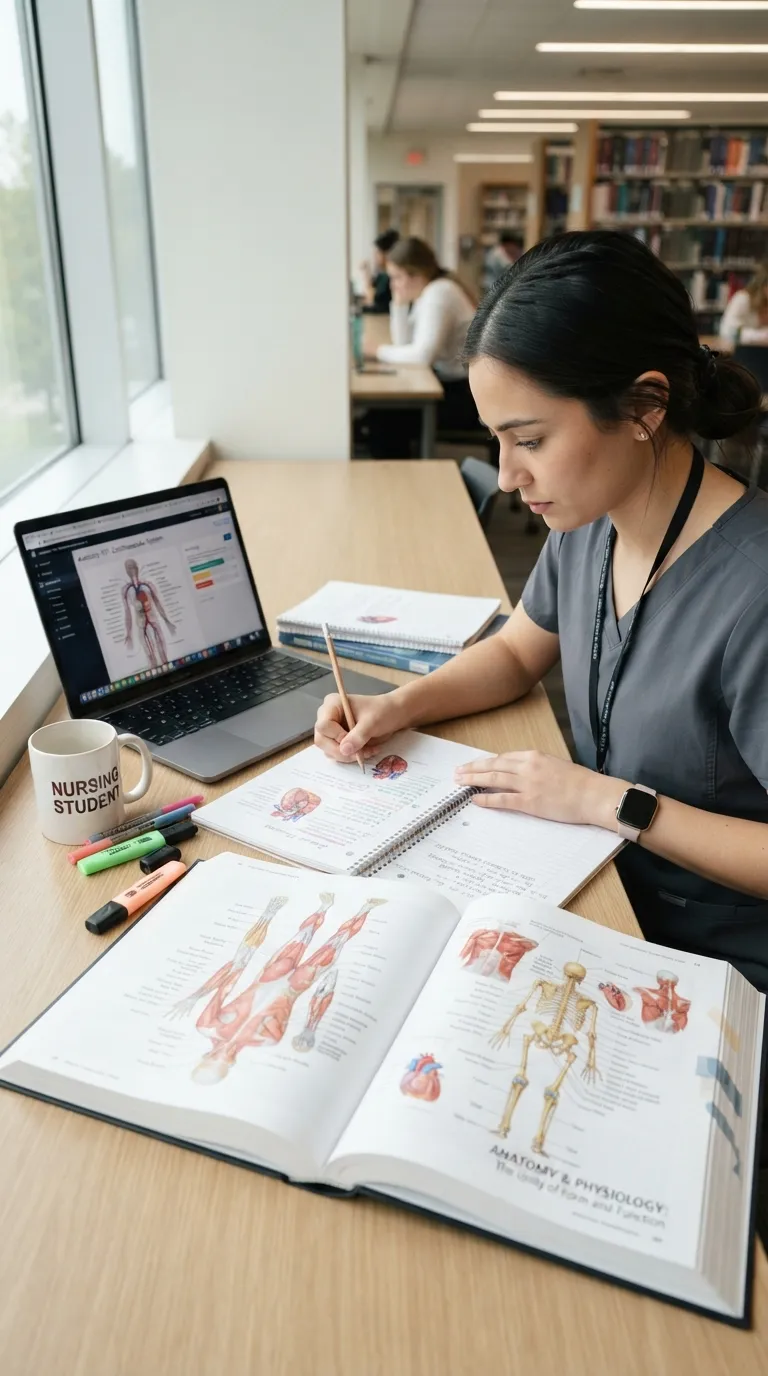
Anatomy becomes easier when students focus on relationships between structures instead of memorizing separate terms. Visual reviews help beginners understand how body systems connect to assessments, symptoms, and patient care decisions.
Use labeled diagrams, simple sketches, and blank worksheets to test your knowledge. Start by identifying major structures, then explain their functions and relationships. For example, when studying the heart, connect its chambers and valves with the direction of blood flow. Revisit difficult diagrams regularly and try labeling them without assistance. Combining visual learning with short explanations can make complex anatomical information easier to recall.
Memory Technique Practice
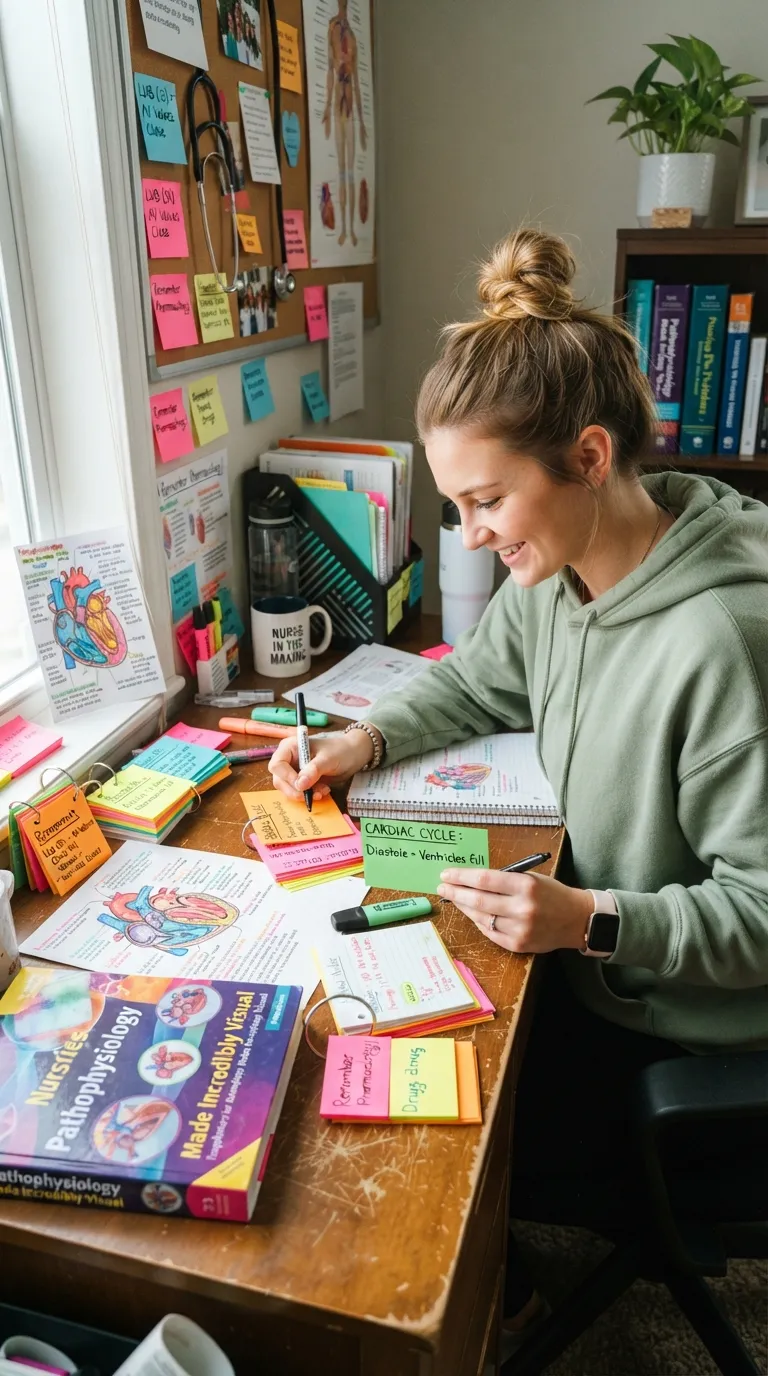
Memory techniques work best when students create meaningful connections instead of repeating information without understanding. Associating concepts with patterns, examples, or visual cues can make important details easier to retrieve.
Mnemonics may help with lists, while flashcards and spaced repetition can support long-term recall. However, avoid using memory shortcuts without understanding the underlying concept. A mnemonic should help you remember information, not replace knowledge of why it matters. Review difficult material over several days instead of trying to memorize everything in one sitting. You may also like reading about Nursing Student Study.
Healthy Study Balance

Successful nursing students understand that learning requires both effort and recovery. Protecting sleep, nutrition, and personal time helps maintain concentration and creates a healthier approach to long-term study success.
Take regular breaks, eat balanced meals, drink enough water, and aim for a consistent sleep schedule. Avoid making all-night study sessions your normal routine because tiredness can affect attention and memory. When coursework feels overwhelming, break tasks into manageable steps and ask instructors or classmates for appropriate academic support. Looking after your well-being helps make a demanding nursing program more sustainable.
Digital Learning Tools

Digital resources can make nursing education more accessible when used with a clear purpose. Beginners can combine online tools with traditional notes and practice methods to create a more complete learning system.
Consider using a digital calendar for deadlines, flashcard applications for revision, and reputable educational videos for difficult concepts. Organize saved resources by subject so you can find them quickly. Check the credibility and date of online information, particularly when reviewing medications or clinical recommendations. Digital tools should support your learning goals rather than become another source of distraction.
Clinical Skill Drills

Clinical skills improve when students practice consistently and understand the purpose behind every action. Repeating procedures in an appropriate learning environment helps beginners feel more prepared when applying knowledge during clinical rotations.
Use instructor-approved checklists to review the steps of a skill, the equipment required, infection prevention, and patient safety considerations. During practice, focus on correct technique instead of rushing to finish. Ask for feedback when something feels unclear, and repeat the skill until you can explain the purpose of each major step. Follow your institution’s protocols and practice under appropriate supervision.
Exam Preparation Routine

A reliable exam routine helps nursing students feel prepared without unnecessary pressure. Reviewing summaries, organizing materials, and avoiding heavy last-minute studying can create a calmer and more confident exam experience.
In the days before an examination, prioritize difficult concepts and complete practice questions that match the course objectives. Prepare permitted materials in advance and make sure you understand the examination instructions. The evening before, use a short review session rather than attempting to relearn an entire subject. A consistent routine helps you arrive better organized and ready to focus.
Study Environment Setup

The right study environment can influence focus more than many students realize. A simple setup with organized materials, comfortable seating, and fewer distractions helps beginners create a place where productive habits become easier to maintain.
Choose a quiet area with adequate lighting and enough space for books, notes, and a laptop. Keep frequently used supplies within reach and remove unnecessary items from your desk. If home is noisy, consider a library or another suitable study location. You do not need an expensive workspace; a clean, comfortable, and consistent environment is often enough to support better concentration.
Progress Tracking Journal

Tracking progress allows nursing students to see growth beyond grades and test scores. A simple journal can reveal successful habits, challenging topics, and improvements that help create a more personalized study approach.
At the end of each week, record the topics you reviewed, the questions you found difficult, and the strategies that helped most. You can also note upcoming goals and areas that need additional practice.
For example, your weekly review might include:
- Topics understood confidently.
- Concepts that need another review.
- Practice questions completed.
- One goal for the following week.
Use these observations to adjust your study plan instead of repeating methods that are not helping you learn.
Consistent Study Habits
Strong study results come from habits that students can maintain throughout their nursing journey. Creating a realistic routine, reviewing regularly, and staying consistent helps beginners develop the confidence and skills needed for academic success.
Start with a manageable daily target, such as reviewing one topic, completing a small set of practice questions, or revisiting flashcards. Increase your workload gradually as you become comfortable with the routine. If you miss a study session, return to your schedule without trying to compensate with an exhausting marathon. Consistency means making steady progress over time, not studying perfectly every day.
Bringing It All Together
Use active recall, clinical practice, and organized study systems to make challenging nursing topics easier to manage. Start with consistent habits like focused study blocks and progress tracking because small improvements can create lasting progress. Choose the strategies that match your current needs, review your results regularly, and adjust your routine as coursework becomes more demanding. Save these study ideas on Pinterest and try one strategy today to build confidence in your nursing journey with Effective Study Tips for Nursing Students.