


This article shares a practical Nursing Student Study Schedule with simple ideas to help nursing students manage study time, stay organized, and prepare more confidently for exams and clinical responsibilities. A well-planned routine can make demanding coursework feel more manageable while leaving enough time for rest and personal activities.
Explore these effective schedule strategies to develop better learning habits, reduce stress, and build a routine that fits your nursing journey.
Weekly Study Planner

A weekly planner gives nursing students a clear view of their responsibilities before the week becomes stressful. Breaking large tasks into smaller study blocks creates better consistency and leaves room for unexpected clinical or academic changes. At the beginning of each week, review your class timetable, assignment deadlines, upcoming exams, and clinical shifts. Then, assign specific study periods to each subject instead of leaving everything until the last minute.
For example, you might reserve Monday for anatomy, Tuesday for pharmacology, and Wednesday for clinical skills review. Keep your plan realistic by including meals, commuting, sleep, and personal responsibilities. A simple weekly planner can include:
- Important exam and assignment dates.
- Dedicated study blocks for difficult subjects.
- Clinical preparation and revision time.
- Flexible periods for unfinished tasks.
Daily Priority List

A daily priority list helps nursing students turn a busy schedule into clear actions. Choosing the most important tasks first allows more energy to go toward difficult subjects, clinical preparation, and exam review. Rather than writing a long list of everything you need to accomplish, choose three major goals for the day. These could include reviewing cardiovascular concepts, completing practice questions, and preparing notes for an upcoming clinical rotation.
Place demanding tasks during the hours when you usually concentrate best. Smaller activities, such as organizing notes or checking assignment instructions, can fit into shorter periods between classes. At the end of the day, review your progress and move unfinished tasks to another suitable time. This approach keeps your schedule flexible without allowing important responsibilities to disappear from view.
Clinical Study Blocks

Clinical study blocks help students prepare with purpose instead of reviewing randomly. Setting aside specific time for procedures, assessments, and patient care concepts builds stronger connections between theory and real nursing situations. For instance, before a clinical day, dedicate 30 to 45 minutes to reviewing relevant assessment steps, safety precautions, documentation principles, and common terminology.
Focus on understanding why a procedure is performed rather than memorizing a sequence without context. You can also use class notes, approved textbooks, and instructor-provided checklists to guide your review. A useful clinical study block might include:
- Ten minutes reviewing essential concepts.
- Fifteen minutes practicing a skill sequence mentally.
- Ten minutes identifying safety considerations.
- Five minutes listing questions to ask your instructor.
Always follow your school’s clinical guidelines and instructor directions when preparing for patient care.
Exam Review Calendar
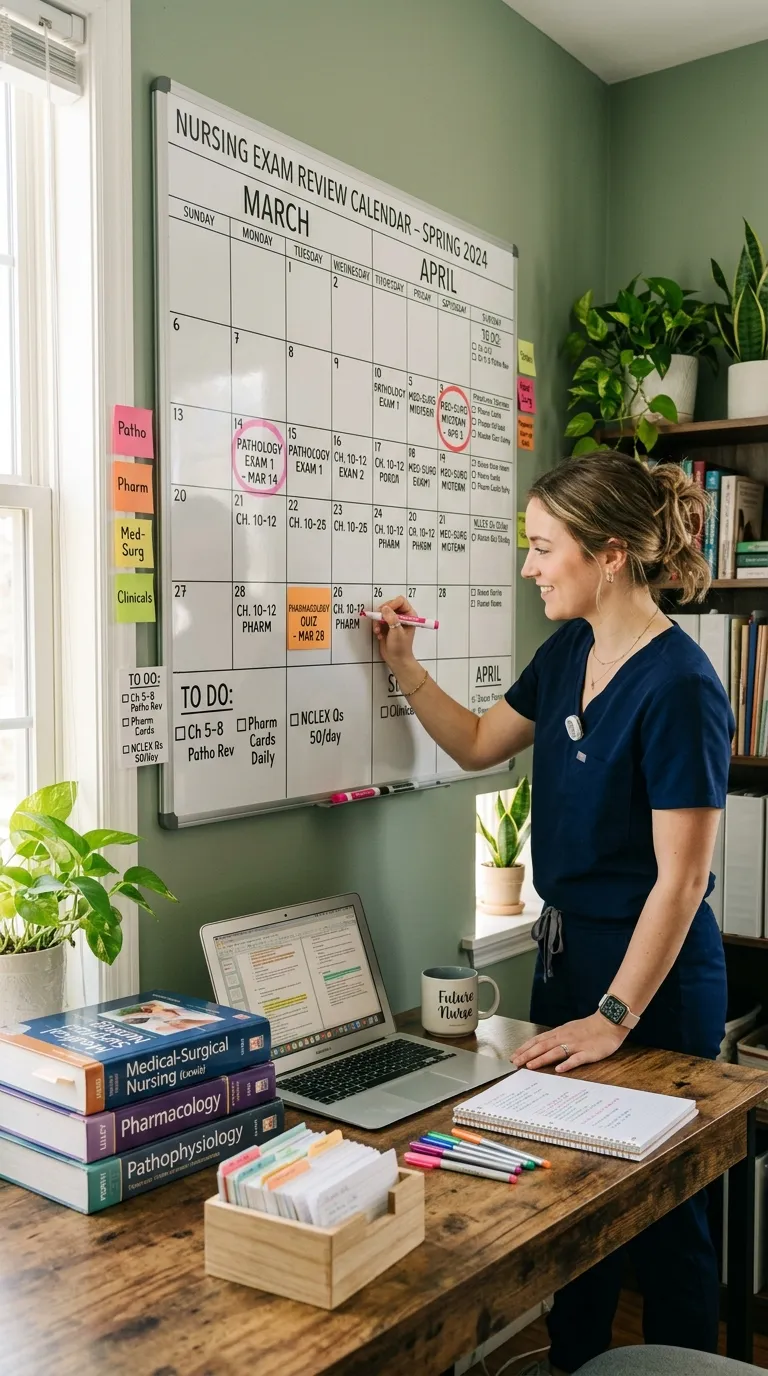
An exam review calendar gives nursing students a realistic path before major assessments. Instead of trying to cover everything at once, planned review periods create better retention and reduce unnecessary stress. Begin by marking your examination dates on a calendar, then work backward to divide the syllabus into manageable topics. Give complicated subjects more time and revisit previously studied material instead of reviewing each chapter only once.
For example, if an examination is two weeks away, use the first week to review core concepts and the second week to strengthen weak areas through practice questions and active recall. Leave the final day for a lighter review of important information rather than attempting to learn an entire unit overnight. Remember to schedule short self-testing sessions throughout the preparation period. These sessions help you identify what you understand and what needs additional attention before the exam.
Flexible Time Blocks

A flexible schedule helps nursing students stay consistent even when life becomes unpredictable. Planning around available energy and responsibilities creates a routine that can survive busy semesters. Instead of assigning every task an exact starting time, create broader study windows that allow you to adjust when classes run late or clinical duties take longer than expected.
For example, you might plan to study pharmacology sometime between 3 p.m. and 5 p.m. If an unexpected responsibility interrupts that period, move the session to another available window. Divide longer tasks into 20- to 40-minute blocks, depending on the difficulty of the material and your concentration. Keep one or two backup periods open during the week for unfinished work. Flexibility does not mean abandoning structure; it means creating a realistic plan that can adapt without making you feel behind every time circumstances change.
Morning Study Routine

A morning study routine can make challenging nursing subjects feel easier because the mind is often more refreshed after adequate rest. Even a short focused session before classes can create steady progress over time. Choose a manageable period, such as 20 to 30 minutes, to review flashcards, practice medical terminology, or revisit difficult concepts from the previous day.
Prepare your study materials the night before so you can begin without wasting time organizing everything. If you have an early class or clinical shift, avoid sacrificing sleep to complete a morning session. Consistent rest is important for concentration and learning, so adjust the routine to match your timetable. Morning studying works especially well for students who prefer quiet environments and fewer distractions. Start with one subject, set a clear goal, and finish by noting what you need to review next.
Evening Review Routine

An evening review routine helps nursing students maintain progress without overwhelming study sessions. Reviewing key points and preparing materials before bed can create a smoother transition into the next academic day. Rather than starting a completely new and difficult topic late at night, use this period to revisit lecture notes, test your memory, and organize upcoming responsibilities.
A simple 20-minute evening routine could include reviewing five important concepts, answering a few practice questions, and checking the next day’s schedule. Write down confusing topics so you can ask your instructor or revisit them during your next study block. Keep your workspace comfortable and reduce distractions whenever possible. Avoid allowing evening study to interfere with adequate sleep, particularly before clinical shifts or examinations.
You might also want to explore Nursing Student Study resources for additional learning and organization ideas.
Subject Rotation Plan

A subject rotation plan helps beginners avoid ignoring challenging topics until exams arrive. Moving between different nursing subjects throughout the week creates a balanced routine and supports stronger understanding. Instead of spending every study session on your favorite subject, rotate through areas such as anatomy, pharmacology, fundamentals, pathophysiology, and health assessment according to your current coursework.
For example, you could study anatomy on Monday, pharmacology on Tuesday, and nursing fundamentals on Wednesday before revisiting anatomy later in the week. This approach provides repeated exposure to important concepts while reducing the monotony of studying one subject for several hours. Make adjustments when an exam approaches or when your instructor identifies an area that needs additional attention. The goal is not to divide every subject equally but to ensure that important topics receive consistent attention.
Weekend Catch-Up Plan

A weekend catch-up plan gives nursing students extra space to organize unfinished work and prepare ahead. It prevents small delays from becoming stressful problems during busy class and clinical weeks. Choose a specific period on Saturday or Sunday to review outstanding assignments, revise difficult lecture topics, and prepare materials for the upcoming week.
Begin by checking your weekly planner and identifying the tasks that genuinely need attention. Avoid filling the entire weekend with academic responsibilities because recovery time is also important. You can organize your catch-up session into three stages:
- Complete urgent assignments or overdue study tasks.
- Review the week’s most challenging nursing concepts.
- Prepare a realistic plan for the next academic week.
Keep the session focused and stop when your planned priorities are complete. A balanced weekend routine can help you begin Monday with clearer goals and less pressure.
Priority Topic Mapping
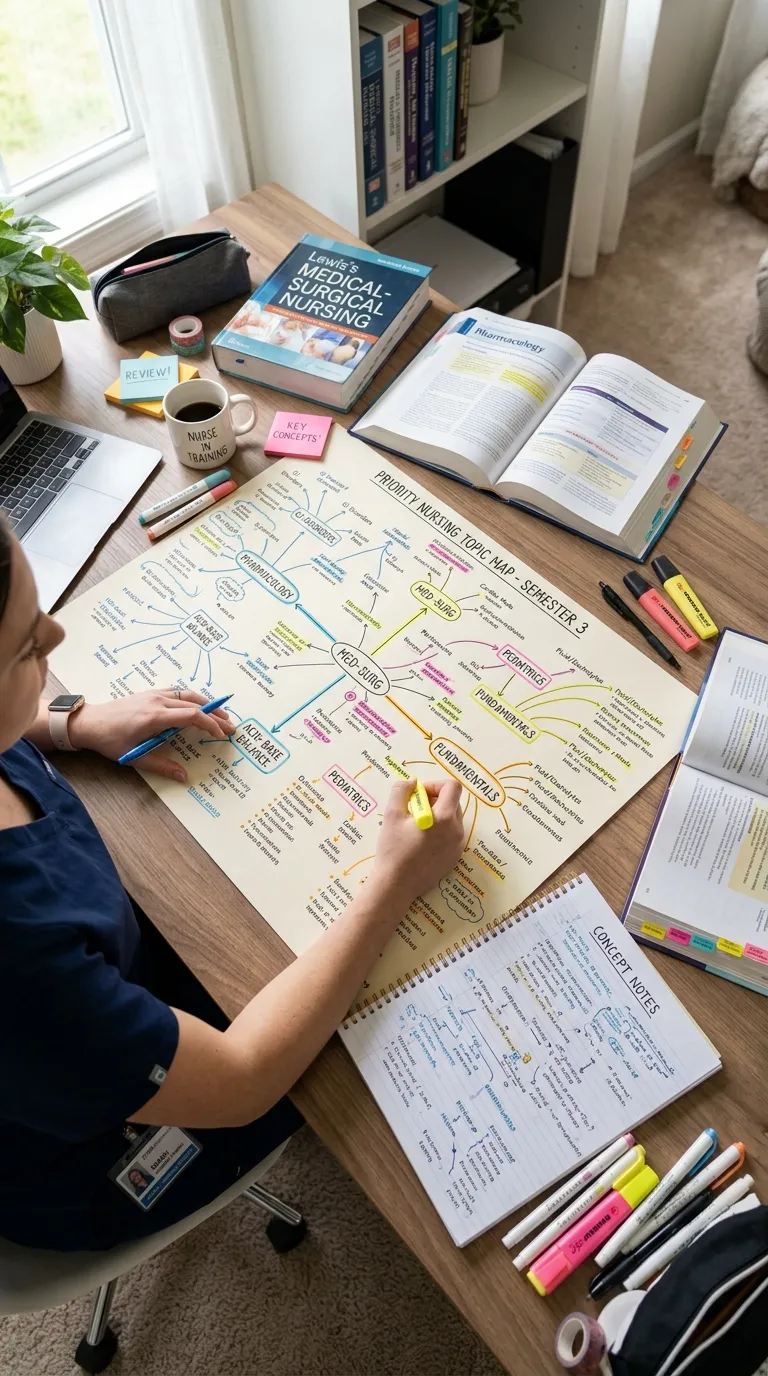
Priority topic mapping helps nursing students study with intention instead of following a random checklist. By identifying difficult areas first, beginners can use their available time where it creates the greatest improvement. Start by listing the topics covered in an upcoming examination, then label each one according to your confidence level. Topics you understand well may need brief revision, while unfamiliar concepts deserve longer study sessions.
You could create three categories: confident, needs review, and difficult. Place these categories in a notebook or digital document and update them as your understanding improves. For instance, if medication calculations remain challenging, schedule additional practice instead of repeatedly reviewing material you already know. Use your syllabus and instructor guidance to determine which concepts deserve attention. Priority mapping makes study time more purposeful and helps prevent students from spending too much time on easy topics simply because they feel comfortable.
Clinical Prep Checklist

A clinical prep checklist turns preparation into a repeatable habit. Nursing students can save time and feel more confident by organizing supplies, reviewing procedures, and checking important information before each rotation. Preparing in advance reduces the chance of forgetting essential items when mornings are busy or clinical responsibilities begin early.
Your checklist might include the following:
- Confirm the clinical schedule and arrival time.
- Pack required identification, equipment, and supplies.
- Review assigned learning objectives and relevant procedures.
- Check uniform requirements and necessary paperwork.
- Prepare questions about unfamiliar clinical concepts.
Keep the checklist somewhere accessible and update it when your program requirements change. A short preparation period the evening before a clinical shift can also help you identify missing supplies or unclear instructions. Follow your institution’s policies and avoid including identifiable patient information in personal study notes. Consistent preparation makes clinical days easier to organize while keeping safety and professional expectations in focus.
Study Accountability System

An accountability system helps nursing students follow through when coursework becomes demanding. Whether using a partner, tracker, or weekly check-in, small reminders can make study habits more consistent. Find a classmate who has similar academic goals and agree to share weekly priorities or review selected topics together. You do not need to study side by side every day; even a brief check-in can encourage you to stay on track.
For individual accountability, use a paper checklist or digital calendar to mark completed sessions. Record whether you achieved the intended learning goal rather than measuring success only by the number of hours spent studying. For example, completing 20 practice questions and understanding your mistakes may be more valuable than spending an hour rereading notes without concentration. Review your progress every weekend and adjust unrealistic goals. An accountability system should encourage steady improvement rather than create guilt when plans need to change.
Practice Question Schedule

A practice question schedule helps nursing students develop application skills instead of only memorizing information. Setting regular question sessions throughout the week creates stronger exam preparation and clinical reasoning. Choose practice questions related to recently covered topics and answer them without immediately checking the explanations. Afterward, review both correct and incorrect answers to understand the reasoning behind each option.
You can organize practice sessions in different ways:
- Complete five to ten questions after a lecture.
- Schedule a longer question session twice a week.
- Review missed questions during weekend revision.
- Repeat difficult concepts after studying the explanations.
Pay attention to questions involving prioritization, patient safety, and clinical judgment when these subjects match your course objectives. Use reputable learning resources and follow your program’s examination guidance. The purpose is not simply to achieve a high score but to recognize knowledge gaps and improve your ability to apply information in unfamiliar situations.
Break Planning Method

A good study schedule includes recovery time because nursing education requires long-term energy. Planned breaks allow students to return to difficult topics with better concentration and less frustration. Studying continuously for several hours can make it harder to remain attentive, particularly when reviewing complex material such as pharmacology or pathophysiology.
Try studying for 25 to 45 minutes before taking a short break, then adjust the timing according to your attention span and the task. During breaks, stretch, drink water, have a snack, or take a brief walk instead of automatically switching to distracting applications. After several study blocks, consider taking a longer break. Keep track of your progress so breaks remain restorative rather than turning into unplanned interruptions. A schedule that includes realistic recovery periods is easier to maintain throughout a demanding semester.
Assignment Timeline
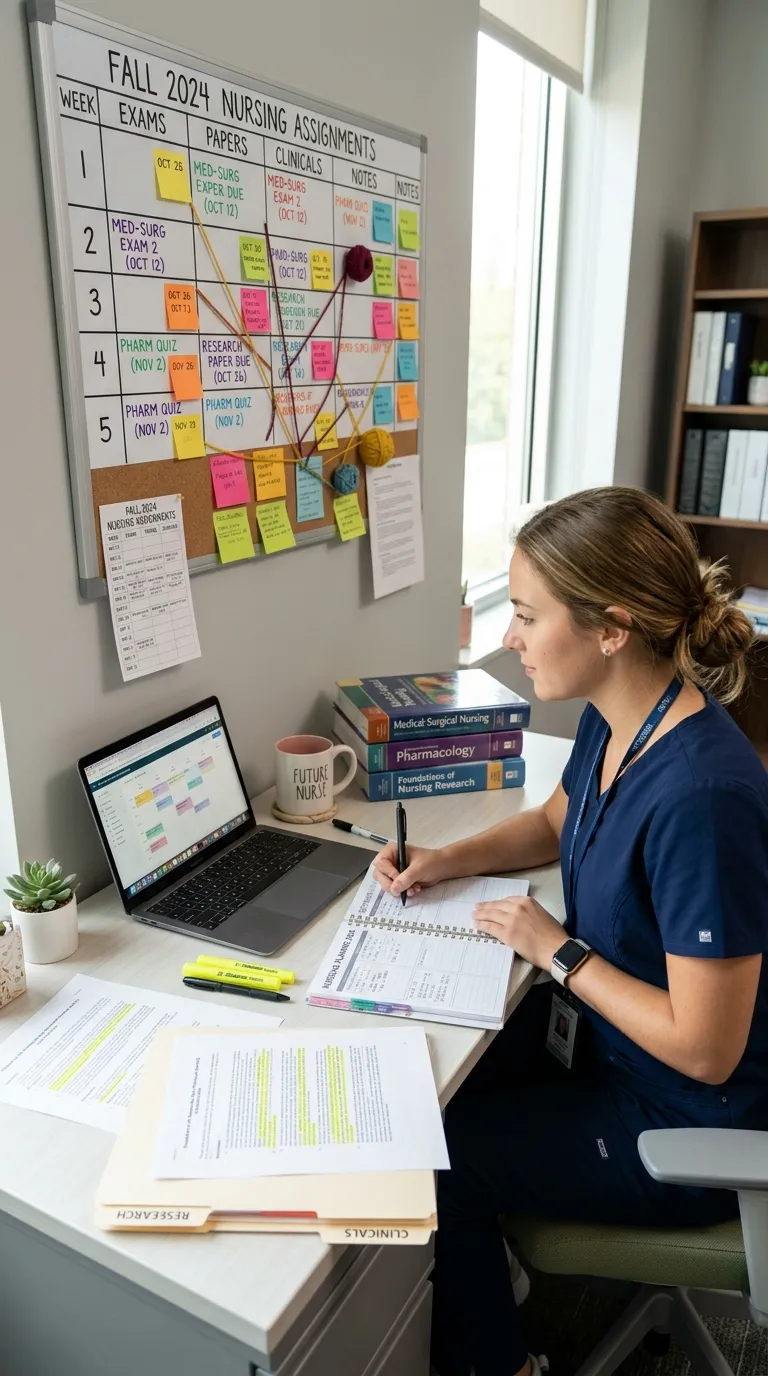
An assignment timeline gives nursing students control over demanding coursework. Planning research, writing, and review stages separately makes complex projects feel more manageable during busy semesters. Start by identifying the submission date and dividing the assignment into smaller tasks, including understanding the instructions, gathering approved sources, creating an outline, drafting, checking references, and proofreading.
For example, if a paper is due in ten days, reserve the first two days for research and planning, the next four for drafting, and the following days for revision and final checks. Leave a small buffer before submission in case you encounter unexpected difficulties. Add each milestone to your weekly planner rather than relying on memory. This approach reduces last-minute pressure and gives you time to check whether your work follows academic requirements. Always follow your institution’s rules regarding citations, collaboration, and permitted writing assistance.
Memory Review Sessions

Memory review sessions help nursing students keep important information active instead of forgetting it after one study period. Regular short reviews make complex topics easier to recall when exams require students to retrieve information efficiently. After learning a new concept, close your notes and explain the main points in your own words. Then reopen the material to check for missing or incorrect details.
Schedule follow-up reviews over the next several days instead of trying to memorize everything in one sitting. Flashcards, blank-page summaries, and self-quizzing can all support active recall. For example, after studying the signs of a condition, challenge yourself to list the key findings without looking at your notes. Return to information you struggle to remember more frequently, while gradually reducing review time for familiar concepts. This method makes revision more active and helps you identify weak areas before an examination.
Study Resource Organization

An organized resource system makes studying more efficient because students spend less time searching and more time learning. Keeping materials separated by subject, exam, or clinical topic creates a smoother study experience. Create dedicated folders for lecture slides, textbook notes, practice questions, assignment instructions, and clinical learning resources. Use clear labels so important information is easy to locate when time is limited.
A digital folder system might include separate sections for pharmacology, anatomy, nursing fundamentals, and examination preparation. If you prefer paper materials, use dividers in a binder and keep a small index of important topics. Review your resources once a week to remove duplicate notes and identify missing materials. Choose a system that is simple enough to maintain during busy periods. The best organization method is not the most complicated one; it is the one that consistently helps you find accurate information when you need it.
Clinical Reflection Time

Clinical reflection time helps students learn from experiences instead of simply completing rotations. Writing down observations, questions, and lessons creates a stronger connection between practice and future nursing decisions. Set aside 10 to 15 minutes after a clinical day, when permitted by your program, to reflect on what you learned and which concepts deserve further study.
Consider using a few prompts to guide your reflection:
- What new skill or concept did I learn today?
- Which situation helped me connect theory with practice?
- What would I like to understand better?
- What question should I discuss with my instructor?
Keep reflections professional and follow your school’s confidentiality policies. Never include patient names or other identifying details in personal notes. Focus on your learning, communication, safety awareness, and areas for improvement. Regular reflection can help you recognize progress over time and prepare more thoughtfully for future clinical experiences.
Flexible Study Blocks

Flexible study blocks help nursing students stay productive even when clinical schedules or assignments change. Instead of abandoning the routine after disruptions, adaptable planning keeps important learning goals moving forward. Begin each week by identifying essential tasks and assigning them approximate time windows rather than making every hour fixed. If an unexpected class activity interrupts your original plan, move the task to another available period.
Keep a short list of activities that can fit into different amounts of time. For example, a 10-minute window might be suitable for reviewing flashcards, while a 30-minute period could work for practice questions or a focused lecture review. Save longer blocks for demanding assignments and complex concepts. This approach is particularly useful during clinical weeks, when schedules can feel less predictable. Flexible planning helps you maintain progress without expecting every day to follow the same pattern.
Exam Preparation Map
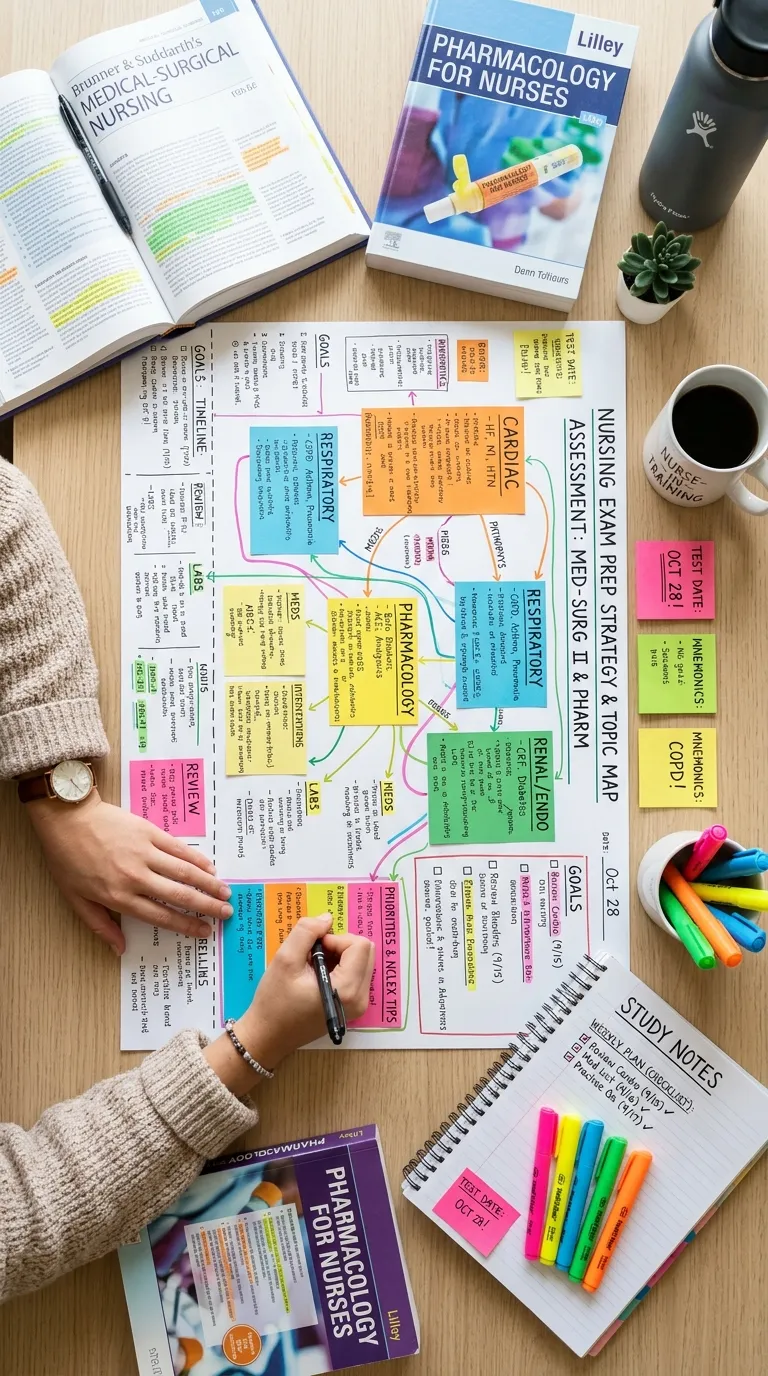
An exam preparation map turns overwhelming study goals into a visual action plan. By arranging topics according to difficulty and importance, students can focus their energy where it creates the greatest improvement. Begin with the exam date, then list the chapters, skills, or learning objectives that may be assessed. Divide these into smaller sections and assign each one a review date.
Use a simple table or calendar to track your progress. Mark topics as not started, reviewing, or ready for practice questions. Revisit the map after each study session and adjust your plan according to the results of your self-testing. If one subject requires additional attention, shift time away from topics you already understand well. Keep the map visible in your study area or accessible on your phone. A clear visual plan makes it easier to see what remains, avoid duplicated effort, and prepare steadily instead of cramming before an exam.
Personal Study Tracking

Personal study tracking helps nursing students understand their own learning patterns. Recording completed goals, difficult topics, and successful methods creates a smarter approach for future exams and clinical preparation. Use a notebook, spreadsheet, or simple digital tracker to record what you studied, how long you focused, and what you learned from the session.
You do not need to track every minute of your day. A few useful details can reveal whether your routine is working. For example, you might discover that you understand difficult concepts better during morning sessions or that practice questions help you identify weaknesses more effectively than rereading notes. Review your records at the end of each week and make small adjustments. Tracking should help you learn about your habits, not create pressure to study for unrealistic amounts of time. Focus on meaningful progress and consistent effort.
Night Before Planning

A night before planning routine helps nursing students protect their energy for learning instead of spending mornings organizing. Preparing materials and priorities ahead creates a smoother workflow throughout demanding nursing school days. Before going to bed, check your timetable, identify the next day’s most important tasks, and pack the materials needed for classes or clinical placements.
Your evening checklist can remain simple:
- Confirm class times, deadlines, and clinical requirements.
- Pack books, stationery, identification, and required supplies.
- Choose one or two important study goals for the next day.
- Prepare clothing and other everyday essentials.
- Set a reasonable bedtime that supports adequate rest.
Avoid using this routine to add more work to an already exhausting day. Five to ten minutes of preparation may be enough to make the morning feel more organized. When your schedule is ready in advance, you can begin the day with clearer priorities and spend less time deciding what to do next.
To Sum It Up
Creating a successful Nursing Student Study Schedule does not require a perfect timetable or hours of studying every day. Weekly planning, flexible study blocks, practice questions, and regular memory reviews can help you manage coursework while making room for rest and personal responsibilities. Start with two or three strategies that fit your current routine, then adjust them as your classes and clinical placements change.
Consistency matters more than perfection. Small, realistic habits can make nursing school feel easier to manage and help you prepare more confidently for examinations and clinical learning. Save this Nursing Student Study Schedule guide on Pinterest and choose one idea to put into practice today. As you discover which methods work best for you, build a personalized routine that supports steady learning throughout your nursing journey.