

Most nursing students copy a lecture word for word into one solid block of handwriting, then discover in exam week that there is no way to quiz themselves from it. Pages set up as cornell notes for nursing students work differently, because the layout does half the studying for you. These 12 steps build the page from the first ruled line to the weekly review, so every lecture ends as ready-made self-test material.
You need one notebook, a pen and a ruler. Nothing else. Set the page up once, use the same three zones in every lecture, and the system stays simple enough to keep on the busiest clinical week. Start with the next pharmacology or med surg lecture and give the format one full week before you judge it.
Rule the Page Into Three Zones

Everything else in this system depends on three zones drawn the same way on every page. The left column holds questions you write later, the wide right area holds the lecture itself, and the strip across the bottom holds the point of the whole page in your own words. Draw the lines before class, not during it.
- Rule a vertical line about a third of the way in from the left edge.
- Rule a horizontal line about two inches up from the bottom.
- Leave the top line or two empty for the heading you add next.
- Use the same spacing on every page, so your eye learns the layout.
Leave a Real Summary Strip

The strip across the bottom is the part students skip first, usually because it feels like extra writing at the end of a long lecture. It is not extra. The summary is where a page of scattered facts turns into one idea you can say out loud, and that idea is what you revise in exam week.
Keep the strip genuinely empty while the lecture runs. Guard the space on purpose: nothing goes there during class, not a late fact, not a reminder, not a doodle. A strip filled in class is just more notes. A strip you write afterwards, from memory, is the first honest test of whether the lecture stuck.
Head Every Page Before the Lecture Starts
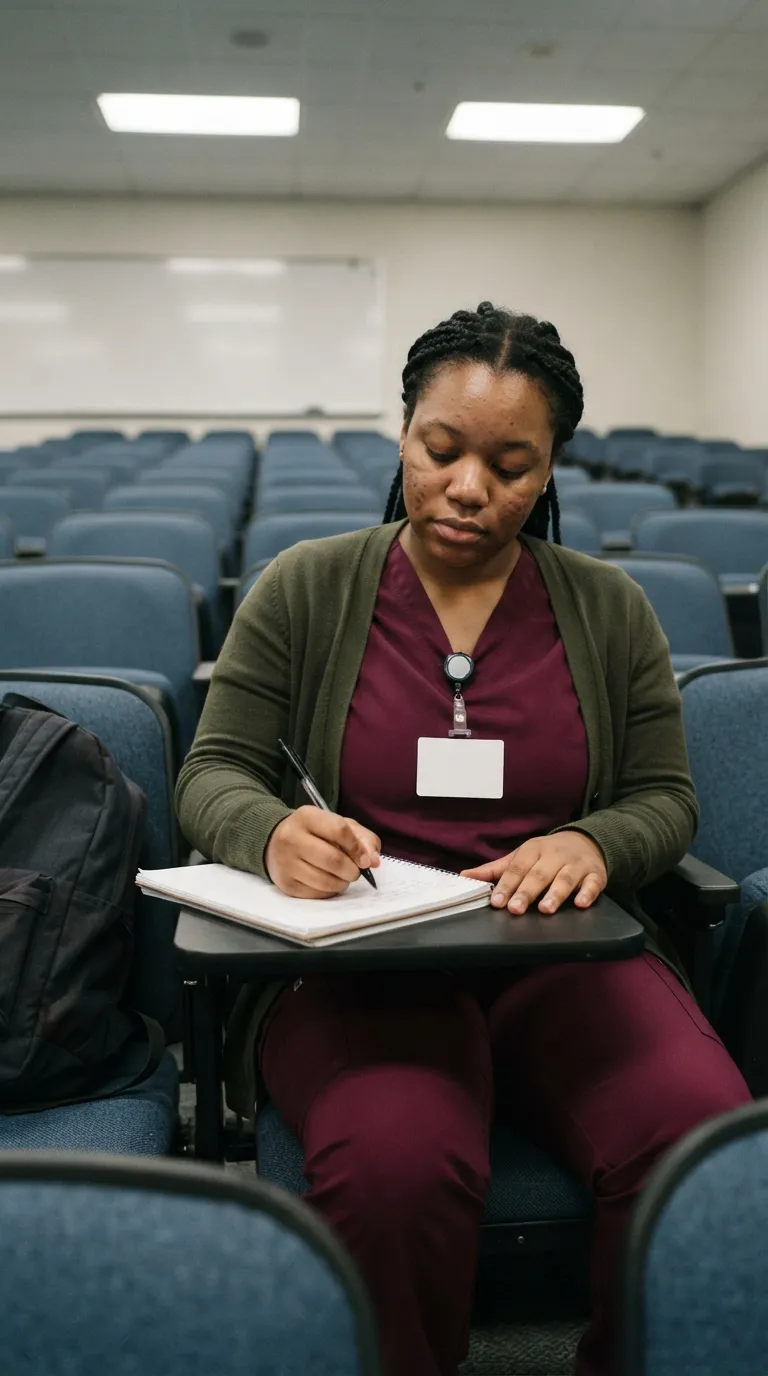
Write the course, the date and the lecture topic at the top of the page before the lecturer starts talking. It takes thirty seconds, and it is what lets you find the right page in seconds during exam week instead of flipping through a term of lookalike notes. The habit pairs well with the broader nursing notes taking tips that keep a whole notebook findable.
- Course name and lecture number, so series lectures stay in order.
- The date, because clinical rotations scramble your sense of weeks.
- The topic in plain words, the way you would search for it.
- The chapter or slide set, so you can match page to source later.
Take Notes Only in the Wide Column
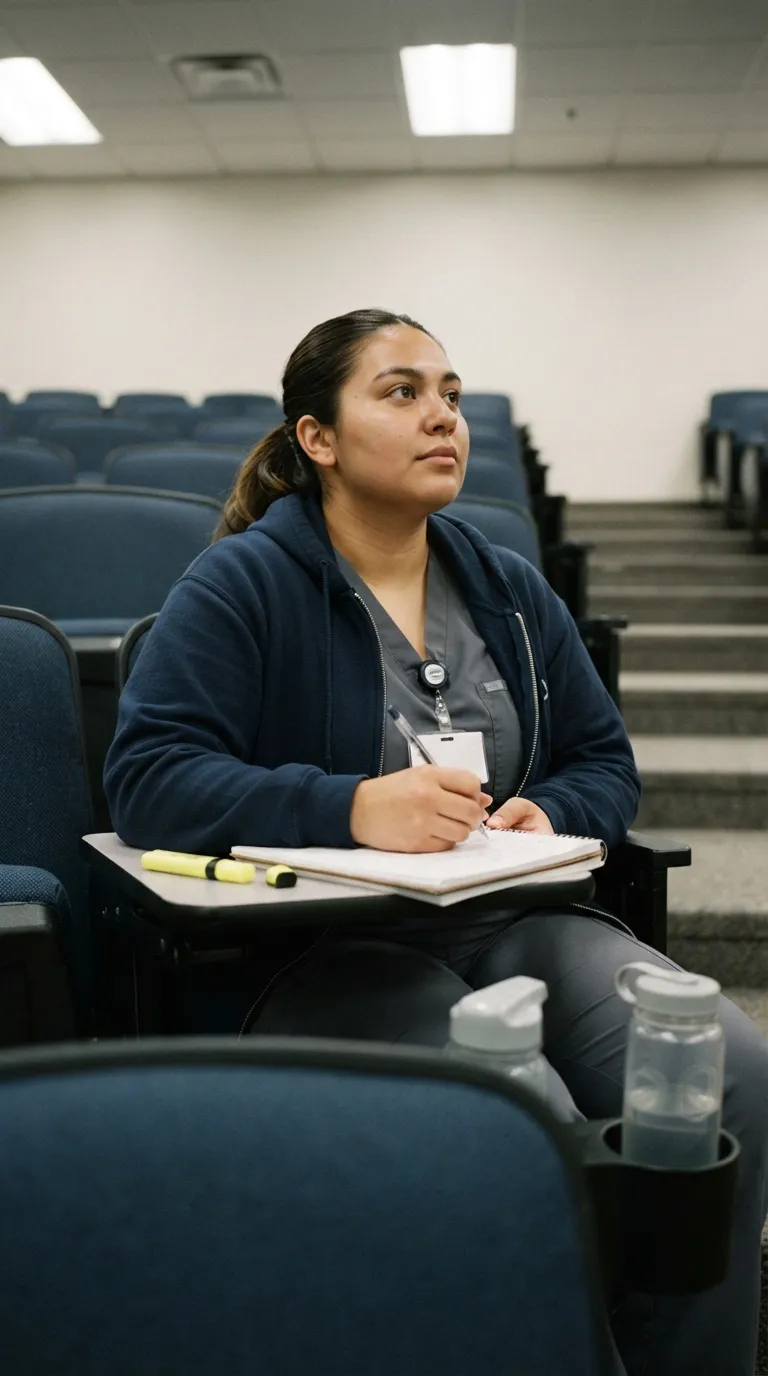
During the lecture, everything lands in the wide right-hand area: definitions, examples, the values a lecturer repeats, the drug names spelled out loud. Keeping one home for live notes stops the page turning into a puzzle you have to solve before you can study from it.
Resist the urge to decorate the cue column in class or to tidy as you go. Class time is for capture, not polish. Short lines beat long sentences, and a rough example you caught beats a neat sentence you missed because you were busy rewriting the last one.
Shorten as You Write

A lecturer talks faster than anyone writes, so the wide column needs shorthand you can trust. The safe kind is boring: arrows for increases and decreases, a plus or minus for levels, and the standard abbreviations your program already uses in charts and care plans.
- Use arrows for rises and falls instead of writing the words out.
- Keep one idea per line, so gaps and cues stay easy to add.
- Write standard abbreviations exactly as they appear in your course materials.
- Never invent private shorthand in class; you will not reread it next week.
Study tip: Rule up a week of pages in one sitting on a quiet evening. A page that is already zoned when you sit down in the lecture hall removes the last excuse for falling back on one solid block of writing.
Leave a Gap Where You Got Lost

Somewhere in every fast lecture, a point passes you by. The worst response is to write a guess and trust it later. Leave a clear gap of several lines and keep moving. A gap is a task, a guess is a trap, and the difference matters most in pharmacology lectures where a wrong number is worse than a missing one.
Fill the gap the same day from the slides, the textbook or a classmate’s notes, and mark it as filled. If it stays blank for a week, it stops being a gap and becomes a hole in your revision, and holes have a way of appearing in exams.
Fill the Cue Column Within a Day
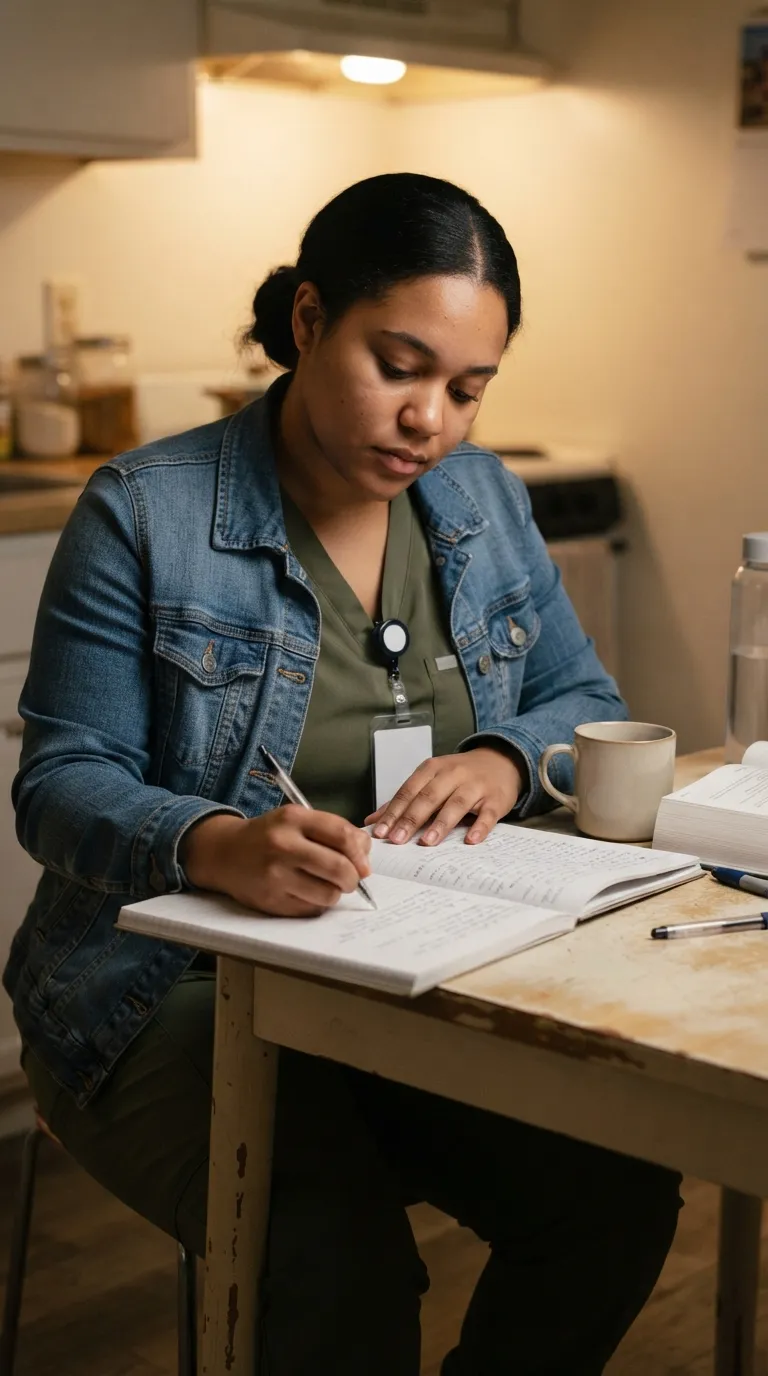
That evening, or the next morning at the latest, go back to the page and fill the narrow left column with short prompts. The habit works for every subject, including dense ones like pharmacology notes for nursing students, where a single drug can take a whole page of detail.
- Turn each wide-column chunk into one short question or label.
- Use the lecturer’s own wording for key terms, not your guess.
- Place the cue level with the notes it covers, not at random.
- Leave a cue blank if you cannot phrase it yet; that is a gap to fix.
Write the Summary in Your Own Words

Once the cues are in, write the summary strip at the bottom of the page in your own words. Two or three sentences that say what the lecture was really about, not a copy of the lecturer’s first slide. If you cannot write it without looking, the lecture has not settled yet, and that is useful news, not failure.
A good summary names the topic, the key idea and the one point you would be embarrassed to miss. Keep it short enough to read in a single glance during exam week, because a summary you have to decode is just more notes.
Cover the Notes and Answer From the Cues

This is the step that makes the whole system worth the setup. Cover the wide column with your hand or a blank sheet, read the first cue, and answer it out loud before you peek. Rereading the notes feels like learning, but it is mostly recognition, and recognition fades fast in an exam room.
- Cover the wide column completely; a half-covered page cheats.
- Answer each cue out loud, not in your head.
- Uncover and check, then mark the cues you missed.
- Run the missed cues again before you put the page away.
Turn Cues Into Practice Questions

Once a page has cues and a summary, it can become practice material without extra tools. Cover the wide column, turn each cue into a full question, and answer it before you check. The cue column was already a set of half-questions; finishing the job turns a passive page into a test you can take anywhere.
Keep the questions short and specific, the way exam questions are, and pair them with the study tips for nursing students that fit a short daily routine. A page of cues plus ten minutes of honest answering beats an hour of rereading, because the answering is what the exam will actually ask you to do.
Memory trick: The page has three jobs in order: capture in class, cue within a day, test before the week ends. Skip the middle job and the last one turns into guessing; skip the last one and the first two fade by exam week.
Keep One Section per Course

Mixing courses in one run of pages is the fastest way to lose the system. A pharmacology cue filed after a maternity page will not be found when you need it, and a mixed notebook makes weekly review feel like sorting laundry. Give each course its own section, with its own divider and its own page numbering if you use it.
- Start each course on a fresh page, even mid-week.
- Keep the same three zones in every section.
- Number pages within the section, not across the whole notebook.
- File loose handouts behind the section they belong to.
Review the Week’s Pages in One Sitting

Once a week, sit with the whole week’s pages and run the cues again, fast. Do not reread the wide column first. Answer from the cues, mark the misses, and put a star beside the pages that still fight you. The starred pages are next week’s review list, and they are worth more than a fresh set of notes.
This one sitting is what turns a notebook into a study system. Without it, pages pile up and fade; with it, each week builds on the last instead of starting over, and exam week becomes a review of familiar pages rather than a rescue mission.
One Last Study Tip
Set up one page tonight, before the next lecture, and use it for real in class tomorrow. One page done properly teaches your hands the layout faster than a week of reading about it, and the second page is easier than the first.
For study use only. Always follow your program, your facility’s policy and current drug and lab references.