


Pharmacology notes for NCLEX are easier to remember when medication facts are organized around patient safety, therapeutic effects, and nursing decisions. Rather than memorizing endless drug lists, focus on patterns such as medication classes, monitoring, adverse effects, teaching, interactions, and priority actions. These 25 study points can help turn complicated pharmacology material into practical review categories you can revisit throughout your NCLEX preparation.
1. Master Medication Suffixes
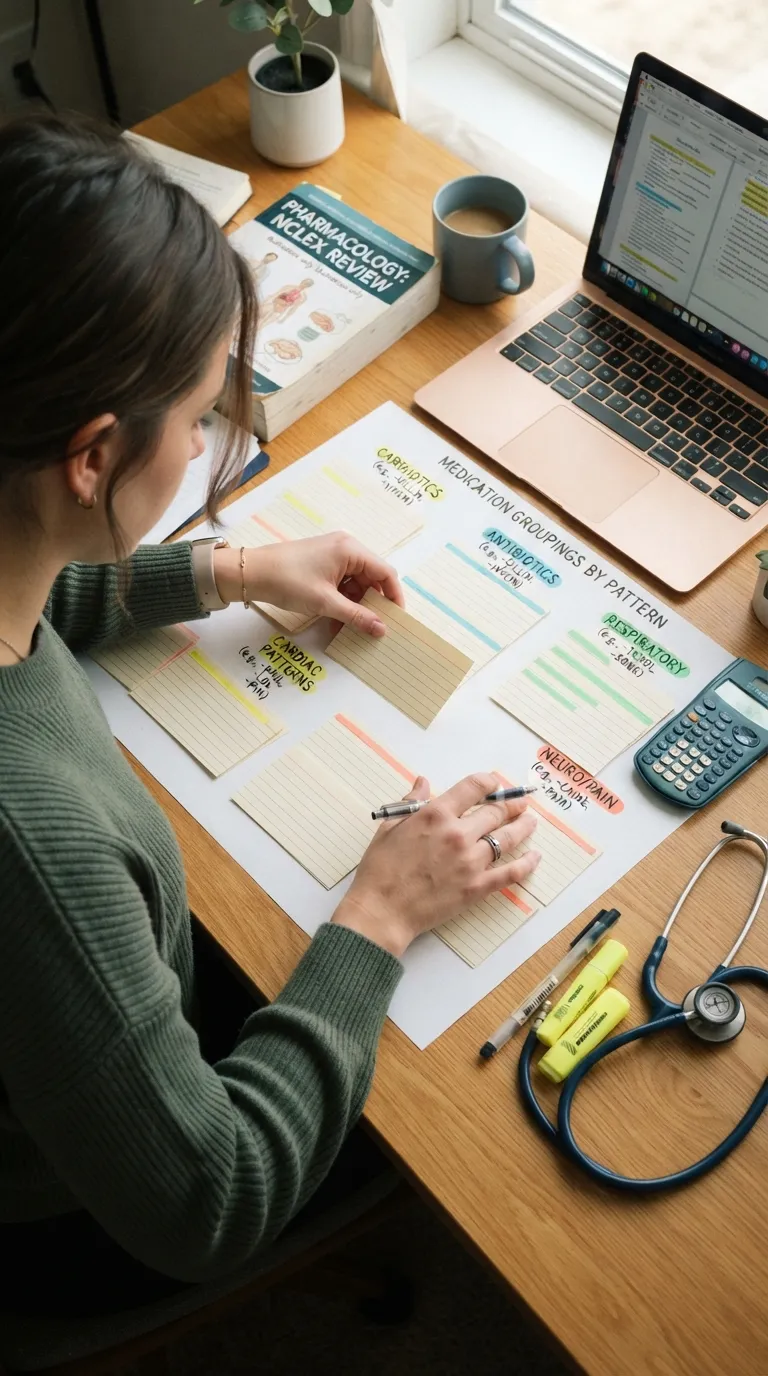
Drug-name patterns can act as memory shortcuts, but they should support—not replace—understanding. Use suffixes to recognize possible medication families, then verify the specific medication’s action, precautions, and nursing considerations.
2. Learn Generic Names First

Starting with generic names gives your notes a consistent foundation. When brand names appear in clinical examples or study resources, treat them as secondary identifiers rather than allowing multiple names to clutter your primary memory system.
3. Build a Medication Profile

A consistent medication profile makes review faster because every drug is studied through the same framework. It also helps you notice when an important category is missing from your notes.
4. Separate Therapeutic Uses

When a practice question gives you a medication and a patient condition, recognizing the therapeutic purpose can quickly establish whether the medication makes sense. Study the connection as a clinical scenario rather than as a vocabulary pair.
5. Create Contraindication Pairs

Instead of memorizing contraindications as disconnected lists, ask what characteristic of the medication makes a particular patient situation risky. That reasoning can make unfamiliar question variations easier to approach.
6. Review Black Box Warnings

Serious warnings should stand out in your notes rather than being buried among routine medication facts. Focus on understanding the clinical risk and the type of patient situation in which that warning becomes especially important.
7. Organize Antidote Information

Antidote questions reward recognition of important medication-safety relationships. Build a compact reference section rather than scattering reversal information throughout unrelated drug notes.
8. Practice Dose Safety Concepts

Dose safety requires careful attention to units and the prescribed amount. When studying calculations, practice checking your setup and final result rather than focusing only on reaching a numerical answer.
9. Know Administration Routes
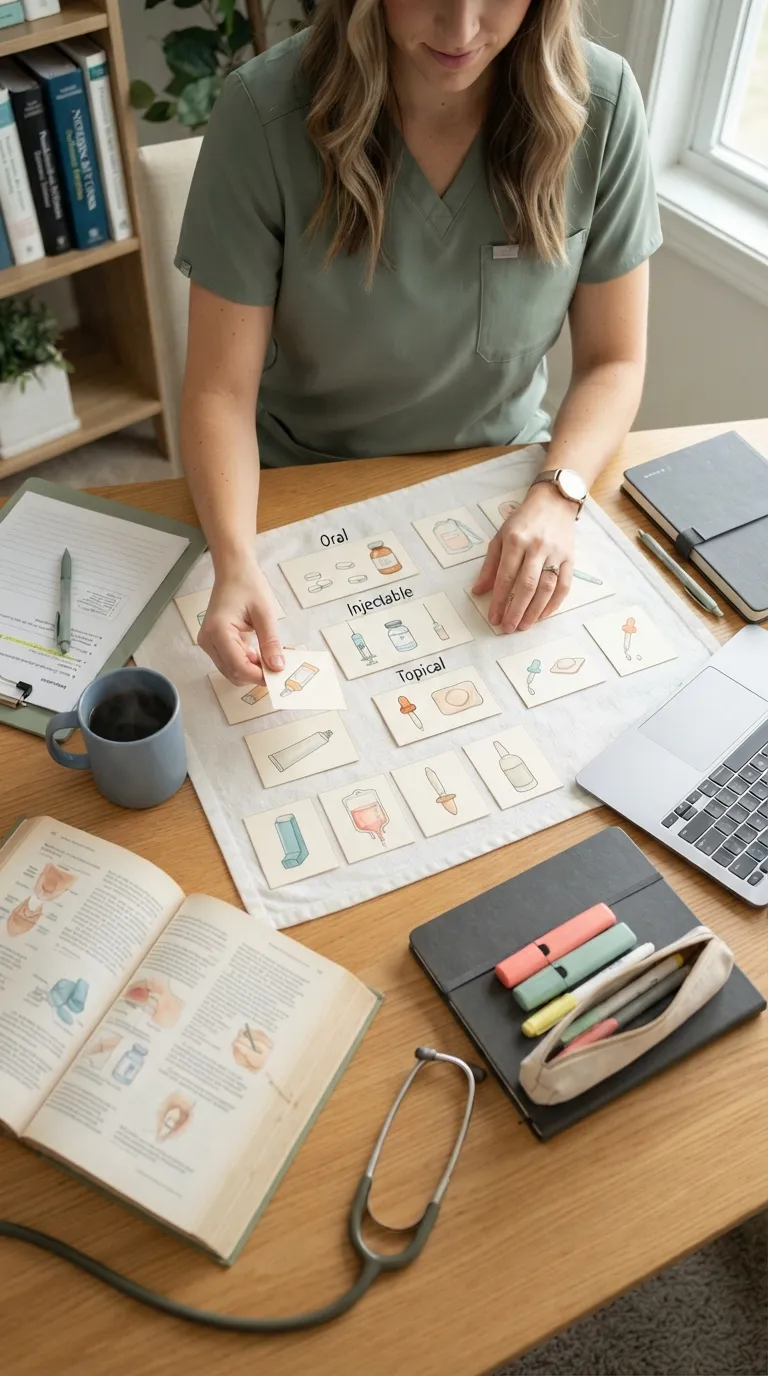
Route questions are not simply vocabulary questions. Consider how the route affects administration technique, onset, monitoring, and patient safety when reviewing each medication.
10. Recognize Therapeutic Response

A strong pharmacology note should answer an important question: How will I know the medication is working? Linking the drug to an observable therapeutic response makes the information much more useful in patient-centered questions.
11. Review Food Interactions

Food-related questions become easier when you understand why a dietary interaction matters. Rather than memorizing a long list, connect each important food consideration with the medication effect it can influence.
12. Understand Timing Instructions

Timing instructions are worth studying as part of the medication’s overall profile. Ask yourself whether timing affects absorption, effectiveness, tolerability, or interactions with other treatments.
13. Study Medication Teaching

A medication question may test whether the nurse understands what the patient should be taught, not just what the medication does. Practice turning technical information into short, clear instructions that a patient could realistically understand.
14. Learn Pregnancy Considerations

Pregnancy-related medication questions require patient-specific thinking. Focus on whether the medication presents a meaningful risk and what the nurse should assess, teach, or communicate rather than relying on one memorized category label.
15. Review Older-Adult Risks

Older adults can respond differently to medications because physiological changes may affect how drugs are processed and tolerated. When reviewing a medication, consider how age could alter monitoring needs or increase vulnerability to unwanted effects.
16. Recognize Medication Toxicity

Toxicity is easier to recognize when you understand the difference between the intended effect and an excessive effect. Build notes around the patient findings that should make you stop, reassess, and consider whether medication-related harm could be occurring.
17. Understand Half-Life Basics
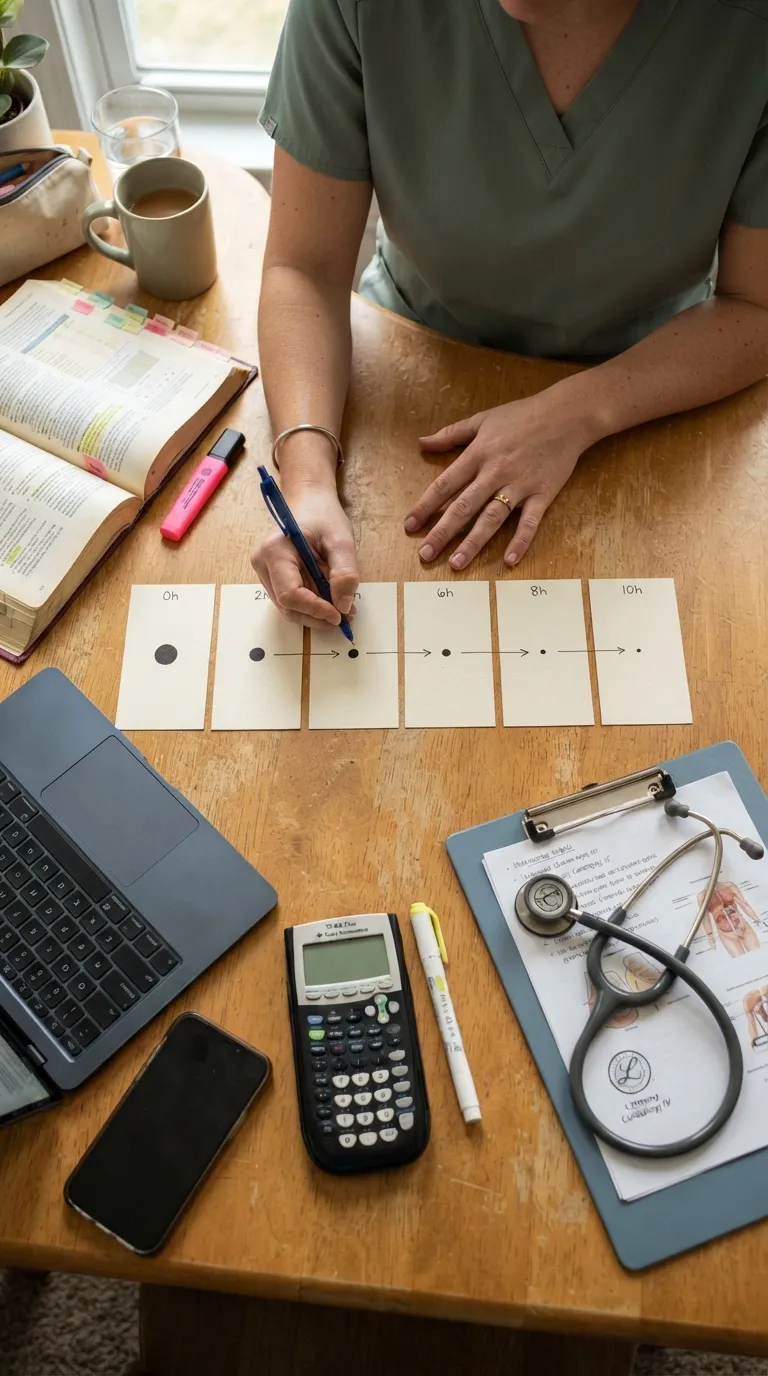
You do not always need complicated calculations to understand half-life. Focus on the concept: how quickly the amount of medication in the body decreases and how that influences duration, repeated dosing, and accumulation.
18. Review Medication Reconciliation

Medication reconciliation is about identifying discrepancies before they create problems. When studying, practice comparing medication lists carefully and remembering that patients may use products beyond their prescription medications.
19. Connect Labs With Medications

Lab-monitoring questions become more logical when you know what the medication can affect. Instead of memorizing a laboratory test in isolation, connect it to the medication’s mechanism, potential toxicity, or therapeutic purpose.
20. Practice Priority Medication Questions

Pharmacology questions often test nursing judgment alongside medication knowledge. When practicing, ask what information is most urgent, whether assessment is needed first, and which patient finding could represent an immediate safety issue.
Closing Thoughts
Effective pharmacology preparation is about more than remembering medication names. You need to recognize patterns, connect medications with patient findings, understand safety concerns, and determine what information matters most in a clinical situation. Use these pharmacology notes for NCLEX as a framework for active study. Build medication profiles, compare confusing drugs, practice patient-teaching questions, review monitoring requirements, and use mixed quizzes to test whether you can apply what you have learned. The goal is not to memorize every possible detail at once. Build a strong foundation, revisit weak areas regularly, and practice explaining why a medication-related answer is correct.