

You opened your results and the word was not the one you studied for, so what exactly do you change this time? A failed attempt gives you data most first-time candidates never get: a report that names your weak areas. This nclex retake study plan turns that report into 14 steps, from the 45-day wait to the morning of the exam, so the second attempt runs on a routine instead of hope.
Each step is small on purpose and ordered the way a rebuild actually unfolds: diagnose first, practice second, simulate last. Follow them in order, and give the plan the full wait between attempts rather than squeezing it into a panicked fortnight.
Read Your Candidate Performance Report First [Start Here]

Your Candidate Performance Report is the most honest study guide you own. It rates each NCLEX content area as below, near, or above the passing standard, so it shows exactly where the first attempt leaked points. Read it before you open a single review book, and let it set the order of everything that follows.
- Start with the below areas: every content area marked below the passing standard becomes a first-priority block in your plan.
- Note the near areas too: near-the-standard areas are close, and short, steady review often lifts them the fastest.
- Keep the report visible: pin it near your desk so each study session answers to it, not to guesswork.
Use the 45-Day Wait as Your Runway [Timeline]

Wait: 45 days between attempts · Focus: a full rebuild, not a break · Register: again, under your board’s rules · Mindset: runway, not punishment
The 45 days between attempts is a rule, not a suggestion: you cannot sit the exam again sooner, and registration and processing take time as well. Treat those weeks as a runway with a start and an end. Week one is for the report and the plan. The middle weeks carry the question work, and the final week tapers. A dated end point keeps the wait from drifting into lost time.
Rebuild Your Content Map From the Test Plan [Content]

Turn the report into a map. Lay the NCLEX test plan categories beside your report results and mark each area red, yellow or green by how you scored. Pharmacology sits inside several categories at once, so rebuild it early with solid pharmacology notes for the NCLEX rather than scattered drug lists.
- Red areas first: below-standard categories get the most study sessions every week.
- Yellow in rotation: near-standard areas appear twice a week so they do not slip backward.
- Green on maintenance: strong areas get one short review a week, and no more than that.
Set a Daily Question Quota You Can Keep [Daily Habit]

Daily quota: 25 to 50 questions · Sessions: one or two blocks · Rule: finish the quota, then stop · Tracking: same time each day
A quota only works if a bad day cannot break it. Pick a number you can finish on your worst day, not your best one, and hold it steady for the full 45 days. Twenty-five careful questions with full rationale review teach more than a hundred rushed ones. If work or clinicals eat into a day, shrink the session, but never skip the review step, because the review is where the points are earned.
Answer in Tutor Mode Before Timed Mode [Practice Mode]

Early in the rebuild, tutor mode is the right classroom. You see each rationale right after answering, while your reasoning is still fresh, so wrong thinking gets corrected on the spot. Save timed, exam-style blocks for the last two weeks, when the goal shifts from learning content to managing the clock.
- Tutor mode first: read every rationale immediately, for right and wrong answers alike.
- Untimed means unhurried: no clock on your practice until the final two weeks of the plan.
- Timed blocks last: full exam pacing belongs at the end of the rebuild, not the start.
Keep a Miss Log With a Reason Column [Tracking]

Log: every missed question · Reason column: knowledge gap, misread, or changed answer · Review: the same evening · Pattern check: every Sunday
A miss log turns random wrong answers into a diagnosis. For every missed question, write the topic and the honest reason: you did not know it, you misread the stem, or you changed a right answer. After two weeks the reason column shows your real problem. Many repeat candidates find it is not knowledge at all, but rushing and second-guessing, and those two habits are fixable.
Reread Rationales for the Ones You Got Right [Review]

A right answer can hide a wrong reason. You may have guessed, eliminated badly, or remembered only half of a rule. Rereading rationales for correct answers closes those gaps before the real exam finds them, and it confirms the reasoning you want to repeat under pressure.
- Check the why: confirm your reason matches the rationale, not just the answer letter.
- Flag lucky guesses: a question you guessed right goes into the miss log anyway.
- Steal the wording: rationales teach how the exam phrases priorities, so copy that phrasing into your notes.
Memory trick: Sort every miss into three piles: Know It, Read It, Trust It. Knowledge gaps need study, misreads need slower reading, and changed answers need trust in your first pick.
Rotate Weak Areas Instead of Random Topics [Focus]

Rotation: two weak areas a day · Order: weakest first, while you are fresh · Mixed sets: once a week only · Source: your content map
Random question sets feel productive, but they spend your best hours on topics you already know. Build each day around two weak areas from your map instead. Care planning is a common weak spot after a first attempt, and the care plan study tips on Stethly show how to break that category into small daily pieces. One mixed set a week is enough to keep the strong areas warm.
Schedule Two Full Practice Exams [Simulation]

Two full-length practice exams, taken under real conditions, teach what no short quiz can: pacing, stamina, and how you behave at question 100. Sit the first around day 25 and the second about a week before the retake. Build them from mixed sets, and fill any category your map still flags as weak with a focused block of questions on that one topic.
- Real conditions: start at the same time as your booking, and take breaks by the official rules only.
- No pausing: the clock keeps running, so mark a stalling question and move on.
- Review for two days: each practice exam earns two full days of rationale review afterward.
Fix Your Sleep and Test-Day Routine Early [Routine]
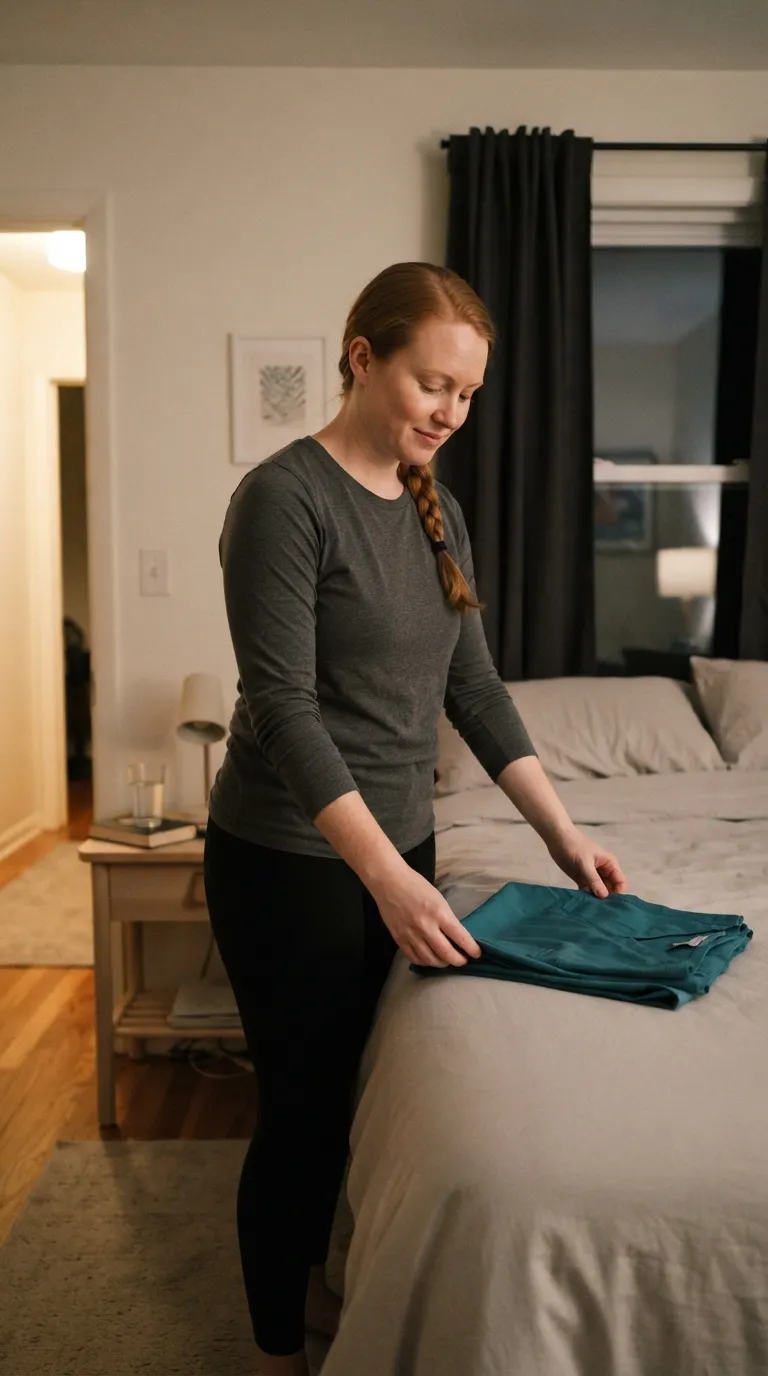
Sleep: 7 to 9 hours, same times daily · Wake time: matched to test day by week two · Screens: off an hour before bed · Caffeine: mornings only
Sleep is a study tool, not a reward for finishing. Memory settles overnight, so the last hour of late cramming costs more than it earns. Set your wake time to your test-day wake time at least two weeks out, and keep it on days off too. By the retake morning, your body should feel that the schedule is completely normal, because by then it is.
Book the Retake and Sort the Paperwork [Logistics]

Book early, while your preferred date and testing center still have seats. You register and pay again, and your board of nursing may ask for updated paperwork, so check its rules the same week your results arrive. Keep one eye on the goal while you file forms: the license on the other side of this exam, and milestones beyond it, right down to the nurse practitioner graduation cap you may wear one day.
- Register this week: pick the date first, then build the study calendar backwards from it.
- Check board rules: confirm exactly what your state board needs from repeat candidates.
- Save every confirmation: keep receipts and emails together in one folder, paper and digital.
Study With One Partner Once a Week [Support]

Partner: one person at your level · Sessions: weekly, 60 to 90 minutes · Format: teach each other, then quiz · Rule: study only, no drift
One partner is enough. Meet weekly to teach each other the week’s weak areas out loud, because explaining a rationale exposes gaps that silent reading hides. Quiz each other with questions neither of you has seen, and keep the whole session to study only. A partner who has also sat the exam, pass or fail, understands the pressure in a way family cannot.
Taper Your Study Load in the Final Week [Final Week]

The final week is for sharpening, not for new content. Cut your daily quota in half, review your miss log and your flagged rationales, and let hard new topics go without guilt. If one flagged area still needs a light touch, a short set like the pediatric growth and development questions at half length is enough. Arriving rested with a clear head beats arriving exhausted with three extra facts.
- Halve the quota: short review sets only, and finish by early evening each day.
- Reread the miss log: your own error patterns are the highest-yield review you have left.
- Stop the night before: no questions after dinner on the evening before the exam.
Plan the Morning of the Retake Hour by Hour [Test Day]

Wake: your practiced time · Breakfast: normal food, normal caffeine · Arrive: 30 minutes early · Bring: ID and your confirmation
Write the morning down hour by hour the day before, so no decision is left to a nervous brain. Lay out your clothes, your ID and your route the night before. Eat the breakfast you have eaten all month, leave early, and use the trip to breathe, not to review. At the door, your only job is the first question. The plan carries the rest.
Questions Students Ask
How soon can you sit the NCLEX again after not passing?
You must wait 45 days between attempts, and you register and pay again just like the first time. Your board of nursing sets its own paperwork rules, so read them early. Use the wait as study time with a dated plan, not as time off, and book your seat as soon as your registration window opens.
Should you reuse the same study materials for a retake?
Not in the same way. Materials are rarely the whole problem; the method usually is. Keep a question bank you trust, but change how you use it: tutor mode first, a miss log for every wrong answer, and timed blocks only near the end. Drop any resource you once finished without reading its rationales.
What does it mean if your exam ends at the minimum number of questions?
A short exam is not a verdict by itself. The computer stops when it has enough evidence that you are clearly above or clearly below the passing standard, so a minimum-length exam can go either way. Judge the attempt by how your preparation felt, not by the question count, and wait for the official result.
One Small Habit to Start
Big rebuilds fail on motivation; small routines survive it. You do not need a perfect 45 days. You need a plan you can repeat on tired days, busy days and doubtful days alike.
Start tonight with the smallest version: open your performance report, pick the single weakest content area, and answer ten questions on it with the rationales open. Ten careful questions today become the habit that carries the other 13 steps.