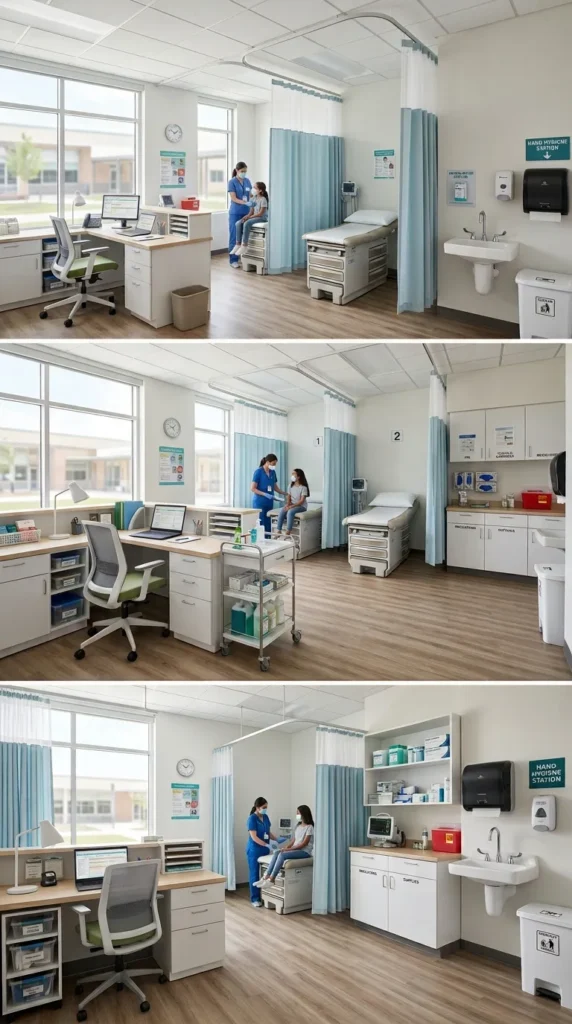

This article shares effective school nurse hacks that simplify daily tasks, improve student support, and create a more organized health office. From supply systems to wellness routines, these ideas help nurses save time and provide better care. Explore these practical strategies to make every school day run smoother while creating a safe, welcoming environment where students feel comfortable asking for help.
Organized Supply Stations
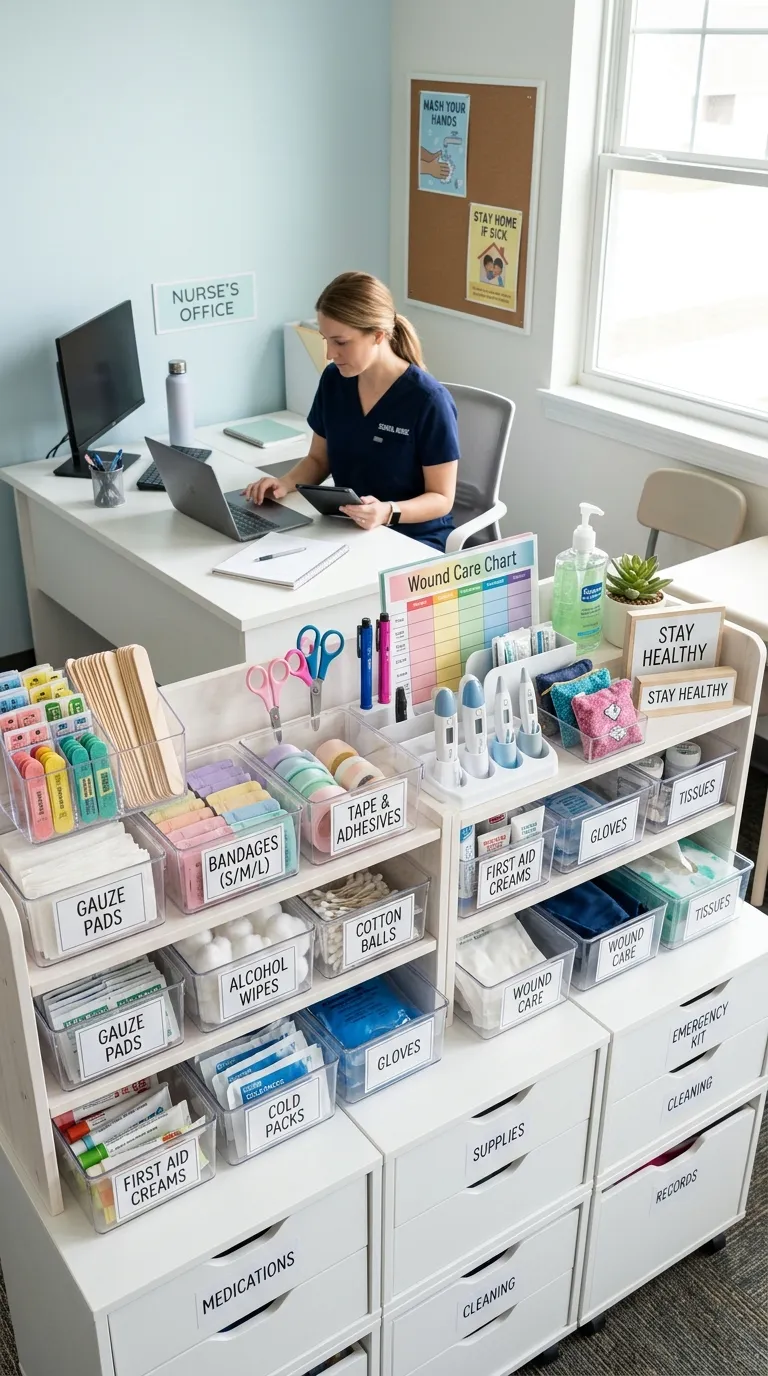
A smart supply station helps a school nurse handle unexpected situations without unnecessary delays. Grouping items by purpose, such as wound care, comfort supplies, and student records, creates a smoother routine and makes emergency response more efficient when every second matters.
Keep frequently used items in clearly labeled containers so they are easy to find during busy school hours. Check supplies regularly to replace expired products and restock items that are running low. Adding a simple inventory checklist can also help the nurse track essential materials and maintain an organized, well-prepared health office.
Useful supply station categories include:
- First aid: Bandages, gauze, and approved wound-care materials.
- Student comfort: Tissues, disposable emesis bags, and other appropriate comfort items.
- Daily essentials: Gloves, cleaning materials, and frequently used office supplies.
Keep medications and clinical supplies secured according to school policies, and separate items that require special storage.
Student Comfort Corner

A thoughtfully designed comfort corner can change how students experience the nurse’s office. Small environmental details, like comfortable seating and calming visuals, may help children relax and communicate their symptoms more clearly during visits.
Adding a few comfortable pillows, gentle colors, and age-appropriate books can make the space feel more welcoming and less intimidating. A quiet area also gives students a chance to settle down when they feel anxious, overwhelmed, or upset. Keeping the corner clean, organized, and easy to supervise helps the school nurse provide comfort while maintaining a safe and professional environment.
Consider adding these simple touches:
- A comfortable chair in a quiet, supervised area.
- Age-appropriate books or calming visual materials.
- A small container for tissues and other suitable comfort items.
Choose washable materials that are easy to clean, and ensure the space does not interfere with assessments or urgent care.
Quick Documentation Systems
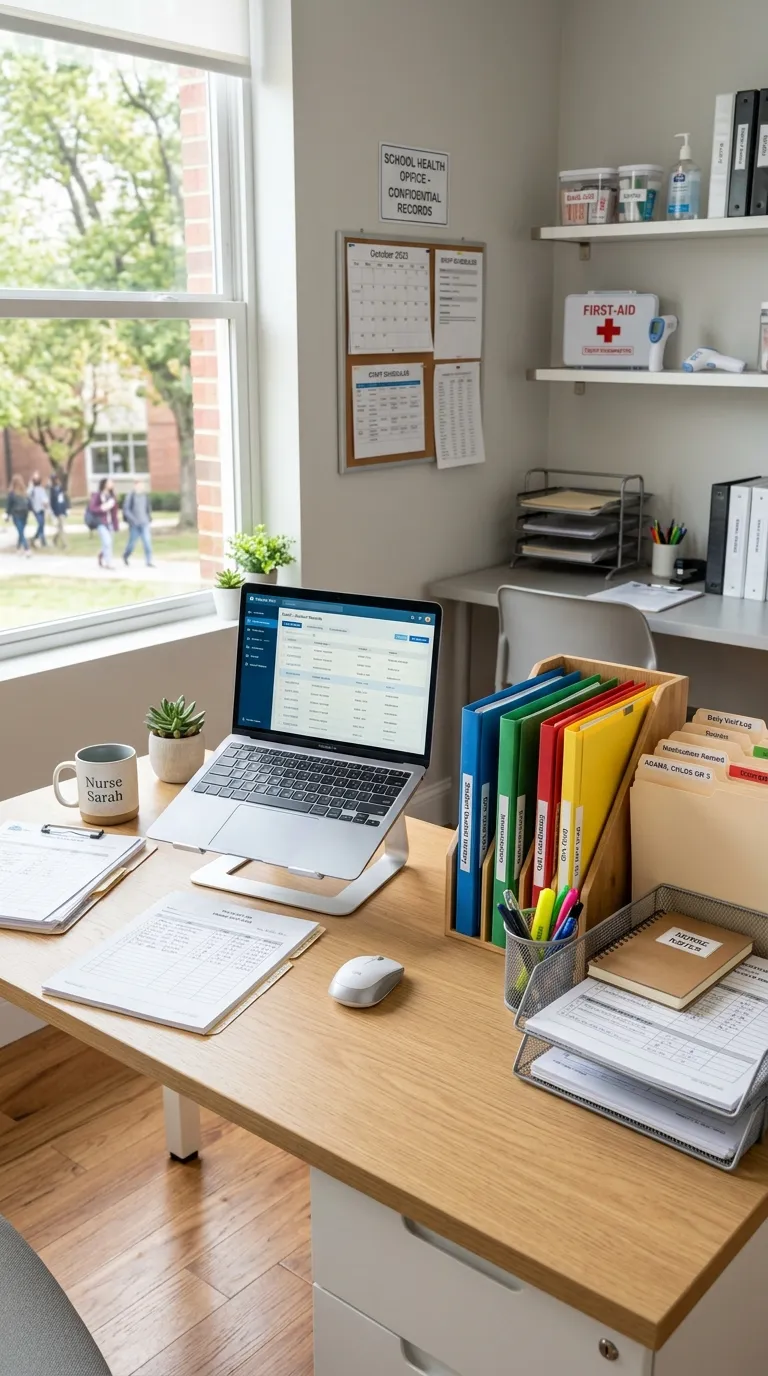
Reliable documentation systems help a school nurse stay organized while managing many student needs throughout the day. A practical setup with consistent file categories and digital reminders reduces mistakes, protects important information, and creates more time for direct student care. Keeping attendance records, medication details, emergency contacts, and health forms in clearly labeled sections makes important information easier to locate when needed.
Regularly reviewing student records also helps ensure that details remain accurate and up to date. By following consistent documentation practices and storing sensitive information securely, school nurses can maintain better communication with parents and school staff while supporting students’ health and safety.
A simple documentation routine can include:
- Recording student visits promptly according to school procedures.
- Reviewing emergency contacts and health forms for missing information.
- Setting reminders for required follow-ups and record updates.
Use only school-approved systems, protect access to confidential records, and share student information only with authorized individuals.
Emergency Kit Essentials
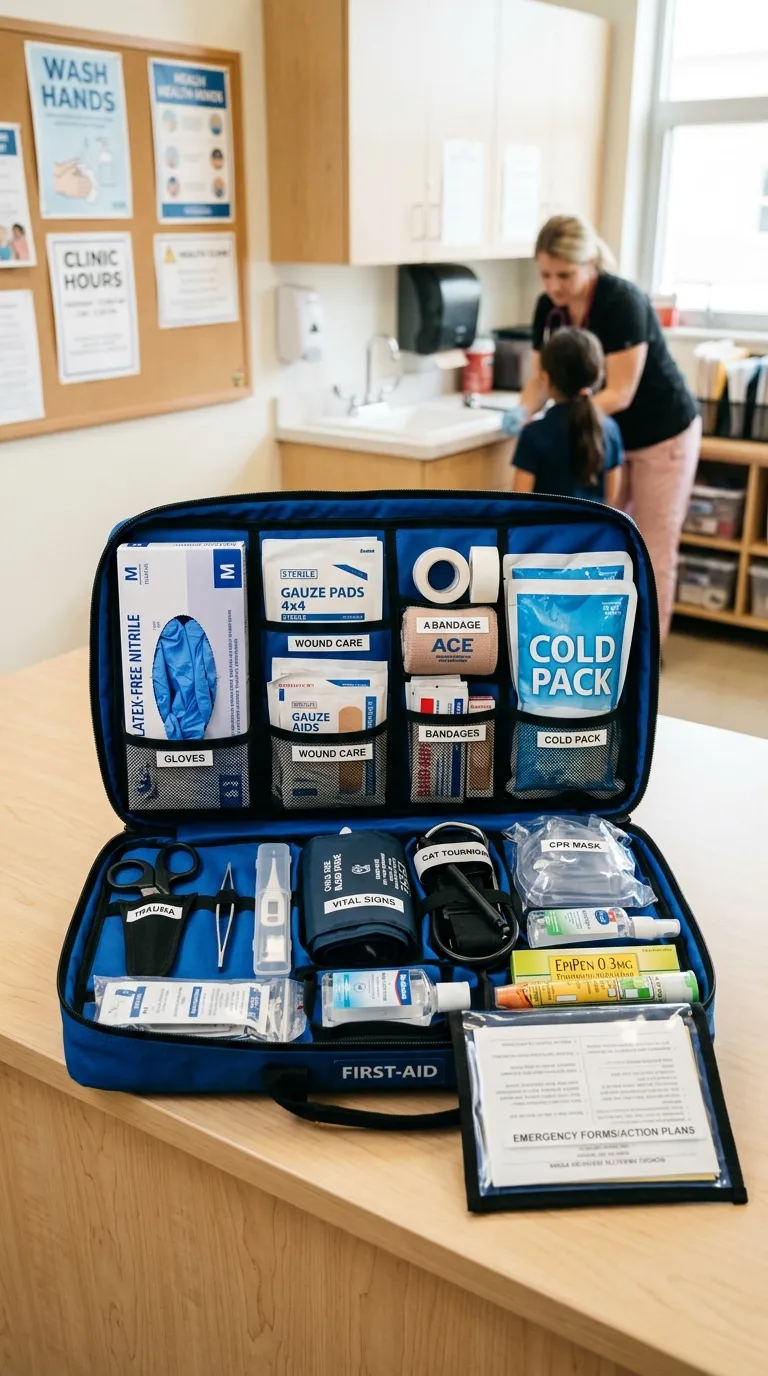
An organized emergency kit allows a school nurse to respond confidently when quick action is needed. Keeping frequently used supplies grouped together and reviewing inventory regularly can prevent frustrating delays during student injuries, allergic reactions, or unexpected health concerns. Clearly labeling each section helps the nurse locate essential items quickly, even during stressful situations.
It is also important to check expiration dates, replace used supplies, and make sure emergency equipment remains in good working condition. Keeping the kit in an accessible but secure location ensures that necessary materials are available when needed while preventing unauthorized access.
To keep an emergency kit ready:
- Review the contents using an approved checklist.
- Replace expired, damaged, or used supplies.
- Check emergency equipment according to manufacturer instructions and school protocols.
- Make sure authorized staff know where the kit is stored.
Follow the school’s emergency action plans and training requirements. An organized kit supports preparedness but does not replace proper assessment, training, or emergency services.
Smart Health Tracking
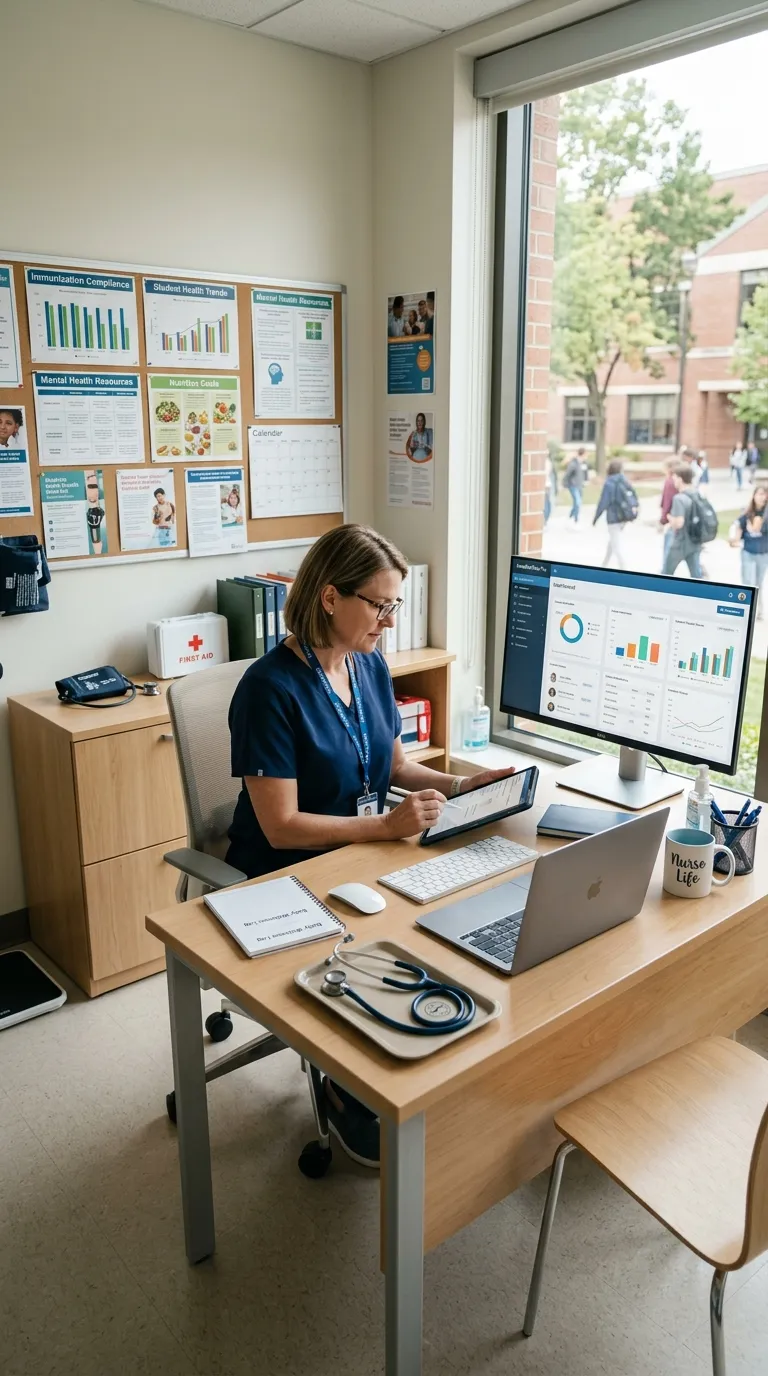
Using simple tracking methods helps a school nurse notice important trends instead of only handling individual visits. Organized records make it easier to recognize repeated concerns, prepare resources, and develop more proactive health support plans for students. Tracking common complaints, frequent office visits, and seasonal health concerns can help identify patterns that may require additional attention.
These records also help nurses understand which supplies are used most often and plan ahead for busy periods throughout the school year. By reviewing information regularly and maintaining student confidentiality, school nurses can make better-informed decisions and provide more consistent support for students’ health and well-being.
Helpful tracking categories may include:
- Common reasons for clinic visits.
- Frequently used supplies and restocking needs.
- Seasonal concerns that may require additional preparation.
Review trends carefully rather than drawing conclusions from isolated visits. Keep records secure and follow school policies when sharing relevant findings.
Classroom Health Partnerships
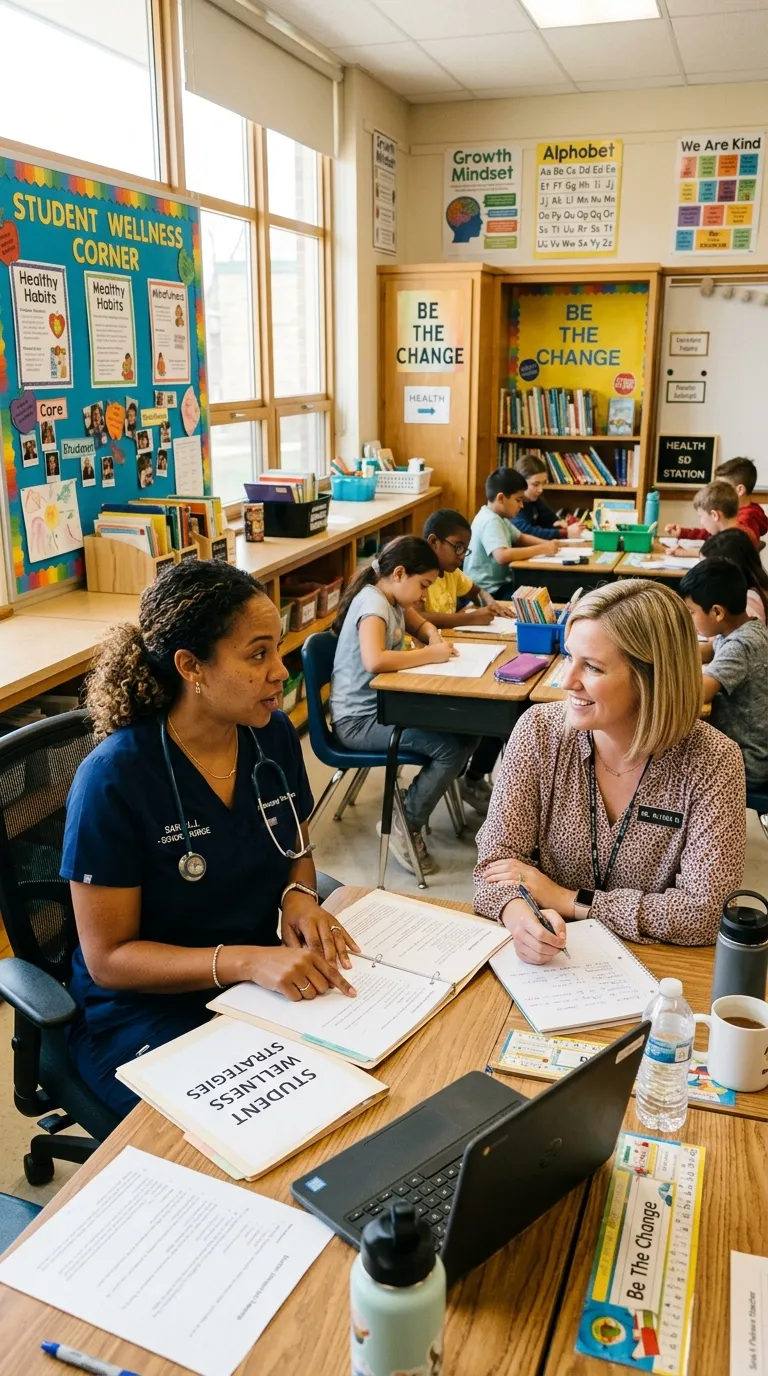
Strong partnerships between educators and healthcare professionals create better student support systems. A school nurse who communicates regularly with teachers can help address health concerns earlier, especially when changes in behavior, attendance, or classroom focus appear. Sharing relevant observations allows both teachers and nurses to understand how a student’s health may affect learning and participation.
Regular check-ins also make it easier to coordinate appropriate support for students managing ongoing health conditions, recovering from illness, or experiencing emotional difficulties. By working together and respecting student privacy, school staff can create a more supportive classroom environment where children feel comfortable asking for help.
To improve communication:
- Establish a clear process for referring students to the health office.
- Share relevant health guidance with authorized staff.
- Agree on appropriate follow-up procedures for ongoing concerns.
Keep communication professional and confidential, and involve parents or guardians when appropriate under school policies.
Seasonal Health Prep
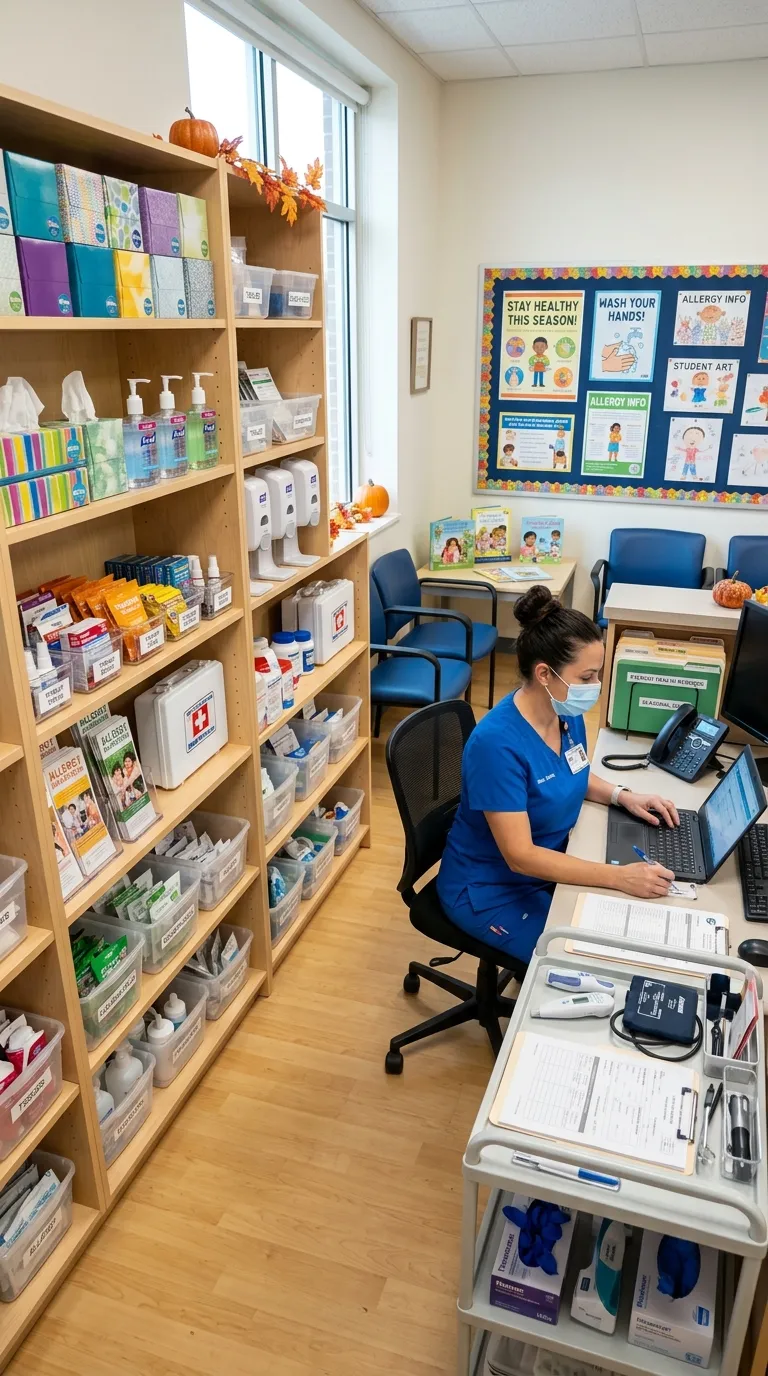
Planning ahead for seasonal challenges helps a school nurse create a smoother and more responsive healthcare routine. Preparing allergy supplies, wellness materials, and commonly needed resources before peak seasons can save valuable time when student visits increase. Reviewing previous health records can help identify recurring seasonal concerns, such as allergies, colds, or flu-like symptoms, that may affect students during certain months.
Nurses can also share timely health reminders with parents and school staff to encourage preventive habits, including proper handwashing and staying home when sick. Keeping essential supplies organized and checking inventory before busy periods helps avoid last-minute shortages.
A seasonal preparation checklist might include:
- Reviewing approved health and allergy management plans.
- Checking hand hygiene and respiratory hygiene supplies.
- Preparing age-appropriate wellness reminders for families.
- Restocking commonly used materials before anticipated busy periods.
Adapt preparations to local health guidance and the needs of the student population.
Time-Saving Triage Tips
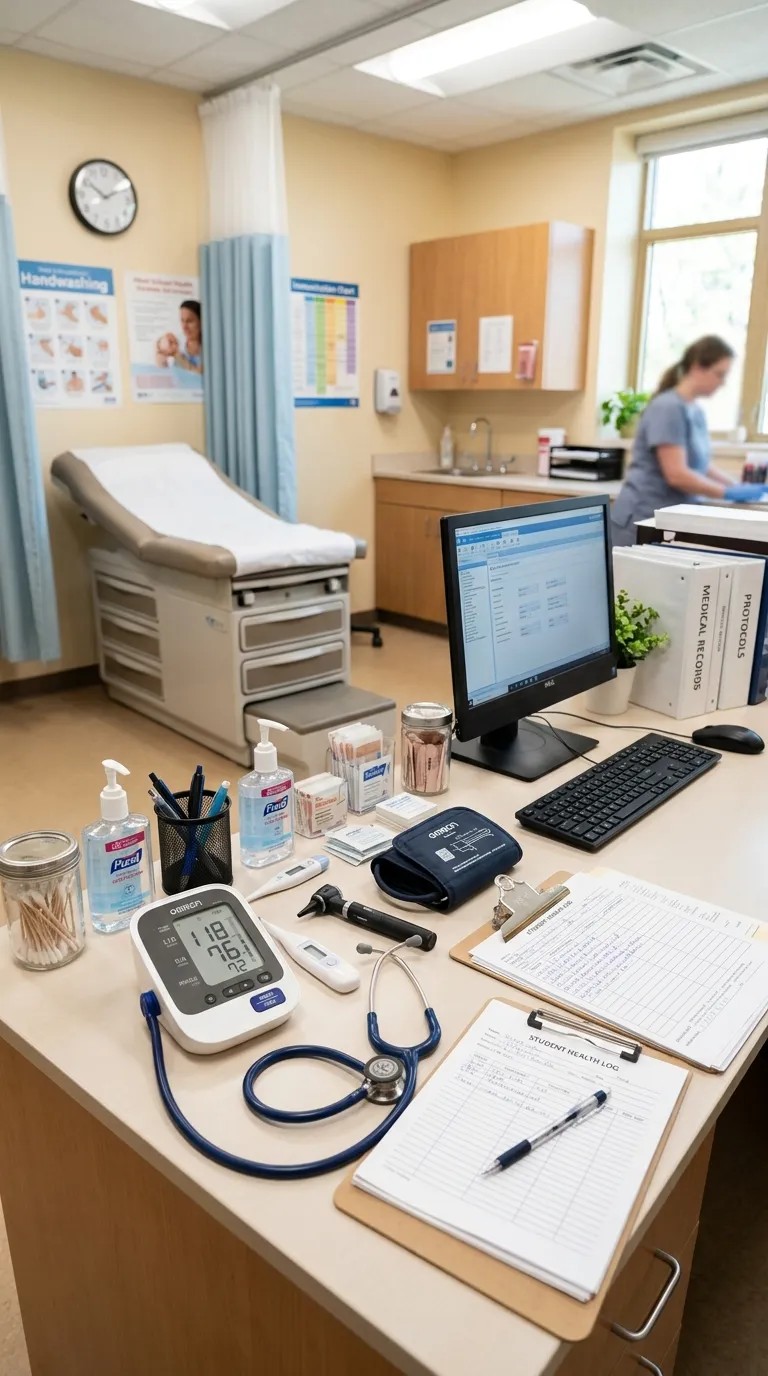
A simple triage routine helps manage busy clinic hours without making students feel rushed. Having a repeatable assessment process allows nurses to stay focused, prioritize concerns properly, and provide a more reassuring experience for every student who walks in.
Start by establishing a consistent process for identifying the reason for each visit, assessing symptoms, and determining the appropriate next step. Students with potentially serious symptoms should receive immediate attention according to emergency protocols rather than waiting in the regular queue.
Helpful workflow habits include:
- Ask the student what happened and when symptoms began.
- Assess the student’s condition within your professional scope and training.
- Follow established protocols for urgent symptoms and escalation.
- Document the assessment, actions taken, and required follow-up.
Never allow a time-saving routine to replace clinical judgment or delay emergency care. Clear procedures help the nurse work efficiently while keeping student safety the priority.
Allergy Management Setup
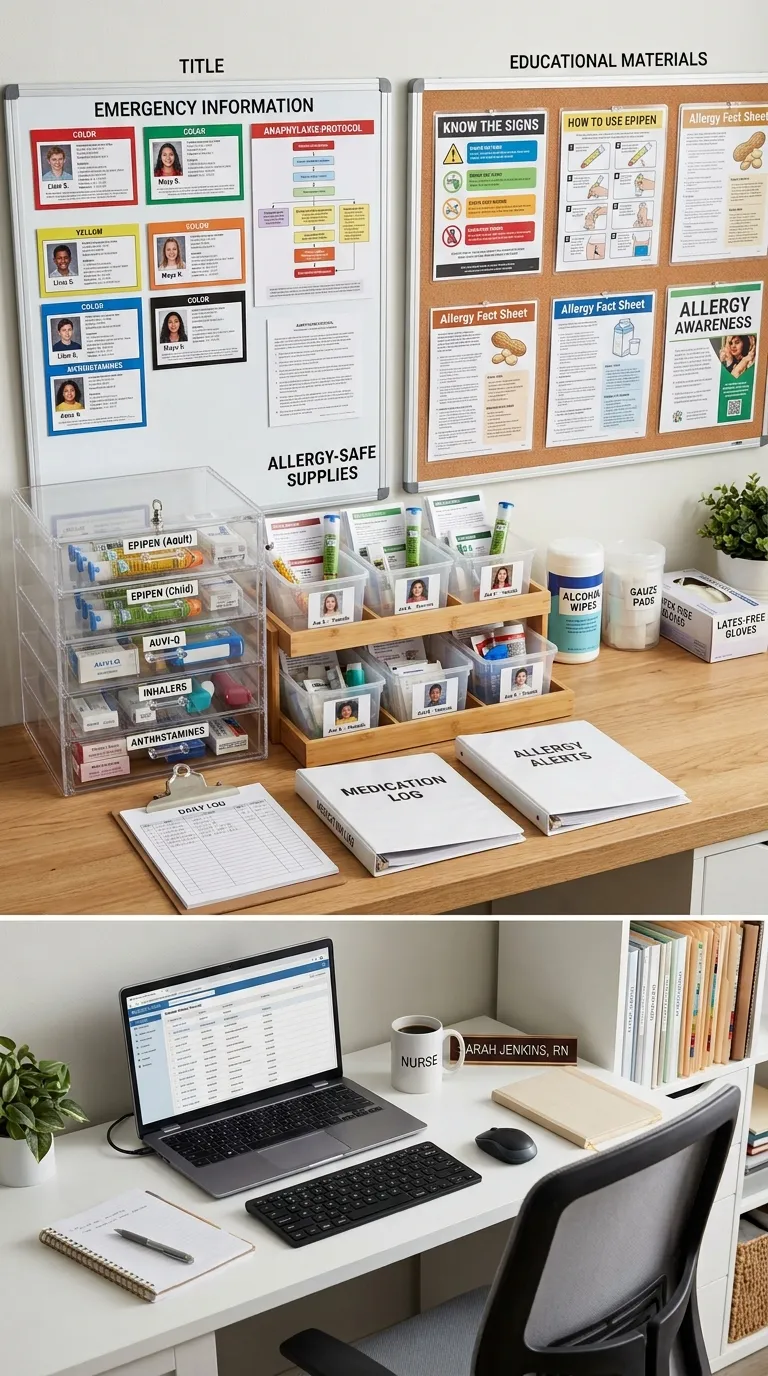
A dedicated allergy management area makes important information easier to find during critical moments. A school nurse can improve daily safety by keeping records updated, supplies organized, and communication systems clear for students, families, and school staff.
Maintain current, authorized allergy information and review individual emergency action plans according to school procedures. Keep prescribed emergency medication secured but accessible to authorized personnel in accordance with applicable rules. Teachers and other relevant staff should understand their responsibilities and know how to seek immediate assistance.
Useful allergy management habits include:
- Review student allergy records and action plans regularly.
- Check medication storage requirements and expiration dates.
- Confirm that relevant staff know the emergency response procedure.
- Communicate changes through approved, confidential channels.
A clear setup can reduce confusion and help the school respond more consistently when an allergic reaction is suspected.
Wellness Education Boards
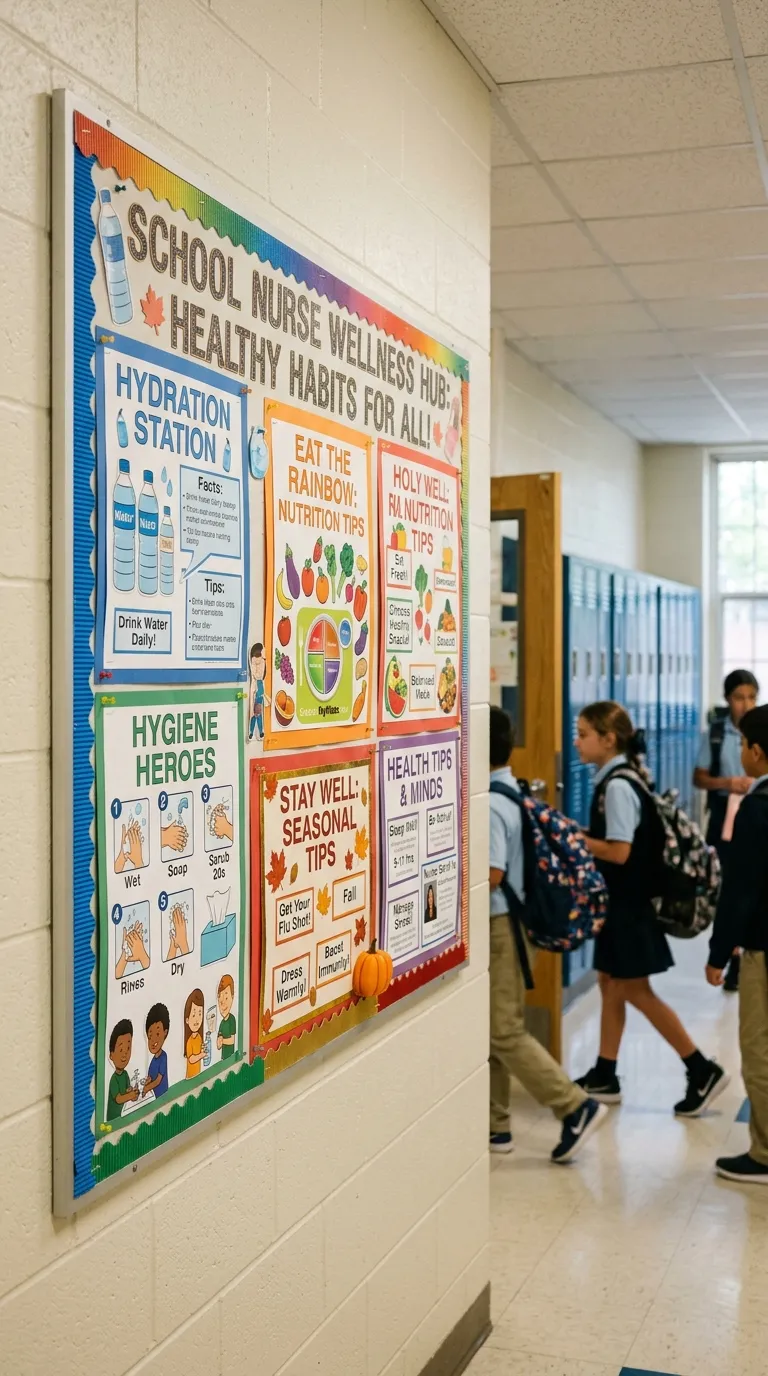
A well-designed wellness board turns everyday school spaces into learning opportunities. Simple visuals about hydration, hand hygiene, and healthy routines can encourage students to make better choices without feeling like they are receiving a lecture.
Refresh the display throughout the school year so the information remains relevant and engaging. Short messages, colorful illustrations, and easy-to-follow reminders are often more useful than large blocks of text. Choose materials that match the students’ ages and learning needs.
Ideas for a wellness board include:
- Handwashing steps displayed in a clear sequence.
- Reminders about drinking water throughout the day.
- Seasonal illness prevention tips.
- Simple guidance on recognizing emotions and asking a trusted adult for help.
Use reliable health information and avoid including identifiable student information or personal health details on public displays.
Parent Communication Tools
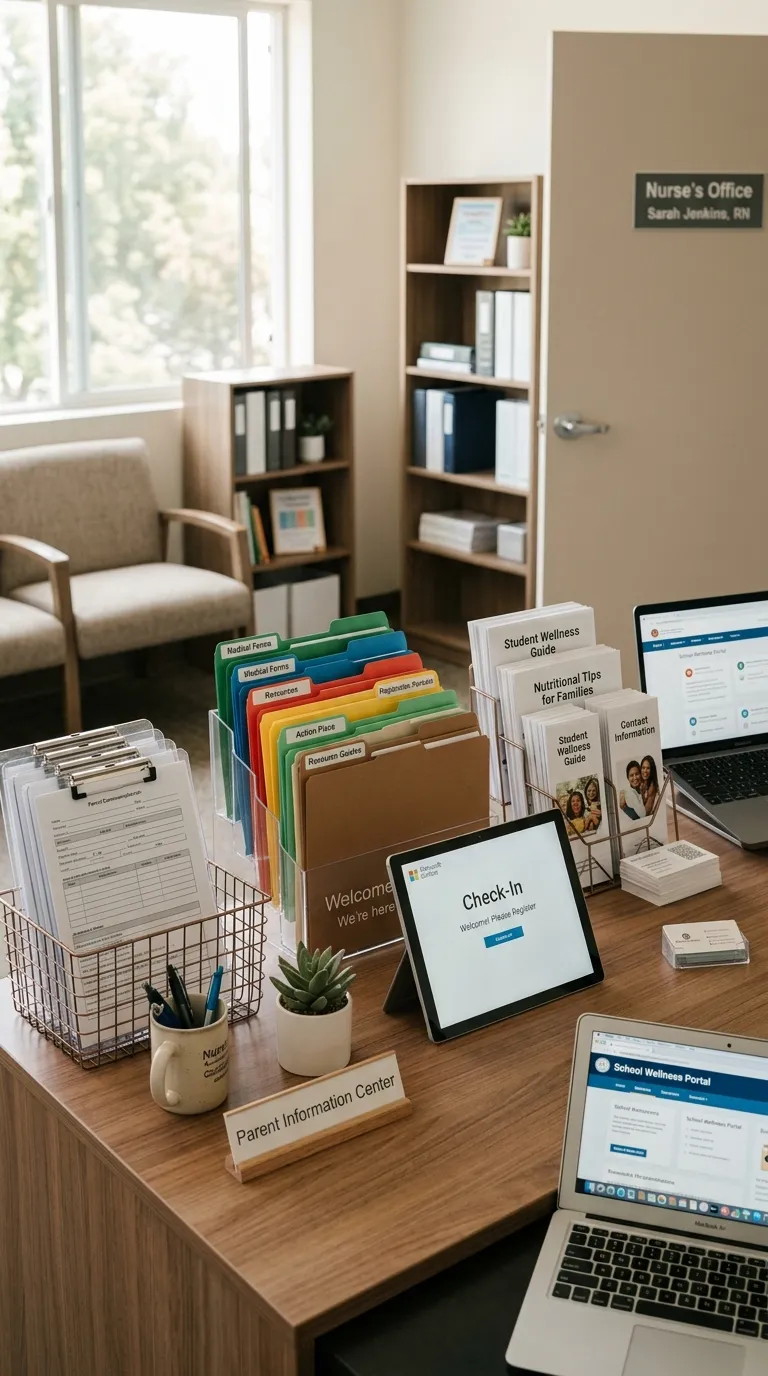
Clear communication systems help a school nurse create stronger connections with families. Simple tools like organized forms, reminder systems, and easy-to-follow instructions make it easier for parents to stay involved in their child’s health needs.
Create consistent procedures for sharing health forms, notifying families about relevant concerns, and requesting updated emergency contacts. Using standard templates can save time and reduce the chance of leaving out important information. Make sure messages use clear language that families can understand.
Consider keeping these resources ready:
- Health history and emergency contact forms.
- Medication authorization instructions.
- Approved follow-up communication templates.
- Reminders about required health documentation.
Use school-approved communication channels and verify the recipient before sending sensitive information. Clear, respectful communication helps families understand what is needed without creating unnecessary confusion.
Comfort Supply Drawer
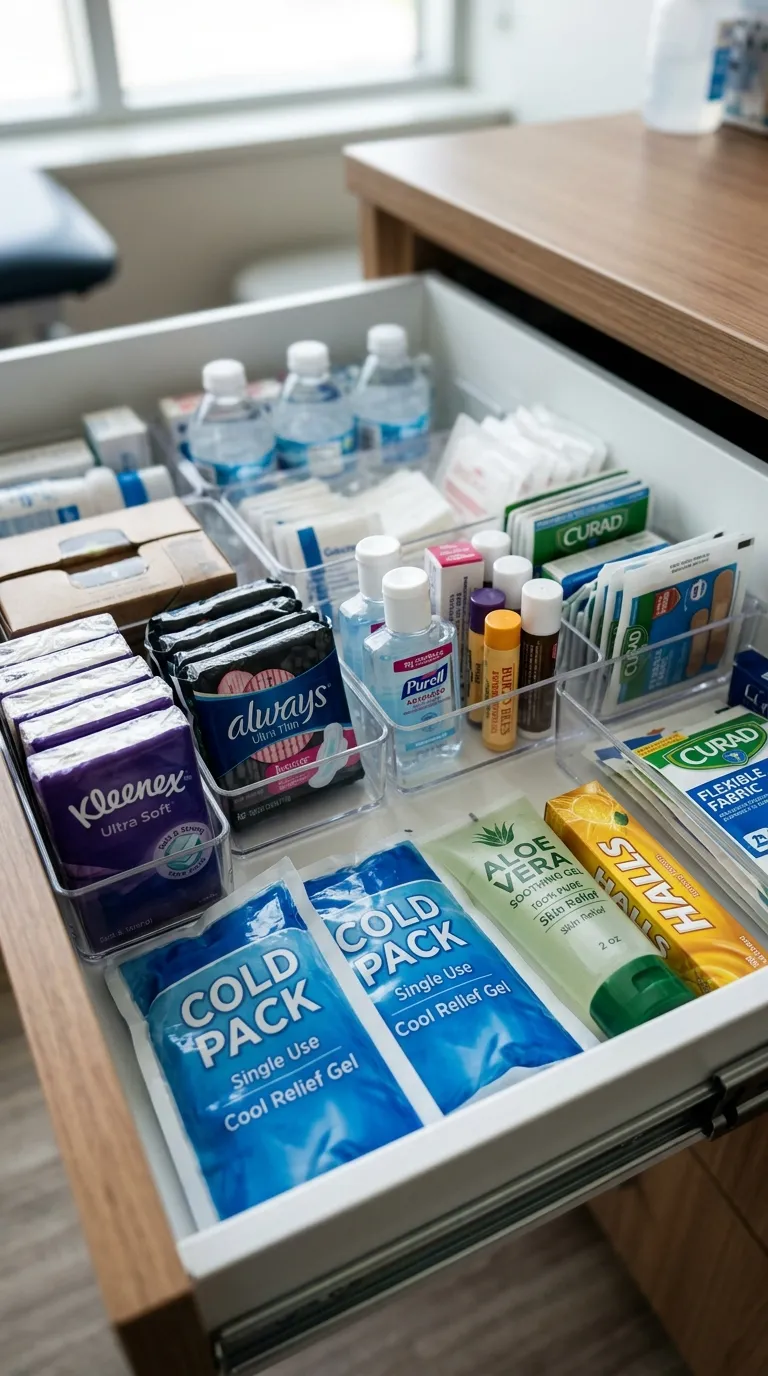
A dedicated comfort drawer is a small upgrade that makes daily routines easier. Keeping frequently requested items together helps a school nurse provide faster support while creating a more prepared and welcoming environment for students.
Choose items according to the age range of the students and the school’s health and safety policies. Use small dividers or labeled containers so supplies remain easy to find. Check the drawer regularly to remove damaged items, clean storage areas, and replace supplies that have run out.
Useful organization tips include:
- Group items by purpose instead of placing everything together.
- Store clean materials separately from used or contaminated items.
- Keep supplies appropriate for student needs and approved school procedures.
- Place frequently used items within easy reach of authorized staff.
A simple drawer system reduces clutter and makes it easier to maintain a tidy health office during busy school days.
Infection Control Zones
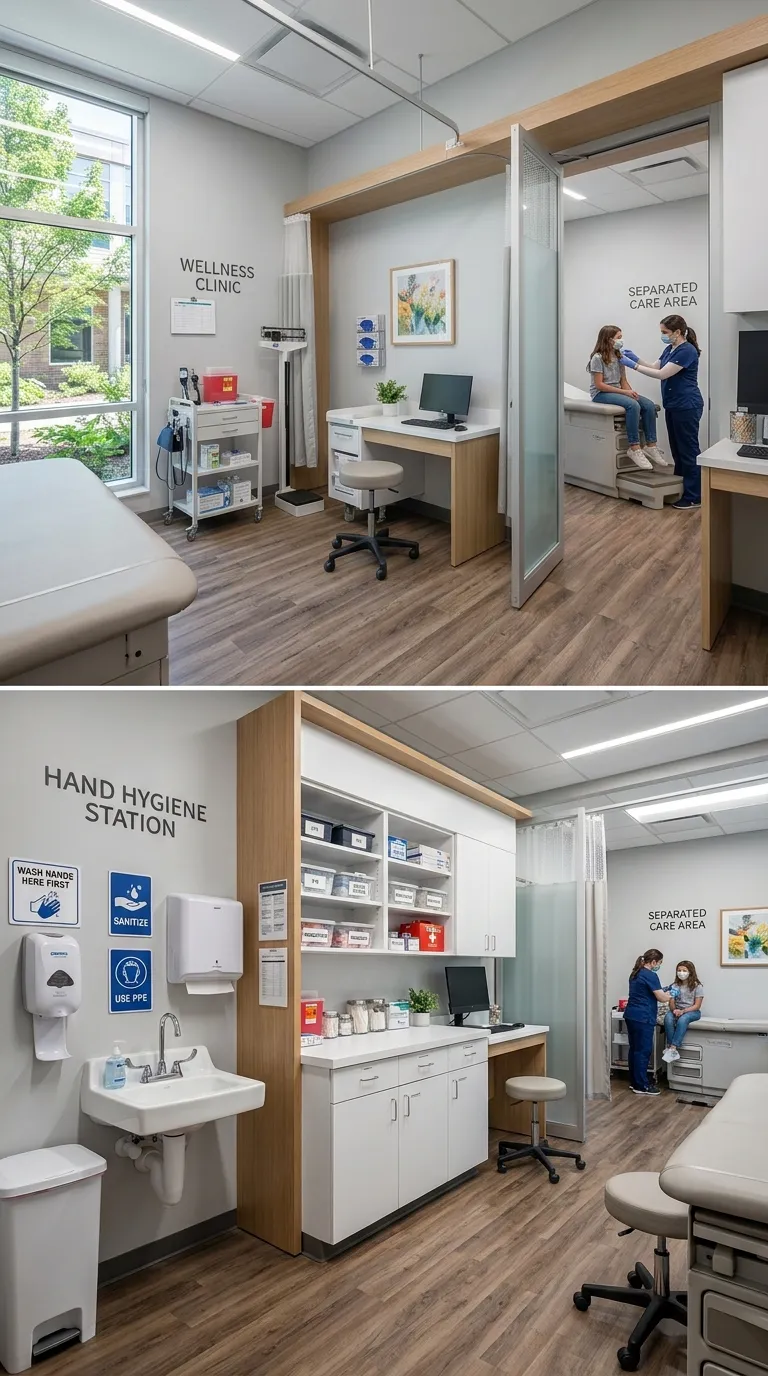
Thoughtful clinic organization makes infection control easier to maintain every day. A school nurse can improve safety by creating clear zones for supplies, student care, and cleaning routines instead of relying on last-minute adjustments during busy periods.
Keep clean supplies separate from used materials and establish a designated process for disposing of waste safely. Follow the school’s approved cleaning and disinfection procedures, including the instructions for the products being used. Hand hygiene supplies should be accessible, and frequently touched surfaces should be cleaned according to applicable guidance.
An effective setup can include:
- A clean storage area for unused supplies.
- A designated space for handling used materials safely.
- Clearly identified waste disposal arrangements.
- A consistent cleaning checklist for work surfaces and shared equipment.
Review these arrangements regularly to ensure they remain practical, safe, and consistent with school infection prevention policies.
Student Routine Charts
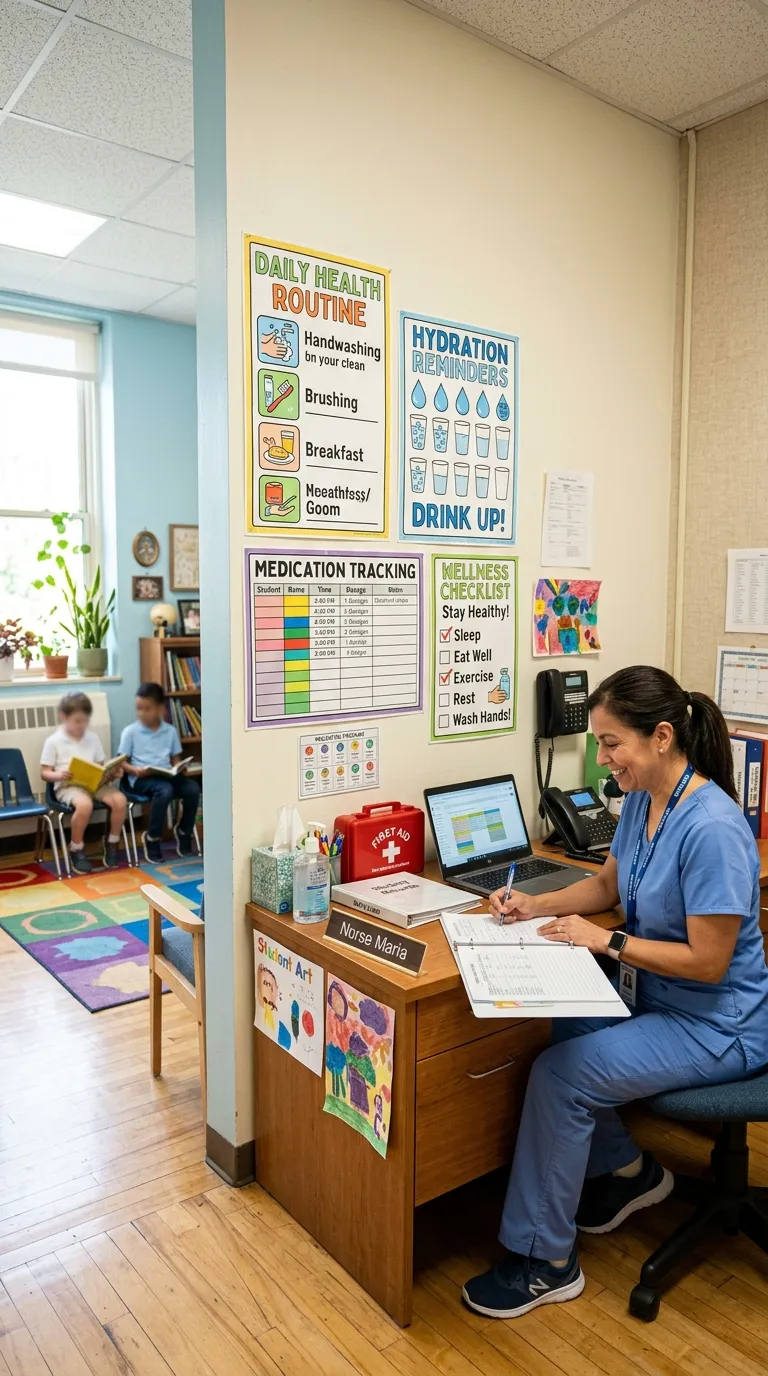
Simple visual routines help students feel more confident about their own health needs. Clear charts and reminders can reduce confusion, especially for younger children who benefit from predictable steps and easy-to-understand guidance.
Use pictures, short instructions, and age-appropriate language to explain routines such as handwashing, covering coughs, drinking water, or asking an adult for help. For students who need additional support, adapt the visual format to suit their communication and learning needs.
You can create a routine chart that includes:
- Steps for proper hand hygiene.
- Reminders to report injuries or feeling unwell.
- Instructions for keeping personal items organized.
- Simple prompts for emotional regulation and seeking support.
Keep charts positive and easy to read. The goal is to encourage independence without making students feel embarrassed about needing help.
Mobile Care Cart
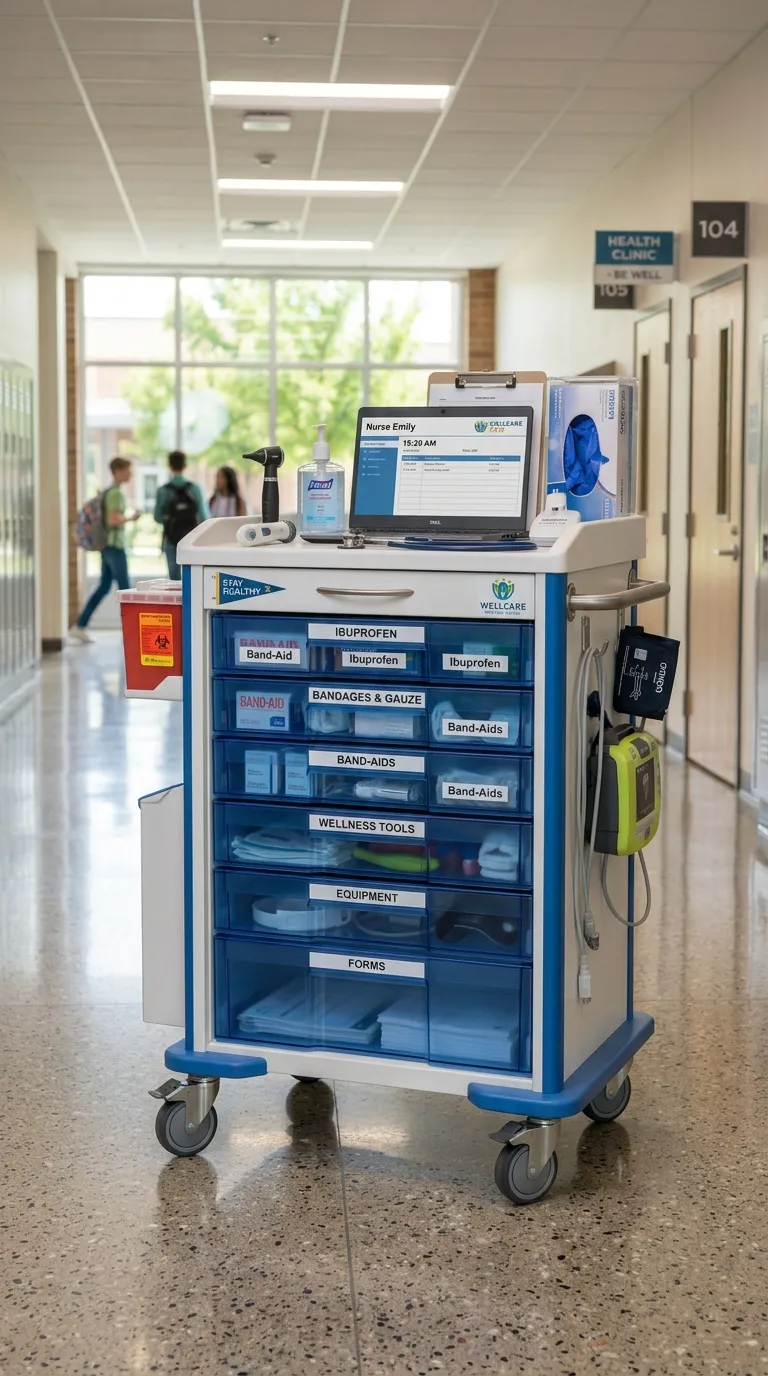
A mobile care cart adds flexibility to a busy school health routine. A school nurse can use a well-prepared cart for events, larger campuses, or situations where bringing essential supplies directly to students saves valuable time.
Organize the cart with approved supplies for the specific activity rather than loading it with unnecessary materials. Check the contents before leaving the health office, and return items to their designated storage areas afterward. The cart should never block hallways, exits, or accessible routes.
Before using a mobile cart, remember to:
- Check that the wheels and handles are in good condition.
- Secure supplies so they do not fall during movement.
- Keep confidential records and medications appropriately secured.
- Restock and clean the cart after each use.
A well-maintained cart supports convenient access to supplies while keeping the school environment orderly and safe.
Stress Relief Resources
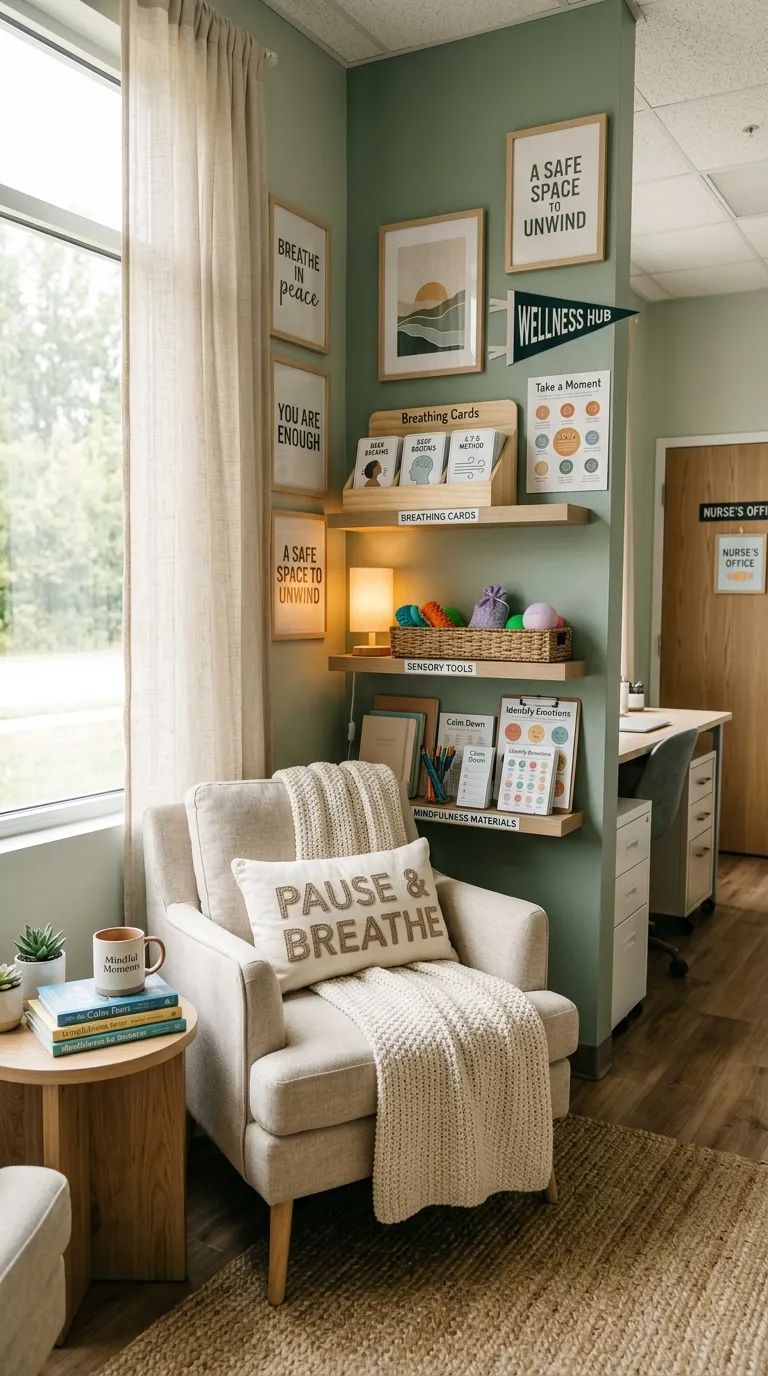
Supporting emotional wellness is an important part of modern school healthcare. A school nurse can create a more welcoming experience by offering simple stress management tools that help students calm down, communicate better, and return to learning with confidence.
Age-appropriate resources may include guided breathing instructions, quiet reading materials, simple grounding activities, or prompts that help students describe their feelings. These tools can support everyday emotional regulation, but they should not replace professional assessment when a student shows signs of serious distress.
Consider keeping a small collection of resources such as:
- Illustrated breathing exercises.
- Emotion charts that help students express how they feel.
- Simple grounding activities suitable for different ages.
- Information about trusted adults and school support services.
Provide a calm, respectful environment and follow school procedures when a student needs additional mental health support or urgent intervention.
Inventory Checklists
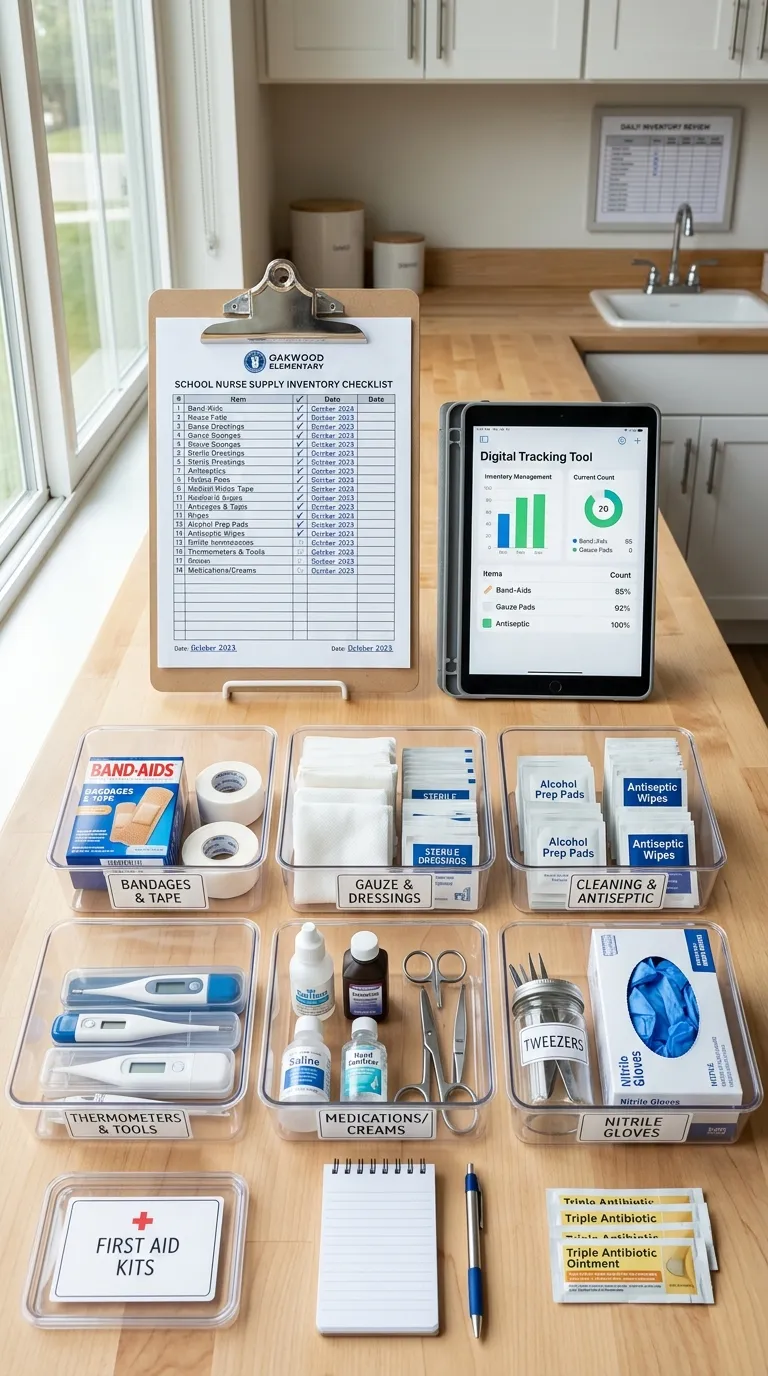
A simple inventory checklist can turn supply management from a stressful task into an easy routine. Reviewing high-use items regularly helps a school nurse stay prepared and avoid disruptions when student needs suddenly increase.
Create a checklist that includes the supply name, quantity available, minimum stock level, expiration date where applicable, and restocking action. Assign a regular time to review the list so that missing items are identified before they become urgent problems.
A practical checklist should cover:
- Frequently used first-aid materials.
- Gloves and other appropriate protective supplies.
- Hygiene and cleaning materials.
- Forms, labels, and general office essentials.
- Items that require expiration-date or storage checks.
Adjust the list to match school requirements and actual usage. A consistent review schedule makes ordering easier and reduces unnecessary purchases or supply shortages.
Daily Reset Routine
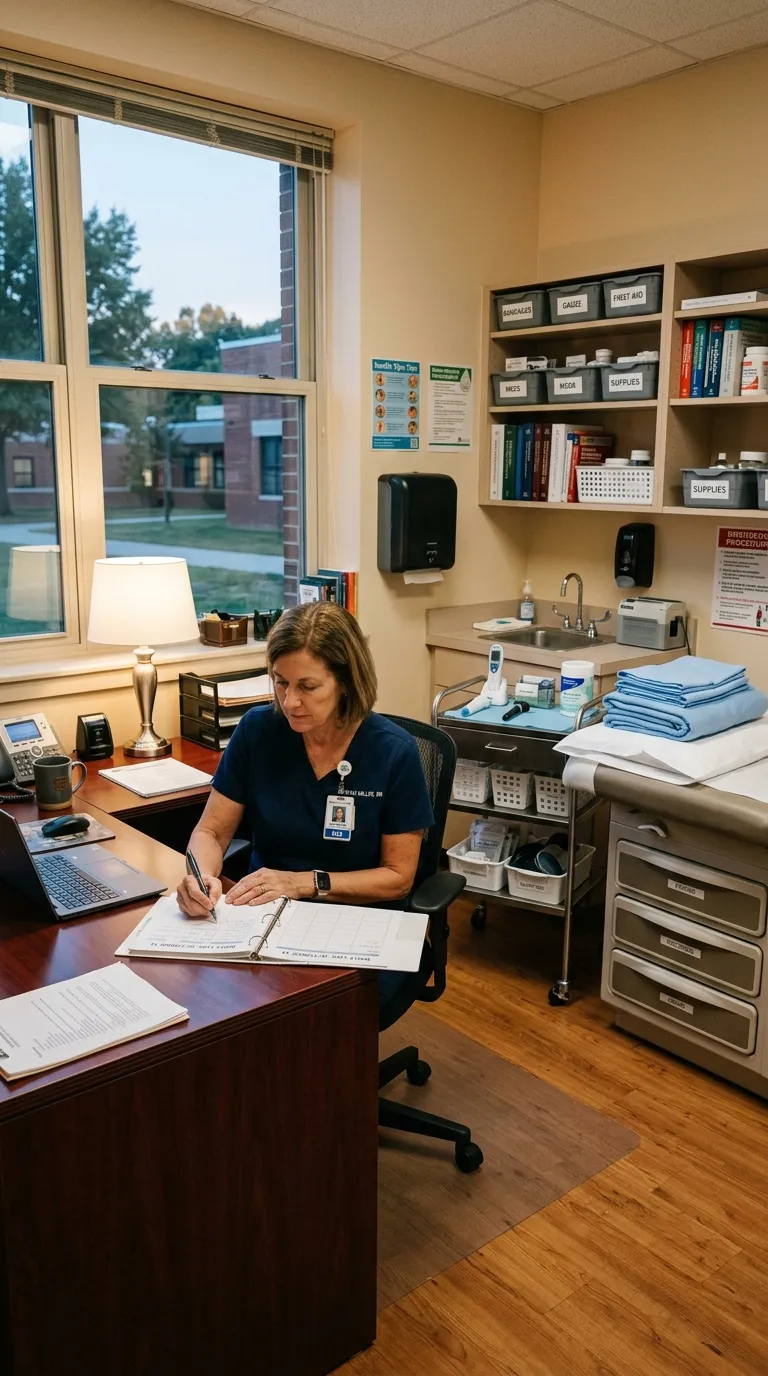
A consistent reset routine helps a school nurse begin each morning with a prepared and organized environment. Small habits like restocking supplies, reviewing notes, and cleaning work areas create a smoother workflow and a better student care experience.
At the end of each school day, take a few minutes to return supplies to their proper places, complete outstanding documentation, and identify tasks that require follow-up. In the morning, check essential equipment, review scheduled health-related needs, and confirm that frequently used supplies are ready.
A simple daily reset can include:
- Checking the health office for cleanliness and organization.
- Reviewing supplies that need replacement.
- Confirming that required records are securely stored.
- Identifying pending parent communications or follow-up tasks.
- Preparing the workspace for the next school day.
Keep the routine realistic so it remains manageable even on particularly busy days. Small, consistent actions are often more useful than occasional, time-consuming reorganizations.
Final Thoughts
Effective school nurse hacks do not need to involve expensive equipment or complicated systems. Labeled supply stations, organized documentation, clear communication, and regular inventory checks can make daily responsibilities easier to manage. Small improvements also help create a more welcoming health office where students can receive appropriate support.
Start with one simple upgrade, such as organizing an emergency kit or creating a daily reset checklist. Once that routine becomes manageable, introduce another improvement that fits your school’s needs. Save these ideas on Pinterest and use the strategies that help make your school health office more organized, prepared, and student-focused.