

The sim lab instructor dims the lights, starts the scenario, and the manikin’s wheeze fades to almost nothing while your classmates relax. That quiet chest is the trap. These 20 nclex asthma questions train the calls a nurse makes in that moment and in clinic visits after: reading severity, acting in the right order, teaching control that holds.
Four sets move from recognizing attacks and severity to first actions and priorities, then medications, and close with teaching and long-term control. Score each set before moving on, and use the same cover-and-commit habit that works for ECG practice questions: pick a letter, name the danger, then read why the wrong options fail.
How to Use This Practice Set
Cover the answer and rationale, read the stem, and say your choice and your reason out loud before you look. A reason you cannot say is a guess, even when the letter is right.
Work one set at a time and mark every miss by its kind: a missed sign, a wrong first move, a drug fact, a teaching point. For plain-language background, the MedlinePlus asthma guide covers symptoms, triggers and treatments in everyday words.
Recognizing Attacks and Severity
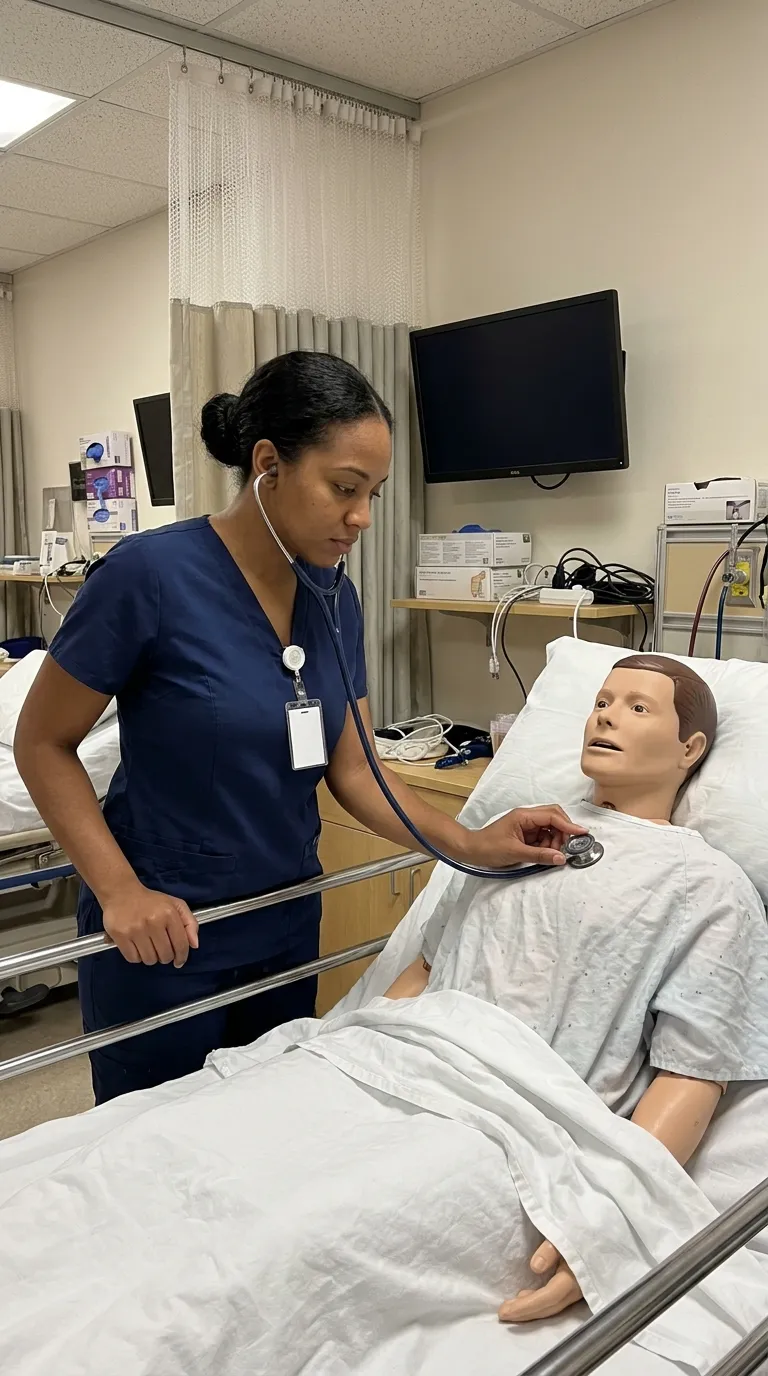
Question 1
A client was wheezing loudly an hour ago. Now the chest is almost silent, breath sounds are faint, and the client looks exhausted. Which conclusion does the nurse draw?
- A. The attack is ending because the wheeze has faded
- B. The bronchodilator has opened the airways fully
- C. Air is barely moving, signaling a severe, dangerous attack
- D. The client is resting and needs quiet, not treatment
Answer: C. Air is barely moving, signaling a severe, dangerous attack.
Rationale: A silent chest means so little air moves that no wheeze can form; with exhaustion, it is a danger sign needing urgent action. A and B read the quiet as recovery when airflow is worse. D leaves a tiring client untreated at the riskiest moment.
Question 2
Which client with asthma shows signs of a severe attack that needs action now?
- A. A client sitting forward on the hands, using neck muscles to breathe, speaking two words at a time
- B. A client with a mild wheeze after climbing stairs who settles within minutes
- C. A client coughing twice after laughing, then breathing easily
- D. A client with a green-zone peak flow and no symptoms at rest
Answer: A. A client sitting forward on the hands, using neck muscles to breathe, speaking two words at a time.
Rationale: Tripod posture, accessory muscle use and two-word speech mark a severe attack. B and C describe brief symptoms that settle alone. D is control, not danger.
Question 3
A client’s personal best peak flow is 420; today’s reading is 200, with chest tightness and shortness of breath. What does the written action plan direct?
- A. Stay in the green zone routine and recheck next week
- B. Add an extra controller dose and rest at home
- C. Use the rescue inhaler and recheck in one hour
- D. Use the rescue inhaler now and get emergency care right away
Answer: D. Use the rescue inhaler now and get emergency care right away.
Rationale: 200 is about 48 percent of the personal best of 420, below the 50 percent red-zone line, so the plan says rescue inhaler plus emergency care now. A ignores the reading. B uses a controller as rescue. C waits an hour in the zone that allows no waiting; the percentage math matches medication calculation questions.
Question 4
During a severe attack, the nurse notes the client’s systolic blood pressure falls 14 mmHg with each breath in. How does the nurse interpret this finding?
- A. A normal finding in most asthma attacks
- B. Pulsus paradoxus, a sign of severe airway obstruction that must be reported
- C. Proof that the blood pressure cuff is the wrong size
- D. A sign the attack is easing
Answer: B. Pulsus paradoxus, a sign of severe airway obstruction that must be reported.
Rationale: A drop over 10 mmHg on inspiration is pulsus paradoxus: breathing hard against tight airways swings the pressures, tracking severe obstruction. A understates a severity marker. C blames equipment. D reads a warning as improvement.
Question 5
A client with a long attack is tiring. Early blood gases showed a low carbon dioxide level; the latest shows it back in the normal range. What does this change mean?
- A. Gas exchange has recovered and the client can rest
- B. The first result was a lab error and can be ignored
- C. The client is too tired to blow off carbon dioxide: a warning of respiratory failure
- D. The bronchodilator is working better than expected
Answer: C. The client is too tired to blow off carbon dioxide: a warning of respiratory failure.
Rationale: Fast breathing early in an attack blows carbon dioxide down. When a tiring client cannot keep that pace, the level climbs back toward normal and above it, warning of respiratory failure. A and D read the number without the story. B dismisses data that fits.
First Actions and Priorities
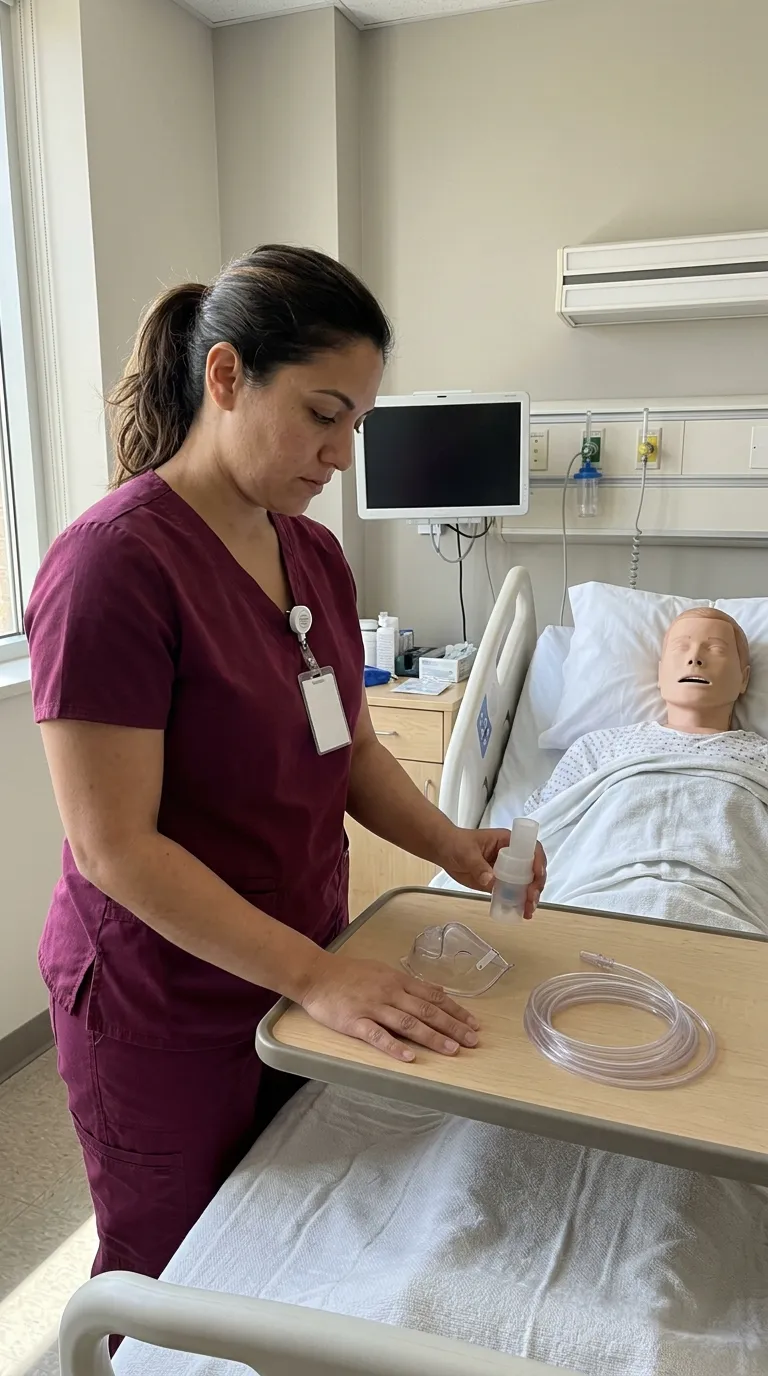
Question 6
A client arrives in the emergency department mid-attack: wheezing, anxious, oxygen saturation 89 percent on room air. What is the nurse’s first move?
- A. Lay the client flat and draw blood gases first
- B. Sit the client upright and give the prescribed rescue bronchodilator
- C. Give a sedative so the client rests through the attack
- D. Send the client for a chest X-ray first
Answer: B. Sit the client upright and give the prescribed rescue bronchodilator.
Rationale: Sitting upright eases breathing, and the rescue bronchodilator opens the airways, so it goes first. A flattens a client who needs to sit up. C blunts the drive to breathe. D puts imaging ahead of the airway.
Question 7
A student asks why sedatives are avoided during an asthma attack. What is the nurse’s best explanation?
- A. Sedatives interact with every asthma drug on the chart
- B. Sedatives raise the heart rate too much
- C. Sedatives are only a problem for clients over age 65
- D. Sedatives slow breathing and hide how badly the client is tiring
Answer: D. Sedatives slow breathing and hide how badly the client is tiring.
Rationale: Sedatives depress the respiratory drive and mask exhaustion, so a client can slide into respiratory failure quietly. A overstates interactions. B names the wrong effect. C invents an age rule.
Question 8
During an attack, a client’s oxygen saturation reads 88 percent on room air. Which order does the nurse carry out?
- A. Give oxygen as prescribed, titrated to keep the saturation at or above 90 percent
- B. Withhold oxygen so the client keeps a strong drive to breathe
- C. Give oxygen only when the client asks for it
- D. Set oxygen at the highest flow until the saturation reaches 100 percent
Answer: A. Give oxygen as prescribed, titrated to keep the saturation at or above 90 percent.
Rationale: Low saturation in an attack is treated with oxygen, adjusted to stay at or above 90 percent. B applies a worry that does not govern asthma care. C waits for a request. D chases a perfect number over a safe range.
NCLEX tip: when an asthma stem offers a quiet chest and a loud wheeze, the quiet chest is the sicker client. Priority questions grade the direction of airflow, not the volume of the sound.
Question 9
A client with a severe attack still struggles after repeated nebulized albuterol. Which added treatment does the nurse anticipate?
- A. A beta blocker to slow the racing heart
- B. An extra dose of a long-acting controller inhaler
- C. IV magnesium sulfate to help relax the airway muscles
- D. A sedative infusion so the client stops fighting the mask
Answer: C. IV magnesium sulfate to help relax the airway muscles.
Rationale: IV magnesium sulfate relaxes smooth muscle and is a standard add-on in severe attacks that do not answer the rescue drug; epinephrine is the other escalation. A blocks the receptors the rescue drug needs. B is daily control, not rescue. D repeats the sedative danger.
Question 10
A client’s attack continues for hours despite standard treatment with bronchodilators and steroids. What is this emergency called?
- A. Exercise-induced bronchoconstriction
- B. Status asthmaticus
- C. Intermittent asthma
- D. Occupational asthma
Answer: B. Status asthmaticus.
Rationale: Status asthmaticus is the severe attack that keeps going despite standard treatment; it can tire into respiratory failure and is managed as an emergency. A names a trigger pattern, C a severity class, D an exposure pattern; none is an unresponsive attack.
Asthma Medications

Question 11
Fifteen minutes after nebulized albuterol, a client’s hands shake and the heart rate is 124. What is the nurse’s best response?
- A. Stop future albuterol and chart a drug allergy
- B. Call a rapid response for anaphylaxis
- C. Give a dose of epinephrine to reverse the reaction
- D. Recognize expected albuterol effects, keep monitoring, and expect them to fade
Answer: D. Recognize expected albuterol effects, keep monitoring, and expect them to fade.
Rationale: Tremor and a fast pulse are classic effects of albuterol, a beta agonist; they settle as the drug wears off. A removes the rescue drug over an expected effect. B and C treat a side effect as an emergency.
Question 12
In a severe attack, which inhaled drug is commonly nebulized together with albuterol as a bronchodilator?
- A. Ipratropium, an anticholinergic that helps open the airways
- B. Fluticasone, an inhaled steroid for daily control
- C. Montelukast, a leukotriene modifier taken by mouth
- D. Salmeterol, a long-acting agonist used for daily control
Answer: A. Ipratropium, an anticholinergic that helps open the airways.
Rationale: Ipratropium blocks cholinergic tightening and pairs with albuterol in severe attacks; dry mouth is its usual complaint. B and D are controllers with no rescue role. C is a daily tablet, useless mid-attack.
Question 13
A client got IV methylprednisolone 30 minutes ago for a severe attack and still wheezes. The family asks why the steroid has not worked. What is the nurse’s best answer?
- A. The dose was too small and will be doubled
- B. Steroids calm swelling over hours, so they are given early; the bronchodilator works in minutes
- C. Steroids only work once the client falls asleep
- D. The steroid failed, so it will be stopped today
Answer: B. Steroids calm swelling over hours, so they are given early; the bronchodilator works in minutes.
Rationale: Systemic steroids reduce airway inflammation over hours, not minutes, so they are given early while bronchodilators carry the first minutes. A guesses at dosing. C invents a sleep rule. D quits a drug before its window opens. The same slow-onset trap is drilled in the antibiotic practice questions.
Question 14
A student practices with a demo metered-dose inhaler and spacer. Which sequence shows correct technique?
- A. Exhale into the spacer, press the canister twice, then inhale fast and hard
- B. Press the canister, wait ten minutes, then breathe in through the spacer
- C. Breathe out away from the spacer, seal the lips, press once, inhale slowly, hold the breath about 10 seconds
- D. Hold the inhaler in the mouth without the spacer and spray while breathing out
Answer: C. Breathe out away from the spacer, seal the lips, press once, inhale slowly, hold the breath about 10 seconds.
Rationale: One press, a slow deep breath in and a breath hold near 10 seconds puts the most medicine in the airways; the spacer helps it get there. A wastes the dose and rushes the breath. B separates press from breath. D sprays on the exhale, so the dose is lost.
Question 15
A client on theophylline reports nausea, shakiness, a racing heart and feeling wired. What does the nurse suspect and do?
- A. Normal adjustment to the drug; reassure and continue
- B. An asthma attack starting; give extra albuterol first
- C. Low blood sugar; offer juice and recheck in an hour
- D. Possible theophylline toxicity; hold the next dose and notify the prescriber
Answer: D. Possible theophylline toxicity; hold the next dose and notify the prescriber.
Rationale: Theophylline has a narrow safety margin; nausea, tremor, tachycardia and agitation are early toxicity signs that can progress to seizures and dangerous rhythms. A waves off a warning cluster. B adds another stimulating drug. C treats the wrong system.
Teaching and Long-Term Control

Question 16
A client is due for both inhalers and is wheezing this morning. Which order does the nurse teach?
- A. Use the albuterol rescue inhaler first, then the controller once breathing eases
- B. Use the controller first so the rescue drug lasts longer
- C. Take both inhalers at once through one spacer
- D. Skip the controller whenever the rescue inhaler is needed
Answer: A. Use the albuterol rescue inhaler first, then the controller once breathing eases.
Rationale: The rescue bronchodilator opens the airways first; the controller then reaches deeper airways. B reverses the taught order. C mixes two devices into one dose. D drops daily control on the days it matters most.
Question 17
A client starting daily fluticasone asks how to prevent the white mouth patches a friend developed. What does the nurse teach?
- A. Brush the tongue hard after every dose
- B. Swallow a sip of juice right after inhaling
- C. Rinse and spit with water after each dose to prevent oral candidiasis
- D. Use the inhaler only on days the mouth feels sore
Answer: C. Rinse and spit with water after each dose to prevent oral candidiasis.
Rationale: Steroid residue in the mouth lets candida grow; rinsing and spitting after each dose prevents the thrush, and a spacer lowers residue too. A irritates tissue without clearing drug. B swallows the residue. D breaks the daily schedule that keeps airways calm.
Question 18
A client’s asthma flares with soccer. The written plan allows pre-treatment. What does the nurse teach?
- A. Skip practice on green-zone days
- B. Use the rescue inhaler about 15 minutes before exercise, as the plan directs
- C. Double the controller dose on game days
- D. Use the rescue inhaler only after symptoms stop the game
Answer: B. Use the rescue inhaler about 15 minutes before exercise, as the plan directs.
Rationale: A rescue dose about 15 minutes before exercise prevents most exercise flares, which is why plans write it in. A keeps a controlled client off the field. C misuses a daily drug as a pre-game fix. D waits for the flare the plan prevents.
Question 19
A client with dust mite and smoke triggers asks which home changes help most. Which answer does the nurse give?
- A. Keep bedroom windows open all night in pollen season
- B. Use scented sprays to cover smoke smells indoors
- C. Let visitors smoke in one room with the door closed
- D. Use mite-proof covers on pillow and mattress, wash bedding in hot water, and allow no smoking in the home
Answer: D. Use mite-proof covers on pillow and mattress, wash bedding in hot water, and allow no smoking in the home.
Rationale: Where the client sleeps carries the longest trigger exposure, so mite covers, hot-water washing and a home with no smoking cut both named triggers. A invites pollen into the bedroom. B adds a spray irritant. C lets smoke drift through the home anyway.
Question 20
Which statement shows a client understands the written asthma action plan?
- A. The controller runs daily even when breathing feels fine, peak flows go in the diary, and zone steps come from the plan
- B. The controller is saved for yellow-zone days, as a rescue drug
- C. The diary only matters during the first week
- D. Green-zone days mean every inhaler can be skipped
Answer: A. The controller runs daily even when breathing feels fine, peak flows go in the diary, and zone steps come from the plan.
Rationale: Control rests on daily controller use, a peak flow record against personal best, and the plan’s zone steps; controllers include inhaled steroids and leukotriene tablets such as montelukast, taken even when the client feels well. B turns a controller into rescue medicine. C retires the diary that shows trends. D stops the treatment that holds the best zone.
Answer Review Tips
- Missed the severity call: reread the stem for airflow words: silent chest, two-word speech, neck muscles working. Quiet and tired beats loud.
- Missed the order: line actions up by airway: position, rescue drug, oxygen, then add-ons; anything delaying the bronchodilator is the distractor.
- Missed the drug fact: sort each drug as rescue or control, then attach its warning: steroids are slow, theophylline turns toxic, steroid inhalers need a rinse.
- Missed the teaching: say the plan out loud in client words; the CDC asthma pages show how action plans and trigger control are explained to families.
Which Questions Did You Miss?
Start where the misses cluster. Severity misses mean the signs need another pass before the drugs; teaching misses mean the plan language needs practice out loud. The fuller NCLEX study notes give a second angle on the facts behind every miss.
Pick the weakest set, redo it tomorrow with the rationales covered, and check that the traps no longer catch you. Which set will you rerun first: the quiet chest, the drug warnings, or the teaching points?
For study use only. Always follow your program, your facility’s policy and current drug and lab references.