

Your client is two minutes into a first IV antibiotic dose and the wheeze starts: do you slow the drip, finish the dose, or stop everything and act? Questions that only test drug names never prepare you for that minute. These 20 antibiotics nclex questions test the first action, the lab draw and the warning you teach, each with an answer and a rationale.
Four sets move from penicillins and cephalosporins to vancomycin and aminoglycosides, on to fluoroquinolones, macrolides and tetracyclines, and close with sulfonamides, tuberculosis drugs and safety calls. Use the same cover-and-commit habit that works for rhythm strip questions: pick a letter, name the harm you are watching for, then read why each wrong option fails.
How to Use This Practice Set
Cover the answer and rationale before you read the options. Say your choice and your reason out loud; a reason you cannot say is a guess, even when the letter turns out right.
Work one set at a time and score it before moving on. For the drug facts behind any miss, the MedlinePlus antibiotics overview gives a plain-language refresher on how these medicines work and why courses are finished.
Penicillins and Cephalosporins
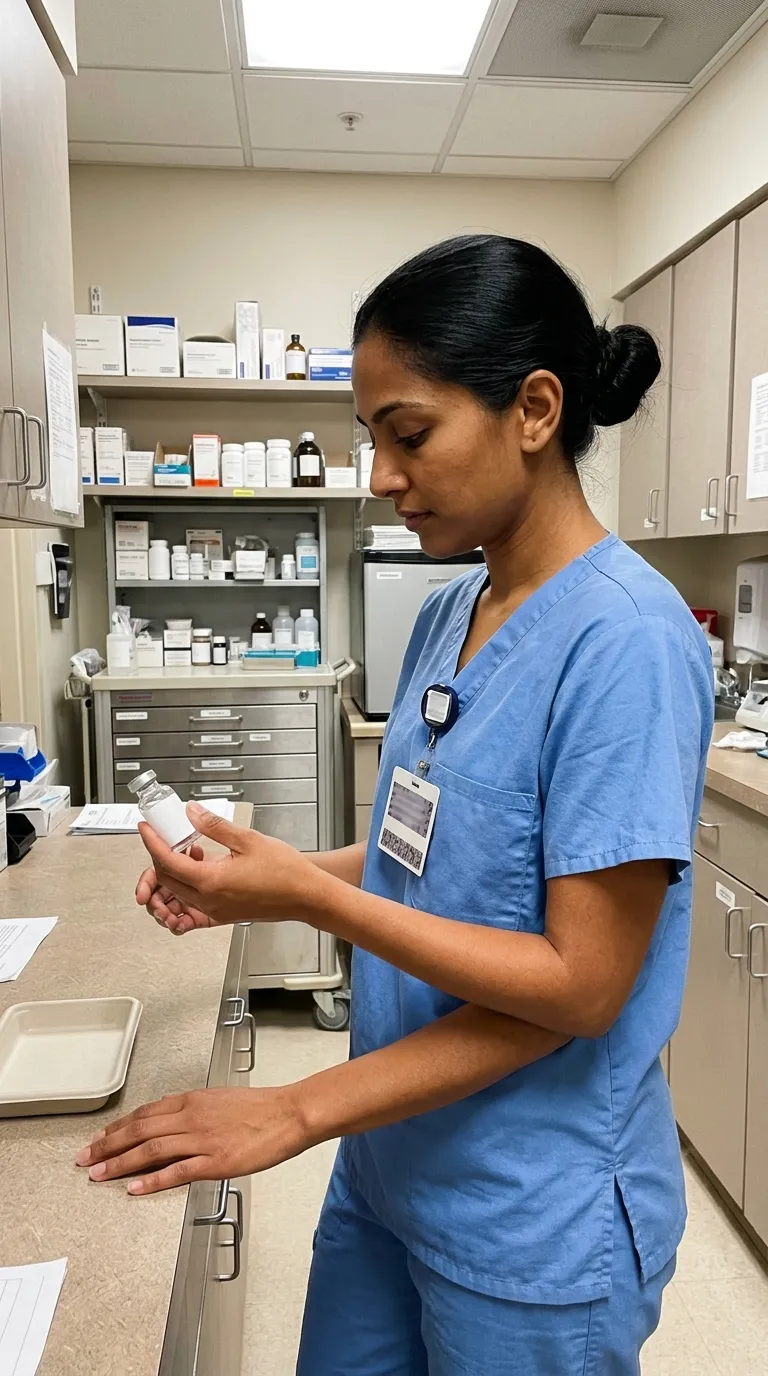
Question 1
A client receives a first IV dose of penicillin G. Two minutes later the client reports itching, develops hives, and begins wheezing with lip swelling. What is the nurse’s first action?
- A. Slow the infusion and reassess in 15 minutes
- B. Give an oral antihistamine and finish the dose
- C. Stop the infusion, assess the airway, and call for emergency help
- D. Stop the dose and restart it at a slower rate once symptoms fade
Answer: C. Stop the infusion, assess the airway, and call for emergency help.
Rationale: This is anaphylaxis: stop the drug, protect the airway, and summon help; epinephrine follows per orders or protocol. A keeps the allergen running. B uses a slow oral drug for an airway emergency. D re-exposes the client to the trigger.
Question 2
A client’s chart lists a penicillin allergy that caused anaphylaxis last year. A new order reads cefazolin IV before surgery. What should the nurse do?
- A. Give the dose, because cephalosporins are a different drug family
- B. Hold the dose and verify the order with the prescriber and pharmacist
- C. Give a small test dose and watch for a reaction
- D. Premedicate with an antihistamine and give the full dose
Answer: B. Hold the dose and verify the order with the prescriber and pharmacist.
Rationale: Penicillins and cephalosporins share a beta-lactam ring, so a severe penicillin reaction makes any cephalosporin order worth stopping and checking first. A ignores the shared structure. C risks a full reaction from a partial dose. D masks early signs without removing the risk.
Question 3
After five days of amoxicillin, a client reports a sore mouth with thick white patches on the tongue that wipe off and leave red spots. What does the nurse suspect?
- A. A normal coating from mouth breathing
- B. Dehydration from poor fluid intake
- C. An allergic reaction to amoxicillin
- D. A candida superinfection of the mouth
Answer: D. A candida superinfection of the mouth.
Rationale: Antibiotics suppress normal flora, letting candida overgrow; white plaques that scrape off are the classic picture, and the prescriber should be told. A and B do not produce removable plaques. C would show rash, itching or swelling rather than mouth plaques.
Question 4
A wound culture grows MRSA. Which prescribed antibiotic does the nurse expect as coverage for this organism?
- A. Vancomycin IV
- B. Penicillin G IV
- C. Amoxicillin by mouth
- D. Cefazolin IV
Answer: A. Vancomycin IV.
Rationale: MRSA is resistant to standard beta-lactam antibiotics, so vancomycin is the expected coverage until sensitivities return. B, C and D are all beta-lactams that MRSA resists.
Question 5
A client prescribed cefotetan after abdominal surgery asks whether a beer with dinner is safe tonight. What is the nurse’s best response?
- A. One beer is fine if you eat first.
- B. Avoid alcohol during treatment and for a few days after, because this drug can cause a severe reaction with it.
- C. Alcohol is only a problem with IV antibiotics.
- D. Drink water instead only on the days you feel nauseated.
Answer: B. Avoid alcohol during treatment and for a few days after, because this drug can cause a severe reaction with it.
Rationale: Some cephalosporins, including cefotetan, can trigger a disulfiram-like reaction with alcohol: flushing, vomiting and a fast pulse. A understates a real risk. C is wrong because the reaction depends on the drug, not the route. D ties the rule to symptoms instead of the drug.
Vancomycin and Aminoglycosides
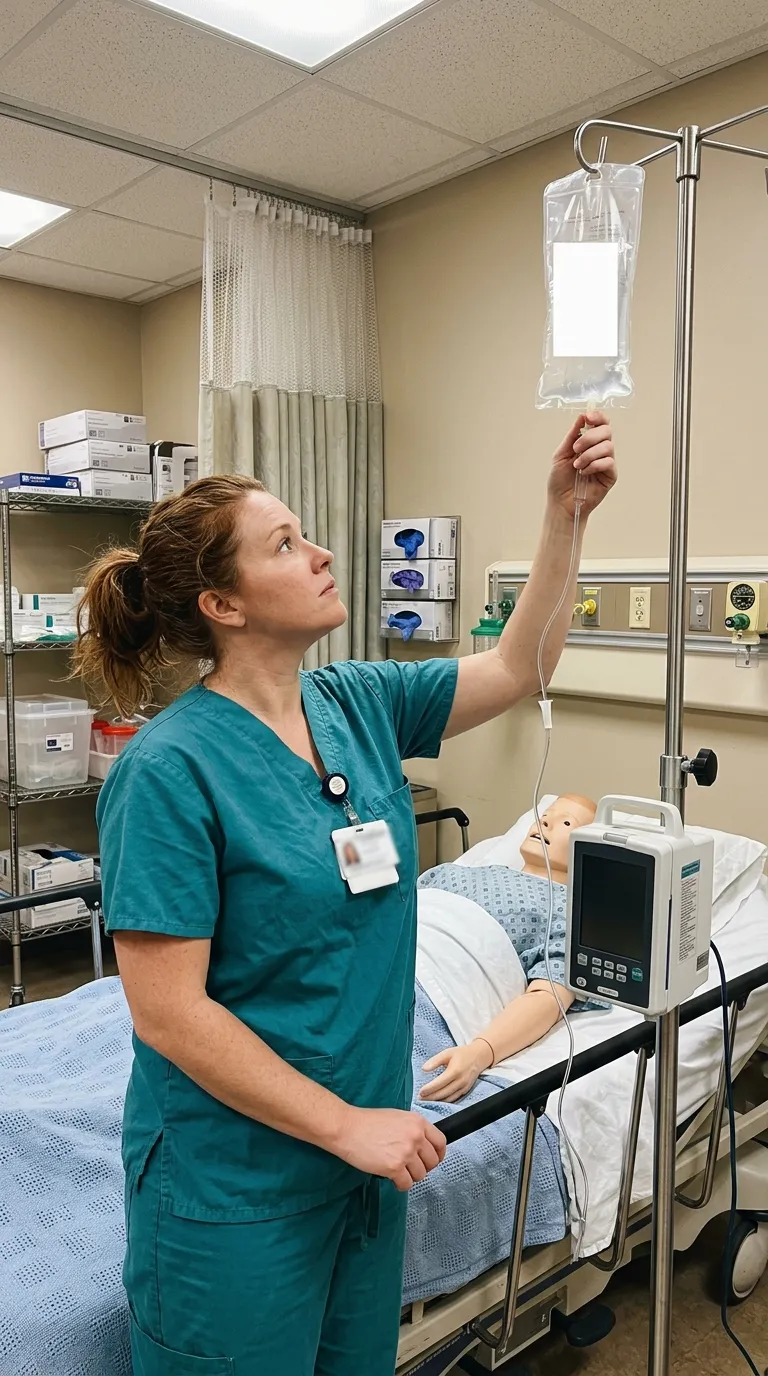
Question 6
Twenty minutes into a vancomycin infusion, a client reports itching and the nurse sees flushing over the face, neck and upper chest. The blood pressure is stable and breathing is clear. What should the nurse do first?
- A. Slow the infusion and notify the prescriber
- B. Stop the drug permanently and label it an allergy
- C. Speed up the infusion so it finishes sooner
- D. Give epinephrine and call a rapid response
Answer: A. Slow the infusion and notify the prescriber.
Rationale: Flushing of the upper body during a vancomycin infusion is the infusion reaction often called red man syndrome; slowing the rate and reporting it is the first move, with an antihistamine if ordered. B overstates a rate reaction as an allergy. C worsens it. D treats anaphylaxis, which this stable picture is not.
Question 7
A client on vancomycin is due for a trough level. When should the nurse draw the blood sample?
- A. Thirty minutes after the infusion ends
- B. Halfway through the infusion
- C. Immediately after the next dose starts
- D. Just before the fourth dose is given
Answer: D. Just before the fourth dose is given.
Rationale: A trough is the lowest level, drawn right before a dose once levels are steady, usually just before the fourth dose. A describes a peak draw. B and C catch the drug mid-distribution and read falsely high.
Question 8
A client receiving gentamicin reports new ringing in the ears and feeling off balance. What is the nurse’s priority action?
- A. Reassure the client that ear ringing is harmless
- B. Report the symptoms to the prescriber before the next dose
- C. Offer an over-the-counter ear drop
- D. Lower the head of the bed and recheck in an hour
Answer: B. Report the symptoms to the prescriber before the next dose.
Rationale: Tinnitus and balance changes are early signs of aminoglycoside ototoxicity, which can become permanent, so the prescriber needs to know before more drug is given. A dismisses a warning sign. C treats the ear canal, not the inner ear. D delays the report while damage can grow.
Study tip: sort every antibiotic question by the harm the drug can do first: airway, kidney, hearing, tendon, liver. Name the organ at risk and the safest action usually follows from it.
Question 9
A gentamicin peak level is ordered for a client receiving the drug IV. When should the nurse draw the peak sample?
- A. Just before the next dose
- B. During the infusion
- C. Thirty minutes after the IV infusion finishes
- D. Four hours after the dose starts
Answer: C. Thirty minutes after the IV infusion finishes.
Rationale: A peak is the highest level after a dose, drawn about 30 minutes after an IV infusion ends so distribution is complete; the timing habit matches the precision used in dosage calculation practice. A is the trough draw. B reads during delivery. D misses the peak window entirely.
Question 10
On day four of gentamicin, a client’s urine output falls and the creatinine rises above baseline. What should the nurse do before the next dose?
- A. Give the dose, because infection raises creatinine
- B. Encourage the client to restrict fluids
- C. Draw the trough level after the dose instead
- D. Notify the prescriber about possible kidney injury and hold for new orders
Answer: D. Notify the prescriber about possible kidney injury and hold for new orders.
Rationale: Aminoglycosides are nephrotoxic; falling output with a rising creatinine is the pattern to report before more drug reaches the kidneys. A adds drug to a failing filter. B reduces the perfusion the kidneys need. C changes lab timing, not the safety problem.
Fluoroquinolones, Macrolides and Tetracyclines

Question 11
A client taking ciprofloxacin for three days reports new pain at the back of the ankle. What is the nurse’s best action?
- A. Suggest stretching exercises for the calf
- B. Tell the client to stop the drug and notify the prescriber today
- C. Apply heat and continue the antibiotic
- D. Switch the dose to bedtime so the client rests the leg
Answer: B. Tell the client to stop the drug and notify the prescriber today.
Rationale: Fluoroquinolones carry a boxed warning for tendon inflammation and rupture, and new tendon pain means the drug stops, the prescriber is told, and the tendon rests. A and C load or soothe a tendon that may tear. D changes timing, not exposure.
Question 12
A client with myasthenia gravis is prescribed levofloxacin for pneumonia. What should the nurse do?
- A. Give the dose with a full glass of water
- B. Give the dose and monitor muscle strength hourly
- C. Question the order, because fluoroquinolones can worsen myasthenia gravis
- D. Crush the tablet and mix it with applesauce
Answer: C. Question the order, because fluoroquinolones can worsen myasthenia gravis.
Rationale: A boxed warning tells clinicians to avoid fluoroquinolones in myasthenia gravis because they can trigger a dangerous worsening of weakness. A and D only change how the drug is swallowed. B gives a drug the warning says to avoid.
Question 13
A client is starting tetracycline capsules. Which instruction helps the drug absorb properly?
- A. Take each dose on an empty stomach and keep dairy foods, antacids and iron a few hours away from dose times
- B. Take each dose with a large glass of milk
- C. Take the dose together with a calcium antacid to protect the stomach
- D. Double the next dose if one is missed
Answer: A. Take each dose on an empty stomach and keep dairy foods, antacids and iron a few hours away from dose times.
Rationale: Calcium, magnesium, aluminum and iron bind tetracyclines in the gut and block absorption, so doses sit apart from dairy, antacids and iron. B and C pair the drug with its blockers. D is never the rule for a missed antibiotic dose.
Question 14
Which client should not receive a tetracycline antibiotic?
- A. An adult with acne and normal liver tests
- B. A client who works outdoors in summer
- C. An adult who drinks milk at breakfast
- D. A pregnant client in the second trimester
Answer: D. A pregnant client in the second trimester.
Rationale: Tetracyclines cross the placenta and can stain developing teeth and slow bone growth, so they are avoided in pregnancy and in young children. A is a common use. B needs sun protection teaching, not avoidance. C is solved by spacing doses away from dairy.
Question 15
A client with a prolonged QT interval is prescribed azithromycin. Which finding adds the most risk and should be reported before the first dose?
- A. The client also takes a potassium-wasting diuretic and the latest potassium is low
- B. The client prefers taking pills with food
- C. The client has a mild seasonal allergy to pollen
- D. The client drinks two cups of coffee each morning
Answer: A. The client also takes a potassium-wasting diuretic and the latest potassium is low.
Rationale: Macrolides can lengthen the QT interval, and low potassium raises the risk of a dangerous rhythm, so the combination is worth reporting first. B affects comfort, not rhythm. C is unrelated to this drug. D is a habit to note, not the priority risk.
Sulfonamides, TB Drugs and Safety Calls
Question 16
A client starts trimethoprim-sulfamethoxazole for a urinary infection. Which teaching point protects the kidneys and urinary tract?
- A. Limit fluids so the drug stays concentrated
- B. Take the dose only when burning returns
- C. Drink a full glass of water with each dose and keep up daily fluids unless restricted
- D. Stop the drug once the urine looks clear
Answer: C. Drink a full glass of water with each dose and keep up daily fluids unless restricted.
Rationale: Sulfonamides can crystallize in concentrated urine, so steady fluids help prevent crystalluria and stones. A creates the concentration that causes harm. B turns a scheduled drug into an as-needed one. D stops treatment before the infection is cleared.
Question 17
A client starting isoniazid for tuberculosis asks why a second tablet, pyridoxine, is on the medication list. What is the nurse’s best explanation?
- A. It is vitamin B6, added to help prevent the numbness and tingling isoniazid can cause in the hands and feet.
- B. It is a pain reliever for muscle aches.
- C. It makes the isoniazid taste less bitter.
- D. It replaces the antibiotic on weekends.
Answer: A. It is vitamin B6, added to help prevent the numbness and tingling isoniazid can cause in the hands and feet.
Rationale: Isoniazid interferes with vitamin B6 and can cause peripheral neuropathy, so pyridoxine is given with it; liver tests are also watched because isoniazid can injure the liver. B, C and D invent jobs the vitamin does not do.
Question 18
Two days after starting rifampin, a client calls, worried that the urine has turned orange-red. What is the nurse’s best response?
- A. Stop the drug at once and go to the emergency department.
- B. That color means blood, so collect a sample today.
- C. Drink less water so the color fades.
- D. That color change is expected with rifampin; it can also tint sweat and tears and stain soft contact lenses.
Answer: D. That color change is expected with rifampin; it can also tint sweat and tears and stain soft contact lenses.
Rationale: Rifampin turns body fluids orange-red, a harmless and expected effect that clients should hear about before it scares them. A and B treat an expected effect as bleeding. C risks dehydration and does not change the color the drug causes.
Question 19
A client who finished a course of clindamycin now has frequent watery diarrhea and cramping, and testing confirms Clostridioides difficile infection. Which prescribed treatment does the nurse expect?
- A. Loperamide to slow the diarrhea
- B. Vancomycin given by mouth
- C. IV vancomycin as the main treatment
- D. A laxative to flush out the toxin
Answer: B. Vancomycin given by mouth.
Rationale: Oral vancomycin reaches the bowel lumen where C. difficile lives and is a standard first-line treatment. A slows the gut and can trap toxin. C works from the blood side and barely reaches the bowel. D worsens fluid loss.
Question 20
A client taking metronidazole asks for a glass of wine at a family dinner. What should the nurse teach?
- A. Avoid alcohol while taking this drug and for at least a day after the last dose, because the mix can cause severe nausea, vomiting and flushing.
- B. Wine is safe if the dose was taken in the morning.
- C. Only hard liquor causes a reaction.
- D. A small glass is fine once symptoms improve.
Answer: A. Avoid alcohol while taking this drug and for at least a day after the last dose, because the mix can cause severe nausea, vomiting and flushing.
Rationale: Metronidazole with alcohol can cause a disulfiram-like reaction, so the rule covers the course and a short window after it. B and D tie safety to timing or symptoms. C wrongly ranks drinks by strength.
Answer Review Tips
- Missed the action: reread the stem for the time cue. First-minute findings (a wheeze, tendon pain, ringing ears) outrank routine teaching every time.
- Missed the lab: redraw the peak and trough timeline on paper until the draw times feel automatic.
- Missed the teaching: say the warning out loud in plain words, the way a client would hear it at the kitchen table.
- Think stewardship: the CDC core elements of antibiotic stewardship explain why the right drug, dose and duration protect the next client too.
What These Questions Test Most
If you remember one thing: antibiotics questions rarely ask what the drug kills; they ask what the drug can harm, and what you do in the first minute after it does.
Review by drug family, one harm and one action per drug, and keep the fuller pharmacology notes beside this set when a rationale names a drug you cannot place yet.
For study use only. Always follow your program, your facility’s policy and current drug and lab references.