
Which reflex fades first, stepping or the palmar grasp, and what does a one-sided Moro point to? Questions like these fill maternity exams, and they punish anyone who memorized names without the timelines. These notes fix that gap. The 14 newborn reflexes below each come with the exact check, the normal response, and the age the reflex fades, in the order an examiner tests them.
Work through the list in its three groups: feeding reflexes first, then the protective and posture set, then the grasp, foot and airway group. One table holds all 14 for review, and the sections under it explain what each response tells a nurse about the brain and spinal cord. Pair this sheet with a medical terminology for beginners refresher when a term like abduction needs a plain definition.
| Course | OB |
| Best for | Students in maternity and newborn clinicals |
| Study time | 15 to 25 minutes |
Quick Reference
Every reflex here has a trigger, an expected response, and a fade window. Treat the sheet like an insulin chart in a med room, one row per fact. Ages describe full-term newborns; preterm babies follow a corrected timeline.
| Reflex | How to check it | Normal response | Present | Fades by |
|---|---|---|---|---|
| Rooting | Stroke corner of the mouth | Head turns toward touch, mouth opens | At birth | 4 to 6 months |
| Sucking | Finger or pacifier in the mouth | Strong, rhythmic sucking | At birth | Becomes voluntary |
| Swallowing | Watch a feed | Milk moves down, airway shut | At birth | Stays for life |
| Gag | Touch the back of the mouth | Gagging clears the airway | At birth | Stays for life |
| Moro | Supported head drop or loud noise | Arms fling out, then pull in | At birth | 4 to 6 months |
| Tonic neck | Turn head to one side, on back | Face-side arm straightens, other bends | At birth | 3 to 4 months |
| Galant | Stroke one side of the back | Trunk curves toward the touch | At birth | 4 to 6 months |
| Blink | Bright light or puff of air | Both eyelids close at once | At birth | Stays for life |
| Palmar grasp | Press a finger into the palm | Fingers curl and grip | At birth | 4 to 6 months |
| Plantar grasp | Press sole below the toes | Toes curl around the pressure | At birth | 9 to 12 months |
| Babinski | Stroke outer sole, heel to toes | Big toe lifts, toes fan out | At birth | 12 to 24 months |
| Stepping | Hold upright, soles on flat surface | Alternating steps, as if walking | At birth | 2 to 3 months |
| Cough | Airway irritation at feeds or suction | A cough clears the airway | At birth | Stays for life |
| Sneeze | Irritation inside the nose | A sneeze clears the nose | At birth | Stays for life |
Reflexes That Help a Newborn Feed

Feeding comes first in every newborn check, because these four run milk from lips to stomach while guarding the airway.
Rooting Reflex
Rooting is the newborn’s food finder. A touch at the corner of the mouth shows the baby where the breast or bottle waits, long before the eyes focus to help.
- Checked by: stroke the corner of the mouth or cheek.
- Normal response: head turns toward the touch, mouth opens.
- Timeline: present at birth; formed near 28 weeks, fades by 4 to 6 months.
- Exam cue: a weak root in a term baby signals a brainstem problem.
Sucking Reflex
Sucking takes over where rooting stops. Once something reaches the hard palate, the mouth answers with steady, rhythmic pulls. Judge strength and rhythm over a full minute of feeding.
- Checked by: place a gloved finger or pacifier against the hard palate.
- Normal response: strong, rhythmic sucking bursts with short rests.
- Timeline: present at birth; forms at 32 to 35 weeks, coordinates near 37 weeks.
Swallowing Reflex
Swallowing partners every feed. The soft palate seals the nose, the voice box lifts, and the epiglottis tips over the windpipe, so milk travels down safely. Coughing or wet sounds break the pattern.
- Checked by: watch a feed for the suck, swallow, breath pattern.
- Normal response: the pattern repeats without coughing, color change or spilling.
- Timeline: present at birth; matures rather than fades, stays for life.
Gag Reflex
The gag guards the airway: a touch at the back of the mouth pushes material away from the windpipe. The MedlinePlus infant reflexes page lists gagging with blinking, coughing and sneezing as reflexes that stay into adulthood.
- Checked by: gentle stimulation of the back of the mouth.
- Normal response: a prompt gag that clears the mouth and settles.
- Timeline: present at birth, stays for life; a missing gag raises aspiration risk.
Protective and Posture Reflexes
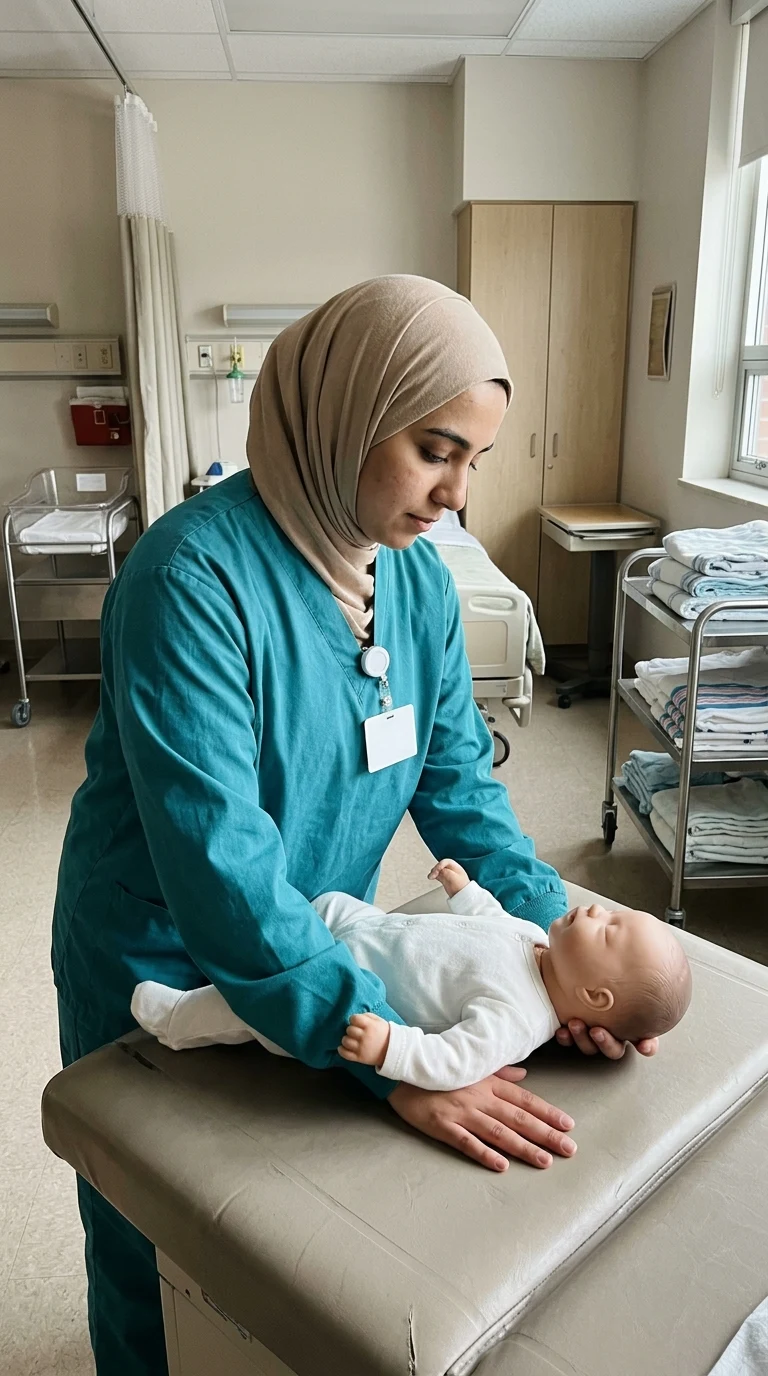
This group reads the nervous system: symmetry, posture and speed show how brain and cord work together.
Moro Reflex
The Moro tests both sides of the body at once. A sudden startle sets off a two-part answer: arms wide, then arms in. The StatPearls review of primitive reflexes stresses symmetry and completeness.
- Checked by: support the baby, let the head drop back briefly.
- Normal response: arms extend with hands open, then flex into an embrace.
- Timeline: present at birth; formed near 28 weeks, fades by 4 to 6 months.
- Exam cue: a one-sided Moro points to brachial plexus injury or a broken clavicle.
Red flag: A Moro that is missing, weak or present on one side only in a newborn needs a provider review the same shift. Any reflex still strong months past its fade window deserves the same response.
Tonic Neck Reflex
Turn a calm baby’s head to one side and the body strikes a fencer’s pose. The pose looks playful, yet it brings one hand into view, an early step toward hand-eye coordination.
- Checked by: baby on the back, head turned to one side, held 10 to 15 seconds.
- Normal response: face-side arm and leg extend; opposite side flexes.
- Timeline: present at birth; formed near 35 weeks, fades by 3 to 4 months.
Galant Reflex
The Galant reflex, also called truncal incurvation, answers a stroke down the back. The trunk bends toward the touch, as if the baby were dancing sideways: a read on the spinal cord pathways.
- Checked by: baby face down, stroke one side of the back near the spine.
- Normal response: trunk curves toward the stroked side, pelvis swings up.
- Timeline: present at birth; formed near 32 weeks, fades by 4 to 6 months.
Blink Reflex
Blink is the fastest guard here. A bright light or a puff of air snaps both lids shut before the brain can think. Unlike the practice reflexes around it, blink never retires.
- Checked by: soft light toward the eyes, or a gentle puff of air.
- Normal response: both lids close together, at the same speed.
- Timeline: present at birth, stays for life; one-sided absence needs reporting.
Grasp, Foot and Airway Reflexes
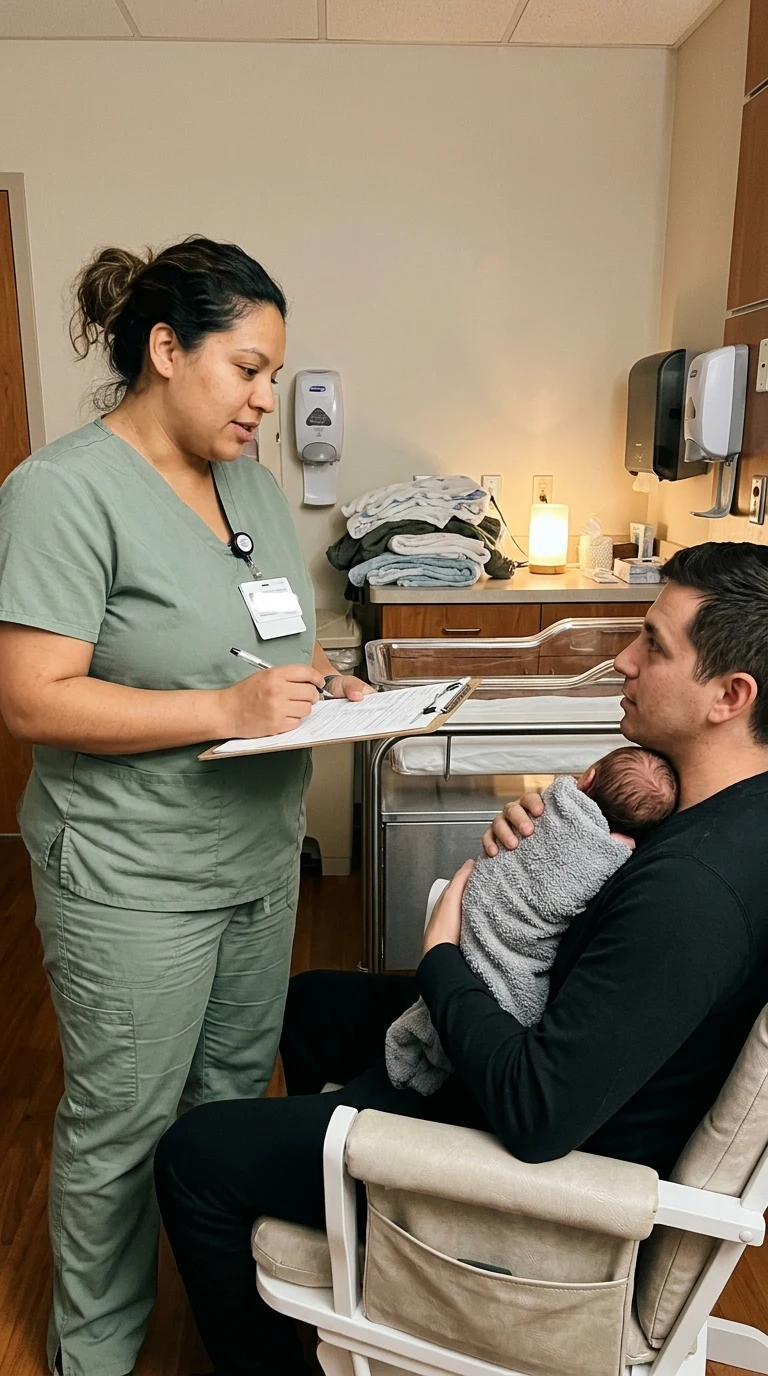
The last group mixes milestones with lifelong guards: two grasps and two foot responses that must fade on time, plus cough and sneeze.
Palmar Grasp Reflex
Press a finger into a newborn’s palm and the hand closes like a trap. The grip surprises new parents with its strength. Its later fade makes room for reaching.
- Checked by: press a finger into the open palm, from the little-finger side.
- Normal response: fingers curl around the finger; the grip strengthens when pulled.
- Timeline: present at birth; formed near 28 weeks, fades by 4 to 6 months.
Plantar Grasp Reflex
The feet keep their grip long after the hands let go. Pressure under the toes curls them down around the touch. It must fade before walking: curling toes cannot hold a stance.
- Checked by: press the sole just below the toes.
- Normal response: the toes flex down and curl around the pressure.
- Timeline: present at birth; formed near 28 weeks, fades by 9 to 12 months.
- Exam cue: a grasp still strong past 12 months can delay walking.
Babinski Reflex
Babinski changes its meaning with age. Fanned toes are normal in a newborn, a warning sign in an adult, because the response tracks the slow insulation, called myelination, of the motor pathways.
- Checked by: stroke the outer sole from heel to toes, 2 to 3 seconds.
- Normal response: the big toe lifts, the other toes fan out.
- Timeline: present at birth; fades between 12 and 24 months.
Stepping Reflex
Held upright with soles on a table, a newborn walks on the spot: brisk, automatic steps run by the cord, long before true walking. Its short window suits the timeline drills inside these nursing school study hacks.
- Checked by: hold the baby upright, soles flat, body tipped slightly forward.
- Normal response: alternating steps, one leg bending as the other straightens.
- Timeline: present at birth; fades by 2 to 3 months, the earliest fade here.
Cough Reflex
A cough is the airway clearing its own doorway: a sharp blast of air pushes mucus and stray milk out. In a newborn the cough is soft, yet during feeds it is a healthy sign.
- Checked by: watch during feeds and suctioning, when irritation triggers it.
- Normal response: a cough clears the airway, then breathing settles.
- Timeline: present at birth, stays for life; color change with coughing signals swallowing trouble.
Sneeze Reflex
Newborns sneeze often, and the sneeze is a tool, not a symptom. A tickle in the nose fires a blast that clears mucus and fluid. Parents fear a cold; in the first days, this is housekeeping.
- Checked by: no test needed; it fires when the nasal passages are irritated.
- Normal response: one or a few sneezes clear the nose.
- Timeline: present at birth, stays for life; early sneezing alone is normal.
Questions Students Ask
Why do examiners test reflexes that are supposed to disappear?
Because the pattern is the finding. A reflex present on time shows that the brainstem and cord pathways work, and its fade shows the cortex taking over. A missing, one-sided or overdue reflex localizes trouble early.
Can a baby’s state change the results?
Yes. Reflexes answer best in a quiet, alert state. Deep sleep, hard crying, hunger or a recent feed can blunt rooting, sucking and stepping, and can soften a grasp. Record the state beside the finding, and retest before calling a response absent.
Is a positive Babinski ever normal after the first birthday?
Yes, through the second year. The fanned-toe response stays normal until about 24 months, while the cord pathways finish myelinating. After that age the toes should curl downward, and a persistent upgoing toe signals an upper motor neuron problem.
One Last Study Tip
Sort the 14 by fade window: stepping leaves first, at 2 to 3 months, then the tonic neck at 3 to 4. Rooting, Moro, Galant and the palmar grasp share 4 to 6 months, the plantar grasp holds 9 to 12, and the Babinski closes at 12 to 24 months. Sucking turns voluntary; swallowing, gag, blink, cough and sneeze never leave. File this sheet with your pharmacology study notes so maternity facts share a review loop with the drug facts.
One practical tip for clinicals: test in a quiet, alert moment and write the baby’s state beside every finding, because a weak root in a sleepy baby and a weak root in a calm baby mean opposite things. Symmetry is the second habit: test both sides, since a one-sided answer is often the earliest clue.
For study use only. Always follow your program, your facility’s policy and current drug and lab references.