

22 Study Tips for Nursing Students to Succeed
These Study Tips for Nursing Students provide practical strategies to study smarter, manage coursework, and build stronger nursing knowledge.Learn effective habits that improve focus, confidence, and preparation throughout your nursing school journey.Explore these simple ideas to create a study routine that supports lasting success.
1. Active Recall Practice

Active recall changes studying from passive reading into a brain-training exercise. Instead of simply reviewing information, nursing students strengthen memory by repeatedly practicing how they would retrieve and explain important concepts.
2. Personalized Study Schedule

A study schedule works best when it matches your real routine rather than an unrealistic ideal. Creating a flexible plan helps nursing students stay consistent while balancing lectures, assignments, and personal responsibilities.
3. Note-Taking Systems

Good notes are not about writing everything a lecturer says. A useful nursing note system captures the details needed for understanding, clinical application, and quick revision before assessments.
4. Study Group Strategy

A productive study group can make difficult topics easier to understand when every member actively participates. Teaching concepts to others often reveals knowledge gaps and strengthens confidence before exams.
5. Clinical Experience Notes

Clinical experiences provide lessons that textbooks cannot fully recreate. Writing down observations after rotations helps nursing students remember important details and understand how classroom concepts appear in real patient care situations.
6. Simplified Study Materials
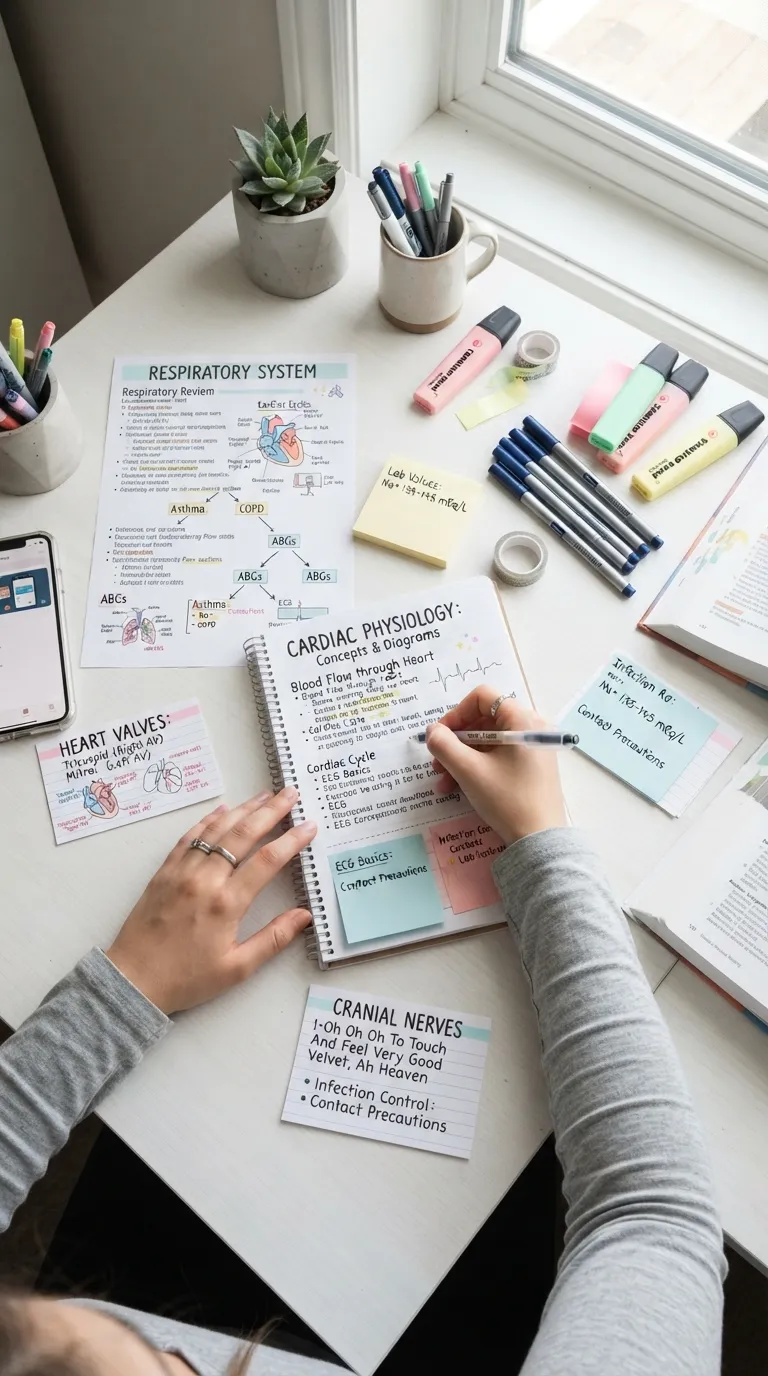
Simplifying study materials helps nursing students see the bigger picture without feeling overwhelmed by large amounts of information. The goal is creating resources that make review faster while keeping essential details clear.
7. Medication Memory Tricks

Medication information can become easier to manage when students organize drugs into meaningful patterns. Connecting medications with their uses, risks, and nursing responsibilities creates stronger understanding than memorizing isolated facts.
8. Classroom Question Review

Classroom discussions often contain valuable insights that are easy to overlook. Reviewing questions and explanations after lectures helps nursing students understand what instructors want them to recognize and apply.
9. Break Management

Effective studying is not about staying at a desk for endless hours. Planned breaks help maintain concentration and prevent burnout, especially during demanding periods of nursing school.
10. Practice Teaching

Teaching a concept is one of the fastest ways to discover whether you truly understand it. When nursing students explain ideas in their own words, they strengthen recall and identify missing pieces in their knowledge.
11. Resource Selection

More study materials do not always create better results. Selecting a few trustworthy resources allows nursing students to spend more time learning instead of constantly searching for new information.
12. Reading Strategies

Reading nursing textbooks effectively requires more than moving through pages quickly. Using a structured approach helps students recognize important information and connect details with practical nursing applications.
13. Sleep Protection

Rest is an important part of learning, not a break from it. Nursing students often remember information better when they balance study time with enough recovery to keep their minds alert.
14. Goal Tracking
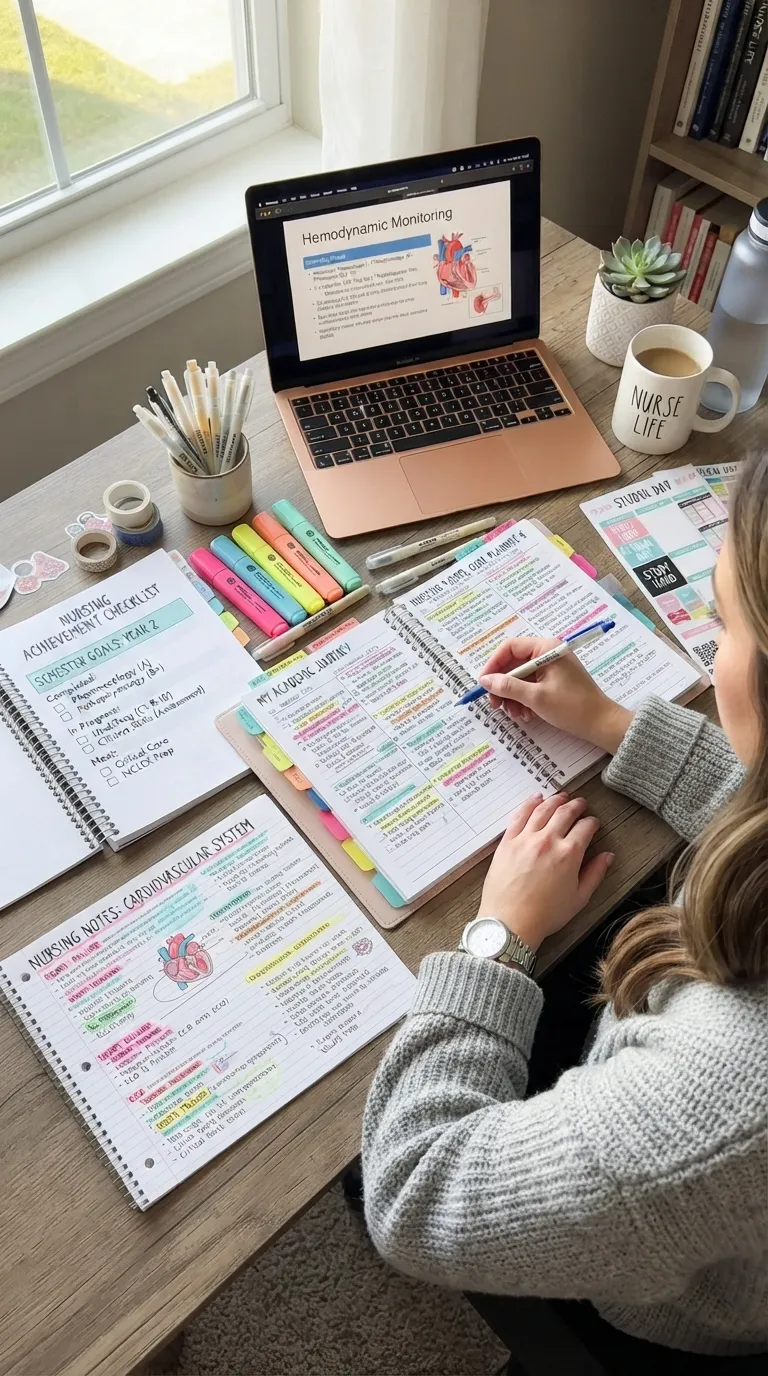
Clear goals make nursing school feel more manageable by turning large challenges into smaller steps. Tracking progress helps students stay motivated and recognize improvements that are easy to miss during busy semesters.
15. Clinical Vocabulary Practice
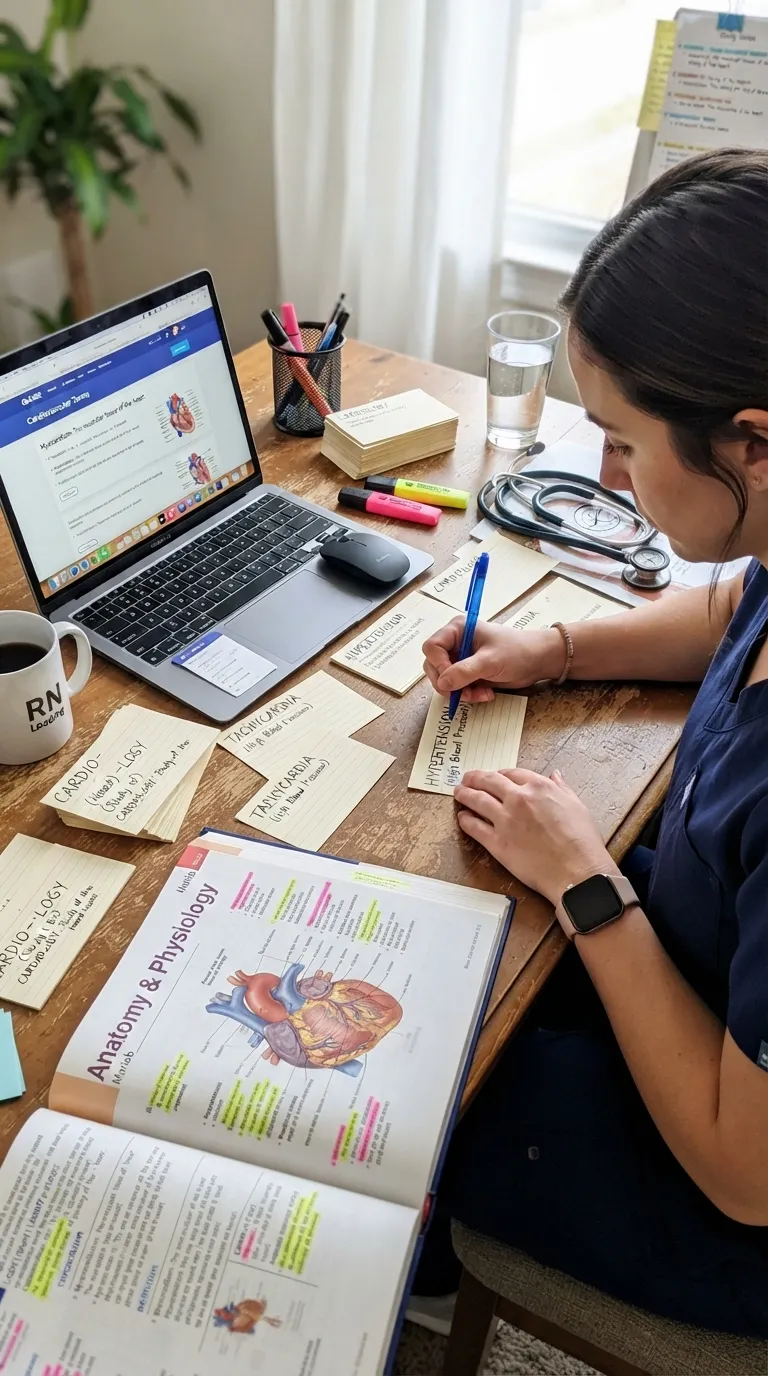
Medical vocabulary becomes easier when students learn words through meaning rather than memorizing definitions alone. Understanding terminology helps nursing students communicate clearly and recognize important information during clinical experiences.
16. Learning Reflection

Reflection helps students become more aware of how they learn best. Looking back at successful strategies and challenges can create a more personalized approach for future nursing coursework.
17. Digital Organization

Digital organization prevents wasted time searching for missing resources. A simple file system allows nursing students to focus on learning instead of managing scattered documents during busy academic periods.
18. Confidence Practice

Confidence develops through repeated practice, not overnight. Nursing students who regularly practice explaining and applying knowledge often feel more prepared when facing challenging classes and clinical situations.
19. Focus Routine

A consistent focus routine makes studying easier to begin and maintain. When nursing students create predictable habits, they spend less energy deciding when to study and more energy actually learning.
20. Study Environment Setup

The right environment can make studying feel less overwhelming. A thoughtfully arranged workspace supports better concentration and helps nursing students create a reliable place for academic progress.
21. Healthy Motivation

Motivation becomes stronger when it connects with a meaningful purpose. Nursing school requires patience and consistency, so remembering long-term goals can help students continue moving forward during difficult weeks.
22. Progress Celebration

Recognizing progress keeps nursing students motivated throughout demanding semesters. Small achievements, improved habits, and growing confidence all contribute to long-term success in nursing school.
Conclusion
Build strong habits with organized notes, focused routines, and regular reflection to make nursing school more manageable.
Start with one strategy that fits your routine and gradually create a study system that works for you.Save these Study Tips for Nursing Students on Pinterest and use them to stay motivated throughout your nursing journey.
Keep Reading
 Nursing School
 Nursing Exam Study Tips for Better Results
These Nursing Exam Study Tips reveal practical strategies to prepare smarter, improve test performance, and fe…
 Nursing School
 20 Nursing Student Study Tips That Actually Work
These Nursing Student Study Tips share practical ways to improve studying, prepare for exams, and build strong…
 Nursing School
 18 Brilliant School Nurse Hacks That Really Work
This article shares effective school nurse hacks that simplify daily tasks, improve student support, and creat…